





Coquitlam Renovation Guide: Costs, Permits & Neighbourhoods (2026)
Coquitlam is no longer Metro Vancouver’s overlooked neighbour. Over the past decade, the Evergreen Line SkyTrain extension, a surge of Burke Mountain development, and some of the region’s last remaining lots for large family homes have transformed this city of 160,000 into one of the most active renovation markets in British Columbia. Homeowners across Ranch Park, Westwood Plateau, Austin Heights, and Maillardville are investing heavily in their properties — and for good reason. With detached homes trading between $1.0 million and $1.9 million, a well-executed renovation doesn’t just improve your quality of life; it protects and grows a significant asset.
This guide covers everything a Coquitlam homeowner needs to know before starting a renovation in 2026: realistic costs by project type, neighbourhood-by-neighbourhood considerations, City of Coquitlam permit requirements, hillside and slope challenges unique to this market, secondary suite regulations, and the latest ROI data. Whether you’re planning a kitchen upgrade in Westwood Plateau or a full two-storey addition on Burke Mountain, the numbers and process are here.
Why Coquitlam Is Metro Vancouver’s Rising Renovation Market
Three converging forces have made Coquitlam one of the most compelling renovation markets in the Lower Mainland heading into 2026.
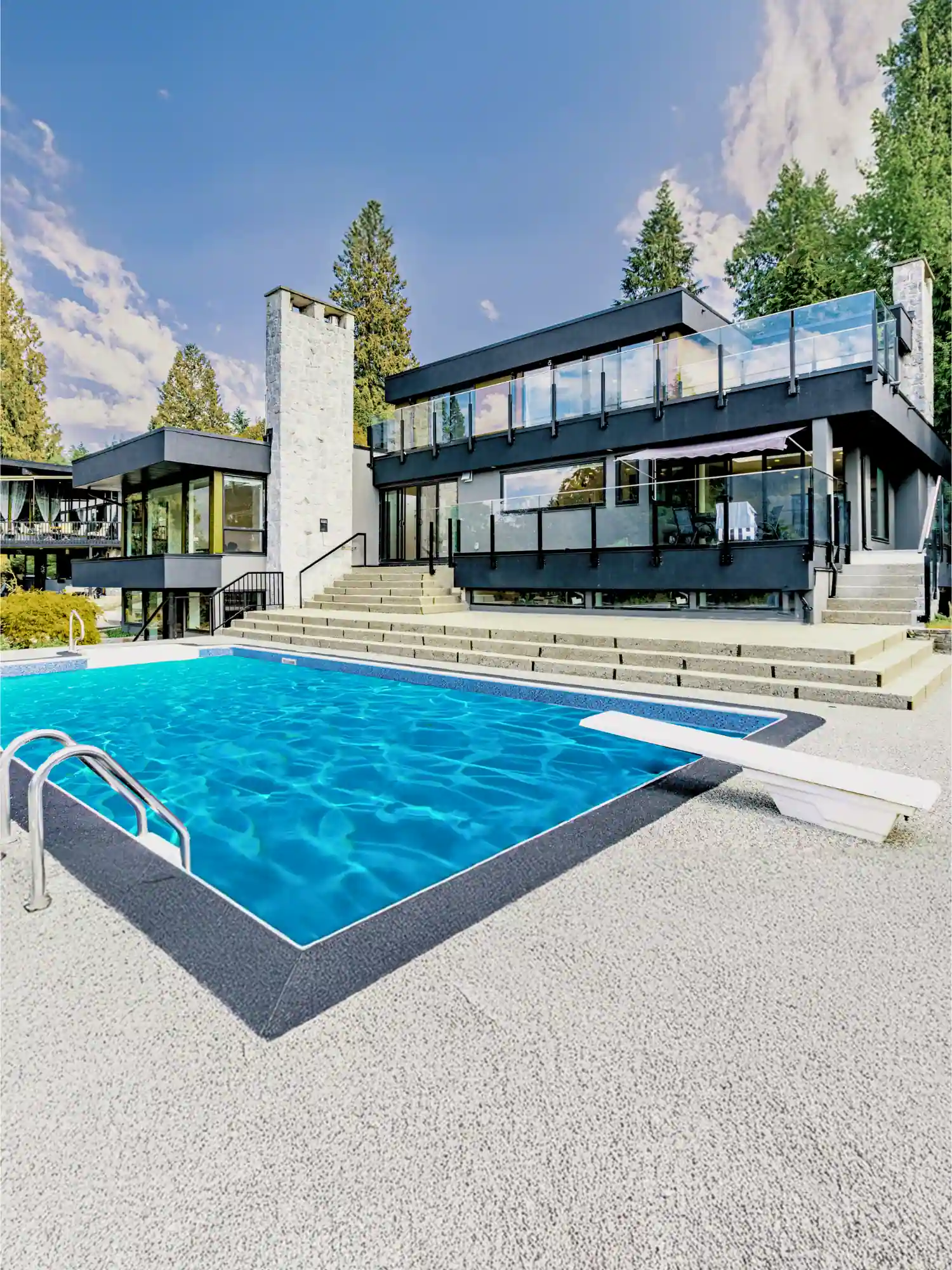
The housing stock gap. Coquitlam's residential base is dominated by homes built between 1965 and 1995 — a generation of construction that is now aging into its major renovation window
Vancouver General Contractors
The Evergreen Line effect. When the Millennium Line extension opened in 2016, it didn’t just improve transit — it fundamentally repriced neighbourhoods. Lougheed Town Centre, Lincoln, Burquitlam, and Lafarge Lake–Douglas stations turned formerly car-dependent commuter suburbs into connected urban nodes. Homes within a 10-minute walk of these stations have appreciated faster than the Coquitlam average, and rental demand has followed. Secondary suite conversions, basement suites, and laneway-style garden suites near SkyTrain now generate $2,100–$2,800 per month, numbers that have made previously marginal renovation investments financially obvious.
The housing stock gap. Coquitlam’s residential base is dominated by homes built between 1965 and 1995 — a generation of construction that is now aging into its major renovation window. These properties have solid bones: larger lots than you’ll find in Vancouver or Burnaby, structurally sound post-and-beam or stick-frame construction, and floor plans that respond well to open-concept reconfiguration. But their kitchens, bathrooms, electrical panels (many are still 100-amp), plumbing, and insulation are decades overdue for modernization. The combination of aging systems and strong market values makes renovation economics compelling: you’re spending $60,000–$165,000 on a property worth $1.2 million–$1.6 million.
Burke Mountain and the new-build comparison pressure. Coquitlam’s northeast quadrant has seen some of the most aggressive residential development in Metro Vancouver over the past eight years. Burke Mountain’s new subdivisions — Canyon Springs, Heritage Woods adjacencies, and the upper slopes — have delivered thousands of 2,500–3,800 sq ft family homes at $1.4 million–$1.9 million. These new builds set a visual and functional benchmark that owners of 1970s Ranch Park or 1980s Westwood Plateau ranchers increasingly want to match. The result is a steady stream of full gut renovations, second-storey additions, and kitchen-and-bath overhauls aimed at bringing older homes in line with what new construction delivers.
City of Coquitlam’s development ambitions. The City has been deliberately densifying around its Town Centre and SkyTrain corridors through its Official Community Plan updates and the Town Centre Area Plan. New zoning overlays, streamlined secondary suite approvals, and Bill 44 multi-unit permissions are changing what homeowners can legally build on their lots. For investors and owner-occupiers alike, this regulatory tailwind makes renovation and densification more financially accessible than it has been at any point in the past 20 years.
Coquitlam Renovation Costs by Project Type (2026)
The following cost ranges are based on projects completed in Coquitlam and the broader Tri-Cities area in 2024–2025. All figures are in Canadian dollars and include materials, labour, permit fees, and a standard contractor margin. They do not include landscaping, appliances (kitchen), or furniture.
| Project Type | Mid-Range | Premium | Notes |
|---|---|---|---|
| Kitchen Renovation | $46,000–$76,000 | $76,000–$125,000 | Includes cabinets, countertops, tile, lighting, plumbing fixtures |
| Main Bathroom Renovation | $21,000–$33,000 | $33,000–$55,000 | Full gut, new tile, vanity, fixtures, ventilation |
| Ensuite Bathroom | $28,000–$42,000 | $42,000–$72,000 | Walk-in shower, heated floors, double vanity typical |
| Basement Suite (Legal) | $58,000–$88,000 | $88,000–$120,000 | Full legal suite with kitchen, bath, egress window, separate entry |
| Rear Addition | $145,000–$195,000 | $195,000–$250,000 | 300–500 sq ft, on-grade or crawlspace foundation |
| Second Storey Addition | $225,000–$295,000 | $295,000–$360,000 | Full second floor, 2–3 bedrooms, new roof |
| Full Home Renovation | $165,000–$245,000 | $245,000–$330,000 | Kitchen, 2 baths, flooring, electrical, plumbing, windows |
| Open Concept Main Floor | $38,000–$62,000 | $62,000–$95,000 | Load-bearing wall removal, beam installation, flooring, lighting |
| Exterior Upgrade | $35,000–$58,000 | $58,000–$90,000 | Siding, windows, front entry, landscaping excluded |
These ranges reflect Coquitlam market pricing specifically. Hillside lots on Westwood Plateau or Burke Mountain can add 8%–18% to foundation, drainage, and access costs compared to flat-lot equivalents in Burnaby or Port Coquitlam. If your home sits on a slope greater than 15%, budget for the higher end of these ranges and factor in a geotechnical assessment ($3,500–$7,500) if your project involves excavation or structural modifications.
Coquitlam Neighbourhoods: What Each Area Means for Your Renovation
Coquitlam is not a monolithic market. Each neighbourhood has distinct housing stock, lot characteristics, permit considerations, and renovation economics. Understanding where your home sits changes how you should plan and budget.
Burke Mountain. The city’s newest residential area features post-2010 construction on large, often sloped lots. Renovation here skews toward finishing unfinished basements ($45,000–$75,000), upgrading builder-grade kitchens and bathrooms ($55,000–$95,000 combined), and adding suites to generate rental income. Because homes are newer, structural and systems work is minimal — the focus is cosmetic and functional upgrades. Lot drainage and retaining walls are common concerns on steeper properties.
Westwood Plateau. One of Coquitlam’s most affluent neighbourhoods, with homes predominantly built between 1989 and 2005. Properties here sit on sloped terrain with dramatic mountain views. Renovations tend toward premium finishes — imported stone countertops, steam showers, custom millwork — and second-storey additions that capitalize on mountain sightlines. Budgets run 10%–20% higher than the city average due to the premium on finishes and the hillside complexity. Expect $85,000–$130,000 for a full kitchen-and-ensuite overhaul.
Ranch Park. A solidly middle-class neighbourhood of 1970s and early-1980s ranchers and split-levels. This is the sweet spot for full gut renovations and second-storey additions — homes are structurally sound but functionally dated, lots are relatively flat, and property values ($1.1M–$1.45M) support renovation investment. A $145,000 second-storey addition on a Ranch Park rancher typically yields a finished product worth $400,000–$500,000 more than the unrenovated baseline. ROI on well-executed additions here is among the strongest in the Tri-Cities.
Austin Heights. The most urban neighbourhood in Coquitlam, centred on Austin Avenue with post-war and 1960s housing. Proximity to Burquitlam SkyTrain has driven rapid appreciation. The dominant renovation type here is secondary suite creation — converting unfinished basements or reconfiguring main floors to create legal 1- or 2-bedroom suites. With rental rates running $2,100–$2,600/month for a good suite, payback periods of 4–6 years are achievable. Many Austin Heights lots also qualify for garden suite (coach house) development under new City of Coquitlam policies.
Maillardville. Coquitlam’s oldest neighbourhood and the first French-Canadian community west of the Rockies. Homes here date to the 1920s–1950s, which means renovation projects often encounter knob-and-tube wiring, galvanized or cast-iron plumbing, and original single-pane windows. Budget a contingency of 15%–25% for concealed conditions. The upside: Maillardville’s proximity to Braid SkyTrain and its heritage character mean renovated properties command a premium. A fully renovated Maillardville character home in good condition can achieve $1.3M–$1.55M — well above the unrenovated equivalent at $900K–$1.1M.
Town Centre / Lougheed. The densification epicentre of Coquitlam. Single-family homes here are under development pressure, and many renovations are investor-driven: maximize rentable space, add suites, or prepare the property for eventual stratification. Renovation budgets tend to prioritize function over finish. Bill 44 multi-unit opportunities are strongest here due to zoning context and SkyTrain access.
Scott Creek. A family neighbourhood of 1980s–1990s two-storey homes on generous lots. Similar renovation profile to Ranch Park but with slightly newer housing stock. Kitchen and bathroom refreshes dominate, with a growing trend toward basement suite additions as empty-nesters look to offset carrying costs.
Secondary Suites and Garden Suites in Coquitlam
Secondary suites — basement apartments, above-garage suites, and garden suites — are one of the highest-ROI renovation investments available to Coquitlam homeowners. The City of Coquitlam has actively supported secondary suite development for over a decade, and the 2023–2024 provincial housing legislation has expanded what’s permitted further.
City of Coquitlam suite policies. Secondary suites (internal to the main dwelling) have been permitted in most single-family zones for many years. Garden suites (detached or semi-detached structures in the rear yard) were expanded under the City’s OCP update and are now permitted on most RS-zoned lots subject to size and setback limits. A garden suite can be up to 968 sq ft in floor area. Both suite types require building permits, inspections, and compliance with BC Building Code egress and smoke alarm requirements.
Evergreen Line rental demand. The SkyTrain corridors running through Burquitlam, Lincoln, Lougheed, and Lafarge Lake–Douglas have created concentrated rental demand that pushes suite rents above the Coquitlam average. A well-finished 2-bedroom basement suite within 1 km of a station can achieve $2,400–$2,800/month in 2026. This rental premium significantly improves payback calculations compared to suites in less transit-accessible locations.
| Neighbourhood / Location | 1-BR Suite ($/month) | 2-BR Suite ($/month) | Garden Suite ($/month) |
|---|---|---|---|
| Austin Heights / Burquitlam SkyTrain | $1,850–$2,150 | $2,200–$2,650 | $2,400–$2,900 |
| Town Centre / Lougheed SkyTrain | $1,800–$2,100 | $2,150–$2,600 | $2,350–$2,800 |
| Maillardville / Braid SkyTrain | $1,700–$2,000 | $2,050–$2,450 | $2,200–$2,650 |
| Ranch Park / Scott Creek | $1,600–$1,900 | $1,950–$2,300 | $2,100–$2,500 |
| Westwood Plateau | $1,700–$2,000 | $2,050–$2,450 | $2,200–$2,600 |
| Burke Mountain | $1,650–$1,950 | $2,000–$2,400 | $2,150–$2,550 |
CMHC programs. Homeowners adding secondary suites may qualify for the CMHC Secondary Suite Loan Program, which provides up to $40,000 in low-interest financing. The program requires the suite to be rented at below-market rates for a defined period. Applications are processed through approved lenders; eligibility depends on income and property value thresholds. Additionally, CMHC’s MLI Select program offers insured mortgage financing for properties with rental suites, reducing down payment requirements for qualifying buyers — an important consideration if you’re building a suite prior to sale.
City of Coquitlam Permit Process: What to Expect
Permit compliance in Coquitlam is non-negotiable. The City’s building department is active, inspectors know the local housing stock well, and unpermitted work creates title problems that complicate sale, refinancing, and insurance. More practically, the City of Coquitlam’s online permit portal and permit-ready processing pathways have meaningfully reduced administrative friction over the past three years.
Building permits are required for most structural work, new plumbing and electrical circuits, window and door enlargements, suite additions, and any change to the building envelope. A straightforward interior renovation — kitchen cabinets, bathroom tile, flooring — typically does not require a building permit, but adding or moving plumbing, upgrading the electrical panel, or opening walls for insulation does. When in doubt, call the City’s development services counter at 604-927-3441 before starting work.
Development permits are required for projects that alter exterior appearance, site coverage, or building height in Development Permit Areas (DPAs). Much of Coquitlam’s hillside and Town Centre areas are designated DPAs. A development permit review adds 4–8 weeks to the pre-construction timeline and may require architectural drawings stamped by a registered professional.
Permit fees. Coquitlam’s building permit fees are calculated on construction value. As a rough guide, expect permit fees of $1,800–$3,500 for a kitchen renovation, $3,500–$6,500 for a basement suite, and $8,000–$16,000 for a second-storey addition. These fees are in addition to any development permit fees or engineering review fees.
| Project Type | Permit Type(s) | Typical Timeline | Inspections Required |
|---|---|---|---|
| Kitchen Renovation (plumbing/electrical) | Building | 2–4 weeks | Rough-in, final |
| Bathroom Renovation | Building | 2–4 weeks | Rough-in, final |
| Basement Suite | Building | 4–8 weeks | Framing, rough-in, insulation, final |
| Rear Addition | Building + Development (if DPA) | 6–14 weeks | Foundation, framing, rough-in, insulation, final |
| Second Storey Addition | Building + Development | 8–16 weeks | Framing, rough-in, insulation, exterior, final |
| Garden Suite | Building + Development | 10–18 weeks | Foundation, framing, rough-in, insulation, final |
Inspection sequence. City of Coquitlam inspectors follow BC Building Code requirements and the City’s own inspection protocols. For a basement suite, the typical sequence is: (1) framing inspection after walls and ceiling framing are complete but before insulation; (2) rough-in inspection for plumbing and electrical; (3) insulation and vapour barrier inspection; (4) fire separation inspection (smoke alarms, CO detectors, fire-rated assemblies between suite and main dwelling); (5) final inspection. Plan 48–72 hours’ advance notice for each inspection booking. Experienced Coquitlam contractors know how to batch inspections efficiently — this is one of many reasons to use a contractor with specific local permit experience rather than a general contractor unfamiliar with the City’s building department.
Coquitlam’s Hillside and Slope Challenges
Coquitlam’s topography is one of the defining features of the renovation market here, and it’s one of the factors that most surprises homeowners who have only renovated in flatter cities. Westwood Plateau, Burke Mountain, portions of Ranch Park, and the hillside areas above Como Lake all involve slopes that introduce costs and complexity not present on flat lots in Port Coquitlam or Langley.
Retaining walls. Any excavation on a sloped lot — for a new foundation, a basement egress, or a rear patio — may require a retaining wall. Coquitlam’s building department requires engineering drawings for retaining walls over 1.2 metres (roughly 4 feet). A typical residential retaining wall on a Westwood Plateau or Burke Mountain property runs $15,000–$40,000 depending on height, length, drainage complexity, and material (timber, concrete block, or poured concrete). On some steeper lots, terraced walls or helical pier systems push costs to $50,000–$75,000.
Drainage requirements. The City of Coquitlam has specific drainage requirements for hillside development that are more stringent than flat-lot regulations. Any addition or major renovation on a sloped lot typically requires a site drainage plan prepared by a civil engineer. Storm water management — directing surface runoff away from both your property and neighbouring properties — must be addressed in the permit drawings. Budget $4,500–$9,000 for a drainage plan and any new perimeter drain or catch basin work required.
Foundation complexities. Ranchers and split-levels built in the 1970s–1980s on sloped Coquitlam lots often have partial basements, uneven slab depths, and foundations stepped to follow the natural grade. Adding a rear addition or second storey on these properties requires careful structural assessment. A structural engineer review ($2,500–$5,500) is strongly recommended before finalizing the scope and budget for any addition on a sloped lot. In some cases, the existing foundation requires underpinning or reinforcement before additional load can be applied.
Geotechnical considerations. Burke Mountain and upper Westwood Plateau include areas with thin soils over bedrock, as well as areas with expansive clay soils that swell and contract seasonally. If your proposed addition involves new footings within 1.5 metres of a slope break, the City may require a geotechnical assessment as a condition of permit issuance. A standard geotech report runs $3,500–$7,500. In rare cases where the geotech identifies unstable soils, remediation costs can be substantial — this is a risk to identify and price before committing to a project on a challenging hillside lot.
Coquitlam Kitchen Renovations: The Family Home Advantage
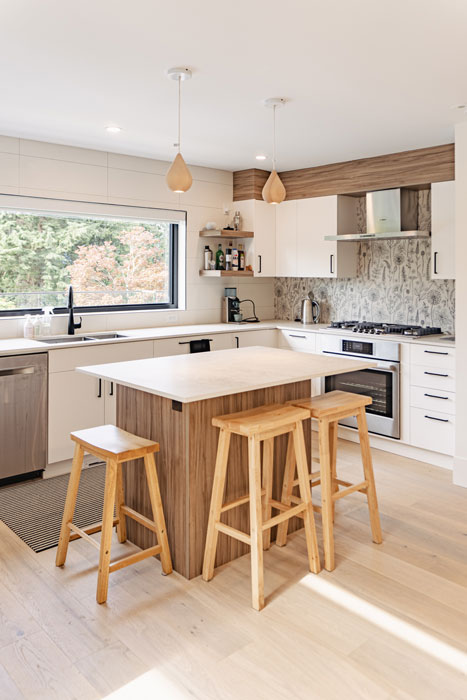
Coquitlam’s housing stock skews toward large family homes — 1,800–2,800 sq ft properties designed for families of four or five. These homes were built when kitchens were functional but separate: closed-off rooms with limited natural light, small footprints, and layouts that made little sense for how modern families actually live. Open-concept kitchen renovations, which involve removing the wall between the kitchen and the adjacent living or dining room, are the single most popular renovation type in Coquitlam’s older residential neighbourhoods.
Mid-range kitchen renovation: $46,000–$76,000. At this budget, you’re looking at semi-custom cabinetry (RTA or locally fabricated), quartz countertops, a new tile backsplash, recessed and pendant lighting, a new sink and faucet, and updated appliances (if included). If the kitchen is being opened to an adjacent space, include $8,000–$14,000 for load-bearing wall removal, engineered LVL beam installation, and structural patching. This budget produces a kitchen that photographs well, functions efficiently, and meets the expectations of buyers at the $1.1M–$1.4M price point.
Premium kitchen renovation: $76,000–$125,000. At the premium level, you’re upgrading to custom millwork, waterfall quartz or granite islands, high-end appliance packages (Wolf, Sub-Zero, or Fisher & Paykel), in-floor heating, custom range hood cabinetry, and integrated wine storage or pantry systems. Many Westwood Plateau clients at this level are also expanding the kitchen footprint by 80–150 sq ft through a rear bump-out, which adds $45,000–$75,000 to the project. The total investment can reach $140,000–$200,000 for a premium kitchen-plus-extension project, but in the right home these produce a 120%–142% ROI at resale.
What to budget for unknowns. In Coquitlam homes built before 1990, opening walls for an open-concept kitchen reliably uncovers electrical deficiencies — aluminum branch wiring, ungrounded outlets, undersized circuits for modern appliances. Budget $4,500–$8,500 for electrical upgrades if your home was built before 1985. Plumbing rough-in for a kitchen island sink adds $1,800–$3,200. Hardwood or engineered wood flooring to match or complement existing floors runs $8–$16/sq ft installed. Build these line items into your initial budget rather than treating them as surprises.
For a detailed breakdown of kitchen renovation costs in the Vancouver market, see our home renovation guide.
Bill 44 and Multi-Unit Opportunities in Coquitlam
Bill 44, BC’s Housing Statutes (Residential Development) Amendment Act, came into force January 1, 2024. It requires all municipalities in BC to permit a minimum of three to four residential units on any single-family or duplex lot in urban areas, regardless of local zoning. For Coquitlam homeowners, this represents a fundamental change in what’s possible on a standard RS-zoned lot.
City of Coquitlam’s implementation. Coquitlam updated its zoning bylaw to comply with Bill 44 in late 2023. In practical terms, most single-family lots in Coquitlam can now accommodate up to four units — a principal dwelling, a secondary suite within that dwelling, and a garden suite (detached) in the rear yard. Lots larger than the minimum threshold and within 400 metres of a SkyTrain station may accommodate up to six units. The City has published a Bill 44 information sheet and a development checklist available through its planning counter.
Triplex and quadplex opportunities near SkyTrain. The highest-value Bill 44 applications in Coquitlam are within the 400-metre walkshed of Burquitlam, Lincoln, Lougheed Town Centre, and Lafarge Lake–Douglas stations. On a standard 6,000–8,000 sq ft lot in these areas, it is now feasible to construct a three- or four-unit building that generates $7,500–$11,000/month in aggregate rental income. At a total construction cost of $850,000–$1.3 million (including land, demolition, and construction), project yields of 6%–9% are achievable — well above the cap rate on purpose-built rental in Vancouver proper.
| Configuration | Est. Construction Cost | Monthly Rental Income | Gross Annual Yield |
|---|---|---|---|
| Main + 1BR suite + garden suite | $185,000–$260,000 | $4,200–$5,400 | 5.5%–7.2% on reno cost |
| Triplex (3 units, owner occupied) | $650,000–$900,000 | $6,800–$8,600 | 5.8%–7.4% on build cost |
| Quadplex (4 units near SkyTrain) | $950,000–$1,300,000 | $9,500–$12,000 | 6.1%–8.3% on build cost |
Bill 44 projects require full development and building permit applications, stamped architectural and structural drawings, and compliance with the City’s Design Guidelines for small-scale multi-unit housing. The permitting timeline for a triplex or quadplex typically runs 12–20 weeks. These are complex projects that benefit significantly from a general contractor with direct experience in Coquitlam’s planning department review process. Contact us to discuss whether your lot qualifies for a multi-unit project.
Coquitlam Home Addition Costs: Rear Additions and Second Storeys
For families who want more space but don’t want to sell and move — a transaction that costs $50,000–$80,000 in realtor commissions, PTT, and moving expenses on a $1.3M Coquitlam home — additions are the answer. Coquitlam’s housing stock, dominated by 1,200–1,800 sq ft ranchers and bungalows, is well-suited to both rear additions and second-storey additions.
Rear additions: $145,000–$250,000. A rear addition typically adds 300–500 sq ft of living space to the back of a house. Common applications include an expanded kitchen and family room, a main-floor primary suite, or a multi-purpose mudroom/laundry/home office space. On flat or gently sloped lots, foundation options include a poured concrete perimeter wall on spread footings (most common), a concrete slab on grade, or helical piers on challenging soils. On steeper Coquitlam lots, foundation costs are 15%–30% higher. Total project costs: $145,000–$195,000 mid-range, $195,000–$250,000 premium.
Second-storey additions: $225,000–$360,000. A second-storey addition transforms a bungalow or rancher into a full two-storey home, typically adding 900–1,400 sq ft. The process involves removing the existing roof structure, reinforcing or replacing the main-floor bearing walls, constructing new floor framing, framing the second storey, and installing a new roof. On a Ranch Park or Scott Creek rancher where the main floor is already 1,000–1,400 sq ft, a well-executed second storey can create a finished home of 2,200–2,800 sq ft — competitive with Burke Mountain new construction — at a fraction of the cost of moving.
Hillside considerations for additions. On sloped lots, every addition requires a geotechnical and structural review to confirm the existing foundation can support the new load. Westwood Plateau homes, for example, were often built with foundations designed for a single-storey load. Adding a full second storey may require foundation reinforcement, perimeter drain upgrades, or soil anchoring — each of which adds $15,000–$45,000 to the project cost. On these properties, always engage a structural engineer before issuing an RFP to general contractors. An accurate structural assessment up front produces more accurate contractor bids and avoids change orders later.
Suite additions: $58,000–$120,000. Many Coquitlam homeowners add legal suites as part of a broader renovation — for example, a basement suite created during a full renovation of an Austin Heights or Ranch Park property. The cost of a standalone legal suite ranges from $58,000 for a basic but code-compliant 1-bedroom to $120,000 for a fully finished 2-bedroom suite with a full kitchen, in-suite laundry, egress windows, and a separate exterior entry.
For a full overview of renovation scope and contractor selection, see our complete renovation guide.
ROI Data for Coquitlam Renovations
Return on investment data for Coquitlam renovations is based on Greater Vancouver resale analysis from 2023–2025, adjusted for Coquitlam’s specific market dynamics. These figures represent the ratio of the increase in assessed/market value attributed to the renovation versus the renovation cost — they are not guarantees, and market timing, project quality, and neighbourhood context all influence actual outcomes.
| Renovation Type | Typical Cost (Mid) | ROI Range | Value Added | Best Neighbourhoods |
|---|---|---|---|---|
| Kitchen Renovation | $58,000 | 105%–142% | $61,000–$82,000 | Westwood Plateau, Ranch Park |
| Ensuite Bathroom | $34,000 | 107%–148% | $36,000–$50,000 | Burke Mountain, Westwood Plateau |
| Basement Suite (Legal) | $70,000 | 185%–248% | $130,000–$174,000 | Austin Heights, Town Centre, Maillardville |
| Second Storey Addition | $260,000 | 114%–155% | $296,000–$403,000 | Ranch Park, Scott Creek, Maillardville |
| Rear Addition | $175,000 | 108%–138% | $189,000–$242,000 | Ranch Park, Austin Heights |
| Full Home Renovation | $205,000 | 110%–172% | $226,000–$353,000 | Maillardville, Austin Heights |
| Open Concept Main Floor | $50,000 | 118%–145% | $59,000–$73,000 | All neighbourhoods |
| Exterior Upgrade | $46,000 | 95%–125% | $44,000–$58,000 | Maillardville, Ranch Park |
The standout performer in Coquitlam’s ROI table is the legal basement suite. The combination of Coquitlam’s strong rental market (particularly near SkyTrain), Bill 44 validation of the rental suite model, and buyers who routinely pay a $100,000–$175,000 premium for homes with legal income suites means that a well-constructed $65,000–$85,000 basement suite is the most reliably high-ROI renovation available in this market. In Austin Heights and Town Centre specifically, where buyers are accustomed to income-producing properties and Evergreen Line walkability commands a further premium, suite ROI consistently outperforms the citywide average.
Second-storey additions on Ranch Park and Scott Creek ranchers tell a similarly compelling story. A $250,000 addition that transforms a 1,100 sq ft rancher into a 2,300 sq ft two-storey home can push market value from $1.15M to $1.55M–$1.7M — an increase of $400,000–$550,000 on a $250,000 investment. The math works because Coquitlam buyers pay a steep discount for single-storey homes with small square footage: the gap between a 1,100 sq ft rancher and a comparable 2,300 sq ft two-storey in the same neighbourhood is far larger than the cost of the addition.
Finding the Right Contractor for a Coquitlam Renovation
The difference between a successful Coquitlam renovation and a costly, drawn-out nightmare is rarely the design — it’s the contractor. Coquitlam’s combination of hillside topography, aging housing stock, active permit requirements, and a building department with its own specific processes means that local experience is not a nice-to-have; it’s a functional requirement.
What to look for. A contractor working in Coquitlam should be able to demonstrate: (1) a track record of permits pulled and closed-out with the City of Coquitlam’s building department; (2) specific experience with hillside lots, including retaining walls, drainage plans, and geotechnical coordination if required; (3) subcontractor relationships with Tri-Cities electricians and plumbers who understand the City’s inspection protocols; and (4) references from Coquitlam homeowners — ideally in your neighbourhood or with a similar project type.
Red flags. Be cautious of contractors who: quote without visiting the site; cannot name the City of Coquitlam building permit process or inspection sequence; propose starting work before a permit is issued; offer a significantly lower price than competing bids without a clear explanation; or lack a current BC HST number and Workers’ Compensation Board (WorkSafeBC) clearance letter. In Coquitlam, where hillside conditions can produce expensive surprises, a contractor who hasn’t done their due diligence on your specific lot is a liability.
Contract structure. Most reputable Coquitlam contractors work on either a fixed-price contract (appropriate for well-defined scopes) or a cost-plus contract with a guaranteed maximum price (appropriate for complex renovations where concealed conditions are likely). A typical payment schedule involves 10% at contract signing, 25% at permit issuance, 25% at rough-in completion, 25% at drywalling, and 15% at final inspection and deficiency clearance. Never pay more than 10%–15% upfront, and never pay for work that hasn’t been completed.
VGC’s Tri-Cities experience. Vancouver General Contractors has managed renovation and addition projects across Coquitlam, Port Coquitlam, and Port Moody for over a decade. Our Coquitlam project history includes second-storey additions on Ranch Park ranchers, legal suite builds in Austin Heights, full gut renovations in Maillardville character homes, and premium kitchen and bathroom overhauls on Westwood Plateau. We maintain current knowledge of the City of Coquitlam’s permit processes, know the building inspectors, and have subcontractor relationships with licensed Tri-Cities tradespeople. If you’re planning a Coquitlam renovation, we’d welcome the opportunity to visit your home and provide a detailed assessment. Contact us here to schedule a consultation.
More Neighbourhood Guides Guides

Renovation in Tsawwassen, Delta: South Delta Home Styles & Renovation Considerations

Renovation in Squamish: Mountain Town Growth, Unique Styles & Permit Guide

Renovation in Mission, BC: Small-Town Building Permit Guide & Local Contractors

Renovation in the Fraser Valley: Complete Guide for Abbotsford, Langley & Chilliwack
Renovation in Steveston, Richmond: Heritage & Coastal Home Considerations
Ready to start your renovation?
Frequently Asked Questions: Coquitlam Renovations
1. How do Coquitlam renovation costs compare to Vancouver?
Coquitlam renovation costs run approximately 5%–12% lower than comparable projects in Vancouver proper. Labour rates are similar across the Lower Mainland, so the difference is primarily driven by slightly lower permit fees, less complex access logistics (no lane-restricted Vancouver streets), and lower subcontractor premiums for projects farther from the City of Vancouver. However, Coquitlam’s hillside lots can add 8%–18% to costs for projects involving excavation or additions — so the location advantage can be partially or fully offset on sloped properties.
2. Do I need a permit for a Coquitlam basement suite?
Yes, absolutely. A legal secondary suite in Coquitlam requires a building permit from the City, and the suite must comply with BC Building Code requirements for fire separation, egress (a window sized appropriately for escape), smoke and CO alarms, ceiling height (minimum 1.95 metres), and ventilation. An unpermitted suite is an illegal suite — it cannot be legally advertised for rent under the City’s bylaws, it creates liability for the homeowner if there is a fire or injury, and it must be disclosed at the time of sale, which reduces value or requires remediation. The City’s suite permit process is well-established and manageable; there is no good reason to skip it.
3. How long does the City of Coquitlam take to issue a building permit?
For straightforward projects — a basement suite or kitchen renovation with electrical and plumbing work — typical permit turnaround is 3–6 weeks from submission of a complete application. Larger projects requiring development permits (additions, second storeys, garden suites) take 8–16 weeks. Applications in Development Permit Areas or that require an OCP variance can take 16–24 weeks. Submitting a complete, accurate application — including all required drawings and supporting documents — is the single most effective way to avoid delays. Experienced Coquitlam contractors know what the building department requires and can prepare application packages that move through review without revision requests.
4. What are the hillside lot challenges specific to Coquitlam?
Westwood Plateau and Burke Mountain sit on terrain with slopes ranging from 10% to over 30%. The primary challenges are: (1) retaining walls — required for any excavation on slopes greater than 1.2 metres, engineered and permitted; (2) drainage — the City requires stormwater management plans to prevent runoff damage to adjacent properties; (3) foundation complexity — stepped foundations on steeply sloped lots cost more to build and modify; (4) geotechnical risk — thin soils, expansive clays, and steep slope breaks require assessment before new footings are placed; and (5) access — material delivery and waste removal on steep lots without rear lane access can add 5%–10% to labour costs. A contractor with specific hillside experience in Coquitlam is essential for these projects.
5. Is it worth renovating a Burke Mountain home that is only 10 years old?
Yes, for specific projects. Burke Mountain homes were largely built with builder-grade finishes — standard laminate cabinets, basic tile, minimal lighting design — that look dated quickly and don’t match the premium the neighbourhood commands. A kitchen and ensuite upgrade ($75,000–$120,000) on a Burke Mountain home currently valued at $1.4M–$1.7M is well-supported by the market. Finishing an unfinished basement as a legal suite ($55,000–$85,000) provides income that can materially reduce carrying costs. Full structural renovations are rarely needed on 10-year-old construction, keeping costs focused on the high-ROI cosmetic and functional work.
6. What is the best ROI renovation for a Ranch Park rancher?
The highest ROI project for a typical Ranch Park rancher (1,000–1,400 sq ft, 1970s–1980s construction, valued at $1.1M–$1.4M) is a second-storey addition. By adding 900–1,200 sq ft of bedroom and bathroom space above the existing main floor, you create a property competitive with newer two-storey homes selling at $1.5M–$1.75M in the same area. The typical cost ($225,000–$295,000) against a value increase of $350,000–$500,000 represents a 120%–155% ROI. The second-best option is a legal basement suite ($58,000–$88,000, ROI 185%–248%) if the basement is currently unfinished or used for storage. For homeowners who plan to live in the home rather than sell, the kitchen renovation typically delivers the greatest quality-of-life improvement per dollar spent.
7. Can I build a garden suite (coach house) in Coquitlam?
Yes. The City of Coquitlam permits garden suites (also called carriage houses or coach houses) on most RS-zoned lots subject to size, setback, and height regulations. A garden suite can be up to 968 sq ft in floor area. It must have a separate utility connection (or share utilities with the principal dwelling per City regulations), comply with setback requirements from the rear and side property lines, and receive building and development permits. Construction costs for a new 800–968 sq ft detached garden suite typically run $280,000–$420,000 all-in, including foundation, utilities, and finished interior. At $2,400–$2,900/month in rental income near SkyTrain, payback is typically 8–12 years on the renovation cost alone, and the unit adds $250,000–$380,000 to the property’s assessed value.
8. How does the Evergreen Line affect renovation decisions in Coquitlam?
The Evergreen Line has had three direct effects on renovation economics: (1) it has raised property values in the walkshed of Burquitlam, Lincoln, Lougheed, and Lafarge Lake–Douglas stations, improving the value base against which renovation ROI is calculated; (2) it has dramatically increased rental demand near these stations, making secondary suite construction more financially attractive; and (3) it has made Coquitlam attractive to a broader buyer demographic — younger professionals and families who previously looked only at Vancouver or Burnaby — raising expectations for finish quality and modern layouts. If your property is within 800 metres of a station, renovations oriented toward rental income and modern finishes will consistently outperform the citywide average.
9. What CMHC financing is available for renovation in Coquitlam?
Several CMHC programs are relevant for Coquitlam homeowners. The Secondary Suite Loan Program provides up to $40,000 at low interest for homeowners adding a rental suite, with a condition that the suite be rented at below-market rates for a defined period. The Canada Greener Homes Grant (currently paused as of early 2026 — check CMHC’s website for current status) provided up to $5,600 for energy efficiency upgrades. CMHC’s MLI Select program offers insured mortgages for properties with rental units, enabling financing up to 95% LTV on qualifying properties. Additionally, homeowners using a home equity line of credit (HELOC) or refinancing to fund renovations benefit from Coquitlam’s strong property appreciation, which has grown equity reserves significantly since 2020.
10. What is the typical timeline for a Coquitlam kitchen renovation?
A typical Coquitlam kitchen renovation — full gut, new cabinets, countertops, plumbing, electrical, and tile — takes 6–10 weeks from demo to final inspection. The timeline breaks down as follows: permit issuance (2–4 weeks, running in parallel with cabinet fabrication); demo and rough-in (1 week); electrical and plumbing rough-in inspection (1–2 days, including scheduling); insulation and drywall (3–5 days); cabinet installation (2–3 days); countertop templating and fabrication (1–2 weeks); countertop installation and finishing (2–3 days); appliances, fixtures, and trim (2–3 days); final inspection (1–2 days after booking). Custom cabinetry can extend the timeline by 3–6 weeks compared to semi-custom options. The critical path is almost always cabinet fabrication and countertop production — start this process before demo, not after.
11. How do older Maillardville homes affect renovation budgets?
Maillardville’s pre-1960s housing stock introduces conditions that routinely require budget contingency. Knob-and-tube wiring — present in a significant percentage of pre-1950 homes — must be replaced before insulation can be installed and before most insurance companies will write a homeowners policy on a renovated property. Replacement cost: $8,000–$16,000 for a typical Maillardville bungalow. Galvanized plumbing deteriorates from the inside out and typically needs full replacement in homes where the plumbing has never been updated ($12,000–$22,000 for a full replumb). Original single-pane windows, lack of wall insulation, and asbestos-containing materials in floor tiles, pipe wrap, or stippled ceilings are also common. Budget a 20%–25% contingency on any Maillardville renovation involving walls or services, and factor in an asbestos survey ($350–$650) before demo begins on any pre-1990 home.
12. What is the cost difference between renovating a Westwood Plateau home versus a Ranch Park home?
Westwood Plateau renovations typically run 12%–22% higher than equivalent Ranch Park projects. Three factors drive this premium: (1) client expectations — Westwood Plateau buyers and owners consistently demand higher-end finishes, custom millwork, and premium appliance packages that add $20,000–$45,000 to a kitchen budget; (2) hillside complexity — Westwood Plateau’s steeper terrain increases retaining wall, drainage, and foundation costs for any addition; and (3) subcontractor premiums — trades working on premium Westwood Plateau projects (tile setters, custom cabinet shops) charge accordingly. If budget is the primary constraint, Ranch Park and Scott Creek offer similar-vintage housing stock with flatter lots and more modest finish expectations, producing better renovation economics.
13. Does Bill 44 apply to my Coquitlam property?
Bill 44 applies to all single-family and duplex lots within Coquitlam’s urban containment boundary — which encompasses virtually all residential neighbourhoods including Burke Mountain, Westwood Plateau, Ranch Park, Austin Heights, Maillardville, Town Centre, and Scott Creek. The minimum permitted density is three units on lots up to a certain size threshold, and four units on larger lots or those near SkyTrain. However, standard zoning setbacks, height limits, and site coverage regulations still apply to each individual unit. Not every lot can physically accommodate four units while meeting all other zoning requirements. The best starting point is the City’s Bill 44 information page or a pre-application meeting with the City’s development services counter to assess your specific property.
14. Should I renovate before selling my Coquitlam home?
It depends on the project type and the home’s current condition. Targeted, high-ROI renovations — a kitchen refresh ($30,000–$50,000), bathroom updates ($18,000–$28,000), and fresh paint and flooring — consistently return more than their cost at the Coquitlam price point and help properties sell faster and above list. These are worth doing before listing in most cases. Large structural projects (second-storey additions, rear additions) have longer project timelines and require the homeowner to be displaced; they make sense when the homeowner will benefit from the additional space for several years before selling. Legal suites are almost always worth adding before sale — buyers pay $100,000–$175,000 more for homes with permitted income suites, and the suite cost ($58,000–$88,000) typically yields a net gain even when not using the rental income. Consult a local realtor familiar with Coquitlam for current market-specific advice on presale renovation strategy.
15. How do I find a licensed general contractor in Coquitlam?
A licensed BC general contractor must hold a current HST number (GST/HST registration), carry general liability insurance of at least $2 million, and maintain a clearance letter from WorkSafeBC confirming their account is in good standing. They should also hold a valid business licence in the City of Coquitlam or a municipality in the Lower Mainland. Ask for all three documents before signing a contract. Beyond credentials, look for contractors with verifiable references from Coquitlam projects, specific knowledge of the City’s permit process, and a clear written contract that specifies scope, payment terms, and a change order protocol. Vancouver General Contractors serves the Tri-Cities area with licensed crews, full insurance, and a track record of successfully permitted projects in Coquitlam. Request a quote here or visit our renovation guide for more on selecting the right contractor for your project.
Start Your Coquitlam Renovation the Right Way
Coquitlam is a market where renovation investment is well-supported by property values, rental demand, and a housing stock that responds well to modern upgrades. Whether you’re converting a Ranch Park basement into a legal suite, adding a second storey to a Scott Creek rancher, or doing a full gut renovation on a Maillardville character home, the fundamentals are sound: strong appreciation trends, Evergreen Line rental premiums, Bill 44 densification opportunities, and a buyer market that pays for quality work.
The keys to a successful project are: a realistic budget that accounts for Coquitlam’s hillside complexities and aging housing stock conditions; a permit process started early enough to stay on schedule; and a general contractor with verifiable Coquitlam experience who understands the City’s building department and the Tri-Cities trades market.
Vancouver General Contractors has the experience, the local relationships, and the project track record to deliver your Coquitlam renovation on budget and on time. Contact us today to schedule a site visit and consultation — or explore our home renovation services and renovation guide to learn more about the process before you start.
Get a Free Renovation Quote
Metro Vancouver’s trusted general contractors. Free consultations across Vancouver, Burnaby, Richmond, North Shore & beyond.
Get Your Free Quote →Ready to start your project? Vancouver General Contractors (VGC) provides free, fixed-price quotes for homeowners across Metro Vancouver. Learn more about our Coquitlam renovation contractor services or request a free quote today.
VGC serves Coquitlam and surrounding areas. View all renovation services in Coquitlam →

Comments are closed