




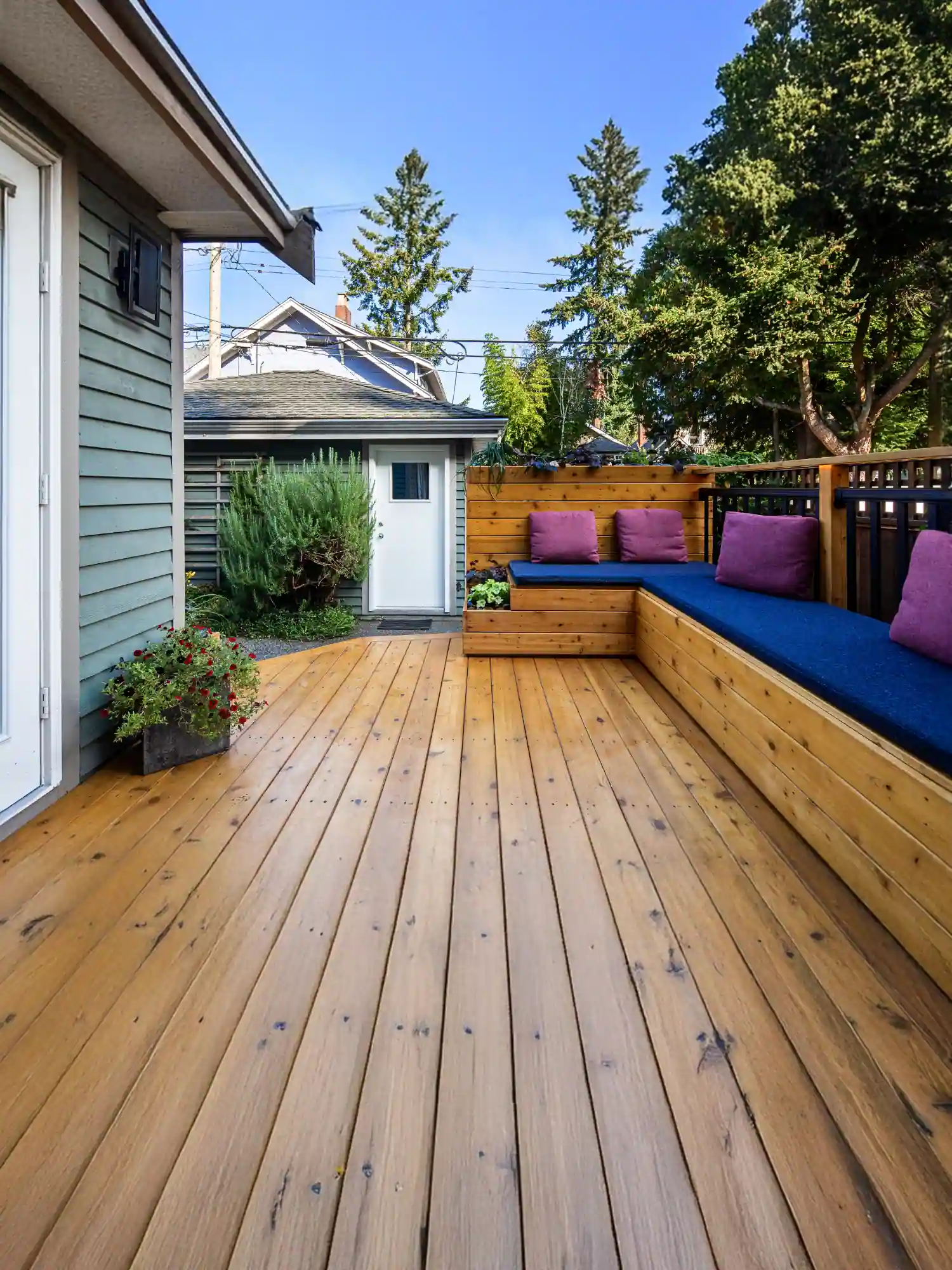
Deck Addition Vancouver: Costs, Materials, Permits & Outdoor Living (2026)
Vancouver’s outdoor living season runs from March through November — nearly nine months of usable backyard time that most Canadians can only dream about. That mild Pacific climate is one of the city’s greatest assets, and savvy homeowners are increasingly capitalizing on it with deck additions that transform underused backyards into genuine extensions of their living space. Whether you’re in North Vancouver with mountain views that deserve a proper stage, East Van where backyard culture is practically a religion, or the West Side where a well-done outdoor space can push your home’s value into a new bracket, a deck addition is consistently one of the highest-return renovation projects available in Metro Vancouver.
At Vancouver General Contractors, we’ve built hundreds of decks across the region — from simple ground-level pressure-treated platforms to multi-level composite masterpieces with covered roofs, outdoor kitchens, and rooftop patios on flat-roof townhouses. This guide covers everything you need to know: real 2026 cost figures, the City of Vancouver’s permit requirements, material comparisons, structural considerations for sloped lots, and the ROI data that makes outdoor living one of the smartest renovation investments you can make.
Vancouver’s Outdoor Living Renovation Market
Metro Vancouver’s real estate market has always rewarded usable outdoor space, but the last few years have accelerated that trend dramatically. Post-pandemic buyers place enormous value on functional backyards, covered patios, and outdoor entertainment areas — and they’re willing to pay a significant premium for homes that already have them. A well-executed deck addition in Vancouver typically adds $40,000 to $120,000+ to a home’s resale value, depending on scope, location, and quality of materials.
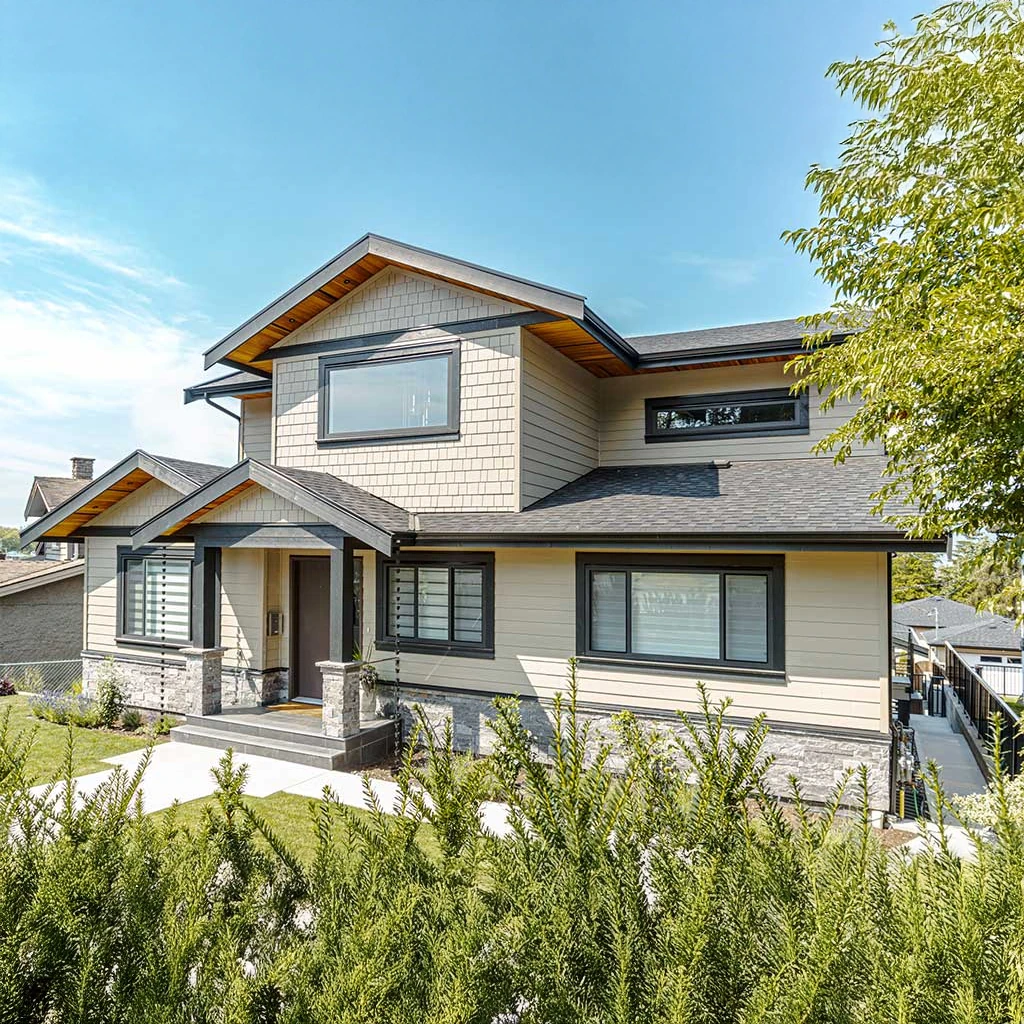
The Vancouver outdoor living season also matters more than people outside the region realize
Vancouver General Contractors
North Vancouver leads the region in deck ROI, largely because mountain-facing and canyon-view lots command enormous premiums, and a properly positioned deck captures those views in a way that no interior renovation can replicate. East Vancouver’s dense, community-oriented neighbourhoods have cultivated a genuine backyard culture — neighbours know each other’s patios by name, and a beautiful outdoor space signals pride of ownership in a way that drives value in this market. The West Side and Burnaby follow similar patterns: buyers expect outdoor space, and homes without it sell for less than comparable properties that have it.
The Vancouver outdoor living season also matters more than people outside the region realize. With lows rarely dipping below freezing until December, and spring arriving by March, a covered deck extends your usable season by another two to three months compared to an uncovered platform. Add a gas patio heater and string lights, and you’re entertaining outdoors nine or ten months of the year — that’s a lifestyle upgrade that every future buyer in this market understands immediately.
Ready to explore what a deck addition could look like for your property? Read our complete renovation guide or get a free quote from VGC today.
Deck Addition Costs in Vancouver: 2026 Price Guide
Deck costs in Metro Vancouver have stabilized somewhat from the peaks of 2022–2023, but materials and labour remain significantly higher than national averages. The figures below reflect current 2026 pricing for a standard 200 square foot deck (roughly 14′ × 14′) with standard railing, permit, and basic footings on a relatively flat lot. Sloped lots, complex designs, and premium features will add cost — those details are covered in later sections.
| Deck Type | 200 sq ft Installed Cost | Per Sq Ft | Lifespan |
|---|---|---|---|
| Pressure-treated wood | $12,000–$22,000 | $60–$110 | 15–20 years |
| Cedar decking | $18,000–$32,000 | $90–$160 | 20–30 years |
| Composite (Trex/TimberTech) | $22,000–$42,000 | $110–$210 | 25–30 years |
| Ipe hardwood | $28,000–$52,000 | $140–$260 | 40–50 years |
| Covered deck with roof | $35,000–$75,000 | $175–$375 | 30+ years |
| Rooftop patio | $35,000–$75,000 | $175–$375 | 20–30 years |
| Outdoor kitchen addition | $15,000–$45,000 | $75–$225 | 15–25 years |
| Pergola (wood or aluminum) | $15,000–$40,000 | $75–$200 | 20–40 years |
Several factors push costs toward the higher end of each range. Deck height above grade is one of the biggest drivers: a ground-level or near-grade deck uses short posts and minimal bracing, while a deck elevated 6–8 feet requires substantially more structural material, engineering review, and labour. Similarly, complex deck shapes — multi-level platforms, angled corners, wraparound designs — increase both materials and labour compared to a simple rectangle.
Material quality and railing choice significantly affect total cost as well. Cable railings or glass panel railings add $3,000–$8,000 compared to standard wood or aluminum spindle railings. Built-in bench seating, planters, and LED lighting are popular additions that add $2,000–$6,000. Permit fees in the City of Vancouver typically run $500–$1,500 for a residential deck, depending on scope.
Labour accounts for 40–55% of total deck cost in Metro Vancouver. Experienced deck carpenters in Vancouver charge $85–$130/hour, and a 200 sq ft deck typically requires 60–120 hours of total labour including demolition, footings, framing, decking, and railing. Don’t let a low initial quote seduce you — cut-rate contractors often skip permits, use undersized lumber, or attach ledger boards incorrectly, creating structural and liability issues that cost far more to fix than they saved.
Deck Materials Guide: Which Surface Is Right for Your Vancouver Home?
Material choice is the single most consequential decision you’ll make for your deck — it affects aesthetics, maintenance, longevity, and a significant portion of your budget. Vancouver’s climate, with its combination of wet winters, UV exposure in summer, and frequent freeze-thaw cycles at higher elevations, puts real demands on outdoor materials. Here’s how the main options perform in this specific environment.
Pressure-Treated Lumber
Pressure-treated (PT) lumber is the budget choice and remains the most commonly installed deck surface in Metro Vancouver by volume. Modern PT uses alkaline copper quaternary (ACQ) treatment, which is safer than the old CCA formulas but is harder on hardware — you must use hot-dipped galvanized or stainless steel fasteners to prevent corrosion. PT decking is structurally sound and widely available, but it has real drawbacks: it splinters as it ages, warps and checks (cracks along the grain) as it dries, and requires sealing or staining every two years to maintain appearance and extend life. Freshly installed PT lumber is wet from the treatment process and should be allowed to dry 6–12 months before staining.
Best for: homeowners with tight budgets who are comfortable with ongoing maintenance, rental properties, and decks intended as a first step toward a future upgrade.
Cedar Decking
Western red cedar is the quintessential British Columbia deck material, and for good reason. It’s naturally rot-resistant, dimensionally stable (warps and checks far less than PT), lightweight, and beautiful. The warm reddish-brown tone weathers gracefully to a silver-grey if left untreated, or maintains its original colour with regular oiling every two to three years. Cedar is significantly more comfortable underfoot than composite in summer — it doesn’t absorb and radiate heat the way darker composite boards do.
The downside is that cedar requires genuine maintenance commitment. Skip the oiling for three or four years and you’ll see grey, weathered boards that are more fragile and prone to cracking. Cedar also softens over time and can show dents from furniture legs. In Vancouver’s wet climate, poorly maintained cedar develops mould and mildew along the grain. At $90–$160 per square foot installed, cedar sits in the middle of the market and is our recommendation for homeowners who appreciate natural wood aesthetics and are genuinely committed to maintenance.
Composite Decking (Trex, TimberTech, Deckorators)
Composite decking has matured dramatically over the last decade. Today’s capped composite products — where the wood-plastic core is encased in a protective polymer shell — are genuinely excellent outdoor surfaces that hold up exceptionally well in Vancouver’s climate. They don’t splinter, check, warp, or rot. They require nothing more than an annual power wash to look great. Most premium composite products carry 25-year fade-and-stain warranties, and the colour consistency is perfect from board to board, every year.
The trade-offs: composite costs more upfront ($110–$210/sq ft installed for the deck surface), and it gets hotter in direct summer sun than cedar. Dark-coloured composites on south-facing decks can reach uncomfortable temperatures on July afternoons — choose lighter shades for sun-exposed decks. Composite also requires slightly tighter joist spacing than wood (12″ OC vs. 16″ OC for wood), which adds framing cost.
VGC recommendation: Composite is our default recommendation for most Vancouver homeowners. The maintenance savings over 25 years — no staining, no sealing, no annual oiling — easily outweigh the higher upfront cost. Trex Transcend and TimberTech AZEK are our most-specified products.
Ipe Hardwood
Ipe (pronounced ee-pay) is a Brazilian hardwood so dense it barely floats. It’s the material used on the Coney Island boardwalk and dozens of other high-traffic commercial applications that demand 40–50 year lifespan with minimal maintenance. Ipe is naturally splinter-free, fire-resistant, and almost impervious to rot and insects. It machines to a silky finish and develops a beautiful silver patina if left untreated, or maintains a rich brown with annual oiling.
The premium is real: at $140–$260/sq ft installed, Ipe is 30–50% more expensive than composite for the decking surface alone. It also requires carbide-tipped saw blades and pre-drilled pilot holes for fasteners — Ipe will split if you drive screws without pre-drilling. For homeowners planning to stay in their home for 20+ years and who want the absolute best, Ipe is worth the investment. For most renovation budgets, composite delivers 90% of the performance at two-thirds the cost.
City of Vancouver Deck Permit Requirements
Deck permits in Vancouver are one of those things homeowners love to avoid and contractors learn to respect. The rules are clear, enforcement has increased significantly in recent years, and the consequences of building without a permit — difficulty selling, forced removal, insurance complications — far outweigh the inconvenience of obtaining one properly.
In the City of Vancouver, a building permit is required for any deck that meets one or more of these conditions:
- The deck surface is more than 600mm (approximately 24 inches) above grade at any point
- The deck is structurally attached to the house (a ledger-attached deck)
- The deck area exceeds 10 square metres (approximately 108 square feet)
- The deck includes a roof or cover (pergola, solid roof, polycarbonate panels)
In practice, almost every deck that’s worth building in a Vancouver backyard will trigger at least one of these conditions. A freestanding, grade-level platform under 108 sq ft is the only common exception — and even then, you need to verify setback requirements from property lines (typically 1.2m or 4 feet minimum in residential zones).
The permit application requires a site plan showing the deck’s location on the lot, a framing plan with dimensions and lumber specifications, and footing details. For elevated decks, a structural engineering letter confirming beam and post sizing is typically required. The City of Vancouver Building and Licensing department processes most residential deck permits in three to six weeks for straightforward applications. More complex projects — covered decks, decks requiring engineering — may take eight to twelve weeks.
Inspections are required at two stages: a footing inspection before concrete is poured, and a framing inspection before decking is installed. A final inspection is required before the permit is closed. Your contractor should be managing all permit applications and inspections — if they suggest skipping the permit to save time or money, walk away.
Municipalities surrounding Vancouver — Burnaby, North Vancouver City, North Vancouver District, Coquitlam — have similar but not identical requirements. VGC obtains all necessary permits as part of our standard process for every deck project. See our home renovation services page for more about our permitting process.
Structural Considerations: How a Deck Is Actually Built
Understanding the structural elements of a deck helps you evaluate contractor proposals and understand why certain cost differences exist. A deck is a structural system, not just a surface — and the components below the decking surface account for roughly 60% of total project cost.
Ledger Attachment
For decks attached to the house, the ledger board is the single most critical structural element — and the location where most deck failures originate. The ledger is a horizontal board bolted to the house’s rim joist, carrying half the deck’s load. Proper ledger installation requires: removing siding down to the sheathing, installing self-adhering flashing membrane followed by Z-flashing above the ledger, and fastening with correctly sized and spaced lag bolts or through-bolts into the rim joist (not just the sheathing).
The most common failure mode is water infiltration at the ledger-to-house connection, which rots both the ledger and the house’s rim joist over time — leading to eventual collapse. VGC always installs a full flashing system at ledger connections, regardless of whether an inspector specifically checks for it. Homeowners inspecting existing decks should look for signs of rot at the ledger and any darkness or soft wood at the house wall behind the ledger — these are red flags that require immediate attention.
Footings and Posts
Footings transfer the deck’s load to the ground. In Metro Vancouver, the standard footing for most residential decks is a concrete pier — a tube form filled with concrete, extending below the frost line (typically 18–24 inches in Metro Vancouver). Footings must be sized to distribute the load adequately based on soil bearing capacity and tributary area calculations.
For sloped lots with elevated decks, helical piles are increasingly specified. Helical piles are steel screws driven into the ground by a machine — they’re faster than poured concrete, don’t require excavation, and provide excellent load capacity on challenging terrain. They cost $400–$800 per pile installed, compared to $200–$400 for concrete piers, but the labour savings often make them competitive on difficult sites.
Posts must be adequately sized (6×6 posts for most residential applications above 4 feet, 4×4 acceptable for shorter decks) and protected from ground contact — posts should never be embedded in concrete, which traps moisture. The correct installation is a steel post base set into the concrete pier, with the post sitting above the concrete surface.
Beams, Joists, and Decking Orientation
Beams span between posts and support the joists. Joist sizing depends on span length and species — 2×10 joists at 16″ on-centre are standard for most residential spans up to 12 feet. Composite decking manufacturers typically require 12″ on-centre joist spacing, which adds roughly 25–30% more framing material than standard 16″ OC spacing for wood decking.
Decking orientation affects both aesthetics and cost. Diagonal decking (at 45° to the joists) adds visual interest but increases material waste by 10–15% and requires additional blocking. Perpendicular decking is most cost-effective. For rectangular decks longer than about 16 feet, a picture frame border adds a finished look but adds labour cost.
Railing Requirements
BC Building Code requirements for residential deck railings: any deck over 600mm (24″) above grade requires a railing. Minimum railing height is 42 inches (1,070mm) for decks over 1,800mm (about 6 feet) above grade, and 36 inches (914mm) for decks between 600mm and 1,800mm above grade. Baluster spacing must not allow passage of a 4-inch (100mm) sphere — in practice, this means balusters at 4″ maximum spacing.
Railing post attachment to the deck frame is critical — railing posts must be bolted to the rim joist or double joist, not merely toe-nailed to the decking surface. Surface-mounted railing posts are a common shortcut that fails the lateral load test (a railing must withstand 200 lbs of lateral force at the top rail).
Sloped Lot Deck Design: North Vancouver and Beyond
Metro Vancouver’s topography is one of its defining features — and one of its biggest deck-building challenges. North Vancouver, West Vancouver, and many areas of Burnaby, Coquitlam, and East Vancouver feature sloped lots that require elevated deck structures far more complex than the simple platforms common on flat Prairie lots. If your backyard drops away from the house, you’re looking at a meaningfully different (and more expensive) project than a grade-level deck.
The primary cost driver on sloped lots is post height. Every additional foot of post height adds material cost, increases the structural engineering requirements, and requires cross-bracing to resist lateral loads (the forces that try to push tall posts sideways). For decks where any post exceeds 8 feet in height, most municipalities and the BC Building Code require a structural engineer’s stamp — not just a contractor’s sizing judgment. Engineering fees for a residential deck typically run $2,000–$4,000 for a stamped letter and drawings.
The cost premium for elevated decks on sloped lots versus grade-level decks on flat lots is substantial:
| Post Height / Slope Type | Cost Premium Over Grade-Level | Engineering Required? |
|---|---|---|
| Under 4 feet (gentle slope) | $2,000–$4,000 | Usually not required |
| 4–8 feet (moderate slope) | $4,000–$8,000 | Often required |
| 8–12 feet (steep slope) | $8,000–$15,000 | Always required |
| Over 12 feet (severe slope) | $15,000–$30,000+ | Always required + geotechnical report |
Cross-bracing between posts (diagonal members in an X or K pattern) is required for any tall post structure. Bracing must be engineered to resist the lateral forces of wind loading and live loads (people moving on the deck). Wrapped post systems — where the structural post is concealed by decorative cedar or composite wrapping — significantly improve the appearance of tall post structures and are worth the additional $1,500–$3,000 cost on elevated decks.
Footing depth on sloped lots requires additional care. The top of each footing must be positioned to keep the bottom of the beam at consistent height, which means footings at different elevations on the slope — some will be very shallow, while others on the lower end of the slope may require substantial excavation. On very steep sites, access for excavation equipment may require a surcharge or additional hand excavation labour.
Despite the additional cost, a well-designed elevated deck on a North Vancouver or East Van sloped lot is often the project with the highest absolute dollar return. A deck that captures a mountain view or creates a usable outdoor room out of an otherwise unusable steep backyard can add $60,000–$120,000 to a home’s market value in these locations. Contact VGC for a site assessment on sloped lot properties.
Covered Decks and Pergolas: Extending Vancouver’s Outdoor Season
Vancouver’s rainy season is real. From mid-October through March, precipitation is a near-daily presence, and even the famously mild shoulder months — September, October, and March — can bring multi-day rain events that make an uncovered deck unusable. A covered outdoor space — whether a pergola, polycarbonate panel system, or full solid roof — is arguably the single upgrade that delivers the most lifestyle value in this climate, extending your usable outdoor season from roughly six months to nine or ten months per year.
Pergolas
A traditional pergola — an open lattice or beam structure over the deck — provides shade and architectural interest but minimal rain protection. Modern aluminum pergolas with louvered roofs (brands like Struxure, Alumacovers, and similar) are far more functional: the louvers open and close electrically, providing full shade or full rain protection on demand. These systems cost $15,000–$35,000 installed and are one of the fastest-growing outdoor living products in Metro Vancouver. They require a building permit and must be engineered for snow loads (Metro Vancouver is typically Zone 1, around 1.0 kPa ground snow load — manageable for aluminum systems designed for this application).
Polycarbonate Panel Roofs
A polycarbonate panel system over a wood or aluminum frame is a popular mid-range option: full rain protection, some UV filtering, and reasonable cost ($18,000–$35,000 installed). The panels transmit light (unlike a solid roof), keeping the space bright, which matters in Vancouver’s already-dim winter months. The downside is heat gain in summer — clear polycarbonate panels can create a greenhouse effect. Opal or bronze-tinted panels mitigate this. Panels require regular cleaning to prevent algae growth in Vancouver’s wet climate.
Full Solid Roof Addition
A full solid roof over the deck — typically a simple shed or gable roof with proper rafters, sheathing, and roofing — provides the maximum weather protection and is the closest thing to adding an outdoor room. Costs run $25,000–$60,000 depending on size and complexity. A full roof requires a building permit with structural engineering for the roof framing and any new posts or beams supporting it. In many Vancouver lots, the roof addition must comply with total site coverage limits — adding impervious surface to a lot that’s already at or near maximum coverage requires variance approval.
Outdoor heating extends the season further. Gas-fired infrared patio heaters ($800–$2,500 per unit plus gas line extension) are the most effective and popular option in Vancouver. They’re radiant rather than convective — they heat objects and people, not air, which means wind doesn’t carry the heat away. Electric infrared heaters are cleaner and require no gas line but are more expensive to operate and less powerful. A covered deck with two gas heaters converts Vancouver’s outdoor living season to essentially year-round.
Outdoor Kitchens: Vancouver’s Fastest-Growing Backyard Trend
Outdoor kitchens have moved from luxury novelty to mainstream Vancouver renovation request in the last four years. The combination of Vancouver’s outdoor living culture, the desire to maximize entertainment space, and post-pandemic home investment has driven strong demand for everything from simple gas BBQ rough-ins to full outdoor kitchen builds with countertops, sinks, refrigerators, and pizza ovens. Here’s what’s actually involved and what it costs.
Gas BBQ Rough-In
The simplest outdoor kitchen investment is a gas line rough-in: extending a gas line from your house to the deck with a shutoff valve and quick-connect fitting. This allows you to connect any natural gas BBQ without propane tanks — an enormous convenience upgrade. Cost: $800–$1,500 for the gas line extension, plus a gas permit (required by the City of Vancouver for any gas line work, applied for by a licensed gas fitter). This is a project VGC regularly adds to deck builds at minimal incremental cost when the framing is open.
Built-In BBQ Station
A built-in BBQ station — a masonry or steel-framed cabinet with a built-in gas grill and side counters — costs $5,000–$15,000 depending on materials and grill quality. The frame is typically concrete block, steel studs, or pressure-treated lumber with cement board facing. Countertop material (concrete, porcelain tile, natural stone) significantly affects cost and durability — we recommend porcelain tile or poured concrete for outdoor Vancouver applications, as natural stone absorbs moisture and can crack in freeze-thaw cycles. The grill itself (Weber, Napoleon, DCS, Wolf) ranges from $1,500 to $6,000+.
Full Outdoor Kitchen
A full outdoor kitchen — built-in grill, side burners, undercounter refrigerator, stainless steel sink with plumbing, bar seating, and full countertop — is a $15,000–$45,000 project. Plumbing a sink requires extending water supply lines and, critically, a drain line — which typically means a licensed plumber (required for permit purposes) and careful planning about where the waste water goes. In most Vancouver lots, the drain connects to the sanitary system, not simply draining to grade (which is not permitted).
Weather protection is not optional for a serious outdoor kitchen in Vancouver. A covered structure over the cooking area keeps moisture out of the grill, prevents the refrigerator from being rained on, and makes the space usable October through May. Budget for a pergola or roof cover as part of the outdoor kitchen scope if you’re investing at this level. An outdoor kitchen without cover in Vancouver has a dramatically shortened useful season and equipment life.
Required permits for outdoor kitchen projects: building permit (for the structure), gas permit (always required for any gas work — no exceptions), electrical permit (for outlets, lighting, and appliances), and plumbing permit if adding a sink. VGC manages all of these as part of a full outdoor kitchen project.
Rooftop Patios: Townhouses, Flat Roofs, and Urban Outdoor Space
Metro Vancouver’s urban density has created a growing market for rooftop patios — converting an existing flat or low-slope roof into a functional outdoor living space. This is particularly common on detached homes with flat-roof garages, coach houses, and the many attached townhouses in East Van, Burnaby, and New Westminster that sit on narrow lots where the only outdoor space is vertical. A well-executed rooftop patio dramatically expands livable space and, in the right location, adds meaningful resale value.
Rooftop patios are significantly more complex than grade-level or even elevated deck projects. Several critical factors must be addressed before any surface work begins:
Waterproofing and Existing Roof Condition
The existing roof membrane is now your floor. If it leaks, water gets into the structure below — and it will leak if you install a patio over a compromised membrane without proper attention. Before any rooftop patio project, the existing membrane must be assessed by a roofing professional. If it’s approaching end of life (typically 15–20 years for torch-on/modified bitumen), it must be replaced before the patio is installed — far cheaper than tearing up finished patio work to redo the membrane later. Budget $8,000–$18,000 for membrane replacement on a typical garage or suite roof.
Structural Loading
A typical residential roof structure is designed for snow loads and maintenance access — not for the combined dead load (patio materials, furniture) and live load (people) of a rooftop patio. Before proceeding, a structural engineer must assess whether the existing roof framing can accommodate the additional load. Pavers on pedestals are the standard approach: porcelain or concrete pavers sit on adjustable plastic pedestals that spread load across the roof surface without penetrating the membrane. The air gap below also allows drainage. Pedestal-set pavers typically weigh 15–25 lbs per square foot — engineers can usually accommodate this with minimal or no structural reinforcement for roofs framed to modern standards.
Access, Railings, and Permits
Access to the rooftop requires either an existing hatch (to be upgraded) or a new hatch cut through the ceiling/roof — this requires both a roofing/waterproofing detail around the hatch opening and, typically, an interior stair or ship’s ladder. Guardrails at roof edges are required by code for any occupied rooftop — and this is where rooftop patio projects get structurally complex, since railing posts cannot simply be bolted through the membrane. Post bases must be mounted on structural blocking that distributes loads to the roof framing below, with membrane detailing around each penetration.
Building permits are required for all rooftop patio projects. The application requires structural engineering documentation and, often, a roofing report. Total rooftop patio costs in Metro Vancouver run $35,000–$75,000 for a 400–600 sq ft space, including membrane work, structural engineering, paver system, railing, hatch, and permit. Contact VGC to discuss your rooftop patio project.
Deck ROI in Metro Vancouver: What the Numbers Actually Show
Return on investment for deck additions in Metro Vancouver is consistently among the highest for any residential renovation category, and the data is meaningfully better than national Canadian averages because of the outdoor living premium built into this specific real estate market.
| Area | Typical Deck ROI | Value Added (on $25K project) | Notes |
|---|---|---|---|
| North Vancouver (mountain views) | 122–200% | $30,500–$50,000 | View-capturing decks command massive premium |
| East Vancouver / Burnaby | 108–145% | $27,000–$36,250 | Backyard culture drives strong buyer demand |
| West Side Vancouver | 105–130% | $26,250–$32,500 | Quality materials matter more in this market |
| Coquitlam / Port Moody | 100–130% | $25,000–$32,500 | Family-oriented buyers value outdoor space |
| Surrey / Langley | 95–120% | $23,750–$30,000 | Larger lots reduce scarcity premium slightly |
Several factors push deck ROI toward the top of each range. Composite or Ipe materials signal low maintenance to buyers, who price in avoided maintenance costs. A covered outdoor space extends the season and broadens the buyer pool to those who specifically seek year-round outdoor capability. Built-in outdoor lighting (string lights on pergola, LED step lights, low-voltage landscape lighting) dramatically improves evening photography and showing appeal — and costs $2,000–$5,000 to add during deck construction. Privacy screening — cedar lattice panels, frosted glass, or planted hedges — adds intimacy and reduces hesitation from buyers who’d otherwise discount an exposed deck.
What subtracts value: failing railings, rotting or checking wood, unstained pressure-treated lumber, missing permits (discovered in pre-sale inspections and creating title issues), and incomplete projects. A deck that’s partially built or clearly nearing end of life is a liability, not an asset — buyers discount it for the removal cost plus replacement cost. The lesson: build it right and maintain it, or budget to replace it before listing.
For perspective on how deck ROI compares to other renovation categories, see our comprehensive home renovation guide.
Deck Maintenance and Longevity: Protecting Your Investment
The gap between a well-maintained deck and a neglected one in Vancouver’s climate is dramatic. The combination of wet winters, UV-heavy summers, and the occasional freeze-thaw cycle means that deferred maintenance compounds quickly — what would have been a $500 staining job at year two becomes a $3,000–$8,000 full replacement project at year seven. Here’s the maintenance schedule for each material, and how to recognize when a deck needs replacement rather than repair.
| Material | Maintenance Schedule | Annual Cost | End-of-Life Signals |
|---|---|---|---|
| Pressure-treated lumber | Seal/stain every 2 years; check fasteners annually | $400–$800 | Deep checking, rot at ledger or posts, widespread splintering |
| Cedar | Oil or stain every 2–3 years; check for soft spots annually | $300–$700 | Grey/black discolouration throughout, soft areas, cracking boards |
| Composite (capped) | Power wash annually; check fasteners and structure | $100–$200 | Structural failure (frame, posts) — surface rarely fails on capped composite |
| Ipe hardwood | Annual oiling recommended; check fasteners | $200–$400 | Severe checking from long-term oiling neglect; structural failure |
Inspection priorities: every year, inspect the ledger-to-house connection for signs of rot or moisture infiltration. Check post bases for corrosion and moisture damage. Look for loose railing posts (pull laterally on each one — it should feel completely solid). Check for any boards that are significantly softer than surrounding boards, which indicates rot beneath the surface. These annual checks take 20 minutes and catch problems when they’re still $200–$800 repairs rather than $5,000–$15,000 structural rehabilitation projects.
When to replace rather than repair: when the structural framing (joists, beams, posts, ledger) shows significant rot or damage, repair is rarely cost-effective. Replacing decking on a sound frame is a reasonable repair — typically $6,000–$14,000 depending on material and size. But when the frame is compromised, a full replacement is the right call. Most homeowners also take the opportunity to upgrade materials when replacing — moving from pressure-treated to composite, or adding a cover that wasn’t on the original deck.
More Home Additions & Custom Homes Guides

Wheelchair Accessible Home Renovation in Vancouver: ADA Clearances and BC Code

Grab Bar Installation in Vancouver: Types, Placement, and What the BC Code Requires
Main Floor Master Bedroom Addition in Vancouver: Design for One-Level Living
Home Elevator and Stair Lift Installation in Vancouver: Options, Costs, and Permits
Universal Design Home Renovation in Vancouver: Designing for All Ages and Abilities
Ready to start your renovation?
Frequently Asked Questions: Deck Additions in Vancouver
Do I need a permit for a small deck in Vancouver?
In the City of Vancouver, a building permit is required if your deck is over 10 square metres (108 sq ft), is attached to the house via a ledger board, or has any portion of the deck surface more than 600mm (24″) above grade. A freestanding, grade-level deck under 108 sq ft may not require a permit, but you should verify with the City’s building department and check setback requirements. When in doubt, apply for the permit — the cost and timeline are manageable, and the consequences of building without one are not.
What’s the difference between a ledger-attached deck and a freestanding deck?
A ledger-attached deck connects to the house via a ledger board bolted to the rim joist, with one side of the deck structurally supported by the house. A freestanding deck has its own post-and-beam structure on all four sides and doesn’t transfer load to the house. Ledger-attached decks are simpler and less expensive for most applications. Freestanding decks are preferred when the house structure is complex (stucco-clad walls where ledger attachment is difficult), when the homeowner wants to avoid any penetrations into the house envelope, or for decks significantly below the house floor level where a ledger connection is geometrically awkward.
Is composite decking worth the higher upfront cost over cedar?
For most Vancouver homeowners, yes. Cedar costs $90–$160/sq ft installed vs. $110–$210/sq ft for premium composite. But cedar requires staining or oiling every 2–3 years at $300–$700 per application — over 25 years, that’s $2,500–$5,000 in maintenance costs (conservatively, not counting your time). Composite requires only an annual power wash. The total cost of ownership over 25 years typically favours composite, and composite holds its appearance far better. The exception is homeowners who genuinely love natural wood, are committed to maintenance, and prefer the underfoot feel and temperature characteristics of cedar.
My backyard slopes significantly — will a deck cost a lot more?
Yes, significantly more. For every foot of post height above grade-level, add roughly $800–$1,500 to the project cost for additional structural material, bracing, and labour. Decks where any post exceeds 8 feet typically require structural engineering ($2,000–$4,000). A deck on a lot with a 12-foot drop at the far end might cost $12,000–$20,000 more than the same deck on a flat lot. That said, the view and usability value created by a well-designed elevated deck on a sloped North Vancouver or East Van lot often makes it the highest-ROI deck project in the region.
Does a covered deck or pergola require a separate permit?
Yes. Any roof or cover structure over a deck — whether a pergola, polycarbonate panel system, louvered aluminum pergola, or full solid roof — requires a building permit in addition to the deck permit. Solid roofs also typically require structural engineering documentation. The cover addition also affects setback compliance and may affect total site coverage calculations. Plan for an additional 3–6 weeks of permit timeline and $300–$800 in permit fees for covered structures.
Is my roof structure strong enough for a rooftop patio?
It depends on how the roof was originally framed. Most residential roofs are designed for snow loads and maintenance access, not for the sustained live loads of a patio. A structural engineer must assess the existing framing before any rooftop patio project proceeds. Using lightweight pedestal-set pavers rather than poured concrete reduces loading significantly and is the standard approach for Vancouver rooftop patios. Budget $800–$1,500 for the engineering assessment as an early step before committing to the full project.
Do I need a permit for a gas BBQ line on my deck?
Yes, always. Any gas line extension — even a simple run from your house to a deck quick-connect — requires a gas permit and must be done by a licensed gas fitter. This is non-negotiable in BC. Gas permits are pulled by your contractor or gas fitter, not by the homeowner. The permit ensures the work is inspected and the connection is safe. Unpermitted gas work is a serious safety hazard and is not covered by homeowner’s insurance if something goes wrong.
What’s the best deck material for Vancouver’s rainy climate?
Capped composite decking (Trex Transcend, TimberTech AZEK, or similar) is the best choice for Vancouver’s wet climate. The polymer cap prevents moisture absorption, eliminates rot, and resists mould and mildew that plague unsealed wood in prolonged wet conditions. Cedar is an excellent natural alternative if properly maintained — it’s naturally rot-resistant and handles wet-dry cycles better than pressure-treated lumber. What to avoid: uncapped composite (the older generation without a protective shell) and pressure-treated lumber without a serious maintenance commitment — PT in Vancouver’s climate degrades noticeably faster than in drier climates.
What are the railing height requirements in Vancouver?
For decks between 600mm (24″) and 1,800mm (about 6 feet) above grade, BC Building Code requires a minimum railing height of 36 inches (914mm). For decks over 1,800mm above grade, the minimum is 42 inches (1,070mm). Balusters must be spaced no more than 100mm (4 inches) apart. Railing posts must be structurally fastened to the deck frame — not surface-mounted to the decking — and must be able to resist 0.5 kN (approximately 110 lbs) of force applied in any direction at the top rail.
How long does it take to build a deck in Vancouver?
From initial contact to completed deck, plan for 8–16 weeks for a typical project. Permit approval takes 3–6 weeks for a standard deck, 6–12 weeks for covered decks or projects requiring engineering. Material lead times for composite decking run 2–4 weeks. Actual construction once permits are in hand and materials are on site: 3–7 days for a straightforward 200 sq ft deck, 2–3 weeks for a complex covered deck or outdoor kitchen. Starting the design and permit process in February or March allows completion before the peak outdoor living season in May–June.
How do I actually apply for a deck permit in Vancouver?
In the City of Vancouver, deck permits are applied for through the Development and Building Services Centre, either in person or online through the City’s eBuild portal. You’ll need a site plan showing the deck location on the lot (to scale), a framing plan with dimensions and lumber specifications, a footing plan, and elevation drawings. For elevated decks, a structural engineer’s letter is typically required. Most reputable deck contractors handle the permit application on your behalf as part of the project — if a contractor says they don’t pull permits, find a different contractor.
Will a deck help sell my house faster?
Yes, consistently, in Metro Vancouver. Real estate agents across the region report that well-maintained outdoor spaces — and decks specifically — reduce time on market and support asking price. The effect is strongest in East Van (where outdoor space is a major selling point on compact lots), North Vancouver (view decks), and the family-oriented suburbs where buyers specifically look for backyard living capability. A deck in poor condition, however, can have the opposite effect — buyers see it as a liability and negotiate accordingly. The condition matters as much as the presence.
Can I build a deck over my garage in Vancouver?
Yes, if the garage has a flat or low-slope roof and the structure can support the additional load — this is the rooftop patio scenario described above. It’s a common project in East Van, Burnaby, and New Westminster on older homes where the detached garage has a usable flat roof. Requirements: structural engineering assessment, membrane inspection and likely replacement, pedestal paver or deck-on-sleeper system, perimeter railing, and building permit. Budget $35,000–$65,000 for a typical garage rooftop patio in Metro Vancouver.
What questions should I ask a deck contractor before hiring?
The five most important: (1) Will you pull all necessary permits, including gas and electrical if applicable? (2) Can you provide a stamped structural engineering letter if my deck requires one? (3) What is your ledger attachment and flashing detail? (4) What fastener specifications do you use for pressure-treated lumber or composite? (5) Can I speak with two or three recent customers in my area? A contractor who deflects on permits, can’t describe their ledger flashing detail, or won’t provide references is not the right choice for a structural project that will be attached to your home for decades.
Does an unpermitted deck affect my home insurance?
Yes, potentially significantly. Most homeowner’s insurance policies require that structures on the property comply with applicable building codes and permits. An unpermitted deck that causes injury (railing failure, structural collapse) may result in a denied liability claim. Additionally, when selling, a pre-sale home inspection will typically flag an unpermitted deck as a deficiency — and your disclosure obligations require you to disclose known deficiencies to buyers. Some lenders will not fund a purchase if there are known unpermitted structures. The risk-adjusted cost of a permit is always lower than the cost of avoiding one.
What’s the best time of year to build a deck in Vancouver?
Late spring through early fall — May through September — offers the best weather for deck construction, though experienced contractors work year-round in Metro Vancouver. The advantage of starting your project in late fall or winter (November through February) is contractor availability — this is the slow season for outdoor projects, and you’re more likely to get your preferred contractor’s schedule, potentially at a slightly lower price, and be ready for the spring season. Concrete footings can be poured in Vancouver’s mild winters — ground freezing is rarely an issue below about 400m elevation in Metro Vancouver.
Get a Free Renovation Quote
Metro Vancouver’s trusted general contractors. Free consultations across Vancouver, Burnaby, Richmond, North Shore & beyond.
Get Your Free Quote →Ready to add a deck to your Vancouver home? Vancouver General Contractors builds decks across Metro Vancouver — from simple cedar platforms to complex multi-level composite systems with covered roofs, outdoor kitchens, and rooftop patios. We handle every permit, every inspection, and every detail of the project from design through completion. Contact VGC for a free deck addition consultation, or explore our complete renovation guide to understand how a deck fits into your broader home renovation plan.
Ready to start your project? Vancouver General Contractors (VGC) provides free, fixed-price quotes for homeowners across Metro Vancouver. Learn more about our home additions Vancouver services or request a free quote today.
VGC serves Vancouver and surrounding areas. View all renovation services in Vancouver →

Comments are closed