




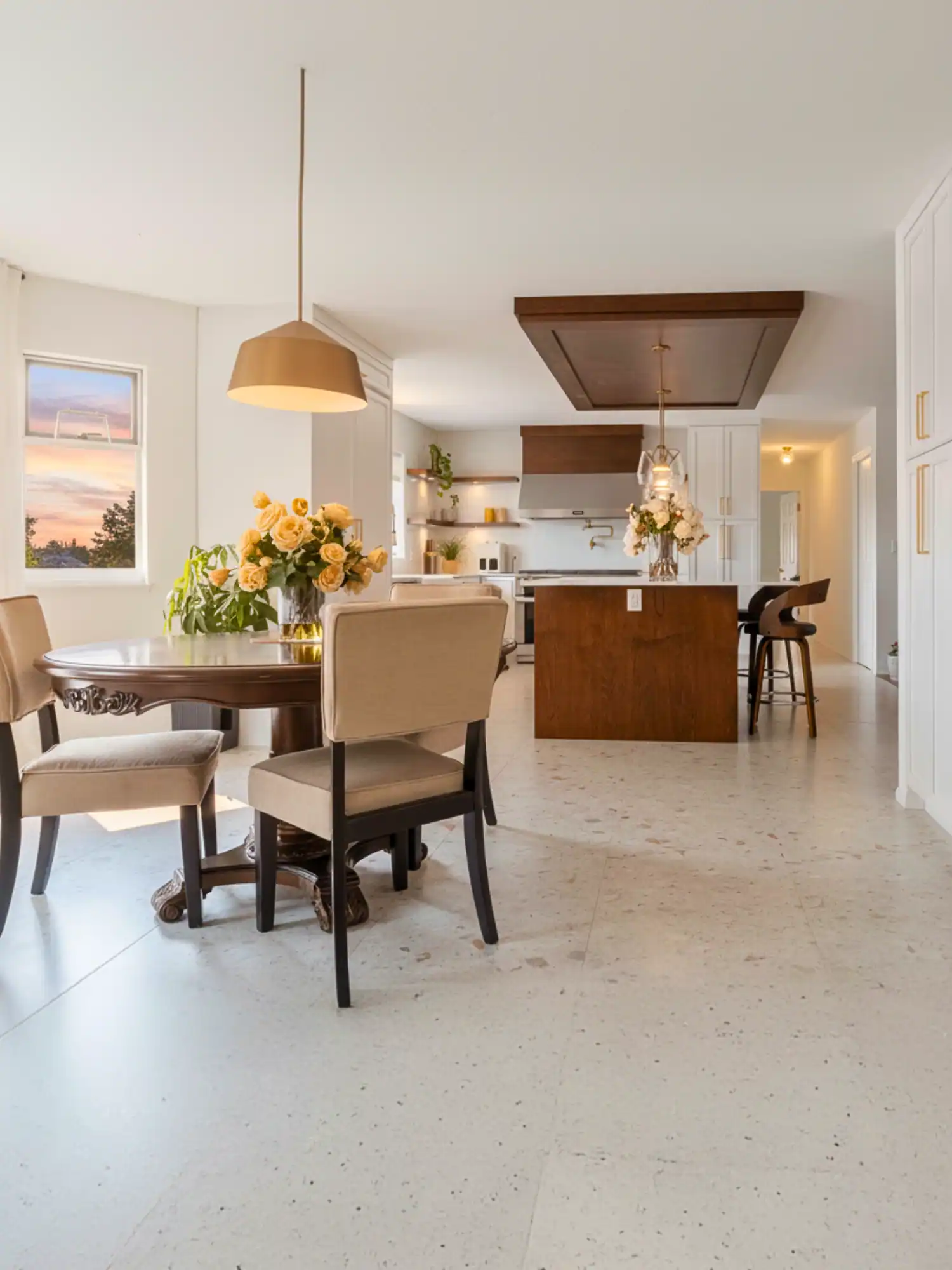
Flooring Renovation Vancouver: All Options, Costs & What Works in BC (2026)
Flooring is the single highest-impact renovation you can make in a Vancouver home. Nothing else — not a kitchen refresh, not a bathroom update, not new lighting — transforms how a space looks and feels as completely as new floors. Walk into a 1970s split-level with orange carpet and dated vinyl, swap everything out for wide-plank engineered hardwood, and the home feels like a different building. Buyers at the $1.5M+ price point that defines much of Metro Vancouver’s resale market arrive expecting hardwood or a convincing hardwood alternative. If they see carpet in the living room or scratched laminate in the kitchen, they mentally reprice the home — or walk away.
This guide covers every major flooring option available to Vancouver homeowners in 2026: costs, performance in BC’s climate, what each material does well and where it falls short. Whether you are renovating a character home in Kitsilano, finishing a basement suite in Burnaby, or doing a full main-floor gut on a Richmond detached, you will find the numbers and decisions you need here.
Why Flooring is the Highest-Impact Renovation Per Dollar in Vancouver
Renovation budgets always involve trade-offs. A kitchen renovation at $60,000–$120,000 in Vancouver is a large line item that buyers may or may not value at dollar-for-dollar return. A bathroom renovation at $20,000–$40,000 is appreciated but rarely visible in listing photos from the main angles. Flooring is different. It appears in every single photo. It is the first thing buyers see when they walk through the front door. It sets the visual tone for the entire main floor and flows from room to room through an open-concept layout.
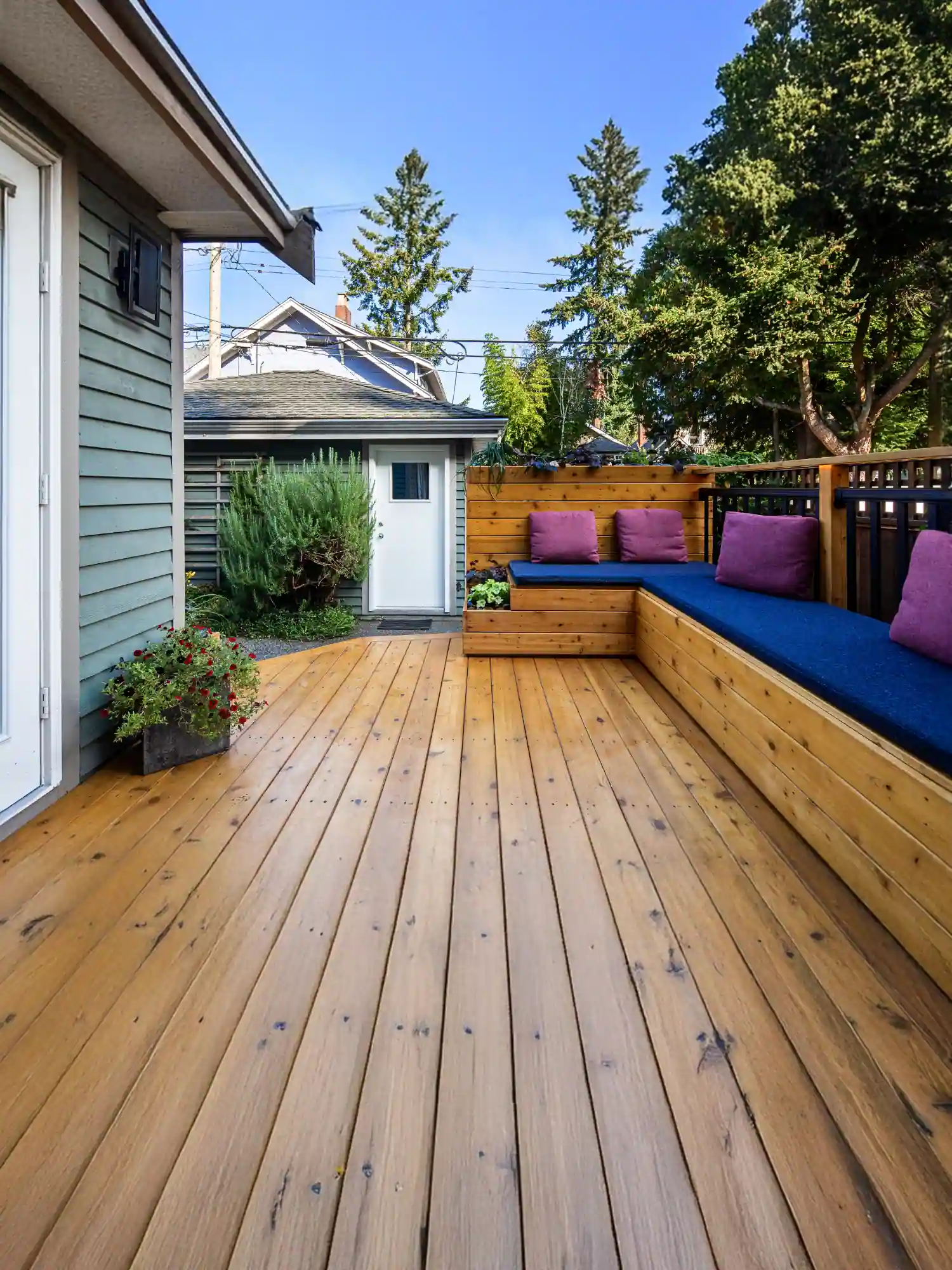 Surrey” class=”wp-image-12769″ />
At the $1.5M–$3M price point that represents a large segment of Vancouver's detached and semi-detached market in areas like Dunbar, Kitsilano, Mount Pleasant, and East Vancouver
Vancouver General Contractors
A full main-floor flooring replacement in a 1,200 sq ft bungalow — engineered hardwood throughout at $16/sq ft installed — costs approximately $19,200. That same renovation in a 1970s home with orange shag carpet and dated ceramic tile instantly photographs as a contemporary home. Real estate agents consistently report that updated flooring is one of the top factors determining how quickly a home sells and whether it achieves asking price or above. In Vancouver’s listing-photo-driven market, where buyers preview homes online before ever walking through, flooring quality can determine whether a buyer books a showing at all.
Beyond resale, flooring renovations deliver immediate livability returns that other renovations do not. New floors eliminate allergens trapped in old carpet, reduce noise transmission in multi-storey homes, and make daily cleaning dramatically easier. For families with young children or pets — a major demographic in Vancouver’s suburbs and mid-density neighbourhoods — durable, easy-care flooring is a functional upgrade as much as an aesthetic one.
At the $1.5M–$3M price point that represents a large segment of Vancouver’s detached and semi-detached market in areas like Dunbar, Kitsilano, Mount Pleasant, and East Vancouver, real hardwood or engineered hardwood is essentially an expectation rather than a bonus. Buyers in this range have typically viewed dozens of homes. They know what $2M looks like with hardwood and what $2M looks like with carpet. The mental discount they apply when they see dated flooring often exceeds the actual cost of replacement.
If you are planning any renovation before listing — or simply want to transform how your home feels to live in — flooring should be the first conversation you have with your contractor. Ready to start planning? Visit our renovation planning guide or contact our team for a free flooring consultation.
Flooring Costs in Vancouver: Full Price Breakdown by Material (2026)
The following cost ranges reflect installed pricing in Metro Vancouver in 2026, including materials, labour, basic subfloor prep (level, clean, and dry), and standard transition strips. They do not include asbestos abatement, extensive subfloor leveling, stair work, or demolition of existing materials beyond standard removal. All figures are per square foot of finished floor area.
| Flooring Type | Installed Cost (per sq ft) | Typical Lifespan | Refinishable? | Best Application |
|---|---|---|---|---|
| Engineered Hardwood | $12–$22 | 25–40 years | Yes (1–3 times) | Main floor, bedrooms, above-grade |
| Solid Hardwood | $15–$30 | 50–80+ years | Yes (many times) | Main floor, bedrooms, character homes |
| Luxury Vinyl Plank (LVP) | $6–$14 | 20–30 years | No | Basements, rental suites, kitchens, full-home |
| Laminate | $5–$10 | 10–20 years | No | Bedrooms, low-traffic areas |
| Porcelain Tile | $10–$28 | 30–50+ years | No | Bathrooms, kitchens, entryways, mudrooms |
| Ceramic Tile | $8–$18 | 20–30 years | No | Bathrooms, laundry rooms |
| Carpet | $4–$12 | 10–15 years | No | Bedrooms, stairs, basement rec rooms |
| Polished Concrete | $8–$15 | 30–50+ years | Yes (re-polish) | Basements, modern main floors, commercial |
| Cork | $8–$14 | 15–25 years | Limited | Home offices, bedrooms, gyms |
| Douglas Fir Refinish (existing) | $6–$9 | Adds 20–30 years | Already in place | Pre-1960 Vancouver character homes |
To translate these per-square-foot figures into real project budgets, here are typical room costs using mid-range engineered hardwood at $16/sq ft installed:
| Room / Area | Typical Size (sq ft) | Estimated Cost (Eng. Hardwood @ $16/sq ft) | Estimated Cost (LVP @ $10/sq ft) |
|---|---|---|---|
| Living room | 200–280 | $3,200–$4,480 | $2,000–$2,800 |
| Dining room | 120–180 | $1,920–$2,880 | $1,200–$1,800 |
| Kitchen (open concept) | 150–220 | $2,400–$3,520 | $1,500–$2,200 |
| Master bedroom | 180–260 | $2,880–$4,160 | $1,800–$2,600 |
| Secondary bedroom | 120–160 | $1,920–$2,560 | $1,200–$1,600 |
| Full main floor (1,200 sq ft) | 1,200 | $19,200 | $12,000 |
| Full main floor (1,800 sq ft) | 1,800 | $28,800 | $18,000 |
| Basement suite (700 sq ft) | 700 | $8,400 (eng. hw) | $7,000 |
These are budgeting estimates. Actual quotes will vary based on material grade, layout complexity, existing subfloor condition, and whether demolition of existing flooring is required. For a detailed scope-specific quote, reach out via our contact page.
Engineered Hardwood: The Top Choice for Most Vancouver Renovations
Engineered hardwood has become the dominant flooring choice for Vancouver renovations, and for good reason. It solves the core problem that solid hardwood has in BC: dimensional stability in a humid climate. Vancouver’s coastal weather means humidity levels swing significantly across seasons — from wet, grey winters to dry summer stretches. Solid hardwood expands and contracts with these changes. Engineered hardwood, built around a plywood core with a real wood veneer layer on top, is engineered (as the name implies) to resist this movement.
The top layer — called the veneer or wear layer — is genuine hardwood, typically 2mm to 6mm thick. This is what you see, walk on, and feel. It can be sanded and refinished one to three times over its life depending on veneer thickness, which means a quality engineered floor installed today can be refreshed 15 or 20 years from now rather than replaced. The plywood core below provides structural rigidity and moisture resistance that solid hardwood simply cannot match.
Wide-plank formats — 5 inches to 7 inches — now dominate the Vancouver renovation market. Narrow 2.25-inch strips feel dated and make rooms look smaller. Wide planks photograph well, make rooms feel larger, and align with the clean, Scandinavian-influenced aesthetic that has dominated interior design in Vancouver for the past decade. White oak and European oak are the most popular species in 2026, prized for their subtle, consistent grain pattern and neutral tone that works with a wide range of interior palettes.
Finish preferences have shifted strongly toward matte and low-sheen. High-gloss hardwood shows every scratch, dust particle, and dog paw print. Matte finishes are more forgiving in daily life and align better with current design preferences. Wire-brushed and hand-scraped textures — which add subtle dimensional character to the surface — are also popular in Vancouver renovations, as they hide minor surface wear and add tactile interest.
Installed cost for engineered hardwood in Vancouver runs $12–$22 per square foot. Entry-level products in the $12–$15 range are perfectly serviceable but typically feature thinner veneer layers (2mm) and narrower planks. Mid-range products at $15–$18 installed represent the sweet spot for most renovation projects: 3mm–4mm wear layer, 6-inch plank width, and realistic species options. Premium products at $18–$22 installed include European oak with 6mm wear layers, wider planks (7″+), and more sophisticated finish options.
Engineered hardwood is appropriate for main floors, bedrooms, hallways, and above-grade applications throughout the home. It is generally not recommended for below-grade installations (basements) due to residual moisture concerns, though products with enhanced moisture-resistant cores have expanded its application range in recent years. For kitchens, engineered hardwood is used extensively in Vancouver — particularly in open-concept plans where it runs continuously from the living area through the kitchen — though spills should be wiped up promptly and the area under the sink should be monitored for leaks.
Luxury Vinyl Plank (LVP): The Renovation Market Favourite for Value
Luxury vinyl plank has transformed the mid-range renovation market in the past five years. Ten years ago, “vinyl flooring” evoked cheap sheet vinyl and builder-grade bathrooms. Today’s LVP products are genuinely high-performing floors that are waterproof, durable, comfortable underfoot, and available in realistic wood-grain textures that fool guests and buyers at casual inspection.
The defining characteristic of LVP is 100% waterproofness. The core — typically either a rigid stone-polymer composite (SPC) or wood-polymer composite (WPC) — does not absorb water. Planks can sit in standing water for extended periods without damage. For Vancouver homeowners, this matters enormously. Basement suites, below-grade family rooms, laundry rooms, mudrooms, and kitchens are all applications where moisture is a realistic concern, and LVP handles all of them without hesitation.
Wear layer thickness is the key quality differentiator within the LVP category. Wear layer is measured in mil (thousandths of an inch). Entry-level residential products use 6 mil wear layers — adequate for low-traffic bedrooms and secondary spaces but prone to scratching in high-traffic areas or with pets. Standard residential products use 12 mil. Heavy residential and light commercial products use 20 mil. Premium products reach 28 mil, which is virtually scratch-proof under normal residential use. For a main-floor LVP installation in an active household, 20 mil is the recommended minimum.
LVP thickness ranges from 4mm (entry-level, noticeably flexible) to 8mm (premium, rigid and stable underfoot). Thicker products with attached underlayment feel substantially more like real hardwood underfoot and reduce sound transmission in multi-storey homes. For rental suites and investment properties, the additional cost of a quality 6mm–8mm 20-mil product typically pays for itself in reduced tenant complaints and longer product lifespan.
One major practical advantage of LVP is the ability to run the same flooring throughout an entire home — across living areas, kitchen, bathrooms, bedrooms, and even the basement — using the same product and eliminating transition strips at most doorways. This creates a visual continuity that is particularly appealing in open-concept homes and makes the space photograph as larger and more cohesive. Several premium LVP lines are now designed specifically for this whole-home application.
Installed cost for LVP in Vancouver ranges from $6–$14 per square foot. Basic products in the $6–$8 range are fine for secondary bedrooms and rental suites where budget is the priority. Mid-range products at $8–$11 represent excellent value for main floors and high-traffic areas. Premium products at $11–$14 include rigid SPC cores, 20–28 mil wear layers, and sophisticated wood-grain embossing that closely mimics hardwood texture.
LVP is the recommended choice for Vancouver basement suites, secondary suites, rental investment properties, and any application where moisture is a known concern. It is also an excellent choice for full-home renovations where budget is a priority or where a single material running through all rooms — including bathrooms — is the design goal.
Solid Hardwood: The Premium Long-Term Investment
Solid hardwood is exactly what it sounds like: a plank milled from a single piece of wood, typically 3/4 inch thick, with no engineered core. It is the traditional flooring material that was standard in homes built before the 1970s, and it remains the premium choice for certain Vancouver renovation scenarios — particularly in character homes in Shaughnessy, Dunbar, Point Grey, Kerrisdale, and Kitsilano, where authenticity and longevity are valued above all.
The defining advantage of solid hardwood is refinishability over decades. A 3/4-inch solid oak floor contains enough material to be sanded and refinished many times over its life — potentially 8–10 refinishes before the floor is worn down to the tongue and groove. Floors installed in the 1940s are being refinished and look beautiful today. This longevity changes the economics entirely: solid hardwood installed at $15–$30 per square foot in 2026 is still there in 2076, refreshed multiple times, while LVP or laminate will have been replaced at least twice. For homeowners intending to stay in a property long-term, solid hardwood remains the most economical choice measured over decades.
The catch in Vancouver is humidity. Solid hardwood requires stable humidity conditions — typically 35%–55% relative humidity — to remain dimensionally stable. In Vancouver’s climate, this is achievable but requires attention. Homes without humidity control can see gaps open up in winter (when indoor heating dries the air) and crowning or cupping in spring (when moisture levels rise). Proper acclimatization before installation — storing the flooring in the space for 48–72 hours before laying it — is not optional; it is critical to a successful installation.
Solid hardwood cannot be installed below grade. The moisture conditions in basements and on concrete slabs make solid hardwood installation inappropriate — it will cup, buckle, and potentially develop mold in the subfloor layer. On-grade slab installations are marginal and depend on thorough moisture testing results. Solid hardwood’s natural domain is above-grade over wood subfloor, which is the standard construction in Vancouver detached homes built before the 1990s.
Popular species for Vancouver solid hardwood installations include white oak (stable, neutral grain, very popular in 2026), red oak (traditional, slightly pink undertone, less fashionable currently but durable and refinishable), maple (hard, light, good for modern aesthetics), and walnut (dark, dramatic, premium price point). Wide-plank solid hardwood (4″–5″) has grown in popularity but requires more careful humidity management than narrow-strip formats.
Installation is nail-down over wood subfloor (the traditional method, requiring a pneumatic floor nailer) or glue-down over concrete using approved adhesive. Floating installation is not recommended for solid hardwood — the material’s movement over time makes click-lock applications unstable.
Restoring Existing Douglas Fir Floors: A Vancouver Renovation Priority
For homes built before 1960 in Vancouver, Burnaby, New Westminster, and the North Shore, the most valuable flooring decision you can make is often not a purchase at all — it is restoration of what is already under your feet. Beneath decades of carpet, linoleum, and sometimes multiple layers of subfloor material, old-growth Douglas fir floors are frequently found in original or near-original condition.
Old-growth Douglas fir is one of the best flooring materials ever installed in Canadian homes, and it is irreplaceable. The old-growth trees harvested in BC in the early 20th century grew slowly over hundreds of years, producing wood with extremely tight growth rings — 15 to 30 rings per inch or more. This tight grain makes old-growth fir harder and more dimensionally stable than virtually any new-growth wood available today. New-growth fir, cut from trees grown over 30–50 years, is noticeably softer and more prone to denting. If you have old-growth fir floors in a pre-1960 home, you have a material that literally cannot be purchased new at any price.
Assessing whether existing floors are worth restoring involves two key questions: how much material remains for sanding, and what is the extent of the damage? A typical original fir floor is 3/4 inch thick. Each professional sanding removes 1/16 to 1/8 inch of material. If a floor has been sanded twice previously (visible from edge boards being slightly lower than centre boards), it may have 1/2 inch or more of material remaining — still easily worth restoring. If the floor has deep gouges, missing boards, or widespread rot, the restoration calculation changes.
Professional floor sanding and refinishing costs $6–$9 per square foot in Vancouver. For a 1,200 sq ft main floor, that is $7,200–$10,800 to fully restore floors that, if replaced with quality engineered hardwood, would cost $14,400–$26,400. The economics are clear: restoration costs half to one-third of replacement, produces a superior material, and preserves character that buyers specifically seek in Vancouver character homes. Restoring original fir floors is consistently cited by Vancouver real estate agents as one of the best pre-sale investments in homes from this era.
When restoration requires repairs — damaged or missing boards — the challenge is sourcing matching material. New-growth fir looks visually different from old-growth and will stand out after finishing. The right approach is old-growth fir salvage: recovered from demolished Vancouver homes, sold by salvage suppliers in the Lower Mainland. Matching grain, width, and patina takes skill, but a good flooring contractor who works with heritage materials can make repairs that are nearly invisible after finishing.
The decision to replace versus restore comes down to condition and coverage. If more than 15–20% of the floor requires board replacement, if moisture damage has caused widespread cupping or rot in the substructure, or if the floor has been sanded so many times that remaining material is less than 3/8 inch, replacement may be the better path. In borderline cases, a professional assessment before committing to either direction is worth the cost of a consultation call.
Learn more about planning heritage and character home renovations in our comprehensive renovation guide.
Porcelain and Ceramic Tile: Best for Wet Zones and High-Traffic Entries
Tile is the appropriate flooring material for bathrooms, laundry rooms, mudrooms, and entryways — spaces where water, mud, and heavy foot traffic are daily realities. In Vancouver’s climate, where residents track in rain and mud eight months of the year, a tiled entryway or mudroom is a practical necessity rather than a luxury. A hardwood entryway in a Vancouver home takes a beating; a porcelain-tiled entryway is virtually indestructible.
The distinction between porcelain and ceramic matters in a Vancouver context. Both are kiln-fired clay tiles, but porcelain is fired at higher temperatures with finer clay, producing a denser, harder, less porous tile with water absorption below 0.5%. Ceramic tile is softer and more water-absorbent. For wet applications — shower floors, bathroom floors, outdoor-adjacent areas — porcelain is strongly preferred. Ceramic is appropriate for dry interior applications where the lower cost is attractive.
Large-format tile — 24×24 inches and even 32×32 — has dominated the Vancouver renovation market for the past several years. Larger tiles mean fewer grout lines, a cleaner visual aesthetic, and a perception of more space. In a 5×8 bathroom, 24×24 porcelain with minimal grout joints looks dramatically more contemporary than 12×12 tile with visible grid lines. The trade-off is installation cost: large-format tile requires a flatter, more carefully prepared substrate and more skilled installation than smaller tiles. Leveling clips and experienced installers are non-negotiable for large-format work.
Anti-slip ratings matter in Vancouver bathrooms and entryways. Tile is rated for slip resistance by its Dynamic Coefficient of Friction (DCOF) — look for a rating above 0.42 for wet floor applications. Most porcelain tiles designed for floor use meet this standard, but smooth, polished porcelain (common in high-end bathroom looks) can be dangerously slippery when wet. Textured or matte finishes, or tiles with a subtle raised pattern, provide better traction without sacrificing aesthetics.
Grout maintenance is the ongoing reality of tiled floors that many homeowners underestimate. Sanded grout in floor applications is porous and will stain and discolour without regular sealing and cleaning. Epoxy grout eliminates this issue — it is non-porous, stain-proof, and nearly maintenance-free — but costs more and requires skilled installation. For kitchen floors and high-traffic areas, the additional cost of epoxy grout is typically worthwhile. For shower floors and bathroom tile, rectified large-format tiles with minimal grout joints (1/16″) and epoxy grout represent the current best practice in Vancouver renovations.
Heated floors — electric radiant heating systems installed under tile — are an increasingly popular upgrade in Vancouver bathrooms and entryways. The climate makes heated bathroom floors a genuine comfort upgrade, not just a luxury. Electric mat systems (Nuheat is the dominant brand in Canadian residential) cost $8–$12 per square foot installed and are compatible with all tile types. Adding heated floors during a bathroom renovation adds relatively little cost when the tile is already being installed; retrofitting later requires complete demolition of the floor tile.
Installed cost for porcelain tile in Vancouver ranges from $10–$28 per square foot. Standard 12×12 and 18×18 tiles at entry-level price points come in at $10–$14 installed. Mid-range 24×24 porcelain with standard installation runs $14–$20. Premium large-format, specialty stone-look, or designer tiles with epoxy grout and complex layout patterns reach $20–$28 installed. These figures do not include heated floor systems, which add $8–$12 per square foot.
The Open-Concept Continuity Challenge in Vancouver Renovations
Open-concept floor plans are nearly universal in Vancouver homes renovated or built in the past 20 years, and they create a specific flooring design challenge that catches many homeowners off-guard: the visual break. When you install hardwood in the living room, different tile in the kitchen, and carpet in the adjacent dining area, the result in a fully open floor plan is a patchwork that makes the space look smaller and less cohesive than it actually is. It also photographs poorly — at a wide angle, multiple flooring materials cut the space into visual segments.
The standard approach in contemporary Vancouver renovations is to run a single hard floor material throughout the entire main floor — living room, dining room, kitchen, and hallways — and transition to tile only at bathroom and laundry thresholds. This single-material approach maximizes the sense of space, creates clean sight lines in listing photos, and eliminates the visual clutter of transition strips between areas.
Engineered hardwood running through kitchen and living areas is the most common execution of this approach in Vancouver. The concern about kitchen moisture and hardwood is real but manageable: spills need to be wiped up promptly, and the area under the sink should have a drip tray to catch slow leaks. For homeowners willing to take this care, hardwood kitchen floors look significantly better than tile alternatives in an open-concept plan — the visual warmth carries through the entire space.
LVP is increasingly used as the whole-home solution precisely because it eliminates the kitchen moisture concern entirely. A single LVP product running from the front door through the living area, kitchen, hallways, bedrooms, and even the bathrooms creates perfect visual continuity with zero moisture risk anywhere in the home. This is the dominant approach in investment property renovations and is growing in popularity in owner-occupied homes where the design look of hardwood is desired with none of the maintenance considerations.
When transitioning from hardwood or LVP to tile at bathroom thresholds, there are two standard approaches. A T-bar transition strip is the traditional method — a metal or wood cap strip that sits slightly above both floor levels to bridge the height difference. A flush transition, where both floors are at the same height and a minimal grout joint separates them, is the premium approach. Flush transitions require careful planning — both materials must be installed to the same finished height — but produce a cleaner look with no trip hazard. In higher-end Vancouver renovations, flush transitions are increasingly specified at all tile-to-hardwood boundaries.
Eliminating carpet from open areas is one of the first design decisions in a main-floor renovation. Carpet in the living room of an open-concept home creates an awkward boundary that reads as dated in virtually every design context. If budget requires phasing, prioritize hardwood or LVP in the main open area first — living, dining, kitchen as a single continuous field — and address secondary spaces (bedrooms, stairs) in subsequent phases.
Subfloor Preparation: The Hidden Cost That Determines Success
The most common source of flooring installation problems — squeaks, hollow spots, premature wear, and warranty voidance — is insufficient subfloor preparation. Flooring contractors who provide unusually low quotes frequently achieve those numbers by skipping or minimizing subfloor work. The flooring material itself is the visible part of the job; the subfloor work is invisible but determines whether the installation lasts a decade or three decades.
The core subfloor preparation requirement for any floating or glued floor installation is flatness: the subfloor must be within 3/16 inch over 10 feet for most products, and within 1/8 inch over 6 feet for large-format tile. In practice, this standard is rarely met without work in Vancouver homes. Concrete basement slabs in homes built before 1985 are typically lumpy, with high spots, trowel marks, and low areas that accumulate. Wood subfloors in older homes have typically deflected, been patched unevenly, or have fastener heads that have risen above the surface. Proper prep addresses all of this before a single piece of flooring is installed.
On concrete slabs, the standard approach is floor grinding to knock down high spots combined with self-leveling compound to fill low areas. Floor grinding is a messy, dusty, and skilled process. Self-leveling compound — a pourable cement-based product — flows to find level and fills depressions when poured over a properly primed slab. Both processes add cost: subfloor preparation on a concrete slab typically runs $1–$4 per square foot depending on how much grinding and leveling is required.
On wood subfloors, squeaks must be eliminated before covering with new flooring. Squeaks are caused by subfloor panels rubbing against each other or against fasteners. The correct fix is to drive screws through the subfloor into the joists below — not nails, which back out over time, but screws, which pull the panel tight permanently. A squeaky main floor that is covered with new hardwood without screw-fastening the subfloor will transfer every squeak through the new material. This is one of the most common callbacks in flooring installations and one of the most easily prevented.
Asbestos floor tile is a significant concern in Vancouver homes renovated or built before 1990. Vinyl floor tile installed between the 1950s and late 1980s frequently contained chrysotile asbestos in the tile backing and adhesive. This tile is commonly found under carpet in pre-1990 homes — the carpet was simply laid over the existing vinyl tile rather than removed. When renovating and pulling up carpet, homeowners may find intact vinyl tiles beneath. Intact asbestos tile that is not being disturbed poses minimal risk; the fibers are bound in the matrix. However, cutting, grinding, or removing this tile without abatement creates a respiratory hazard and, in BC, requires a licensed asbestos abatement contractor. Testing cost is $200–$500; abatement cost for a floor area varies widely but typically runs $2,000–$8,000 for a main floor area. This is a cost that must be factored into the renovation budget for any pre-1990 home.
Moisture testing is mandatory before any flooring installation over concrete. The standard test in Canada is the calcium chloride test or the in-situ RH probe test, which measures moisture vapor emission from the slab over 24–72 hours. Most flooring warranties have explicit moisture limits that, if exceeded, void the warranty entirely. Testing before installation identifies whether a vapor barrier, moisture-blocking primer, or additional curing time is required. Skipping moisture testing is one of the most common causes of flooring failures in below-grade applications.
Stairs and Transitions: The Most Visible Detail in Your Flooring Renovation
Stairs are disproportionately visible and disproportionately expensive relative to their floor area. A single flight of 13 stairs occupies less than 100 square feet of material but represents the most-photographed feature in a multi-storey home renovation — they are visible from the entry, appear in every wide-angle shot of the main floor, and are touched by every person who moves between floors. Getting the stair material and finish right is critical to the overall impact of a flooring renovation.
Carpet on stairs remains common in Vancouver for practical reasons: it is softer underfoot, less slippery than hard surfaces, reduces noise, and is comfortable for children and elderly residents. Berber and cut-pile carpets in neutral colours continue to be specified on stairs in family homes where safety and comfort are priorities. Carpet on stairs costs $150–$300 per tread-and-riser combination installed, depending on carpet quality.
Hardwood on stairs — typically matching the main floor hardwood material — produces the premium look that dominates renovation photography and defines the high-end market. Hardwood stair treads at $150–$400 per tread installed (including tread, riser, and nosing profile) are substantially more expensive than carpet but deliver a visual return that is immediately apparent in listing photos. The challenge with hardwood stairs is the nosing profile: the front edge of each tread must be capped with a nosing piece that matches the tread material and meets building code requirements for projection and slip resistance. Standard nosings are rounded (bullnose); square-edge nosings are popular in contemporary renovations but require more precise installation.
Open-riser stairs — treads with no risers, allowing sightlines through the staircase — are a popular design choice in contemporary Vancouver renovations, creating an open, airy feel in tight spaces. Building code requirements for open risers under the BC Building Code specify a maximum opening of 100mm (about 4 inches) to prevent children from getting their heads stuck. Open-riser stairs in existing homes that are being renovated (not new construction) may be possible without a permit in some jurisdictions under the “like for like” renovation category, but this varies by municipality; always confirm with your local building department.
Transition strips between flooring materials — T-bars, reducers, thresholds, and end caps — are small components that have a large effect on the finished look of a flooring installation. Metal transition strips in brushed nickel or matte black are the standard in contemporary renovations. Matching the transition profile metal to other hardware in the home (door handles, cabinet pulls) is a finishing detail that signals quality. Where possible, eliminating transition strips entirely — by bringing both materials to the same height or using flush installation techniques — is the premium approach and is increasingly standard in high-end Vancouver renovation work.
Flooring Installation Methods: What Your Contractor Should Be Doing
The installation method for a flooring product is not optional or interchangeable — it is specified by the manufacturer based on the product’s construction and the intended substrate. Using the wrong installation method voids the product warranty and may produce a floor that fails prematurely. Understanding the major installation methods helps homeowners verify that their contractor’s approach is appropriate for the specified product and substrate.
Nail-down installation is the traditional method for solid hardwood over wood subfloor. A pneumatic cleat nailer drives angled fasteners through the tongue of each plank at a consistent spacing (typically every 8–10 inches) into the subfloor and joist structure below. The result is a mechanically fastened floor that is fully rigid, will not move or shift, and is appropriate for solid hardwood and thick engineered hardwood over wood substrates. Nail-down installation requires a wood subfloor at least 3/4 inch thick and preferably 1.5 inches (double-layer). It is not appropriate for concrete substrates.
Glue-down installation uses a trowel-applied adhesive to bond the flooring directly to the substrate. It is appropriate for solid hardwood and engineered hardwood over concrete slabs, and is the standard method for engineered hardwood in Vancouver basement-adjacent applications where the slab has passed moisture testing. The quality of the adhesive matters enormously — manufacturer-approved adhesives with the correct spread rate are not negotiable. Glue-down floors have no hollow-sounding areas, feel the most solid underfoot, and handle temperature and humidity fluctuations better than floating floors because they are mechanically coupled to the mass of the slab.
Floating installation — where planks are clicked together and lay on top of the substrate without mechanical attachment — is the installation method for LVP, laminate, and many engineered hardwood products. The floor “floats” as a unified panel on an underlayment layer. Floating installation is the fastest installation method, the most forgiving of minor subfloor imperfections, and the most accessible to advanced DIYers. It requires expansion gaps at all walls (typically 1/4 to 3/8 inch) to allow the floor to move with temperature and humidity changes. Failing to maintain expansion gaps — or running a floating floor under door casings without sufficient clearance — is one of the most common installation errors, resulting in buckling and compression damage.
Click-lock LVP — a subset of floating installation — uses an interlocking click system that requires no adhesive and allows the planks to be installed rapidly. Modern click-lock LVP systems are robust enough to be walked on immediately after installation (with no cure time, unlike glue-down) and are straightforward enough for competent DIY installation. However, DIY installation still requires proper subfloor preparation, correct underlayment selection, and precise cutting around obstacles. The material cost savings of DIY are typically in the $3–$5 per square foot range; a botched installation can cost more to remediate than the original contractor price.
For any flooring renovation in your Vancouver home, our team can guide you through material selection and installation method for your specific substrate and application. Start with our home renovation services overview or contact us for a free on-site assessment.
More Vancouver Housing Types Guides
Vancouver Special vs. Character Home Renovation: Key Differences in Approach and Cost
Condo vs. House Renovation in Vancouver: What's Different About Strata?
Townhouse vs. Detached Home Renovation in Vancouver: What Strata Changes About Your Project
Vancouver Heritage Register A Vs B Vs C Listings
Post And Beam Home Renovation North Vancouver
Ready to start your renovation?
Flooring Renovation Vancouver: 15 Frequently Asked Questions
1. Engineered hardwood vs. LVP: which is better for Vancouver homes?
It depends on the application and budget. For above-grade main floors in owner-occupied homes where aesthetics and long-term value matter, engineered hardwood is the better choice: it is real wood, can be refinished, and adds more resale value at the $1.5M+ price point. For basements, rental suites, kitchens, full-home renovations on a budget, or any application where moisture is a known concern, LVP is the superior practical choice. Many Vancouver homeowners use engineered hardwood on the main floor and LVP in the basement — the best of both materials where each performs best.
2. Can I put engineered hardwood in a kitchen?
Yes, and it is done extensively in Vancouver renovations — particularly in open-concept homes where the same floor runs through the kitchen and living areas. The practical requirements are: wipe up spills immediately, install a drip tray under the sink to catch slow leaks, and choose a product with a thicker veneer layer (4mm+) and a finish rated for kitchen applications. In properly maintained kitchens, engineered hardwood performs well. If you have a household where water management is not consistent (young children, frequent cooking with high splash), LVP in the kitchen with a flush transition to hardwood in the living area is a lower-maintenance alternative.
3. What is the best flooring for a rental suite in Vancouver?
LVP with a 20 mil wear layer and a rigid SPC core is the best choice for Vancouver rental suites. It is 100% waterproof, highly durable, easy to clean, and provides a good tenant experience. Choose a mid-range product at $8–$11 per square foot installed — cheap LVP under 6 mil will not hold up to tenant wear. Running the same LVP throughout the suite, including the bathroom, eliminates transition strips and the maintenance issues associated with carpet. Avoid carpet in rental suites entirely: it traps odours, shows stains, and typically needs replacement between tenants.
4. When is hardwood refinishing better than replacement?
Refinishing is almost always better than replacement when the floor is old-growth Douglas fir, solid hardwood, or quality engineered hardwood with sufficient veneer remaining. Refinishing at $6–$9 per square foot vs. replacement at $12–$22+ per square foot is a cost difference of 50–70%. Beyond cost, old-growth fir and solid hardwood are irreplaceable materials that refinishing restores to excellent condition. The tipping point toward replacement is when: the veneer is too thin for further sanding, more than 15–20% of boards need replacement, there is structural moisture damage, or the homeowner wants to change the species or plank width entirely.
5. How do I safely handle asbestos floor tile when renovating?
The first step is testing. Have a sample tested by a certified lab ($200–$500) before any removal work begins. If the tile tests positive for asbestos and is in good condition (not crumbling or friable), one option is to encapsulate — cover it with new flooring — rather than remove it, which is the safest and least expensive approach. If removal is required (because the subfloor needs to be accessed or leveled), hire a licensed asbestos abatement contractor in BC. Do not attempt to remove or grind suspect vinyl tile yourself — disturbing asbestos-containing materials creates airborne fibers that are a serious long-term health hazard. Abatement cost is a legitimate project line item, not an optional extra.
6. Can I install heated floors under LVP?
Yes, with conditions. Electric radiant heating is compatible with many LVP products, but the maximum temperature rating of the LVP must be verified — most quality SPC/WPC products are rated to 27°C (80°F) floor surface temperature. The system must have a thermostat with a floor sensor to prevent overheating. Hydronic (hot water) radiant heating under LVP is less common and requires specific compatibility verification. Always check the manufacturer’s warranty documentation before installing heated floors under LVP, as some products will void their warranty if installed over any radiant heating system.
7. What is the best flooring for a home with dogs?
For households with dogs, the priority is scratch resistance and easy cleaning. LVP with a 20 mil or higher wear layer is the most pet-friendly hard floor option — it resists scratching from nails, is completely impervious to accidents, and wipes clean easily. If hardwood is the preference, choose a harder species (white oak, hickory) with a wire-brushed or matte finish that hides minor scratches, and accept that the floor will develop a patina over time that can be addressed by refinishing. Avoid high-gloss hardwood finishes with pets — every scratch and nail mark is immediately visible. Engineered hardwood in a brushed oak finish is a reasonable compromise between hardwood aesthetics and pet practicality.
8. How long does floor installation take for a whole house?
A whole-house flooring installation — removing existing flooring, preparing subfloors, and installing new material — typically takes 3 to 7 working days for a 1,500–2,000 sq ft home, depending on the material and complexity. LVP floating installation is the fastest; a crew of two can install 500–800 sq ft per day. Hardwood glue-down installation is slower due to adhesive cure time; expect 1–2 days for a typical room. Tile work is the most time-intensive — a bathroom floor and shower tile combined can take 3–5 days for a single bathroom. Stair work adds additional time regardless of material. Plan for the home to be partially or fully inaccessible during installation, and factor in 24–48 hours of off-gassing time for adhesive-based installations before re-occupying.
9. How do I match new floors to existing floors in adjacent areas?
Matching existing floors is one of the most challenging scenarios in flooring renovation. For hardwood, bring a sample board or detailed photos to the flooring supplier and match species, grain pattern, and plank width as closely as possible before committing to a product. Expect that an exact match is unlikely unless you are matching a very common species (red oak, 2.25″ strip) — and even then, age and finish difference will be visible. The better approach is often to extend the renovation to cover the entire area, eliminating the match issue entirely. For partial repairs within an existing floor, salvage material matching the original species and age is the closest achievable match for old-growth fir and vintage hardwood.
10. Should I remove carpet before selling my Vancouver home?
In most cases, yes — particularly in living areas, dining rooms, and main-floor spaces. Carpet in living areas photographs poorly, registers as dated to buyers in the current market, and raises concerns about what may be hidden underneath (stains, odours, subfloor condition). In Vancouver’s price range, carpet in living areas is a value detractor. The exception is carpet in secondary bedrooms, which remains acceptable and even desirable for some buyers (warmth, softness). If budget is limited, prioritize removing carpet from all main-floor open areas and replace with hardwood or LVP. Bedroom carpet removal is a lower-priority use of pre-sale renovation budget.
11. What is the best flooring for high-traffic hallways?
Hallways see more concentrated traffic than any other area in the home — every person walking between rooms passes through them repeatedly. The best flooring for high-traffic hallways is a hard surface (not carpet) with a high wear rating. LVP with a 20 mil wear layer handles hallway traffic extremely well and is easy to clean. Solid hardwood and engineered hardwood in harder species (white oak, maple) also perform well in hallways; avoid softer species (pine, cherry) in hallways unless you are prepared for a developing patina. Tile is also appropriate in hallways, particularly near entries. Whatever material you choose for the main floor, extend it consistently through hallways for continuity — hallway-specific materials create visual breaks that make the home feel smaller.
12. What flooring is recommended for a Vancouver basement?
LVP with a rigid SPC core is the definitive choice for Vancouver basement floors. Basements in BC have inherent moisture considerations — even apparently dry basements have higher relative humidity than above-grade spaces, and BC’s wet winters mean the water table is seasonally elevated. LVP’s 100% waterproof core handles this environment without risk of moisture-related failure. Run it throughout the entire basement level — rec room, bedroom, bathroom, hallways — for visual continuity. For added comfort underfoot (basements over concrete always feel cold), choose a product with attached underlayment or add a quality 3mm foam underlayment layer. Avoid engineered hardwood, laminate, and any carpet in below-grade applications unless the slab has been comprehensively moisture-tested and the environment is actively controlled.
13. What are the best slip-resistant flooring options for bathrooms?
For bathroom floors in Vancouver, specify porcelain tile with a matte or textured finish and a DCOF rating above 0.42. Tile manufacturers specifically label bathroom-appropriate products for wet area use. In walk-in showers, mosaic tile (2×2 or penny round) provides the most slip resistance due to the high ratio of grout lines to tile surface, which creates grip. LVP with an embossed texture surface is also acceptable for bathroom floors and performs well in terms of slip resistance when wet — better than polished porcelain. Smooth stone and polished porcelain look beautiful but require sealed, textured treatments or non-slip mats when wet. For households with elderly residents or young children, prioritize slip resistance over aesthetics in bathroom floor specification.
14. Tile throughout vs. hardwood throughout: which is better for a Vancouver home?
In the Vancouver market, hardwood or hardwood-look throughout an above-grade open-concept floor plan outperforms tile in terms of buyer appeal, perceived warmth, and listing photo impact. Large-format tile throughout a main floor reads as cold and commercial to many buyers — it is better suited to warm-climate markets than Vancouver’s grey-sky aesthetic. The exception is for design-forward renovations where the architect or designer has specified large-format stone-look tile with radiant heating — in this context, the material reads as premium rather than clinical. For most Vancouver residential renovations, the standard is hard surface (hardwood or LVP) throughout main floor living areas, tile in bathrooms, mudrooms, and laundry rooms, and the same hard surface or carpet continuing into bedrooms.
15. What are the biggest DIY flooring installation pitfalls?
The most common DIY flooring installation errors are: (1) Skipping subfloor preparation — DIYers underestimate how flat and level the subfloor needs to be and install over a wavy surface, leading to hollow spots, clicking noises, and edge chipping. (2) Forgetting expansion gaps — floating floors need space to expand at walls and obstacles; a floor installed without proper gaps will buckle in summer. (3) Incorrect underlayment — using the wrong underlayment for the substrate (e.g., foam underlayment over concrete without a vapour barrier) leads to moisture damage. (4) Not acclimating the material — hardwood and engineered hardwood need 48–72 hours in the installation space to acclimate to temperature and humidity. (5) Mishandling cuts — poor cuts at walls and around obstacles (door frames, vents, pipes) look obviously amateur and cannot be easily fixed after the floor is laid. For LVP floating installation in a simple rectangular room with minimal obstacles, DIY is achievable with careful preparation. For hardwood, irregular rooms, stairs, or any glue-down application, professional installation is recommended.
Ready to start planning your flooring renovation in Vancouver? Our team at Vancouver General Contractors has completed hundreds of flooring projects across Metro Vancouver — from Douglas fir restoration in character homes to full LVP suites in new rental properties. Visit our renovation guide to plan your project scope, explore our home renovation services, or contact us today for a free on-site assessment and quote.
Get a Free Renovation Quote
Metro Vancouver’s trusted general contractors. Free consultations across Vancouver, Burnaby, Richmond, North Shore & beyond.
Get Your Free Quote →VGC serves Vancouver and surrounding areas. View all renovation services in Vancouver →

Comments are closed