




Garden Suite Vancouver: What They Are, Costs, Permits & vs. Laneway House (2026)
If your Vancouver lot doesn’t back onto a rear lane, you’ve probably assumed a secondary suite is off the table — or at least limited to a basement conversion. That assumption is wrong. Since 2018, the City of Vancouver has allowed garden suites on interior lots that have no lane access at all. For thousands of homeowners across RS-1 and RS-2 zones, a garden suite is the only way to add a fully detached secondary dwelling, and it can generate $2,000–$2,700 per month in rental income while adding lasting value to your property.
This guide covers everything you need to know about garden suites in Vancouver: what they are, how they differ from laneway houses, what they cost in 2026, how the permit process works, and how to finance and design one that works for your lot.
What Is a Garden Suite?
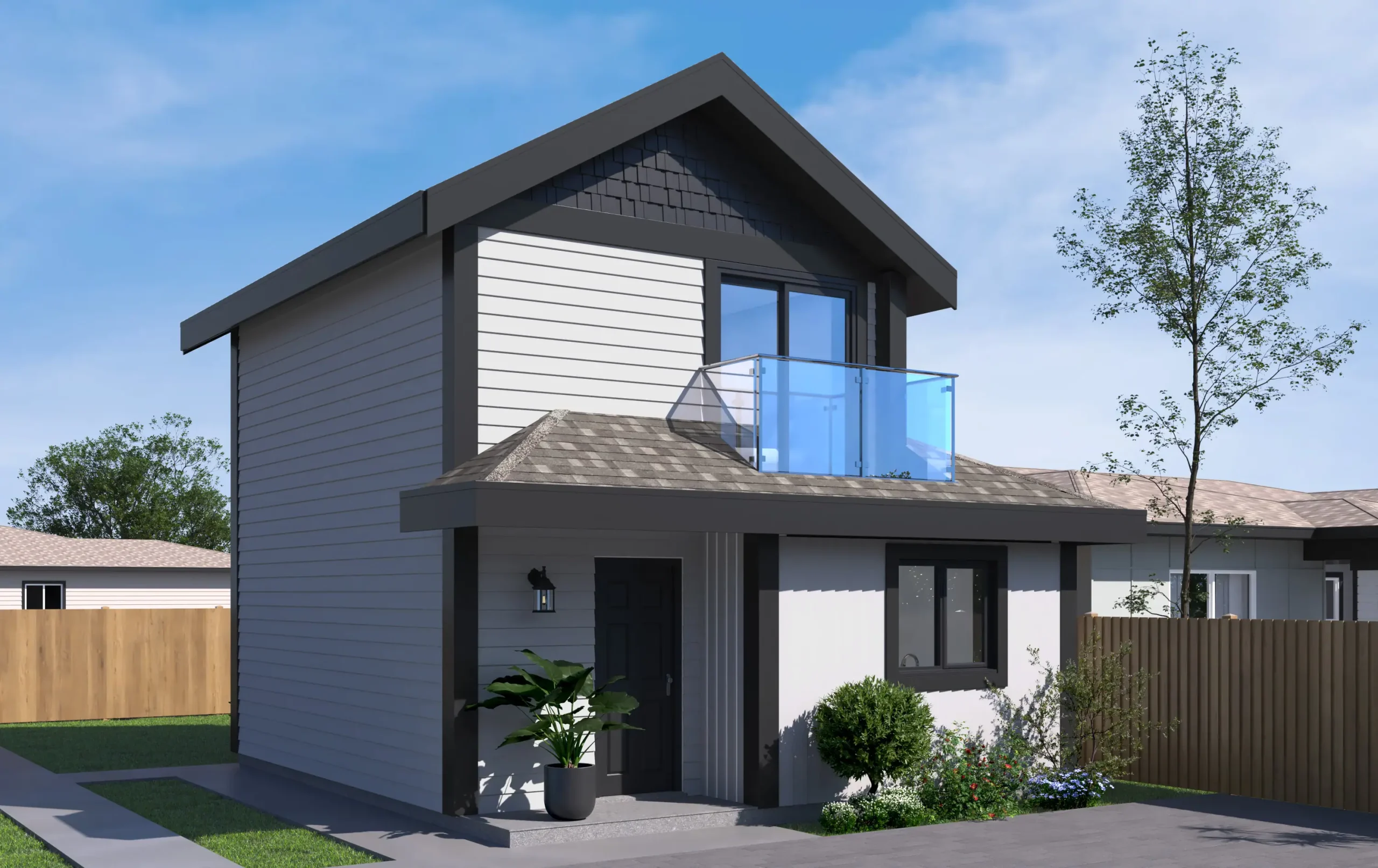
A garden suite is a fully detached, self-contained secondary dwelling unit built in the rear yard of a residential lot. Unlike a laneway house — which sits at the back of a property with direct access to a rear lane — a garden suite is designed specifically for lots that have no rear lane access. The unit is separated from the main house, has its own entrance, and functions as a complete home, but it shares the same lot and legal title as the principal dwelling.
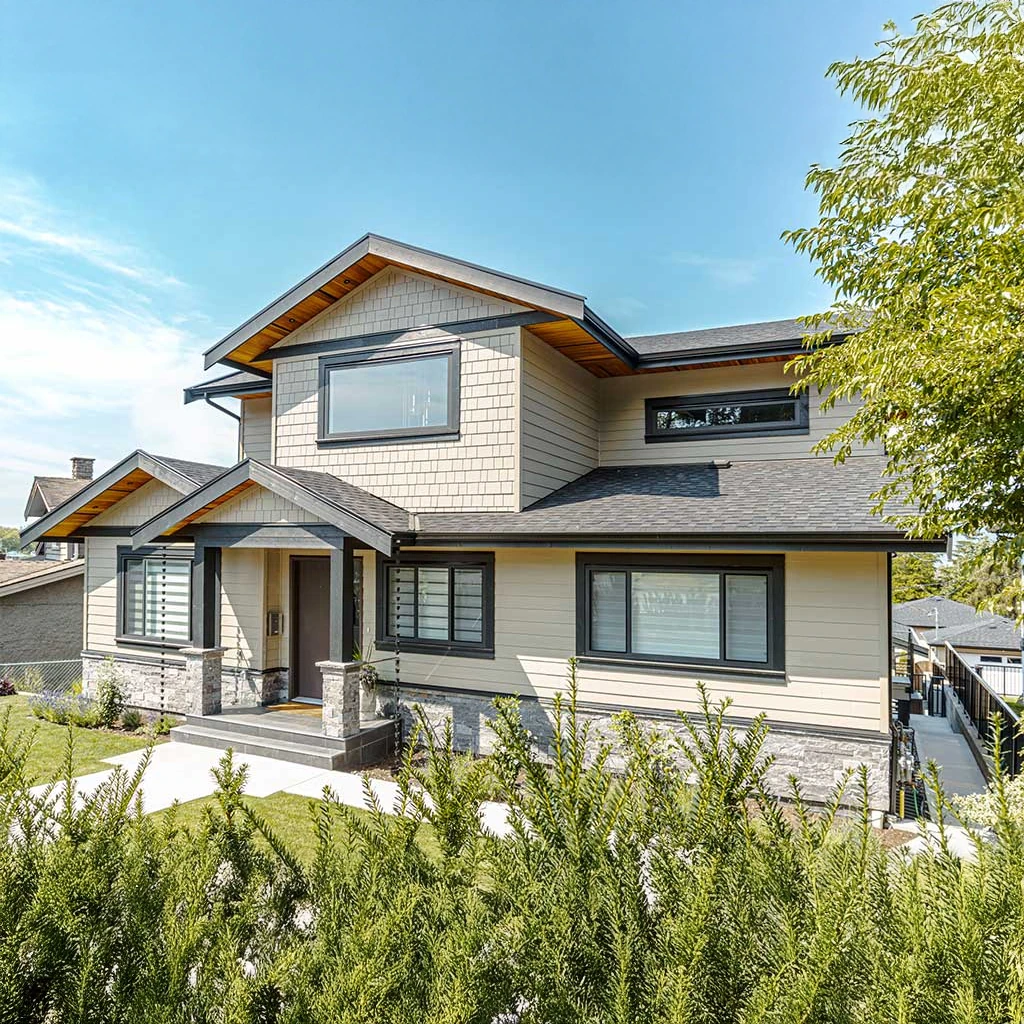 Home addition renovation in Metro Vancouver” class=”wp-image-12760″ />
In the City of Vancouver, a garden suite is typically between 30 and 60 square metres (323 to 646 square feet)
Vancouver General Contractors
The City of Vancouver introduced the garden suite policy in 2018 precisely to extend secondary suite options to interior and landlocked lots. Before that, homeowners on lane-less lots had three choices: basement suite, secondary suite within the main house, or nothing. Garden suites opened a fourth option — one that gives tenants a genuinely private, ground-level home with outdoor space, and gives owners a significantly higher rental premium than a basement unit commands.
In the City of Vancouver, a garden suite is typically between 30 and 60 square metres (323 to 646 square feet). That size range is not arbitrary: the bylaw caps garden suites at the lesser of 33% of the principal dwelling’s floor area or 60 sq m. On a typical Vancouver RS-1 lot with a 2,000 sq ft house, the 33% rule equates to about 660 sq ft — so the 60 sq m (646 sq ft) hard cap is almost always the binding constraint.
Garden suites are permitted in RS-1, RS-1A, RS-1B, RS-2, RS-3, RS-3A, RS-5, RS-6, RS-7, and most RS and RT residential zones across Vancouver. The key eligibility trigger is the absence of a rear lane: if your lot fronts a street but has no lane behind it, you are the intended beneficiary of this policy. A significant portion — estimates suggest roughly one-third — of Vancouver’s single-family lots are lane-less, meaning garden suites represent a genuine option for tens of thousands of properties.
The suite must be subordinate to the main house in both size and character. It cannot subdivide the lot, cannot be stratified or sold separately, and must share the lot’s water and electrical service connections, though it will typically have its own subpanel, meter, and utility runs from the main house.
Garden Suite vs. Laneway House: Key Differences
Garden suites and laneway houses are both detached secondary dwellings, and they serve the same fundamental purpose: adding a fully independent rental unit to an existing residential lot without subdividing. But they differ in important ways — and understanding those differences is the first step to figuring out which one applies to your property.
| Feature | Laneway House | Garden Suite |
|---|---|---|
| Rear lane requirement | Required — must front onto a rear lane | Not required — designed for lane-less lots |
| Typical lot type | Standard Vancouver lots with rear lane access | Interior or landlocked lots with no rear lane |
| Maximum size (City of Vancouver) | 83.6 sq m (900 sq ft) for 1-storey; up to 83.6 sq m on larger lots | Lesser of 33% of principal dwelling or 60 sq m (646 sq ft) |
| Typical build cost | $350,000–$550,000 | $220,000–$380,000 |
| Height maximum | 5.5m (one-storey with loft) depending on zone | 3.7m flat roof / 5.5m pitched roof |
| Access/entry | Directly off the rear lane | Via side yard pathway from the front street |
| Setbacks | Set back from lane (typically 1m from lane property line) | 1.2m minimum from side and rear property lines |
| Parking requirement | Often one space required off lane | No additional parking typically required |
| Typical rental premium | $2,300–$3,200/month (1-bed) | $2,000–$2,700/month (1-bed) |
| Privacy from main house | Excellent — faces the lane away from main house | Good — separated by yard space, shares front approach |
The most important practical takeaway from this comparison: if your lot has a rear lane, a laneway house almost always makes more sense. Laneway houses are typically larger, command higher rents, and have more natural separation from the main dwelling. But if your lot has no rear lane — and a meaningful number of Vancouver lots don’t — a garden suite is your best path to a detached secondary unit.
There are scenarios where a garden suite can be the right choice even on a lane-accessible lot: if the lot is unusually narrow and lane access is poor, if the homeowner wants to preserve the rear yard for other uses, or if budget constraints make the smaller (and cheaper) garden suite more attractive than a full laneway build. These are edge cases, but they exist.
Need help figuring out which secondary dwelling option suits your specific lot? Contact our team for a free site assessment.
Garden Suite Costs in Vancouver 2026
Garden suites cost less than laneway houses for one simple reason: they’re smaller. The 60 sq m cap means you’re building a compact but complete home — and the construction cost per square foot is often comparable to or slightly higher than a laneway house (because the fixed costs of foundation, mechanical, and electrical are spread over fewer square feet), but the total dollar amount is substantially lower.
Here is a realistic 2026 cost breakdown for garden suites in Vancouver across three common configurations:
| Configuration | Size (approx.) | Construction Cost | Soft Costs | Total Estimate |
|---|---|---|---|---|
| Studio / Bachelor | 30–38 sq m (323–410 sq ft) | $155,000–$230,000 | $25,000–$50,000 | $180,000–$280,000 |
| 1-Bedroom | 38–52 sq m (410–560 sq ft) | $190,000–$280,000 | $30,000–$60,000 | $220,000–$340,000 |
| 2-Bedroom | 52–60 sq m (560–646 sq ft) | $240,000–$345,000 | $40,000–$75,000 | $280,000–$420,000 |
These figures assume mid-range finishes — engineered hardwood or LVP flooring, solid-surface countertops, standard appliance package, single full bathroom, in-suite laundry, and a high-efficiency mini-split heat pump for heating and cooling. They do not include landscaping restoration, new fencing, or utility connection upgrades at the street level, which can add $10,000–$30,000 depending on the lot’s existing service capacity.
What Drives Garden Suite Construction Cost
Foundation type is often the single biggest variable. A concrete perimeter foundation is the most robust option and what most lenders and appraisers prefer to see, but it requires excavation, forming, and pour — typically $25,000–$40,000 just for the foundation. Screw piles (helical piles) cost less ($15,000–$25,000) and can be installed in a day with minimal site disruption, making them attractive for tight rear yards. A slab-on-grade is the most economical option ($10,000–$18,000) and works well for studio suites in areas with stable, well-draining soil.
Mechanical and electrical are more expensive on a per-square-foot basis in garden suites than in larger laneway houses because every garden suite needs a full suite of mechanical systems regardless of size: electrical panel, water service connection, sewer tie-in, hot water, heating, and ventilation. These systems cost roughly the same whether the suite is 350 or 650 square feet, so smaller suites carry a higher mechanical cost per square foot.
Site access and excavation conditions matter enormously. If your rear yard is accessible only through a narrow side gate, equipment access will be limited and labour costs will rise. Some garden suite projects require hand-digging portions of the foundation or using smaller excavation equipment, which adds time and cost. Mature trees with root systems, underground utilities, or sloping grades all add complexity.
Soft Costs Breakdown
| Soft Cost Item | Typical Range |
|---|---|
| Architectural drawings and design | $12,000–$28,000 |
| City of Vancouver permits and fees | $8,000–$20,000 |
| Structural engineering | $5,000–$12,000 |
| Geotechnical report (if required) | $3,000–$8,000 |
| Land surveyor / site plan | $2,500–$5,000 |
| Energy advisor (if required) | $1,500–$3,500 |
| Contingency (10–15%) | $18,000–$55,000 |
For a comprehensive breakdown of renovation and construction budgeting, our Renovation Guide covers how to plan and finance major home projects in Vancouver.
City of Vancouver Garden Suite Regulations
The City of Vancouver’s garden suite policy is codified in the Zoning and Development By-law. Here are the key regulatory parameters you need to understand before you proceed.
Maximum Size
The maximum floor area of a garden suite is the lesser of: (a) 33% of the principal dwelling’s total floor area, or (b) 60 square metres (646 square feet). On most standard Vancouver RS-1 lots with houses in the 1,800–2,500 sq ft range, the 60 sq m cap is the binding constraint. The 33% rule only becomes relevant on smaller houses — if your house is, say, 1,100 sq ft, then 33% = 363 sq ft = 34 sq m, and that is your maximum even though it’s well below the 60 sq m hard cap.
Maximum Height
Garden suites are single-storey structures. The maximum height is 3.7 metres for flat or low-slope roofs, and 5.5 metres for pitched roofs (measured to the midpoint of the pitch). The lower height limit for flat roofs reflects the City’s concern about privacy impacts on neighbouring properties. Most garden suites use a simple shed or gable roof at modest pitch to maximize interior ceiling height while staying within the 5.5m limit.
Setbacks
A garden suite must maintain a minimum 1.2 metre setback from the rear property line and from both side property lines. This is smaller than the setback required for the main house, which is one of the features that makes garden suites workable on typical RS lots. There is no minimum separation required between the garden suite and the main house under the zoning bylaw, but BC Building Code fire separation requirements will dictate a minimum distance based on the construction type — typically at least 3 metres between the main house and the garden suite to avoid triggering fire-rated wall construction on both structures.
Lot Coverage
The garden suite’s footprint counts toward the overall lot coverage calculation for your property. In most RS zones, lot coverage is capped at 40–45% of the lot area for all structures combined. If your main house already consumes most of that allowance, a garden suite may not be feasible without reducing coverage elsewhere (removing a garage or large shed, for instance). Your architect or designer will calculate this early in the design process.
Development Permit vs. Building Permit
In most cases, a garden suite requires only a Building Permit — not a Development Permit — provided it complies with all applicable zoning regulations as-of-right. A Development Permit is triggered if the project involves any relaxation of zoning standards (e.g., reduced setbacks, increased lot coverage), if the lot is subject to a Heritage Revitalization Agreement, or if it falls within certain character retention areas. The distinction matters because a Development Permit adds months to the approval timeline and may require neighbourhood notification or a public hearing.
Garden Suite Permit Process in Vancouver
The City of Vancouver has streamlined its building permit process for secondary suites in recent years, and garden suites benefit from this effort. Here is how the typical permit process unfolds.
Step 1: Pre-Application Research
Before spending money on drawings, verify your lot’s eligibility using the City’s online zoning map and confirm there are no registered covenants, easements, or heritage overlays that would restrict construction. Check the existing lot coverage and whether the main house has an existing secondary suite — this affects how the garden suite is classified under the bylaw. Your contractor or designer should assist with this step.
Step 2: Design and Drawing Preparation
Engage an architect or building designer to prepare permit-ready drawings. For a City of Vancouver garden suite building permit application, you will need:
- Site plan showing the lot, existing structures, proposed garden suite footprint, setbacks from all property lines, and lot coverage calculations
- Floor plan at 1:50 scale showing room layout, dimensions, ceiling heights, window and door locations, and plumbing fixture locations
- Elevations (all four sides) showing the exterior appearance, roof pitch, window placement, and maximum height
- Building sections showing structural assembly, insulation, and ceiling/floor construction
- Foundation plan and structural drawings (stamped by a professional engineer if using atypical foundation systems)
- Energy compliance documentation per BC Energy Step Code (Step 3 minimum for new construction)
Step 3: Building Permit Application
Submit the complete drawing package to the City of Vancouver Development, Buildings and Licensing department via the online portal. The City’s current service standard for straightforward garden suite applications is 6 to 10 weeks from submission to permit issuance — though this can extend if revisions are required or during peak application periods (spring and early summer are the busiest). Having complete, well-coordinated drawings from an experienced designer is the single most effective way to avoid revision cycles that add weeks to the timeline.
Step 4: Inspections During Construction
Once the permit is issued and construction begins, you will need to schedule and pass a series of City inspections at key milestones:
- Excavation and footing inspection (before concrete pour)
- Foundation inspection (after forming, before backfill)
- Framing inspection (rough framing complete, before insulation and sheathing)
- Rough-in plumbing inspection
- Rough-in electrical inspection (ESA — Electrical Safety Authority, not City)
- Insulation and vapour barrier inspection
- Final inspection (all trades complete, suite ready for occupancy)
Common Reasons for Permit Rejection
Garden suite applications are most commonly rejected or required to be revised for the following reasons: setback non-compliance (proposed footprint too close to a property line), lot coverage exceedance (total footprint of all structures exceeds the zoning limit), inadequate energy code compliance documentation, missing or incomplete structural details, and failure to address existing non-conformities on the lot (such as an unpermitted structure that must be removed or legalized before the garden suite permit can proceed).
Garden Suite Lot Eligibility: Does Your Property Qualify?
Not every residential lot in Vancouver can accommodate a garden suite. Here is a practical eligibility checklist.
Who Qualifies
- Interior lots in RS and RT zones with no rear lane. This is the primary intended use case. If your lot is surrounded by other lots on all sides with no lane behind it, you are a strong candidate.
- Lots in RS-1, RS-1A, RS-1B, RS-2, RS-3, RS-3A, RS-5, RS-6, RS-7 zones. Most single-family and two-family residential zones in Vancouver are eligible.
- Lots with sufficient rear yard depth. You need enough rear yard space to fit the garden suite footprint plus the required 1.2m setbacks and the fire separation from the main house. On typical 33-foot wide lots, this usually means a rear yard of at least 20 metres in depth.
- Lots where total lot coverage, including the new garden suite, remains within the zoning limit.
Who May Not Qualify
- Lots that are too small. If your lot is below approximately 334 sq m (3,600 sq ft), fitting a garden suite with required setbacks becomes geometrically very difficult.
- Lots with Heritage Covenants or Heritage Revitalization Agreements. These encumbrances can restrict new construction in the rear yard.
- Lots with registered easements that cross the rear yard. A utility easement running across your rear yard may prevent construction within it.
- Lots already at or near the lot coverage maximum. If your existing house, garage, and outbuildings already consume most of your allowable lot coverage, there may not be enough coverage remaining for a garden suite footprint.
- RS-6 lots in certain protected character retention areas where the City has placed additional restrictions on infill.
- Agricultural Land Reserve (ALR) parcels — ALR land is subject to ALC approval for any residential infill, and garden suites on ALR land require ALC authorization, which is not guaranteed.
Beyond the City of Vancouver, similar eligibility frameworks exist in other Metro Vancouver municipalities. Burnaby, Coquitlam, North Vancouver City, and District of North Vancouver all have garden suite or secondary detached dwelling policies, though the specific size limits, setbacks, and zone applicability vary. More on this in the Metro Vancouver section below.
Foundation Options for Garden Suites
The foundation is the first and most consequential structural decision in any garden suite project. Your choice of foundation affects project cost, construction timeline, site disruption, and long-term performance of the suite. Here are the three main options.
Concrete Perimeter Foundation
A poured concrete perimeter foundation (frost wall and footings) is the traditional and most structurally robust option. It involves excavating around the perimeter of the proposed footprint to below the local frost depth, forming and pouring concrete footings and stem walls, waterproofing, and backfilling. Cost in Vancouver: $25,000–$40,000. Timeline: 2–3 weeks for the foundation alone. This option provides excellent long-term stability, is well-understood by inspectors and lenders, and allows for a crawl space under the suite (useful for mechanical access and additional insulation). It is the best choice for larger garden suites (45–60 sq m) and for lots with good soil bearing capacity.
Helical Screw Pile Foundation
Helical (screw) piles are steel shafts with helical plates that are drilled into the ground using a small machine — which is a major advantage on tight rear yards where a full excavator cannot manoeuvre. Installation takes one day. There is no concrete cure time, no excavation spoil to remove, and the suite can be framed the next day. Cost: $15,000–$25,000 depending on soil conditions and number of piles. Screw piles are particularly good on soft or wet soil where conventional spread footings would need to go very deep to reach stable bearing. The downside: no crawl space (the suite sits on a structural floor platform), and some lenders or appraisers are less familiar with this system. Structurally, when properly engineered, screw piles perform comparably to conventional foundations.
Concrete Slab-on-Grade
A slab-on-grade involves pouring a continuous concrete slab directly on prepared, insulated subgrade. It is the simplest and lowest-cost foundation option: $10,000–$18,000. Slab-on-grade is best suited to studio-sized suites (under 38 sq m) on stable, well-draining soil that is not in a frost-heave risk area. In Vancouver’s mild climate, slab-on-grade with adequate insulation under the slab performs well — the frost line is only about 45cm deep compared to inland BC or prairie climates. The limitation is that any plumbing within the slab must be perfectly positioned before pour, because post-pour modifications are extremely disruptive.
| Foundation Type | Cost Range | Best For | Key Advantage | Key Limitation |
|---|---|---|---|---|
| Concrete perimeter | $25,000–$40,000 | Larger suites, good soil | Most robust, crawl space access | Requires excavation, longer timeline |
| Helical screw piles | $15,000–$25,000 | Tight yards, soft soil | 1-day install, minimal disruption | No crawl space, lender familiarity |
| Concrete slab-on-grade | $10,000–$18,000 | Studio suites, stable soil | Lowest cost, simple | Plumbing must be set before pour |
Designing a Garden Suite That Works
The design challenge with a garden suite is real: you need to create a home that feels complete and liveable in a space that is roughly the size of a large hotel suite. The good news is that small-footprint residential design has advanced dramatically in recent years, and a well-designed 500 sq ft garden suite can feel significantly more spacious and functional than its square footage suggests.
Open Plan Living
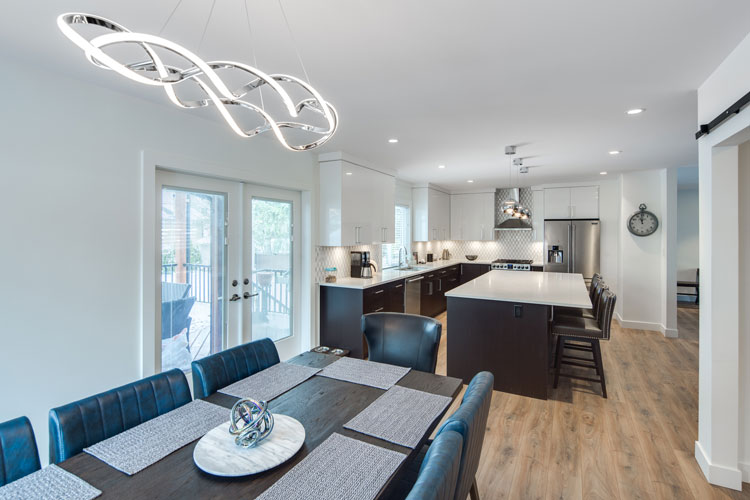
The most effective way to make a small space feel larger is to eliminate unnecessary walls between the living room, dining area, and kitchen. An open-plan living/kitchen layout with a kitchen island that doubles as a dining table is almost universal in well-designed garden suites. This approach creates a single flowing space that reads as much larger than its actual area and allows natural light from windows on opposite sides to travel through the whole room.
Sleeping Area Options
For a studio garden suite, the sleeping area can be in the main open space (daybed or murphy bed) or partially separated by a half-wall, storage unit, or sliding partition. For a 1-bedroom, a fully enclosed bedroom is strongly preferred by both tenants and lenders — an enclosed bedroom makes the suite easier to rent and more valuable as an asset. A loft sleeping area (accessible by a ship’s ladder or compact stair) can work within the 5.5m height allowance of a pitched-roof garden suite, effectively creating a 1.5-storey layout without technically being a 2-storey building.
In-Suite Laundry
In-suite laundry is a strong rental differentiator in Vancouver. A stacked washer/dryer unit takes approximately 700mm × 700mm of floor space — small enough to tuck into a closet or bathroom alcove. From a plumbing standpoint, connecting laundry to the garden suite adds $1,500–$3,500 to the cost depending on drain routing, but it can meaningfully increase both rental income and tenant quality. We strongly recommend including in-suite laundry in any garden suite designed for long-term rental.
Natural Light and Privacy
Natural light is the other great differentiator between a good garden suite and a mediocre one. Because garden suites sit in the rear yard surrounded by the main house (in front) and neighbours (on the sides and back), window placement requires careful thought. Skylights are an excellent option — they bring in light without creating privacy conflicts with neighbouring properties. Clerestory windows (high on the wall, above neighbour fence height) allow daylight to enter without sightlines into adjacent yards. South and west facing windows should be maximized for solar gain and light; windows on the neighbour-facing sides should be thoughtfully placed to balance light with privacy.
Acoustic Separation
As a detached structure, a garden suite has inherently better acoustic separation from the main house than any attached or basement suite. However, the suite still shares the same lot, and tenants and homeowners will live in close proximity. Choose mechanical systems (heat pumps, HRV) with low noise output, and consider the acoustic impact of the suite’s HVAC equipment on the main house outdoor areas. Between the suite and its own envelope, use double-layer drywall and dense-pack insulation to minimize sound transmission from outside — especially road noise if the suite is near a busy street approached via the side yard path.
If you’re planning a garden suite as part of a broader home renovation, our home renovation services page covers how we integrate major additions and secondary suites with your existing property.
Rental Income from Garden Suites in Vancouver
Vancouver’s rental market remains one of the tightest in Canada, and detached secondary suites command a significant premium over basement suites of similar size. Garden suites — with private entrances, outdoor space, and no shared walls with the main dwelling — are positioned at the top of the secondary suite rental market.
Current Market Rents (2026)
| Suite Type | Monthly Rent Range | Typical Mid-Point |
|---|---|---|
| Studio / Bachelor garden suite | $1,600–$2,100 | $1,850 |
| 1-Bedroom garden suite | $2,000–$2,700 | $2,350 |
| 2-Bedroom garden suite | $2,400–$3,200 | $2,800 |
For comparison, a basement suite of similar size typically rents for 15–25% less — so a garden suite’s detached, private nature genuinely commands a premium in the market.
Rental Yield Calculation
Consider a typical 1-bedroom garden suite built for $280,000 all-in (construction plus soft costs). At a market rent of $2,200 per month:
- Annual gross rental income: $26,400
- Operating costs (estimated, including insurance, minor repairs, vacancy allowance at 5%): $3,500/year
- Net annual income: approximately $22,900
- Gross yield on cost: $26,400 / $280,000 = 9.4%
- Net yield on cost: $22,900 / $280,000 = 8.2%
- Simple payback period: 280,000 / 22,900 = approximately 12.2 years
This compares favourably with a laneway house, which might cost $430,000 and generate $2,600/month net income — an 8.5-year payback — but requires a much larger upfront capital commitment that not all homeowners can access. The garden suite’s lower cost makes it accessible to a broader range of homeowners and carries proportionally less financial risk if rental conditions shift.
Compare this to a basement suite, which might cost $80,000–$140,000 to build but typically rents for $1,600–$2,000/month — and you can see why garden suites occupy an interesting middle ground: they cost more than a basement suite but generate meaningfully higher income, and they cost less than a laneway house while still providing the detached, private experience that tenants value most.
Financing a Garden Suite
Most Vancouver homeowners finance garden suite construction using existing home equity. With Vancouver property values remaining elevated, many homeowners have substantial equity available — and several financing structures make accessing that equity practical.
Home Equity Line of Credit (HELOC)
A HELOC is the most common and flexible financing tool for garden suites. Canadian lenders will advance up to 65% of the home’s appraised value (or 80% combined with your outstanding mortgage) as a revolving line of credit. For a house appraised at $1.8 million with a $600,000 mortgage, the available equity could be $840,000 — far more than a garden suite requires. HELOC rates in 2026 are typically prime plus 0.5%–1.0%, which translates to rates in the mid-to-high single digits. Interest is charged only on the drawn balance, and because construction proceeds in stages, you only draw (and pay interest on) funds as the project progresses.
CMHC Secondary Suite Loan Program
The CMHC Secondary Suite Loan program provides up to $80,000 at 2% interest for homeowners adding a secondary suite, including garden suites. Garden suites explicitly qualify under this program as they meet the definition of a secondary dwelling on a residential property. The loan is available to owner-occupied properties, requires the homeowner to occupy the main dwelling, and carries a 10-year repayment term. At 2%, this is dramatically below market rate and represents a genuinely attractive option to finance part of a garden suite project. Note that $80,000 covers roughly 25–40% of a typical garden suite budget, so it works best as a partial financing tool combined with a HELOC or personal savings.
Construction Mortgage
For larger or more complex garden suite projects — or for homeowners who don’t have sufficient equity in their existing mortgage — a construction mortgage (also called a draw mortgage) can provide project financing. The lender advances funds in stages based on completed inspections (typically 4–5 draws over the course of construction), and the loan converts to a conventional mortgage at completion. Construction mortgages typically require an “as-improved” appraisal that values the property after the garden suite is complete. In Vancouver’s market, a well-designed garden suite typically adds $250,000–$400,000 to an as-improved appraisal — meaning the asset value created often exceeds or matches the cost of construction.
Rental Income Qualification
One often-overlooked benefit of building a garden suite before refinancing: most lenders will include 50–80% of documented rental income in their debt service calculations. If your garden suite generates $2,200/month, lenders may count $1,100–$1,760/month of that as income when assessing your borrowing capacity. This can meaningfully improve mortgage qualification on a subsequent refinance or purchase.
Garden Suites in Metro Vancouver Beyond the City
The City of Vancouver was among the first Metro Vancouver municipalities to establish a comprehensive garden suite policy, but other municipalities have followed with their own frameworks. If your property is outside the City of Vancouver’s boundaries, here is what to expect in neighbouring municipalities.
City of Burnaby
Burnaby allows detached garden suites in RS zones on lots without lane access. The Burnaby policy has evolved significantly since 2020, with the municipality now permitting garden suites up to approximately 60 sq m (subject to the specifics of the zone and lot). Burnaby’s RS-1 zone (which covers most of Burnaby’s single-family residential areas) explicitly includes garden suite as a secondary use. Setback requirements and height limits are similar to Vancouver’s framework, though the specific numbers differ — always verify with Burnaby’s Planning and Building department for current regulations.
City of North Vancouver
The City of North Vancouver has an established secondary suite policy that includes detached garden suites on RS-zone lots. City of North Van lots tend to be smaller than Vancouver equivalents, which makes the size constraints more binding. The City’s planning department is generally proactive about secondary suites as a tool to increase housing supply, and permit timelines are often shorter than the City of Vancouver’s. Verify zone-specific regulations and any slope or geotechnical requirements, which are particularly relevant given North Vancouver’s hillside terrain.
District of North Vancouver
The District of North Vancouver permits secondary suites including garden suites across various residential zones, with the specific permissions varying by zone designation. The District’s secondary suite policy requires the homeowner to occupy either the principal dwelling or the garden suite (owner-occupancy requirement), which is an important distinction from some other municipalities. Contact the District’s building and planning department for current zone-specific requirements.
City of Coquitlam
Coquitlam has expanded its secondary suite policy to include garden suites in RS zones, recognizing the same “landlocked lot” problem that drove Vancouver’s 2018 policy. Coquitlam’s approach is slightly more restrictive on size in some zones, with some areas capping garden suites at 55 sq m rather than 60 sq m. The city has invested in making its permit application process more accessible, with online submission and relatively fast review times for straightforward applications.
What to Check in Your Municipality
Regardless of which Metro Vancouver municipality your property is in, the same due-diligence checklist applies before committing to a garden suite project: (1) Confirm your specific zone permits a garden suite as-of-right. (2) Check the maximum size limits — they vary by zone and municipality. (3) Verify setback requirements from all property lines. (4) Confirm total lot coverage limits and your current coverage. (5) Check for any registered covenants, easements, or heritage overlays. (6) Confirm whether an owner-occupancy requirement applies. (7) Ask the local planning department about current permit review timelines.
Our team works with homeowners across Metro Vancouver. Get in touch for a site-specific assessment of your garden suite eligibility.
Working with a Contractor on Your Garden Suite
A garden suite is not a minor renovation project — it is a complete new building on your property, subject to full building code compliance, City inspections, and the same structural, electrical, and plumbing requirements as any new residential construction. Choosing the right contractor matters as much as any other decision in the process.
Look for a general contractor with demonstrated garden suite or laneway house experience in Vancouver. Ask to see completed projects and speak with past clients. Verify that the contractor is licensed with BC Housing (Residential Builder licence), carries WorkSafeBC coverage, and maintains appropriate general liability insurance (minimum $2 million). A good contractor will be familiar with City of Vancouver permit requirements and will have established relationships with subcontractors (electricians, plumbers, framers) who have worked on similar projects.
Be cautious of contractors who offer to build your garden suite without permits (“faster and cheaper”). Unpermitted construction is not just a bylaw violation — it creates serious problems when you try to rent, insure, refinance, or sell your property. Mortgage lenders will not lend against a property with unpermitted structures. Title insurance does not cover unpermitted additions. And the City of Vancouver actively follows up on complaints about unpermitted construction, with enforcement orders that can require demolition of the offending structure. Do not take this risk.
From permit application through final inspection, a typical Vancouver garden suite takes 10–16 months total: 1–2 months for design, 2–3 months for permit review, and 6–10 months for construction. This timeline can compress if you have an experienced design team and construction is well-organized, or extend if permit revisions are required or trade scheduling creates delays.
Ready to start the conversation? Our project inquiry page takes five minutes and lets our team review your lot and give you a realistic sense of what is achievable.
Garden Suite FAQ: 15 Common Questions Answered
1. What is the difference between a garden suite and a laneway house?
Both are fully detached secondary dwellings on a residential lot, but a laneway house is built at the rear of a lot that has a rear lane, with its entry facing the lane. A garden suite is built in the rear yard of a lot that has no rear lane access — the entry is typically via a side yard pathway from the front street. Garden suites are generally smaller (max 60 sq m vs. up to 83.6 sq m for laneway houses) and cost less to build ($220K–$380K vs. $350K–$550K). If your lot has a rear lane, a laneway house is usually the better option; if it does not, a garden suite may be your only path to a detached secondary unit.
2. Can I build a garden suite if I have a rear lane?
Technically, in some zones you may be able to, but the City of Vancouver’s garden suite policy was specifically designed for lots without lane access. If your lot has a rear lane, you should first explore a laneway house, which offers more floor area and greater design flexibility. In some narrow-lot situations or where the lane is poorly accessible, a garden suite may still make sense — but this is worth discussing with a planner or experienced contractor before committing to either path.
3. What is the maximum size of a garden suite in Vancouver?
The lesser of 33% of the principal dwelling’s floor area or 60 square metres (646 square feet). On most standard Vancouver lots with houses over 1,800 sq ft, the 60 sq m cap is binding. On smaller houses, the 33% rule may produce a lower limit — for example, a 1,200 sq ft house would cap the garden suite at 396 sq ft (approximately 37 sq m).
4. How long does a garden suite permit take in Vancouver?
The City of Vancouver’s current service standard for garden suite building permit applications is 6 to 10 weeks from submission to permit issuance, assuming a complete application with no revision cycles. If the City requires revisions (which happens frequently if drawings are not comprehensive or well-coordinated), each revision round adds 2–4 weeks. Total pre-construction time from design start to permit in hand is typically 3–5 months for most garden suite projects.
5. What are the minimum setbacks for a garden suite in Vancouver?
The City of Vancouver requires a minimum 1.2 metre setback from the rear property line and from both side property lines. There is no specified minimum setback from the main house under the zoning bylaw, but BC Building Code fire separation requirements typically dictate at least 3 metres between the main house and the garden suite (to avoid requiring fire-rated wall construction on both structures). Always confirm current setback requirements with a City planner or your design professional, as these can vary by zone.
6. Can I have both a basement suite and a garden suite on the same lot?
This is a nuanced question. The City of Vancouver’s zoning bylaws limit the number of secondary suites on a residential lot, and the interaction between basement suites, secondary suites, and garden suites depends on the specific zone and how the suite types are classified. In general, most RS zones allow one secondary suite within the principal dwelling plus one garden suite — meaning a basement suite and a garden suite can coexist. However, this depends on the zone and current bylaw interpretation. Verify with the City’s Zoning Enquiry service before assuming this is permitted on your lot.
7. Does the CMHC Secondary Suite Loan apply to garden suites?
Yes. The CMHC Secondary Suite Loan program (up to $80,000 at 2% interest) explicitly covers detached garden suites as they meet the definition of a secondary dwelling on an owner-occupied property. You must occupy the principal dwelling to qualify. The $80,000 maximum covers a meaningful portion of a studio or small 1-bedroom garden suite and can be combined with a HELOC or personal funds to finance a larger project.
8. What foundation is best for a garden suite?
It depends on your lot conditions, budget, and the size of the suite. A concrete perimeter foundation (frost wall and footings, $25K–$40K) is the most robust and best suited to larger suites on stable soil. Helical screw piles ($15K–$25K) are excellent for tight rear yards or soft/wet soil conditions. A slab-on-grade ($10K–$18K) is the most economical option for studio suites on stable, well-draining soil. Your engineer and contractor will recommend the appropriate option after assessing your site conditions.
9. How much rent can I expect from a garden suite in Vancouver?
Based on current 2026 market conditions: studio garden suites rent for $1,600–$2,100/month, 1-bedroom units for $2,000–$2,700/month, and 2-bedroom units for $2,400–$3,200/month. Garden suites command a 15–25% premium over basement suites of similar size because tenants value the private entrance, detached structure, and typically superior natural light. Rents vary by neighbourhood, finish level, and suite quality — East Vancouver suites generally rent at the lower end of these ranges, West Side and North Shore suites at the higher end.
10. Are there design restrictions for garden suites?
The City of Vancouver’s garden suite regulations focus primarily on size, height, and setbacks rather than aesthetic restrictions. The suite must be a “subordinate” structure to the main house in character and scale, but the bylaw does not prescribe architectural style. Some Heritage Conservation Areas or lots with Heritage Revitalization Agreements may impose design restrictions on new rear yard structures. Outside of heritage overlays, you have considerable freedom in design — shed roofs, flat roofs, large windows, modern cladding, and contemporary detailing are all permissible within the height and setback envelope.
11. Will a garden suite increase my property value?
Yes — in Vancouver’s market, a well-built, permitted garden suite adds measurable value to a property. Appraisers typically apply an income approach to value the suite: at $2,200/month net rent, the income-capitalized value addition is approximately $250,000–$380,000 depending on cap rate assumptions. Market sales data also supports a premium for properties with legal secondary suites. The key qualifier is “permitted” — an unpermitted garden suite adds no bankable value and can actually complicate a sale or refinance. Always build with permits.
12. Do garden suite rules differ between municipalities in Metro Vancouver?
Yes, significantly. Each municipality in Metro Vancouver has its own zoning bylaws and secondary suite policies. While the general concept of a detached garden suite for non-lane lots is widely recognized, the specific size limits, setback requirements, height maximums, zone applicability, and owner-occupancy requirements vary. Burnaby, City and District of North Vancouver, and Coquitlam all have garden suite policies, but you must verify the specific rules in your municipality before proceeding. Do not assume City of Vancouver rules apply outside Vancouver’s boundaries.
13. Can I build a garden suite on Agricultural Land Reserve (ALR) property?
Possibly, but with additional hurdles. ALR parcels are under the jurisdiction of the Agricultural Land Commission (ALC), and any new residential construction on ALR land — including a garden suite — requires ALC authorization. The ALC’s mandate is to protect agricultural land from non-farm uses, so residential infill on ALR land is not automatically approved. Some homeowners on ALR parcels have received ALC approval for secondary dwellings, particularly when they can demonstrate the suite supports farm operations or worker housing. This process is separate from, and in addition to, the municipal building permit process.
14. How is a garden suite different from a secondary suite within the main house?
A secondary suite within the main house is a self-contained living unit — typically a basement suite or in-law suite — that is part of the same structure as the principal dwelling. It shares walls, floors, or ceilings with the main house and is not a separate building. A garden suite is a completely separate, detached building in the rear yard with its own foundation, exterior walls, and roof. Garden suites offer superior acoustic separation, private outdoor space, and a fundamentally more autonomous living experience — which is why they command higher rents than basement or in-law suites of similar size.
15. Do I need an architect for a garden suite, or can I use a building designer?
For a garden suite within the standard size and complexity range (single-storey, up to 60 sq m), you do not legally require a licensed architect in BC — a qualified building designer (Registered Building Designer or Registered Technologist) can prepare the permit drawings. However, many homeowners choose to work with an architect for design quality and project coordination reasons. The more important requirements are that any structural drawings (foundation, if non-standard) be stamped by a professional engineer, and that the designer be experienced with Vancouver’s garden suite permit requirements specifically. A designer who has navigated multiple garden suite permits will produce more complete, approvable drawings than one who is doing it for the first time.
Is a Garden Suite Right for Your Property?
Garden suites are an underutilized tool in Vancouver’s secondary housing landscape. For homeowners on interior lots without rear lane access, they are often the only path to a detached secondary dwelling — and the rental income, property value uplift, and long-term flexibility they offer make them a compelling investment even at $220,000–$380,000 all-in cost.
The key considerations are straightforward: Does your zone permit a garden suite? Is your lot large enough and does it have sufficient coverage room? Can you access the rear yard with construction equipment? And does the financial case work for your specific situation — balancing your all-in cost estimate against realistic rental income projections and the equity you’ll be deploying?
If those boxes check out, a garden suite represents one of the strongest returns available on a residential property investment in Vancouver — generating meaningful cash flow, improving your property’s market value, and creating housing supply in one of Canada’s most constrained rental markets.
Vancouver General Contractors specializes in laneway houses, garden suites, and whole-home renovations across Metro Vancouver. We handle the full project lifecycle — from design coordination and permit application through construction and final inspection. Contact us today to discuss your garden suite project, or start with our Renovation Guide to understand how major residential projects are planned and financed in Vancouver.
Get a Free Renovation Quote
Metro Vancouver’s trusted general contractors. Free consultations across Vancouver, Burnaby, Richmond, North Shore & beyond.
Get Your Free Quote →Ready to start your project? Vancouver General Contractors (VGC) provides free, fixed-price quotes for homeowners across Metro Vancouver. Learn more about our laneway home Vancouver services or request a free quote today.
VGC serves Vancouver and surrounding areas. View all renovation services in Vancouver →
More Laneway Homes & Multiplexes Guides

Laneway House vs. Secondary Suite in Vancouver: Which is the Better Investment?
Prefab vs. Custom-Built Laneway House in Vancouver: Complete Comparison for 2026
Duplex vs. Secondary Suite in Vancouver: Which Maximizes Your Investment Return?
Strata vs. Rental for Your Vancouver Duplex: Which Makes More Financial Sense?
Garden Suite vs. Laneway House in Vancouver: Key Differences and Which to Choose
Ready to start your renovation?

Comments are closed