




Home Office Renovation Vancouver: Converting Space, Costs & Permits (2026)
The way Vancouver professionals work changed permanently after 2020. What started as a temporary arrangement has become the permanent reality for hundreds of thousands of Metro Vancouver residents — and the home office has moved from a nice-to-have to a critical functional space. Yet most Vancouver homes were built for a different era, designed around formal dining rooms, TV rooms, and guest bedrooms that saw use a few times a year. Today, those rooms need to work harder. This guide covers everything you need to know about home office renovation in Vancouver: which space to convert, what it costs, what permits you need, and how to build a workspace that actually supports serious, sustained productivity.
Why Home Office Renovations Are Surging in Vancouver
Vancouver’s real estate market has fundamentally changed the calculus for homeowners who need more space. The median detached home in Metro Vancouver sits above $1.8 million as of early 2026. Buying a larger home to gain an extra room — the traditional solution — now costs an additional $200,000 to $400,000 in purchase price, plus land transfer tax, realtor fees, and moving costs. Converting an existing room into a proper home office costs a fraction of that and delivers a dedicated workspace that performs as well as anything you’d find in a commercial office.
The WFH permanence factor is real. Major Vancouver employers including Hootsuite, Slack Canada, Microsoft Canada, and dozens of tech firms on the Broadway Corridor have maintained hybrid or fully remote arrangements. BC’s public sector employs tens of thousands of people working from home multiple days per week. Freelancers, consultants, architects, accountants, and therapists have always needed home offices — but the pandemic-era shift brought that need into sharp relief for a much broader population.
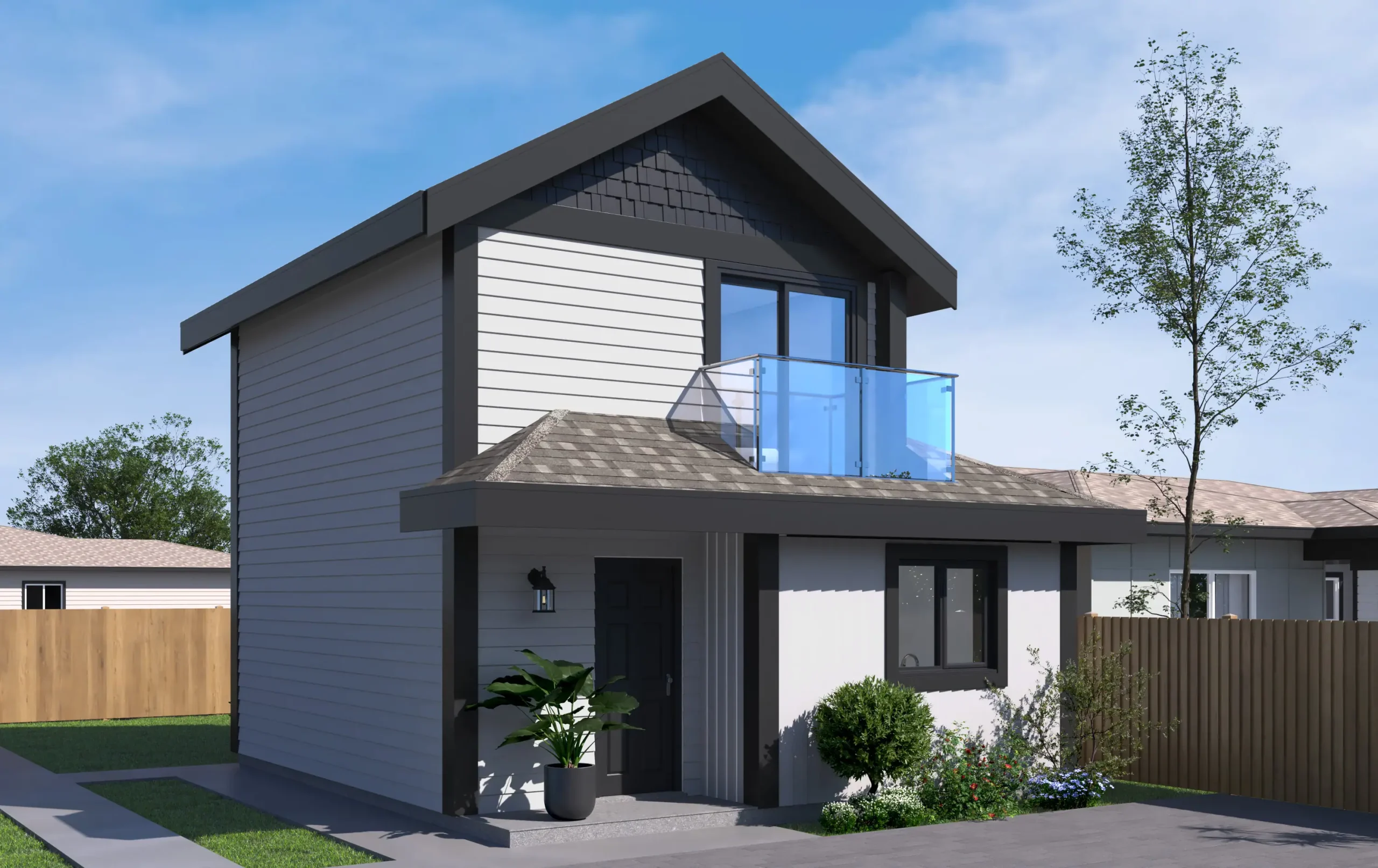 Laneway house construction in Vancouver” class=”wp-image-12762″ />
Vancouver labour rates are among the highest in Canada. Skilled carpenters and framers bill at $75–$110 per hour. Electricians bill at $110–$140 per hour. HVAC technicians run $95–$130 per hour
Vancouver General Contractors
Multi-generational households have also become more common in Vancouver. When adult children return home or aging parents move in, the household head-count increases while the available space stays the same. A garage conversion or basement office can give a professional family member their own productive zone without the household feeling crowded.
The productivity cost of working in a poorly configured space compounds over time. A kitchen table means no acoustic privacy for calls, no ergonomic setup, and no psychological separation between work and home life. A bedroom makeshift office means poor lighting, inadequate storage, and video calls against unmade beds. Research consistently shows that dedicated workspace — even a modest one — improves focus, reduces context-switching, and supports longer sustained work sessions. Vancouver homeowners are increasingly treating the home office renovation as a productivity investment rather than a luxury.
Vancouver’s mix of housing types creates different conversion opportunities. Single-family homes in East Vancouver and the west side typically offer garages and unfinished basements. Townhouses in Burnaby, Coquitlam, and New Westminster often have flex rooms or tandem garages. Older character homes in Kitsilano and Mount Pleasant have spare bedrooms with good natural light. Each type presents different opportunities and different challenges — all of them solvable with the right approach. If you’re planning a larger renovation alongside your home office, our Vancouver Renovation Guide covers the full process from planning to completion.
Home Office Renovation Costs in Vancouver: Full Breakdown
Home office renovation costs in Vancouver vary dramatically based on the starting point — an existing bedroom requires far less work than a raw garage slab or an unfinished basement. Below is a realistic cost table based on Metro Vancouver labour rates and 2025–2026 material costs. These are project totals, not rough estimates: they include demolition where applicable, framing, insulation, drywall, electrical, flooring, painting, and a basic built-in desk or storage component.
| Conversion Type | Typical Size | Cost Range | Key Cost Drivers |
|---|---|---|---|
| Bedroom to office (basic) | 120–180 sq ft | $8,000–$18,000 | Electrical upgrade, built-ins, soundproofing |
| Bedroom to office (premium) | 150–220 sq ft | $18,000–$32,000 | Custom millwork, skylight, full soundproofing |
| Garage conversion | 200–480 sq ft | $25,000–$55,000 | Insulation, heating, windows, electrical panel |
| Basement office (partial) | 150–300 sq ft | $35,000–$55,000 | Moisture control, egress windows, ceiling height |
| Basement office (full finish) | 400–800 sq ft | $55,000–$70,000 | Full suite finish, bathroom rough-in, HVAC zone |
| Main floor addition | 200–400 sq ft | $120,000–$220,000 | Foundation, structure, exterior cladding |
| Detached garden studio | 200–500 sq ft | $180,000–$320,000 | Full building, services, foundation, permit |
Several factors push projects toward the higher end of each range. Soundproofing — genuinely effective acoustic treatment rather than a single layer of insulation — adds $3,000 to $10,000 to any project. Electrical work that involves upgrading a panel or running a sub-panel to a detached structure can add $4,000 to $12,000. HVAC extension or a dedicated mini-split system adds $3,500 to $8,000. Custom built-in millwork — the element that most distinguishes a professional home office from a repurposed bedroom — runs $4,000 to $18,000 depending on scope and materials.
Vancouver labour rates are among the highest in Canada. Skilled carpenters and framers bill at $75–$110 per hour. Electricians bill at $110–$140 per hour. HVAC technicians run $95–$130 per hour. Any project that touches multiple trades will have mobilization costs from each. Bundling your home office renovation with other renovation work — if you have other projects on the horizon — can reduce per-trade mobilization costs meaningfully. Our team at Vancouver General Contractors manages multi-trade projects under a single contract, which simplifies scheduling and accountability significantly.
Converting a Bedroom to a Home Office
Bedroom-to-office conversion is the most common home office renovation in Vancouver, and for good reason: the room already has heat, electrical, and drywall. The marginal cost to transform it into a high-performing workspace is manageable, and the disruption to daily life is minimal compared to garage or basement projects.
Choosing the right bedroom matters. South-facing and east-facing rooms get excellent natural light for morning and midday work. West-facing rooms get hot afternoon sun that can cause screen glare and make cooling difficult — consider adding a solar shade blind if this is your only option. North-facing rooms get consistent, diffuse light that’s actually excellent for video calls and monitor work, but can feel dark and cold; a well-placed skylight solves this decisively. Proximity to noise sources matters too: a bedroom above the garage, adjacent to the laundry, or directly below a child’s bedroom will require acoustic treatment that a room in a quieter zone of the house won’t.
The closet question deserves serious thought. A standard reach-in closet can be converted into an integrated storage wall or a hidden “cloffice” — removing the doors and building in open shelving transforms 20–24 square feet of dead closet space into fully usable work storage. Alternatively, closing the closet off and using the entire wall for a floor-to-ceiling built-in bookcase and desk creates the most functional configuration for a serious workspace.
Custom built-in desk and shelving systems are the defining upgrade of a bedroom conversion. A floating desk with integrated drawers, open shelving above, and a closed lower cabinet removes the visual clutter of freestanding furniture and makes the room feel twice as large. Vancouver millwork shops typically price custom bedroom built-ins at $4,000 to $8,000 for a mid-range painted MDF system, or $8,000 to $15,000 for a premium hardwood or lacquered finish with soft-close hardware and integrated cable management. Semi-custom systems from California Closets or Atmosphere Interiors fall in the $3,000 to $7,000 range for a full wall.
Soundproofing a bedroom office typically focuses on the door (the largest acoustic leak in any room) and the shared wall. Replacing a hollow-core interior door with a solid-core door — a $400 to $800 upgrade — improves the Sound Transmission Class (STC) rating from roughly STC 20 to STC 30. Adding acoustic batt insulation in the shared wall cavity and resilient channel on the drywall further reduces noise transfer. Budget $2,500 to $5,000 for a properly executed bedroom soundproofing upgrade.
Natural light optimization in north-facing rooms is a worthwhile investment. A tubular skylight (sun tunnel) costs $800 to $2,000 installed and dramatically brightens a room that would otherwise feel dungeon-like by November. A full fixed skylight installation runs $3,500 to $7,000 but provides genuine views of the sky and a much stronger daylight connection. Both options require a roofing opening and are best included when a contractor is already on-site for other work.
Garage Conversion for Home Office
A garage conversion is the gold standard for a serious home-based professional in Vancouver. Garages offer three things that converted bedrooms rarely deliver: genuine acoustic separation from the main living area, significantly more square footage, and the psychological distance that helps establish work/life boundaries. The typical attached single-car garage in Vancouver provides 240 to 360 square feet — enough for a generous office, a small meeting area, and a storage zone.
The primary technical challenge in a Vancouver garage conversion is thermal performance. Garage slabs sit at grade without a thermal break, and concrete is an excellent conductor of cold. The correct solution is a sleeper floor system: pressure-treated 2×4 sleepers over a 6-mil poly vapour barrier, filled with rigid foam insulation, topped with 3/4-inch plywood subfloor and your finish flooring. This assembly raises the floor 4–6 inches — worth noting for door threshold heights — but delivers a floor that feels warm underfoot and dramatically reduces heating load.
Wall insulation in a converted garage must meet the BC Building Code’s habitable space requirements: minimum RSI 3.85 (R-22) for above-grade exterior walls in Metro Vancouver’s climate zone. This typically means 2×6 framing with R-22 batt or R-20 batt plus 1-inch rigid foam continuous insulation on the exterior. The garage door opening is usually framed out and insulated; the new wall can accommodate a window or door for natural light and egress.
Heating a garage conversion with a mini-split heat pump is the right choice in 2026. A single-zone 9,000 or 12,000 BTU mini-split from Mitsubishi, Daikin, or Fujitsu provides both heating and cooling from a single unit, operates quietly, and consumes roughly one-third the energy of electric baseboard heating. Installation cost ranges from $3,500 to $6,000. The outdoor compressor unit can be mounted on the exterior wall beside the garage, on a ground pad, or on the roof. For a serious home office, the quiet operation and precise temperature control of a mini-split is worth every penny.
Adding windows and natural light is critical in a converted garage — a room with one small window and no skylight will feel oppressive regardless of how well it’s furnished. The framed-out garage door wall is the obvious location for a large window or even a glass-panel door that opens to a small patio. Skylights are highly effective in garages because the ceiling is often the only exterior surface not adjacent to the main house. Budget $2,500 to $5,000 for window additions beyond the basic conversion scope.
Electrical requirements for a garage conversion almost always trigger a panel upgrade or sub-panel installation. Most attached garages have a single 15A or 20A circuit running a single outlet and the garage door opener. A functioning home office needs a minimum of two 20A circuits, a dedicated circuit for heating, low-voltage for ethernet, and appropriate lighting circuits. If the main panel is already near capacity — common in Vancouver homes built before 1990 — a 100A sub-panel in the garage may be required. Budget $4,000 to $9,000 for electrical work on a garage conversion.
A building permit is required for a garage conversion in Vancouver and all Metro Vancouver municipalities when the change of occupancy is formalized or when structural work, plumbing, or significant electrical work is involved. The permit process typically takes 6 to 12 weeks in the City of Vancouver. Detached garage conversions require more complete drawings than attached conversions in most jurisdictions. Contact VGC for guidance on the permit process specific to your municipality and lot.
Basement Home Office: Opportunities and Challenges
Vancouver’s basement home offices are a study in trade-offs. The space is already enclosed, heated (usually), and acoustically isolated from the street. But natural light is scarce, ceiling heights are often marginal, moisture is a genuine concern, and every footstep from the floor above transmits directly to your workspace. When those challenges are properly addressed, a finished basement office can rival any above-grade space. When they’re ignored, the result is a workspace that feels like a parking structure.
Natural light is the first problem to solve. Window wells with enlarged openings can make a substantial difference — a 48-inch wide by 36-inch tall egress window in a properly excavated window well brings in genuine daylight and provides emergency egress for a habitable space (required by BC Building Code for sleeping areas, but strongly recommended for any occupied room). Window wells should be fitted with covers to prevent water accumulation. Budget $3,000 to $6,000 per egress window installation including excavation and drainage.
Ceiling height is a code requirement, not just a comfort preference. The BC Building Code requires a minimum finished ceiling height of 1.95 metres (approximately 6 feet 5 inches) for habitable rooms. Many Vancouver basements — particularly in homes built before 1970 — have structural beams that drop below this height. Options include lowering the slab (expensive: $15,000–$30,000 for underpinning), routing mechanical systems around the beam to gain headroom, or simply treating the beam as a design element. Have your contractor measure actual headroom throughout the space before committing to a basement office conversion.
Moisture management must be addressed before any finishing work begins. A basement that has experienced water infiltration — staining on the foundation walls, efflorescence (white salt deposits), or a musty smell — needs waterproofing remediation before drywall and flooring go in. Installing finishes over a wet or damp basement creates conditions for mold growth that will destroy the renovation within a few years. Exterior waterproofing is the gold standard; interior drainage systems with a sump pump are an effective and less disruptive alternative. Budget $8,000 to $25,000 for serious waterproofing work depending on scope.
Acoustic separation in a basement office means addressing both structure-borne impact sound (footsteps from above) and airborne sound (voices, music from upstairs). The ceiling is the primary battleground. A resilient channel ceiling assembly — using RC-1 channel to decouple the drywall from the joists — with two layers of 5/8-inch drywall and acoustic batt insulation in the joist cavity delivers STC 50+ performance. This is a meaningful commitment: the assembly drops your ceiling height by 3–4 inches, so ceiling height needs to be confirmed before specifying this solution. Budget $6,000 to $12,000 to properly treat a 400 square foot basement ceiling for acoustic performance.
A dedicated HVAC zone for a basement office is worth the investment. Basement spaces are naturally cooler in summer (a benefit) and can be harder to heat efficiently in winter. Running a branch from the main forced-air system often results in inadequate airflow at the furthest point from the air handler. A mini-split system gives independent temperature control, better air quality through filtration, and eliminates the noise of ductwork — important in a space where acoustic quality matters. The incremental cost over extending existing ductwork is $2,000 to $4,000 and is almost always justified.
Soundproofing a Home Office in Vancouver
Sound transmission has two distinct mechanisms that require different solutions, and confusing them leads to expensive mistakes. Impact sound is structure-borne: footsteps, dropped objects, and vibration travel through the building’s framing and emerge as noise in adjacent rooms. Airborne sound travels through the air and through openings: voices, keyboard clatter, video call audio, and traffic noise from outside. An effective home office soundproofing strategy addresses both.
For impact sound transmission coming from above — the most common complaint in basement offices — the only real solution is mass and decoupling in the ceiling assembly. The resilient channel approach described above decouples the ceiling drywall from the floor joists, preventing vibration from transmitting directly through the structure. Adding mass (two layers of 5/8-inch Type X drywall with Green Glue damping compound between layers) further reduces transmission. What does not work for impact sound: acoustic batt insulation alone, single-layer drywall, or foam-based treatments. These reduce airborne sound but do little for footfall.
For airborne sound — the primary concern in above-grade offices, especially those adjacent to living areas, children’s rooms, or street noise — the weak points are almost always the door, any electrical boxes back-to-back in shared walls, and HVAC ducts that connect rooms acoustically. Upgrading to a solid-core door with a good door sweep and compression seals (total cost $600–$1,200 installed) provides the biggest single improvement per dollar for above-grade offices. Acoustic batt insulation (Roxul Safe’n’Sound) in wall cavities, staggered-stud or double-stud framing for shared walls, and back-to-back electrical box avoidance complete a proper airborne treatment.
Acoustic window inserts — secondary glazing panels that install over existing windows — are highly effective for street noise in Vancouver’s urban neighbourhoods. Unlike replacement windows, they don’t require permits or exterior work. They create a 2–4 inch air gap between the existing window and the insert, which is the primary mechanism for sound reduction. Cost: $600–$1,200 per window. For offices on arterial roads in Kitsilano, Mount Pleasant, or Commercial Drive, this investment meaningfully reduces background traffic noise during calls.
Realistic budgets for soundproofing: a basic above-grade bedroom office with solid-core door, wall insulation, and window treatment will run $3,000 to $5,000. A basement office with a full resilient channel ceiling assembly runs $6,000 to $10,000 for the ceiling work alone. A garage conversion treated for acoustic privacy from the main house adds $2,500 to $5,000 to the base conversion cost. These are not optional extras for a professional who takes conference calls — they’re the difference between a usable workspace and a frustrating one.
Electrical Requirements for a Home Office
The electrical infrastructure of a home office is routinely underspecified — and the consequences range from nuisance tripped breakers to genuine safety hazards from overloaded circuits. A modern professional home office draws significantly more power than a bedroom. Mapping out the actual load is the starting point for any electrical plan.
A fully equipped standing desk workstation can draw 400–600 watts continuously: dual monitors (80W each), a desktop computer or docking station (150–200W), task lighting (40W), phone charging (20W), and a small space heater or under-desk mat (300W). Add network equipment — a router, switch, NAS, and UPS — and you’re looking at another 100–200 watts. This total load easily saturates a single 15A circuit shared with other outlets on the circuit. The correct solution is a dedicated 20A circuit for the workstation, a second 20A circuit for heating, and a third circuit for lighting. This is non-negotiable for a well-designed home office and requires a permit in BC for new circuit installation.
Ethernet drops versus WiFi is not a debate for a serious home office: run ethernet. WiFi has improved dramatically in the 802.11ax (WiFi 6) era, but a wired gigabit ethernet connection delivers lower latency, zero interference from neighbouring networks, consistent bandwidth, and eliminates the one variable you can’t control when a video call drops at a critical moment. Running Cat6 cable during a renovation costs $300–$600 per drop including wall plates and termination — a trivial cost in the context of any renovation. Run at least two drops to the workstation (one for the computer, one spare), and one to any location where a conference phone or smart TV might be used.
For a detached garden studio, a separate electrical service is typically required by BC Hydro — a 100A or 200A service entrance with its own meter base (or sub-metered from the main service) and underground conduit from the main house or street. The cost for a 100A detached service including trenching, conduit, wire, sub-panel, and inspection runs $4,500 to $9,000 depending on the distance from the main panel and site conditions. This is a significant permit and inspection milestone in any detached studio project.
All new electrical work in BC requires a permit from the BC Safety Authority (BCSA) and must be inspected before walls are closed. Your electrical contractor pulls the permit and arranges inspections. Unpermitted electrical work is a material defect that can affect home insurance coverage and create complications at sale. There is no legitimate reason to skip this step.
Ergonomics and Design: Building an Office That Works
The ergonomic quality of a home office directly affects health and sustained productivity, yet it’s the element most often compromised in favour of aesthetic choices or cost savings. Getting the fundamentals right is not expensive — it requires thoughtful planning at the design stage, before walls are framed and furniture is ordered.
Desk depth is the first ergonomic constraint that many residential offices violate. A minimum 24-inch desk depth is required for a single monitor at proper viewing distance (arm’s length from your eyes, roughly 20–28 inches). A 30-inch deep desk is significantly more comfortable and accommodates a dual monitor setup properly. Many residential built-in desks are designed at 18–21 inches to save space — this is ergonomically inadequate for extended computer work. If space is genuinely constrained, using monitor arms rather than desk-stand monitors reclaims 8–10 inches of usable desk depth and eliminates the primary reason designers shrink desk depth.
Chair clearance — the space between the desk and the wall or other obstruction behind the chair — should be a minimum of 48 inches for comfortable movement. In a small bedroom conversion, this clearance frequently gets squeezed to 36 or 40 inches, making it necessary to move the desk forward before standing. This sounds minor until you do it 20 times a day. Lay out the furniture arrangement on the floor plan before the built-ins are designed.
Lighting direction matters enormously for both screen readability and video call appearance. A window behind your monitor creates glare and backlighting that forces your screen brightness to maximum and makes your face dark on camera. A window to your side — particularly the left side if you’re right-handed — provides excellent ambient light without glare. If window placement is constrained, adjustable blackout blinds on south- and west-facing windows plus a dedicated key light or LED panel for video calls solves the problem at modest cost ($150–$400 for a good ring light or panel).
Video call backgrounds have become a legitimate design consideration. A background with built-in bookcases, quality artwork, or a clean painted wall projects professionalism. A background with a visible closet, unmade storage, or a cluttered shelf does the opposite. Many Vancouver professionals find that the built-in bookcase wall — a functional storage choice in any case — also serves as the best possible video call backdrop. Consider the camera framing when designing the desk position and background wall.
Floor finish in a home office is both an ergonomic and acoustic choice. Hard flooring — engineered hardwood, LVP, or tile — is easier to clean, pairs well with ergonomic chair mats, and looks professional. However, a hard-floored office with hard walls and a flat ceiling is acoustically reflective, creating echo that makes calls sound hollow. The solution is a quality area rug (8×10 feet minimum under the desk and chair area) paired with acoustic panels on one or two walls if the room is large. Carpet is acoustically excellent but uncomfortable for rolling chairs and visually dated in most contemporary home office designs.
Built-In Desk and Storage Systems
The storage and desk system is the centrepiece investment of any bedroom office conversion and a significant component of garage and basement projects. The choice between custom millwork, semi-custom systems, and freestanding furniture shapes both the functionality and the feel of the finished space.
Custom built-ins from a Vancouver millwork shop offer the highest functional quality and the cleanest aesthetic. A custom desk-and-shelving system can maximize every inch of wall space, accommodate ceiling angles in attic conversions or basement beam configurations, and integrate cable management trays, monitor arms, and under-desk CPU storage invisibly. Materials range from painted MDF (durable, affordable, modern) to veneered hardwood (premium, warm, timeless) to two-tone systems with painted carcases and natural wood faces. Lead time from a local millwork shop is typically 6–10 weeks; budget 3–4 weeks for installation and final adjustments. Cost: $5,000–$18,000 for a full wall system in a standard bedroom.
Semi-custom systems — IKEA KALLAX or PAX configured and modified by a carpenter, California Closets, Elfa from The Container Store, or Atmosphere Interiors — offer a middle path. The components are mass-produced, which reduces cost; a skilled installer customizes the configuration, adds trim, and integrates with the room’s architecture. A well-executed semi-custom installation is difficult to distinguish from a fully custom one. Cost: $2,500–$7,000 for a comparable wall coverage. The trade-off is less flexibility for non-standard dimensions and more visible hardware.
Floating desks versus freestanding desks each have appropriate applications. A floating (wall-mounted) desk creates a clean, spacious appearance and makes floor cleaning easy — useful if the office doubles as a yoga or exercise space at other times. It requires proper blocking in the wall framing during construction. A freestanding desk offers more flexibility for reconfiguration and doesn’t require pre-planned blocking. For a dedicated, permanent home office, the floating desk as part of an integrated built-in system is almost always the better choice.
L-shaped configurations use corner space efficiently and separate the primary monitor workspace from a secondary task area — useful for professionals who split time between screen work and paper-based tasks, drawing, or model review. The corner typically accommodates a monitor arm with a swing-out design, keeping the desk surface clear when the secondary area is in use. Standard L-shape dimensions: 60 inches on each leg with a 24–30 inch depth on the primary run.
Cable management is the detail that separates a professional installation from a DIY-looking one. Built-in cable trays under the desk surface route power, ethernet, USB, and display cables from the work surface to the wall. Grommets in the desktop surface allow monitor arms and device cables to disappear below the surface. A cable ladder in the wall cavity from the outlet position to the desk height eliminates surface-mounted cable raceways entirely. This is specified at the millwork design stage and installed during rough-in — it cannot be added later without disrupting finished work.
Permits and Zoning for Home Office Renovations in Vancouver
Navigating the permit requirements for a home office renovation in Vancouver and Metro Vancouver municipalities requires understanding both the building permit system and the zoning rules around home-based businesses. These are separate frameworks that can interact in important ways.
For a bedroom conversion that involves only paint, furniture, and new flooring, no building permit is required. As soon as you add new electrical circuits, move a non-load-bearing wall, or add a skylight, a building permit is required in the City of Vancouver and all Metro Vancouver municipalities. The permit requirement for electrical work specifically is enforced through the BCSA (BC Safety Authority) permit system — this is separate from the building permit and is required regardless of the scale of electrical work.
For a garage conversion, a building permit is required in all Metro Vancouver jurisdictions when: the space is converted to habitable use, plumbing is added, or the electrical system is substantially modified. The City of Vancouver’s permit system categorizes garage conversions based on whether the garage is attached or detached, and whether any exterior changes are proposed. Attached garage conversions typically take 6–10 weeks for permit approval. Detached structure conversions may require a Development Permit in addition to a Building Permit in some zones, adding 4–8 weeks to the timeline.
For a detached garden studio of any meaningful size ($25,000+ projects), a building permit is required, and the studio must comply with accessory building regulations. In RS-1 (single-family residential) zones in Vancouver, an accessory building may not exceed 10% of the lot area or 108 square metres (1,162 square feet), whichever is less. Maximum height is typically 6.1 metres (20 feet) at the peak. A laneway house or garden suite with plumbing requires a more complex development permit process. Pure garden studios without plumbing are simpler but still require building permits for structures over 10 square metres.
Home-based business zoning rules are separate from renovation permits but directly relevant for anyone using a home office for a business with clients, employees, or signage. The City of Vancouver allows Type 1 Home-Based Businesses (no clients visiting, no employees, no external signage) in all residential zones without any additional permit. Type 2 Home-Based Businesses (limited client visits — up to 10 per week, no more than 2 at a time; one non-resident employee permitted) require a $58 home-based business licence. Type 3 (higher client traffic, more complex uses) require a Development Permit. Municipalities in Metro Vancouver (Burnaby, Surrey, Richmond, etc.) have their own similar but non-identical rules — check with your specific municipality before establishing a practice with regular client traffic.
The practical implication for most home office renovations: the renovation permit (electrical, structural, garage conversion) is straightforward and your contractor manages it. The home-based business licence is simple and inexpensive for most professionals. The scenarios that create complexity are detached structures (development permit potentially required) and businesses with significant client traffic in residential zones (Type 3). For a standard professional home office — a place where you work remotely or run a consulting practice — the regulatory burden is minimal.
Adding a Detached Garden Studio: The Premium Home Office Solution
A purpose-built detached garden studio represents the ultimate home office solution for Vancouver professionals: complete acoustic and physical separation from the main house, a dedicated building that functions exclusively as a workspace, and an architectural addition that meaningfully increases property value. At $180,000 to $320,000, it’s not a decision made lightly — but for the right household, the productivity and lifestyle impact is transformational.
West Coast modern design suits Vancouver garden studios beautifully. The characteristic aesthetic — horizontal cedar siding, large fixed glazing, exposed timber structure, metal roof — performs well in Vancouver’s climate, ages gracefully, and complements the landscape of most Vancouver yards. A studio with 12-foot ceilings, clerestory windows on the north wall, and a south-facing glass wall maximizes natural light without solar gain issues. Acoustic separation from the main house is inherent in a detached structure — the air gap between buildings eliminates structural sound transmission entirely, and a well-insulated studio with solid-core exterior doors achieves STC 60+ acoustic performance from exterior noise.
Foundation choice affects both cost and timeline. A concrete slab-on-grade is the most common and cost-effective foundation for a garden studio in Vancouver’s climate, costing $8,000–$15,000 for a 300 square foot studio. Helical piles are faster (no curing time), less disruptive to the yard, and better suited to challenging soil conditions — cost is similar but with lower site disruption. A crawl space foundation is rarely justified for a studio but may be required on sloped lots. Foundation choice should be confirmed after a geotechnical assessment or at minimum a soils report from a structural engineer.
Separate electrical service is typically required by BC Hydro for a detached building, even on the same property. The trenching and installation of underground conduit from the main house service to the studio adds $3,000–$7,000 depending on distance and soil conditions. A 100A panel in the studio is adequate for a home office without electric vehicle charging; a 200A panel is recommended if you anticipate adding EV charging or significant heating load. Plan the conduit route before landscaping is finalized — trenching through an established garden is far more costly and disruptive than trenching during initial construction.
Fast internet to the studio deserves the same planning attention as electrical. Running a conduit alongside the electrical conduit at the time of installation costs almost nothing incremental — adding it later after the yard is landscaped costs $2,000–$5,000 in excavation alone. The conduit can carry a fibre optic cable (capable of 10Gbps+), Cat6A for ethernet, or coaxial for legacy connections. A 1-inch conduit with a fish tape pull string and both ethernet and fibre cables gives you maximum flexibility. Total cost to add a data conduit to an electrical trench: $300–$600 for the cable and conduit materials.
Design details that make a garden studio work over the long term include: a small powder room rough-in (even if not finished initially — $1,500 to rough in versus $8,000 to add later), a covered exterior deck or porch for breaks and calls in good weather, a kitchenette with sink and mini-fridge, and sufficient wall space for whiteboards, screens, or artwork. If the studio will occasionally be used for client meetings, plan for seating accommodation and appropriate acoustics in a small meeting zone. Contact VGC to discuss your garden studio concept — our design-build team has completed several West Coast modern detached studios in Vancouver and North Shore municipalities.
More Home Additions & Custom Homes Guides

Universal Design Home Renovation in Vancouver: Designing for All Ages and Abilities

Senior-Friendly Bathroom Renovation in Vancouver: Safety, Accessibility, and Style
Accessible Kitchen Renovation in Vancouver: Design for Aging-in-Place and Mobility
Home Safety Renovation for Seniors in Metro Vancouver: What to Prioritize and What It Costs
In-Law Suite Addition in Vancouver: Design Options, Permits, and Cost Guide
Ready to start your renovation?
Frequently Asked Questions: Home Office Renovation Vancouver
Can I deduct home office renovation costs on my Canadian taxes?
This is a tax law question best answered by your accountant, but the general framework is as follows: for employees, the federal home office expense deduction (T2200) covers workspace costs like a portion of utilities, internet, and minor supplies — it does not cover capital improvements like a renovation. For self-employed individuals and incorporated businesses, the rules are more flexible: a portion of renovation costs attributable to a workspace used exclusively for business purposes may be deductible or depreciable as a business expense. The CRA’s position on “exclusive use” is strict — a room that doubles as a guest bedroom or storage space typically does not qualify. Consult a tax professional before making renovation decisions based on tax expectations.
Do I need a permit to convert a bedroom to a home office in Vancouver?
If the work is limited to paint, new flooring, and furniture — no permit is required. If you’re adding new electrical circuits, modifying the room’s electrical panel connection, adding a skylight, or removing a wall, a permit is required. New electrical circuits always require a BCSA permit regardless of whether a building permit is needed. The simplest rule: any trade work (electrical, plumbing, structural) requires a permit. Finishing and cosmetic work does not.
What is the best natural light direction for a home office?
North-facing and east-facing rooms are generally best for home offices. North-facing rooms receive consistent, diffuse light without direct sun — ideal for screen work and video calls, as it eliminates glare and harsh shadows throughout the day. East-facing rooms get bright morning light that energizes the start of the workday and are cool by afternoon. South-facing rooms have strong light but require solar shades to prevent glare and heat gain. West-facing rooms get afternoon sun that typically causes screen glare during peak afternoon work hours and can overheat the space in summer without good shading.
How much does soundproofing a home office cost?
For an above-grade bedroom office, a proper soundproofing upgrade — solid-core door with seals, Roxul Safe’n’Sound in shared walls, and acoustic window inserts — costs $3,000 to $6,000. For a basement office requiring impact sound treatment of the ceiling (resilient channel assembly with double drywall), budget $6,000 to $12,000 for the ceiling work alone. For a garage conversion with acoustic separation from the main house, add $2,500 to $5,000 to the base conversion. Acoustic treatment is one of the highest-ROI elements of a home office renovation for anyone who takes calls regularly.
Is a detached garden studio or garage conversion better for a home office?
A detached garden studio is the superior home office in almost every objective measure: better acoustic separation, better natural light possibilities, stronger psychological work/home boundary, and more architectural flexibility. However, it costs 4–6 times more than a garage conversion ($180K–$320K versus $25K–$55K) and requires more permitting complexity. A garage conversion is the right choice when budget is the primary constraint and you have an underused attached or detached garage. A garden studio is the right choice when budget allows and you want a genuine, purpose-built professional workspace that will serve for decades. If you park two cars in your garage and have a functional yard, consider the conversion sequence: garage to studio first, then plan the garden studio as a future phase.
What is the minimum ceiling height for a home office in BC?
The BC Building Code requires a minimum ceiling height of 1.95 metres (approximately 6 feet 5 inches) for habitable rooms. This applies to any room intended for occupancy, including home offices. In basement spaces, this measurement is taken from the finished floor to the finished ceiling — meaning structural beams, ductwork, and HVAC equipment that drop below this height are non-compliant if they cover more than a limited area. Basement spaces with structural elements below 1.95 metres can often be redesigned around those elements, but the bulk of the occupied work area must meet the minimum height requirement.
Should I run ethernet or rely on WiFi in a dedicated home office?
Always run ethernet to a dedicated home office. A wired gigabit ethernet connection is faster, lower latency, more reliable, and not susceptible to interference from neighbouring networks or microwave ovens. The cost to run a Cat6 ethernet drop during a renovation is $300–$600 — a trivial amount compared to the cost of a dropped video call during an important meeting. WiFi 6 (802.11ax) is excellent but remains a backup for laptops, phones, and tablets. Your workstation desktop or laptop docking station should be wired. Run at least two drops to the desk (primary + spare) and one to any location where a conference phone, printer, or media device will be used.
What is the best flooring for a home office?
Engineered hardwood or luxury vinyl plank (LVP) is the most practical choice for most Vancouver home offices. Both are durable, easy to clean, look professional, and are compatible with ergonomic chair mats (use a hard-surface chair mat, not a soft carpet mat, with hard flooring). Add a quality wool or jute area rug under the desk and chair zone to absorb acoustic reflections and add warmth. Avoid wall-to-wall carpet in home offices: it looks dated, traps dust and allergens, is incompatible with rolling office chairs without a mat, and adds complexity when the room needs deep cleaning. Tile is excellent in basement offices for moisture resistance; pair with heated floor and an area rug for comfort.
How do I get natural light into a north-facing home office room?
Three options work well. First, a tubular skylight (sun tunnel) — a reflective tube that carries daylight from a rooftop dome to a ceiling diffuser — costs $800 to $2,000 installed and dramatically brightens a dark room without requiring major structural work. Second, a fixed skylight installation ($3,500 to $7,000) brings in more light and a view of the sky. Third, for rooms where roof access is not practical, a well-placed exterior window on an adjacent wall (east or south exposure) combined with high-gloss paint on the north wall and ceiling bounces ambient light deeper into the room. Mirrors used strategically amplify this effect. All three approaches can be combined; the skylight solution alone typically solves the problem at the most cost-effective price point.
Can I convert an attic to a home office in Vancouver?
Yes, but attic conversions are more structurally complex and more expensive than basement or garage conversions. The primary requirements are ceiling height (1.95m minimum over the usable area), proper insulation to manage summer heat gain and winter cold, and a safe stair access point. Most Vancouver attics require significant structural work — installing knee walls, collar ties, and a ridge beam to create a usable room — that adds $15,000 to $35,000 beyond the finishing cost. The heat management challenge is significant: attic spaces gain heat rapidly in summer and can reach 40°C without adequate insulation and ventilation. A mini-split system is essential. Budget $60,000 to $120,000 for a quality attic conversion in a Vancouver single-family home. Building permits are required.
How do I manage moisture in a basement home office?
Moisture management in a basement office must be addressed in the correct sequence: before any finishing work begins. Start with a visual inspection: white efflorescence staining on concrete walls, rust stains, visible cracks, or a musty smell all indicate active moisture intrusion that must be remediated first. Options range from interior drainage systems with a sump pump ($8,000–$18,000 for a full perimeter system) to exterior waterproofing membrane and drainage tile ($15,000–$30,000 for full excavation). After waterproofing, use a continuous 6-mil poly vapour barrier on all below-grade walls before framing, and ensure the HVAC system for the basement space has adequate dehumidification capacity (integrated dehumidification or a dedicated unit set to 45–50% RH). Never install hardwood or laminate directly on a basement concrete floor without a proper subfloor system with thermal break — use LVP on a dimple-mat subfloor, or a plywood sleeper system.
Do I need a permit for a sub-panel in a detached home office studio?
Yes. Any new electrical panel installation — whether a sub-panel fed from the main house or a new service entrance from BC Hydro — requires a BCSA (BC Safety Authority) electrical permit and inspection in British Columbia. This applies to detached studios, garage conversions, and any other accessory structure. Your licensed electrical contractor pulls the permit and schedules the inspection. The BCSA inspection confirms that all wiring, panel sizing, grounding, and bonding meet the BC Electrical Code. Inspections are typically scheduled within 1–2 weeks of permit application. Unpermitted electrical panels are a significant insurance and liability risk and can prevent home sale or refinancing.
How long does a garage conversion to home office take in Vancouver?
From permit application to completed renovation, a typical attached garage conversion in Vancouver takes 16 to 24 weeks: 6–10 weeks for building permit approval, 4–8 weeks of active construction (demolition, framing, insulation, electrical, HVAC, drywall, flooring, painting, millwork installation), and 2–4 weeks for final inspections, punch list items, and millwork delivery. Projects with simultaneous BCSA electrical inspections, HVAC permits, and plumbing work may have their timelines extended by inspection scheduling. Working with a general contractor who coordinates all trades and manages permit timelines — rather than managing each trade separately — typically shaves 4–6 weeks off the total timeline.
Does a home office renovation affect my mortgage or refinancing?
A permitted home office renovation that improves the finished area of your home generally increases the appraised value, which is a positive factor for refinancing. However, an unpermitted garage conversion that changes the legal occupancy classification of the space can create complications — some lenders require confirmation that a converted space has a valid building permit before including it in the appraised area. If you plan to refinance after completing a garage or basement conversion, ensure all permits are in place and final inspections are signed off before requesting the appraisal. For standard bedroom conversions (no structural or significant electrical work), mortgage and refinancing implications are typically minimal.
Does a home office renovation add to resale value in Vancouver?
Yes, particularly in the post-2020 market where a dedicated home office is explicitly listed as a key feature by a large percentage of Vancouver buyers. According to recent realtor surveys, a properly finished, dedicated home office — not a bedroom with a desk in it, but a room designed and marketed as an office — can add $30,000 to $80,000 to a Vancouver home’s perceived value in a competitive market. Garage conversions that are fully permitted, well-insulated, and finished to a high standard add the most value relative to their cost. Detached garden studios add substantial value but have the longest payback horizon given their higher upfront cost. Bedroom conversions have the best cost-to-value ratio: an $8,000–$18,000 conversion that markets a dedicated office typically returns more than its cost in a Vancouver sale. Keep all permits and inspection records, as these are material to any buyer’s due diligence review.
Get a Free Renovation Quote
Metro Vancouver’s trusted general contractors. Free consultations across Vancouver, Burnaby, Richmond, North Shore & beyond.
Get Your Free Quote →Planning a home office renovation in Vancouver? VGC manages the full project — design, permits, all trades, and built-in millwork — under a single contract with clear accountability. Contact us for a consultation or review our full Vancouver Renovation Guide to understand the complete renovation process before your first contractor meeting. We work across Vancouver, Burnaby, North Vancouver, West Vancouver, Richmond, and Coquitlam.
Ready to start your project? Vancouver General Contractors (VGC) provides free, fixed-price quotes for homeowners across Metro Vancouver. Learn more about our home additions Vancouver services or request a free quote today.
VGC serves Vancouver and surrounding areas. View all renovation services in Vancouver →

Comments are closed