




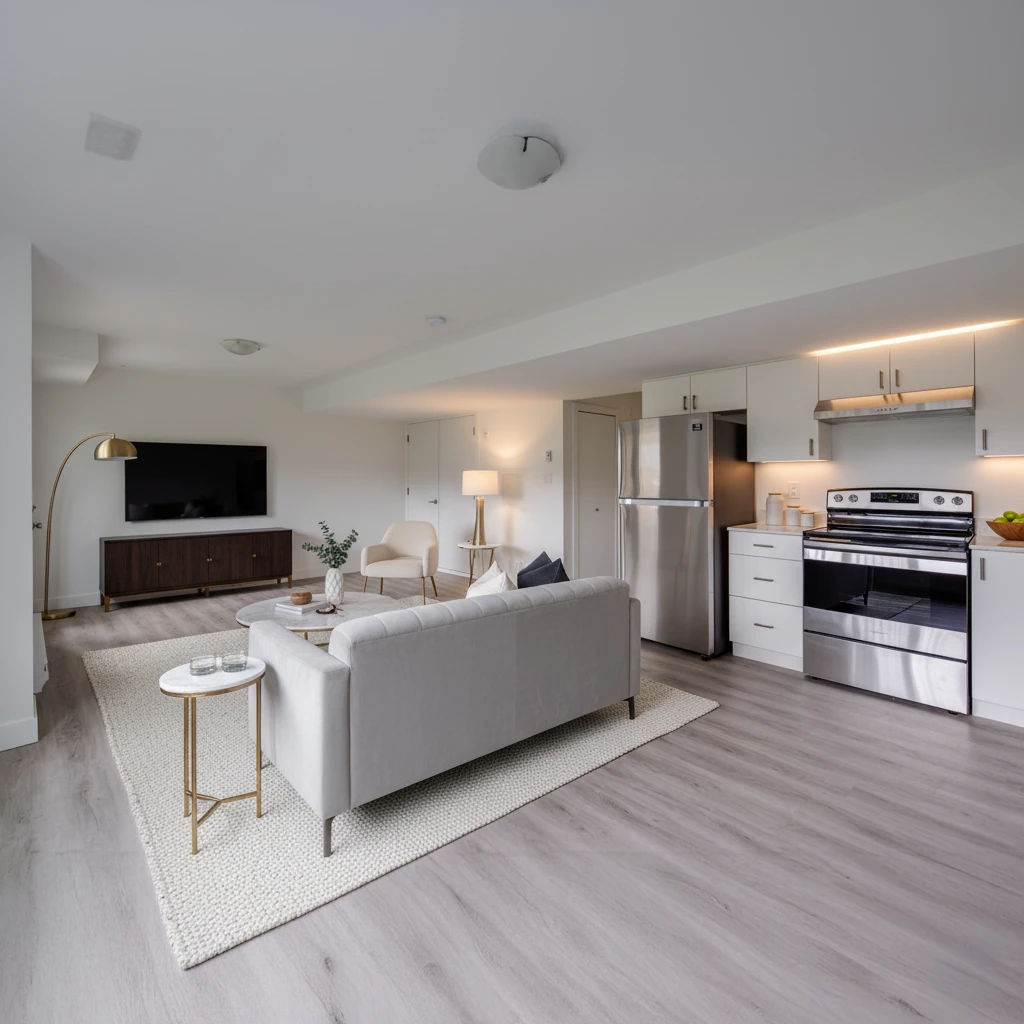
In-Law Suite Vancouver: Costs, Design Ideas & Multi-Generational Living (2026)
Three generations under one roof used to be a necessity. In Vancouver’s 2026 housing market, it’s become a strategy — and for thousands of Metro Vancouver families, building an in-law suite is the smartest renovation decision they’ll ever make.
Whether your parents are approaching retirement and want their independence without losing family proximity, your adult children can’t afford to rent in a city where average one-bedroom apartments exceed $2,800 per month, or your family simply functions better together than apart, an in-law suite transforms a single-family home into a multi-generational asset that pays dividends for decades.
This guide covers everything Vancouver homeowners need to know: realistic costs, the best suite type for your specific home, accessibility and aging-in-place design, City of Vancouver permit requirements, and how to structure ownership so the arrangement works legally and financially for every family member.
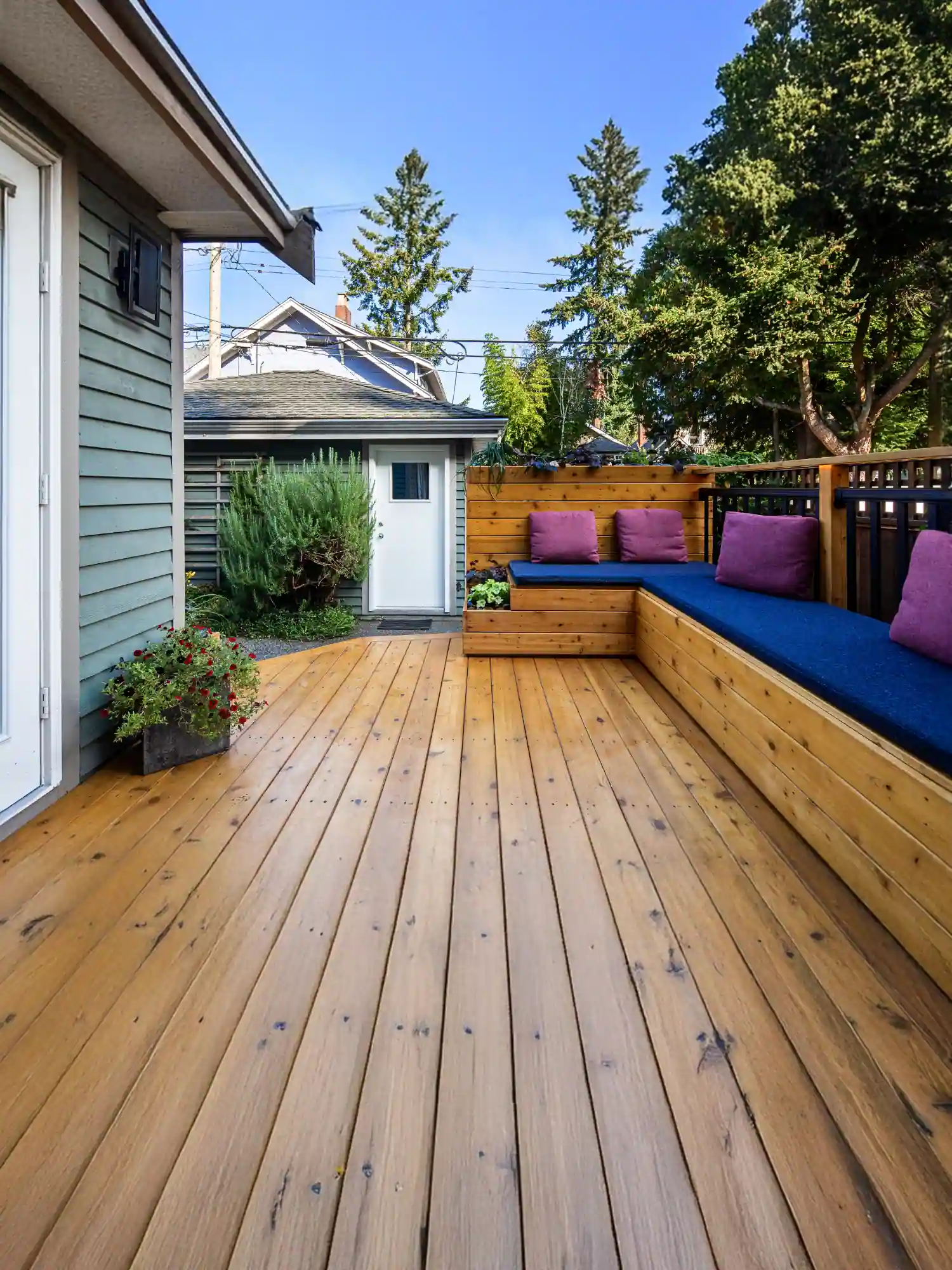 Surrey” class=”wp-image-12769″ />
The numbers are stark. A family purchasing a $2.2 million Vancouver home requires roughly $440,000 as a 20% down payment and approximately $9,800 per month in mortgage payments at current rates
Vancouver General Contractors
Why In-Law Suites Are Surging in Vancouver
Vancouver’s housing affordability crisis has permanently changed how families think about property. With detached homes averaging $1.8 million to $2.5 million across Metro Vancouver, the traditional model — each generation buys their own home — has become economically impossible for a growing share of families. The result is a fundamental shift toward multi-generational living, and in-law suites are the infrastructure that makes it work.
The numbers are stark. A family purchasing a $2.2 million Vancouver home requires roughly $440,000 as a 20% down payment and approximately $9,800 per month in mortgage payments at current rates. That’s before strata fees, property taxes, utilities, and maintenance. For most households, those numbers are only possible with two income streams or significant family contribution.
At the same time, elder care costs in Metro Vancouver have reached crisis levels. Assisted living facilities in Vancouver charge $4,500 to $8,000 per month depending on the level of care — costs that can exhaust a lifetime of retirement savings within a few years. An in-law suite eliminates that expense entirely while keeping parents connected to family rather than institutionalized.
Cultural context matters enormously in Metro Vancouver. Chinese-Canadian, South Asian, Filipino, and Korean families have long maintained multi-generational living as a cultural norm rather than a last resort. Grandparents provide childcare. Parents contribute financially to property purchases. Adult children remain close to aging relatives. The in-law suite gives these families a Western housing model that finally accommodates their actual family structure.
There’s also the pure arithmetic of shared ownership. Two families contributing to one mortgage, one set of property taxes, and one maintenance budget creates financial resilience that neither household could achieve independently. When parents contribute $300,000 toward a down payment in exchange for a purpose-built suite, both generations win: parents retain equity and independence, adult children access homeownership they couldn’t afford alone.
In-Law Suite Costs in Vancouver: What to Budget
In-law suite costs in Vancouver vary widely depending on the type of suite, the condition of your existing home, and how extensively you’re reconfiguring space. The table below reflects realistic 2026 contractor pricing for Metro Vancouver — not low-ball estimates, and not worst-case scenarios.
| Suite Type | Cost Range | Typical Size | Best For |
|---|---|---|---|
| Basement Conversion | $65,000–$110,000 | 500–800 sq ft | Homes with full-height basement (6’5″+) |
| Basement + Underpinning | $130,000–$200,000 | 600–900 sq ft | Pre-1970 homes with low ceilings |
| Main Floor Addition | $150,000–$280,000 | 400–700 sq ft | Parents with mobility limitations |
| Above-Garage Suite | $120,000–$200,000 | 400–650 sq ft | Homes with attached double garage |
| Detached Garden Suite | $220,000–$380,000 | 500–900 sq ft | Large lots, maximum privacy |
| Laneway House | $350,000–$550,000 | 700–1,200 sq ft | Corner lots or lanes, rental potential |
These ranges assume full suite completion: a functional kitchen (or kitchenette), full bathroom, at least one bedroom, a separate private entrance, in-suite laundry, and all City of Vancouver permit and inspection fees. They do not include landscaping, furniture, or appliances beyond the kitchen.
What drives costs higher within each range: structural complexity (underpinning, removing load-bearing walls, adding foundation footings for an addition), custom accessibility features (curbless showers, motorized doors, elevator platforms), high-end finishes, and sites with difficult access for excavation or delivery. What keeps costs toward the lower end: homes already close to code compliance, minimal structural work, standard finishes, and accessible sites.
A useful rule of thumb for Metro Vancouver: budget $150–$220 per square foot for a basement conversion, $250–$350 per square foot for a new addition, and $300–$450 per square foot for a detached structure. These figures include labour, materials, permits, and standard finishes but exclude furnishings and landscaping.
Which In-Law Suite Type Is Right for Your Home?
Not every suite type suits every home or every family situation. The right choice depends on your lot size, existing home structure, parent’s mobility needs, budget, and long-term plans for the space. Here’s an honest breakdown of each option.
Basement Suite
The most common and most affordable path in Vancouver. If your home was built after the 1970s and has a full 8-foot basement, conversion is relatively straightforward: separate entrance, egress windows, kitchen rough-in, bathroom, framing, insulation, drywall, and finishes. The challenge is older Vancouver homes — many pre-1970 bungalows have 5’6″ to 6’4″ basement heights that don’t meet the City’s 6’5″ minimum. If your ceilings are too low, you’ll need to underpin the foundation to gain height, which adds $60,000–$100,000 to the project cost but dramatically transforms the space.
The key limitation of basement suites for aging parents: stairs. If your parent currently has good mobility but that’s likely to change, a basement suite may work short-term but require a different solution within five to ten years. Build with this trajectory in mind.
Main Floor Addition
The most accessible option. A rear addition of 400–700 square feet built at grade eliminates stairs entirely, making it ideal for parents with mobility limitations, those using walkers or wheelchairs, or anyone where future accessibility is a primary concern. Additions require structural engineering, foundation work, and tying into existing mechanical systems, which pushes costs higher — but for families where stairs are a genuine barrier, this investment is justified.
Above-Garage Suite
If your home has an attached double garage with adequate structural capacity, converting or adding above the garage is an efficient use of existing footprint. The garage slab and walls provide a partial structure, reducing foundation costs. The limitation: stairs are required to access the suite, making it less suitable for parents with significant mobility issues. These suites work well for fit parents who want privacy from the main home without feeling removed to a separate structure.
Garden Suite (Detached)
A separate structure in the backyard provides maximum privacy for both the main household and the in-law suite occupant. No shared walls means true acoustic separation. Garden suites require a large enough lot to accommodate both the structure and required setbacks, separate utility connections (or shared with metering), and their own foundation. They’re the most expensive option per square foot when built small, but the privacy premium is meaningful for families where separation is important.
Laneway House
Vancouver’s laneway housing policy has made rear-lane detached structures increasingly common and popular. A laneway house is a full dwelling — not just a suite — that fronts onto the back lane. They’re larger than typical garden suites, have the highest potential rental value when the suite eventually becomes available to the rental market, and require the most significant investment. The City of Vancouver has streamlined laneway approvals, and there are now pre-approved laneway designs available that reduce design costs.
| Suite Type | Stairs Required | Privacy Level | Rental Potential | Permit Complexity |
|---|---|---|---|---|
| Basement | Yes (exterior) | Medium | High | Low–Medium |
| Main Floor Addition | No | Medium | Medium | High |
| Above-Garage | Yes (interior) | High | Medium | Medium |
| Garden Suite | Possible (grade) | Very High | High | Medium–High |
| Laneway House | Possible (grade) | Very High | Very High | High |
Design Principles for In-Law Suites That Actually Work
An in-law suite that functions well long-term requires more thought than simply adding a kitchen and bathroom to unused space. The best suites balance three competing needs: genuine privacy for both households, physical connection that allows caregiving when needed, and flexibility to serve different occupants at different life stages.
Separate entrance is non-negotiable. The ability to come and go independently — without walking through the main home — is the single most important feature of a functional in-law suite. This means a private exterior door with its own lock, its own address if possible (useful for mail and eventually for rental), and ideally a private outdoor space like a patio or small garden area. Without this, you’ve built a bedroom addition, not an in-law suite.
Acoustic separation matters more than homeowners expect. Sound transmission between units — footsteps, television, conversation, kitchen activity — is the most common source of friction in multi-generational living. Specify acoustic insulation (Roxul Safe’n’Sound or equivalent) in all shared walls and ceilings. Use resilient channel systems on shared ceilings to isolate structure-borne sound. Add solid-core doors between any connecting internal passage. This is far cheaper to do during construction than to retrofit later.
Single-level living within the suite. If your parent is in their 70s today, assume they’ll be in their 80s in this suite. All living functions — bedroom, bathroom, kitchen, living area, washer/dryer — should be on one level with no steps or thresholds within the suite itself. If the suite is at basement level, the issue is accessing the exterior entrance, not internal circulation. Plan an exterior ramp or level-entry path from grade to the entrance door.
Kitchenette vs. full kitchen. A full kitchen (30″ or 36″ range with oven, refrigerator, dishwasher, full sink) gives parents complete meal independence and makes the suite fully rentable later. A kitchenette (counter-top induction, bar-size refrigerator, microwave, small sink) costs $8,000–$15,000 less to build and is adequate if families plan to share meals regularly. For most families planning true multi-generational independence, the full kitchen is worth the additional cost.
In-suite laundry. Shared laundry causes friction. Budget for a stacked washer/dryer in the in-law suite — a 30″ x 30″ closet is all that’s required. The plumbing rough-in during construction costs far less than retrofitting later.
Connecting door (optional). An interior door between the main home and the suite — typically in a utility corridor, mudroom, or hallway — allows direct access for caregiving without going outside. This door can remain locked from both sides under normal conditions but provides immediate access in an emergency. Install a solid-core door with good weatherstripping to maintain acoustic and thermal separation.
Accessibility and Aging-in-Place Design
If your in-law suite is designed for parents who are currently in their 60s or 70s, it needs to be built to serve them into their 80s and 90s. Accessibility features built into a renovation cost a fraction of what retrofitting them costs later — and they dramatically reduce the risk that a parent needs to move to a care facility earlier than necessary.
Doorway width. Standard interior doorways are 28″–30″ — too narrow for a walker or wheelchair. Specify 32″ clear opening as a minimum, 36″ for primary bathroom and bedroom doors. This is done during framing and adds minimal cost during construction (perhaps $200–$400 per door in extra rough opening work) versus $800–$2,000 per door if widened later.
Curbless (zero-threshold) shower. A shower with no lip or curb eliminates the most common tripping hazard for older adults and allows wheelchair or shower chair access. A 36″ x 36″ curbless shower is the minimum; 36″ x 48″ is better; a 36″ x 60″ roll-in shower accommodates a seated shower chair comfortably. The linear drain required for curbless shower installation adds $300–$600 to the plumbing cost but is far superior functionally.
Grab bars. Install structural blocking in all bathroom walls during framing — 3/4″ plywood panels behind the drywall at the shower, beside the toilet, and at the bathtub (if included). This blocking costs $400–$800 during construction and allows grab bars to be installed anywhere in those areas later without requiring wall demolition. If parents need grab bars now, install them during construction at $200–$600 per bar installed, including blocking. Required locations: shower entry, shower interior (horizontal at 33″–36″ AFF, vertical at shower entry), beside toilet (one or both sides at 33″–36″ AFF).
Lever door handles throughout. Replace round knobs with lever-style handles on all doors in the suite. A person with arthritis, carrying groceries, or with limited hand strength cannot reliably operate a round knob. Lever handles cost approximately the same as knobs and are a universal design principle that benefits anyone.
Non-slip flooring. Avoid high-gloss tile in bathroom and kitchen areas. Specify textured ceramic or porcelain tile with a coefficient of friction (COF) of 0.60 or higher for wet areas. Vinyl plank flooring throughout the rest of the suite is comfortable underfoot, warmer than tile, and highly durable.
Lighting. Older adults require two to three times more light than younger people to see the same detail. Specify LED lighting with a minimum of 50 foot-candles at counter surfaces and 30 foot-candles in corridors and bedrooms. Motion-sensing night lights in the corridor between bedroom and bathroom are an inexpensive addition ($80–$150 per unit) that significantly reduces nighttime fall risk.
Stair lift provision. If your suite requires exterior stairs to reach the entrance (basement suite, above-garage suite), rough in a 20-amp dedicated circuit beside the stair during construction. A stair lift costs $3,000–$8,000 installed — easy to add if the electrical is already there, difficult to retrofit without opening finished walls.
For a comprehensive approach to accessible renovation, our Vancouver Renovation Guide covers universal design principles that apply across all room types.
City of Vancouver In-Law Suite Regulations
The City of Vancouver does not legally distinguish between an “in-law suite” and a “secondary suite.” From a regulatory standpoint, any self-contained dwelling unit within or attached to a single-family home is a secondary suite, subject to the same requirements regardless of who occupies it.
Minimum suite requirements under City of Vancouver bylaws:
- Minimum floor area: 37 square metres (approximately 398 square feet)
- Minimum ceiling height: 1.95 metres (6 feet 5 inches) throughout habitable space
- Separate private entrance directly from exterior or from common area (not through primary dwelling)
- Full bathroom (toilet, sink, and shower or tub)
- Kitchen facilities (sink, refrigerator, cooking appliance)
- Egress window in every sleeping room: minimum 0.35 sq m opening, minimum 380mm height and 380mm width, maximum 1.0m sill height from finished floor
- Smoke and carbon monoxide detectors interconnected with main dwelling
- Fire separation between suite and main dwelling (typically Type X drywall)
Permits required: A Building Permit is required for all secondary suite construction in Vancouver, whether new or existing. If you’re adding floor area (addition or new detached structure), a Development Permit is also required prior to the Building Permit. Electrical, plumbing, and mechanical sub-permits are typically issued as part of the Building Permit package.
When a variance is needed: If your existing home structure cannot meet standard setback, lot coverage, or height requirements for the proposed suite configuration, you’ll need to apply for a variance from the Board of Variance. Common variance triggers: adding a second story to a garage that would exceed the permitted height, a rear addition that would push lot coverage beyond the 40% allowance, or a garden suite on a lot that’s too small to meet setback requirements on all sides.
Owner-occupancy requirement: Secondary suites in Vancouver require that the registered owner occupy the principal dwelling. You cannot rent out both the main home and the suite simultaneously. This requirement disappears for laneway houses, which are permitted as full rental properties independent of owner occupancy.
Permit timeline: Simple basement suite conversions (existing footprint, no structural changes) typically take 4–8 weeks for Building Permit issuance. Additions and new detached structures requiring Development Permits typically take 3–6 months for approval. Factor this into your project timeline — construction cannot begin until permits are issued and posted at the site.
Inspections: Expect inspections at framing, rough-in mechanical/electrical/plumbing, insulation, and final occupancy stages. Your contractor should coordinate all inspections. Never skip or try to work around inspections — an un-inspected suite cannot legally be occupied and creates serious problems at sale.
Basement In-Law Suite: The Most Common Path
For the majority of Vancouver homeowners, a basement conversion is the starting point for in-law suite planning. It’s the least expensive option, it works within the existing home footprint (no new lot coverage, simpler permitting), and it leverages space that’s often underutilized for storage.
The ceiling height challenge. Vancouver’s residential building stock is heavily weighted toward pre-1970 construction, particularly in East Vancouver, the West Side, Burnaby, and New Westminster. These homes commonly have 5’6″ to 6’4″ basement ceiling heights — below the City’s 6’5″ minimum. Before spending on design and planning, have a contractor measure your actual basement height from the top of the concrete slab to the underside of the floor joists (not the existing drywall ceiling if one exists).
If you’re at 6’3″ or above, it’s worth consulting with your structural engineer — some configurations allow meeting the 6’5″ requirement by adjusting the finished floor level or routing mechanical systems differently. If you’re at 6’0″ or below, underpinning is likely required.
Underpinning explained. Underpinning involves excavating beneath the existing foundation footings, extending the foundation walls deeper, and pouring new concrete to create additional headroom. It’s done in alternating sections (never the full perimeter at once) to maintain structural integrity throughout. A typical Vancouver underpinning project to gain 18″–24″ of headroom costs $65,000–$100,000 for the structural work alone, before suite finishing.
Separate entrance. A basement suite requires its own exterior door. In Vancouver, this typically means an exterior stair down from grade to the basement level, often at the side or rear of the home. The stair enclosure requires a landing, railing, and often a roof or weatherproofing. If you’re planning for aging parents, consider the trajectory of this entrance — exterior stairs become increasingly difficult. A ground-level ramp pathway alongside the stair (if lot space allows) provides an accessible alternative route.
Sample cost breakdown: 650 sq ft basement suite, existing 7′ ceiling height
| Item | Estimated Cost |
|---|---|
| Permits and inspections | $4,500–$7,000 |
| Structural / egress window cutting | $3,000–$6,000 |
| Separate entrance (exterior stair + door) | $8,000–$15,000 |
| Framing, insulation, drywall | $14,000–$22,000 |
| Electrical (suite panel + wiring) | $8,000–$14,000 |
| Plumbing (bathroom + kitchen rough-in + fixtures) | $12,000–$20,000 |
| HVAC (suite heating, ventilation) | $6,000–$10,000 |
| Kitchen (cabinets, counters, appliances) | $12,000–$22,000 |
| Bathroom (tile, fixtures, vanity) | $8,000–$15,000 |
| Flooring throughout | $5,000–$9,000 |
| Painting and trim | $3,500–$6,000 |
| In-suite laundry | $2,500–$4,500 |
| Total | $86,500–$150,500 |
This range reflects a standard basement suite with mid-grade finishes in Metro Vancouver. Accessibility upgrades (curbless shower, blocking, grab bars, wider doorways) add approximately $5,000–$15,000 to the total depending on scope.
Main Floor Addition for In-Law Suite: The Most Accessible Option
If stairs are a present or near-future barrier for your parents, a main floor addition built at grade is the most functionally superior option for aging-in-place. There are no stairs within the suite, no exterior stair to navigate in ice or rain, and the suite can be designed with a level-access entrance from the exterior and a direct connection to the main home at the same level.
A rear addition of 400–700 square feet extends the existing home footprint toward the rear property line (subject to setback requirements — typically 3.5 metres in Vancouver RS zones). The addition sits on its own foundation, which is poured contiguous with or abutting the existing home’s foundation. The structural connection between the old and new construction requires engineering — this is not a minor framing project.
Permit requirements for additions: Main floor additions require a Development Permit (reviewed for zoning compliance) and a Building Permit. The permit application must include structural engineering drawings stamped by a Professional Engineer registered in BC, architectural drawings, and energy compliance documentation. Plan for a 3–4 month permit timeline in Vancouver before construction can begin.
Structural and aesthetic integration. The most successful additions are designed to read as part of the original home rather than an obvious appendage. This means matching roof pitch and materials, using the same exterior cladding or a complementary material, aligning window heights and proportions with the existing home, and coordinating interior floor levels. A good architect or experienced design-build contractor will develop this integration from the outset rather than treating it as an afterthought.
Utility connections. A main floor addition can share the main home’s mechanical systems (furnace, hot water, electrical panel) or be served by its own dedicated systems. For an in-law suite specifically, a separate hot water tank or tankless unit for the suite gives the occupant control over hot water without coordinating with the main household. Separate electrical metering requires an additional meter base (approximately $2,000–$3,500) and is worth the investment if family finances are managed separately.
Private outdoor space. A main floor addition at the rear of the home naturally creates an opportunity for a private patio or small garden area adjacent to the suite’s exterior door. This private outdoor space — even if only 100–150 square feet of patio — is enormously valuable to the suite’s resident. Dedicate a portion of the rear yard to the in-law suite’s exclusive use via simple landscaping separation (a low hedge, raised planter, change in paving material) rather than a full fence.
Financial Structure for Multi-Generational Homes
The financial architecture of multi-generational home purchases is as important as the physical architecture of the in-law suite. Done well, it protects every family member’s interests. Done poorly, it creates conflict, legal complications, and potential financial harm when circumstances change.
Parental contribution options. Parents contributing to a home purchase can do so in several ways, each with different legal and tax implications:
- Gift: Parent transfers funds with no expectation of repayment. Simple, but the parent has no legal claim to the property or the funds if the relationship breaks down or adult child divorces. Mortgage lenders require a gift letter.
- Loan: Parent lends funds with a promissory note specifying repayment terms. The loan can be registered as a second mortgage on title, giving the parent a secured interest. Requires proper legal documentation.
- Co-ownership (Joint Tenancy): Parent is a registered owner. If either owner dies, the survivor inherits the deceased’s share automatically. Simpler for estate planning but complicates mortgage qualification if parent has income limitations.
- Co-ownership (Tenancy in Common): Each owner holds a specified percentage share. Shares pass through each owner’s estate rather than automatically to the co-owner. More flexible for estate planning, particularly if parent has other heirs.
There is no universally correct structure — the right answer depends on your family’s specific situation, the parent’s estate plan, and how the adult children’s relationship is structured. Consulting a BC family lawyer and an estate planning professional before signing anything is essential, not optional.
What happens when a parent eventually needs a care facility? This is the question most families avoid discussing but must plan for. If the parent is a registered co-owner, selling their interest or refinancing becomes more complex. If the parent has contributed funds as a loan, those funds should be repayable when the parent needs them for care costs. The suite itself — once vacated — becomes a rental property that generates income to offset care costs. Build this contingency into your planning from the beginning.
Mortgage qualification with parental contribution. If parents are co-borrowers on the mortgage, their income is included in qualification calculations — helpful if they have pension income, investment income, or rental income. Lenders vary on how they treat parental gift funds versus loan funds for down payment purposes. Work with a mortgage broker who has experience with multi-generational purchase structures before selecting a lender.
Property tax implications. There is no property transfer tax on transfers between parents and children in BC (via the Family Transfer Exemption), which is relevant if parents are added to title after purchase. The Home Owner Grant applies only to the owner-occupied principal residence and is not affected by having a suite, provided the registered owner occupies the principal dwelling.
Rental Suite vs. In-Law Suite: The Legal Reality
From the City of Vancouver’s perspective, there is no legal distinction between an in-law suite and a rental secondary suite. Both are secondary suites. Both require the same permits, meet the same construction standards, and are subject to the same owner-occupancy requirement (for attached suites in single-family zones).
This matters for two reasons. First, if you build a proper legal secondary suite — with permits, to code, with inspections — you’ve built something that works equally well as an in-law suite now and a rental suite later. The suite’s function can shift without any physical changes. Second, if you build an unpermitted “in-law suite” to avoid the regulatory requirements, you’ve built an illegal secondary suite that will be flagged at sale, may be ordered vacated by the City if discovered, and creates liability for any injury to an occupant.
Planning for the rental transition. When parents no longer need the suite — whether they’ve moved to a care facility, downsized, or passed away — a legal secondary suite becomes a significant rental income generator. In 2026, a well-finished 600–800 square foot legal suite in Vancouver or Burnaby commands $2,000–$2,800 per month. At $2,400/month, that’s $28,800 per year in rental income — a meaningful offset to mortgage costs and property expenses.
Property value. A legal secondary suite adds $200,000–$350,000 to the assessed and market value of a Metro Vancouver home, according to current market data. This reflects both the income-generating potential and the appeal to the large segment of buyers who are themselves planning multi-generational arrangements. An illegal suite adds far less value — buyers discount heavily for the cost and disruption of either legalizing or removing the suite.
Tax implications when renting. Rental income from a secondary suite is taxable income reported on your personal income tax return. However, you can deduct a proportionate share of home expenses — mortgage interest (not principal), property taxes, insurance, utilities, maintenance, and depreciation — based on the square footage of the suite relative to the total home. A tax accountant familiar with Canadian rental property rules is worth consulting before you begin renting.
The ROI of an In-Law Suite: Quantifying the Value
In-law suites are frequently discussed in terms of family benefit and lifestyle. They should also be evaluated in hard financial terms — because the numbers are compelling.
Avoided elder care costs. Assisted living in Metro Vancouver costs $4,500 to $8,000 per month in 2026, depending on the level of care and the facility. Memory care facilities run higher. A parent living in a well-designed in-law suite, maintaining their independence, costs the family nothing in care facility fees. Over five years, the difference between assisted living ($270,000–$480,000) and an in-law suite ($65,000–$280,000 to build, $0 monthly) is self-evidently dramatic. The suite pays for itself multiple times over against the alternative.
Childcare value. Grandparents living on-site and available for childcare represents a significant financial contribution. Full-time licensed childcare in Metro Vancouver costs $1,200–$2,000 per month per child. Grandparents providing regular part-time childcare — even a few days per week — generate thousands of dollars in annual value to the younger generation.
Property value addition. A legal secondary suite in Vancouver adds $200,000–$350,000 to market value at current prices. A $90,000 basement suite conversion that adds $250,000 in market value represents a 178% return on the renovation investment — before accounting for any rental income or care cost savings.
Eventual rental income. When the suite transitions to a rental unit, current market rents of $2,000–$2,800/month represent $24,000–$33,600 per year in additional household income. At a conservative 5% capitalization rate, that income stream represents $480,000–$672,000 in asset value — justifying substantial construction investment.
| Financial Factor | Value |
|---|---|
| Avoided assisted living costs (5 years) | $270,000–$480,000 |
| Property value addition (legal suite) | $200,000–$350,000 |
| Potential rental income (annual) | $24,000–$33,600/year |
| Childcare value offset (2 days/week) | $12,000–$19,200/year |
| Construction cost (basement suite) | $65,000–$150,000 |
| Net financial benefit (10 years) | $500,000–$900,000+ |
The financial case for a well-built in-law suite in Vancouver is not marginal. In most cases, it represents the highest-return home renovation a Vancouver homeowner can undertake — combining property value appreciation, income potential, and avoided costs into a single investment.
If you’re considering an in-law suite as part of a broader home renovation, our Vancouver Home Renovation guide covers how to prioritize and sequence renovation projects for maximum return. And when you’re ready to discuss your specific project, contact our team for a site consultation.
More Home Additions & Custom Homes Guides

Wheelchair Accessible Home Renovation in Vancouver: ADA Clearances and BC Code

Grab Bar Installation in Vancouver: Types, Placement, and What the BC Code Requires
Main Floor Master Bedroom Addition in Vancouver: Design for One-Level Living
Home Elevator and Stair Lift Installation in Vancouver: Options, Costs, and Permits
Universal Design Home Renovation in Vancouver: Designing for All Ages and Abilities
Ready to start your renovation?
Frequently Asked Questions: In-Law Suites in Vancouver
Should I build a basement suite or a main floor addition for my aging parents?
It depends almost entirely on your parents’ current and anticipated mobility. If they’re in their 60s with good mobility and likely to remain active for 10+ years, a basement suite with a well-designed exterior stair entry (and stair lift rough-in) is the more economical choice. If they currently have difficulty with stairs, use a walker or wheelchair, or have conditions likely to affect mobility within five years, invest in a main floor addition — it’s more expensive to build but eliminates the single biggest functional limitation of basement suites for aging adults.
What are the City of Vancouver’s minimum requirements for a secondary suite?
The City requires a minimum 37 square metres (398 sq ft) of floor area, a minimum 1.95-metre (6’5″) ceiling height throughout habitable space, a private entrance from the exterior (not through the main dwelling), a full bathroom, kitchen facilities, egress windows in all sleeping rooms, and interconnected smoke and carbon monoxide detectors. Fire separation (Type X drywall) between the suite and the main dwelling is also required. These requirements apply identically whether the suite is for family members or rental tenants.
Do I need a Development Permit and a Building Permit?
A Building Permit is required for all secondary suite construction. A Development Permit is additionally required if you’re adding floor area — meaning any addition, new detached structure, or significant reconfiguration that changes the home’s overall footprint or height. A straightforward basement conversion that doesn’t change the home’s exterior footprint typically requires only a Building Permit. Your contractor or the City’s development planning counter can confirm which permits apply to your specific project based on a brief site description.
Can my parents and I share utilities, or do we need separate meters?
Shared utilities are common for in-law suites, particularly when the arrangement is family-occupied rather than a rental tenancy. Many families split utility costs proportionally (typically 30–40% for the suite, 60–70% for the main home based on relative square footage). If you anticipate the suite becoming a rental unit in the future, separate electrical metering ($2,000–$3,500 for the additional meter base and panel) makes the transition to tenancy much cleaner, as you’ll need separate metering to bill a tenant fairly. Separate gas and water metering is less common and more expensive to retrofit.
Does the in-law suite need a full kitchen, or will a kitchenette work?
Either will satisfy the City’s requirements — “kitchen facilities” includes a kitchenette configuration. The practical question is how independent your parents want to be with meal preparation and whether you’re planning for the space to function as a rental unit later. A full kitchen (range with oven, full refrigerator, dishwasher, double sink) adds $8,000–$15,000 over a kitchenette but provides complete meal independence and full rental marketability. If parents are planning to share dinners with your household regularly, a kitchenette may be entirely sufficient for their actual use.
What ownership structure should we use when parents contribute to the purchase?
This is a legal and estate planning question that requires professional advice specific to your family situation. Generally: if parents want to preserve their financial contribution as an asset within their estate (to be distributed among multiple heirs), Tenancy in Common with specified percentage shares is more appropriate. If the primary goal is simplicity and the survivor inherits automatically, Joint Tenancy works. If parents prefer not to be on title at all, a properly documented loan secured by mortgage provides legal protection without ownership complexity. Engage a BC real estate lawyer and an estate planner before making this decision.
Can parents’ income be used to help qualify for the mortgage?
Yes, if parents are co-borrowers on the mortgage (meaning they are both on title and on the mortgage). Their qualifying income — including CPP, OAS, pension income, investment income, and rental income — is included in the lender’s gross debt service and total debt service calculations. This can meaningfully improve the purchasing household’s qualification limit. The tradeoff is that parents being on the mortgage means their personal liability is also on the line, and their credit profile is assessed by the lender. Work with a mortgage broker experienced in multi-generational purchase structures to evaluate whether co-borrowing improves your situation.
What happens when my parent eventually moves to a care facility or passes away?
If your parent contributed to the purchase or is on title, their interest passes according to the ownership structure and their estate plan. In Tenancy in Common, their percentage interest becomes part of their estate (which may mean other heirs have a claim). In Joint Tenancy, the surviving registered owner inherits. The suite itself remains — now vacant — and becomes a rental unit generating income that can help offset any ongoing care facility costs or estate obligations. Planning for this transition explicitly, in writing, with legal documentation before it occurs is far preferable to resolving it under emotional and financial pressure after the fact.
If I built an in-law suite for family, can I later rent it to a non-family tenant?
Yes, provided the suite was built with proper permits, meets all City of Vancouver secondary suite standards, and you as the registered owner continue to occupy the principal dwelling. The City does not restrict who occupies a legal secondary suite — family member or arm’s-length tenant, the suite is legally equivalent. When you transition to a rental tenancy, BC’s Residential Tenancy Act applies fully, including fixed-term lease requirements, allowable rent increases, and tenant protections. Familiarize yourself with the RTA before signing a tenancy agreement.
How do I design a senior-friendly bathroom in an in-law suite?
Key elements: a curbless (zero-threshold) shower at minimum 36″ x 48″ with a linear drain, grab bars at the shower entry and on both walls within the shower (horizontal at 33″–36″ AFF), a wall-mounted grab bar beside the toilet on the approach side (33″–36″ AFF), a comfort-height toilet (17″–19″ seat height versus standard 15″), a pedestal or floating vanity with knee clearance underneath (allows seated use), lever faucet handles, non-slip tile flooring (COF 0.60+), and adequate lighting (minimum 50 foot-candles at the mirror). If budget allows, a comfort-height vanity with the counter at 34″–36″ eliminates bending for someone with back issues.
Where exactly should grab bars be placed?
At the toilet: one horizontal bar on the side wall adjacent to the toilet, positioned 33″–36″ above the finished floor and 12″ forward of the toilet’s front edge. A fold-down bar on the open side is more flexible if the toilet can be approached from either direction. In the shower: a vertical bar at the shower entry (24″–36″ AFF, for balance entering and exiting), a horizontal bar on the primary wall at 33″–36″ AFF (for lateral support while standing), and a diagonal bar on the end wall at 33″–36″ AFF. Install all grab bars into structural blocking rated to support 250 lbs minimum — standard drywall without blocking will not hold under a fall load.
Is my basement ceiling height high enough for a legal suite?
The City of Vancouver requires 1.95 metres (6 feet 5 inches) of clear ceiling height throughout habitable space. Measure from the top of your concrete slab (or existing finished floor) to the underside of the floor joists — not to any existing drywall ceiling or ductwork that reduces clear height. Mechanical systems (ducts, pipes) routed within the ceiling must fit within the floor joist space or you must account for their impact on clear height. If your existing height is 6’3″ or less, consult with a structural engineer about underpinning options before assuming a basement suite is off the table — some configurations can be made to work with strategic ductwork routing and other measures.
Can I add a stair lift to the exterior stairs for my parent’s basement suite?
Yes. Exterior stair lifts are available and installed regularly on Vancouver home stairs, though they require weatherproof models rated for outdoor use (typically higher cost than interior lifts). The stair must be sufficiently wide to accommodate the lift track while leaving adequate clearance — typically a minimum 28″ clear width alongside the track is required as an emergency egress route. Cost runs $4,000–$10,000 for an exterior stair lift depending on stair length and configuration. Installing a dedicated 20-amp electrical circuit near the stair during the original construction makes future stair lift installation straightforward; retrofitting the circuit later typically requires opening finished walls, adding $800–$2,000 to the lift installation cost.
How do multi-generational families handle privacy in a shared home?
The most effective strategies: a truly separate entrance that neither household uses casually for the other’s space, acoustic insulation in all shared walls and ceilings (discussed as non-negotiable during design), clear household agreements about when the internal connecting door (if one exists) is appropriate to use, separate outdoor spaces that belong distinctly to each household, and honest communication between generations before moving in about expectations around meals, childcare, social visits, and privacy. Physical design can support good boundaries, but it cannot substitute for explicit family conversations about how you’ll live together. Families who have these conversations before construction find the arrangement far more sustainable than those who assume shared living will work itself out.
How long does it take to build an in-law suite from start to finish?
For a basement suite conversion: 4–8 weeks for Building Permit (assuming no Development Permit required), then 10–16 weeks of construction, for a total of 4–6 months from project start to occupancy. For a main floor addition: 3–6 months for Development and Building Permits, then 16–24 weeks of construction, for a total of 7–12 months. For a new detached garden suite or laneway house: 4–8 months for permits, then 20–28 weeks of construction, for a total of 9–15 months. These timelines assume a properly resourced contractor, no major unforeseen structural issues, and no permit revisions required. Start planning 6–12 months before you need the suite to be ready.
How do I get started planning an in-law suite in Vancouver?
Start with a site assessment by an experienced contractor or designer who can evaluate your specific home’s feasibility for each suite type — checking basement ceiling heights, lot coverage calculations, setbacks, existing mechanical system capacity, and structural conditions. This assessment (typically 1–2 hours) informs which options are genuinely available to you and provides realistic cost ranges for your actual site rather than generic estimates. From there, engage an architect or designer to develop permit-ready drawings. Select a general contractor experienced with secondary suites in Vancouver — permit knowledge, subcontractor coordination, and City inspection experience matter significantly on these projects. Our team at Vancouver General Contractors handles the complete process from design consultation through final inspection. Contact us to schedule a consultation.
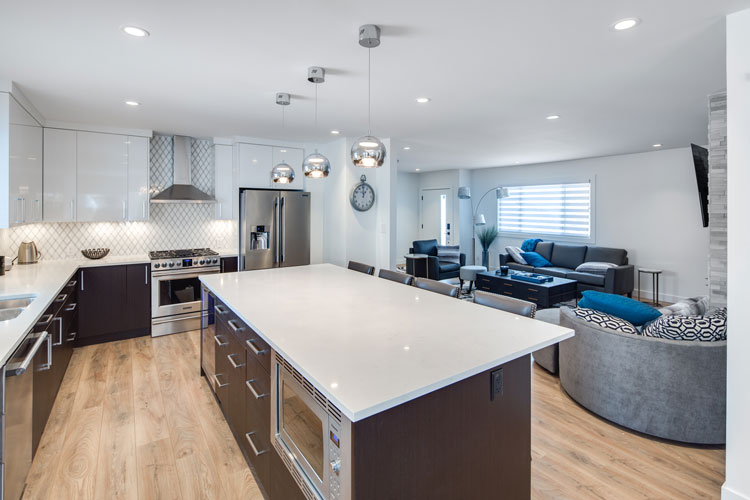 North Vancouver” class=”wp-image-12856″ />
Get a Free Renovation Quote
Metro Vancouver’s trusted general contractors. Free consultations across Vancouver, Burnaby, Richmond, North Shore & beyond.
Get Your Free Quote →Ready to start your project? Vancouver General Contractors (VGC) provides free, fixed-price quotes for homeowners across Metro Vancouver. Learn more about our home additions Vancouver services or request a free quote today.
VGC serves Vancouver and surrounding areas. View all renovation services in Vancouver →

Comments are closed