




Interior vs. Exterior Basement Waterproofing in Vancouver: Which is More Effective?
If you’re a homeowner in Metro Vancouver researching Interior vs. Exterior Basement Waterproofing in Vancouver: Which is More Effective?, you’re in the right place. This in-depth guide covers everything you need to know — from realistic cost expectations and permitting requirements to step-by-step process guidance, contractor selection tips, and Vancouver-specific regulatory considerations. Whether you’re planning a project for next month or simply gathering information for the future, the details here reflect current 2026 market conditions across the City of Vancouver, Burnaby, North Vancouver, Richmond, Coquitlam, and the broader Metro Vancouver region.
Vancouver’s renovation market is unlike any other in Canada. Labour costs are higher, permit timelines are longer, and the complexity of local zoning regulations — from R1-1 zoning changes to heritage restrictions and secondary suite bylaws — means that projects here require more planning than similar work in other cities. At the same time, Vancouver’s extraordinary real estate values mean that a well-executed basement renovation can add disproportionate value to your home. This guide is designed to help you navigate that complexity with confidence.
Understanding the true scope of Interior vs. Exterior Basement Waterproofing in Vancouver: Which is More Effective? means going beyond the surface-level numbers you’ll find on national cost-estimator websites. Those tools don’t account for Vancouver’s premium labour rates (typically 25–40% higher than the national average), the specific material costs at Vancouver-area suppliers, or the impact of local building codes and permit fees. The figures and insights in this guide are drawn from our experience completing 500+ renovation projects across Metro Vancouver since 2010 — giving you a grounded, realistic picture of what this project actually involves.
One of the most common mistakes Vancouver homeowners make is underestimating both the cost and the timeline of basement renovation projects. A project that looks straightforward on paper often reveals hidden complexities during demo — old knob-and-tube wiring, substandard insulation, asbestos in older homes, or structural issues that weren’t visible during the planning phase. This is why experienced contractors always build a 15–20% contingency into renovation budgets, and why this guide dedicates significant space to the “unknowns” that commonly affect basement and secondary suite renovation projects in older Vancouver-area homes.
By the end of this guide, you’ll have a thorough understanding of the costs, process, timeline, and key decisions involved in Interior vs. Exterior Basement Waterproofing in Vancouver: Which is More Effective?. You’ll know what questions to ask contractors, what permits are likely required, what mistakes to avoid, and what a realistic outcome looks like for a property in Metro Vancouver. Let’s get into it.
What Interior vs. Exterior Basement Waterproofing in Vancouver: Which is More Effective? Actually Involves
Before diving into costs and timelines, it’s worth defining exactly what Interior vs. Exterior Basement Waterproofing in Vancouver: Which is More Effective? encompasses — because the scope can vary enormously depending on your home, your goals, and the specific municipality you’re in. At the broadest level, this type of project involves finishing the relevant areas of your home according to current building standards, your aesthetic preferences, and the applicable regulations under the BC Building Code and your municipality’s zoning bylaw.
In practical terms, a typical basement renovation in Metro Vancouver involves coordination between multiple trades: basement renovation contractor, framing carpenters, electricians, plumbers, HVAC technicians, tilers, painters, and finish carpenters. The sequence in which these trades work is critical — mistakes in sequencing lead to costly rework, delays, and sometimes permit inspection failures. A general contractor experienced in basement and secondary suite renovation manages this sequencing as part of their core service, which is one of the primary reasons homeowners hire them rather than self-managing individual subtrades.
The scope of your specific project will be defined early in the planning process, typically through a combination of a site visit, detailed drawings or plans, and a written scope-of-work document. This document becomes the basis for your permit application (where required), your contractor agreements, and your project budget. Skipping or rushing this planning stage is one of the most reliable predictors of project overruns in Metro Vancouver’s renovation market.
Secondary suites require a full building permit from the City of Vancouver and must meet specific requirements for fire separation, egress, plumbing, and minimum ceiling height. This has significant implications for your timeline and budget. Permit fees in Metro Vancouver range from a few hundred dollars for simple projects to several thousand for major structural work. More importantly, the time required to obtain permits — typically 4–12 weeks depending on the municipality and complexity — needs to be factored into your overall project timeline from day one. Projects that skip required permits face significant consequences at resale: unpermitted work must either be disclosed (reducing buyer confidence and sale price) or legalized through an “after-the-fact” permit process that’s considerably more expensive and time-consuming than getting permits done correctly upfront.
Another aspect of basement renovation that Vancouver homeowners often underestimate is the disruption to daily life during construction. Depending on the scope and which rooms are affected, you may need to make alternative arrangements for cooking, bathroom use, or even temporary accommodation. A good general contractor will provide a realistic picture of disruption timelines before work begins and will structure the project schedule to minimize the impact on your family — but some level of inconvenience is inevitable with any substantive renovation project.
Finally, it’s important to understand that basement and secondary suite renovation in Vancouver involves layers of regulatory compliance that don’t exist in many other cities. BC’s Building Code requires specific standards for insulation (particularly relevant given Vancouver’s energy step code requirements), fire separation between suites, structural loads, and more. Meeting these standards isn’t optional — they protect your family’s safety and ensure your home’s systems perform as expected for decades. A licensed contractor who regularly works in Metro Vancouver will be well-versed in these requirements and will build them into the project plan from the start.
Complete Cost Breakdown for Metro Vancouver (2026)
The single most common question homeowners ask about Interior vs. Exterior Basement Waterproofing in Vancouver: Which is More Effective? is: “How much will it cost?” The honest answer is that costs vary significantly based on scope, materials, contractor availability, and specific site conditions — but understanding the typical cost ranges for Metro Vancouver helps you set a realistic budget and evaluate contractor quotes. The figures below reflect current 2026 market conditions and represent typical projects across the Metro Vancouver region.
| Cost Item | Typical Range (Metro Vancouver) | Notes |
|---|---|---|
| Basic basement finishing (open plan) | $35,000 – $65,000 | Framing, drywall, flooring, electrical, egress windows |
| Secondary suite with kitchen + bath | $75,000 – $130,000 | Full suite with fire separation, plumbing, HVAC |
| Legal suite legalization (existing suite) | $25,000 – $55,000 | Bringing unauthorized suite up to code |
| Basement waterproofing (interior) | $8,000 – $18,000 | Interior drainage system + sump pump |
| Basement waterproofing (exterior) | $15,000 – $40,000 | Excavation, membrane, drainage, landscaping repair |
| Permit fees (secondary suite) | $1,200 – $3,500 | City of Vancouver or municipality building permit |
| Contingency (recommended) | 15–20% of budget | Radon, asbestos, and moisture issues common in older basements |
These figures reflect typical mid-range projects with standard-grade materials in Metro Vancouver. High-end projects using premium imported materials, complex structural work, or properties with challenging site access can push costs 30–60% above the ranges shown. Budget-conscious projects using builder-grade materials and straightforward scopes can come in at the lower end of the ranges — but in Vancouver’s market, very low quotes should raise questions about the contractor’s experience, licensing status, and what might be excluded from the scope.
Labour is typically the largest cost component in Metro Vancouver renovation projects, representing 40–55% of total project cost depending on the trade. Electrician rates run $95–$130/hour; licensed plumbers charge $110–$145/hour; tile setters command $65–$95/hour; and framing carpenters range from $55–$85/hour depending on experience and availability. These rates have increased by 18–25% since 2020 and are expected to continue rising modestly through 2026–2027 due to the ongoing skilled trades shortage in BC.
One cost that homeowners consistently underestimate is the “soft costs” associated with renovation projects: permit fees (typically $800–$4,500 in Metro Vancouver depending on project value), engineering fees if structural work is involved ($1,500–$6,000), design/architectural fees ($3,000–$15,000 for larger projects), and waste disposal ($400–$1,200 for a typical renovation). These costs typically add 8–15% to the contractor’s base quote and should be budgeted for explicitly rather than left as surprises.
The most important budgeting principle for any basement renovation project in Vancouver is the contingency budget. We recommend setting aside 15–20% of your total estimated cost for unexpected discoveries during demolition — which in older Metro Vancouver homes almost always includes something: outdated wiring requiring an electrical upgrade, old galvanized pipes that should be replaced while walls are open, subfloor damage from historical moisture issues, or structural surprises that need addressing. Homeowners who budget for contingencies report significantly less financial stress and better overall project outcomes than those who plan to the dollar.
7 Key Factors That Will Shape Your Interior vs. Exterior Basement Waterproofing in Vancouver: Which is More Effective? Project
Every basement renovation project in Metro Vancouver is shaped by a combination of factors that interact to determine final cost, timeline, and outcome. Understanding these factors — and how they apply to your specific property and goals — is essential for making well-informed decisions before and during the project.
1. Fire separation requirements: 1-hour rated assemblies
The most fundamental requirement for a legal secondary suite in Metro Vancouver is a 1-hour fire separation between the suite and the rest of the house. This requires 5/8″ Type X drywall on both faces of all shared walls and ceilings, as well as a fire-rated door (solid-core with intumescent seal) at the shared stairwell. Using standard 1/2″ drywall on the suite side — a common shortcut on unpermitted suites — fails fire inspection and must be replaced at significant cost.
2. Egress window compliance: minimum openings
Every bedroom in a secondary suite must have an egress window meeting City of Vancouver’s minimum opening area of 0.35 m² with a minimum clear opening of 380mm in height and 450mm in width. Many existing basement windows don’t meet this standard. Cutting new window openings in a concrete foundation costs $2,500–$5,500 per window depending on wall type. Plan for 1–2 egress window upgrades in any basement suite permit application — it’s almost always required.
3. Minimum ceiling height: 2.44m requirement
The BC Building Code requires 2.44m (8’0″) minimum ceiling height in the principal rooms of a secondary suite. In basement suites, this means the finished ceiling — after framing, insulation, and drywall — must clear 2.44m. Mechanical ducts, beams, and pipes must be accounted for in this calculation. If your existing basement slab-to-joists height is less than 2.75m (accounting for 2.5″ ceiling assembly), achieving minimum height will require either underpinning (lowering the slab) or suite-specific design workarounds.
4. Moisture management and radon testing
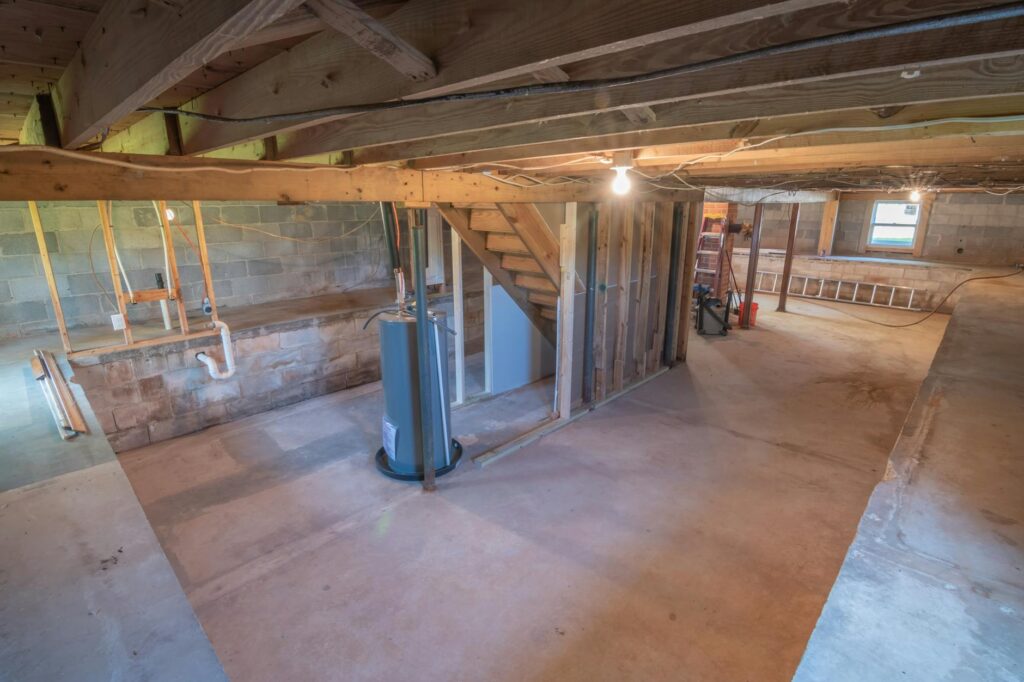
Metro Vancouver’s high water table and significant seasonal rainfall mean basement moisture is a genuine risk factor that must be addressed before finishing. Interior drain tile systems: $8,000–$18,000. Exterior waterproofing: $15,000–$40,000. Spray-foam insulation on walls (vapour barrier + insulation in one): $6,000–$12,000 vs. standard batt approach. Additionally, radon testing is strongly recommended: Metro Vancouver averages 100 Bq/m³ (action level: 200 Bq/m³) and many Vancouver basements exceed this. Radon mitigation after finishing costs 3–5× more than addressing it during construction.
5. Permit type: new vs. legalization of existing
A brand-new secondary suite permit and a “legalization of existing suite” permit follow different processes. New suite: full permit package, new rough-in, clean-slate compliance. Legalization: the existing suite must be brought up to current code — which often means upgrading nearly everything to current standards while working around existing conditions. Legalization is often more expensive per square foot than new-build because it involves piecemeal corrections rather than systematic installation. Get quotes for both scenarios if you have an existing suite to legalize.
6. Separate entrance: feasibility and cost
A secondary suite requires a separate exterior entrance — both for livability and for code compliance in most Metro Vancouver municipalities. Creating a new separate entrance through the foundation involves excavation, new stairwell construction, and exterior door installation: $8,000–$18,000. If the existing basement has a walk-out or a door to the backyard, this cost is avoided. Evaluate the entrance feasibility before proceeding with suite planning — it’s a significant cost item that’s easy to overlook in early planning.
7. Separate metering and utility provisions
Most Metro Vancouver municipalities require secondary suites to have separate electrical metering to clearly differentiate utility consumption between the primary dwelling and the suite. BC Hydro service upgrade to accommodate a second meter: $2,000–$4,500. Separately metered suites also need their own circuit panels, hot water tank (or shared system with separate controls), and in some cases separate heating systems. These utility provisions add $6,000–$12,000 to a secondary suite renovation budget but are required for legal status.
The Step-by-Step Interior vs. Exterior Basement Waterproofing in Vancouver: Which is More Effective? Process
Understanding the typical sequence of events in a basement renovation project helps you stay oriented, ask the right questions at each stage, and catch potential problems before they become costly mistakes. While every project has unique elements, the following process reflects how experienced general contractors approach basement and secondary suite renovation work in Metro Vancouver:
- Pre-renovation assessment: moisture, radon, asbestos
Before any planning or design work, conduct a moisture assessment (look for efflorescence, staining, or mould), radon test (deploy a 90-day test kit or hire a certified tester), and have any pre-1985 floor tile or pipe insulation tested for asbestos. These three issues are discovered during construction in the majority of Metro Vancouver basement renovations — knowing about them upfront prevents expensive mid-project surprises. - Pre-application meeting with the municipality
For secondary suite permits, a pre-application meeting with your municipality’s building department is strongly recommended. This meeting clarifies permit requirements specific to your property and may identify site-specific complications (inadequate lot coverage, setback issues, service requirements) before you invest in design drawings. - Design phase: maximize ceiling height, egress, natural light
Basement suite design is primarily constrained by ceiling height (2.44m minimum), egress window placement (minimum 0.35 m² opening in each bedroom), and available natural light. An experienced designer will optimize the floor plan within these constraints. Spend adequate time here — changes mid-construction are far more expensive than changes on paper. - Structural assessment and waterproofing
A structural engineer should assess foundation walls and overhead framing before finishing begins. Any moisture infiltration must be addressed before insulating and drywalling — interior drain tile and sump pump installation ($8,000–$18,000) before framing is the most common intervention. Installing this after walls are complete requires costly demolition. - Egress window cutting and installation
Cutting egress windows in concrete foundation walls requires concrete saw-cutting and forming — typically $2,500–$5,500 per window. This must be done before framing begins to avoid disrupting new framing with the vibration of concrete saw work. Plan window locations carefully in the design phase. - Framing: walls, ceiling drops, separate entrance
Frame all partition walls, drop ceilings for mechanical and duct chases, and construct the separate entrance landing and stairs. Fire separation walls between the suite and the main house framing require 2×6 framing (to accommodate full-depth insulation + 5/8″ Type X drywall). - Rough-in trades: plumbing, electrical, HVAC
Plumbing rough-in for suite kitchen and bathroom drains and supplies. Electrical: separate panel for suite, circuits for kitchen, bathroom, bedroom, common areas. HVAC: extend existing or install separate ductwork. Separate suite electrical metering (required for legal suite in most Metro Vancouver municipalities): coordinate with BC Hydro early. - Fire separation assembly: 5/8" Type X drywall
This is the most critical code requirement for secondary suites and the most commonly failed inspection item. All walls and ceilings shared between the suite and the main house must be sheathed with 5/8″ Type X drywall on BOTH faces. Staggered joints, taped, and fire-blocked at all penetrations. The suite entry door must be a solid-core fire door with an intumescent seal. - Insulation: R-22 walls, R-38 ceiling
BC Building Code requires minimum R-22 insulation in suite walls and R-38 at the ceiling level between suite and main floor. Spray foam on concrete walls (R-20 at 3.5″) is the preferred approach for moisture management. Batt insulation requires a vapour barrier installed on the warm side (towards the interior). - Drywall, finishes, kitchen, and bathroom
After insulation, complete drywall installation, taping, and painting. Install suite kitchen and bathroom (the finish work is identical to main-floor renovations but compressed into a smaller space). Complete final inspections (electrical, plumbing, building) and obtain permit closure before advertising the suite for rent.
How to Choose the Right Contractor for Interior vs. Exterior Basement Waterproofing in Vancouver: Which is More Effective?
Contractor selection is arguably the single most important decision you’ll make for your basement renovation project. The right contractor brings experience, licensing, proper insurance, reliable subtrade relationships, and transparent communication to your project. The wrong one can turn what should be a positive transformation into a prolonged nightmare involving disputes, cost overruns, poor workmanship, and legal complications. In Metro Vancouver’s busy renovation market, where demand for skilled contractors consistently outstrips supply, due diligence before hiring is essential.
Start by verifying the contractor’s licensing. In BC, general contractors who do work over $10,000 must be registered with the BC HomeOwner Protection Office (HPO) if they build new homes, but renovation contractors don’t have a specific provincial licensing requirement beyond business registration. However, their subtrades (electricians, plumbers, gas fitters, HVAC technicians) must be licensed by their respective regulatory bodies. Ask for BC Safety Authority (BCSA) numbers for electrical and gas work, and confirm that plumbers hold a Certificate of Qualification. Any contractor who can’t provide these on request is a red flag.
Beyond licensing, look for contractors who specialize in basement and secondary suite renovation specifically — not just “general renovation.” Ask for three references from projects similar to yours, completed in the past two years, and actually call them. Ask past clients specifically about: whether the project came in on budget, how the contractor handled unexpected issues, whether the site was kept clean and safe, and whether they’d hire them again without hesitation. These questions reveal far more than any online review.
Ensure your contract includes a detailed scope of work, a payment schedule tied to project milestones (not dates), a warranty provision (minimum 2 years on labour in BC), and a process for handling change orders. A written contract protects both parties and creates accountability at every stage of the project. Vancouver General Contractors provides all of this as standard practice — and we encourage you to hold every contractor you consider to the same standard.
5 Common Mistakes Vancouver Homeowners Make with Interior vs. Exterior Basement Waterproofing in Vancouver: Which is More Effective?
After completing hundreds of basement and secondary suite renovation projects across Metro Vancouver, our team has seen the same avoidable mistakes occur repeatedly. Understanding these pitfalls in advance can save you thousands of dollars, weeks of delays, and significant frustration.
Using 1/2-inch drywall for fire separation (should be 5/8 Type X)
This is the most common cause of suite permit rejection in Metro Vancouver. Fire code requires 5/8-inch Type X drywall on both faces of all assemblies between a secondary suite and the main dwelling — not just one face, and not standard 1/2-inch drywall on either face. Discovering this mid-project (after standard drywall is already installed) requires removing and replacing all shared walls at a cost of $4,000–$8,000. Confirm drywall specs with your contractor before framing begins.
Creating a suite that technically meets minimum height but has no usable ceiling
Many Metro Vancouver basements have mechanical systems — HVAC ducts, plumbing drain lines, beam pockets — that drop below the 2.44m minimum ceiling height at specific locations. While a basement can technically meet the minimum if the bulk of the area meets the height requirement, creating a livable suite requires that critical areas (kitchen, living area, bedroom) maintain full height. Design the mechanical routing before framing to avoid discovered conflicts that require moving ducts after installation.
Skipping radon testing before construction
Radon is a colourless, odourless radioactive gas that accumulates in basement spaces. Metro Vancouver has significant radon variability — some areas test well above the 200 Bq/m³ action level. Installing a sub-slab depressurization (SSD) system during construction costs $800–$1,500. Installing it after basement finishing requires cutting concrete and routing pipes through finished walls: $3,000–$6,000. Test before construction; mitigate during construction if needed.
Creating an unauthorized suite and thinking permit risks are low
Vancouver has significantly increased enforcement of unauthorized suites in recent years, driven by fire safety concerns after several fatal residential fires in suites. Complaints to 3-1-1, insurance claims that reveal a suite’s existence, and routine building inspections all create paths to discovery. The consequences of an order to remove a non-compliant suite ($30,000–$60,000 in a finished basement) dwarf the cost of permitted construction ($75,000–$130,000). Get the permit.
Not planning the electrical service upgrade before construction begins
BC Hydro requires significant lead time (6–12 weeks) to process electrical service upgrades. A secondary suite requires a second electrical meter — this requires a BC Hydro service upgrade application and physical installation of new service infrastructure. Starting this process after construction is well underway consistently creates 6–12 week delays at the end of the project when the suite is complete but can’t be energized. Apply to BC Hydro for the service upgrade at the same time you apply for your suite building permit.
Vancouver-Specific Considerations for Interior vs. Exterior Basement Waterproofing in Vancouver: Which is More Effective?
Metro Vancouver presents a unique combination of regulatory requirements, housing stock characteristics, and market conditions that make renovation projects here genuinely different from those in other Canadian cities. If you’re working with a contractor who doesn’t regularly work in this market, they may not be aware of requirements that significantly affect your project’s scope, cost, and timeline. This section outlines the key Vancouver-specific factors you need to understand before proceeding.
The City of Vancouver’s building permit process is managed by the Development, Buildings and Licensing (DBL) department. Standard residential building permits are processed in 4–10 weeks for straightforward applications; however, projects involving heritage-listed properties, rezoning applications, development permits, or complex structural work can take 3–12 months. Burnaby, Richmond, North Vancouver, and Coquitlam each have their own building departments with distinct processes and timelines. The most important advice we give homeowners: start the permit process as early as possible, and don’t assume approval will be quick based on the project’s simplicity from your perspective.
BC’s Energy Step Code is increasingly relevant to renovation projects in Metro Vancouver. While Step Code compliance was initially focused on new construction, it now affects certain renovation projects — particularly those that disturb more than 25% of the building envelope (exterior walls, roof, foundation). Step Code compliance requires higher R-values for insulation, improved airtightness, and better window performance than older standards required. If your project involves significant envelope work, discuss Step Code requirements with your contractor early — the additional cost is typically $3,000–$12,000 but can significantly improve your home’s comfort and energy efficiency.
Finally, Vancouver’s housing stock presents challenges that don’t exist in newer suburban markets. Homes built before 1980 may contain asbestos-containing materials (ACMs) in floor tiles, textured ceiling finishes, pipe insulation, and roofing. BC regulations require that ACMs be tested and, if present, removed by a licensed asbestos abatement contractor before being disturbed. Asbestos testing costs $400–$800; abatement ranges from $2,000 (minor amounts) to $15,000+ for extensive contamination. Budget for asbestos testing in any pre-1980 Metro Vancouver home before finalizing your project cost estimates — it’s better to know upfront than to be surprised mid-demo.
Project Timeline & Planning Guide for Interior vs. Exterior Basement Waterproofing in Vancouver: Which is More Effective?
One of the most frequent sources of homeowner frustration in Metro Vancouver renovation projects is unrealistic timeline expectations. Vancouver’s busy renovation market, extended permit approval windows, and the inherent unpredictability of construction work all mean that projects frequently take longer than initially estimated. Here’s a realistic breakdown of what to expect at each phase:
| Phase | Typical Duration | What Happens |
|---|---|---|
| Pre-renovation assessment: moisture, radon, asbestos | 2–4 weeks | Testing must complete before design is finalized |
| Design and permit application (secondary suite) | 6–10 weeks | Full suite permit package requires complete drawings |
| Permit approval | 6–14 weeks | Secondary suite permits take longer than standard residential |
| Site preparation: waterproofing, egress windows | 2–3 weeks | Drain tile installation and egress window cutting before framing |
| Framing: walls, ceiling drops, separate entrance | 1–2 weeks | All framing before any rough-in work |
| Rough-in trades: plumbing, electrical, HVAC, BC Hydro service | 2–3 weeks | Coordinate BC Hydro service upgrade application early |
| Fire separation drywall (5/8" Type X) + insulation | 1–2 weeks | Critical code requirement — do not substitute 1/2" drywall |
| Standard drywall, taping, and painting | 2–3 weeks | Non-fire-separation walls use standard 1/2" drywall |
| Kitchen and bathroom finishes | 2–3 weeks | Suite kitchen and bathroom complete |
| Total (typical range) | 5–10 months | From pre-renovation assessment to permit closure |
The total timeline from decision to move-back-in for a typical basement renovation project in Metro Vancouver ranges from 3–4 months for smaller, straightforward projects to 9–14 months for larger, more complex work involving permits, engineering, and multiple trades. Homeowners who engage a contractor early in the process — ideally 3–4 months before their target start date — have consistently better outcomes than those who try to compress the planning phase.
One timeline factor that surprises many Vancouver homeowners is the time required to source materials. Custom cabinets, specialty tiles, imported fixtures, and engineered windows can have lead times of 8–16 weeks from order to delivery. For this reason, design decisions — especially for kitchen and bathroom renovations — must be made during the planning phase, not after construction begins. Waiting to select your countertop or tile after demo is completed almost always extends your project timeline and can increase costs if the delay cascades to other trades.
Return on Investment: Is Interior vs. Exterior Basement Waterproofing in Vancouver: Which is More Effective? Worth It in Vancouver?
In Vancouver’s real estate market — where detached homes regularly trade at $1.5–$3M and even condos command $700K–$1.2M — renovation ROI calculations look very different than they do in other Canadian cities. The simple reality is that the base cost of real estate is so high that improving the quality of your existing home is often more financially sound than moving to achieve a better result. Understanding the specific ROI dynamics of Interior vs. Exterior Basement Waterproofing in Vancouver: Which is More Effective? helps you make that decision with confidence.
According to real estate appraisal data and our experience working with Vancouver homeowners who subsequently sell, basement renovation projects in Metro Vancouver recover approximately 70–90% of their cost at resale — particularly for legal secondary suites that generate ongoing rental income in Metro Vancouver’s tight rental market. While this doesn’t represent a dollar-for-dollar return on your renovation investment, it’s important to recognize that the remaining value was recaptured in quality of life — in daily comfort, functionality, and enjoyment of your home during the years between renovation and sale.
Beyond direct resale ROI, certain types of renovation — particularly secondary suites, laneway houses, and energy-efficiency upgrades — generate ongoing financial returns through rental income or reduced energy costs. A legal secondary suite in Metro Vancouver generating $2,400/month in rental income represents $28,800/year in pre-tax income — which, over a 7-year horizon, delivers far more financial value than any simple resale ROI calculation captures. When evaluating the financial case for your basement renovation project, consider both the direct resale value improvement and any income generation or operating-cost savings the renovation enables.
Finally, consider the cost of the alternative. In Metro Vancouver’s 2026 market, moving to a larger or better-configured home typically involves $80,000–$150,000 in transaction costs alone (realtor commissions, legal fees, property transfer tax, moving costs). When viewed against that benchmark, the cost of improving your existing home — even at less than 100% ROI — often represents the more financially sound decision.
More Basement & Secondary Suites Guides
Drywall vs. Drop Ceiling for Your Vancouver Basement: Cost and Practicality Compared
Carpet vs. LVP Basement Flooring in Vancouver: Which Handles Moisture Better?

Wood vs. Steel Stud Framing for Vancouver Basement Walls: Which is Better?
Basement Subfloor Options Sleepers Dricore Lvp Concrete
Secondary Suite Appliance Requirements Stove Hood Fridge
Ready to start your renovation?
Frequently Asked Questions: Interior vs. Exterior Basement Waterproofing in Vancouver: Which is More Effective?
How much does a secondary suite renovation cost in Vancouver?
In Metro Vancouver, a new legal secondary suite in a basement typically costs $75,000–$130,000 for a complete project including permit fees, fire separation work, egress windows, separate electrical metering, kitchen, and bathroom. Legalizing an existing unauthorized suite (bringing it up to code) costs $25,000–$55,000 depending on how far below compliance the existing suite is. New suite from scratch is often more cost-effective than legalization because you start with a clean slate rather than correcting irregular work.
How long does it take to build a secondary suite in Vancouver?
From initial planning to rental occupancy, legal secondary suites in Metro Vancouver typically take 5–10 months: 2–4 weeks for pre-renovation assessment, 6–10 weeks for design and permit application, 6–14 weeks for permit approval, 8–14 weeks for construction, and 2–4 weeks for final inspections and permit closure. The permit approval phase is the most variable — start your permit application as early as possible.
Is a secondary suite a good investment in Vancouver?
A legal secondary suite in Metro Vancouver generating $2,200–$2,800/month in rent produces $26,400–$33,600/year in pre-tax rental income. At a construction cost of $100,000, the gross rental yield is 26–34% annually before carrying costs — a compelling financial case. Additionally, suite income improves mortgage qualification. The critical qualifier: ‘legal’ suite. Unauthorized suites carry significant legal and financial risk that substantially reduces the investment thesis.
What’s the minimum ceiling height required for a secondary suite?
The BC Building Code requires a minimum 2.44m (8’0″) finished ceiling height in the principal rooms of a secondary suite. This means the finished ceiling — after framing (1.5″), insulation, and drywall (5/8″ Type X = 5/8″ = 1.6cm) — must clear 2.44m. In a basement where the unfinished height from slab to bottom of joists is only 2.6m, this is very tight and requires careful mechanical routing to clear mechanical ducts and pipes through all areas.
What fire separation requirements apply to secondary suites?
BC Building Code requires a 1-hour fire separation between a secondary suite and the rest of the house. This means: 5/8″ Type X drywall on both faces of all shared walls and ceilings; a solid-core fire door with intumescent seal at the stairwell connection; and firestopping at all penetrations through the assembly (pipes, electrical conduit). Using standard 1/2″ drywall on either face fails the requirement and will not pass inspection.
Can I rent out my secondary suite while the renovation is in progress?
No — a secondary suite cannot be legally occupied until the City of Vancouver issues final permit approval and all inspections are passed. Occupying a suite before final permit closure violates the permit conditions and creates significant liability for the homeowner if there’s a fire or other incident. Plan for the suite to be unavailable for the full construction period plus 2–4 weeks for final inspections.
Do I need a separate electrical meter for my secondary suite?
Most Metro Vancouver municipalities require separate electrical metering for secondary suites to clearly differentiate consumption between the primary dwelling and the suite. BC Hydro must install the second meter — this requires a service upgrade application that takes 6–12 weeks to process. Apply to BC Hydro at the same time you apply for your building permit to avoid the suite sitting complete but un-energized while waiting for the meter.
What egress window size is required for a basement bedroom?
In the City of Vancouver, bedrooms in secondary suites require egress windows with a minimum openable area of 0.35 m² (3.77 sq ft), with the openable portion at least 380mm (15″) high and 450mm (17.7″) wide. Most existing basement windows are smaller than this. Cutting a new egress window in a concrete foundation wall costs $2,500–$5,500. Plan for 1–2 egress window upgrades in any secondary suite project budget.
Ready to Move Forward with Your Interior vs. Exterior Basement Waterproofing in Vancouver: Which is More Effective? Project?
Interior vs. Exterior Basement Waterproofing in Vancouver: Which is More Effective? is one of the most meaningful investments you can make in your Metro Vancouver home — both in terms of daily quality of life and long-term financial value. Like any significant project, the key to a successful outcome is thorough planning, clear communication with your contractor, realistic expectations about cost and timeline, and the right team to execute the work.
Vancouver General Contractors has been completing renovation projects across Metro Vancouver since 2010. Our team of licensed contractors, project managers, and renovation specialists brings genuine expertise to every project — from initial consultation and permit applications through to final inspections and project handover. We’ve helped hundreds of Vancouver homeowners through projects like the one described in this guide, and we understand the specific challenges, regulations, and opportunities that come with renovating in this market.
If you’re ready to move forward with your basement renovation project, or simply want a professional assessment of your options, we’d love to hear from you. Contact Vancouver General Contractors for a free consultation — we’ll help you understand what’s achievable within your budget, which permits you’ll need, and what realistic timelines look like for your specific project. Let’s build something great together.

Comments are closed