




Laneway House Permit Vancouver: Complete Process, Costs & Timeline (2026)
A laneway house is one of the most significant investments a Vancouver homeowner can make — adding a fully self-contained dwelling to your property, generating rental income, or housing family members on the same lot. But before a single shovel touches the ground, you need permits. Multiple permits. From multiple departments. With fees that surprise almost every homeowner who hasn’t gone through the process before.
This guide covers every stage of the laneway house permit process in Vancouver in 2026 — from eligibility checks and pre-application consultations through development permits, building permits, inspections, and final occupancy. We’ve included the current fee schedules, realistic timelines, and the specific City of Vancouver requirements that apply to new laneway construction. Whether you’re in the planning stage or ready to submit drawings, this is the process you need to understand before committing.
Why Laneway House Permits Are Non-Negotiable
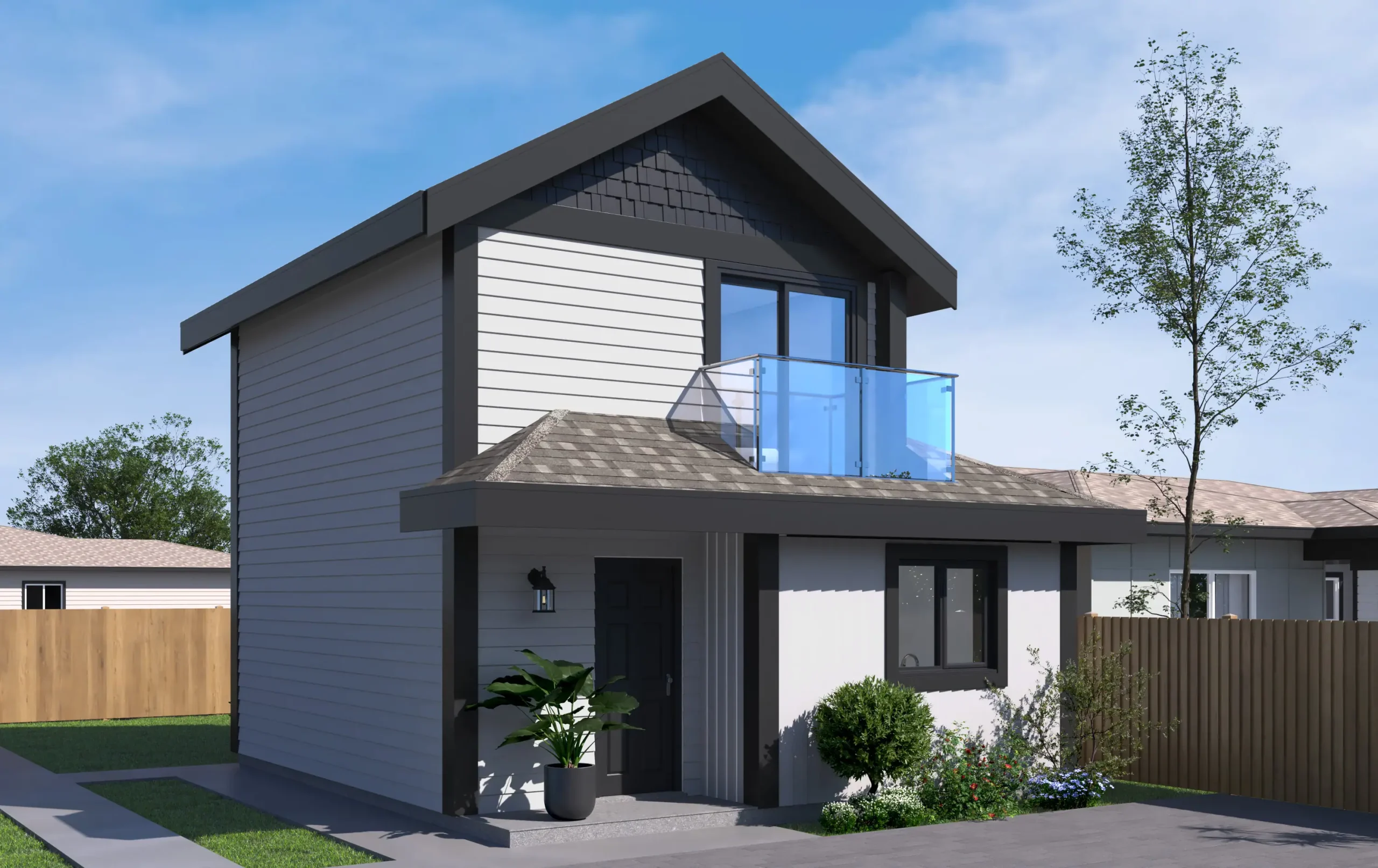
A laneway house is a new, separate dwelling unit. That single fact determines everything about the permit process. In British Columbia, any new dwelling unit — regardless of size — requires a building permit. There are no exemptions, no informal approvals, and no shortcuts. A laneway house is not a shed, not a garage, and not a simple renovation. It is a new residential building, and the City of Vancouver treats it accordingly.
The total cost of permits, fees, levies, and connection charges for a laneway house in Vancouver typically runs between $45,000 and $65,000 — before a single dollar of construction cost
Vancouver General Contractors
Beyond the legal requirement, permits protect you financially and practically. An unpermitted laneway house cannot be legally rented. It will not pass a home inspection when you sell. It creates liability exposure if anything goes wrong — fire, flood, electrical fault. Your home insurance may refuse coverage. And the City of Vancouver has the authority to order demolition of unpermitted structures, leaving you with nothing but debt and a legal battle.
The permit process for a laneway house in Vancouver typically involves two distinct approval stages. First, in most residential zones, a development permit is required because you are adding a new dwelling unit to a lot that already has an existing house. The development permit confirms that the proposed laneway house meets all zoning bylaw requirements — height, setbacks, massing, lot coverage. Second, a building permit is required for the actual construction, covering structural, mechanical, electrical, and plumbing systems. Both permits are issued by the City of Vancouver, but by different departments, on different timelines, with different reviewers.
The total cost of permits, fees, levies, and connection charges for a laneway house in Vancouver typically runs between $45,000 and $65,000 — before a single dollar of construction cost. That figure shocks most homeowners. We break down every component later in this guide. The other number that surprises people is the timeline: from the decision to build to the day you hand a tenant the keys, expect 18 to 30 months. Understanding both of these realities before you start is the single most valuable thing this guide can offer.
Laneway House Eligibility: Which Lots and Zones Qualify
Not every Vancouver property can have a laneway house. The City of Vancouver has specific zoning and lot requirements that must be met before a development permit application can even be submitted. Confirming eligibility is the first step — and it determines whether the rest of this guide applies to your property at all.
Eligible Zoning Districts
Laneway housing is permitted in the following Vancouver residential zones:
- RS-1 — Single-family residential (most of Vancouver’s east side and parts of the west side)
- RS-1A — Single-family residential with character retention provisions
- RS-1B — Single-family residential with smaller lot provisions
- RS-2 — Single-family residential (select neighbourhoods)
- RS-3 — Single-family residential
- RS-3A — Single-family residential
- RS-4 — Single-family residential (Point Grey and select west side areas)
- RS-5 — Single-family residential
- RS-6 — Single-family residential
- RS-7 — Single-family residential
- RT zones — Two-family and multiple conversion dwelling zones, subject to zone-specific conditions
To confirm your specific zoning, use the City of Vancouver’s online VanMap property information tool. Enter your address and look for the “Zoning District” field. If your zone is not listed above, you may still have options through the City’s multiplex or secondary suite programs, but those involve a different approval process than a standard laneway house.
Lot Requirements
Meeting the zoning requirement is necessary but not sufficient. Your lot must also meet specific dimension requirements:
| Requirement | Standard | Notes |
|---|---|---|
| Minimum lot width | 10.0 m (33 ft) | Standard laneway house |
| Minimum lot width (small lot) | 7.3 m (24 ft) | Available via relaxation in some zones |
| Minimum lot depth | 28.0 m (92 ft) | Required to accommodate both house and laneway with setbacks |
| Lane access | Paved lane at rear | Mandatory — no lane access = no laneway permit |
| Existing principal dwelling | Must be present | Laneway is accessory to the main house |
The lane access requirement is absolute. If your property does not back onto a paved lane, a laneway house is not permitted under current City of Vancouver bylaws. This eliminates many properties in areas where lanes were not built or where the rear of the property abuts another property rather than a lane. Check your property’s lane access on VanMap before proceeding.
Lot depth matters because the City requires specific setbacks between the laneway house and the main house, between the laneway and the lane itself, and between the laneway and side property lines. On a very short lot, these setbacks can make it geometrically impossible to fit a laneway house that meets the minimum size to be functional. Your designer will model this in the site plan.
If your lot is narrower than 10.0 m, relaxation may be available — but it is not guaranteed. Relaxation requires a formal request through the development permit process, reviewed by a City planner who considers the specific circumstances. Narrow lots that receive relaxation typically have exceptional characteristics (deeper lot, sympathetic neighbouring properties, heritage considerations) that justify the deviation from standard requirements.
Development Permit vs. Building Permit: Understanding the Two-Stage Process
The single biggest source of confusion for homeowners new to the laneway permit process is the difference between a development permit and a building permit — and why both are typically required. These are distinct approvals issued by different City of Vancouver departments, in sequence, and neither can substitute for the other.
Development Permit (DP)
A development permit (DP) confirms that what you propose to build is allowed under the Vancouver Zoning and Development Bylaw. For a laneway house in an RS zone, a DP is required because you are adding a second dwelling unit to a lot — a change that requires formal zoning review even though the zone permits it as-of-right.
The development permit review evaluates:
- Zoning compliance — is a laneway house permitted in this zone?
- Setbacks — does the proposed building maintain required distances from the lane, side property lines, and existing house?
- Height — does the proposed structure stay within the maximum height limits?
- Floor area ratio (FAR) — does the combined floor area of all buildings on the lot stay within the allowed maximum?
- Lot coverage — does the total footprint of all buildings stay within the allowed percentage?
- Shadow impact — in some cases, a shadow study demonstrating that the laneway house does not materially shade neighbouring properties
- Design compatibility — in heritage or character areas, the exterior design may need to complement the existing neighbourhood character
The development permit process in Vancouver typically takes 8 to 16 weeks from submission to approval. Complex applications — heritage overlays, relaxation requests, unusual lot configurations — can take longer. The City assigns a planner to your file who will issue comments, request revisions, and ultimately recommend approval or refusal. Most straightforward laneway applications go through one or two revision cycles before approval.
Development permit fees in the City of Vancouver currently range from approximately $2,500 to $5,000 for a standard laneway house application, depending on construction value and whether any relaxations are requested.
Building Permit (BP)
The building permit is where the actual construction is approved. While the development permit confirms what you can build, the building permit confirms how it must be built — structure, fire separation, insulation, plumbing systems, electrical, mechanical ventilation, accessibility, and compliance with the BC Building Code.
Building permit review for a new laneway dwelling typically takes 6 to 14 weeks in Vancouver. You can submit the building permit application before the development permit is issued (parallel processing), but the City will not release the building permit until the development permit is in hand. Submitting in parallel can save 6–8 weeks of total calendar time.
Building permit fees are calculated as a percentage of declared construction value — typically 1.0% to 1.5% for a new dwelling. On a laneway house with a declared construction value of $400,000, expect a building permit fee of $4,000 to $6,000. This is separate from development cost levies (DCLs), which we cover in the fees section.
Pre-Application Consultation: The Step Most Homeowners Skip
The City of Vancouver offers a free pre-application consultation service for residential projects, including laneway houses. This is a meeting with a City planner — typically 45 to 60 minutes — where you present a preliminary concept and receive direct feedback before spending money on full permit drawings.
Most homeowners skip this step. That is a mistake that regularly costs $5,000 to $15,000 in wasted design fees when a full drawing set is submitted and the City’s initial comments require a fundamental redesign.
What to Bring to the Pre-Application Meeting
- A basic site plan showing the lot dimensions, location of the existing house, location of the proposed laneway, and approximate setbacks
- Simple concept sketches or massing drawings showing the footprint, number of floors, and approximate height
- Your address and property information (zoning, lot dimensions, current lot coverage)
- A list of specific questions — particularly if you are considering any relaxations from standard requirements
You do not need engineered drawings or full architectural plans. The planner is reviewing the concept, not approving it. A hand-drawn sketch or a simple CAD plan is sufficient.
What the Planner Reviews
At the pre-application meeting, the assigned planner will review your concept against the zoning bylaw and identify any obvious issues — setback violations, height problems, lot coverage concerns, or heritage overlay requirements you may not have been aware of. They can also indicate whether a relaxation request is likely to be supported, saving you from submitting a doomed application.
The planner’s comments at this stage are not binding approvals. But they give you and your designer concrete direction before the expensive work of preparing full permit drawings begins.
How to Book and When
Pre-application consultations are booked through the City of Vancouver’s Development and Building Services Centre. Availability varies, but expect to wait 3 to 6 weeks for an appointment. Book before engaging a designer for full drawings — ideally before you’ve signed a design contract — so you can share the planner’s feedback with your designer from the start.
The consultation is free for residential projects. There is no obligation to proceed with a permit application afterward. For a project where design and permit fees will total $20,000 to $40,000, an hour at City Hall is always worth the investment.
Laneway House Design Standards: What the City of Vancouver Requires
The City of Vancouver has detailed regulations governing the size, height, setbacks, and design of laneway houses. These are not guidelines — they are bylaw requirements. Any design that does not comply cannot receive a development permit, regardless of how it looks or how much the neighbours like it.
Maximum Floor Area
The maximum floor area for a laneway house in most Vancouver RS zones is 83.6 square metres (900 square feet). This is the gross floor area of the laneway house — all habitable space on all floors. Garages, uncovered decks, and mechanical rooms are generally excluded from this calculation, but you must verify the specific definition with your designer, as small differences in calculation method can affect your final floor area significantly.
Note that adding a laneway house consumes floor area ratio from the lot’s overall FSR (floor space ratio) allowance. In some cases — particularly on smaller lots or lots with larger main houses — the remaining FSR may limit the laneway house to less than the 83.6 sq m maximum. Your designer will calculate this as part of the site analysis.
Maximum Height
Height limits for laneway houses in Vancouver:
- 5.8 metres to the midpoint of a pitched roof (measured from grade at the lane)
- 4.5 metres to the top of a flat roof or shed roof
- Rooftop decks and mechanical equipment can affect height calculations — confirm with your designer
The two-storey format is the most common for Vancouver laneways because it maximizes usable floor area within the height limit. A two-storey laneway with a pitched roof that stays at or below 5.8 m to the midpoint allows for full second-floor bedrooms with adequate ceiling height. Single-storey laneways are feasible on lots where the height limit is constrained by neighbouring properties or shadow impact considerations.
Setback Requirements
| Setback | Minimum Distance |
|---|---|
| From rear property line (lane edge) | 1.2 m (4 ft) |
| From side property lines | 0.6 m (2 ft) |
| From existing principal house | 1.0 m (3.3 ft) |
| From front property line | Not applicable (laneway is at rear) |
The 0.6 m side setback is tight. On a standard 33-foot (10 m) lot, a laneway house with 0.6 m setbacks on each side has a maximum buildable width of approximately 8.8 m. This is workable but leaves very little margin for error in the construction layout. Your contractor needs to be precise about setbacks during foundation and framing.
Heritage Properties
If your property has a heritage designation or sits within a heritage conservation area (HCA), additional requirements apply. The City’s Heritage Planning team reviews laneway applications on designated properties for compatibility with the heritage character of the main house and neighbourhood. Exterior materials, window proportions, roof pitch, and façade articulation may all be subject to comment. Heritage reviews add time — typically 4 to 8 additional weeks — and may constrain your design options significantly.
The Permit Drawings Package: What You Need to Submit
A permit application for a laneway house is not a simple form. It requires a complete set of architectural drawings prepared by a qualified designer, engineering drawings, and supporting technical documentation. The drawings package is both your permit application and the construction documents your contractor will build from. Getting them right the first time is critical to avoiding costly revision cycles with the City.
Required Drawing Components
- Site plan — A scaled plan of the entire lot showing the existing house, proposed laneway house, all setbacks, lot coverage calculations, FSR calculations, parking spaces, and any other structures on the property. Must include a North arrow, scale bar, and legal description of the property.
- Floor plans — Dimensioned floor plans of every level of the laneway house (typically ground floor and upper floor, plus any roof deck). Room labels, door and window locations, and overall dimensions must be shown.
- Elevations — All four exterior elevations (north, south, east, west) showing building height measurements, window and door openings, exterior materials, and roof pitch.
- Building sections — Cross-sections through the building showing ceiling heights, floor assemblies, roof structure, and foundation detail.
- Construction details — Specific details for connections, waterproofing, insulation assemblies, and any non-standard conditions. The City’s plan checkers pay close attention to these details for Building Code compliance.
- Energy compliance schedule — Documentation demonstrating compliance with the BC Energy Step Code (Step 3 in the City of Vancouver as of 2025). This is a separate technical submission required for all new dwelling permits.
- Structural drawings — Prepared by a licensed engineer (P.Eng.), covering foundation design, floor and roof framing, lateral bracing, and any special structural conditions. Structural drawings are separate from architectural drawings and add cost.
- Mechanical and electrical drawings — May be required depending on system complexity. Heat pump systems, HRV/ERV specifications, and plumbing layout drawings are typically required for Building Code compliance verification.
Who Can Prepare the Drawings
In British Columbia, permit drawings for a new dwelling can be prepared by:
- Registered Architects (AIBC members) — Full architectural services, highest level of professional responsibility, most familiar with City of Vancouver’s DP process and design guidelines
- Architectural Technologists (AIBC Registered Architectural Technologists) — Can design and stamp drawings for residential buildings, typically lower cost than architects
- Building Designers — In BC, individuals who are not architects or engineers can design single-family and small residential buildings up to a certain complexity threshold, but cannot stamp documents as a professional
For a laneway house, we recommend engaging a registered architect or architectural technologist who has specific laneway house experience in Vancouver. The City’s requirements are specific and evolving — a designer who has taken multiple laneway applications through the Vancouver permit process will navigate it faster and with fewer revision cycles than someone doing it for the first time.
Typical Drawing Costs
Architectural drawings and engineering for a standard Vancouver laneway house currently cost between $18,000 and $35,000, depending on the complexity of the design, the level of service provided, and the firm engaged. This range includes:
- Architectural design and permit drawings: $12,000–$22,000
- Structural engineering: $4,000–$8,000
- Energy compliance documentation (Step Code): $1,500–$3,000
- Site survey (if not already available): $1,500–$3,000
Construction administration — the designer’s involvement during construction to answer questions, review substitutions, and perform site visits — is typically billed separately at an hourly rate or as a percentage of construction cost. For a laneway house, budget $3,000 to $6,000 for construction administration if your designer offers it.
BC Energy Step Code Compliance for Laneway Houses
One of the most significant changes to laneway house construction in recent years has been the mandatory adoption of the BC Energy Step Code. All new residential dwellings in the City of Vancouver — including laneway houses — must meet Step Code requirements as of 2025. This is not optional, and it materially affects both the design and the construction cost of your project.
What Step 3 Requires
The City of Vancouver requires Step 3 of the BC Energy Step Code for new small-scale residential buildings, including laneway houses. Step 3 is an energy performance standard, not a simple prescriptive checklist. It requires the building to achieve a specific energy use intensity (EUI) and air tightness level, verified through a combination of modelling and physical testing.
Step Code compliance for a laneway house typically requires:
- High-performance insulation — Wall assemblies of R-22 to R-30 effective (not just R-value in the cavity), roof assemblies of R-40 to R-50 effective. This means continuous exterior insulation in addition to batt insulation in the framing cavity.
- Air tightness — The building envelope must achieve 2.0 ACH50 or better on a blower door test. Achieving this requires careful air barrier detailing throughout construction — taped sheathing, gaskets at rough openings, sealed penetrations. The test is performed by a certified energy advisor before drywall is installed (or sometimes after insulation is complete).
- Mechanical ventilation — An HRV (Heat Recovery Ventilator) or ERV (Energy Recovery Ventilator) is required to provide continuous fresh air while recovering heat from exhaust air. This is a system cost of $3,000 to $6,000 installed.
- Space heating system — Step Code buildings typically use heat pumps for space heating and cooling. A mini-split heat pump for a laneway house costs $5,000 to $12,000 installed, depending on the number of zones.
- Hot water heating — Heat pump water heaters are the most common compliant solution, replacing traditional gas hot water tanks. Cost: $2,000 to $4,000 installed.
The Energy Advisor’s Role
Step Code compliance requires the involvement of a registered Energy Advisor at two stages: before permit submission (to prepare an energy model demonstrating the proposed design meets Step 3) and after construction (to conduct the blower door air tightness test and issue the final compliance report). Budget $1,500 to $3,000 for the Energy Advisor’s services across both stages.
If the blower door test fails — which happens when air barriers are incomplete or penetrations are missed — the contractor must identify and seal the leak points and retest. Failed tests delay final occupancy and cost $500 to $1,500 for the retest. This is one of the most preventable delays in the laneway construction process, and it comes down entirely to the quality of the contractor’s air barrier work.
Cost Impact of Step Code
Meeting Step 3 requirements adds approximately 10% to 20% to the construction cost compared to a laneway house built to the minimum 2012 BCBC standards. On a $400,000 project, that’s an additional $40,000 to $80,000. However, Step Code buildings have significantly lower operating costs — heating and cooling bills for a Step 3 laneway house are typically 40% to 60% lower than a code-minimum building. Over a 25-year ownership horizon, the energy savings typically exceed the incremental construction cost.
Building Permit Application: Submission, Review, and Approval
Once your development permit is approved (or running in parallel, if you choose the parallel submission strategy), the building permit application can be submitted to the City of Vancouver. This is the largest and most technically detailed permit submission of the project.
What the Building Permit Application Includes
The building permit application for a laneway house includes the complete architectural and engineering drawing package described above, plus:
- A completed City of Vancouver building permit application form
- Declaration of construction value (used to calculate permit fees)
- Property title or owner authorization
- Schedule B letters from the engineer(s) of record, confirming responsibility for the structural design
- Energy compliance documentation (Step Code model output)
- Any outstanding development permit conditions that must be resolved before building permit issuance
The Review Process
The building permit review for a new laneway dwelling at the City of Vancouver typically takes 6 to 14 weeks. During this period, plan checkers from multiple departments review the drawings:
- Building Code compliance — Structural adequacy, fire separations, egress, accessibility, and construction type
- Electrical — Service size, panel location, smoke alarm compliance, and Arc Fault Circuit Interrupter (AFCI) requirements
- Plumbing — Pipe sizing, fixture counts, venting, and connection to municipal services
- Fire separation from main house — If the laneway house shares any structural elements with the main house (very rare), fire separation requirements apply
- Mechanical — HRV/ERV system, heat pump specification, combustion appliance venting (if any)
The City will issue a plan check letter identifying any deficiencies or required revisions. Most first-round submissions receive comments. Your designer responds to each comment, revises the drawings where required, and resubmits. Second-round review is typically faster — 2 to 4 weeks. Some applications require a third round.
Building permits are released once all comments are resolved, the development permit is in place, and all fees and levies are paid. For most laneway projects, the total fee payment at building permit issuance is the largest single cash outlay of the project — easily $30,000 to $50,000 when permit fees, DCLs, and connection fees are combined.
The Inspection Sequence: 9 Inspections from Start to Occupancy
Construction of a laneway house requires a sequence of inspections by City of Vancouver building inspectors and, for electrical work, by a BC Safety Authority (BCSA) electrical inspector. Understanding the inspection sequence matters because you cannot proceed to the next stage of construction until the previous inspection passes. A failed inspection or a missed booking can delay your project by days or weeks.
Required Inspection Stages
| # | Inspection | Timing | Inspector |
|---|---|---|---|
| 1 | Footing inspection | After excavation, before concrete pour | City of Vancouver |
| 2 | Foundation inspection | After formwork, before backfill | City of Vancouver |
| 3 | Framing inspection | After framing complete, before insulation | City of Vancouver |
| 4 | Insulation inspection | After insulation, before drywall | City of Vancouver |
| 5 | Plumbing rough-in | After rough plumbing, before concealment | City of Vancouver |
| 6 | Electrical rough-in | After rough wiring, before drywall | BCSA (BC Safety Authority) |
| 7 | Mechanical inspection | After HRV/heat pump installation | City of Vancouver |
| 8 | Blower door (air tightness) test | After air barrier complete, before drywall or post-insulation | Certified Energy Advisor |
| 9 | Final building inspection | After construction complete, before occupancy | City of Vancouver |
Note that the electrical final inspection — confirming all electrical work is complete and code-compliant — is a separate inspection by BCSA, not the City. Your electrician is responsible for booking this inspection and obtaining the BCSA acceptance letter, which your contractor will need to present for the City’s final building inspection.
Booking Inspections
City of Vancouver building inspections must be booked a minimum of 1 to 5 business days in advance, depending on the type of inspection and current workload. In peak construction periods (spring and summer), same-week bookings can be difficult. Your contractor should be proactive about booking inspections 5 to 7 business days ahead to avoid construction delays waiting for an inspection slot.
Failed Inspections
If an inspection fails, the inspector will issue a deficiency notice listing the items that must be corrected before the work can be re-inspected. The contractor makes the corrections and books a re-inspection. Re-inspections are subject to the same booking lead times as initial inspections. Multiple failed inspections on the same stage (which is uncommon but does happen) can push your project back by several weeks.
Common causes of failed inspections include: framing that doesn’t match the approved drawings, missing fire blocking in wall cavities, improper vapour barrier installation, plumbing that doesn’t meet venting requirements, and electrical rough-in with insufficient wire gauge for the specified circuits. A qualified, experienced contractor who knows the City of Vancouver’s inspection standards will rarely fail an inspection. This is one of the most concrete reasons to work with an established Vancouver contractor rather than the lowest bidder.
Permit Fees and Total Costs: The Full Picture Before You Commit
The permit and fee costs associated with a laneway house in Vancouver are the most consistently underestimated aspect of the project. Homeowners often budget for construction and are shocked by the additional $45,000 to $65,000 in fees, levies, and connection charges that must be paid before or alongside construction. Here is a complete breakdown of every cost category.
Development Permit Fee
The development permit application fee for a laneway house in the City of Vancouver ranges from approximately $2,500 to $5,000, depending on construction value. This fee is paid at application submission and is non-refundable if the application is withdrawn or refused.
Building Permit Fee
The building permit fee is calculated based on declared construction value. The City of Vancouver uses a sliding scale, but for a typical laneway house with a declared construction value of $350,000 to $500,000, expect a building permit fee of $8,000 to $18,000. The exact calculation uses the City’s current fee schedule, which is published on the City of Vancouver website and updated periodically.
Declared construction value matters. Undervaluing the construction cost to reduce the permit fee is a compliance violation and can result in penalties. The City has the authority to reassess construction value if the declared amount is clearly inconsistent with the scope of work.
Development Cost Levies (DCLs)
Development cost levies are charges assessed by the City of Vancouver to fund infrastructure — roads, utilities, parks, and social housing — necessitated by new development. For a laneway house, DCLs are calculated based on the gross floor area of the new dwelling.
As of 2025, the City of Vancouver DCL rate for residential development in most areas is approximately $28.88 per square foot (this rate is subject to annual adjustment). For a maximum-size laneway house of 83.6 sq m (900 sq ft):
900 sq ft × $28.88/sq ft = approximately $25,992 in DCLs
DCLs are paid at building permit issuance. They are not negotiable, and there are limited exemptions (affordable housing projects and some rental-restricted units may qualify for DCL waivers or reductions — confirm with City staff if you plan to use the laneway as a secured rental).
Connection Fees
A laneway house requires its own utility connections or metered sub-connections. The fees and scope depend on the existing infrastructure on your property:
- Water connection / meter — If a second water meter is required for the laneway house (which is typical for a new dwelling), the City charges a connection/meter fee. Budget $3,000 to $6,000.
- Sewer connection — New sanitary sewer connection from the laneway house to the municipal sewer. May involve breaking up lane pavement. Budget $3,000 to $8,000 depending on depth and distance.
- Electrical service — BC Hydro connection for the new unit. A laneway house requires its own electrical service (typically 100-amp). BC Hydro connection fees vary by service type. Budget $2,000 to $5,000.
- Natural gas — If you choose to include gas (uncommon in Step Code buildings), a new service and meter are required. Budget $1,500 to $3,000.
Total Pre-Construction Fee Summary
| Cost Category | Low Estimate | High Estimate |
|---|---|---|
| Development permit fee | $2,500 | $5,000 |
| Building permit fee | $8,000 | $18,000 |
| Development cost levies (DCLs) | $22,000 | $26,000 |
| Water/sewer connection fees | $6,000 | $14,000 |
| Electrical service connection | $2,000 | $5,000 |
| Design and drawings | $18,000 | $35,000 |
| Engineering | $4,000 | $8,000 |
| Energy advisor (Step Code) | $1,500 | $3,000 |
| Total pre-construction fees | $64,000 | $114,000 |
This total does not include construction cost — the actual building of the laneway house — which in Vancouver currently ranges from $350,000 to $600,000+ for a complete laneway house (foundation through finishes, mechanical, and electrical). The all-in project cost for a Vancouver laneway house in 2026 typically runs $450,000 to $750,000 for most homeowners.
For a comprehensive look at renovation and addition budgeting, our Renovation Cost Guide covers the full range of home improvement projects and budget frameworks.
Complete Timeline: From Decision to Occupancy
The laneway house timeline is consistently the biggest surprise for homeowners who have experience with other construction projects. A home renovation might take 3 to 6 months from contract to completion. A laneway house — start to finish, from the decision to build through to occupancy — takes 18 to 30 months for most Vancouver projects. Here is where all that time goes.
| Stage | Duration | Notes |
|---|---|---|
| Pre-application consultation | 3–6 weeks to book + 1 hour meeting | Book before engaging designer |
| Designer engagement and concept design | 2–4 weeks | Site analysis, massing options, client review |
| Design development and permit drawings | 8–14 weeks | Full architectural + engineering set |
| Development permit review | 8–16 weeks | Can start simultaneously with BP drawings |
| Development permit revision cycles | 2–6 weeks (if required) | 1–2 rounds typically |
| Building permit review | 6–14 weeks | Submit simultaneously with or after DP |
| Building permit revision cycles | 2–6 weeks (if required) | Plan check comments from multiple departments |
| Fee payment and permit issuance | 1–2 weeks | Large cash outlay at this stage |
| Contractor procurement and mobilization | 4–8 weeks | Get quotes, finalize contract, mobilize |
| Construction | 6–12 months | Foundation through finishes and inspections |
| Final inspections and occupancy permit | 2–4 weeks | All inspections must pass |
| Total (realistic range) | 18–30 months | Varies significantly by project complexity |
The fastest laneway projects — straightforward lots, experienced designers who submit complete drawings the first time, parallel DP and BP submissions, no revision cycles, contractors ready to start immediately — can be completed in as little as 16 months. The slowest projects, involving heritage overlays, relaxation requests, revision cycles at both DP and BP stages, and complex construction, can stretch to 36 months.
How to Accelerate the Process
There are several concrete strategies that reduce total project timeline:
- Parallel DP and BP submission — Submit your building permit application as soon as your development permit application is submitted, rather than waiting for DP approval. The City will not release the BP until the DP is in hand, but the review can run concurrently, saving 4 to 8 weeks.
- Complete first-round submission — The most common source of delays is an incomplete or non-compliant first-round submission that generates lengthy plan check comments. A designer with deep Vancouver laneway experience submits more complete drawings and generates fewer comments.
- Pre-application consultation — Resolving issues before drawings are prepared is faster and cheaper than resolving them through the DP revision process.
- Contractor pre-qualification — Begin talking to contractors while the permits are in review. A signed contract and a contractor ready to mobilize means construction starts the week after permit issuance, not 6 weeks later.
- Prompt response to City comments — When the City issues plan check comments, every week of delay in responding is a week added to the total timeline. Target 2-week response times on all comment letters.
If you’re considering a laneway house, our team at Vancouver General Contractors can walk you through the full process, help you understand the costs for your specific property, and connect you with qualified designers who specialize in Vancouver laneway permitting.
More Laneway Homes & Multiplexes Guides

Laneway House vs. Secondary Suite in Vancouver: Which is the Better Investment?
Prefab vs. Custom-Built Laneway House in Vancouver: Complete Comparison for 2026
Duplex vs. Secondary Suite in Vancouver: Which Maximizes Your Investment Return?
Strata vs. Rental for Your Vancouver Duplex: Which Makes More Financial Sense?
Garden Suite vs. Laneway House in Vancouver: Key Differences and Which to Choose
Ready to start your renovation?
Frequently Asked Questions: Laneway House Permits in Vancouver
1. What is the difference between a development permit and a building permit for a laneway house?
A development permit (DP) confirms that what you want to build is allowed under Vancouver’s zoning bylaw — it reviews massing, setbacks, height, lot coverage, and design. A building permit (BP) confirms that how you plan to build it complies with the BC Building Code — it reviews structural systems, fire safety, plumbing, electrical, and energy performance. Both are required for a laneway house. The DP comes first (or runs in parallel), and the BP cannot be released until the DP is approved.
2. What minimum lot size does my property need to qualify for a laneway house?
In most Vancouver RS zones, the standard minimum lot width is 10.0 metres (33 feet). Some zones allow a relaxation to 7.3 metres (24 feet) for smaller lots, but relaxation is not guaranteed. Lot depth should be at least 28 metres (approximately 92 feet) to accommodate the required setbacks between the main house, laneway house, and rear lane. Your property must also have an improved (paved) lane at the rear — this is a mandatory requirement with no workaround.
3. Can I skip the development permit and go straight to building permit?
In most Vancouver RS zones, no. A development permit is required for a laneway house because you are adding a second dwelling unit to a lot — this constitutes “development” under the Vancouver Zoning and Development Bylaw, triggering the DP requirement. In certain circumstances, notably some RT zones and depending on how the existing property is configured, a DP may not be required, but this is the exception rather than the rule. Confirm with a City of Vancouver planner at the pre-application stage whether your specific project requires a DP.
4. How is the building permit fee calculated?
The City of Vancouver building permit fee is calculated as a percentage of the declared construction value of the project. The current fee schedule uses a sliding scale, but for a typical laneway house with a declared construction value in the $350,000 to $500,000 range, the building permit fee is approximately $8,000 to $18,000. The exact fee for your project can be estimated using the City of Vancouver’s online fee calculator. Do not under-declare construction value — the City has the authority to reassess and can levy penalties for under-declaration.
5. What are DCLs and how much will they be for my laneway house?
Development Cost Levies (DCLs) are charges the City assesses on new development to fund infrastructure — roads, utilities, parks, and social housing — necessitated by new density. They are calculated based on gross floor area of the new dwelling. At the current (2025) City of Vancouver rate of approximately $28.88 per square foot, a maximum-size 900 sq ft laneway house generates approximately $26,000 in DCLs. This is paid at building permit issuance. Some affordable rental housing projects may qualify for DCL waivers — ask your designer or the City’s Development Services team whether your project qualifies.
6. How do I find a qualified architect or designer for my laneway house?
Look for architects or architectural technologists who are registered with the AIBC (Architectural Institute of BC) and who can demonstrate specific experience with Vancouver laneway house applications. Ask to see their portfolio of completed laneway projects, ask how many DP applications they’ve submitted in Vancouver, and ask about their typical number of revision cycles. Referrals from contractors who have built laneways in Vancouver are often the best source — contractors see which designers produce drawings that pass City review without extensive revision. Our home renovation resources include guidance on finding and vetting qualified professionals in Vancouver.
7. What does Step Code compliance mean for my laneway construction?
The BC Energy Step Code is a performance-based energy standard that all new dwellings in the City of Vancouver must meet (currently Step 3 as of 2025). For a laneway house, Step Code compliance means your building must achieve a specific energy use intensity and air tightness level — verified by a certified Energy Advisor through energy modelling before permit submission and a blower door test during construction. Practically, it means your laneway house will need continuous exterior insulation, an HRV or ERV for ventilation, a heat pump for heating and cooling, and a heat pump water heater. Step Code adds 10–20% to construction cost but produces a more comfortable, cheaper-to-operate building.
8. How many inspections does a laneway house require?
A typical laneway house construction requires approximately 9 inspection stages: footing, foundation, framing, insulation, plumbing rough-in, electrical rough-in (BCSA), mechanical, blower door air tightness test (Energy Advisor), and final building inspection (City of Vancouver). There is also a separate BCSA electrical final inspection that must be completed before the City’s final inspection. Inspections must be booked 1 to 5 business days in advance — your contractor should book proactively to avoid delays.
9. What are the most common reasons a laneway inspection fails?
The most common inspection failures on laneway house projects are: (1) framing that doesn’t precisely match approved drawings — even small deviations can trigger a deficiency notice; (2) missing fire blocking in wall and floor cavities; (3) vapour barrier installation errors that fail the insulation inspection; (4) plumbing venting that doesn’t meet code requirements; (5) blower door test failure due to incomplete air barrier work — unsealed penetrations, missing tape at sheathing joints, or unaddressed thermal bridges. All of these are preventable with an experienced contractor who understands Vancouver’s Building Code enforcement standards.
10. Can I submit the development permit and building permit at the same time?
Yes — this is called parallel processing, and it is the most effective way to reduce total project timeline. You submit the development permit application as soon as your concept drawings are complete, and submit the building permit application as soon as the full engineering drawings are ready (usually a few weeks later). The City will review both applications concurrently but will not release the building permit until the development permit is approved. In practice, this strategy can save 4 to 8 weeks of total project time compared to sequential submission.
11. How long after the development permit is issued until I can start construction?
You cannot start construction until you have both a development permit and a building permit in hand. If you submitted the building permit in parallel with the development permit, the BP review may be complete (or nearly complete) when the DP is issued — in which case construction could start within a few weeks of DP approval. If you submitted the BP after DP approval, add another 6 to 14 weeks for BP review plus time for fee payment. Most homeowners who use the parallel submission strategy start construction 4 to 8 weeks after DP approval.
12. What happens if the City rejects my development permit application?
Development permit refusals for laneway houses are uncommon when the application is for a standard, by-right laneway that meets all zoning requirements. Refusals are more likely when a relaxation is requested and the circumstances don’t support it, or when a heritage designation creates restrictions that the proposed design doesn’t satisfy. If your DP is refused, you can revise and resubmit (most common), appeal the decision to the Board of Variance (for certain refusals), or engage in a pre-application meeting with the responsible planner to understand exactly what changes would lead to approval.
13. Can I live on my property during laneway house construction?
Yes. In most cases, laneway house construction does not require you to vacate the main house. Construction takes place at the rear of the lot, and while there will be noise, dust, equipment, and workers throughout the construction period, the main house typically remains habitable. The main disruption periods are excavation (noisy and dusty), concrete pours, and utility connection work. If sewer or water connections require excavation in the main house’s yard or require temporary service interruption, your contractor will need to coordinate this carefully. There is no bylaw requirement to vacate the main house during laneway construction.
14. What is the permit process for converting an existing detached garage into a laneway house?
Converting a detached garage into a laneway house typically requires the same two-stage permit process as new construction: a development permit (because you are changing the use of the structure to a dwelling unit) and a building permit (because the conversion requires significant construction work to meet Building Code requirements for a habitable dwelling). The conversion is subject to the same size, height, and setback requirements as a new laneway house, and must meet Step Code requirements for new dwellings — which often means significant insulation upgrading, new mechanical systems, and possibly structural modifications. In many cases, the cost of converting a structurally sound but non-compliant garage to a fully permitted laneway house is only marginally less than building new.
15. Is a laneway house the same as a secondary suite or a garden suite?
No — these are three distinct housing types in Vancouver, each with different permit requirements. A secondary suite is a self-contained unit within the main house (typically a basement suite). A laneway house is a detached dwelling at the rear of the lot, accessed from the lane. A garden suite is a detached dwelling within the rear yard that does not front onto a lane — it is a newer housing type in Vancouver, enabled more recently, with its own distinct regulations. Laneway houses require lane access and are subject to the regulations described throughout this guide. If your property does not have lane access, a garden suite may be an alternative — the permit process is similar in structure but the specific regulations differ.
Working With a Contractor: What to Look for in a Laneway House Builder
The permit process for a laneway house is complex and long. The construction that follows is equally demanding — it is, after all, the complete construction of a new building. The contractor you choose will have a significant impact on both timeline and outcome.
When evaluating contractors for your laneway house project, look for:
- Demonstrated laneway experience — Ask for a list of completed Vancouver laneway projects, including addresses where you can drive by and evaluate the work. A contractor who has built 10 laneways in Vancouver is categorically different from one doing their first.
- Step Code experience — Not all contractors are equally experienced with Step Code construction requirements, particularly the air barrier work that determines blower door test results. Ask specifically about their blower door pass rate on first testing.
- City of Vancouver familiarity — Contractors who regularly build in Vancouver know the City’s inspection standards, know which inspectors are thorough about specific items, and have established relationships with the City’s building department. This experience reduces delays.
- Subcontractor relationships — A laneway house requires qualified mechanical, electrical, and plumbing subcontractors. Your contractor’s existing relationships with reliable subs matter — a delay in getting an electrician on site can cascade into inspection booking delays and schedule compression.
- Fixed-price vs. cost-plus contracts — For a project with a complete drawing set, a fixed-price contract provides cost certainty. Beware of cost-plus arrangements without a guaranteed maximum price on projects of this scope.
At Vancouver General Contractors, we have extensive experience with laneway house construction across the City of Vancouver — from the permit process through to final occupancy. We work closely with established laneway designers and can help you navigate the full permit process from initial eligibility assessment through to construction completion. Contact our team for a consultation on your specific property and project goals.
Final Checklist: Before You Submit Your Laneway Permit Application
Use this checklist to confirm you are prepared before committing to the full design and permit process:
- Confirmed your zoning on VanMap — RS or RT zone that permits laneway housing
- Confirmed your lot width meets the minimum (10.0 m standard, 7.3 m with potential relaxation)
- Confirmed your lot has a paved lane at the rear
- Confirmed your lot depth is sufficient to accommodate the required setbacks
- Booked a pre-application consultation with City of Vancouver planning staff
- Engaged an AIBC-registered architect or architectural technologist with Vancouver laneway experience
- Understood the full fee structure — permit fees, DCLs, connection fees, design fees
- Prepared for the 18–30 month total timeline from decision to occupancy
- Budgeted for $450,000 to $750,000+ all-in project cost (fees + construction)
- Discussed the parallel DP and BP submission strategy with your designer
- Started contractor pre-qualification while permits are in review
The laneway house process in Vancouver is genuinely complex — but it is navigable. The homeowners who are most successful are those who approach it with accurate information about what it costs, how long it takes, and what decisions matter most. If you are in the early planning stages, our Vancouver Renovation Guide covers the broader landscape of home improvement projects and can help you think through how a laneway house fits into your overall property investment strategy.
For a personalized assessment of your specific property — lot eligibility, realistic cost estimates, and timeline planning — reach out to the Vancouver General Contractors team. We have helped dozens of Vancouver homeowners navigate the laneway permit process and build laneway houses that meet their goals for rental income, family housing, and long-term property value.
Get a Free Renovation Quote
Metro Vancouver’s trusted general contractors. Free consultations across Vancouver, Burnaby, Richmond, North Shore & beyond.
Get Your Free Quote →Ready to start your project? Vancouver General Contractors (VGC) provides free, fixed-price quotes for homeowners across Metro Vancouver. Learn more about our laneway home Vancouver services or request a free quote today.
VGC serves Vancouver and surrounding areas. View all renovation services in Vancouver →

Comments are closed