




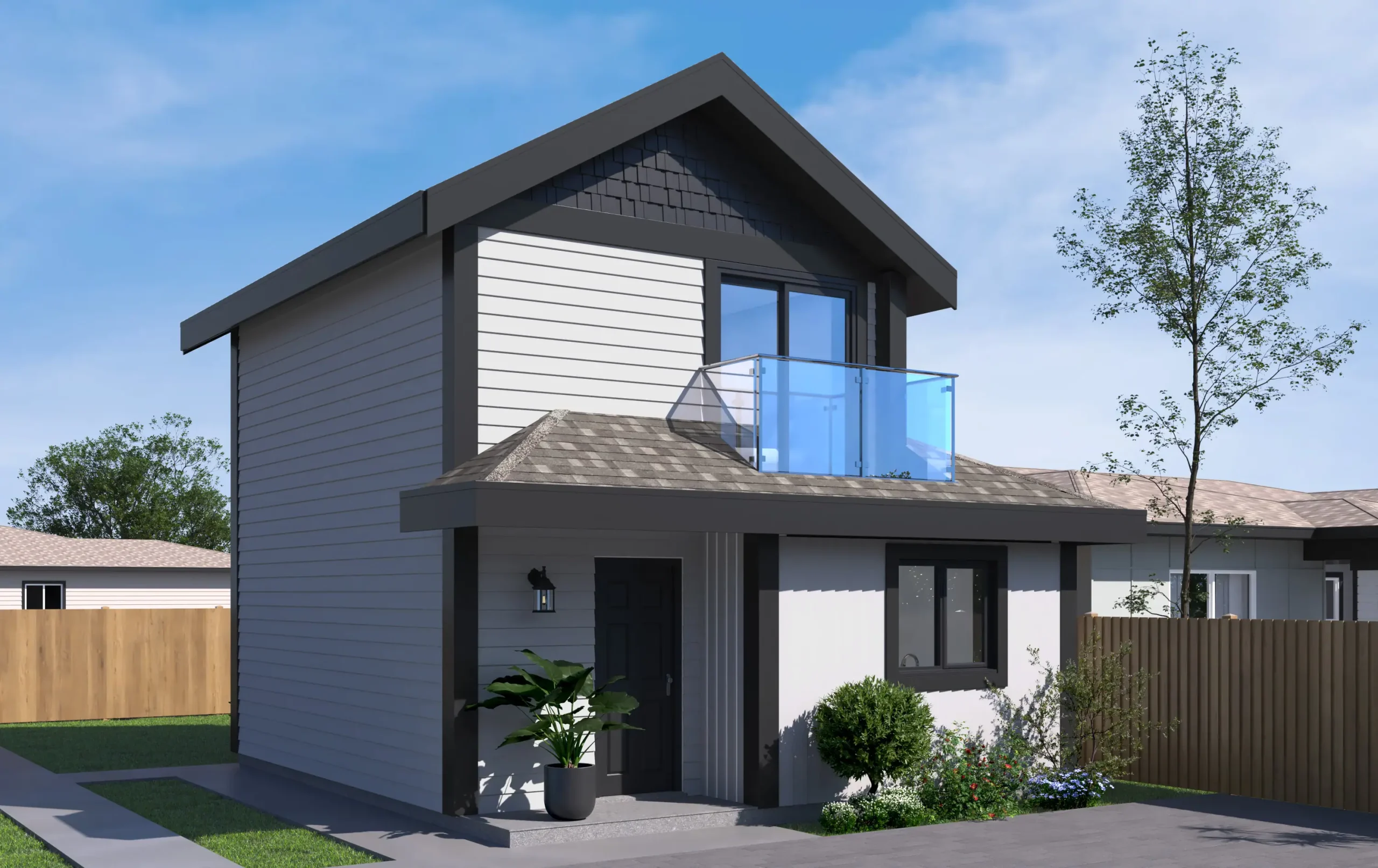
Laneway House in Vancouver: The Complete 2026 Homeowner Guide (Cost, Permits, ROI)
Vancouver has more laneway houses per capita than almost any city in North America — and that number keeps climbing. Since the City of Vancouver legalized them in 2009, over 7,000 have been built, and our team at Vancouver General Contractors pulls permits for new ones every single week. If you own a single-family lot in Vancouver or the surrounding municipalities, there is a reasonable chance you are sitting on one of the best low-risk real estate investments available to you right now.
This guide covers everything: whether your lot qualifies, what it actually costs in 2026, how long the permit process takes, how to finance it, what you can realistically earn in rent, and what the R1-1 zoning changes mean for your options. We have written this from a builder’s perspective because that is what we are — a Metro Vancouver general contractor that designs and builds laneway houses from the first site visit to the final occupancy permit.
What Is a Laneway House? (And Why Vancouver Has So Many)
A laneway house is a small, fully detached residential dwelling built at the rear of a lot, fronting the lane (the alley that runs behind the property) — completely separate from the main house on the same lot. It has its own entrance, its own mailing address, its own kitchen, its own bathroom, and in most cases its own utility connections. You may also hear it called a coach house, carriage house, or garden suite — these terms are used interchangeably in Vancouver, though garden suite technically refers to a rear dwelling on a lot without lane access.
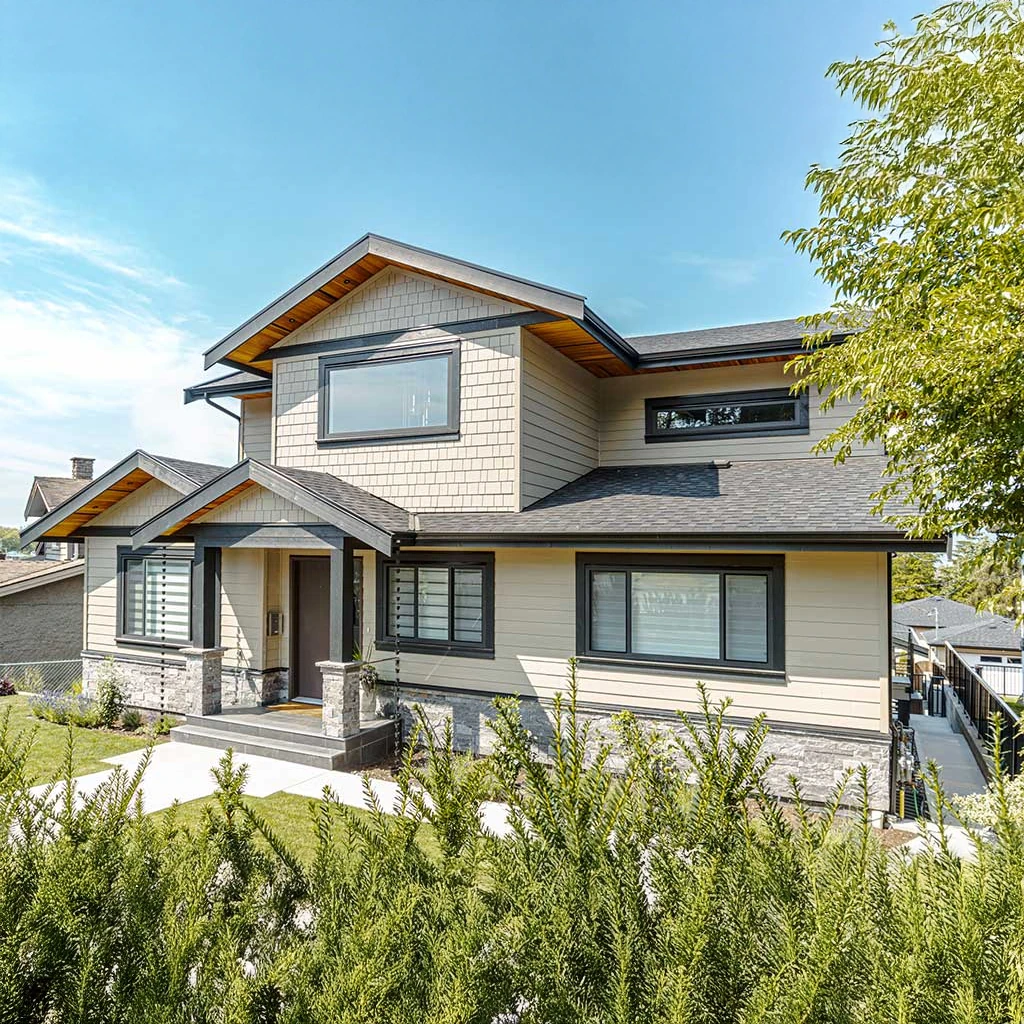 Home addition renovation in Metro Vancouver” class=”wp-image-12760″ />
The 2023 R1-1 rezoning (more on this in its own section below) expanded eligibility further, allowing laneway houses on a broader range of lots and signalling that Vancouver intends to keep pushing the missing-middle housing agenda for years to come.
Vancouver General Contractors
The key distinction that confuses many homeowners: a laneway house is not a secondary suite. A secondary suite is a self-contained unit inside the existing main house — a basement apartment, for example. A laneway house is an entirely separate building. This matters for permits, for financing, for tax treatment, and for how tenants experience the property. Laneway tenants typically report higher satisfaction than basement suite tenants because they have no shared walls with the main house occupants.
Why does Vancouver have so many of them? Several forces converged at once. The City of Vancouver legalized laneway houses in 2009 as part of an early densification push, recognizing that the city had a severe housing shortage and a massive stock of underutilized rear yards. The timing was prescient: Vancouver’s housing affordability crisis deepened through the 2010s, making the rental income from a laneway house increasingly meaningful to homeowners who had seen their property values — and property taxes — rise dramatically. The aging-in-place movement also accelerated demand, as families sought ways to house aging parents or adult children on the same property without living under the same roof.
The 2023 R1-1 rezoning (more on this in its own section below) expanded eligibility further, allowing laneway houses on a broader range of lots and signalling that Vancouver intends to keep pushing the missing-middle housing agenda for years to come.
Does Your Lot Qualify? Eligibility Requirements
The first question every homeowner asks us is simple: can I actually build one? The answer depends on several lot-specific factors. Here is the framework we use when we first assess a property.
| Requirement | Minimum Standard |
|---|---|
| Lane access | Must front a lane (alley) at the rear of the lot |
| Lot width | Minimum 9.8 m (32 ft) for a standard laneway house |
| Lot depth | Minimum 29 m (95 ft) recommended; some lots approved at less |
| Zoning | RS-1, RS-2, RS-3, RS-5, RS-6, RS-7, RT-5, RT-6, RT-10, R1-1, and select others |
| Existing units | No more than one secondary suite already in the main house |
| Heritage designation | Heritage-designated properties require a Heritage Alteration Permit (HAP) |
How to check your lot eligibility:
- Go to the City of Vancouver’s VanMap at vanmap.vancouver.ca
- Enter your address and look up your zoning designation, lot dimensions, and any development restrictions flagged on the parcel
- Alternatively, call Development and Building Services at 604-873-7611 to book a free pre-application consultation — this is a 15–20 minute call where a planner reviews your lot and gives you a preliminary read on eligibility
- For a detailed analysis from a builder’s perspective, contact our team directly — we do site assessments regularly and can flag issues before you spend money on drawings
Common eligibility issues we encounter:
Lot too narrow. The narrowest qualifying lots can technically accommodate a laneway house as narrow as 3 metres, though this produces a very small footprint. On lots between 9.8 m and 12 m wide, expect a compact layout — usually a studio or small one-bedroom. Lots 15 m wide and above give much more design freedom.
No lane access. Some interior lots — particularly in older neighbourhoods where lane networks were never built — do not front a lane. In this case, you may qualify for a garden suite instead, which has its own set of City of Vancouver rules and is sited facing the rear yard rather than a lane. Our team handles garden suite applications as well.
Already have a secondary suite. In most RS and R1-1 zones, having an existing secondary suite in the main house does not disqualify you from building a laneway house. The City of Vancouver actively encourages the combination of main house + secondary suite + laneway house on the same lot. The key rule is that you cannot have two secondary suites in the main house and also build a laneway house — one suite maximum in the principal dwelling.
All-In Cost: What Building a Laneway House Actually Costs in 2026
This is the section most homeowners come here for, and we are going to give you real numbers — not vague ranges designed to look impressive on a brochure. These figures are based on our actual project invoices from 2024–2025 builds in Metro Vancouver. Every project is different, but this table will give you a credible baseline for budgeting.
| Cost Category | Low End | High End | Notes |
|---|---|---|---|
| Architectural drawings | $15,000 | $35,000 | Full permit set + structural |
| Structural engineering | $5,000 | $12,000 | Required for all laneway builds |
| Energy compliance report | $1,500 | $3,500 | BC Energy Step Code required |
| Geotechnical report | $2,500 | $6,000 | Required on slopes or poor-soil lots |
| City permit fees + DCLs | $35,000 | $65,000 | Development Cost Levies alone: $12,000–$42,000 |
| Site preparation + demolition | $5,000 | $20,000 | Removing old garage if present |
| Excavation + foundation | $20,000 | $55,000 | Slab vs. crawlspace vs. full basement |
| Sewer + water connection | $25,000 | $38,000 | Separate service connection required by City |
| BC Hydro service + meter | $8,000 | $18,000 | New service run from the lane |
| Gas service (if applicable) | $3,000 | $8,000 | Optional; heat pumps increasingly replace gas |
| Framing | $35,000 | $70,000 | Single-storey vs. 2-storey |
| Exterior (windows, cladding, roofing) | $35,000 | $75,000 | Significant cost driver; cladding choice matters |
| Electrical | $20,000 | $38,000 | Full suite wiring to code |
| Plumbing | $18,000 | $35,000 | Full kitchen + bathroom rough-in and finish |
| HVAC + heat pump | $12,000 | $25,000 | Heat pump now standard for BC Step Code compliance |
| Insulation | $8,000 | $18,000 | Must meet BC Energy Step Code minimums |
| Drywall + interior finish | $18,000 | $35,000 | |
| Kitchen (cabinets, counters, appliances) | $18,000 | $45,000 | Wide range depending on finish level |
| Bathroom | $12,000 | $28,000 | |
| Flooring | $8,000 | $18,000 | |
| Exterior work (landscaping, pathway, fence) | $8,000 | $20,000 | |
| TOTAL ALL-IN | $312,000 | $647,000 |
The Metro Vancouver median all-in cost for a quality 600 sq ft single-storey laneway house in 2025–2026 lands in the $460,000–$520,000 range. If you are seeing quotes significantly below $300,000, ask detailed questions about what is included — in our experience, low quotes typically exclude DCLs and utility connections, which alone add $60,000–$100,000.
What Drives Cost Variation Most
Foundation type is often the biggest single variable. A slab-on-grade foundation ($20,000–$30,000) is the cheapest option and is entirely appropriate for a single-storey laneway house on a flat lot with good soil. A crawlspace ($30,000–$45,000) adds mechanical access space and is preferred on lots where slab drainage is complicated. A full basement ($45,000–$75,000+) adds significant cost but also adds substantial livable area — it makes the most financial sense when combined with a 2-storey design.
Number of storeys has a large impact. Adding a second storey typically adds $80,000–$140,000 to the build cost but can add 350–500 sq ft of livable area — significantly improving the rental income potential and the appraisal value of the completed unit.
Finish level accounts for a 30–40% cost difference between the bottom and top of the market. Builder-grade finishes (laminate flooring, stock cabinets, standard fixtures) versus mid-range finishes (engineered hardwood, semi-custom cabinetry, tile bathrooms) versus high-end finishes (custom everything) represent real money — and in Vancouver’s rental market, mid-range finishes generally produce the best return, since tenants pay for location and size more than for premium materials.
City of Vancouver DCLs are a cost that surprises many first-time clients. Development Cost Levies are fees collected by the city to fund infrastructure — and they vary significantly by zone. In some zones they run $12,000–$18,000; in others, particularly newer higher-density zones, they can reach $38,000–$42,000. We always pull the current DCL schedule for your specific property during the feasibility stage so there are no surprises at permit issuance.
The Permit Process: What Our Team Navigates Every Time
The permit process for a laneway house in Vancouver is genuinely complex — multiple departments, multiple review rounds, and significant document requirements. Our team manages this process for clients from start to finish, but it helps to understand the stages so you know what is happening and why timelines are what they are.
Step 1: Pre-Application Assessment
Before any money is spent on drawings, we confirm lot eligibility using VanMap and, where there are any grey areas, book a pre-application meeting with City of Vancouver planning staff. This meeting is free, takes 15–20 minutes by phone or in person, and can save weeks of rework later if there are constraints on the lot that are not obvious from the zoning map alone.
Step 2: Design and Drawings
A full permit set is required — architectural drawings, a site plan, structural drawings stamped by a professional engineer, and a BC Energy Step Code compliance report prepared by a registered energy advisor. This phase typically takes 6–12 weeks depending on the complexity of the design and the designer’s schedule. We work with a roster of experienced laneway house architects in Vancouver who know the City’s submission requirements cold, which reduces deficiency rounds later.
Step 3: Development Permit (If Required)
Most standard laneway houses on eligible lots in RS or R1-1 zones do not require a separate Development Permit — they go straight to Building Permit. However, non-standard lots (irregular shapes, unusual dimensions, heritage proximity, relaxations required) may trigger a DP requirement. A Development Permit adds 8–16 weeks to the timeline and requires a separate application fee.
Step 4: Building Permit Application
The Building Permit application is submitted to the City of Vancouver’s Development and Building Services with the full drawing package, site plan, energy compliance report, and any geotechnical report required. The City first performs a completeness check (2–5 business days) to confirm all required documents are present before assigning the application to reviewers.
Step 5: Technical Review
This is the longest phase. The application is reviewed by Building, Plumbing, Electrical, Fire, and Planning departments — often concurrently but not always. Each reviewer may issue deficiencies (requests for additional information or drawing revisions). Each round of deficiencies requires a response submission, which then goes back into the review queue. A clean application from an experienced design team might get through in two rounds; a complex application with a first-time designer can take four or five rounds.
Step 6: Permit Issuance and Construction
Once all deficiencies are resolved, the permit is issued digitally. Construction can begin, and City inspectors must be called for mandatory inspection stages: foundation, framing, rough-in (plumbing, electrical, HVAC), insulation, and final. Missing a required inspection or failing an inspection adds time. An Occupancy Permit is required before anyone — tenant or family member — can legally occupy the laneway house.
Real Timelines From Our 2024–2025 Applications
| Scenario | Permit Timeline |
|---|---|
| Standard single-storey laneway on eligible RS-1 / R1-1 lot | 18–28 weeks from submission to permit issuance |
| Non-standard lot requiring a variance or relaxation | Add 12–20 weeks |
| Heritage property requiring Heritage Alteration Permit | Add 8–16 weeks |
| Full project: “we want to build this” to move-in day | Typically 18–30 months total |
The 18–30 month total timeline surprises many homeowners. Design takes 6–12 weeks, permits take 18–28 weeks on a standard lot, and construction takes 4–8 months. These phases overlap somewhat but not completely. The homeowners who are happiest with the process are the ones who accepted the timeline upfront and planned accordingly — for example, not counting on rental income to start until 24 months after the first site meeting.
Design Options: What Vancouver Laneway Houses Actually Look Like
The range of laneway house designs built in Vancouver is surprisingly wide. From compact studios that prioritize rental yield to two-storey family dwellings with rooftop decks, the form factor is flexible within the City’s regulations. Here is how we think about the main design decisions with clients.
Size Options
| Configuration | Approx. Size | Best For |
|---|---|---|
| Studio / bachelor | 350–450 sq ft | Maximum rental income per sq ft; single adult or couple; tightest budgets |
| 1 bedroom | 500–650 sq ft | Most common configuration; professional renters; aging parent; best balance of cost and yield |
| 2 bedroom | 700–900 sq ft | Requires wider lot; suits small families or premium rental segment |
| 2 storey | 800–1,200 sq ft | Where lot allows; significantly more space; 30–40% more expensive but adds rental income potential |
Foundation Options
Slab-on-grade is the simplest and cheapest foundation ($20,000–$30,000). No below-grade space, minimal excavation, fastest to build. For a single-storey laneway house on a flat lot with good drainage, a slab is entirely appropriate and is what we recommend for clients prioritizing budget and timeline.
Crawlspace ($30,000–$45,000) provides access to mechanical systems — useful when the HVAC, plumbing rough-in, or electrical panels need future servicing without cutting through floors. No livable space below grade, but better long-term maintenance access than a slab.
Full basement ($45,000–$75,000+) makes the most financial sense when combined with a 2-storey design, since you are already excavating and the marginal cost of finishing the below-grade space is lower than the rental value it adds. On a larger lot where you want maximum density, a 2-storey laneway house with a full basement can deliver 1,400–1,600 sq ft of total livable area.
Key Design Considerations Specific to Vancouver Laneways
Window orientation and privacy. The laneway house and the main house are close together. Good design orients the laneway house’s primary windows toward the lane and the rear yard, not toward the main house’s backyard. This is both a City requirement (minimum separation distances) and a practical matter — tenants who feel they are being watched do not stay long.
Roof pitch and height limits. Most RS and R1-1 zones in Vancouver cap laneway house height at 6 metres at the peak. This typically means a low-slope or flat roof, particularly for single-storey designs. Two-storey designs often use shed roofs or very shallow pitches to maximize interior volume within the height envelope.
Private outdoor space. A small deck or patio — even 80–100 sq ft — dramatically improves tenant satisfaction and rental value. We build these as standard on most of our laneway house projects. The City’s setback rules define how close the building can be to the lot lines; a well-designed project maximizes the usable outdoor space within those limits.
Parking. In 2022, the City of Vancouver eliminated the off-street parking requirement for laneway houses. This is a significant cost saving — you no longer need to carve out a parking stall for the laneway tenant. In practice, many of our clients’ laneway tenants are younger professionals who do not own cars or who use the main house’s existing parking arrangement. The savings from not building a parking pad or adjusting the lane access can be $8,000–$20,000.
Financing a Laneway House: Your Options in 2026
Vancouver homeowners are in an unusual position: the equity in most properties significantly exceeds the cost of building a laneway house. A home worth $1.8M with a $600,000 mortgage has over $1M in equity — meaning the financing question is less about whether you can access the money and more about which vehicle makes the most sense.
Option 1: HELOC (Home Equity Line of Credit)
The most common financing method for our clients. A HELOC lets you borrow against your existing home equity, typically up to 65% of the appraised value (or up to 80% combined with your existing mortgage). Current HELOC rates run at approximately prime + 0.5%; with the Bank of Canada’s rate movements through 2025, most clients are seeing rates in the 5–7% range. The advantage is flexibility — you draw only what you need, when you need it, and pay interest only on the outstanding balance during construction. The disadvantage is variable rate risk if rates rise during a long build.
Option 2: Mortgage Refinance
Refinancing the existing mortgage to a higher amount releases equity as a lump sum. This works well when fixed-rate certainty matters — you lock in a rate for the construction and repayment period, protecting against rate increases. The trade-off is that breaking an existing fixed mortgage triggers a prepayment penalty, and the higher mortgage balance means higher monthly payments on the full amount from day one, even if construction is not yet complete.
Option 3: Construction Loan
Construction loans are specifically designed for building projects. They advance funds in stages tied to construction milestones — foundation complete, framing complete, rough-in complete, substantial completion — and convert to a standard mortgage on final completion. This structure aligns borrowing with spending and is attractive for larger laneway projects. More paperwork than a HELOC, but construction lenders are experienced with exactly this type of project and often offer competitive rates for well-documented applications.
Option 4: Canada Secondary Suite Loan Program
The federal CMHC Secondary Suite Loan Program offers up to $80,000 at 2% fixed interest for qualifying homeowners adding secondary suites or, in some lender interpretations, laneway houses. This program is worth investigating seriously — at 2% fixed, it dramatically improves the financial case for a laneway build. Eligibility and lender participation vary; we encourage clients to speak with their mortgage broker about this specifically before assuming they do not qualify. If even half the build cost could be financed at 2%, the blended cost of capital drops significantly.
What lenders examine: current loan-to-value ratio on the property, appraised value of the completed property (with the laneway house), and in some calculations the estimated rental income from the new unit. A professional appraisal ordered after design drawings are complete — showing the “as-complete” value — is a powerful tool for improving your financing position.
Rental Income and ROI Analysis
The financial case for a laneway house in Metro Vancouver is strong — but it depends on the numbers. Here are current rental rates from our clients’ properties and a worked ROI example that shows what a realistic investment looks like.
Rental Rates for Metro Vancouver Laneway Houses (2025–2026)
| Size | East Vancouver | North Shore | Burnaby / Richmond | Surrey / Langley |
|---|---|---|---|---|
| Studio (350–450 sq ft) | $1,900–$2,300/mo | $2,000–$2,500/mo | $1,700–$2,100/mo | $1,500–$1,900/mo |
| 1 Bedroom (500–650 sq ft) | $2,200–$2,800/mo | $2,400–$3,000/mo | $2,000–$2,500/mo | $1,800–$2,300/mo |
| 2 Bedroom (700–900 sq ft) | $2,700–$3,400/mo | $2,900–$3,800/mo | $2,400–$3,000/mo | $2,200–$2,800/mo |
ROI Worked Example
Scenario: East Vancouver, 600 sq ft 1-bedroom laneway house. All-in cost: $490,000.
- Monthly rental income: $2,500
- Annual gross rental: $30,000
- Annual operating expenses (maintenance $1,800 + insurance allocation $900 + property tax allocation $2,400): $5,100
- Annual net income: $24,900
- Simple payback period: 19.7 years
- Cash-on-cash return: 5.1% annually
5.1% annually compares very favourably with GIC and bond rates in the current environment, especially since it comes with physical asset backing. But the yield calculation alone understates the financial case significantly.
The property value addition is where the numbers get compelling. An income-producing laneway house in East Vancouver adds $380,000–$480,000 to the appraised value of the property on a completed-value appraisal. This is not hypothetical — it is how appraisers value income-producing properties, using a capitalization of the net rental income at current cap rates. When you add the value increase to the rental income, the effective return on the $490,000 investment becomes cost-neutral to positive within 3–5 years in a stable market, and strongly positive in a rising one.
For clients housing a family member rather than renting commercially, the calculation is different but often more compelling: the alternative of buying a separate condo or rental in Vancouver for a parent or adult child starts at $700,000–$1,000,000, with strata fees and no equity return to the family. A $490,000 laneway house that stays within the family’s property and adds to its value is frequently the better financial decision.
Vancouver’s R1-1 Zoning: New Opportunities in 2026
In 2023, the City of Vancouver made one of its most significant zoning changes in decades: it replaced most RS-1 (single-family) zoning across the city with the new R1-1 (Residential Inclusive) zone. If your property was in RS-1, it is almost certainly now in R1-1 — and the implications for laneway house development are meaningful.
R1-1 allows the following uses on a qualifying lot:
- Main house + secondary suite + laneway house (the classic combination)
- A multiplex of up to 6 units on larger qualifying lots — a significantly more intensive use than a single laneway house
- Duplexes, triplexes, and fourplexes as of-right uses in many configurations
For homeowners whose primary goal is a laneway house, R1-1 is largely positive: more lots now qualify, some lots that previously required a variance under RS-1 are now conforming under R1-1, and the political direction of the city is firmly toward encouraging this type of gentle densification rather than restricting it.
For homeowners with larger lots — typically 50 ft wide and above — the multiplex option under R1-1 is worth a serious feasibility review. Building 4–6 units on a large lot costs more ($1.5M–$3.5M all-in for a multiplex) but produces proportionally more rental income and potentially much higher property value appreciation. Our team has been involved in a number of early R1-1 multiplex projects in Vancouver and can walk you through the comparison. You can start that conversation on our laneway homes page or our broader renovation guide.
One practical point: if you are checking your zoning on VanMap and see R1-1 where you expected RS-1, this is correct and current. The rezoning happened city-wide in 2023. Any older feasibility studies or discussions based on RS-1 rules should be re-examined under R1-1 bylaws.
What About Garage Suites and Garden Suites?
Not every rear-yard densification project needs to be a ground-up laneway house. Two alternatives are worth knowing about.
A garage suite is a conversion of an existing detached garage into a dwelling unit. If you already have a detached garage with reasonable ceiling height (minimum 2.4 m finished ceiling required), a garage suite conversion can cost significantly less than a new laneway house — typically $80,000–$180,000 all-in depending on existing structure quality and the scope of the conversion. You still need full building permits, and the structure must meet current BC Building Code requirements for a dwelling unit (insulation, egress windows, plumbing, electrical), but you avoid foundation and framing costs. The trade-off is that converted garages often have lower ceilings and less natural light than purpose-built laneway houses, which can affect rental rates.
A garden suite is for lots that do not have lane access — the rear yard faces another property, not an alley. Garden suites have their own City of Vancouver policy (introduced in 2021 and updated since), their own siting rules, and their own permit requirements. In most respects, the permit and construction process parallels a laneway house. The siting is different — the garden suite faces the interior of the yard rather than the lane — and privacy considerations are slightly more complex, but the financial case is similar. Our team builds garden suites as well, and the cost structure broadly mirrors the laneway house cost table above.
The term coach house is used interchangeably with laneway house in most Vancouver conversations and in most City of Vancouver documents. There is no practical regulatory distinction — coach house is simply an older, more architectural term for the same thing.
More Laneway Homes & Multiplexes Guides

Laneway House vs. Secondary Suite in Vancouver: Which is the Better Investment?
Prefab vs. Custom-Built Laneway House in Vancouver: Complete Comparison for 2026
Duplex vs. Secondary Suite in Vancouver: Which Maximizes Your Investment Return?
Strata vs. Rental for Your Vancouver Duplex: Which Makes More Financial Sense?
Garden Suite vs. Laneway House in Vancouver: Key Differences and Which to Choose
Ready to start your renovation?
Frequently Asked Questions
How long does it take to build a laneway house in Vancouver?
From the first site meeting to move-in, typically 18–30 months. Design takes 6–12 weeks, permits take 18–28 weeks on a standard lot (longer if variances or heritage approvals are required), and construction takes 4–8 months. These phases partially overlap. Clients who start planning early and engage an experienced design-build team consistently finish at the shorter end of this range.
Do I need to move out during laneway house construction?
No. In the vast majority of laneway house projects, the main house is fully occupied throughout construction. The work happens entirely in the rear yard and lane. There will be some noise, some lane disruption for deliveries and concrete pours, and potential temporary loss of the rear yard. Our team communicates the construction schedule weekly so there are no surprises. The only exception is if the project requires significant utility work that temporarily disrupts water or power to the main house — we plan these events carefully and minimize disruption to a matter of hours.
Can I use my laneway house for Airbnb?
Short-term rental of a laneway house in Vancouver requires a City of Vancouver Short-Term Rental Business Licence, and there are important restrictions. The City of Vancouver’s short-term rental rules generally require that the unit being rented short-term is your principal residence. A laneway house is a secondary dwelling on the lot — meaning the owner typically lives in the main house, not the laneway house. This makes the laneway house ineligible for short-term rental under most interpretations of the policy. We strongly recommend confirming with the City’s licensing office before planning on Airbnb income as part of your financial case.
What is the difference between a laneway house and a secondary suite?
A secondary suite is a self-contained dwelling inside the existing main house — typically a basement suite with a separate entrance. A laneway house is a completely separate, detached building on the same lot, with its own foundations, roof, and utility connections. They can coexist on the same lot: you can have a main house with a basement suite and a laneway house in the rear — three separate households on one lot in many Vancouver zones.
Can I sell my laneway house separately from the main house?
No. In Vancouver, a laneway house exists on the same lot as the main house and cannot be strata-titled or sold separately under current City policy. Both dwellings are on one legal parcel and transfer together when the property is sold. Some homeowners explore strata conversion or lot subdivision, but these are separate, complex, and expensive processes that our team does not typically recommend pursuing solely to separate the laneway house for individual sale.
Does a laneway house need its own property address?
Yes. The City of Vancouver assigns a separate civic address to each laneway house — typically the same street number as the main house with a “½” designation, or a lane-facing address if the laneway fronts a named lane. This separate address is required for utility connections (BC Hydro, FortisBC, sewer/water) and for the tenant to receive mail. Our team handles the address assignment process as part of the permit application.
What is the maximum size of a laneway house in Vancouver?
The maximum floor area for a laneway house in Vancouver depends on lot size and zone, but typical limits range from 83.6 sq m (900 sq ft) for smaller lots up to larger allowances on wider lots in some zones. Height is capped at 6 metres at the peak for most RS and R1-1 zones. Two-storey laneway houses are permitted in some zones where the lot is wide enough and the design stays within the height envelope. Your architect will calculate the maximum allowable floor area for your specific lot during the design phase.
Do I need to provide parking for a laneway house tenant?
No. The City of Vancouver eliminated the off-street parking requirement for laneway houses in 2022. You are not required to provide a parking stall for your laneway tenant. This is a meaningful cost saving — no need to redesign the rear yard to accommodate a parking pad or reconfigure the lane access. If you want to provide parking voluntarily, you may, but it is no longer a permit requirement.
Can I build a laneway house on a corner lot?
Yes, with some additional considerations. Corner lots in Vancouver have different setback rules — the “exterior side yard” (facing the side street) has a larger required setback than an interior side yard. This can affect where the laneway house can be sited and potentially its maximum size. Corner lots that front a lane on one side are generally eligible, and our team has built on a number of corner lots. The feasibility check should specifically note the corner lot setback rules for your zone.
How does a laneway house affect my property taxes?
Adding a laneway house will increase the assessed value of your property, which will increase your annual property tax bill. The exact increase depends on BC Assessment’s valuation of the completed laneway house, which typically uses an income approach for rental units. Most of our clients see an annual property tax increase in the range of $2,000–$4,500, depending on the size and rental value of the unit. This cost is factored into the net income calculation in the ROI section above. Note that BC Assessment’s valuation may differ from the construction cost — and in a high-rental-yield market, the assessed value can be higher than the build cost.
Can I finance my laneway house with a HELOC?
Yes — a HELOC is the most common financing vehicle our clients use, precisely because most Vancouver homeowners have substantial equity available. The key constraint is that most lenders cap total debt (existing mortgage + HELOC) at 80% of the current appraised value of the property. On a $1.8M property with a $600,000 mortgage, that allows up to $840,000 in total borrowing — easily covering a $490,000 laneway build. Speak with your mortgage broker early, before finalizing the design scope, to confirm your borrowing capacity and the most cost-effective structure for your situation.
What happens if my lot doesn’t have lane access?
A lot without lane access does not qualify for a laneway house, but it may qualify for a garden suite — the City of Vancouver’s policy for rear-yard detached dwellings on lots that do not front a lane. Garden suites have similar eligibility requirements and a similar permit process, but different siting rules and slightly different design constraints. Our team handles garden suite applications as well; contact us for a site assessment if you are unsure whether your lot has lane access or qualifies for a garden suite.
Do laneway houses need sprinkler systems?
For most single-storey laneway houses under 600 sq ft in Vancouver, a full sprinkler system is not required under the BC Building Code. However, requirements depend on specific lot conditions, proximity to lot lines, and the specific zone rules applicable to your property. Two-storey laneway houses and those in certain proximity to property lines may trigger sprinkler requirements. Your architect and our team will flag this during the design phase — it is a code analysis item that must be resolved before the permit set is complete.
Can I build a laneway house and still have a secondary suite in my main house?
Yes — this is one of the most common configurations in Vancouver and is explicitly permitted in R1-1 and most RS zones. You can have your main house occupied by one household, a secondary suite in the basement occupied by a tenant, and a laneway house in the rear occupied by another tenant (or a family member). Three households on one lot, two rental incomes from one property. Many of our clients are pursuing exactly this configuration as part of a broader financial planning strategy.
What permits are needed for a laneway house in Vancouver?
A laneway house requires a Building Permit from the City of Vancouver as the primary approval, plus separate permits or approvals for: sewer and water service connection (City of Vancouver Engineering), BC Hydro electrical service connection, gas connection (if applicable, FortisBC), and an Occupancy Permit before anyone can live in the unit. Some lots also require a Development Permit (non-standard lots or those requiring variances) or a Heritage Alteration Permit (heritage-designated properties). Our team manages all permit applications and coordinates with each authority as part of our project management process.
Get a Free Renovation Quote
Metro Vancouver’s trusted general contractors. Free consultations across Vancouver, Burnaby, Richmond, North Shore & beyond.
Get Your Free Quote →Building a laneway house is one of the most financially sound decisions a Vancouver homeowner can make right now — but it requires the right team, realistic timelines, and a clear-eyed budget from day one. Our team at Vancouver General Contractors builds laneway houses in Vancouver and across Metro Vancouver every week. We handle the full scope: design coordination, permit applications, construction, inspections, and occupancy. If you want to know specifically what is possible on your lot, the most useful first step is a conversation. Contact us here or visit our laneway homes page for more information on our process and recent projects.
VGC serves Vancouver and surrounding areas. View all renovation services in Vancouver →

Comments are closed