





Langley Renovation Guide: Costs, Township vs. City Permits & What to Expect (2026)
Langley is one of Metro Vancouver’s most active renovation markets — and one of its most misunderstood. The region is actually two separate municipalities (the Township of Langley and the City of Langley), each with its own building department, permit fees, zoning bylaws, and secondary suite rules. Add in the unique prevalence of acreage properties with septic systems, hobby farms, and rural residential zones, and you have a renovation environment that is genuinely different from anything you’ll encounter in Burnaby, Surrey, or Vancouver proper.
This guide covers everything homeowners in both Langley municipalities need to know before starting a renovation project in 2026: what things cost, how the permit process works, what’s different about rural and acreage properties, and how to maximize return on investment in one of the fastest-growing communities in British Columbia.
Langley’s Renovation Market in 2026
The Township of Langley has been the fastest-growing municipality in Metro Vancouver for several consecutive years. From Willoughby’s dense townhome corridors to Murrayville’s established single-family streets and Brookswood’s rural-residential lots, the Township covers a massive and diverse geographic area. The City of Langley — a separate, much smaller municipality — is the historic commercial core, centered around the Langley City downtown and Nicomekl River area.
One important caveat for acreage and rural properties: septic system upgrades, well water testing and treatment
Vancouver General Contractors
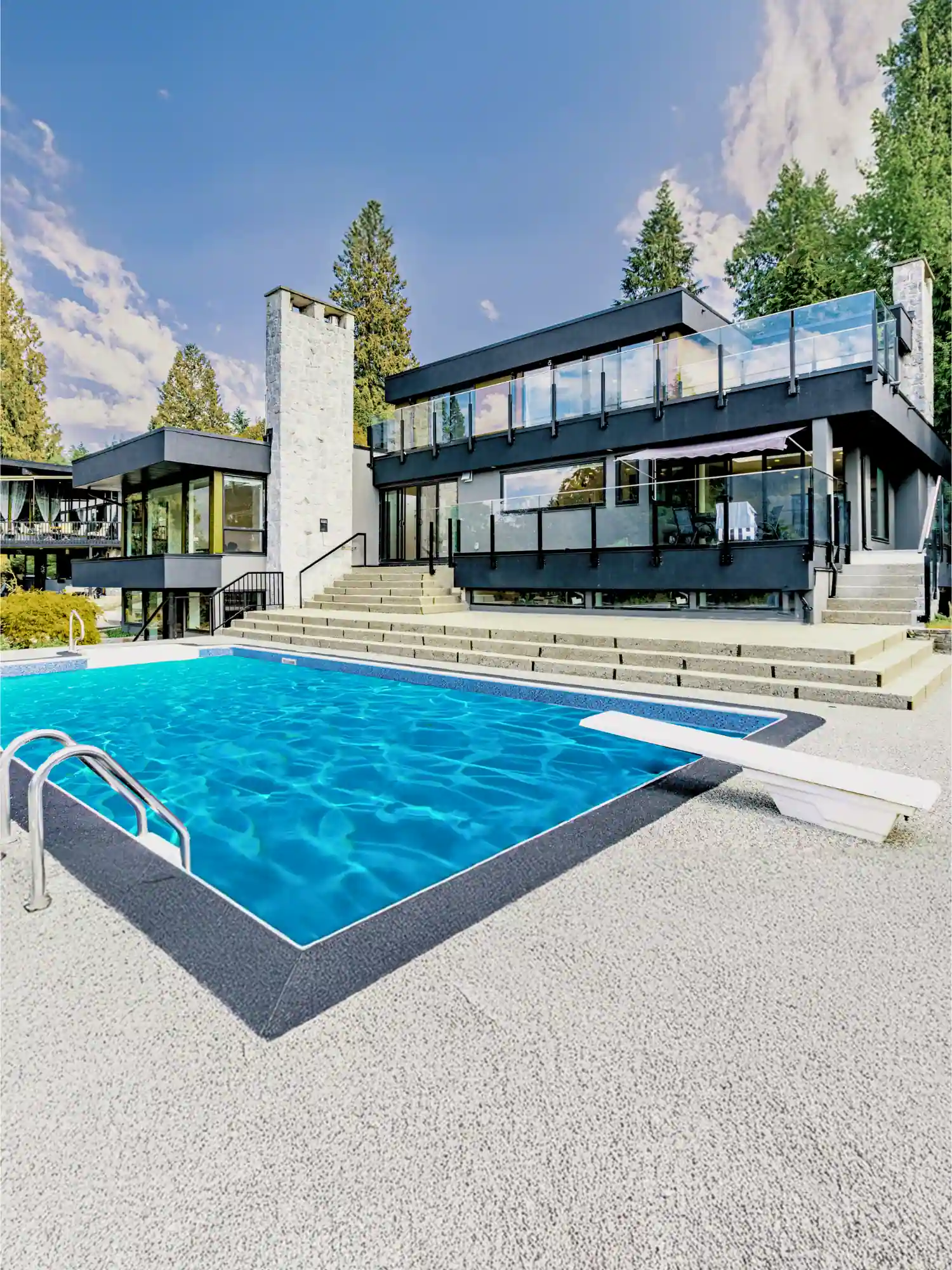
Property values in both municipalities have climbed steadily. Detached homes across the Langley region now typically range from $850,000 to $1.6 million depending on location, lot size, and age. Willoughby and south Langley Township properties at the higher end of that range are often newer builds (post-2010) with less renovation need, while the older 1980s and 1990s suburban stock in areas like Walnut Grove, Aldergrove, and Langley City present the strongest renovation opportunity.
What sets Langley apart from the rest of Metro Vancouver is its mix of property types. Alongside standard suburban lots of 6,000–10,000 square feet, Langley has a substantial inventory of acreage properties — rural residential lots of one to five acres or larger — that come with their own unique set of renovation considerations: septic systems instead of municipal sewer, well water instead of municipal supply, older agricultural outbuildings, and rural zoning bylaws that govern what can be built and where.
For homeowners, this diversity means renovation planning in Langley requires more up-front due diligence than in a more uniform urban municipality. The rewards, however, are significant: lot sizes that accommodate substantial additions, strong rental demand from the growing Fraser Valley workforce, and home values that make investment-grade renovations financially viable across a wider range of project types.
Langley Renovation Costs by Project Type (2026)
Renovation costs in Langley run somewhat lower than in Vancouver and the inner suburbs — primarily because trade availability is better, travel time for contractors is shorter, and local subcontractors serving the Fraser Valley market price their work for the regional economy rather than the Metro Vancouver premium market. That said, material costs are consistent province-wide, so the savings are in labour rather than supplies.
The following cost ranges reflect complete, finished projects with permits, all trades, and project management included. They represent mid-range and premium finishes respectively — not builder-grade, and not ultra-luxury.
| Project Type | Mid-Range | Premium | Notes |
|---|---|---|---|
| Kitchen Renovation | $42,000–$68,000 | $68,000–$112,000 | Langley homes typically have larger kitchens (150–200 sq ft) |
| Primary Bathroom | $19,000–$30,000 | $30,000–$52,000 | Ensuite with heated floor, freestanding tub at premium end |
| Secondary Bathroom | $12,000–$19,000 | $19,000–$28,000 | Full refresh or 3-piece conversion |
| Basement Suite | $52,000–$82,000 | $82,000–$118,000 | Legal suite with separate entrance, full kitchen + bath |
| Second Storey Addition | $200,000–$265,000 | $265,000–$330,000 | Full second floor on bungalow, 2–3 bedrooms |
| Rear Addition (main floor) | $135,000–$175,000 | $175,000–$230,000 | 400–700 sq ft addition |
| Full Home Renovation | $155,000–$230,000 | $230,000–$310,000 | Gut-and-rebuild interior, no structural additions |
| Detached Garden Suite | $185,000–$250,000 | $250,000–$340,000 | Township-specific; separate structure on existing lot |
| Acreage Outbuilding Conversion | $75,000–$140,000 | $140,000–$220,000 | Existing barn/shop to liveable space; septic upgrade typically required |
One important caveat for acreage and rural properties: septic system upgrades, well water testing and treatment, and rural utility connections can add $15,000–$45,000 to any project that increases the number of bedrooms or adds a suite. These costs are not included in the figures above and must be assessed on a property-by-property basis.
Township vs. City of Langley: Two Municipalities, Two Permit Processes
This is the point of confusion that catches more Langley homeowners off guard than any other. The Township of Langley and the City of Langley are entirely separate municipalities with separate administrations, building departments, zoning bylaws, and permit fee structures. Your property is in one or the other — never both — and which one you’re in determines everything about how your renovation is permitted and approved.
Township of Langley is the large municipality that surrounds the City. It covers the vast majority of geographic Langley — including Willoughby, Walnut Grove, Murrayville, Brookswood, Aldergrove, Fort Langley, Salmon River, and the rural areas to the south and east. The Township has seen the most explosive residential growth and has active development permit streams for large subdivisions alongside its standard building permit process for individual home renovations.
City of Langley is a small, urban municipality of approximately 28,000 residents centered on the historic downtown core along Fraser Highway and the area around Brydon Lagoon. It has its own building department, its own Development Cost Charges, and its own OCP (Official Community Plan). The City tends to have a more urban-focused zoning framework, with less rural and agricultural zoning than the Township.
For renovation purposes, the practical differences include:
- Permit fees: Each municipality calculates building permit fees differently. Township fees are generally based on construction value; City fees use a similar formula but with different rate schedules.
- Processing times: Both municipalities have been experiencing elevated permit volumes due to population growth. Expect 4–7 weeks for straightforward suite permits and 6–14 weeks for additions and complex projects in both jurisdictions in 2026.
- Secondary suite rules: Both municipalities allow secondary suites, but the specifics — particularly around detached garden suites and garden suites on rural lots — differ significantly (see the dedicated section below).
- Zoning bylaws: The Township’s zoning bylaw is substantially larger and more complex than the City’s, reflecting its diverse land base. Setbacks, lot coverage maximums, and height restrictions can vary significantly between Township zones.
- Agricultural Land Reserve: Portions of the Township border or fall within the ALR. If your property is in the ALR, you need approval from the ALC (Agricultural Land Commission) for non-farm use before the Township will issue building permits for residential additions or suites.
If you’re unsure which municipality your property is in, the fastest check is BC Assessment’s property search at bcassessment.ca — the municipality will be listed on your assessment notice and in the property detail screen.
Secondary Suites in Langley: Rules, Rental Demand, and the Numbers
Secondary suite investment performs exceptionally well in Langley. The region’s growing workforce — drawn by the expanding industrial, logistics, and commercial sectors along 200th Street, the Gloucester Industrial Estates, and the growing healthcare employment base — creates sustained rental demand that differs from the student-and-downtown-worker profile that drives demand in Vancouver. Langley renters tend to be working families and couples, which means demand for full suites with private entrances rather than shared accommodation.
Both the Township and City of Langley permit secondary suites in single-family residential zones, subject to their respective bylaw requirements. The typical requirements include: minimum ceiling height of 1.98m (6’6″), separate entrance, dedicated parking, and compliance with BC Building Code life-safety requirements (smoke alarms, egress windows, inter-unit fire separation).
Detached Garden Suites: The Township of Langley has been more progressive than many Metro Vancouver municipalities in allowing detached garden suites (also called laneway-style suites or coach houses) on residential lots. In many Township residential zones, a detached garden suite up to 90 square metres (968 sq ft) is permitted as a secondary use, subject to setbacks and lot coverage limits. This is a meaningful advantage over municipalities that restrict secondary suites to attached or basement configurations only.
| Suite Type | Typical Monthly Rent (2026) | Annual Income | Gross Yield on Build Cost* |
|---|---|---|---|
| 1-bedroom basement suite | $1,650–$1,950 | $19,800–$23,400 | 24%–45% |
| 2-bedroom basement suite | $1,950–$2,450 | $23,400–$29,400 | 28%–57% |
| Detached garden suite (1BR) | $2,100–$2,600 | $25,200–$31,200 | 9%–17% |
| Detached garden suite (2BR) | $2,500–$3,100 | $30,000–$37,200 | 11%–20% |
*Gross yield calculated against mid-range build cost, before taxes, vacancies, and operating costs.
CMHC Secondary Suite Loan Program: As of 2025, CMHC’s Secondary Suite Loan Program provides up to $40,000 in low-interest financing (2% fixed, 10-year term) for homeowners adding a legal secondary suite. This dramatically improves the cash-on-cash return for suite projects and reduces the upfront capital requirement. The suite must meet local zoning requirements and pass a building inspection to qualify.
For Langley homeowners with suitable lots, the combination of Township garden suite permissions, strong rental demand, and CMHC financing makes suite development one of the highest-return renovation investments available in Metro Vancouver’s suburban markets. Learn more about planning your suite project on our renovation planning guide or speak with our team about what’s possible on your specific property.
Township of Langley Permit Process: Step by Step
The Township of Langley’s Building Department handles building permits for all residential construction within Township boundaries. For the vast majority of renovation projects — suites, additions, structural changes — you will need a building permit before construction begins. Unpermitted work in Langley creates title complications that are increasingly scrutinized by lenders and buyers; it also creates real safety and liability exposure.
Step 1 — Pre-Application Review: For larger projects (additions over 500 sq ft, secondary suites, structural changes), a pre-application meeting with Township planning and building staff is advisable. The Township offers this as a paid service and it can save weeks of back-and-forth on a complex permit application.
Step 2 — Drawings and Documentation: You will need stamped drawings from a registered professional (architect or structural engineer) for any addition or structural alteration. Basement suites in existing homes often require only designer drawings (not engineer-stamped) if no structural work is involved, but your contractor should confirm this for your specific project. Drawings must show existing conditions, proposed changes, dimensions, materials, and compliance with BC Building Code.
Step 3 — Permit Application: Applications are submitted to the Township’s Building Inspection Department at 20338 65th Avenue, Langley, or online via the Township’s eBuild permit portal. Required documents include the completed application form, site plan, floor plans, elevations, and proof of property ownership. Permit fees are calculated at the time of application based on construction value.
Step 4 — Plan Review: The Township reviews your application for compliance with the BC Building Code, Township Zoning Bylaw, and any applicable development permit conditions. Current review timelines in 2026 are:
| Project Type | Typical Review Timeline |
|---|---|
| Basement suite (existing home) | 4–7 weeks |
| Interior renovation (no structural work) | 2–4 weeks |
| Single-storey rear addition | 6–10 weeks |
| Second storey addition | 8–14 weeks |
| Detached garden suite | 8–12 weeks |
| New accessory structure (rural) | 4–8 weeks |
Step 5 — Construction and Inspections: Once your permit is issued, construction can begin. The Township requires inspections at key stages: footing/foundation (before pouring concrete), framing (before insulation and drywall), insulation (before drywall closes walls), and final inspection (before occupancy). Your contractor schedules these with the Township’s Building Inspection team — typically 1–2 business days’ notice is sufficient for routine inspections.
Step 6 — Occupancy and Final Approval: A passed final inspection results in a Certificate of Occupancy or letter of completion from the Township. For suites, this document is important for insurance purposes and confirms the suite’s legal status on title.
The City of Langley’s process is structurally similar but administered by a separate building department at City Hall. If your property is in the City, direct all permit inquiries to the City of Langley Building Department rather than the Township.
Acreage and Rural Properties: Langley’s Unique Renovation Challenge
Langley’s acreage and rural residential properties represent one of the most compelling renovation opportunities in the Metro Vancouver region — and one of the most technically complex. If your property is one to five acres or larger, is served by a private well and septic system, or includes agricultural buildings, your renovation planning needs to account for several factors that simply don’t apply to urban lots.
Septic Systems: The most significant practical difference between urban and rural renovation in Langley is the septic system. Unlike properties on municipal sewer, acreage homes process their waste on-site. The critical point for renovations: septic systems are sized and designed for a specific number of bedrooms and daily wastewater volume. Adding a suite, bedroom, or kitchen to a property with an existing septic system may require a septic capacity assessment — and potentially a system upgrade or replacement — before a building permit will be issued.
Septic assessments are conducted by a licensed on-site wastewater practitioner (ROWP). If the existing system has remaining capacity for the proposed addition, the assessment clears the way for permitting. If not, you’re looking at a new or expanded field — costs of $15,000–$45,000 depending on soil conditions, lot size, and system type. In some cases, the septic constraint is the binding limitation on what a rural renovation can achieve.
Well Water: Properties with well water require water quality testing before renovations that add habitable space. The Township and the Ministry of Health both have requirements around potable water for residential occupancy. If your well is older or has never been tested, budget for testing and potentially UV treatment, filtration, or a new well.
Rural Setbacks and Lot Coverage: Rural zones in the Township often have larger minimum setbacks from property lines than suburban residential zones — sometimes 7.5m to 15m from lot lines depending on the zone and the structure type. Agricultural zones (A-1, A-2) have their own rules that govern what non-farm residential development is permitted. If your property is in the Agricultural Land Reserve, any proposed non-farm use requires ALC approval before Township building permits can proceed.
Agricultural Buildings and Outbuildings: Many acreage properties have existing barns, shops, or agricultural storage buildings. Converting these to liveable space — a studio, workshop, or suite — is a common renovation goal and a legitimate one, but it requires a change of use permit in addition to the standard building permit, a full upgrade to BC Building Code residential standards (insulation, electrical, plumbing, HVAC, egress), and septic capacity confirmation. Costs for these conversions vary widely based on the existing building’s condition and construction.
Utility Connections: Acreage properties may lack natural gas service, requiring propane or heat pump solutions for heating. Electrical service upgrades (from 100A to 200A panels) are common requirements when adding suites or major appliances to older rural homes. Budget for utility upgrades as a distinct line item in your project costs.
Langley Kitchen Renovations: Space, Function, and Value
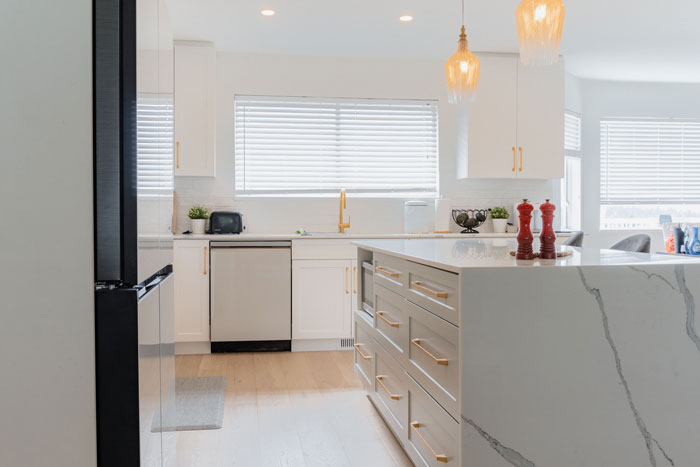
Langley’s predominantly suburban single-family housing stock offers a kitchen renovation experience that’s genuinely different from what you encounter in Vancouver condos or older Vancouver Specials. The typical 1985–2005 Langley home has a kitchen of 150–200 square feet — significantly larger than the 80–110 square feet common in Vancouver’s older attached housing. That extra space changes the design conversation completely.
In a Langley suburban kitchen, the open-concept question is less pressing than in Vancouver (the space is often already adequate), the island versus peninsula decision is a real one rather than a space-constrained default, and the appetite for a full chef’s kitchen — six-burner range, double wall oven, walk-in pantry, integrated refrigerator — can be accommodated without the creative compromises that smaller spaces demand.
Mid-range kitchen renovation ($42,000–$68,000): Semi-custom cabinetry (Dura Supreme, Fabuwood, or Canadian-made equivalent), quartz countertops, new appliances (KitchenAid or Bosch suite), tile backsplash, hardwood or LVP flooring, pot lighting, and updated plumbing fixtures. This scope delivers a complete, lasting transformation on the existing footprint with minor layout adjustments.
Premium kitchen renovation ($68,000–$112,000): Full custom cabinetry (Kounts or comparable), waterfall quartz or natural stone countertops, Sub-Zero or Wolf appliances, integrated panel-ready refrigerator and dishwasher, custom range hood, butler’s pantry, in-floor heating, and full electrical and plumbing reconfiguration. This scope produces a showroom-quality result and commands measurable resale premium in Langley’s $1M+ home segment.
Key Langley-specific considerations for kitchen projects:
- Load-bearing walls: Many 1980s–1990s Langley homes have load-bearing walls between the kitchen and adjacent rooms. Opening these up requires a structural engineer’s assessment and a building permit for structural changes — budget $2,500–$6,000 for the engineering and structural beam work in addition to the kitchen scope.
- Electrical panels: Homes of this era commonly have 100-amp panels. A kitchen renovation with high-draw appliances (induction range, double oven, dishwasher, microwave) may require a 200-amp panel upgrade — $2,500–$4,500 installed.
- Flooring continuity: Given larger floor plates, extending new kitchen flooring into adjacent dining and living areas for visual continuity is common and worth budgeting for.
On our general home renovation page you’ll find more detail on kitchen scopes and what to expect at each stage of the process.
Bill 44 in Langley: What Multi-Unit Zoning Means for Homeowners
BC’s Bill 44 (Housing Statutes Amendment Act, 2023) requires municipalities across BC — including both the Township and City of Langley — to permit higher-density residential uses on land previously zoned exclusively for single-family homes. As of mid-2024, both Langley municipalities have adopted compliant zoning bylaws allowing up to three or four units on most single-family residential lots, subject to building form and setback standards.
For Langley homeowners, Bill 44 creates several distinct opportunities that play out differently here than in Metro Vancouver’s core municipalities:
Triplex feasibility: On a standard Langley suburban lot (7,000–9,500 sq ft), a triplex — three separate self-contained units — is now a permitted use in most residential zones. The economics are compelling: construction cost of $450,000–$650,000 for a new triplex build, against a gross rental income of $7,500–$9,500/month across three 2-bedroom units at current Langley rents.
More land, different economics: Unlike in Vancouver where tiny lots make multi-unit development an architectural puzzle, Langley’s larger lot sizes mean there’s genuine design flexibility. A rear addition that creates a third unit, a detached garden suite added to a duplex conversion, or a stacked duplex-plus-suite configuration — these scenarios are practically achievable on Langley lots in ways that are constrained or impossible on 33-foot Vancouver lots.
| Development Scenario | Estimated Cost | Monthly Rental Income | Annual Gross Income |
|---|---|---|---|
| Main house + 2BR basement suite | $52,000–$82,000 (suite only) | $1,950–$2,450 (suite) | $23,400–$29,400 |
| Main house + suite + garden suite | $240,000–$350,000 (both added) | $4,100–$5,200 (both suites) | $49,200–$62,400 |
| Triplex conversion (existing home) | $350,000–$550,000 | $6,500–$8,500 | $78,000–$102,000 |
| New triplex build | $480,000–$680,000 | $7,500–$9,500 | $90,000–$114,000 |
Township rural lots and Bill 44: It’s important to note that Bill 44’s blanket multi-unit permissions apply to urban residential zones. Agricultural and rural zones in the Township are subject to different rules — properties in the ALR or rural residential zones must still comply with ALC requirements and Township rural zoning bylaws. If your Langley property is on a rural lot, don’t assume Bill 44 permits apply without confirming your zoning classification first.
Navigating multi-unit development in Langley requires careful zoning analysis and an experienced contractor with local project history. We recommend starting with a consultation — contact our team to discuss what’s possible on your specific lot.
Langley Home Additions: Bigger Lots, Bigger Possibilities
Home additions are where Langley’s larger lot sizes create the most tangible advantage over Metro Vancouver’s urban core. When you’re working with a 7,500 square foot lot instead of a 3,300 square foot lot, the constraints that prevent rear additions in Vancouver — FSR limits, lot coverage maximums, setbacks that eat up rear yard space — are far less binding. The result is that first-floor rear additions in the 400–700 square foot range are regularly achievable in Langley without exhausting lot coverage or triggering development permit review.
Second storey additions are among the most popular renovation types for Langley’s aging 1980s and 1990s bungalow stock. These homes were built when land was inexpensive and single-storey living was the norm — they sit on generous lots but often have only 1,100–1,400 square feet of finished floor space. Adding a full second storey typically yields two to three bedrooms, a primary suite with ensuite, and occasionally a home office or flex space, bringing the total living area to 2,200–2,800 square feet without touching the footprint.
Second storey additions require structural upgrades to the existing main floor framing to carry the new load — existing walls, beams, and foundations are assessed by a structural engineer, and reinforcement is budgeted as part of the project. In most Langley suburban homes from this era, the foundation and main walls are structurally adequate for a second storey; beam reinforcement at key spans and updated point loads are typical requirements.
Rear additions are suited to homes that need more main-floor living area — an expanded kitchen, a family room, or a ground-floor primary bedroom suite for aging-in-place. A well-designed rear addition eliminates the dark, compartmentalized feel common in older suburban floor plans by opening up the back of the house with larger windows and direct connection to the yard.
Key considerations for Langley addition projects:
- Zoning compliance check first: Confirm your zoning classification, maximum lot coverage, setbacks, and height limits before committing to a design. Township zoning bylaws are available online; your contractor or designer should pull the zoning schedule for your specific lot before design work begins.
- Roofline integration: The most expensive additions are those that require complex roofline changes to integrate with the existing home. Simple gable-to-gable rear additions are the most cost-effective; additions that require hip-to-hip transitions or complex valley work add $15,000–$30,000 to the structural and roofing scope.
- HVAC extension: Extending your existing forced-air HVAC system to the addition is straightforward if the current unit has capacity; if not, a ductless mini-split for the addition zone is often the most cost-effective solution ($3,500–$6,500 installed).
- Matching exterior: Budget for re-siding or painting the entire exterior if your existing cladding is discontinued or difficult to match — partial re-cladding on new additions rarely looks cohesive at resale.
Return on Investment: Langley Renovation ROI by Project Type
ROI calculations in Langley are more favourable than in many Metro Vancouver markets, for a straightforward reason: the base home values are high enough to support investment-grade renovations, but not so high that the renovation cost becomes a negligible fraction of total value. In a $2.5M Vancouver detached home, a $70,000 kitchen renovation represents less than 3% of asset value — the ROI math works, but the marginal value-add is diluted. In a $1.1M Langley home, that same $70,000 kitchen represents a more meaningful improvement to a more price-sensitive buyer pool.
The ROI figures below represent the estimated resale value added relative to renovation cost, based on current Langley market conditions and comparable sales data. These are ranges reflecting variation in project scope, neighbourhood, and market timing — not guarantees.
| Renovation Type | Typical Cost | Estimated Value Add | ROI Range |
|---|---|---|---|
| Kitchen (mid-range) | $42,000–$68,000 | $48,000–$82,000 | 103%–138% |
| Primary ensuite | $19,000–$30,000 | $22,000–$38,000 | 104%–143% |
| Basement suite (legal) | $52,000–$82,000 | $95,000–$155,000 | 178%–238% |
| Second storey addition | $200,000–$265,000 | $235,000–$330,000 | 110%–148% |
| Rear addition (main floor) | $135,000–$175,000 | $155,000–$215,000 | 108%–140% |
| Full home renovation | $155,000–$230,000 | $185,000–$310,000 | 106%–162% |
| Detached garden suite | $185,000–$250,000 | $175,000–$290,000 | 87%–135% |
The standout performer is the legal basement suite, where ROI regularly exceeds 150% in Langley. This is driven by two factors: buyer premiums for mortgage-helper income, and the capitalized rental income reflected in valuation. A suite generating $2,200/month in rental income adds approximately $110,000–$140,000 to the assessed value of a Langley home in the current market, against a build cost of $52,000–$82,000.
Detached garden suites have slightly lower ROI than basement suites because of their higher construction cost — a standalone structure requires its own foundation, exterior envelope, and utility connections — but they offer higher rental income and more privacy appeal, which is increasingly valued by tenants.
One important ROI consideration unique to acreage properties: the value of a renovated rural home in Langley is often more sensitive to the quality of the renovation than an equivalent suburban home, because the acreage buyer pool expects finished space to be genuinely done well. A mediocre renovation on a $1.4M Langley acreage property can actually impede sale — the buyer who values acreage also typically values quality finish.
Finding the Right Contractor for a Langley Renovation
Trade availability in Langley and the broader Fraser Valley is meaningfully better than in Metro Vancouver’s urban core. Where a Vancouver renovation might face 4–6 month waits for premium subtrades, comparable Langley projects often proceed with 6–10 week lead times for framing, electrical, and plumbing. This doesn’t mean you shouldn’t plan ahead — larger projects still require scheduling commitment from subtrades — but the supply crunch is less acute than in Vancouver and Burnaby.
That said, not all Metro Vancouver contractors price Langley work the same way. Some Vancouver-based contractors add a travel premium for Langley projects — $150–$350/day for a two-person crew — that can add $2,000–$8,000 to the cost of a midsize project compared to a contractor who regularly works in the Valley. When getting quotes, always ask where the contractor’s primary service area is and whether they have active Langley or Fraser Valley project experience.
For rural and acreage projects specifically, you want a contractor with experience managing the additional complexity: coordinating with septic practitioners, managing rural utility upgrades, working in buildings that weren’t originally designed for occupancy, and navigating rural zoning requirements. Not all residential contractors have this background, and the gap matters.
What to look for in a Langley renovation contractor:
- BC Business Number and WCB clearance — do not hire cash-only contractors for permitted work
- Active BC Residential Builder licence or Red Seal trade certification for trades work
- Experience with Township and/or City of Langley permit applications specifically
- References from Langley or Fraser Valley renovation projects in the past 12 months
- A clear, itemized written contract — not a verbal quote or a round-number estimate
- Fixed-price or cost-plus contracts with change order documentation protocols
Vancouver General Contractors brings active Langley and Fraser Valley project experience to every engagement. We manage the permit process, coordinate all subtrades, and deliver completed projects on agreed timelines. Whether you’re planning a basement suite in Walnut Grove, a second storey addition in Willoughby, or a rural property renovation in Brookswood or Aldergrove, we can scope, permit, and deliver the project.
Start with a consultation on our home renovation page or reach out directly on the contact page — we respond to Langley inquiries promptly and can typically arrange a site visit within a week.
Langley Renovation FAQ
1. What’s the difference between Township of Langley and City of Langley for permits?
They are two completely separate municipalities with separate building departments, zoning bylaws, and fee schedules. The Township covers the large suburban and rural areas (Willoughby, Walnut Grove, Murrayville, Aldergrove, Fort Langley, Brookswood, and rural Langley). The City is the small urban core along Fraser Highway and the historic downtown. Your permit application goes to whichever municipality your property is physically located in. Check your BC Assessment notice or the municipalities’ online property maps to confirm which jurisdiction applies to your address.
2. How long does a building permit take in Langley?
In 2026, expect 4–7 weeks for straightforward secondary suite permits, 6–10 weeks for single-storey additions, and 8–14 weeks for second storey additions or detached garden suites. Both the Township and City have been managing elevated permit volumes due to population growth. Completeness of your application and drawings significantly affects timeline — incomplete applications are returned for resubmission, which can add 3–6 weeks. Working with a contractor who prepares complete, code-compliant drawings from the start is the single biggest factor in permit timeline.
3. Is my Langley property in the Agricultural Land Reserve?
Not all rural Langley properties are in the ALR, but many acreage properties in south and east Langley Township are. You can check your property’s ALR status using the Agricultural Land Commission’s online map at alc.gov.bc.ca. If your property is in the ALR, non-farm residential construction (including adding suites, building garden suites, or making substantial residential additions) requires ALC approval before the Township will issue building permits. ALR approval applications can take 6–12 months, so this needs to be on your project timeline radar early.
4. My acreage property has a septic system. Can I still add a suite?
Possibly, but it requires a septic capacity assessment first. A licensed on-site wastewater practitioner (ROWP) will evaluate your existing system’s design capacity against the proposed increased load from the new suite. If capacity exists, the assessment confirms this in a report that supports your permit application. If the system is undersized for the addition, you’ll need to upgrade or replace it — typically $15,000–$45,000 depending on system type, soil conditions, and site access. This assessment is a mandatory part of the permit process for any addition that increases bedroom count on a septic property.
5. Are secondary suites legal in both the Township and City of Langley?
Yes, secondary suites (attached basement or in-law suites with a separate entrance) are permitted in single-family residential zones in both the Township and City of Langley, subject to bylaw requirements. Both municipalities require suites to meet BC Building Code minimum standards: ceiling height of 1.98m (6’6″), egress windows in sleeping areas, smoke and CO detectors, dedicated parking, and fire separation between units. The Township additionally permits detached garden suites (a separate structure on the same lot) in many residential zones — this is a more permissive policy than some neighbouring municipalities offer.
6. How much cheaper is renovating in Langley vs. Vancouver?
Labour costs in Langley typically run 8%–15% lower than equivalent work in Vancouver, primarily because trade availability is better (less upward price pressure from overbooked subtrades) and local contractors price for the regional market. Material costs are essentially identical — lumber, fixtures, and finishes are priced the same whether you’re in Langley or the West End. For a $65,000 Vancouver kitchen renovation, the equivalent scope in Langley often comes in at $55,000–$60,000. The savings are real but not dramatic — don’t choose a contractor based primarily on geography.
7. What is the best ROI renovation in Langley?
The legal secondary suite consistently delivers the highest ROI in Langley — typically 178%–238% of cost returned in increased home value, driven by both the buyer premium for mortgage-helper income and the capitalized rental value. Kitchen renovations (103%–138% ROI) and primary ensuite upgrades (104%–143% ROI) are close runners-up and tend to be the projects that most directly affect everyday enjoyment of the home. For income-focused homeowners with suitable lots, combining a basement suite with a detached garden suite creates a dual-income structure that can substantially offset mortgage costs.
8. Can I get a CMHC loan for a secondary suite in Langley?
Yes. CMHC’s Secondary Suite Loan Program provides up to $40,000 at 2% fixed interest over a 10-year term for homeowners creating a legal secondary suite. The suite must meet local zoning requirements and pass a final building inspection. This program is available province-wide and applies equally to Township and City of Langley properties. The low interest rate makes this one of the best financing tools available for suite development — far better than unsecured renovation loans or HELOC drawdowns for the typical suite budget.
9. Does Bill 44 apply to my Langley property?
Bill 44’s multi-unit permissions apply to properties in urban residential zones in both the Township and City of Langley. Most single-family residential lots in Willoughby, Walnut Grove, Murrayville, and Langley City are covered. Rural residential and agricultural zones are generally not subject to the same blanket permissions — you need to check your specific zoning classification with the relevant municipality. If your property is in an urban residential zone, you can now apply for permits to build up to three or four units (depending on proximity to transit) without a rezoning application.
10. What are the risks of doing unpermitted renovation work in Langley?
Unpermitted work in Langley creates serious problems at sale and financing. Lenders increasingly require confirmation that all renovations are permitted and inspected — particularly suites, additions, and structural changes. Unpermitted suites are often identified during home inspections and create title complications that force price reductions or deal collapses. The Township and City both have complaint-based enforcement programs; an unpermitted renovation reported by a neighbour or discovered during an unrelated inspection can result in a stop-work order, retroactive permit fees, and a requirement to open walls for inspection. The cost of getting work permitted properly up front is always less than the cost of unpermitted work discovered later.
11. What happens if I want to convert a barn or shop on my Langley acreage property?
Converting an agricultural outbuilding to residential or workshop use requires a change-of-use permit and a full upgrade to BC Building Code standards for the new use. The existing structure must meet minimum insulation, electrical, plumbing, and life-safety requirements for the proposed occupancy class — this is rarely a minor undertaking in a working farm building. You’ll also need septic capacity confirmation for any change that adds habitable space or plumbing fixtures. If the property is in the ALR, ALC approval may be required before the Township will accept a permit application for non-farm residential use. Budget for a pre-application consultation with Township planning staff to understand what’s possible before committing to a design.
12. Can I build a detached garden suite in Langley?
In the Township of Langley, detached garden suites are permitted in many residential zones as a secondary use, typically up to 90 square metres (968 sq ft) of floor area, subject to setback and lot coverage requirements. The suite must comply with BC Building Code and Township zoning standards. In the City of Langley, detached garden suite permissions have also been expanding in line with provincial housing legislation. Both municipalities require full permits and inspections for detached suites. Construction costs for a detached garden suite run $185,000–$340,000 depending on size, finish, and site conditions — notably higher than a basement suite due to the separate foundation and envelope, but rental income and privacy are also higher.
13. How do I know if my Langley home’s foundation can support a second storey?
A structural engineer’s assessment is required before any second storey addition permit will be issued. The engineer will review your existing foundation drawings (if available) or conduct a visual assessment, evaluate the main floor wall framing for load transfer capacity, and specify any required upgrades. In most Langley suburban homes built to the 1980s–1990s BC Building Code, foundations are adequate for a second storey — these homes were often designed with future additions in mind. The typical structural upgrade scope for a second storey addition is $8,000–$18,000 for beam and post reinforcement, separate from the addition itself. Engineering fees are typically $3,000–$6,000 for a full second storey structural assessment and drawings.
14. How long does a typical Langley basement suite renovation take?
From permit application to final inspection, a basement suite project in Langley typically takes 14–22 weeks total: 4–7 weeks for permit review, 8–12 weeks for construction (framing, rough-in electrical and plumbing, insulation, drywall, finishing, fixtures), and 1–2 weeks for final inspection scheduling and completion. Active construction on a standard basement suite runs 8–12 weeks for an experienced crew. Projects that require underpinning (lowering the basement floor for ceiling height), exterior entrance excavation, or significant HVAC modifications take longer — budget 12–16 weeks for construction in these cases.
15. What should I budget for project contingency on a Langley renovation?
A 10%–15% contingency is standard for any renovation project, and 15%–20% is recommended for acreage properties, older homes (pre-1990), or projects that involve opening walls in buildings that have never been renovated before. Common contingency draws in Langley projects include: asbestos abatement (homes built before 1990 may have asbestos in popcorn ceilings, floor tiles, or pipe insulation — testing and abatement costs $1,500–$8,000 depending on extent), knob-and-tube or aluminum wiring upgrades discovered during permit process, unexpected foundation waterproofing requirements, and septic system upgrades on acreage properties. A well-managed renovation keeps contingency draws to the minimum through thorough pre-construction assessment — but the reserve needs to exist.
Get a Free Renovation Quote
Metro Vancouver’s trusted general contractors. Free consultations across Vancouver, Burnaby, Richmond, North Shore & beyond.
Get Your Free Quote →Ready to start planning your Langley renovation? Use our renovation planning guide to scope your project, or contact us directly for a consultation. Vancouver General Contractors serves the Township and City of Langley, Aldergrove, Fort Langley, Walnut Grove, Willoughby, Murrayville, Brookswood, and surrounding communities throughout the Fraser Valley.
Ready to start your project? Vancouver General Contractors (VGC) provides free, fixed-price quotes for homeowners across Metro Vancouver. Learn more about our Langley renovation contractor services or request a free quote today.
More Neighbourhood Guides Guides
Renovation in Oakridge & Cambie Village, Vancouver: Densifying Corridor Guide 2026

Renovation in Yaletown: Loft Conversions, Condo Renos & Strata Rules in Vancouver
Renovation in Gastown, Vancouver: Heritage Buildings, Commercial Conversions & Rules

Renovation in South Granville, Vancouver: Luxury Homes & High-End Finishing Standards

Renovation in Tsawwassen, Delta: South Delta Home Styles & Renovation Considerations
Ready to start your renovation?

Comments are closed