




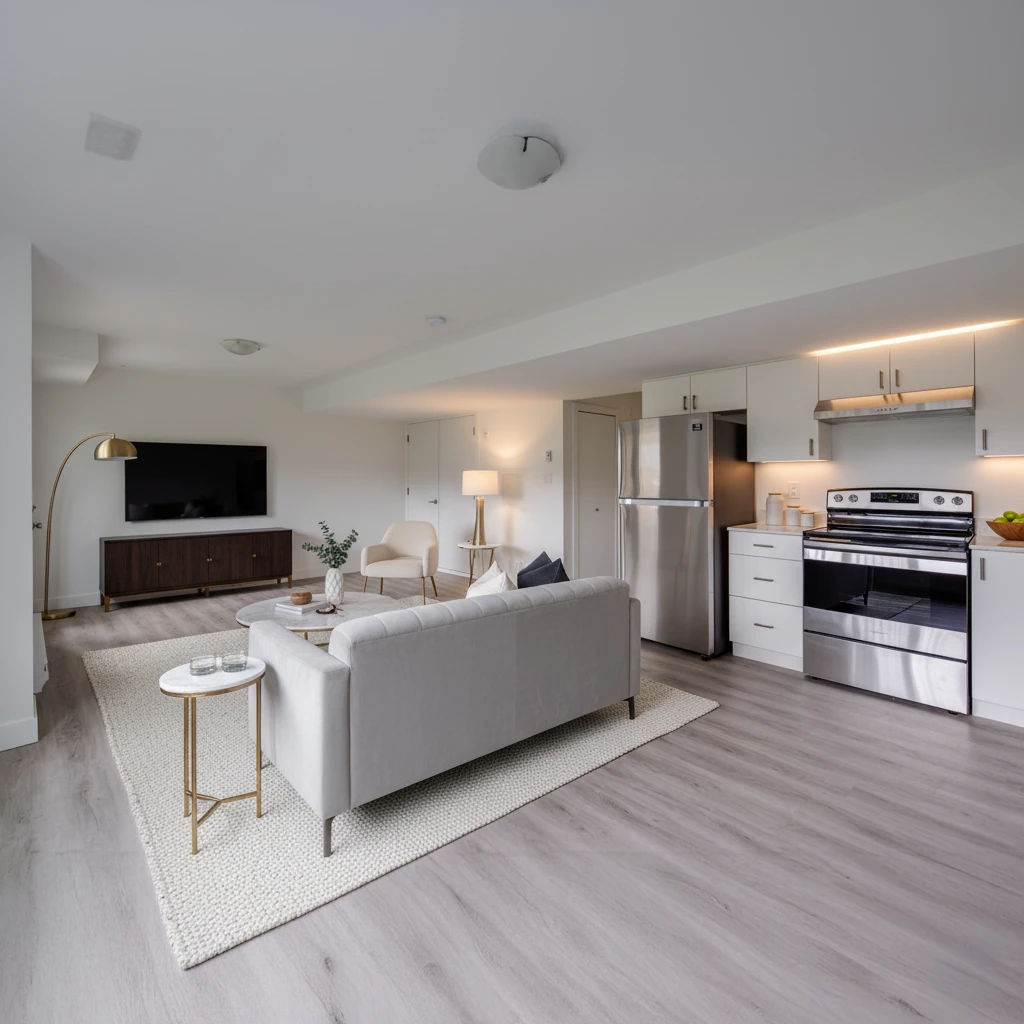
Legal Basement Suite in Vancouver: Requirements, Costs, and Rental Income Potential (2026)
Vancouver homeowners are sitting on one of the most powerful financial tools in real estate: a basement that could legally house a tenant. A legal basement suite in Vancouver generates $1,800–$2,400 per month in rental income, adds $120,000–$200,000 to your property’s market value, and qualifies you for the CMHC Secondary Suite Loan — up to $80,000 at just 2% interest. But getting there requires navigating Vancouver’s building code, zoning by-laws, permit process, and a construction project that typically costs $65,000–$95,000.
This guide covers everything: what makes a suite legal, every City of Vancouver requirement for 2026, realistic cost breakdowns, the egress window and ceiling height challenges most older Vancouver homes face, how to legalize an existing illegal suite, and the full permit process from pre-application to certificate of occupancy. If you’re weighing whether this investment makes sense for your property, the rental income and ROI numbers are here too.
What Makes a Basement Suite “Legal” in Vancouver?
A legal basement suite — formally called a secondary suite under the City of Vancouver Zoning & Development By-law — is a self-contained dwelling unit within a single-family home that has been constructed to code, issued a building permit, passed all required inspections, and registered with the City of Vancouver as a secondary dwelling unit. It has a certificate of occupancy and appears on the city’s secondary suite registry.
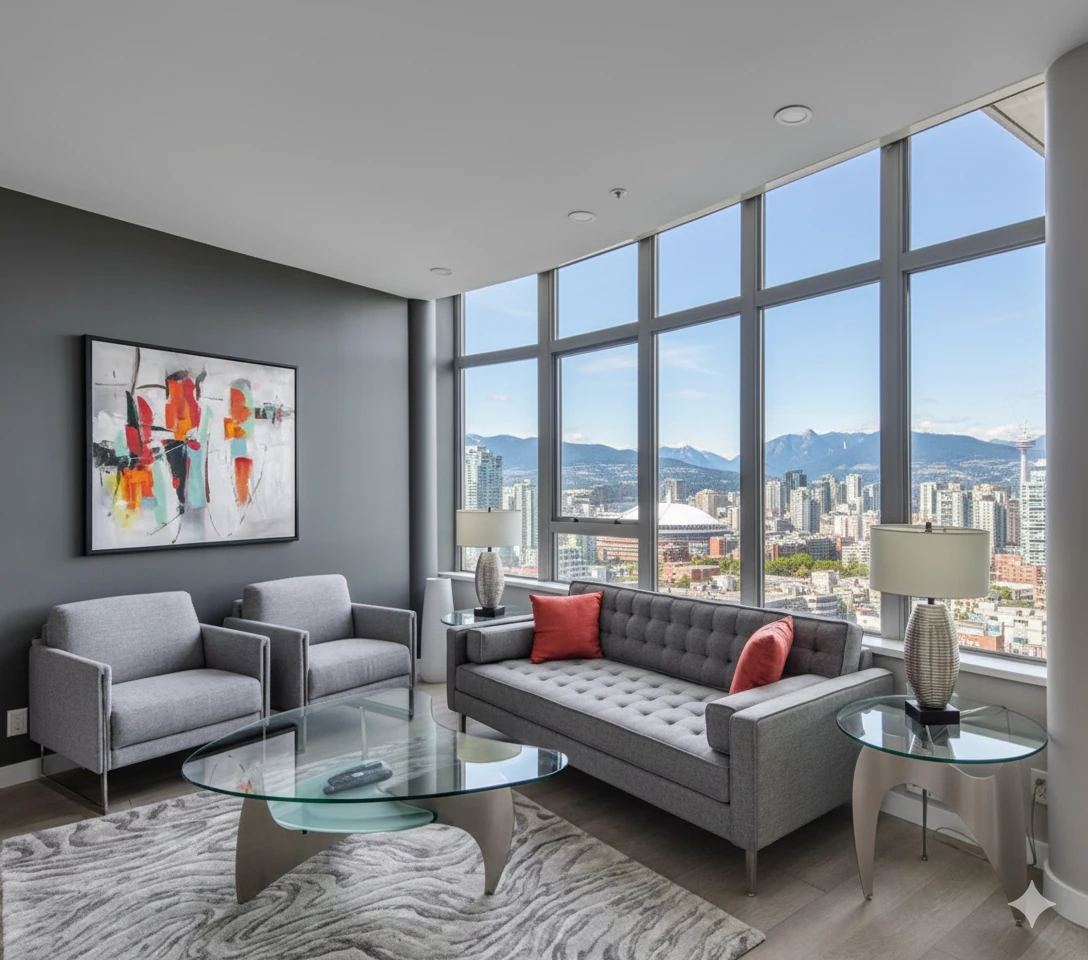
Many Vancouver homeowners have rented out their unregistered basement for years without incident — until something goes wrong. The consequences of an illegal suite are serious:
Vancouver General Contractors
An illegal suite, by contrast, was built without a permit, never inspected, and has no certificate of occupancy. It may look identical to a legal suite from inside, but its legal and financial status is completely different.
Why Legality Matters — The Real Consequences of an Illegal Suite
Many Vancouver homeowners have rented out their unregistered basement for years without incident — until something goes wrong. The consequences of an illegal suite are serious:
- Insurance voids: Your homeowner’s insurance policy almost certainly requires you to disclose a secondary rental unit. An undisclosed illegal suite can void your coverage entirely — meaning a basement fire that spreads to the main home could leave you with nothing.
- Liability exposure: If a tenant is injured in a non-compliant suite (smoke detector not interconnected, no egress window, substandard electrical), you face personal liability that insurance won’t cover.
- Sale complications: Real estate agents are legally required to disclose illegal suites. Buyers’ lenders often refuse to include suite rental income in mortgage qualification for illegal units. Many buyers now demand legalization as a condition of sale or discount the purchase price by $40,000–$70,000.
- Bylaw fines: The City of Vancouver can issue fines of up to $10,000 per day for illegal secondary suites. Neighbour complaints, inspection requests during a sale, or routine bylaw enforcement can trigger these penalties.
- Tenant rights complications: Even in an illegal suite, tenants have full rights under the BC Residential Tenancy Act. But as the landlord, you lose any ability to rely on regulatory compliance if a dispute escalates.
Most RS-1 (single-family residential) lots in Vancouver permit one secondary suite under the Zoning & Development By-law Section 10A. This covers the vast majority of the city’s residential neighbourhoods — East Vancouver, Kitsilano, Mount Pleasant, Grandview-Woodland, Renfrew, Fraserview, and more. RT (two-family residential) and some RM zones have their own rules, often more permissive.
City of Vancouver Secondary Suite Requirements (2026)
The following requirements apply to secondary suites under the City of Vancouver Zoning & Development By-law and the BC Building Code. These are the specific standards your suite must meet to receive a certificate of occupancy and secondary suite registration. Many homeowners are surprised by the specificity — this is not a general renovation, it’s a regulated dwelling unit.
Space and Layout Requirements
- Minimum suite size: 37 square metres (398 sq ft) of habitable floor area — this is a practical minimum, and most functional 1-bedroom suites target 550–700 sq ft.
- Minimum ceiling height: 1.8m (5’11”) absolute minimum anywhere in habitable space; 2.1m (6’11”) preferred and practically required in kitchen and bathroom areas. This is the single most common reason older Vancouver basements cannot be suites without structural work.
- Separate entrance: The suite must have its own dedicated exterior entrance — typically a side door or rear door — that does not pass through the main dwelling’s living space. The entrance must include a covered landing and proper steps.
- Full kitchen required: The suite must contain a complete kitchen with a stove (or stove rough-in), refrigerator space, sink with hot and cold running water, and adequate counter and storage space. A wet bar does not qualify.
- Full bathroom required: A complete bathroom with a toilet, sink, and shower or bathtub. A half bath does not satisfy the requirement.
Egress and Window Requirements
- Egress windows: Every sleeping room in the suite must have at least one egress window with a minimum openable area of 0.35 sq m (3.77 sq ft), a minimum opening width of 380mm (15″), and a minimum opening height of 380mm (15″). The sill must be no more than 1.0m above the floor.
- Window wells: If the egress window is below grade, a window well is required. The well must provide clear access and must be large enough to allow egress (minimum 550mm clear from the window frame). A drainage system is required at the base of the well.
- Natural light: Habitable rooms (bedrooms, living areas) must have windows providing natural light equal to at least 10% of the room’s floor area.
Fire Safety Requirements
- Fire separation: A 1-hour fire-resistance rating is required between the secondary suite and the main dwelling — walls, floor/ceiling assembly, and any shared mechanical space. This typically requires Type X (5/8″) drywall on both sides of the shared assembly, sometimes with additional resilient channel or acoustic insulation.
- Smoke detectors: Interconnected smoke detectors are required in both the suite and the main dwelling — meaning when one alarm sounds, all alarms in the building sound. This requires either hardwired interconnected detectors or a hardwired system with battery backup.
- Carbon monoxide detectors: Required if the suite has gas appliances or if there is an attached garage. CO detectors must be interconnected with smoke detectors in newer installations.
- Fire-rated door: Any door between the suite and the main dwelling must be a 20-minute fire-rated door with a self-closing device.
Mechanical and Electrical Requirements
- Electrical sub-panel: The suite must have its own electrical sub-panel, allowing the tenant’s electricity to be separately metered or at minimum separately controlled. The sub-panel must be sized for the suite’s load (typically 60–100 amp).
- AFCI breakers: Arc-fault circuit interrupter (AFCI) protection is required on all bedroom circuits and increasingly on all circuits in sleeping areas under the 2024 BC Building Code cycle.
- Dedicated heat source: The suite must have its own independent heat source. This can be electric baseboard heaters, a ductless mini-split heat pump, or a shared forced-air system with dedicated supply/return dampers that allow independent temperature control. A mini-split is now the preferred solution for new suites — it provides both heat and cooling, qualifies for BC Hydro rebates, and avoids duct penetration of fire separations.
- Ventilation: The suite must have mechanical ventilation meeting ASHRAE 62.2 requirements — typically a heat recovery ventilator (HRV) or exhaust-only system with makeup air provisions. Bathroom fans must vent directly to the exterior, not into the attic or floor cavity.
Parking and Registration
- Parking: Generally, one off-street parking space is required for the secondary suite. This requirement may be waived on arterial streets designated as transit corridors (e.g., Kingsway, Broadway, Commercial Drive). Check your specific address with the City’s Zoning Information Service.
- Secondary suite registration: After construction and final inspection, you must apply for Secondary Suite Approval from the City of Vancouver. The application fee is approximately $500. This step is separate from the building permit and is what places your suite on the city registry.
Legal Basement Suite Costs in Vancouver: Three Scenarios
The cost of creating a legal basement suite in Vancouver varies significantly depending on the starting condition of your basement. There are three common scenarios VGC encounters:
| Scenario | Description | Cost Range |
|---|---|---|
| Legalize an unfinished basement | New framing, insulation, drywall, flooring, kitchen, bath — built from scratch in raw basement space | $65,000–$95,000 |
| Upgrade an existing “illegal” finished basement | Already has kitchen and bathroom but non-compliant; needs egress, fire separation, electrical upgrade | $25,000–$55,000 |
| Gut and rebuild an existing legal suite | Refresh to modern standards, update systems, re-register with updated floor plan | $35,000–$70,000 |
For a full build-out from an unfinished basement — which is the most common project VGC undertakes — here is a realistic component-level breakdown:
| Component | Cost Range (2026) |
|---|---|
| Permits and approvals (building permit, secondary suite registration) | $1,500–$4,500 |
| Structural work (egress windows, separate entrance, window wells) | $3,000–$12,000 |
| Fire separation (Type X drywall, fire-rated door, framing upgrades) | $2,500–$6,000 |
| Electrical (sub-panel, new circuits, AFCI breakers, smoke/CO interconnect) | $4,500–$10,000 |
| Plumbing (bathroom rough-in, ejector pump if needed, kitchen hook-up) | $5,000–$15,000 |
| HVAC (mini-split or baseboard heat, ventilation, bathroom exhaust) | $3,500–$9,000 |
| Framing and insulation (wall framing, spray foam rim joists, batt insulation) | $4,000–$10,000 |
| Flooring (luxury vinyl plank or tile throughout) | $3,000–$8,000 |
| Kitchen cabinets and appliances (mid-range) | $6,000–$18,000 |
| Bathroom finishes (tile, fixtures, vanity, shower) | $5,000–$12,000 |
| Exterior entrance (door, steps, landing, lighting) | $2,500–$7,500 |
| Soundproofing (Rockwool, resilient channels, double drywall — optional) | $3,000–$8,000 |
| Total | $47,500–$120,500 |
The wide range reflects real variables: whether your basement needs ceiling height work, how many egress windows must be cut, whether you already have a separate entrance, the condition of your existing electrical panel, and whether the plumbing stack is accessible for a new bathroom tie-in. VGC provides detailed itemized quotes after a site assessment — the numbers above are based on our completed projects across East Vancouver, Burnaby, and North Vancouver.
For help planning your renovation budget and understanding financing options, see our complete renovation planning guide — it covers everything from scoping to paying for your project.
The Egress Window Problem: Vancouver’s Most Common Basement Suite Challenge
If there is one issue that stops a basement suite project in its tracks — or adds $10,000–$40,000 to the budget unexpectedly — it is the egress window requirement. And it affects the majority of Vancouver homes built between 1950 and 1990.
These homes were built with small horizontal hopper windows near the top of the foundation wall. They let in light and some air, but their openable area is typically 0.05–0.15 sq m — far below the 0.35 sq m minimum required for egress. They are fine for a storage room. They are not legal for a bedroom in a secondary suite.
What Egress Window Installation Actually Involves
Installing a proper egress window in a below-grade foundation wall is not a simple window swap. The process involves:
- Excavation: Digging down on the exterior of the foundation wall to expose enough concrete to cut a larger opening. This typically means removing shrubs, concrete pathways, or landscaping adjacent to the foundation.
- Concrete cutting: Using a diamond saw to cut through the poured concrete or concrete block foundation. This is noisy, dusty work that requires a structural lintel above the new opening.
- Lintel installation: A structural steel or concrete lintel must span the new opening to carry foundation loads — required by engineer or per code table.
- Window well construction: A galvanized steel or precast concrete window well is set into the excavation and anchored to the foundation. The well must be large enough to allow egress — minimum 550mm clearance from the window face — and must drain properly to prevent water intrusion.
- Waterproofing: The foundation penetration and well perimeter must be waterproofed. This is where projects go wrong if shortcuts are taken — a poorly waterproofed egress window well is a direct water intrusion path into the basement.
Cost per egress window installation in Vancouver: $3,000–$8,000, depending on the depth of excavation required, the foundation material (poured concrete vs. concrete block), and landscaping restoration.
A typical two-bedroom suite requires two egress windows (one per bedroom). A one-bedroom suite requires one. Total egress window cost for a two-bedroom suite: $6,000–$16,000.
When Grade Is the Real Problem
Some Vancouver lots — particularly in areas with sloped terrain or where the grade has been built up over decades — have exterior grade that sits very close to the basement floor level. When the ground outside is nearly as high as your basement floor, a window well simply cannot provide enough clearance, and the egress window sill ends up uncomfortably close to grade.
In these cases, the only solution to achieve both egress compliance and livable ceiling height is to lower the basement floor slab — a major undertaking discussed in the next section. This can add $15,000–$40,000 to the project scope and requires a structural engineer.
Ceiling Height: When You Need to Lower the Floor Slab
The minimum ceiling height requirement — 1.8m (5’11”) absolute minimum, 2.1m (6’11”) preferred — catches many Vancouver homeowners off guard. The math seems simple: measure your basement ceiling and compare to 1.8m. But the reality is more complicated, because the finished ceiling height is lower than the raw structural height, and City inspectors measure to the finished surface.
Here is what you lose between raw slab to finished ceiling:
- Subfloor (sleepers + plywood): 2–3 inches
- Floor finish (LVP or tile): ¼–½ inch
- Joist depth (varies): 9½–11¼ inches for typical floor joists
- Strapping or resilient channel: 1–1½ inches
- Drywall: ½ inch
In total, you lose roughly 14–18 inches (35–46cm) between the raw floor-to-joist-bottom measurement and the finished floor-to-finished-ceiling measurement. A basement with 8’0″ (244cm) from slab to joist bottom finishes at approximately 6’8″–6’10” — compliant. A basement with 7’0″ from slab to joist bottom finishes at approximately 5’8″–5’10” — not compliant for a secondary suite.
Vancouver Homes by Era: Typical Ceiling Heights
- 1950s–1980s bungalows and split-levels: Typically 7’0″–7’6″ slab to joist bottom. After finishing: 5’8″–6’2″. Often marginal or just below the required minimum — requires careful measurement and sometimes a raised floor system with thin-profile sleepers to reduce the height penalty.
- 1980s–2000s homes (builders’ spec): Typically 7’6″–8’0″. After finishing: 6’0″–6’6″. Usually compliant for the 1.8m minimum; may not reach the preferred 2.1m in kitchen/bath areas where beams drop lower.
- Heritage and craftsman homes (1910–1940): Often only 6’4″–7’0″ raw. After finishing: 5’0″–5’8″. Almost always non-compliant. These homes frequently require slab lowering to create a legal suite.
Slab Lowering and Underpinning: The Numbers
Lowering a basement floor involves either underpinning (excavating below the existing footing to create new, deeper footings) or benching (pouring a new concrete bench along the foundation perimeter and excavating only the interior). Both methods require a structural engineer, a building permit, and significant construction time.
Cost for slab lowering in a typical Vancouver basement (800–1,000 sq ft footprint):
- Benching method: $25,000–$40,000. Reduces usable floor area slightly (benches take 18–24 inches from each perimeter wall). Faster and lower risk.
- Full underpinning: $40,000–$65,000. Preserves full floor area. Requires excavation and concrete pours in alternating sections (never more than 50% of footing at once). Takes 3–6 weeks of structural work alone.
Is it worth it? The financial case is straightforward: if your property is in East Vancouver and the cost to create a legal suite (including slab lowering) is $130,000, and the suite adds $160,000–$200,000 in property value plus generates $2,200/month in rental income, the math strongly favours doing the work. The break-even on cash flow alone is under 60 months. The net present value of the asset increase is immediate.
If the slab work alone costs $50,000+ and the resulting suite still has marginal ceiling heights, reconsider scope — a whole-home renovation approach that redesigns the layout may yield better results for a similar investment.
CMHC Secondary Suite Loan Program
The Canada Mortgage and Housing Corporation (CMHC) offers a Secondary Suite Loan of up to $80,000 at 2% interest (as of 2026) specifically for homeowners creating or legalizing a secondary suite. This program was introduced as part of the federal government’s housing supply strategy and is one of the most underutilized financing tools for Vancouver homeowners.
CMHC Secondary Suite Loan: Key Details
- Loan amount: Up to $80,000 per qualifying unit
- Interest rate: 2% fixed for the term of the loan (significantly below prime rate)
- Repayment term: Up to 10 years
- Security: Not registered on title (unsecured loan — does not affect your mortgage or refinancing ability)
- Eligibility: Must be your primary residence. The project must create net new rental housing (either a new suite or legalization of an illegal suite). The suite must meet local zoning and building code requirements.
- Application: Through approved lenders — RBC, TD, BMO, Scotiabank, and other major chartered banks. Apply before construction begins; funds are typically disbursed in stages tied to construction milestones.
At $80,000 over 10 years at 2%, the monthly payment is approximately $735 — well below the $1,800–$2,400 rental income the suite will generate. The suite essentially pays for itself from day one of tenancy.
Stack Your Incentives: Additional Rebates Available
The CMHC loan can be combined with other programs:
- BC Hydro Heat Pump Rebate: $3,000–$6,000 for installing an eligible heat pump (mini-split) as the suite’s heating/cooling system. VGC regularly specifies mini-splits for suites specifically to capture this rebate.
- CleanBC Better Homes Program: Additional rebates for insulation upgrades (spray foam, rigid insulation) and energy efficiency improvements that are part of the suite construction. Rebates vary by measure and can total $2,000–$5,000.
- Canada Greener Homes Grant: Up to $5,000 for qualifying energy upgrades. Requires a pre- and post-renovation EnerGuide assessment.
VGC has helped over 40 homeowners apply for the CMHC Secondary Suite Loan and navigate the rebate stacking process. An important step that many homeowners miss is having their income pre-qualified with the expected rental income included — lenders treat rental income from a legal suite differently (more favourably) than from an illegal suite. This matters if you plan to refinance or use the improved debt service ratio for a future purchase.
Start your planning with our renovation planning guide to understand the full financing landscape before committing to scope.
Secondary Suite Rental Income in Vancouver
Vancouver’s rental market remains one of the tightest in Canada, and basement suites in established residential neighbourhoods command strong rents. Based on Zumper, PadMapper, and VGC project client data from early 2026, here is what a legal suite in Metro Vancouver realistically rents for:
| Suite Type | Metro Vancouver Range | East Van | Burnaby | North Van |
|---|---|---|---|---|
| Studio / bachelor | $1,400–$1,800/mo | $1,500–$1,750 | $1,400–$1,700 | $1,600–$1,900 |
| 1 bedroom | $1,800–$2,400/mo | $1,900–$2,300 | $1,700–$2,100 | $2,000–$2,500 |
| 2 bedroom | $2,200–$3,200/mo | $2,300–$2,900 | $2,100–$2,700 | $2,500–$3,200 |
Break-Even and ROI Analysis
Let’s run a realistic scenario for a mid-range East Vancouver legal basement suite:
- Total project cost: $80,000 (includes permits, construction, finishes)
- Monthly rent (1-bedroom): $2,200/month
- Annual gross rental income: $26,400
- Annual operating costs (insurance premium increase ~$1,200/yr, maintenance allowance ~$1,500/yr, property tax increase ~$400/yr): approximately $3,100/year
- Annual net rental income: approximately $23,300
- Cash-on-cash payback period: ~41 months (3.4 years) before mortgage interest
Now add the property value increase. In Vancouver’s RS-1 market, a legal secondary suite is typically valued by appraisers and buyers using a capitalization rate method. At a 5% cap rate, $23,300 in net annual income translates to approximately $466,000 in imputed value — but this is combined with the underlying land value, so the suite’s incremental contribution is typically assessed at $120,000–$200,000 in increased property value for a well-located RS-1 lot. This is a conservative estimate based on comparable sales analysis in the current market.
In other words: invest $80,000, receive $120,000–$200,000 in immediate property value increase, plus $23,300/year in net income while you own the property. This is why the legal basement suite is, dollar for dollar, one of the highest-ROI home improvement investments in Vancouver.
Secondary Suite vs. Laneway House: Which Makes More Sense?
Vancouver homeowners with sufficient lot depth often ask: should I build a basement suite or a laneway house? Both create rental income. Both add property value. But they serve different financial goals and involve very different projects.
| Factor | Secondary Suite (Basement) | Laneway House |
|---|---|---|
| Typical cost | $65,000–$95,000 | $180,000–$350,000 |
| Monthly rental income | $1,800–$2,400 | $2,500–$3,800 |
| Privacy for homeowner | Shared structure, one lot | Fully separate building |
| Construction time | 3–5 months | 8–14 months |
| Zoning eligibility | Most RS-1 lots | RT zoning + some RS-1 with lane access |
| Estimated ROI (10 yr) | 200–280% | 140–200% |
| Disruption to main home | Significant during construction | Minimal (separate building) |
| Best for | Fastest path to rental income | Long-term investment + maximum income |
The basement suite wins on ROI and speed. The laneway house wins on privacy and total rental income if you have the lot and the budget. Many Vancouver homeowners do both — the suite first for immediate income, the laneway house years later as a larger investment. The two can coexist on most RS-1 lots under current zoning.
For a full breakdown of laneway house costs and process in Vancouver, see our home renovation services page.
The Permit Process for Secondary Suites in Vancouver
The permit process for a secondary suite in Vancouver involves the City’s Development, Buildings, and Licensing (DBL) department. While it can seem daunting, a systematic approach — typically managed by VGC on the homeowner’s behalf — keeps the project on schedule. Here is the step-by-step process:
- Pre-application meeting with the City of Vancouver (optional, recommended): A 30-minute meeting with a City planner to confirm your zoning allows a secondary suite, identify any site-specific concerns (lot coverage, setbacks, heritage overlays), and understand the documentation requirements. This meeting is free and can prevent costly surprises. Book through the City’s Development Enquiry Centre.
- Hire a designer or architect to prepare drawings: A registered building designer or architect prepares a set of permit drawings showing the existing and proposed floor plans, elevations, cross-sections, and details. Cost: $3,000–$8,000 depending on complexity. VGC works with a network of experienced designers familiar with Vancouver’s secondary suite requirements.
- Submit building permit application: Submit drawings, site plan, and forms to the City’s online permit system (Vancouver Permit Centre). Include all relevant schedules. Permit fee: approximately $1,500–$4,500 based on project value. No development permit is required for secondary suites in most RS-1 zones — just a building permit.
- Permit review: The City reviews for zoning compliance, BC Building Code compliance (structural, fire separation, egress), plumbing (issued by Metro Vancouver or City plumbing inspector), and electrical (permit issued to licensed electrical contractor separately through the Safety Authority). Typical review time: 6–12 weeks. Expedited review may be available for straightforward projects.
- Permit issued: Building permit and electrical permit are issued. Post the permit on site before work begins. Your contractor cannot legally proceed before permit issuance.
- Construction with scheduled inspections: City inspectors visit at specified stages — framing, plumbing rough-in, electrical rough-in, insulation and fire separation, and final. Your contractor must call for each inspection and receive a pass before proceeding to the next stage. VGC coordinates all inspection bookings and ensures work is staged accordingly.
- Final inspection and certificate of occupancy: After the final inspection passes, the City issues a certificate of occupancy for the suite. This is the document that legally authorizes human habitation.
- Apply for Secondary Suite registration: Separate from the building permit, you must apply for Secondary Suite Approval through the City of Vancouver. This registers your suite on the city’s secondary suite database. Fee: approximately $500. Provide your building permit number and certificate of occupancy.
- Notify your insurance company: Contact your home insurer to add the secondary suite to your policy. Premium increase is typically $800–$1,500/year. Failure to disclose a rental unit can void your entire policy.
- Declare rental income to CRA: Rental income from a secondary suite is taxable income and must be reported on your T1 personal income tax return using Form T776 (Statement of Real Estate Rentals). You can deduct a proportional share of mortgage interest, property tax, insurance, utilities, and maintenance against rental income. Keep all receipts from construction — the capital cost is depreciable over time.
Legalizing an Existing Illegal Suite: The Reality
The City of Vancouver estimates there are over 40,000 illegal secondary suites within city limits. This is not a fringe phenomenon — it is the baseline condition of a significant portion of Vancouver’s older housing stock. Many of these suites are well-built and functional, created decades ago by homeowners who either did not know about permit requirements or chose to avoid them. The challenge is that “functional” and “legal” are very different standards.
How Illegal Suites Come to Light
The three most common triggers for discovering and being forced to address an illegal suite are:
- Home inspection during sale: A buyer’s inspector notes the suite as unpermitted. The buyer’s lender refuses to include rental income in mortgage qualification, or the buyer conditions the purchase on legalization. Real estate agents representing sellers are required to disclose unpermitted improvements.
- Insurance claim investigation: Following any claim (fire, water damage, liability), the insurer investigates the property. An undisclosed rental unit — legal or illegal — is grounds for claim denial and policy cancellation.
- Neighbour complaint or bylaw inspection: A parking dispute, noise complaint, or renovation on an adjacent property can trigger a bylaw inspection that reveals an illegal suite. The City can issue an order to stop using the suite or bring it into compliance.
What Legalization Typically Requires
The cost to legalize an existing illegal suite depends entirely on what is already present and compliant. In practice, VGC finds that most illegal suites — even those that were built by skilled contractors — fail on three to five of the following requirements:
- Fire separation (most common failure): The 1-hour fire-resistance rating between the suite and the main dwelling is rarely achieved in older construction. Existing drywall is typically ½” regular (not Type X), and there is often no fire-rated door between the units. Upgrading fire separation means opening up walls and ceilings, installing Type X drywall on both sides, and replacing the connecting door. Cost: $8,000–$18,000 depending on scope.
- Egress windows: As discussed, illegal suites built in older homes commonly lack proper egress. If bedrooms do not have compliant egress windows, they cannot be used as sleeping rooms. Cost: $3,000–$8,000 per window.
- Electrical sub-panel and AFCI: Many older illegal suites are fed from the main panel with a single circuit or a small sub-panel without AFCI protection. A licensed electrician must install a properly sized sub-panel and AFCI-protected circuits. Cost: $4,500–$8,000.
- Smoke and CO interconnection: Existing detectors are often standalone battery units, not hardwired interconnected. Upgrading to interconnected smoke and CO detectors requires an electrician. Cost: $800–$2,000.
- Ventilation and heating: Illegal suites often lack dedicated ventilation and have a single electric baseboard heater that is not on a dedicated circuit. Upgrading to code-compliant ventilation and a properly configured heat source: $3,000–$6,000.
Total legalization cost when suite shell is already present but systems are non-compliant: $25,000–$55,000, with the wide range depending on how many systems need upgrading and whether egress windows are required.
Insurance After Legalization
Once your suite is legal, inform your insurer immediately and update your policy. Home insurance premiums increase by approximately $800–$1,500/year when a rental suite is added. This is a reasonable and tax-deductible cost of operating a rental property. The alternative — continuing without disclosure — leaves you exposed to total policy voidance.
Soundproofing Your Basement Suite: Worth the Investment
Sound transmission between a main floor and a basement suite is one of the most common sources of tenant dissatisfaction and landlord complaints. The thumping footsteps, dropped objects, children running, and late-night television that travel through a standard wood-frame floor assembly can make both the tenant’s life and the homeowner’s life unpleasant. Standard suite construction — 2×10 joists, batt insulation, ½” drywall — achieves an STC (Sound Transmission Class) rating of approximately 35–40. Normal speech is audible at this level. The target for acceptable isolation is STC 55+.
What Acoustic Upgrading Involves
Adding proper acoustic treatment to the floor/ceiling assembly is most economically done during construction — specifically after framing inspection and before drywall. The standard VGC acoustic package for basement suites includes:
- Rockwool Safe’n’Sound or Comfortbatt: Dense mineral wool batt insulation completely filling joist cavities. Unlike fibreglass batt, Rockwool dramatically reduces airborne sound transmission (speech, music, TV). It also improves fire resistance — a dual benefit for a suite assembly that is already required to have fire separation.
- Resilient channels or sound isolation clips (IsoMax): Metal channels attached to joist bottoms that mechanically decouple the drywall ceiling from the structure. This breaks the direct vibration path for impact noise (footsteps). Resilient channels are lower cost ($0.50–$1.00/LF); IsoMax clips are more effective and used in premium builds.
- Two layers of 5/8″ Type X drywall: Double-layered drywall adds mass, which attenuates low-frequency transmission. In a secondary suite ceiling, this also satisfies the fire separation requirement — so the acoustic upgrade and fire compliance overlap.
- Acoustic sealant at all penetrations: Every electrical box, pipe penetration, and gap at the perimeter must be sealed with non-hardening acoustic sealant. This is where most DIY acoustic projects fail — the “flanking paths” through unsealed penetrations transmit more sound than the assembly itself.
Total cost for acoustic treatment of a basement suite ceiling during construction: $3,000–$8,000 for a typical 600–800 sq ft suite. Retrofitting after drywall is installed costs 40–60% more and produces inferior results.
VGC’s recommendation: always include acoustic treatment in the spec. The $5,000 investment in a good acoustic assembly is recovered within six months of reduced tenant turnover. A quiet suite commands a higher rent, attracts more qualified tenants, and generates fewer landlord-tenant disputes than a noisy one.
Ready to get started? Contact VGC for a free site assessment — we’ll measure your basement, evaluate ceiling height, assess egress options, and provide a detailed estimate for your specific property.
More Basement & Secondary Suites Guides
Interior vs. Exterior Basement Waterproofing in Vancouver: Which is More Effective?
Drywall vs. Drop Ceiling for Your Vancouver Basement: Cost and Practicality Compared
Carpet vs. LVP Basement Flooring in Vancouver: Which Handles Moisture Better?
Wood vs. Steel Stud Framing for Vancouver Basement Walls: Which is Better?
Basement Subfloor Options Sleepers Dricore Lvp Concrete
Ready to start your renovation?
Frequently Asked Questions: Legal Basement Suites in Vancouver
What are the requirements for a legal secondary suite in Vancouver?
A legal secondary suite in Vancouver must meet the City of Vancouver Zoning & Development By-law and the BC Building Code. Key requirements include: minimum 37 sq m (398 sq ft) of habitable floor space, minimum 1.8m (5’11”) ceiling height (2.1m preferred), a separate exterior entrance, egress windows in all sleeping rooms (minimum 0.35 sq m openable area), a full kitchen and full bathroom, 1-hour fire separation between the suite and main dwelling, interconnected smoke and CO detectors, a dedicated electrical sub-panel with AFCI protection, and an independent heat source. The suite must receive a building permit, pass all inspections, and be registered with the City of Vancouver.
How much does it cost to create a legal basement suite in Vancouver?
Creating a legal basement suite from an unfinished basement in Vancouver typically costs $65,000–$95,000, including permits, structural work (egress windows, separate entrance), fire separation, electrical, plumbing, HVAC, framing and insulation, flooring, kitchen, and bathroom. If the basement requires ceiling height work (slab lowering), add $25,000–$65,000. Legalizing an existing finished but non-compliant suite typically costs $25,000–$55,000 depending on what needs upgrading.
Can I rent out my basement suite in Vancouver?
Yes — but only if it is a legal, permitted, and registered secondary suite. Renting an illegal suite is technically a bylaw violation and can result in fines up to $10,000/day, insurance voidance, and significant liability exposure. Most RS-1 (single-family) lots in Vancouver permit one secondary suite. Once your suite is legal, you operate as a landlord under BC’s Residential Tenancy Act, which provides a clear framework for tenancy agreements, rent increases, and dispute resolution.
Do I need a permit for a basement suite in Vancouver?
Yes. A building permit is required for any secondary suite in Vancouver. You will also need separate electrical and plumbing permits (issued to licensed tradespeople). After construction, a secondary suite registration application is required to place your suite on the City’s registry. Working without permits is the definition of an illegal suite and exposes you to bylaw enforcement, fines, and the cost of retrofitting the work to meet code requirements when you eventually need to legalize.
What is the CMHC secondary suite loan?
The CMHC Secondary Suite Loan provides eligible homeowners with up to $80,000 at 2% interest over a 10-year term to create or legalize a secondary suite. It is not registered on title (unsecured), so it does not affect your mortgage. It is available through approved lenders including the major Canadian banks. The suite must be in your primary residence, and the project must create net new rental housing. At $80,000 over 10 years at 2%, the monthly repayment is approximately $735 — well below typical suite rental income of $1,800–$2,400/month.
How do I legalize an existing basement suite in Vancouver?
Legalizing an illegal suite involves bringing it into compliance with the BC Building Code and City of Vancouver by-law, then obtaining retroactive permits. The process starts with a site assessment to identify what is non-compliant (typically fire separation, egress windows, and electrical). A building designer prepares drawings. A building permit is applied for with the City. The required upgrades are constructed, inspections are passed, and the suite is registered. Total cost: $25,000–$55,000 for most Vancouver homes. VGC handles the entire process from assessment through registration.
How much can I charge for a basement suite in Vancouver?
As of early 2026, basement suite rents in Metro Vancouver typically range from $1,400–$1,800/month for studios, $1,800–$2,400/month for 1-bedroom suites, and $2,200–$3,200/month for 2-bedroom suites. East Vancouver is the most active market for secondary suites; North Vancouver commands a slight premium. Rental rates for legal suites typically run $150–$300/month higher than comparable illegal suites — tenants pay more for the security of a legal, inspected unit with proper fire safety systems.
What ceiling height is required for a basement suite?
The BC Building Code requires a minimum ceiling height of 1.8m (approximately 5’11”) in all habitable spaces. The City of Vancouver prefers and in practice requires 2.1m (6’11”) in kitchens and bathrooms. This is measured to the finished ceiling surface — not the raw concrete or joist bottom. A basement with 7’0″ from slab to joist bottom will finish at approximately 5’8″–5’10” depending on floor system and ceiling assembly — this is not compliant. Slab lowering (benching or underpinning) may be required for older Vancouver homes, adding $25,000–$65,000 to the project.
Does a legal basement suite increase property value?
Yes, significantly. A legal secondary suite in Vancouver typically increases property value by $120,000–$200,000 on an RS-1 lot, based on comparable sales analysis and the income capitalization approach used by appraisers. Buyers and their lenders treat rental income from a legal suite as a qualifying income stream. An illegal suite typically adds little to no verified value — lenders discount or ignore illegal suite income. Creating a legal suite is one of the highest-ROI home improvements possible on a Vancouver property.
What is the difference between a legal suite and an illegal suite?
A legal suite was built with a permit, inspected at every stage by City of Vancouver building inspectors, passed all BC Building Code requirements (fire separation, egress, electrical, plumbing, ceiling height), and is registered on the City’s secondary suite registry. It has a certificate of occupancy. An illegal suite was built without a permit, was never inspected, and may or may not meet code requirements — there is no way to know without a professional assessment. The financial and safety consequences of operating an illegal suite are significant, as described in detail throughout this guide.
How long does it take to create a basement suite?
From initial consultation to move-in-ready, plan on 5–9 months for a new legal basement suite in Vancouver. This breaks down as: 4–8 weeks for design drawings, 6–12 weeks for permit approval (varies by City workload), and 3–5 months for construction. The construction phase includes scheduled inspections that must be passed before proceeding. VGC typically begins design immediately upon contract signing so the permit process can run concurrently with any pre-construction site preparation.
Do I need to pay tax on basement suite rental income in Vancouver?
Yes. Rental income from a secondary suite is taxable income in Canada, declared on your personal T1 return using Form T776 (Statement of Real Estate Rentals). You report gross rental income and deduct eligible expenses including: a proportional share of mortgage interest, property taxes, home insurance, utilities (if included in rent), maintenance and repairs, and professional fees (accountant, property manager). Capital construction costs are not fully deductible in the year incurred — they are depreciated over time using the Capital Cost Allowance system. Consult a tax professional familiar with rental income to set up your records correctly from the first year of tenancy.
What is an egress window and why is it required?
An egress window is an emergency exit window sized large enough for an occupant to escape through in case of fire. The BC Building Code requires that every sleeping room have at least one egress window with a minimum openable area of 0.35 sq m (approximately 24″×24″), a minimum opening width of 380mm, and a minimum opening height of 380mm, with a sill height no more than 1.0m above the floor. Most older Vancouver basements have small hopper windows that do not meet this requirement. Installing proper egress windows requires cutting through the foundation wall, installing a lintel, constructing a window well, and waterproofing — typically costing $3,000–$8,000 per window.
Can I have a secondary suite in any Vancouver neighbourhood?
Secondary suites are permitted in most Vancouver residential zones, including RS-1, RS-1S, RS-2, RS-3, RS-3A, RS-5, RS-6, and RT zones. They are generally not permitted in RS-7 (one-family detached, large lot) areas or in strata-titled properties without strata council approval. Some heritage properties in the RS-1 zone have conditions attached that require review. The quickest way to confirm your specific address is to use the City of Vancouver’s online Zoning Map or contact the Development Enquiry Centre. VGC confirms zoning eligibility at no charge during the initial site assessment.
How much does soundproofing a basement suite cost?
Adding acoustic treatment to a basement suite ceiling during construction typically costs $3,000–$8,000 for a 600–800 sq ft suite. This includes Rockwool Safe’n’Sound insulation in joist cavities, resilient channels or IsoMax sound isolation clips, two layers of 5/8″ Type X drywall (which also satisfies fire separation requirements), and acoustic sealant at all penetrations. Retrofitting acoustic treatment after drywall is installed costs 40–60% more and is less effective. VGC strongly recommends including acoustic treatment in every suite spec — the investment in tenant satisfaction and retention pays back within the first year of tenancy.
Ready to Build Your Legal Basement Suite in Vancouver?
Vancouver General Contractors has completed over 150 basement suite projects across Metro Vancouver — from straightforward permit upgrades to full slab-lowering builds in century-old East Vancouver homes. We handle every step: zoning confirmation, design drawings, permit applications, construction management, inspection coordination, and secondary suite registration. We also help homeowners navigate the CMHC Secondary Suite Loan and BC Hydro heat pump rebate applications.
Every project starts with a free site assessment where we measure ceiling heights, evaluate egress options, review your electrical panel, and assess the separation requirements. You leave the assessment with a clear picture of what your project requires and a realistic cost range — before you commit to anything.
Book your free site assessment with VGC or explore our full home renovation services to see what else we can help with on your property.
Get a Free Renovation Quote
Metro Vancouver’s trusted general contractors. Free consultations across Vancouver, Burnaby, Richmond, North Shore & beyond.
Get Your Free Quote →Ready to start your project? Vancouver General Contractors (VGC) provides free, fixed-price quotes for homeowners across Metro Vancouver. Learn more about our basement renovation Vancouver services or request a free quote today.
VGC serves Vancouver and surrounding areas. View all renovation services in Vancouver →

Comments are closed