





Marpole Renovation Guide: Costs, Vancouver Special & Laneway Homes (2026)
Why Marpole Is One of Vancouver’s Most Active Renovation Markets
Marpole sits in South Vancouver, bounded by Oak Street to the west, SW Marine Drive to the south, the Fraser River to the east, and Granville Street to the north. For decades it was one of the city’s quieter residential enclaves — a working-class and immigrant neighbourhood where families bought older homes and stayed for generations. That era is coming to an end, replaced by one of the most active renovation and investment cycles the neighbourhood has ever seen.
The catalyst is the Oakridge redevelopment. The $3 billion Oakridge Park project — one of the largest mixed-use developments in Canadian history — is transforming the intersection of Cambie and 41st Avenue, just minutes north of Marpole’s core. When a neighbourhood suddenly finds itself adjacent to a 25-tower, 3,300-unit development with a 350,000 sq ft retail centre, property values tend to move quickly. Marpole homeowners and investors are paying attention.
Add Canada Line access via the Langara-49th Ave station, the Oak Street commercial corridor, and river proximity — and you have a neighbourhood that offers genuine liveability at a meaningful discount to Kerrisdale and the broader West Side. Home values currently range from $1.2 million to $1.9 million depending on lot size, condition, and zoning. That spread creates a clear opportunity: buy at the lower end, renovate strategically, and exit — or hold and rent — at the upper end.
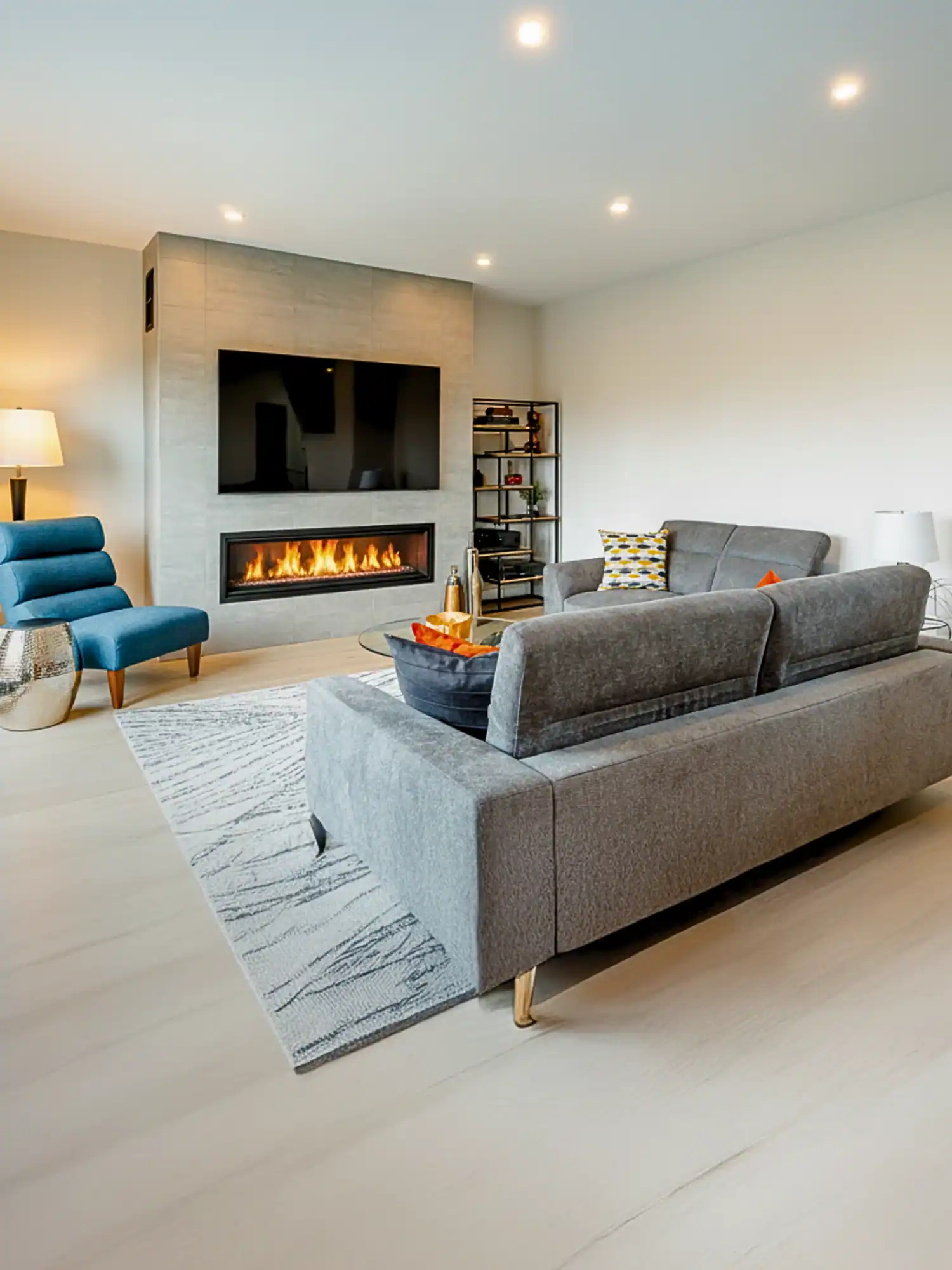 Richmond” class=”wp-image-12768″ />
Along the Granville Street and Oak Street corridors and near the Canada Line station, Marpole has seen newer mid-rise and low-rise condo construction over the past 15 years
Vancouver General Contractors
Marpole’s community is deeply multicultural. A strong Chinese Canadian and Filipino Canadian presence shapes the neighbourhood’s identity, its commercial strips, and the way families approach renovation decisions. Multi-generational living arrangements are common, which influences the types of renovations homeowners prioritize — legal basement suites, secondary kitchens, and accessible main-floor layouts are all regular requests we see from Marpole clients.
Whether you are planning a full home renovation, adding a basement suite, or building a laneway house, Marpole in 2026 is one of the more compelling renovation markets in Metro Vancouver. This guide walks you through what the housing stock looks like, what renovations actually cost, what permits you need, and how to approach the whole process from a neighbourhood-specific perspective.
Marpole Housing Stock: What You Are Actually Working With
Understanding the housing stock in Marpole is the first step toward budgeting a renovation accurately. The neighbourhood is not homogeneous. It contains several distinct housing eras, each with its own construction methods, materials, and renovation implications.
1930s–1950s Bungalows and Character Homes
The oldest housing stock in Marpole lines the streets north and east of the commercial corridor. These are single-storey or storey-and-a-half bungalows, typically 1,100–1,600 sq ft of above-grade living space on 33×122 ft lots. They were built with Douglas fir framing, plaster walls, and single-pane windows. Many have had cosmetic updates over the decades — new windows here, a kitchen refresh there — but the mechanical and electrical systems underneath often remain original. Knob-and-tube wiring, galvanized plumbing, and asbestos-containing materials in multiple locations are common findings in homes from this era.
The upside of these homes is their character: genuine hardwood floors (usually Douglas fir, occasionally oak), solid old-growth lumber framing, and liveable proportions that respond well to thoughtful renovation. A well-executed renovation of a 1940s Marpole bungalow can produce a home that feels genuinely distinct from new construction — and commands a premium with buyers who value that character.
1960s–1970s Two-Storeys and Vancouver Specials
The postwar era filled in the remaining residential lots with two-storey homes built for growing families. Many are conventional two-storeys with bedrooms upstairs and a living/dining/kitchen configuration below. A significant share of Marpole’s stock, particularly along the Oak Street corridor and on the cul-de-sacs off major roads, are Vancouver Specials — the distinctive box-shaped homes built roughly from the late 1960s through the 1980s that became the dominant infill format for South and East Vancouver.
Vancouver Specials are immediately recognizable: flat or slightly pitched roof, stucco exterior, a concrete block lower level that typically contained a self-contained suite, and a main-floor plan defined by a large living room, formal dining area, and kitchen at the rear. They were built to maximize square footage on the standard Vancouver lot, and they succeeded — a typical Vancouver Special delivers 2,200–2,600 sq ft across two levels, plus a lower suite. The renovation opportunity here is substantial, but so are the specific challenges, which we cover in depth below.
Newer Condos and Low-Rise Buildings
Along the Granville Street and Oak Street corridors and near the Canada Line station, Marpole has seen newer mid-rise and low-rise condo construction over the past 15 years. Renovation work in these buildings follows a different framework — strata bylaws, common area considerations, and the limitations of working within a concrete structure rather than a wood-frame house. This guide focuses primarily on the detached and semi-detached housing stock, which represents the majority of renovation activity in the neighbourhood.
Zoning Context
Most of Marpole’s residential streets are zoned RS-1 or RS-1B. RS-1 is the standard single-family residential zone, which permits one principal dwelling unit, a secondary suite, and a laneway house on lots with rear lane access. RS-1B is a slightly denser variant found along some corridors that allows for the same uses with minor dimensional differences. Both zones support the renovation strategies covered in this guide. The typical Marpole lot — 33 feet wide by 122 feet deep — comfortably accommodates a rear laneway house under current RS-1 regulations.
Marpole Renovation Costs: Full Pricing Table for 2026
Cost transparency is the foundation of good renovation planning. The ranges below reflect current contractor pricing in Vancouver — not national averages, not figures from three years ago, but what homeowners in Marpole and across Metro Vancouver are actually paying in 2026. Ranges are wide because scope, finishes, and site conditions vary considerably. Treat the lower end as attainable with careful planning and mid-range finishes; treat the upper end as realistic for complex scopes, premium finishes, or homes with significant hidden conditions.
| Renovation Scope | Cost Range (2026) | Typical Timeline |
|---|---|---|
| Kitchen renovation (mid-range) | $38,000–$65,000 | 4–8 weeks |
| Kitchen renovation (high-end) | $65,000–$95,000 | 6–12 weeks |
| Bathroom renovation (main or ensuite) | $18,000–$35,000 | 2–4 weeks |
| Bathroom renovation (high-end / spa) | $35,000–$50,000 | 3–6 weeks |
| Basement suite (new or legalization) | $55,000–$90,000 | 8–14 weeks |
| Vancouver Special full renovation | $160,000–$320,000 | 5–9 months |
| 1940s bungalow full renovation | $150,000–$290,000 | 5–9 months |
| Laneway house (new construction) | $260,000–$420,000 | 12–18 months |
| Exterior renovation (stucco, windows, siding) | $25,000–$65,000 | 3–8 weeks |
| Main floor open-concept conversion | $35,000–$75,000 | 4–8 weeks |
| Full electrical upgrade (panel + rewire) | $18,000–$38,000 | 1–3 weeks |
| Full plumbing replacement | $15,000–$35,000 | 1–3 weeks |
These figures include labour, materials, and permit fees, but not furniture, appliances (unless specified), landscaping, or post-renovation painting beyond what is included in a typical scope. Always confirm what is and is not included when reviewing contractor proposals.
The Marpole Opportunity: Why Investors and Homeowners Are Moving Here Now
Property investment decisions are fundamentally about the relationship between current value and anticipated future value. Marpole’s current moment is unusually clear on both fronts.
The Oakridge redevelopment is the most important single influence on Marpole property values right now. When Oakridge Park reaches full build-out — a multi-year process but one that is well underway — the intersection of Cambie and 41st will be a genuinely urban node with towers, retail, offices, a community centre, and a park. Marpole, whose northern edge is within walking distance of this development, will function as the residential depth of this new urban centre. Property values in similar positions relative to major developments elsewhere in Vancouver have appreciated substantially.
The Canada Line provides a transportation foundation that the neighbourhood lacked a generation ago. The Langara-49th Ave station puts downtown Vancouver 20 minutes away without a car. For rental tenants — particularly young professionals and students from Langara College just blocks north — the station makes Marpole competitive with far more expensive neighbourhoods. This transit access directly supports the rental income projections for basement suites and laneway houses discussed later in this guide.
Compared to Kerrisdale immediately to the west, or Cambie Village to the north, Marpole still offers meaningful value. A renovated 1950s bungalow in Kerrisdale sells for $2.2–$2.8 million. The equivalent property in Marpole sells for $1.5–$1.9 million. That $300,000–$900,000 gap is partly justified by historical differences in prestige and amenity — but as Marpole’s amenity base improves with Oakridge proximity and ongoing commercial strip development, that gap is narrowing. Investors and owner-occupiers who move early capture the most value.
We are regularly seeing a particular investment pattern in Marpole: a buyer acquires a 1960s bungalow or Vancouver Special in original condition for $1.2–$1.4 million, invests $150,000–$250,000 in a comprehensive renovation, legalizes or creates a basement suite, and either holds for $2,800–$3,400 per month in combined rental income or sells into a $1.7–$2.1 million market. The numbers work — but only with careful cost management and a contractor who understands what these homes actually contain.
Old Systems Reality: What’s Inside Marpole’s Older Homes
One of the most consistent mistakes in Marpole renovation budgeting is underestimating the cost of dealing with old systems. The cosmetic scope — new kitchen, new bathrooms, fresh floors — is easy to price. The mechanical, electrical, and hazmat scope is where budgets expand unexpectedly. Here is a realistic breakdown of what you are likely to find by era, and what it costs to address.
1930s–1950s Homes: The Full Discovery List
Knob-and-tube wiring was the standard electrical system from roughly 1880 through the 1940s. It uses individual hot and neutral conductors run separately through ceramic knobs and tubes, without a ground wire. It is not inherently dangerous in original, undisturbed condition — but it cannot support modern electrical loads, it cannot be covered with insulation (a fire risk), and most insurers either refuse to cover it or charge significant premiums. A full rewire of a typical Marpole bungalow — including a new 200-amp panel, grounded outlets throughout, and updated lighting circuits — runs $18,000–$32,000 depending on accessibility.
Galvanized steel plumbing corrodes from the inside out over decades. Water flow progressively restricts; the pipes become brittle; and failures — often inside walls — can be catastrophic. By the time a 1940s home reaches 80 years of age, galvanized supply lines are typically at or past end of life. Full plumbing replacement with copper or PEX costs $15,000–$28,000 for supply lines; add drain line replacement (cast iron or Orangeburg) and you are looking at $22,000–$40,000 total.
Asbestos was used broadly in construction materials through the 1980s: floor tiles (vinyl), pipe insulation, duct wrap, stipple ceiling texture, vermiculite attic insulation, and roofing products. Pre-renovation asbestos testing is not optional in homes of this era — it is legally required in BC when demolition or renovation work will disturb the materials. Testing costs $300–$600. Remediation costs range from $1,500 for minor encapsulation to $8,000–$20,000+ for full abatement of multiple materials.
Douglas fir floors are actually a hidden asset in many of these homes. Under carpets and vinyl installed in the 1970s and 1980s, original Douglas fir strip flooring is often intact and refinishable. Budget $4–$8 per square foot for refinishing. The payoff — both in aesthetics and in buyer perception — is significant.
1960s–1970s Homes: The Second Generation of Issues
Aluminum wiring was used extensively from approximately 1965 to 1975 when copper prices spiked. Aluminum is a viable conductor, but it expands and contracts more than copper with temperature changes, which causes connections at outlets and fixtures to loosen over time — creating arcing and fire risk. Homes with aluminum wiring are insurable but require either complete rewiring or CO/ALR-rated device installation at every outlet, switch, and connection point. Full rewire: $18,000–$38,000. Device replacement with CO/ALR rated devices: $4,000–$8,000, though many inspectors and insurers prefer the full rewire.
Polybutylene (poly-B) plumbing was installed from approximately 1978 to 1995 and represents one of the most common problem discoveries in Marpole’s 1970s–1980s homes. Poly-B reacts with chlorine and other oxidants in municipal water, causing the pipe to become brittle and fail — often at fittings, often without warning. Many insurers will not cover homes with poly-B, or charge significant surcharges. Full replacement with PEX: $12,000–$22,000 in a typical two-storey home.
60-amp electrical panels are standard in 1960s construction and completely inadequate for modern usage. A 200-amp panel upgrade — separate from any rewiring — costs $2,500–$4,500 including permit and inspection. If you are adding a basement suite, EV charging, or an induction range, the panel upgrade is not optional.
The discipline required in Marpole renovation budgeting is to price the cosmetic scope you want, then add a realistic mechanical allowance before committing to the project. We recommend a $25,000–$50,000 contingency for unknown systems conditions in any home built before 1980.
Basement Suite Opportunity in Marpole
The basement suite may be the single highest-ROI renovation available in Marpole right now. Rental demand in the neighbourhood is strong and growing: Canada Line access means that a basement suite on a Marpole side street competes effectively for tenants with suites in Cambie Village or Mount Pleasant, at a meaningfully lower rent point. For renters, that makes Marpole attractive. For landlords, it means consistent occupancy.
Current rental rates for legal basement suites in Marpole:
| Suite Type | Monthly Rent Range | Annual Income |
|---|---|---|
| Studio suite (bachelor) | $1,500–$1,900 | $18,000–$22,800 |
| 1-bedroom suite | $1,800–$2,400 | $21,600–$28,800 |
| 2-bedroom suite | $2,200–$2,900 | $26,400–$34,800 |
The City of Vancouver secondary suite requirements are specific and non-negotiable for a legal suite. Key requirements include: minimum ceiling height of 1.98 metres (approximately 6’6″) throughout the principal rooms, a minimum suite area of 37 square metres (approximately 400 sq ft), a separate entrance, compliant egress windows in sleeping areas, interconnected smoke and CO detection, a separate electrical panel or sub-panel, and the suite must be registered with the City. The full requirements are detailed in the Vancouver Building Bylaw and are enforced during inspection.
The good news for Marpole specifically is that many of the older bungalows and two-storeys have basements with adequate ceiling height. 1930s–1950s homes were typically built with full basements — not crawl spaces — and ceiling heights of 7 to 8.5 feet are common after concrete floor removal and re-pour if needed. Vancouver Specials almost universally have lower-level suites already roughed in or existing, often with 8-foot ceilings in the concrete-block lower level.
The cost to create or legalize a basement suite ranges from $55,000 to $90,000 in a typical Marpole home. This includes framing, insulation, drywall, a new kitchen and bathroom, flooring, electrical sub-panel, egress windows, separate entrance if needed, permit fees, and all inspections. At the lower end you are legalizing an existing roughed-in space with adequate height; at the upper end you are creating a suite from an unfinished basement with some ceiling-height challenges and a significant mechanical upgrade scope.
At current rental rates, a $72,000 investment in a 1-bedroom basement suite ($24,000/year in rent) generates a payback period of approximately three years — before any property value appreciation. It also adds $80,000–$120,000 in appraised value to the property in most cases. This is, straightforwardly, one of the best uses of renovation capital available in Marpole today.
For a detailed walkthrough of the complete renovation process, including basement suite legalization steps, see our full renovation guide.
Navigating Permits in Marpole: City of Vancouver Requirements
Marpole falls entirely within the City of Vancouver — not Burnaby, not Richmond, not an unincorporated area. This means City of Vancouver Building and Development Services administers all permits, and the Vancouver Building Bylaw applies throughout. Understanding the permit framework before you start is not bureaucratic box-checking: it is risk management. Unpermitted work creates problems at resale, affects insurance, and can trigger expensive remediation orders.
What Requires a Building Permit in Vancouver
The following renovation scopes require a building permit in Vancouver without exception: structural modifications (bearing wall removal, beam installation), new basement suites or suite legalization, additions to the building footprint, changes to the plumbing system, changes to the electrical system, window or door changes that affect the building envelope, HVAC system changes, and laneway houses (which also require a development permit). Cosmetic work — painting, flooring replacement, cabinet replacement without plumbing moves — generally does not require a permit, but the threshold is lower than many homeowners assume.
Permit Timeline Expectations
City of Vancouver permit timelines have improved in recent years but remain a significant planning consideration. For a straightforward building permit (basement suite, kitchen structural work, electrical upgrade), typical review times in 2026 run 6–10 weeks from submission to permit issuance, assuming a complete and accurate application. Complex scopes — full home renovations, additions, laneway houses — run 10–18 weeks, and laneway houses require a development permit review before the building permit, adding 8–16 weeks to the front end of the timeline.
The practical implication: do not sign a contract for structural or suite work without factoring permit timeline into your project schedule. A contractor who says they can start your basement suite in two weeks may be planning to start without a permit — which is a problem you do not want to inherit.
RS-1 and RS-1B Zoning: Key Differences
RS-1 is the standard single-family zone across most of Marpole. It permits a principal dwelling, one secondary suite, and one laneway house. Maximum floor space ratio (FSR) is 0.70 for the main dwelling, with the laneway house having its own allowance. Setbacks — the minimum distances from property lines — are 20 feet at the front, 25 feet at the rear (before laneway house setback), and 4–10% of the lot width on each side.
RS-1B allows slightly higher density in some configurations and is found along certain corridors in Marpole. The practical differences for most renovation projects are minor — both zones allow secondary suites and laneway houses — but RS-1B can allow larger principal dwellings and denser site coverage in some scenarios. If your property is RS-1B, your architect or designer can identify the specific opportunities.
Variance applications are possible for projects that exceed standard zoning requirements in specific ways — rear setback relaxations, for example, or height variances for laneway houses. The Development, Buildings and Licensing department reviews variances, and the timeline adds 3–5 months to a project. Variances are not guaranteed but are granted regularly for properties with specific site constraints.
Vancouver Special Renovation: Unlocking a South Vancouver Icon
The Vancouver Special deserves its own section because it is so prevalent in Marpole and because renovating one successfully requires a specific understanding of how these homes were built.
Built primarily between 1965 and 1985, the Vancouver Special was the city’s answer to the question: how do you fit a large family in a small lot affordably? The result was a home that maximized square footage aggressively — typically 2,200–2,600 sq ft — at the expense of architectural elegance. Flat roof, stucco exterior, a living room across the full front of the main floor, a dining room and kitchen at the rear, bedrooms on the same level, and a lower level with a separate entrance that invariably contained a suite or was designed to accommodate one.
Main Floor Transformation
The defining renovation challenge on a Vancouver Special’s main floor is the bearing wall that runs parallel to the front elevation, approximately one-third of the way back from the front of the house. This wall supports the roof structure and cannot simply be removed — but it can be replaced with an engineered beam and point loads, opening the front living room to the dining area and kitchen behind it. This is the single most impactful transformation available on a Vancouver Special, turning a compartmentalized mid-century floor plan into a modern open-concept space.
The cost for this bearing wall removal and beam installation, including structural engineering, is typically $18,000–$32,000 as a standalone scope. Done as part of a full renovation, the incremental cost is lower. The value it adds — in terms of livability, light, and resale appeal — is substantially higher.
Lower-Level Suite Renovation
Vancouver Specials were designed with the suite in mind. The lower level typically has a separate entrance at grade, 8-foot ceilings (the concrete block construction provides structural walls at generous height), and plumbing rough-ins already in place. Legalizing an existing Vancouver Special lower suite typically costs $45,000–$75,000, less than a bungalow basement suite because the structural work is already done and ceiling heights are not an issue.
Exterior Renovation
The original stucco on 1970s–1980s Vancouver Specials is reaching end of life on many properties. Stucco replacement — remove old stucco, inspect sheathing and framing for moisture damage, install new building wrap, install new stucco or fibre cement panel cladding — costs $25,000–$55,000 depending on scope and condition of what is found underneath. Combining exterior work with new windows and a restyled entry transforms the curb appeal of a Vancouver Special from “dated South Vancouver box” to “modern infill home,” which has a measurable effect on both rental rates and resale value.
Total Vancouver Special Renovation Cost
A comprehensive Vancouver Special renovation — bearing wall removal, main floor kitchen and living space renovation, new bathrooms, suite legalization, exterior stucco and windows — runs $160,000–$320,000 depending on finish level and systems conditions discovered during demolition. The wide range is real: a home with aluminum wiring, poly-B plumbing, and asbestos-containing stucco will cost significantly more to renovate than one where previous owners have already addressed those systems.
Laneway Houses in Marpole: A Second Home on the Same Lot
The laneway house program is one of the most significant densification tools available to RS-1 homeowners in Vancouver, and Marpole is particularly well-suited to it. Nearly every residential block in Marpole has a rear lane, which is the prerequisite for laneway house construction. A 33×122 ft lot — the Marpole standard — comfortably accommodates a laneway house of 500–700 sq ft at the rear of the property while maintaining required setbacks and parking.
What a Laneway House Delivers
A well-designed laneway house on a Marpole lot provides a self-contained one-bedroom or two-bedroom unit, typically 450–700 sq ft, accessed from the lane. Current rental rates for 1-bedroom laneway houses in Marpole range from $2,200 to $3,000 per month, depending on size, finish, and proximity to transit. A 1-bedroom laneway at $2,600/month generates $31,200 annually — income that begins as soon as occupancy permits are issued and continues indefinitely.
Process and Timeline
Laneway house development requires two sequential City approvals. First, a development permit, which reviews the project against zoning requirements — height, setbacks, massing, and design guidelines. Development permit review takes 8–16 weeks. Following development permit approval, a building permit is required for construction — another 8–14 weeks. The full design and permitting phase, from initial architectural engagement to building permit issuance, takes 6–12 months. Construction takes 4–6 months once the building permit is issued.
From the decision to build to receiving an occupancy permit, plan for 18–24 months. This is the realistic timeline. Projects that claim to deliver faster are typically cutting corners in design, permitting, or construction — and corner-cutting on a new structure creates problems that outlast the short-term time saving.
Cost and Feasibility
Laneway house construction in Vancouver currently costs $260,000–$420,000 including design, permits, construction, and all connections to municipal services. The range reflects size (a 450 sq ft studio laneway is at the lower end; a 700 sq ft two-bedroom is at the upper end), finish level, and site conditions (lane grades, existing structure removal, utility locations). At current construction costs and rental rates, a laneway house investment reaches positive cash-on-cost in approximately 10–14 years — while simultaneously adding $350,000–$500,000 in property value on completion.
For families considering multigenerational living — a pattern that is common across Marpole’s Chinese Canadian and Filipino Canadian communities — a laneway house offers a genuine solution: independent living for a parent or adult child on the same property, with privacy for everyone and significant financial benefit to the property owner.
ROI Analysis: What Marpole Renovations Actually Return
Return on investment calculations in renovation are inherently imprecise — property values fluctuate, buyer preferences shift, and the quality of execution affects outcomes considerably. That said, the following ranges are grounded in current Marpole and comparable South Vancouver market data, and they provide a useful framework for prioritizing renovation scope.
| Renovation Scope | Investment | Value Added / Annual Income | Notes |
|---|---|---|---|
| Cosmetic refresh (paint, flooring, fixtures) | $25,000–$40,000 | +$60,000–$90,000 in value | Highest percentage return; essential for any resale |
| Kitchen + bathrooms (mid-range) | $75,000–$100,000 | +$130,000–$170,000 in value | Core of any whole-home renovation strategy |
| Basement suite creation/legalization | $65,000–$85,000 | $23,000–$29,000/yr rental + $80K–$120K value | Fastest payback of any major renovation |
| Vancouver Special full renovation | $230,000–$290,000 | Home value $1.75M–$2.15M | Starting value ~$1.4M; strong upside in this market |
| 1940s bungalow full renovation | $180,000–$250,000 | Home value $1.65M–$2.0M | Character premium supports upper end of range |
| Laneway house addition | $310,000–$380,000 | +$400,000–$500,000 value + $30,000/yr rental | Best total return; 18–24 month timeline |
| Exterior renovation (stucco, windows) | $35,000–$60,000 | +$50,000–$90,000 in value | Also reduces ongoing maintenance cost |
A few observations from this data:
- The basement suite is the most financially efficient renovation in Marpole’s market context. The combination of strong rental demand, SkyTrain proximity, and relatively modest construction cost creates an unusual payback profile.
- The laneway house delivers the largest absolute dollar return but requires the most capital and the longest timeline. For investors with a 5–10 year horizon, it is often the correct answer.
- Full home renovations on 1940s bungalows and Vancouver Specials work because Marpole’s land values are high enough to support the renovation cost. The same renovation mathematics would not work in markets where land is worth less.
- Cosmetic-only renovations have the highest percentage return but the lowest absolute gain. They are essential for resale preparation but not sufficient as a primary investment strategy.
Finding the Right Contractor for Your Marpole Renovation
The renovation market in Marpole is active, which means contractors are available — but availability is not the same as suitability. Choosing the right contractor for a Marpole renovation, whether you are legalizing a basement suite in a 1940s bungalow or doing a full Vancouver Special overhaul, requires specific due diligence.
BC HPO Licence Verification
In British Columbia, any contractor performing residential renovation work above a certain scope is required to hold a licence from BC Housing’s Homeowner Protection Office (HPO), now administered under BC Housing’s Licensing and Consumer Services division. You can verify a contractor’s licence status at the BC Housing website. This verification takes two minutes and eliminates an enormous category of risk. Unlicensed contractors have no accountability mechanism beyond civil litigation — and civil litigation against a dissolved numbered company is a losing proposition.
Experience With Vancouver’s Specific Housing Stock
Marpole’s homes are not generic residential construction. Vancouver Specials have specific structural configurations; 1940s bungalows have specific systems challenges; older homes have specific asbestos and hazmat profiles. A contractor who works primarily on new construction or in suburban markets may not have the experience base to anticipate and manage these site conditions. Ask specifically: have you renovated Vancouver Specials? Have you done bearing wall removals in homes of this era? What is your asbestos abatement process?
Getting Multiple Quotes
The renovation industry has experienced significant cost inflation over the past several years, and pricing variability between contractors for the same scope can be substantial — 20–40% on major projects is not unusual. Get a minimum of three detailed, itemized quotes for any project over $50,000. Compare them line by line, not just in total. A quote that appears lower because it excludes permit fees, hazmat testing, or a realistic contingency is not actually a lower price — it is a price that will grow unpredictably during execution.
Timeline and Communication Expectations
Quality general contractors in Vancouver currently have 2–6 month wait times for project start. If a contractor is available to start next week for a significant project, ask why. Good contractors are busy. A realistic project calendar — including permit timeline, design time, material lead times, and construction duration — should be part of the proposal you receive, not something you have to chase down after signing a contract.
Ready to discuss your Marpole renovation? Contact our team for a consultation and quote. We are experienced with Vancouver Special renovations, basement suite legalization, and the specific systems challenges that come with Marpole’s housing stock.
More Neighbourhood Guides Guides

Renovation in White Rock: Coastal Homes, Salt Air, and Moisture Management

Renovation in Hastings-Sunrise, East Vancouver: Character Homes & Revitalization Guide
Renovation in Cloverdale, Surrey: Heritage Village Character Homes and Modern Upgrades

Renovation in Fairview, Vancouver: Heritage Properties, Character Homes & Modern Updates
Renovation in Port Coquitlam: Newer Homes vs. Older Stock, Permits & Costs
Ready to start your renovation?
Frequently Asked Questions: Marpole Renovation
Can I legalize the existing suite in my Marpole Vancouver Special?
Yes, in most cases. Vancouver Specials were designed with the lower-level suite in mind, and the City of Vancouver’s secondary suite program accommodates legalization of existing suites. The process requires a building permit, inspections confirming compliance with the secondary suite bylaw (minimum ceiling height, separate entrance, egress windows, interconnected smoke/CO detection, and a compliant kitchen and bathroom), and registration with the City. The cost to bring a typical Vancouver Special lower suite up to current standards runs $45,000–$75,000. Once registered, the suite is a legal income-generating unit and is reflected in the home’s assessed value.
What are the biggest challenges when renovating a 1940s Marpole bungalow?
The three most consistent challenges are knob-and-tube wiring (requires full rewire for insurability and modern use), galvanized plumbing (approaching or past end of life, often requiring full replacement), and asbestos-containing materials in floor tiles, pipe insulation, and stipple ceilings. Budget $40,000–$70,000 for addressing all three before you begin the cosmetic scope of your renovation. Homes from this era also frequently have undersized foundations and minimal insulation — both of which can be addressed but add cost. The counterbalancing factor is the quality of the materials: old-growth fir framing, solid hardwood floors, and character details that are genuinely valuable and worth preserving.
How much does knob-and-tube wiring remediation cost?
A full rewire of a 1940s–1950s bungalow in Marpole, including a new 200-amp service entrance and panel, grounded outlets and switches throughout, updated lighting circuits, and all required permits and inspections, currently costs $18,000–$32,000. Accessibility of the existing wiring affects cost — if walls and ceilings are being opened for other renovation work, the incremental rewire cost is lower. If the home is being rewired without full demolition, running new wiring through finished walls adds labour. Partial rewire of specific circuits (where the rest of the system is in reasonable condition and the home will be sold in the near term) can be done for less, but most electricians and most insurers prefer full replacement.
Will poly-B plumbing affect my home insurance in Marpole?
Yes, and the effect is material. Most major insurers in BC will either decline to provide coverage for homes with polybutylene plumbing, require replacement within a specified period as a condition of coverage, or charge significant premium surcharges. Some brokers can find coverage but the cost differential is often enough to justify replacement on financial grounds alone. Beyond insurance, the failure risk of aged poly-B is real — a pipe failure inside a wall during a Vancouver rain season can cause $50,000–$150,000 in water damage. Full poly-B replacement with PEX costs $12,000–$22,000 in a typical two-storey Marpole home and is generally the correct decision for any home that will be held for more than two or three years.
Is my Marpole lot feasible for a laneway house?
Most standard Marpole lots — 33 feet wide by approximately 122 feet deep, with RS-1 or RS-1B zoning and rear lane access — are eligible for a laneway house under current City of Vancouver regulations. A standard 33×122 lot can accommodate a laneway house of 500–700 sq ft while meeting required setbacks (16 feet from the rear lane, with a minimum 3-foot separation from the side property lines). The practical feasibility questions are: is there an existing garage or structure at the rear that needs to be removed? Is the lane improved (paved) and accessible? What is the grade relationship between the lane and the property? A pre-application consultation with City staff can answer these questions before you commit to design fees.
What is the difference between RS-1 and RS-1B zoning in Marpole?
RS-1 and RS-1B are both single-family residential zones that permit the same primary uses: one principal dwelling, a secondary suite, and a laneway house. RS-1B permits slightly higher density in some scenarios — it allows for a slightly larger floor space ratio and may permit different lot coverage calculations on certain lot sizes. In practice, the difference for most renovation and infill projects in Marpole is minor. Both zones support basement suites and laneway houses on standard lots. If you have a specific development scenario in mind — a larger addition, for example — it is worth having an architect review the specific RS-1B regulations for your parcel, as the differences can be meaningful in edge cases.
How is the Oakridge development affecting Marpole property values?
The effect is positive and ongoing. The Oakridge Park development at Cambie and 41st — a $3 billion project with 25 towers, 3,300 residential units, 350,000 sq ft of retail, and a major public park — has been shifting investment sentiment in adjacent neighbourhoods since it was approved. Marpole’s northern fringe, which is within a short drive or bike ride of the development, has seen increased investor interest over the past three years. Properties that sold at the lower end of the Marpole price range are being renovated and repositioned. The full effect of Oakridge Park will take another 5–10 years to manifest as the project completes — which means buyers and investors who move in the next 1–3 years are still ahead of the curve.
Do I need a permit for a kitchen renovation in Vancouver?
It depends on the scope. A straightforward kitchen renovation — new cabinets, countertops, appliances, flooring, and lighting in the existing kitchen footprint without moving plumbing or electrical panels — generally does not require a building permit in Vancouver. However, if you are moving the sink or adding a gas line (which requires a plumbing permit), installing new electrical circuits for a range or refrigerator (which may require an electrical permit), or removing a bearing wall to open the kitchen to an adjacent space, a building permit is required. Our strong recommendation is to disclose the full scope to your contractor and have them confirm permit requirements before work starts. Unpermitted structural work is a significant liability at resale.
What does aluminum wiring remediation involve and cost?
Aluminum wiring remediation takes two main forms. The first is a complete rewire — replacing all aluminum conductors with copper, from the panel to every outlet, switch, and fixture. This eliminates the problem entirely and costs $18,000–$38,000 in a typical two-storey Marpole home. The second approach is CO/ALR-rated device replacement — installing specifically rated outlets and switches at every termination point where aluminum connects to a device. This approach costs $4,000–$8,000 but does not address connections inside junction boxes and is not acceptable to all insurers. A third hybrid approach involves pigtailing — splicing short copper tails at every connection point using approved AlumiConn or COPALUM connectors — which is more expensive than device replacement but more thorough. For homes that will be held long-term, the full rewire is the correct answer. For homes being prepared for resale, pigtailing or CO/ALR devices may be sufficient to satisfy the buyer’s insurer.
What basement ceiling height is required for a legal suite in Vancouver?
The Vancouver Building Bylaw requires a minimum clear ceiling height of 1.98 metres (6 feet, 6 inches) in all principal rooms of a secondary suite. This measurement is taken from the finished floor to the underside of the finished ceiling — not to the bottom of joists or ducts, which must be accommodated within that clearance. In practice, this means you need a structural height (concrete slab to underside of floor joists above) of approximately 7 feet 8 inches or more, depending on floor and ceiling assembly thicknesses and the routing of mechanical systems. Most 1930s–1950s Marpole basements were poured at heights that make this achievable, though some require lowering the concrete slab to gain additional clearance — a technique called underpinning or benching, which adds $15,000–$30,000 to the suite cost. Vancouver Specials, built with a concrete block lower level at 8-foot or greater heights, rarely have a ceiling height issue.
What is the single most valuable renovation for resale in Marpole?
Based on current market data, the highest-return renovation for resale in Marpole is the combination of a kitchen and bathroom renovation paired with basement suite legalization. The kitchen and bathrooms drive the primary suite premium — Marpole buyers in the $1.6–$2.0 million range have high expectations for finishes, and a dated kitchen is the most common reason a property sits on the market. The legal basement suite adds $80,000–$120,000 in appraised value and opens the property to a broader buyer pool, particularly investors and families who want rental income to offset carrying costs. Together, this combined scope ($110,000–$160,000 investment) typically returns $200,000–$280,000 in value in the current Marpole market.
Are there heritage homes in Marpole that have renovation restrictions?
Marpole has relatively few properties on the Vancouver Heritage Register compared to Shaughnessy or Strathcona, but there are some character homes — particularly 1920s–1930s Craftsman bungalows and foursquares — that may be listed. Properties on the Vancouver Heritage Register are subject to heritage review for exterior alterations; interior renovations are generally unrestricted. Being on the Heritage Register does not prevent renovation — it requires that exterior changes be reviewed and, where possible, that character-defining elements be preserved. Heritage designation can also unlock bonuses in some zones: density transfers, tax incentives, or relaxed setback requirements for additions. If your property was built before 1940, it is worth checking the City of Vancouver Heritage Register before finalizing your renovation scope. The City’s heritage planner can provide a pre-application consultation at no charge.
What renovation options work best for multi-generational families in Marpole?
Multi-generational living is one of the most common renovation drivers we see in Marpole, particularly among families with roots in Chinese Canadian and Filipino Canadian communities where extended family living is both culturally preferred and financially advantageous. The three most effective configurations are: (1) a legal basement suite for a parent or adult child, providing independence within the property at a creation cost of $55,000–$90,000; (2) a laneway house for a fully independent family member, at $260,000–$420,000, providing complete separation from the main house; and (3) a main-floor bedroom and bathroom addition or conversion for an aging parent who cannot manage stairs, at $60,000–$120,000. The right choice depends on how much independence is desired, the budget available, and the long-term property strategy. Families planning for an aging parent often find the main-floor option most practical; families with adult children who need their own space often prefer the laneway house.
Does Canada Line proximity increase rental income in Marpole?
Yes, and the premium is measurable. Analysis of rental listings in the Marpole area consistently shows that suites within a 10-minute walk of the Langara-49th Ave Canada Line station command $100–$200 per month more than comparable suites in the same neighbourhood without transit proximity. For a basement suite, that premium represents $1,200–$2,400 in additional annual income — meaningful over a multi-decade ownership horizon. For a laneway house, the premium is similar in dollar terms but smaller in percentage terms given higher base rents. The Canada Line premium reflects real tenant demand: downtown Vancouver is 20 minutes away, Langara College is steps from the station, and transit-dependent tenants pay for that access.
How do I find a qualified contractor for a Marpole renovation?
Start with BC Housing’s licence verification tool to confirm any contractor you are considering holds a current Residential Builder or Renovator licence. From there, ask for a minimum of three references from projects with similar scope and era of construction — specifically, projects involving pre-1980 homes, Vancouver Specials, or basement suite work. Review the references, ask about how site discoveries (unexpected asbestos, wiring issues, plumbing failures) were handled and communicated, and ask about change order frequency. Request detailed, line-item proposals rather than lump-sum numbers so you can compare scopes accurately. And check that the contractor pulls permits — a contractor who suggests going without permits on structural or suite work is a contractor who is placing their risk on you. Our team at Vancouver General Contractors has extensive experience with Marpole’s housing stock and provides detailed, transparent proposals for all renovation scopes. Contact us to start the conversation.
For a complete overview of the renovation process from start to finish, including how to evaluate contractors, understand permit requirements, and manage your project effectively, see our full renovation guide. For a broader look at home renovation options across Vancouver, our home renovation resource covers all major renovation types with current cost data.
Get a Free Renovation Quote
Metro Vancouver’s trusted general contractors. Free consultations across Vancouver, Burnaby, Richmond, North Shore & beyond.
Get Your Free Quote →
Comments are closed