




Master Bedroom Renovation Vancouver: Suite Ideas, Walk-In Closets & Costs (2026)
The master bedroom is the most personal space in your home — and in Vancouver’s competitive real estate market, it has become one of the most financially significant. A thoughtfully renovated primary suite, complete with a proper walk-in closet and ensuite bathroom, can add $80,000 to $200,000 in perceived value to a Metro Vancouver home. Yet most pre-1990 Vancouver houses have master bedrooms that fall embarrassingly short of what today’s buyers expect: a cramped 10×12 ft room, a shallow reach-in closet, and a shared hallway bathroom. This guide covers everything you need to know about master bedroom renovation in Vancouver — from realistic 2026 costs and layout decisions to design trends, permit requirements, and the ROI case for investing in your primary suite.
Why Master Bedroom Renovations Have Strong ROI in Vancouver
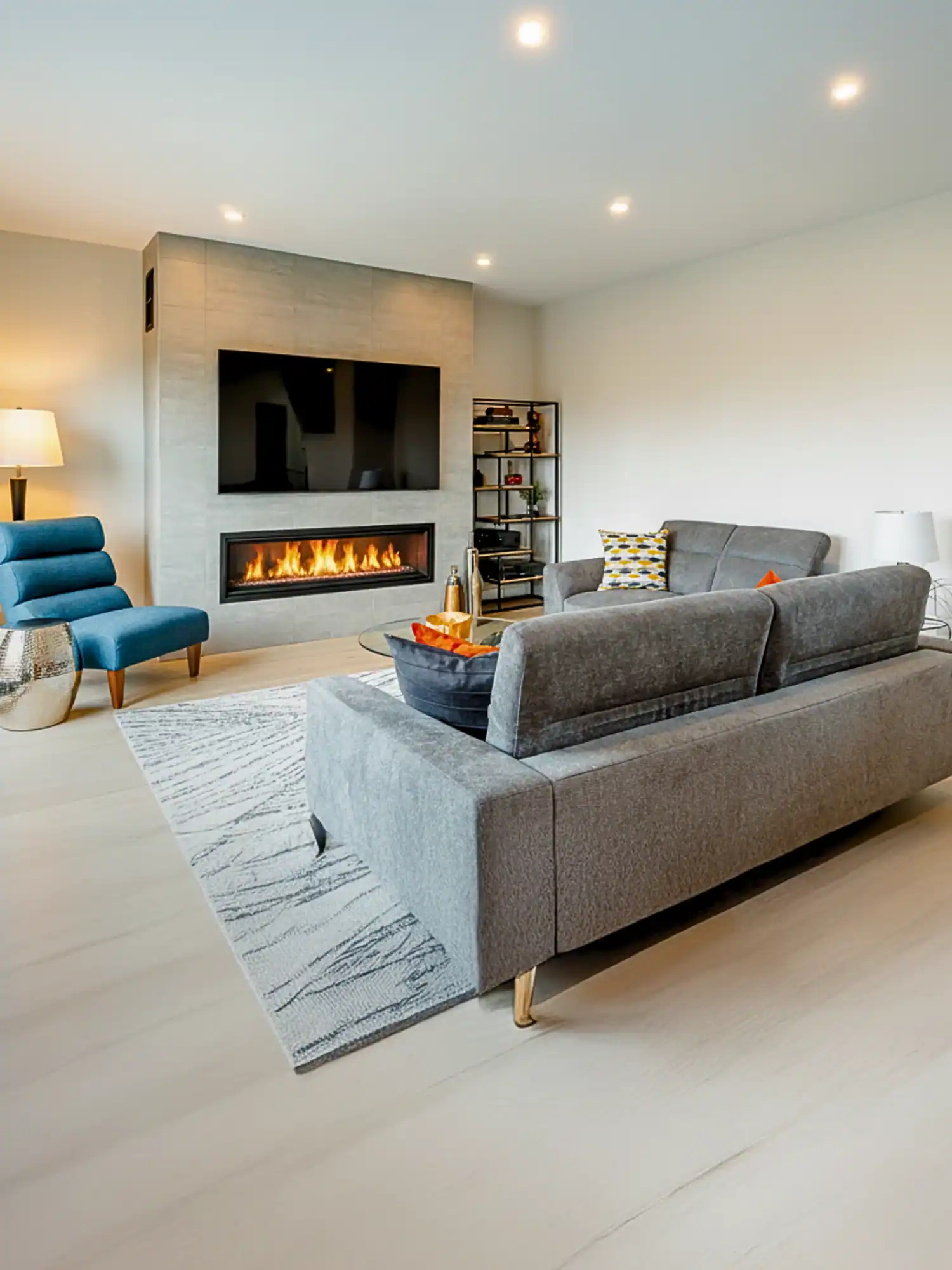
Vancouver’s housing market is uniquely demanding when it comes to the primary suite. At the $1.5M+ price point that describes a large portion of Metro Vancouver’s single-family housing stock, buyers arrive with sophisticated expectations. They have toured homes in Kerrisdale, Dunbar, Kitsilano, and South Surrey. They know what a proper primary suite looks like — and they discount aggressively when it is missing.
The definition of a “primary suite” has evolved significantly. In the 1970s, a master bedroom was simply the largest bedroom, distinguished only by slightly more square footage and perhaps an attached two-piece bathroom. In 2026, buyers in the Metro Vancouver market define a primary suite as a three-component package: a comfortable bedroom footprint (minimum king-bed capable with proper circulation), a dedicated walk-in closet, and an ensuite bathroom with a walk-in shower and ideally a double vanity. Miss any one of these three components and real estate agents will note the deficiency in their comparative market analysis.
 Richmond” class=”wp-image-12768″ />
The ROI math is compelling. A full primary suite renovation — bedroom expansion, walk-in closet addition, and ensuite upgrade — typically costs $65,000 to $150,000 in Vancouver
Vancouver General Contractors
Consider the gap between what was built and what is expected. A typical 1965 Vancouver Special has a master bedroom measuring 10×12 ft — 120 square feet. Fit a queen bed, two nightstands, and a dresser and you have essentially filled the room. The closet is a 24-inch-deep reach-in with a bi-fold door. The bathroom is a shared hall bath with a tub-shower combo. Contrast this with what a buyer at $1.8M expects: a bedroom that comfortably fits a king bed with nightstands and still has a seating area or at minimum a reading chair, a walk-in closet with proper organization systems, and a private ensuite with heated tile floors and a frameless glass shower.
The ROI math is compelling. A full primary suite renovation — bedroom expansion, walk-in closet addition, and ensuite upgrade — typically costs $65,000 to $150,000 in Vancouver. Real estate professionals consistently report that a proper primary suite in a $1.8M home adds $120,000 to $180,000 in market appeal and often converts a house from a lengthy listing to a multiple-offer scenario. Even partial upgrades pay dividends: adding a walk-in closet to an existing decent-sized bedroom is a $10,000 to $18,000 investment that buyers value at $25,000 to $40,000 in perceived value.
Beyond resale, the livability improvement is immediate and profound. Vancouver homeowners who complete primary suite renovations consistently rank them among the highest-satisfaction home improvement projects — higher than kitchen renovations in post-project surveys. The bedroom is where you begin and end every day. Investing in that space pays dividends in comfort and wellbeing that compound over years of ownership.
Master Bedroom Renovation Costs in Vancouver (2026)
Vancouver renovation costs are among the highest in Canada, driven by skilled-trade labour rates, material costs, permit fees, and the logistical complexity of working in established neighbourhoods. The table below provides honest 2026 cost ranges for the full spectrum of primary suite work — from a cosmetic refresh to a complete new suite addition. All figures reflect general contractor pricing inclusive of materials, labour, and permit fees where applicable.
| Scope of Work | 2026 Cost Range | What It Includes |
|---|---|---|
| Cosmetic refresh | $12,000 – $25,000 | New flooring, paint, lighting, closet organizers, trim, doors |
| Closet system addition | $8,000 – $20,000 | Converting existing space or alcove to walk-in closet with custom system |
| Ensuite add or expand | $30,000 – $75,000 | New ensuite bathroom or gut renovation of existing ensuite |
| Bedroom expansion (borrow adjacent room) | $25,000 – $60,000 | Remove wall, reconfigure adjacent space, structural beam if needed |
| Full suite renovation (bedroom + WIC + ensuite) | $65,000 – $150,000 | All three components renovated or added, coordinated design |
| New primary suite addition | $150,000 – $280,000 | Addition to existing home footprint, all new construction |
A few important cost notes for Vancouver specifically. First, older homes (pre-1980) frequently encounter hidden costs: asbestos in drywall compound or floor tile adhesive ($3,000–$8,000 for remediation), knob-and-tube wiring that must be replaced before insulation or new lights can be added ($4,000–$12,000 for a bedroom circuit upgrade), and substandard framing that requires reinforcement. Always budget a 15–20% contingency on pre-1980 renovation projects.
Second, ensuite additions require routing plumbing — and in Vancouver’s older housing stock, the drain stack location often dictates where an ensuite is feasible. A skilled plumber can extend drain lines, but each additional foot of horizontal drain run adds cost and complexity. Before budgeting $30,000 for an ensuite addition, have a contractor assess the plumbing feasibility first.
Third, the difference between the low and high end of each cost range is largely driven by finish level. A $30,000 ensuite uses standard ceramic tile, stock vanities, and builder-grade fixtures. A $75,000 ensuite uses large-format porcelain, custom vanity millwork, heated floors throughout, a freestanding tub, and a full-height frameless glass shower enclosure. Both are quality renovations — the question is what your home’s price point and your personal preferences justify.
To discuss your specific project budget, contact Vancouver General Contractors for a no-obligation consultation.
Master Bedroom Layout and Sizing: What Actually Works
Before selecting finishes or designing a closet system, the most important question in any primary suite renovation is: does the room have enough space to function as a proper bedroom? The answer depends on bed size, furniture needs, and circulation — and many Vancouver homeowners are surprised to discover their “large” master bedroom fails basic functional standards.
The minimum functional dimensions for a primary bedroom designed around a king bed are 12×14 ft (168 sq ft). This provides exactly enough space to position the king bed against the wall with 24 inches of clearance on both sides (the minimum comfortable access to the bed) and allows a clear path to closet and bathroom. It is the minimum, not the ideal. At 12×14, there is no room for a dresser, reading chair, or any meaningful seating without furniture arrangement compromises.
The preferred primary bedroom dimension for a genuinely comfortable suite experience is 14×16 ft (224 sq ft) or larger. At this size, a king bed fits with comfortable clearances on three sides (36 inches minimum for a relaxed circulation path), a full dresser can sit on the fourth wall, and there is still room for two bedside chairs or a small bench at the foot of the bed. If a seating area, window seat, or home office nook within the bedroom is desired, target 16×18 ft or larger.
Vancouver’s home types create very different starting conditions for primary suite renovations. Character homes in Kitsilano, Point Grey, and East Vancouver — typically pre-1940 craftsman and bungalow construction — have the smallest bedrooms, often 10×10 ft to 10×12 ft, with heavily compartmentalized floor plans that make expansion difficult. Two-storey homes from the 1970s–1990s in South Burnaby, Coquitlam, and Langley typically have larger master bedrooms (12×14 ft to 14×16 ft) and offer the best starting point for suite upgrades. New construction and post-2000 builder homes in Surrey, Maple Ridge, and the Fraser Valley often already have dedicated primary suites, though the finishes may warrant upgrading.
The critical decision point for many Vancouver homeowners is whether to expand the bedroom footprint or work with the existing dimensions. Expansion by borrowing space from an adjacent small bedroom is the most common solution — more on this in the dedicated section below. For homeowners who cannot or choose not to expand, the priority becomes optimizing the existing space: eliminating unnecessary furniture, using built-in storage to replace freestanding pieces, and ensuring the layout maximizes the sense of spaciousness through strategic mirror placement and lighting design.
Walk-In Closet Design: From Reach-In to Proper WIC
The walk-in closet is the single most visually compelling element of a primary suite renovation. It transforms the bedroom from a functional sleeping room into a suite — and it is often more achievable than homeowners initially believe. Many Vancouver homes have adjacent small bedrooms, alcoves, or oversized hallways that can be converted into a proper walk-in without a structural addition.
The minimum functional walk-in closet is 5×7 ft (35 sq ft). This provides one long hanging rod wall, one double-rod short wall, and enough floor space to stand and dress without feeling cramped. It accommodates a couple sharing if the storage is well-organized, but leaves no room for an island or full-length mirror within the space. The 5×7 minimum works well as a conversion of a former small closet or part of an adjacent small bedroom.
The ideal walk-in closet for a primary suite is 7×10 ft (70 sq ft) or larger. At this dimension, three walls of storage become possible (two full-height walls with hanging and shelving plus a back wall for additional storage), and there is floor space to include a small island with drawers, shoe storage below, and a surface for folding or accessory display. A 7×10 WIC with a well-designed system rivals a California Closets showroom installation and provides the “wow” moment that buyers remember during a showing.
Walk-in closet system options in Vancouver range significantly in cost and quality. The main tiers are:
- IKEA PAX system ($800–$2,500 installed): The most affordable option, using IKEA PAX wardrobe frames with custom interior fittings. Surprisingly functional and visually clean when installed properly. The limitation is fixed frame widths (50 cm, 75 cm, 100 cm) that may not fill a space without awkward gaps. Best for a secondary bedroom closet rather than a primary suite.
- Semi-custom systems — Closet Factory, Organized Living ($4,000–$10,000 installed): Adjustable shelving systems in better materials (melamine, thermofoil, or wire for ventilation). These can be configured to fill any space precisely and offer more interior fitting options than IKEA. Serviceable for primary suites where budget is a constraint.
- California Closets or equivalent full-custom ($8,000–$18,000 installed): Full-custom millwork in high-quality materials, designed by a closet specialist to maximize every inch. Integrated LED under-shelf lighting, soft-close drawer hardware, jewelry inserts, pull-out pant racks, and other premium fittings. The finish level appropriate for a high-end primary suite renovation.
- Custom carpentry by cabinet maker ($12,000–$25,000+): Full built-in millwork, often matching bedroom or ensuite cabinetry, in painted MDF or stained wood. The most tailored result, often with built-in island and crown molding integration. Appropriate for luxury homes in Shaughnessy, West Vancouver, or high-end Yaletown condos.
Lighting in a walk-in closet is non-negotiable. A single overhead fixture creates shadows in every corner and makes it nearly impossible to assess clothing colours accurately. The standard specification for a quality WIC is LED under-shelf lighting on a motion sensor (no switch required), supplemented by recessed pot lights overhead. Full-length mirror placement deserves attention: a wall-mounted mirror on the back wall of the closet, reaching floor-to-ceiling, makes the space feel significantly larger while providing proper dressing functionality.
His-and-hers configuration for couples sharing a WIC is worth planning carefully. The most common approach assigns one long wall to each person, with shared central drawers on an island. In a narrower WIC where island is not possible, a dividing tower of shelves provides visual separation while doubling the storage depth at that section. Matching hanging heights to the actual users (shorter person’s hanging space at a comfortable reach height, not the standard 66-inch rod height designed for a taller person) is a detail that closet professionals handle and DIY installations often miss.
The Primary Suite Ensuite: Your Most Valuable Renovation
If you can only do one thing to upgrade your primary suite, upgrade the ensuite bathroom. No single renovation component has more impact on perceived home value in Vancouver’s market than a proper primary ensuite. A well-executed ensuite transforms a house from “nice” to “must-have” in a buyer’s mind — and for homeowners, the daily quality-of-life improvement is immediate.
The minimum specification for a competitive primary ensuite in 2026 Vancouver is a walk-in shower of at least 36×48 inches (preferably 36×60 or larger), a single vanity with undermount sink and solid-surface counter, and tile flooring throughout. This is the entry-level “acceptable” ensuite. Most Vancouver buyers at the $1.5M+ market tier expect more.
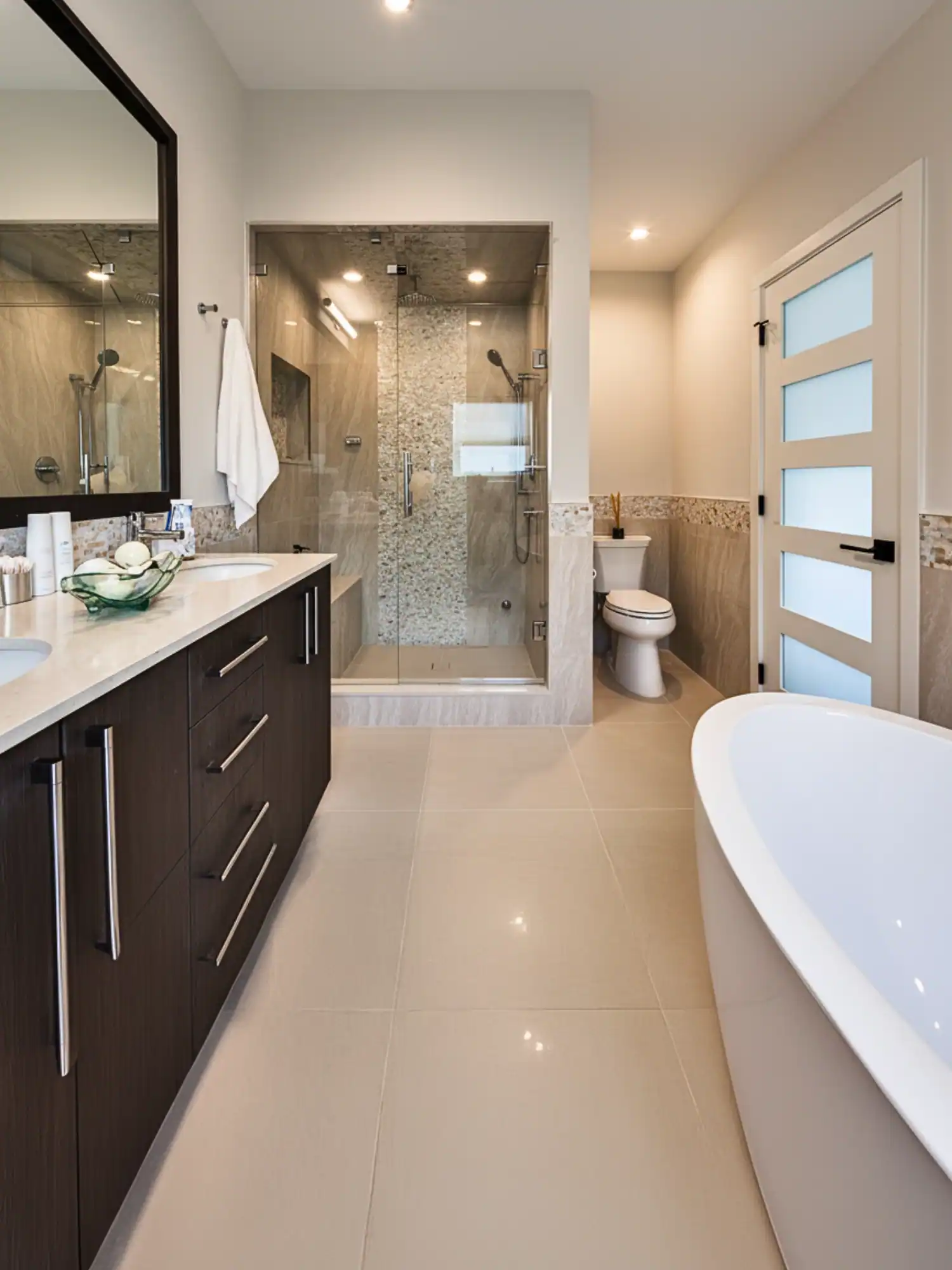
The full-specification primary ensuite that moves the market needle includes: heated tile floors (hydronic or electric — electric radiant mat at $800–$1,500 installed is the most practical choice), a walk-in shower of 60×36 inches or larger with frameless glass enclosure and a rain head plus handheld, a double vanity (requires minimum 60 inches of width, preferably 72 inches for comfort), and LED mirror lighting with warm colour rendering. Storage is often overlooked — a built-in medicine cabinet or floating linen tower adjacent to the vanity eliminates the countertop clutter that undermines otherwise beautiful bathroom photography.
The tub vs. no-tub decision is one of the most debated topics in primary ensuite design. The data-informed answer for Vancouver’s market: a soaker tub adds perceived value and listing photography appeal in family-oriented neighbourhoods (Coquitlam, Langley, South Surrey) where buyers with young children prioritize bath time. In urban and walkable neighbourhoods (Kitsilano, Mount Pleasant, Yaletown condos), the walk-in shower is far more valued and a tub actually wastes the space budget. If the ensuite is large enough for both a tub and a proper shower without compromising either, include the tub. If the space forces a choice, choose the shower in most Vancouver contexts.
For detailed guidance on the ensuite component specifically, see our complete Vancouver renovation guide which covers bathroom renovation from tile selection to permit requirements.
Cost guidance: A gut renovation of an existing 4×7 ft ensuite runs $25,000–$45,000 in Vancouver. Expanding an ensuite into adjacent space or adding a new ensuite where none existed runs $40,000–$75,000. These figures include all rough plumbing, electrical, HVAC, insulation, drywall, tile, fixtures, vanity millwork, and permits. The wide range reflects finish level choices — tile alone can range from $4/sq ft builder grade to $45/sq ft imported large-format porcelain.
Expanding the Bedroom Footprint: Borrowing Space That Works
For Vancouver homeowners in pre-1990 homes with genuinely undersized master bedrooms, the most impactful renovation decision is often to expand the bedroom by absorbing adjacent space. This is most commonly done by removing or relocating the wall between the master bedroom and an adjacent small bedroom, a linen closet, an oversized hallway, or an underutilized room.
The most common expansion scenario in Vancouver involves a three-bedroom home where the master bedroom sits adjacent to a small third bedroom (often 8×9 ft or 9×10 ft). Removing the shared wall and repurposing that entire small room as a walk-in closet is one of the highest-ROI renovation moves available. The bedroom goes from 10×12 ft to 10×22 ft or similar, a portion becomes the sleeping area, and the remainder becomes a proper WIC. The net result is a two-component primary suite (bedroom + WIC) achieved without a structural addition — often for $25,000–$45,000 total.
Structural feasibility is the first question to resolve before committing to any expansion. Vancouver homes from the 1950s–1980s use platform framing, and walls run in two orientations: parallel to the roof ridge (typically non-load-bearing) and perpendicular to floor joists (potentially load-bearing). A contractor or structural engineer can assess this in a brief site visit. A non-bearing wall removal requires no permit in the City of Vancouver if no plumbing, electrical, or structural changes are involved — just drywall patching and finish work. If the wall carries load, a beam must be engineered and installed, which adds $8,000–$20,000 to the project cost but is entirely manageable.
The livability difference between a 10×12 ft and a 12×16 ft bedroom deserves emphasis, because on paper it sounds modest — 120 sq ft vs. 192 sq ft — but the experiential difference is profound. The 10×12 ft bedroom feels like a hotel room. The 12×16 ft bedroom feels like a retreat. The difference is the ability to have a king bed positioned with proper clearances on three sides, room for two substantial nightstands, and still have visual breathing room in the space. If a reading chair or small bench at the foot of the bed is important to you — and most homeowners find it is, once they have the space — 14×16 ft is the target.
Permit requirements for bedroom wall removal in the City of Vancouver: No permit is required for removing a non-load-bearing wall that contains no plumbing pipes or electrical wiring. If the wall contains electrical wiring (which virtually all interior walls in occupied homes do), an electrical permit is required to reroute the circuits. This is a routine electrical permit that costs $100–$200 in fees and requires a licensed electrician to perform the work and pass an inspection. Budget $1,500–$3,000 for the electrical component of a wall removal that involves circuit rerouting.
Ceiling Height and Natural Light in the Primary Suite
Standard ceiling height in Vancouver homes built between 1960 and 1985 is 8 feet — functional but not inspiring. In a bedroom, ceiling height has an outsized effect on the sense of spaciousness and luxury. Raising the ceiling, where feasible, is one of the most dramatic changes possible in a primary suite renovation.
For bedrooms on the upper floor of a two-storey home, raising the ceiling into the attic space to create a vaulted or cathedral ceiling is often structurally feasible and enormously impactful. If the roof structure uses engineered trusses (common in post-1980 construction), vaulting requires removing and replacing trusses with a structural ridge beam — significant but achievable, typically $15,000–$35,000 for the primary bedroom. If the roof uses traditional rafters (common in pre-1970 construction), vaulting is often simpler, involving only insulation relocation and drywall work on the existing rafter slopes.
For bedrooms on the main floor of a two-storey home (uncommon for primary suites but present in some Vancouver home configurations), raising the ceiling is constrained by the floor system above. In some cases, it is possible to raise ceiling height by 6–12 inches by reconfiguring the ceiling assembly between joists — removing the drywall, adding insulation against the subfloor above, and redrywalling at a slightly higher level. This modest gain costs $8,000–$18,000 and has limited visual impact. In most cases, main floor bedrooms below an upper floor are better served by lighting and design choices rather than structural ceiling modifications.
Skylights are a highly effective solution for bedrooms that lack adequate natural light — particularly common in North Vancouver and East Vancouver homes where neighbouring homes shadow side windows, and in character homes where bedroom windows are small by modern standards. A single well-placed skylight in a bedroom can replace the light quality of two standard windows. Velux and similar quality skylights installed in an existing sloped roof cost $3,000–$8,000 per unit installed, including roofing, drywall opening, and interior finishing. Sun tunnels are a lower-cost alternative ($1,500–$3,000) for bringing diffuse light into a room that cannot accommodate a full skylight.
Natural light optimization beyond skylights includes enlarging existing windows, adding a new window on a wall that currently has none, and strategic mirror placement to reflect and amplify available light. For north-facing or light-challenged bedrooms, matte white or very light warm-white walls (as opposed to the current greige trend) significantly improve perceived brightness without expensive structural intervention.
Acoustic Privacy: Designing a Quiet Retreat
A primary suite should be a genuine retreat — which means acoustic privacy from the rest of the home is as important as visual aesthetics. In Vancouver’s typical two-storey family home, the master bedroom sits above the main floor living area, adjacent to children’s bedrooms, and separated from the hallway by a hollow-core door. The acoustic performance of this standard configuration is poor by any retreat standard.
The highest-impact acoustic improvement for a primary suite above a living room is resilient channel on the ceiling — a metal hat-channel system that decouples the drywall from the floor joists above, dramatically reducing impact and airborne sound transmission. Adding two layers of 5/8-inch drywall (one on resilient channel, one direct) with acoustic sealant at all perimeter joints achieves an STC rating improvement of 12–18 points — the difference between clearly hearing conversation below and only faintly perceiving muffled sound. Cost for acoustic ceiling treatment in a typical 14×16 ft bedroom: $3,500–$7,000.
Between the primary bedroom and adjacent bedrooms, dense-pack cellulose insulation blown into existing wall cavities is the most cost-effective acoustic upgrade short of opening and rebuilding the walls. A contractor drills small access holes, blows cellulose to full density, and patches. The STC improvement is 8–12 points. Cost for a shared bedroom wall: $800–$2,000. For a more complete solution, opening the wall, adding a layer of Mass Loaded Vinyl (MLV) before redrywalling, and using acoustic sealant at all penetrations achieves STC improvements of 15–22 points. Cost for open-wall acoustic treatment on one wall: $2,500–$5,000.
The bedroom door is frequently overlooked in acoustic renovation planning. Standard hollow-core interior doors have an STC rating of approximately 20 — they block almost nothing. Replacing with a solid-core door (1-3/4 inch solid wood or solid MDF core) increases the door STC to 28–32, a meaningful improvement, for a cost of $400–$800 including hardware and installation. Adding an automatic door sweep that seals the gap at the floor (the largest air gap in any door assembly) is a $200–$400 addition that has disproportionate acoustic benefit.
Flooring material choice also affects acoustic performance. Carpet with a quality underlay is acoustically superior to hard flooring — it absorbs impact sound and reduces airborne reverberation within the room. The trend toward hardwood and LVP in bedrooms is aesthetically understandable, but hard floors plus hard walls plus no soft furnishings creates a reverberant bedroom that feels louder and less restful. If hard flooring is preferred, specify an acoustic underlayment (minimum 3mm foam with acoustic barrier) and include area rugs in the design plan.
Closet Solutions When a Walk-In Isn’t Possible
Not every Vancouver home can accommodate a dedicated walk-in closet in the primary suite. Character homes with rigid floor plans, condos with fixed unit configurations, and homes where the “spare bedroom” cannot be sacrificed to closet space all present constraints that require working creatively with reach-in closets and supplementary storage solutions.
The most impactful upgrade to an existing reach-in closet is replacing bifold or hinged doors with a bypass sliding door system that opens the full width of the closet at once. Standard bifold doors leave half the closet inaccessible when open; a sliding door system eliminates this limitation and reads as significantly more intentional and designed. Cost: $600–$1,800 for a quality sliding door system (Hafele, Rev-A-Shelf, or custom carpentry) installed.
Interior reach-in organization systems make a dramatic difference in perceived closet quality and functional capacity. A standard builder-grade single rod and shelf uses approximately 40% of the vertical space available in a closet. A properly designed organization system — double rod at the short side, full-height shelving tower at center, pull-out shoe shelving or drawers below long hanging — uses 80–90% of available volume. This typically doubles functional storage capacity without changing the closet dimensions. Cost: $600–$3,500 depending on materials and whether the system is custom-built or system-based.
For homes where even a properly organized reach-in closet is insufficient for two people’s wardrobes, supplementary storage solutions include built-in wardrobe armoires (custom-built to flanking a window or filling an alcove, $3,500–$8,000), under-bed storage platform frames (quality frames with drawer storage, $800–$2,500), and built-in dresser alcoves where a niche is created in an existing wall cavity or shallow bump-out. A headboard with integrated storage — cubby shelves, charging stations, and closed cabinet spaces — is a growing trend that elegantly replaces multiple separate furniture pieces while giving the bedroom a custom, cohesive look.
The honest conversation to have with yourself before committing to an extensive reach-in optimization: if your lifestyle genuinely requires more than a well-organized reach-in closet can provide, the money is better invested in finding a way to create a walk-in, even a minimal 5×6 ft one, than in elaborate reach-in solutions that will ultimately frustrate you. The VGC renovation planning guide covers how to assess your actual storage needs before committing to a closet solution.
Design Trends in Vancouver Primary Suites (2026)
Vancouver’s primary suite aesthetic in 2026 has moved decisively away from the grey-on-grey palette that dominated the 2015–2022 period. The current design direction is warmer, more tactile, and more personal — influenced by West Coast natural materials, Scandinavian comfort design, and a post-pandemic appreciation for the bedroom as a genuine sanctuary rather than a purely functional sleeping space.
Colour palette: The dominant palette is warm neutral — not cool grey but warm greige (grey-beige), warm white (SW Alabaster or BM White Dove rather than Chantilly Lace), and warm wood tones. Feature walls in the bedroom are back in favour, but executed in textured finishes rather than accent paint: plaster (either real Venetian plaster or textured plaster-look paint), wood panel strips in a warm oak or walnut tone, or limewash paint that reads as aged, organic, and deeply textured. The goal is depth and warmth rather than the flat, clean flatness that characterized the previous decade’s aesthetic.
Drapery: Linen drapery, floor-to-ceiling, is the single most transformative and cost-accessible design upgrade in the bedroom. Panels mounted at ceiling height (even in an 8 ft room) create instant visual height and frame the windows as an architectural element rather than a functional hole in the wall. The current preferred specification is natural linen in an oatmeal, warm white, or soft sage tone, with curtain rod hardware in brushed brass or matte black. Total cost for a bedroom window: $800–$2,500 depending on window width and fabric quality.
Lighting: Bedside table lamps are being replaced by pendant lights hung from the ceiling or wall-mounted sconces, freeing nightstand surface area and creating a more designed, intentional look. The specification is a single pendant per side, hung at approximately 24 inches above nightstand height, in a form that complements the bed scale. Warm-white LED (2700K or lower) is standard — cool white LEDs in a bedroom are a design error that creates a clinical atmosphere incompatible with relaxation.
Technology integration: Integrated charging in nightstands (USB-A and USB-C flush-mount outlets, often concealed in a drawer or in the top surface) is now expected in a renovated primary suite. Smart dimmer switches on all bedroom circuits (bed reading lights, ambient overhead, closet) allow mood lighting without multiple switch banks. Blackout blind integration behind drapery — either manual roller blinds or motorized — is increasingly specified in the Vancouver market where summer mornings bring early light and secondary-market buyers often ask specifically about blackout functionality.
Custom window seats: In character homes and pre-war houses with bay windows or deep window reveals, a custom built-in window seat is one of the most beloved renovation additions. It converts an architectural anomaly into a feature, adds practical seating in a space where a freestanding chair would feel awkward, and can incorporate storage below the seat in a deep box frame. Cost: $2,500–$6,000 for a custom built-in window seat with storage and upholstered seat cushion.
Permits for Master Bedroom Renovation in Vancouver
Permit requirements for primary suite renovations in Vancouver are frequently misunderstood — both in the direction of assuming permits are always required (leading to over-permitting) and assuming they are never required (leading to unpermitted work that creates problems at sale). Here is a practical breakdown for the City of Vancouver and Metro Vancouver municipalities.
| Scope of Work | Permit Required? | Permit Type | Approx. Fee |
|---|---|---|---|
| Cosmetic refresh (flooring, paint, trim, fixtures) | No | — | — |
| Non-bearing wall removal (no electrical or plumbing in wall) | No (City of Vancouver) | — | — |
| Non-bearing wall removal with electrical rerouting | Yes | Electrical permit | $100–$250 |
| Load-bearing wall removal with beam | Yes | Building permit + structural drawings | $500–$1,500 |
| Adding recessed pot lights | Yes | Electrical permit | $100–$200 |
| Adding new ensuite bathroom | Yes | Building + Electrical + Plumbing | $800–$2,500 |
| Gut ensuite renovation (same footprint) | Yes | Plumbing + Electrical | $400–$1,200 |
| Skylight addition | Yes | Building permit | $300–$600 |
| Room addition / new primary suite addition | Yes | Building + Electrical + Plumbing | $2,000–$8,000+ |
Note that permit requirements vary slightly between Metro Vancouver municipalities. The City of Vancouver, City of Burnaby, City of North Vancouver, City of Coquitlam, and the Township of Langley all follow the BC Building Code with local amendments, but threshold rules for what triggers a permit and fee schedules differ. Your contractor should confirm the specific requirements for your municipality before beginning work.
Unpermitted work creates real problems at resale. In Metro Vancouver’s market, buyers’ agents routinely ask “Is all the work permitted?” and request permit history from the City. Unpermitted ensuite additions or structural wall removals can delay or derail sales when discovered during the buyer’s home inspection or title search. The permit fees and inspection process for any work that requires a permit are a small fraction of the renovation budget and provide genuine protection — required inspections catch deficiencies before walls are closed. Always pull permits for work that requires them.
For a full overview of when permits are required for home renovations in Vancouver, see our Vancouver renovation planning guide. To get a permit-inclusive quote for your primary suite project, contact our team.
More Vancouver Housing Types Guides
Vancouver Special vs. Character Home Renovation: Key Differences in Approach and Cost

Condo vs. House Renovation in Vancouver: What's Different About Strata?
Townhouse vs. Detached Home Renovation in Vancouver: What Strata Changes About Your Project
Vancouver Special Second Floor Opening Up Layout

Infill House Design Good Infill Vancouver Lot
Ready to start your renovation?
Frequently Asked Questions: Master Bedroom Renovation Vancouver
Should I include a soaker tub or go shower-only in my primary ensuite?
This depends heavily on your neighbourhood market and the size of your ensuite. In family-oriented Vancouver suburbs (Coquitlam, Langley, South Surrey, Maple Ridge), a soaker tub adds listing appeal for buyers with young children and is worth including if space allows. In urban and condo markets (Kitsilano, Mount Pleasant, downtown), buyers prioritize a large, well-specified walk-in shower over a tub. If your ensuite is smaller than 60 sq ft, choose the shower — trying to fit both in a small space results in a cramped tub that neither photographs well nor functions comfortably. If you are in a family neighbourhood with an ensuite 80 sq ft or larger, include both.
How do I expand a small master bedroom in a Vancouver home?
The most practical approach in Vancouver’s pre-1990 housing stock is to absorb an adjacent small bedroom, linen closet, or oversized hallway. Start with a contractor assessment of whether the shared wall is load-bearing — if it is not, the wall removal itself is straightforward. The absorbed space is then configured as a walk-in closet, extended bedroom, or both. Costs run $25,000–$60,000 depending on whether structural work is required and how the new space is finished. If no adjacent space can be borrowed, work with a designer to optimize furniture scale, mirror placement, and built-in storage to maximize the livability of the existing footprint.
What is the minimum size for a functional walk-in closet?
The absolute minimum for a functional walk-in closet is 5 feet wide by 6 feet deep (30 sq ft). At this size, one wall of hanging storage and one wall of shelving are possible, with just enough floor space to stand and turn around. For a couple sharing the closet, the minimum is 5×8 ft, which allows storage on three walls. The ideal dimensions for a primary suite WIC are 7×10 ft or larger — this accommodates full three-wall storage systems, a possible central island, and a full-length mirror. If converting an existing small bedroom into a walk-in, even the modest 8×9 ft former bedroom provides 72 sq ft — more than enough for an excellent walk-in closet system.
Do I need a permit to add an ensuite bathroom in Vancouver?
Yes. Adding a new ensuite bathroom requires a building permit, a plumbing permit, and an electrical permit from the City of Vancouver (or the relevant municipality). This is true regardless of whether the work involves moving walls. Plumbing and electrical work in Vancouver must be performed by licensed tradespeople and must pass inspections before walls are closed. Budget $800–$2,500 for combined permit fees on an ensuite addition. The permits and inspections are genuinely valuable — they ensure the plumbing drain lines are correctly sloped, the electrical wiring is safe, and the ventilation is adequate to prevent moisture damage.
Can I add a primary suite to a Vancouver bungalow?
Yes, and this is one of the most transformative renovations for the many pre-1950 Vancouver bungalows that lack a proper primary suite. Options include: (1) a dormer addition that creates a new upper-floor primary suite — cost $150,000–$220,000 but adds both square footage and a suite where none existed; (2) a rear addition on the main floor — cost $180,000–$280,000 for a full suite addition at the back of the house; (3) reconfiguring the existing main floor to carve out a primary suite from existing bedroom and living space — cost $40,000–$80,000 depending on extent of reconfiguration. All addition options require building permits and must comply with Vancouver’s infill regulations regarding setbacks, lot coverage, and height limits. A pre-application consultation with the City of Vancouver is strongly recommended before committing to an addition.
What does it cost to add a walk-in closet to a bedroom in Vancouver?
Adding a walk-in closet by converting an existing alcove, enlarged reach-in, or portion of an adjacent room costs $8,000–$20,000 in Vancouver, depending on the size of the closet, the closet system specified (prefab vs. custom millwork), and the extent of wall reconfiguration required. A conversion that involves removing a non-bearing wall and installing a semi-custom closet system typically runs $10,000–$15,000 all-in. A full custom millwork closet in a converted 8×9 ft former bedroom — complete with LED lighting, island, and premium hardware — runs $18,000–$28,000. These costs include all carpentry, drywall, painting, closet system, and lighting.
What heating options are best for a primary suite in Vancouver?
Vancouver’s mild climate means primary suite heating requirements are modest compared to colder Canadian cities, but bedroom comfort is about thermal consistency rather than extreme heating capacity. For the ensuite, electric radiant floor heating is the standard choice — an electric radiant mat under tile runs 12–15 watts per square foot, costs $800–$1,500 installed for a typical ensuite, and operates on a programmable thermostat that can have the floor warm before you step on it in the morning. For the bedroom itself, extending the home’s existing forced-air system with a properly sized register is the most cost-effective approach. If the primary suite is in an addition or a converted attic space without existing ductwork, a mini-split heat pump is the preferred solution — it provides both heating and cooling, is highly efficient, and can be operated independently from the main home system.
How do I soundproof my master bedroom from my children’s rooms?
The most effective soundproofing upgrade for a shared bedroom wall without opening the wall is dense-pack cellulose blown into the wall cavity through small drill holes. This is minimally invasive, costs $800–$2,000 per wall, and achieves an STC improvement of 8–12 points. For a more complete solution — necessary if the bedroom wall is currently uninsulated or you need higher noise reduction — open the wall, add Mass Loaded Vinyl sheeting, insulate with acoustic mineral wool (Rockwool Safe’n’Sound), and use two layers of 5/8-inch drywall with Green Glue damping compound between layers. This full treatment achieves STC 50+, reduces noise transmission by roughly 70%, and costs $3,000–$6,000 per wall surface. Also replace hollow-core doors with solid-core and add an automatic door sweep — these two changes alone meaningfully reduce hallway noise transmission.
What is the best flooring for a master bedroom in Vancouver?
The best flooring for a primary bedroom balances comfort underfoot, acoustic performance, durability, and aesthetic. Engineered hardwood is the most popular choice in Vancouver’s primary suites — it provides genuine wood warmth and appearance, handles Vancouver’s humidity fluctuations better than solid hardwood, and aligns with the warm-toned design aesthetic currently dominant in the market. Luxury vinyl plank (LVP) in a quality specification (6mm+ wear layer, attached underlayment) is a practical alternative at a lower price point that also handles humidity well. Carpet remains acoustically superior and the softest underfoot option — if you value acoustic privacy and barefoot comfort, a quality wool-blend carpet over a 10mm premium underlay is still the objectively best choice for a bedroom. Tile is appropriate for the ensuite but rarely used in the bedroom itself given its hard, cold surface.
Custom vs. prefab closet systems: which is better for a primary suite?
For a primary suite walk-in closet, custom millwork wins on fit, finish, and longevity but costs 3–5x more than a prefab system. The practical answer for most Vancouver homeowners is a semi-custom system from a closet specialist (California Closets, Closet Factory, or a local millwork shop) that uses manufactured components configured to your specific dimensions. This provides better fit than pure prefab (IKEA PAX) and significantly lower cost than full custom millwork, while still achieving a finished result that photographs beautifully and adds to home value. Full custom millwork is the right choice when the closet design is architecturally integrated with the bedroom (matching the ensuite vanity material, for example) or when the space has unusual dimensions that standard components cannot accommodate well.
Is a vaulted ceiling in the master bedroom feasible in my Vancouver home?
Feasibility depends on two factors: whether your bedroom is on the top floor (directly below the roof) and whether your roof uses trusses or traditional rafters. If your bedroom is on the top floor and your roof uses traditional rafters (common in pre-1980 construction), vaulting is typically feasible at a cost of $15,000–$25,000 — it involves removing the ceiling drywall, reinsulating the rafter bays, and redrywalling to follow the roof slope. If your roof uses engineered trusses (common in post-1980 construction), vaulting requires replacing the trusses with a structural ridge beam system, which is more complex and expensive ($25,000–$45,000) but still achievable. If your bedroom is not on the top floor, vaulting is not structurally possible without removing the floor system above — not a practical option in an occupied home.
Can a skylight help a north-facing master bedroom in Vancouver?
Yes, and a skylight is often the single most impactful light improvement for a north-facing bedroom. A skylight receives diffuse sky light from above regardless of the home’s orientation — north, south, east, or west orientation is irrelevant for a skylight’s light contribution. In Vancouver’s overcast climate, a fixed-glass skylight provides consistent, beautiful diffuse light throughout the day without the glare associated with south-facing windows. Operable skylights that can be opened are preferred for bedrooms to provide ventilation on warm nights. A 2×4 ft Velux skylight installed in an existing sloped roof costs $3,500–$6,000 all-in. Position it on the ceiling between the head of the bed and the exterior wall for the most effective light distribution without direct glare on a sleeping occupant.
How does a primary suite renovation affect home value in Vancouver?
A properly executed primary suite renovation in Metro Vancouver typically returns 60–80% of its cost directly at resale (measured by appraised value increase) — but the more significant impact is on marketability. Homes with proper primary suites (bedroom + WIC + ensuite) in Vancouver’s $1.5M–$3M market sell faster, attract more offers, and often transact at or above list price. Homes without a proper primary suite in this price range often linger and require price reductions. The primary suite is the #1 quality-of-life feature cited by buyers in post-purchase surveys in the Metro Vancouver market, ahead of kitchen, garage, and outdoor space. The ROI calculation should include not just the appraised value increase but the marketing premium: a home that attracts multiple offers versus languishing on the market represents a substantial financial difference even if the appraised value gain is “only” 60% of renovation cost.
What are the best ROI improvements to a primary suite?
Ranked by return on investment in Metro Vancouver’s current market: (1) Adding a dedicated ensuite where the primary bedroom currently shares a hall bath — this is the single highest-ROI primary suite improvement, often returning 70–90% of cost directly plus enormous marketing benefit; (2) Converting adjacent small bedroom or closet space into a walk-in closet — typically costs $10,000–$20,000 and adds $20,000–$35,000 in perceived value; (3) Upgrading an existing outdated ensuite (old tile, single vanity, tub-only bathroom) to a modern walk-in shower + heated floors + double vanity specification — cost $25,000–$45,000, high return in the luxury segment; (4) Expanding bedroom footprint to king-bed capable dimensions — particularly impactful in character homes where the current bedroom is genuinely too small for comfortable use; (5) Cosmetic refresh (flooring, lighting, closet organizers, paint) — lowest cost, immediate impact, excellent ROI for homes where the suite is structurally adequate but dated in appearance.
How long does a master suite renovation take in Vancouver?
Timeline varies significantly with scope. A cosmetic refresh (flooring, paint, lighting, closet organizers) can be completed in 2–3 weeks with minimal disruption. A closet conversion or expansion (wall removal and new closet system) typically takes 4–6 weeks including permit processing time for the electrical permit. A full ensuite addition or gut renovation runs 8–14 weeks from permit issuance to completion — plumbing rough-in, framing, tile work, and fixture installation each require dry time and inspection holds that extend the timeline. A full primary suite renovation (bedroom expansion + WIC + new ensuite) is typically a 3–5 month project from initial permit application to move-in ready completion. Plan for temporary displacement from the primary bedroom during active construction phases and discuss access and sequence with your contractor before work begins.
Ready to start planning your primary suite renovation? Contact Vancouver General Contractors for a complimentary on-site assessment and detailed project estimate. We’ve helped hundreds of Vancouver homeowners transform their primary suites into the retreats they deserve. See our complete renovation planning guide and home renovation services for more information about what a full-service renovation partner can do for your home.
Get a Free Renovation Quote
Metro Vancouver’s trusted general contractors. Free consultations across Vancouver, Burnaby, Richmond, North Shore & beyond.
Get Your Free Quote →VGC serves Vancouver and surrounding areas. View all renovation services in Vancouver →

Comments are closed