




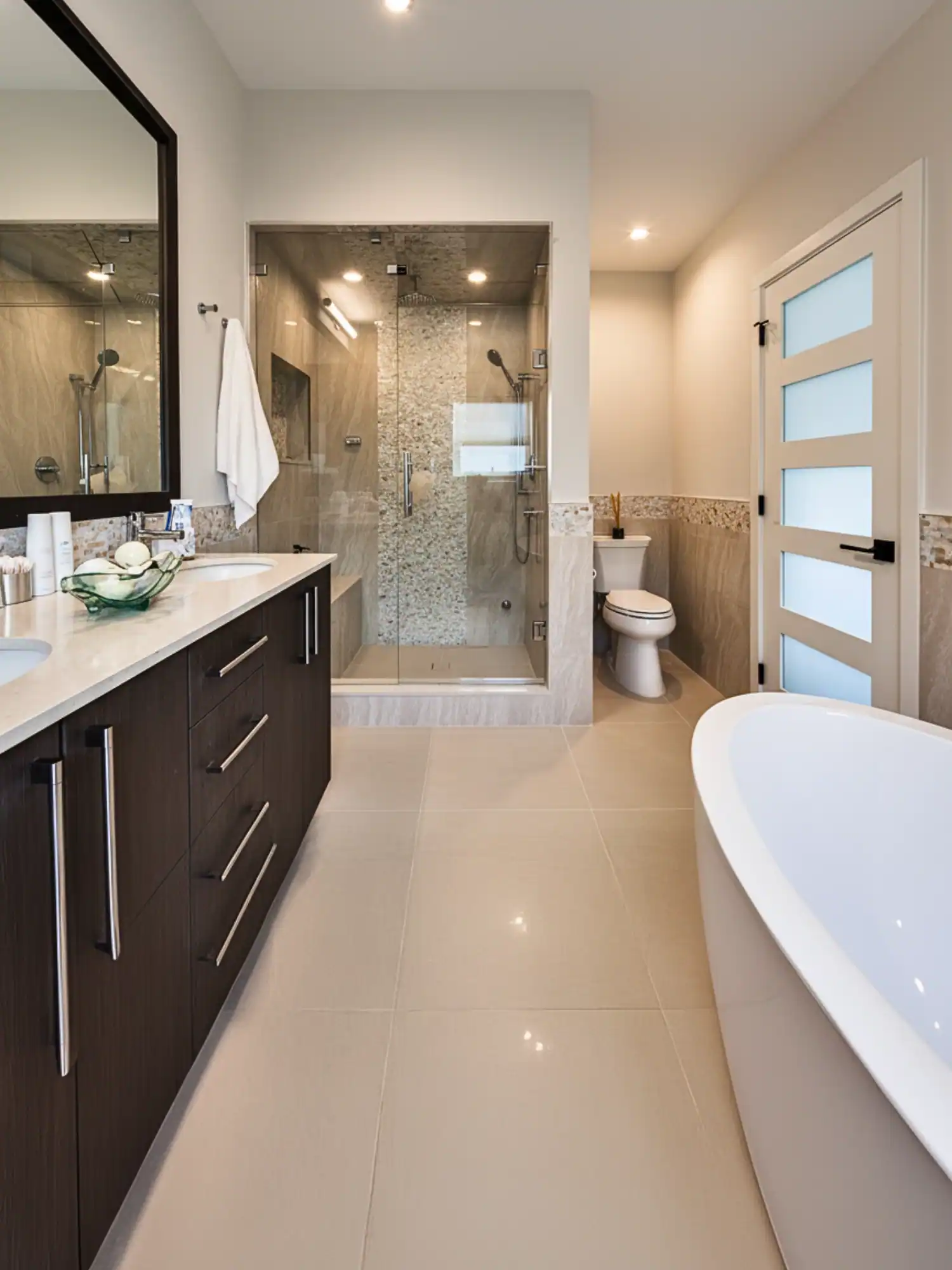
Master Ensuite Renovation in Vancouver: Design Ideas, Costs, and Permit Guide (2026)
The master ensuite has quietly become the most scrutinized room in any Vancouver home sale. Buyers touring properties in Kitsilano, North Vancouver, or Burnaby now walk straight past the kitchen and into the ensuite — and what they find there shapes their offer price more than almost anything else. If your ensuite still has a single vanity, a step-in tub-shower combo, and 1990s tile, it is costing you money every day you list without upgrading it.
This guide covers everything you need to plan a master ensuite renovation in Vancouver in 2026: realistic costs by scope, Vancouver-specific permit requirements, the design features buyers actually want, ROI data by neighbourhood, and the timeline from planning to move-back-in. Whether you are refreshing a dated but functional space or starting from scratch in a pre-war craftsman, this is the complete picture.
Why Vancouver Homeowners Are Prioritizing Master Ensuite Renovations
In Metro Vancouver’s real estate market — where detached homes routinely trade above $1.5 million — buyers have become increasingly specific about what they expect from a master ensuite. Resale surveys of homes in this price bracket consistently identify ensuite quality as the single highest-weighted interior feature in purchasing decisions. A dated ensuite is no longer a minor cosmetic concern; it is a negotiating liability.
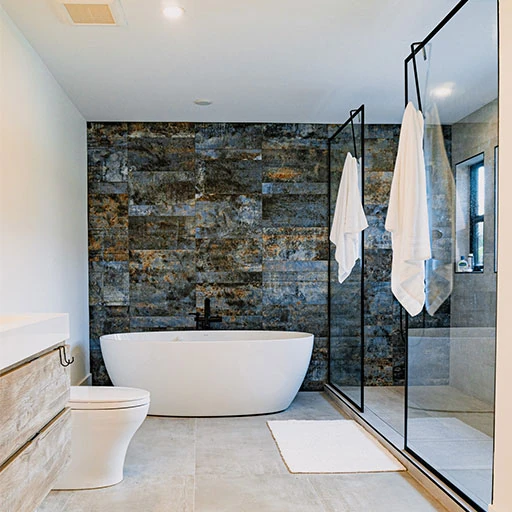
The financial case is equally compelling. Vancouver-area realtors and appraisers consistently report that a properly executed luxury ensuite renovation — full gut, expanded footprint where possible
Vancouver General Contractors
Vancouver’s climate makes the ensuite more than a resale consideration — it is a daily comfort essential. With roughly 166 days of rain per year and cool, damp mornings spanning October through April, the ensuite is where most homeowners start their day. A cold tile floor, inadequate ventilation, and a cramped shower feel far more oppressive here than they would in a dry climate. Heated floors, large walk-in showers with proper steam control, and quality exhaust ventilation are not luxury additions in Vancouver — they are functional necessities.
Pre-2000 Vancouver homes are particularly vulnerable to ensuite obsolescence. The typical ensuite in a Vancouver Special or a West Side rancher built before 2000 measures 50 to 70 square feet — a space that once felt adequate when a single vanity and a tub-shower combo were the standard. Modern buyers in the same price bracket now arrive with a minimum expectation: a walk-in shower (no tub required, or tub separate from shower), a double vanity, and heated floors. If those three features are absent, the property is perceived as needing work.
The financial case is equally compelling. Vancouver-area realtors and appraisers consistently report that a properly executed luxury ensuite renovation — full gut, expanded footprint where possible, quality finishes — adds $75,000 to $150,000 in assessed market value on homes in the $1.5M–$3M range. On the Westside and in West Vancouver, the premium is often higher. That return on a $60,000–$90,000 renovation investment is difficult to replicate with any other single-room upgrade.
What’s Your Starting Point? Vancouver Ensuite Types by Era
The scope and cost of your ensuite renovation depend heavily on what era your home was built. Vancouver’s housing stock spans nearly a century of construction, and each era comes with distinct ensuite conditions — different sizes, plumbing configurations, wall assemblies, and structural constraints.
Pre-1970 Homes: Craftsman Bungalows and Early Vancouver Builds
Many pre-1970 Vancouver homes — craftsman bungalows, early post-war builds on the East Side, character homes in Strathcona or Mount Pleasant — were built with a single shared bathroom and no ensuite at all. Creating one means carving space from the master bedroom or an adjacent room, running entirely new plumbing lines, and potentially dealing with knob-and-tube wiring that cannot safely support a heated floor circuit. These projects are the most expensive because they are building from nothing. Budget $65,000 to $120,000 depending on size and structural complexity.
1970s–1990s Homes: Vancouver Specials and Ranchers
The Vancouver Special — that distinctive two-storey stucco form that dominates East Vancouver and Burnaby — typically has a small ensuite of 50 to 70 square feet, often with a single vanity, a fibreglass tub-shower unit, and basic ceramic tile. These spaces are ripe for transformation but require a full gut and usually some degree of expansion to meet modern expectations. The plumbing is workable (copper supply, ABS drain) but fixture locations often need to move. Budget $55,000 to $95,000 for a full expansion and gut renovation.
1990s–2000s Homes: Reasonable Bones, Dated Finishes
Homes built between 1990 and 2000 typically have ensuites in the 70 to 90 square foot range with existing double vanity rough-in (even if only a single vanity was installed), adequate plumbing, and a shower separate from the tub in many cases. The primary issue is dated tile — small-format ceramic, mauve or beige colour schemes, brass fixtures — and the absence of heated floors and modern lighting. A full gut keeping the existing footprint is typically the right move. Budget $40,000 to $70,000.
2000s–2010s Homes: Mid-Range Refresh Territory
Homes built between 2000 and 2010 often have ensuites that are structurally sound and reasonably sized (80–110 sq ft) but show their age in fixture choices, tile patterns, and lighting. A mid-range refresh — new tile, updated vanity, frameless glass door, heated floor added — delivers a dramatic visual change without the expense of a full gut. Budget $28,000 to $55,000.
2010s and Newer: Cosmetic or Fixture Refresh
Newer Vancouver homes and condos typically have decent ensuites by modern standards (90–120 sq ft, double vanity, walk-in shower). The work here is usually cosmetic: upgrading tile, replacing fixtures with current styles (matte black tapware, larger shower head), adding a heated floor if absent, or replacing a standard mirror with a smart LED mirror. Budget $15,000 to $35,000.
| Era | Typical Ensuite | Recommended Scope | Cost Range |
|---|---|---|---|
| Pre-1970 | None (shared bath only) | Full new ensuite build | $65K–$120K |
| 1970–1990 | 50–70 sq ft, tub-shower combo | Expand + full gut | $55K–$95K |
| 1990–2000 | 70–90 sq ft, dated tile | Full gut, keep footprint | $40K–$70K |
| 2000–2010 | 80–110 sq ft, decent bones | Mid-range refresh | $28K–$55K |
| 2010+ | 90–120 sq ft, modern layout | Cosmetic/fixture refresh | $15K–$35K |
Master Ensuite Renovation Cost in Vancouver
Ensuite renovation costs in Vancouver are driven by four primary variables: scope of demolition, tile and fixture quality, whether plumbing or electrical lines need to move, and whether the footprint expands. The following three-tier breakdown reflects what VGC consistently delivers for clients across Metro Vancouver in 2026, including materials, labour, permits, and applicable taxes.
Tier 1 — Refresh ($28,000–$45,000)
A Tier 1 refresh keeps the existing layout and plumbing locations but replaces all visible surfaces and fixtures. This is the right scope for a 2000s home where the structure is sound but the finishes are tired.
- New double vanity with quartz or solid-surface countertop
- New mirrors and upgraded vanity lighting
- Retile shower enclosure (keep existing pan or liner)
- New toilet (close-coupled or comfort-height)
- Electric radiant heated floor mat (if electrical panel capacity exists)
- Exhaust fan upgrade
- Paint and trim refresh
Tier 2 — Mid-Range Full Gut ($45,000–$70,000)
A Tier 2 renovation strips the ensuite to studs and subfloor, allowing full waterproofing replacement, new plumbing fixture locations if needed, and a completely fresh canvas. This scope works well for 1990s–2000s homes and produces a result that reads as fully modern.
- Full demolition to studs and subfloor
- Liquid-applied waterproofing membrane (Schluter KERDI system or Wedi board)
- Custom tile floor-to-ceiling in shower (12×24 or 24×24 format)
- Double vanity with quartz countertop
- Frameless glass shower door or enclosure
- Electric heated floor with programmable thermostat (new dedicated circuit)
- New toilet (wall-hung optional at additional cost)
- Upgraded lighting (recessed + decorative)
- New exhaust fan with humidity sensing
Tier 3 — Luxury ($70,000–$120,000+)
Tier 3 projects represent the full luxury ensuite transformation — the type of renovation that moves a property from the mid-market to the luxury segment and commands the strongest resale premiums in Westside Vancouver, North Shore, and West Vancouver.
- Full gut plus possible footprint expansion (borrow from closet or bedroom)
- Large-format tile: 24×48 or larger on walls and floors
- Curbless walk-in shower with linear drain and full-slope floor
- Freestanding soaker tub (Victoria+Albert, BainUltra, or Kaldewei)
- Heated floor plus heated towel bars
- Steam shower option ($8,000–$18,000 as an add-on)
- Custom vanity millwork with integrated lighting
- Smart LED mirror with demisting, Bluetooth, and dimming
- Separate water closet with pocket door
- Natural stone or slab porcelain feature wall
- Matte black or brushed gold tapware and accessories throughout
Expanding Your Ensuite: Can You Take Space From the Bedroom or Closet?
Expanding the ensuite footprint is the single highest-ROI move available on a pre-2000 Vancouver home with an undersized bathroom. Adding 15 to 30 square feet transforms what was a cramped utility space into a spa-like retreat — and that transformation is what buyers pay a premium for.
The most popular and cost-effective expansion borrows space from an adjacent walk-in closet. The closet is rebuilt in a new configuration (often L-shaped or moved to a different wall), and the freed space becomes part of the ensuite. This approach typically avoids load-bearing walls, making it structurally straightforward. A 20 square foot expansion of this type adds $15,000 to $25,000 to the base renovation cost — a worthwhile investment when the resulting ensuite can accommodate a double vanity and a dedicated walk-in shower where neither would have fit before.
Borrowing space directly from the master bedroom is less common but sometimes necessary. If the bedroom is large (more than 200 sq ft) and the ensuite is severely undersized, taking 15 to 25 square feet from the bedroom side can be done without meaningfully reducing bedroom function. The cost is similar, though if the separating wall is load-bearing — common in pre-1990 Vancouver homes — structural engineering and a beam installation add $8,000 to $20,000 to the project.
Any expansion that involves moving or removing a structural wall requires a building permit from the City of Vancouver (or your municipality). Adding a new window as part of the expansion also triggers the permit requirement. Plumbing fixtures that move location require a plumbing permit, and a new heated floor circuit requires an electrical permit. VGC manages all permit applications as part of our standard expansion project scope — permits are not an afterthought, they are part of the design process.
A recent VGC project in Kitsilano illustrates the value well: a 1985 home had a 70 sq ft ensuite with a single vanity and a tub-shower combo. By borrowing 25 sq ft from the master bedroom’s walk-in closet (rebuilt as a reach-in closet behind the bedroom door), the ensuite expanded to 95 sq ft. That space accommodated a double vanity, a curbless walk-in shower, and a freestanding BainUltra soaker tub. Total renovation cost was $78,000. The listing realtor estimated the ensuite alone added $110,000 to $130,000 in market value to the property.
Vancouver’s Most Popular Ensuite Design Trends for 2026
Design preferences in Vancouver ensuites have converged sharply over the past three years. The following features appear in the majority of renovation briefs VGC receives in 2026 — not as aspirational wish-list items, but as genuine priorities that clients budget for from the outset.
Curbless Walk-In Shower
The curbless (barrier-free) walk-in shower is now the most requested single feature in Vancouver ensuite renovations. The wet room aesthetic — where the shower zone flows seamlessly from the rest of the floor with only a linear drain and a full-floor slope — creates the feeling of a significantly larger space and requires no step-over entry. A linear drain runs along one wall, the entire floor slopes subtly toward it, and the visual result is a clean, uninterrupted tile plane. This design also appeals to aging-in-place buyers and is universally accessible.
Large-Format Tile
24×48 inch tile on walls and 24×24 or 24×48 on floors has displaced the classic 12×12 or 12×24 as the dominant choice in Vancouver ensuite renovations. Fewer grout lines mean easier maintenance — a significant selling point in a climate where bathroom moisture management is a daily concern — and the large planes of tile read as more luxurious and spatially generous. Rectified porcelain in concrete, stone, or terrazzo looks are the most popular choices in 2026.
Heated Floors
Ninety-seven percent of VGC’s full-gut ensuite clients include a heated floor in their scope. In Vancouver’s climate, stepping onto a warm tile floor at 6:30 a.m. on a November morning is not a luxury — it is the reason people spend real money on their ensuite. Electric radiant mat systems add $1,200 to $2,500 to the renovation cost (supply, installation, and the new dedicated circuit) and repay that investment in perceived value every single morning.
Freestanding Soaker Tub
The freestanding tub has become the visual centerpiece of the luxury ensuite — a statement piece that signals quality before a buyer even registers the other finishes. Popular brands in Vancouver’s market include Victoria+Albert (stone resin), BainUltra (Aker collection), and Kaldewei (steel enamel). One important planning note: a freestanding tub requires a minimum 60 inches by 32 inches of clear floor space plus access to a floor-mounted or wall-mounted filler — the rough-in for the filler needs to be set before tile goes down.
Smart Mirrors
LED-lit smart mirrors with built-in demisting, dimmable lighting, and Bluetooth speakers have moved from niche to mainstream across all budget tiers. A quality smart mirror ($800–$2,500 depending on size and features) replaces both the standard mirror and the vanity light fixture, simplifying the wall and delivering better task lighting than a traditional bar fixture above a plain mirror.
Natural Stone and Slab Porcelain Accents
A book-matched slab porcelain feature wall behind a freestanding tub or as the back wall of a walk-in shower is the 2026 equivalent of the subway tile accent wall. Slab porcelain (large continuous slabs cut from the same tile lot) and quartzite deliver the visual drama of natural stone with better moisture resistance and more consistent appearance. These feature walls anchor the design and give the photography that makes a listing’s bathroom photos stand out.
Matte Black Fixtures and Double Vanity
Matte black tapware — shower heads, hand showers, faucets, drain covers, towel bars — delivers sharp visual contrast against light tile and continues to dominate over chrome and brushed nickel in new installations. The double vanity has become a near-mandatory inclusion even in smaller ensuites: in households where two people share a bathroom, the double vanity is not a luxury feature — it eliminates the single most common morning conflict. VGC’s design team routinely finds ways to accommodate a double vanity even in 70 sq ft ensuites through careful layout planning.
Steam Shower in Vancouver: Is It Worth It?
The steam shower has become a serious consideration in mid-to-upper-range Vancouver ensuite renovations, and the question of whether to include one deserves a direct, cost-honest answer.
A steam shower generator — the unit that heats water to produce steam, typically installed in an adjacent cabinet or under-vanity space — costs $3,500 to $8,000 for equipment from quality brands including MrSteam, Steamist, and ThermaSol. The installation adds another $4,000 to $10,000, because a steam shower requires several things a standard shower does not: upgraded waterproofing on all surfaces including the ceiling, a sloped ceiling (minimum 3-inch slope per 8 feet to prevent condensation drips), a steam-tight door seal, a bench (for comfort during sessions), and a dedicated electrical circuit. The total cost of adding a steam shower to an ensuite renovation is $8,000 to $18,000 on top of the standard shower scope.
Operating costs are modest: a 20-minute steam session costs approximately $0.50 to $1.50 in electricity and water at current BC Hydro and Metro Vancouver utility rates. The generator typically reaches operating temperature in 10 to 15 minutes from cold start.
Resale impact varies significantly by neighbourhood. In Westside Vancouver (Kitsilano, Point Grey, Dunbar), North Vancouver, and especially West Vancouver, a steam shower in a luxury ensuite is a recognized premium feature that buyers in the $3M+ market specifically seek. In East Vancouver or Burnaby, where the typical buyer profile is different, the steam upgrade is less likely to deliver a direct dollar-for-dollar return — though it still enhances the overall quality impression of the bathroom.
From a permit standpoint, steam shower generators are classified as mechanical equipment in the City of Vancouver. A separate mechanical permit is required — this is in addition to any building, plumbing, or electrical permits the broader renovation requires. VGC handles all permits as part of the project.
VGC’s recommendation: include a steam shower if your total ensuite budget is $80,000 or above, you plan to stay in the home for five or more years (or are in the $3M+ property market where it is a resale expectation), and your ensuite layout can accommodate the required ceiling slope and generator placement. For most other clients, the $8,000–$18,000 budget is better directed toward a larger tile format, better vanity millwork, or a freestanding tub.
Heated Bathroom Floors: The Essential Vancouver Add-On
If there is a single feature that Vancouver homeowners consistently rate as the highest-impact quality-of-life addition in an ensuite renovation, it is the heated floor. Not the freestanding tub. Not the smart mirror. The heated floor — and the reason is straightforward: Vancouver’s climate means cold tile floors for nine months of the year, and a radiant mat system eliminates that daily discomfort at a cost that is modest relative to the broader renovation budget.
Electric radiant floor heating for a 50 to 80 sq ft ensuite costs $800 to $1,800 installed, including the mat, thermostat, and labour. The electrical permit and the cost of the new dedicated 240V, 20-amp circuit from the electrical panel adds another $400 to $800 depending on panel proximity. Total cost including the new circuit: $1,200 to $2,500. That represents roughly 3 to 5 percent of a mid-range renovation budget.
The system requires a dedicated 240V circuit — it cannot share a circuit with other bathroom fixtures. If your electrical panel is already near capacity (common in pre-1990 Vancouver homes), the electrician will assess whether a panel upgrade is needed. In most cases, a single additional 20-amp circuit is all that is required.
Thermostat selection matters more than most homeowners expect. A basic mechanical thermostat ($150–$200) works, but a programmable smart thermostat ($300–$400) adds the ability to set a warm-up schedule: the floor reaches temperature before the alarm goes off, with no wasted energy heating an empty room overnight. Brands like Nuheat and Schluter Ditra-Heat integrate well with smart home systems.
All common tile types are compatible with electric radiant heating: porcelain, ceramic, natural stone, and concrete-look tile all conduct and hold heat well. The mat is installed in the mortar bed beneath the tile, adding approximately 3/8 of an inch to the floor height — a detail that needs to be coordinated with the tile setter and the door threshold height.
Operating cost for running the floor one hour each morning: approximately $15 to $30 per month at current BC Hydro residential rates. For most Vancouver households, the heated floor is running 200 days per year — October through May with some shoulder-season use. Annual operating cost: $100 to $200. The cost per warm morning is negligible.
VGC’s internal rule: heated floors add three to four times their cost in perceived value when a potential buyer walks across a warm tile floor during a showing in November. We include heated floors in all full-gut ensuite scopes as a default — clients can decline, but none do.
Permits for Master Ensuite Renovations in Vancouver
Vancouver’s permit requirements for ensuite renovations are more nuanced than many homeowners expect. The critical distinction is between cosmetic work (no permit required) and any work that involves structure, new fixture locations, or new mechanical systems (permit required). Getting this wrong — doing permit-required work without a permit — creates problems at resale when buyers conduct due diligence and discover unpermitted work.
No Permit Required
Cosmetic work within the same footprint and with fixture locations unchanged does not require a permit. This includes retiling walls and floors, replacing a vanity in the same location, swapping a toilet for a new one in the same location, replacing a shower door, repainting, and replacing light fixtures on existing circuits. A straight like-for-like cosmetic refresh is permit-free.
Building Permit
A building permit is required for any change to the ensuite’s structural footprint: removing or modifying a load-bearing wall, expanding the ensuite into adjacent space (regardless of whether the wall is load-bearing), adding a new window or enlarging an existing window opening, or any work that changes the building envelope. In the City of Vancouver, building permit fees for a typical ensuite renovation range from $500 to $3,000. Processing time for a simple, non-structural expansion is typically 2 to 4 weeks. Projects involving structural engineering (beam installation, load path changes) take 6 to 10 weeks for permit approval.
Plumbing Permit
A plumbing permit is required any time a fixture is moved from its existing location — toilet, shower drain, vanity supply lines — or a new fixture is added (adding a second sink, adding a shower where none existed). A licensed plumber must pull this permit. Plumbing inspections are required at rough-in and at completion.
Electrical Permit
An electrical permit is required for adding a new circuit (heated floor, new dedicated lighting circuit), adding a new exhaust fan with a new penetration through the exterior wall or roof, or any work that goes beyond replacing an existing fixture on an existing circuit. A licensed electrician must pull this permit. Electrical inspections are required before drywall closes the walls.
Mechanical Permit
A steam shower generator requires a mechanical permit in the City of Vancouver. This is a separate application from the building and electrical permits. VGC coordinates all permit applications — building, plumbing, electrical, and mechanical — as a single managed process so that inspection timelines align with the construction schedule.
For homeowners in Burnaby, North Vancouver, West Vancouver, or other Metro municipalities, permit requirements are broadly similar but fees and processing times vary. Always confirm with your specific municipality — VGC verifies requirements for every project location before design is finalized.
Ensuite Renovation Timeline in Vancouver
The most common source of frustration in ensuite renovations is not the construction itself — it is the pre-construction lead time that homeowners do not anticipate. Understanding the full timeline from decision to completion helps set realistic expectations and avoid the panic of a half-demolished bathroom while tile is on backorder.
Planning and Design: 2–4 Weeks
Initial site assessment, layout design, fixture selection guidance, and scope documentation. VGC produces a full scope document with every fixture, tile, fitting, and finish specified by model number before any permit is filed. This precision makes the permit drawings accurate and eliminates on-site decision-making delays.
Tile Selection and Lead Time: 1–8 Weeks
Stock tile available from Vancouver suppliers (Centura, Olympia, local design showrooms) can be confirmed and reserved in 1 to 2 weeks. Special-order or large-format tile (24×48 and larger) from European manufacturers typically requires 3 to 8 weeks for delivery. This is the lead time most clients underestimate. VGC’s advice: select your tile first, before anything else — tile availability drives the construction start date more than any other variable.
Permit Processing: 2–10 Weeks
Simple cosmetic permits (plumbing, electrical only) take 2 to 3 weeks in most Metro Vancouver municipalities. Building permits for expansions take 4 to 6 weeks for straightforward cases. Structural projects — beam installations, significant footprint changes — can take 6 to 10 weeks and require a structural engineer’s drawings to accompany the application. VGC files permit applications during the tile and fixture lead-time window to minimize total pre-construction delay.
Vanity and Custom Millwork Lead Time: 3–14 Weeks
Stock and semi-custom vanities from manufacturers like Fairmont Designs or James Martin take 3 to 6 weeks. Fully custom millwork — vanity built to non-standard dimensions, integrated mirror framing, custom storage — requires 8 to 14 weeks from a Vancouver millwork shop. VGC orders vanities at contract signing, not at permit approval, to ensure the vanity arrives before construction finishes.
Construction: 3–8 Weeks
A mid-range gut renovation (Tier 2) takes 3 to 5 weeks of active construction: demo, rough-in inspections, waterproofing, tile, vanity install, fixtures, final electrical, and final cleanup. A luxury or expansion project (Tier 3) takes 5 to 8 weeks. During active construction, the ensuite is completely unusable — clients need a secondary bathroom available or make temporary arrangements.
Realistic Total Timeline: 2.5–5 Months
From the initial planning meeting to the day you walk across a warm tile floor in your finished ensuite: 2.5 to 3 months for a straightforward mid-range project, 4 to 5 months for a luxury or expansion project with custom millwork and structural work. If you are renovating before listing your home, plan accordingly — starting the process 5 months before your target listing date is not excessive.
For a complete home renovation planning framework that covers sequencing multiple projects, visit our renovation guide for Vancouver homeowners.
ROI on Master Ensuite Renovation in Metro Vancouver
Return on investment for ensuite renovations in Vancouver varies by neighbourhood, existing home price, and the degree to which the renovation closes the gap between the current ensuite and buyer expectations at that price point. The highest ROI projects are those that address the most significant deficiency: adding an ensuite to a home that had none, or expanding a severely undersized ensuite to a size that meets modern expectations.
| Area | Renovation Cost | Estimated Value Add | ROI |
|---|---|---|---|
| East Vancouver | $55,000 | $55,000–$80,000 | 100–145% |
| Burnaby | $58,000 | $60,000–$85,000 | 103–146% |
| North Vancouver | $65,000 | $70,000–$100,000 | 108–154% |
| Kitsilano / Point Grey | $75,000 | $80,000–$120,000 | 107–160% |
| West Vancouver | $90,000 | $90,000–$160,000 | 100–178% |
These figures reflect a mid-to-luxury scope renovation on a home in the $1.5M–$3M+ price range. ROI calculations for lower-priced properties will differ — the value added by an ensuite renovation is partly a function of the home’s overall market position. A $70,000 ensuite renovation on a $900,000 East Vancouver home will not add $110,000 in value; in that market segment, the returns are lower in absolute dollar terms but often still positive on percentage basis.
The three highest-ROI ensuite projects, based on VGC’s completed work and realtor feedback:
- Adding an ensuite to a home that had none: Pre-1970 homes in desirable Vancouver neighbourhoods (Mount Pleasant, Main Street, Commercial Drive) that have only a shared bathroom are at a significant market disadvantage. Adding a 60–80 sq ft ensuite — even at $75,000–$100,000 — can add $120,000–$180,000 in market value by making the home competitive with 1980s and 1990s builds that buyers also consider.
- Expanding a very small ensuite to double vanity capability: Moving from a 55 sq ft single-vanity space to a 90 sq ft double-vanity space is the transformation that generates the most positive buyer reaction. The double vanity is the feature buyers specifically mention to realtors.
- Luxury conversion in a premium-area property: On the Westside and in West Vancouver, upgrading an adequate-but-basic ensuite to luxury specification (steam shower, freestanding tub, custom millwork, large-format tile) in a property already priced above $2.5M adds disproportionate value because it removes the last significant objection buyers have about the home.
How VGC Approaches Master Ensuite Projects
Vancouver General Contractors has completed ensuite renovations across Metro Vancouver — from East Vancouver Vancouver Specials to Westside luxury homes to North Shore new-build refreshes. Our process is built around preventing the two problems that make bathroom renovations miserable: surprises on cost and surprises on timeline.
Detailed Scope Before Any Work Starts
Every VGC ensuite project begins with a complete scope document: every tile specified by manufacturer, collection, and SKU; every fixture with model number and finish; every fitting, accessory, and hardware item documented. This document is the basis for a fixed-price contract. Clients know exactly what they are getting before demolition starts.
All Permits Managed
VGC manages all permit applications — building, plumbing, electrical, and mechanical where required. We prepare the permit drawings, coordinate with the structural engineer if needed, and schedule all required inspections. Homeowners do not need to interface with the City; we handle all of it.
Waterproofing Standard That Exceeds Code
BC Building Code requires a waterproof membrane in wet areas. VGC’s standard is liquid-applied membrane using the Schluter KERDI system or Wedi board on all shower surfaces, including corners, curbs, and penetrations. This exceeds the code minimum and is the waterproofing standard recommended by the National Tile Contractors Association. It is also the approach that prevents the mould and structural damage that result from shower pan failures — the most common cause of six-figure remediation costs in Vancouver homes.
Materials Ordered at Signing, Not at Permit
VGC orders tile, vanities, and custom millwork at contract signing — not when the permit is approved. Since permit processing runs 2 to 10 weeks, ordering at signing means materials arrive while permits are being processed, not after. This parallel-path approach is the primary reason VGC projects move into construction faster than the industry average.
Fixed-Price Contract
VGC provides fixed-price contracts for all ensuite projects. The price does not change unless unforeseen conditions are discovered during demolition — mould behind tiles, water damage to structural members, asbestos in pre-1990 homes — conditions that are genuinely impossible to identify before walls open. When unforeseen conditions occur, VGC documents them with photographs, provides a written change order with the cost before proceeding, and requires client approval before any additional work begins.
2-Year Warranty
All VGC ensuite renovations carry a 2-year warranty on workmanship. If grout cracks, caulking separates, a fixture develops a fault related to installation, or any other workmanship issue appears within two years of project completion, VGC returns and makes it right at no charge.
Ready to discuss your ensuite project? Visit our contact page to book a consultation, or explore our home renovation services for the full scope of what VGC delivers across Metro Vancouver.
More Bathroom Renovations Guides
Frameless vs. Semi-Frameless Shower Door in Vancouver: Which is Worth the Cost?
Freestanding vs. Alcove Bathtub in Vancouver: Design, Space, and Cost Comparison
Porcelain vs. Natural Stone Tile for Vancouver Bathrooms: The Complete Comparison
Electric vs. Hydronic Heated Bathroom Floor in Vancouver: Which is Better?
Bathroom Renovation in Richmond: 2026 Planning and Cost Guide
Ready to start your renovation?
Frequently Asked Questions
How much does a master ensuite renovation cost in Vancouver?
A master ensuite renovation in Vancouver costs $15,000 to $120,000+ depending on scope. A cosmetic refresh (new tile, vanity, toilet) on a 2000s home runs $15,000–$35,000. A full mid-range gut renovation costs $45,000–$70,000. A luxury renovation with expanded footprint, curbless shower, freestanding tub, and steam costs $70,000–$120,000 or more. All figures include labour, materials, and applicable taxes but exclude permit fees (typically $500–$3,000).
What is the average size of a master ensuite in Vancouver?
Average ensuite size varies significantly by home era. Pre-1990 Vancouver homes typically have ensuites of 50–70 sq ft. Homes built in the 1990s average 70–90 sq ft. Homes built after 2000 average 80–120 sq ft. Modern buyer expectations in Vancouver’s $1.5M+ market start at approximately 90–100 sq ft with a double vanity and walk-in shower.
Do I need a permit to renovate my ensuite?
It depends on the scope. Cosmetic work within the same footprint with no fixture location changes requires no permit. Moving a plumbing fixture requires a plumbing permit. Adding a new electrical circuit (heated floor, new exhaust fan) requires an electrical permit. Expanding the footprint or altering a structural wall requires a building permit. Most full-gut renovations require at minimum a plumbing and electrical permit.
Can I add a steam shower to my ensuite?
Yes, provided your ensuite has sufficient space (the steam shower enclosure needs to be fully enclosed with a steam-tight door seal) and your electrical panel can accommodate a new dedicated circuit. Budget $8,000–$18,000 as an add-on to the standard shower renovation cost, plus a mechanical permit. Steam showers are particularly popular in luxury ensuites on Vancouver’s Westside and North Shore.
How long does an ensuite renovation take?
Active construction takes 3–5 weeks for a mid-range gut renovation and 5–8 weeks for a luxury or expansion project. However, the total time from decision to completion — including design, tile selection, permit processing, and material lead times — is typically 2.5 to 5 months. Plan accordingly if you are renovating before listing your home.
Is a freestanding tub or walk-in shower better for resale?
In Vancouver’s current market, a curbless walk-in shower is the higher priority for resale — it is the feature buyers most consistently request and that most directly addresses the deficiency of older ensuites. A freestanding tub is a powerful visual statement that helps with luxury positioning, but if budget forces a choice, invest in the walk-in shower first. If space and budget allow, include both — they serve different functions and together define the luxury ensuite.
What tiles are best for a master ensuite in Vancouver?
Large-format rectified porcelain (24×24 or 24×48) is the top choice in 2026 for both floors and walls. It is durable, moisture-resistant, requires minimal grout maintenance, and reads as luxurious. For shower floors where a slip-resistant surface is required, a mosaic tile (2×2 or penny tile) or a large-format tile with a matte/textured finish is appropriate. Natural stone (quartzite, marble) works well as a feature accent wall but requires sealing and more maintenance than porcelain.
How do I expand my small ensuite?
The most cost-effective expansion borrows space from an adjacent walk-in closet — the closet is reconfigured, and the freed space is absorbed into the ensuite. Alternatively, you can borrow from the master bedroom if it is generously sized. Any expansion requires a building permit if it involves a structural wall, and a plumbing permit if fixture locations change. Budget $15,000–$35,000 for a 15–25 sq ft expansion on top of the base renovation cost.
What is the best heated floor system for a bathroom?
Electric radiant mat systems are the standard for ensuite heated floors — they are easier to install, require no boiler, and are highly reliable. Quality systems from Nuheat, Schluter Ditra-Heat, or WarmlyYours are all excellent choices. Pair any system with a programmable smart thermostat to pre-warm the floor before your alarm goes off. Hydronic (water-based) systems exist but are rarely cost-effective for a single bathroom addition.
Should I include a heated floor in my ensuite renovation?
Yes — if you are doing any gut renovation, include a heated floor. The cost ($1,200–$2,500 including the new circuit) is modest relative to the total renovation, and the perceived value is dramatically higher than the actual cost. In Vancouver’s climate, a heated floor is used daily for 6–9 months of the year. No VGC client who has included a heated floor has ever regretted it.
How much does it cost to add an ensuite to a bedroom?
Adding a brand-new ensuite to a bedroom that currently has none costs $65,000–$120,000 depending on how far the new plumbing needs to run, whether structural work is required to create the space, and the finish level. This is the highest-ROI ensuite investment in Vancouver’s market, particularly for pre-1970 homes in desirable neighbourhoods where buyers are comparing the property against newer homes that do have ensuites.
What features do Vancouver home buyers want in a master ensuite?
Based on 2025–2026 buyer feedback reported by Metro Vancouver realtors, the top five features buyers want in a master ensuite are: (1) double vanity, (2) curbless walk-in shower, (3) heated floors, (4) good lighting and a large/smart mirror, and (5) separation of the toilet from the main vanity area (private water closet). A freestanding soaker tub is highly desirable in the luxury segment but not universally expected in the mid-range.
Is it worth renovating the ensuite before selling?
In most cases, yes — provided the existing ensuite is significantly below buyer expectations for your price range and neighbourhood. The key question is whether the current ensuite is causing buyers to discount their offers. If your realtor tells you buyers are commenting on the bathroom, the renovation typically pays for itself and then some. If the ensuite is already decent for the neighbourhood, a full renovation before selling may not pencil out — a cosmetic refresh ($15,000–$25,000) is often sufficient.
What is a wet room bathroom?
A wet room is a bathroom design where the shower area has no curb, screen, or enclosure barrier separating it from the rest of the floor — the entire floor is waterproofed and sloped to drain, creating a seamless open shower zone. In a full wet room, the shower can be open to the rest of the bathroom; in a partial wet room (more common in Vancouver ensuites), a frameless glass panel defines the shower area without a curb. Linear drains running along one wall are standard in wet room designs. The aesthetic is clean, modern, and reads as significantly more spacious than a standard shower enclosure.
How do I find a good bathroom contractor in Vancouver?
Look for a licensed general contractor (BC Homeowner Protection Office registration, valid business licence) with documented bathroom renovation experience in Metro Vancouver, verifiable references from completed projects, and a transparent quoting process that produces a detailed written scope before any money changes hands. Verify that the contractor pulls all required permits — unpermitted work creates problems at resale and may void your home insurance. VGC meets all of these criteria and is happy to provide references from completed ensuite projects across Metro Vancouver. Contact us to start the conversation.
Get a Free Renovation Quote
Metro Vancouver’s trusted general contractors. Free consultations across Vancouver, Burnaby, Richmond, North Shore & beyond.
Get Your Free Quote →Ready to start your project? Vancouver General Contractors (VGC) provides free, fixed-price quotes for homeowners across Metro Vancouver. Learn more about our bathroom renovation Vancouver services or request a free quote today.
VGC serves Vancouver and surrounding areas. View all renovation services in Vancouver →

Comments are closed