





North Vancouver Renovation Guide: Costs, Contractors, and What to Expect (2026)
North Vancouver sits at the edge of the mountains, where Burrard Inlet meets the lower slopes of the Coast Range. It is one of Metro Vancouver’s most desirable places to live — and one of the most technically demanding places to renovate. Steep lots, two separate permit jurisdictions, a strong outdoor lifestyle culture, and a buyer pool that demands West Coast authenticity all shape what renovation looks like here. This guide covers everything homeowners in the District and City of North Vancouver need to know before starting a renovation project in 2026.
North Vancouver’s Housing Stock and Why Renovation Makes Sense
North Vancouver’s residential neighbourhoods were built in waves. The earliest post-war houses went up in the 1950s along lower Lonsdale and around Queens Street. The big development push came in the 1960s through the 1980s, when the District expanded rapidly into Lynn Valley, Edgemont Village, and the slopes above Capilano Road. The result is a housing stock that skews heavily toward 40-to-60-year-old homes: split-levels, side-split bungalows, and the distinctive stucco-clad boxes that cover the hillsides between Grouse Mountain and the highway.
District of North Vancouver vs. City of North Vancouver
Many homeowners don’t realize that “North Vancouver” is actually two entirely separate municipalities with different permit offices, different bylaw departments, and different processing times. The District of North Vancouver (DNV) covers the larger geographic area — Lynn Valley, Deep Cove, Edgemont Village, Capilano, and most of the mountain slopes. The City of North Vancouver (CNV) is the smaller, denser urban core along Lonsdale Avenue and Lower Lonsdale, including the Shipyards area and the neighbourhoods immediately north of the waterfront.
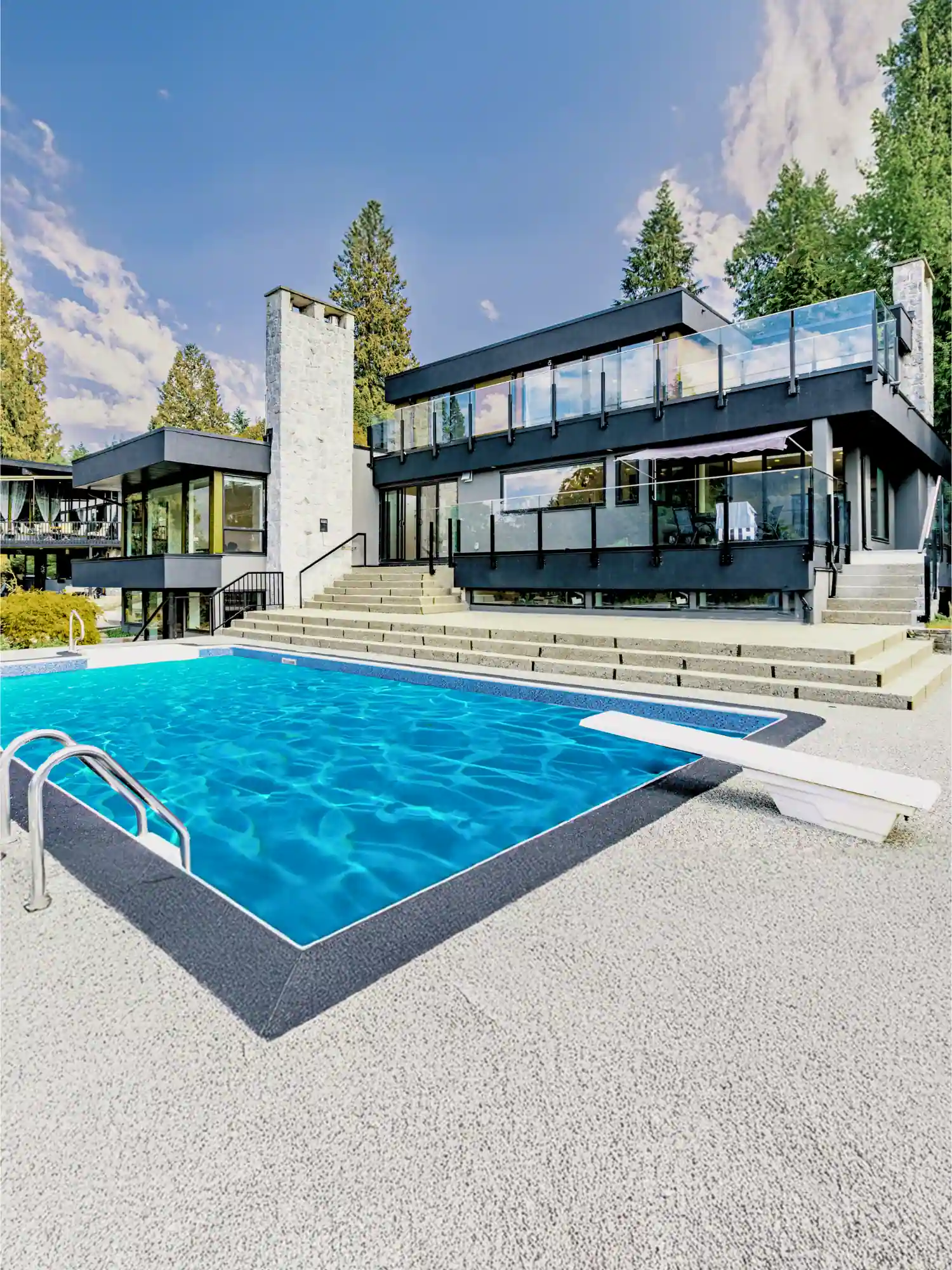
Average property values in the District of North Vancouver currently range from $1.6 million to $2.8 million depending on location, lot size, and views
Vancouver General Contractors
For homeowners, the practical difference is that DNV tends to process residential permits somewhat faster than CNV, reflecting the lower volume of applications in the more suburban District. DNV also has a slightly more flexible approach to secondary suites in certain RS zones, though both jurisdictions now broadly permit them. Any contractor quoting your North Vancouver renovation should know which jurisdiction your property falls in — the permit forms, fees, and inspectors are completely different.
What the Housing Stock Looks Like
The dominant housing types in North Vancouver are the split-level and the raised bungalow. These designs were practical responses to hilly terrain — stepping the floor plan down the slope rather than excavating a flat pad. They’re functional but they age in predictable ways: galvanized plumbing, aluminum wiring in homes built before 1975, cedar shingle roofs due for replacement, and kitchens that haven’t been touched since the 1990s. Many have unfinished or partially finished lower levels that represent significant untapped living space.
Average property values in the District of North Vancouver currently range from $1.6 million to $2.8 million depending on location, lot size, and views. In the City of North Vancouver, values run slightly lower at $1.4 million to $2.2 million, reflecting the smaller lot sizes and denser form. At these price points, renovation is almost always financially rational. Spending $80,000 to $150,000 renovating a home worth $1.8 million — and increasing that value to $2.1 million — delivers better risk-adjusted returns than moving and paying transfer taxes and agent fees.
Mountain Aesthetic and Its Influence on Renovation
North Vancouver has a strong architectural identity. The mountain setting, the forest backdrop, and the outdoor culture all push renovation choices toward natural materials — cedar siding and trim, stone foundation cladding and fireplace surrounds, dark metal accents, and timber details. West Coast modern is the dominant idiom: clean lines but warm materials, minimal ornamentation but high craft. Buyers in North Van are discriminating about authenticity. A renovation that ignores the local aesthetic — all-white Shaker cabinets, grey LVP flooring, generic pot lights — will underperform at sale compared to one that embraces the mountain vernacular.
Top Renovation Neighbourhoods
Lynn Valley leads renovation activity in the District, driven by large lots, strong family demographics, and aging 1970s split-levels ripe for full updates. Deep Cove attracts character renovation projects with its heritage-adjacent cottages and waterfront access. Lower Lonsdale is seeing significant condo and townhouse renovation activity as the waterfront gentrification continues north. Edgemont Village remains one of the most sought-after family addresses in the region, and full renovations here consistently achieve top dollar. Capilano — the slopes between the bridge and the ski areas — features some of the most challenging lots and some of the highest-value renovations in the entire Lower Mainland.
North Vancouver Renovation Costs by Project Type
The following ranges reflect 2026 contractor pricing for North Vancouver residential renovations. Costs include labour, materials, permits, and general contractor overhead. They exclude GST. Ranges are wide because specifications vary significantly — a mid-range kitchen and a premium kitchen are genuinely different scopes of work, not just different appliance packages.
| Project Type | Cost Range (2026) | Notes |
|---|---|---|
| Kitchen renovation (mid-range) | $55,000–$80,000 | Semi-custom cabinets, quartz counters, mid-range appliances, tile backsplash |
| Kitchen renovation (premium) | $85,000–$140,000 | Custom cabinets, quartzite or stone counters, Fisher & Paykel or Wolf appliances |
| Bathroom renovation (full gut) | $22,000–$40,000 | Standard ensuite or main bath, tile, vanity, heated floor |
| Bathroom renovation (luxury) | $45,000–$90,000 | Steam shower, freestanding tub, custom tile, heated floor, specialty fixtures |
| Basement suite (legal) | $65,000–$90,000 | Includes separate entrance, kitchen, bathroom, egress windows, permits |
| Deck and outdoor living | $25,000–$80,000 | Composite or timber frame deck, railing, lighting; upper end includes hot tub integration |
| Addition (second storey) | $180,000–$380,000 | Full second floor over existing bungalow; varies by structural complexity |
| Full home renovation | $200,000–$450,000 | Full interior gut including kitchen, all bathrooms, flooring, electrical, plumbing |
These costs reflect North Vancouver specifically. Contractors who primarily work in Vancouver proper and occasionally take North Van projects may quote a 10–15% access premium for steep lots, bridge tolls, and travel time. Working with a contractor who is already established in North Van eliminates this markup.
Steep Lot Renovations: The North Van Unique Challenge
If there is one factor that distinguishes North Vancouver renovation from nearly every other Metro Vancouver market, it is slope. A significant proportion of North Van residential lots sit on grades between 5 and 30 degrees — some even steeper on the upper slopes above Capilano. Flat lots exist in Lower Lonsdale and parts of the Lynn Valley flats, but the hillside properties that define North Van’s character come with a set of technical challenges that add cost and complexity to almost every project.
Retaining Walls
Rear yard grade management is one of the most common additional scope items on North Van renovations. A homeowner planning a new deck or a basement walkout often discovers that the usable yard is limited by an existing retaining wall that has reached the end of its service life — or that a new wall is needed to create a usable flat zone. Retaining wall costs in 2026 range from $8,000 for a modest timber-framed garden wall to $40,000 or more for engineered concrete block walls on significant grades. Walls over 1.2 metres typically require a permit and an engineer’s stamp in both DNV and CNV.
Foundation Challenges
Stepped foundations — where the foundation follows the grade of the lot rather than sitting on a single level pad — are common on North Van’s hillside properties. They complicate additions significantly. Adding square footage to a stepped-foundation home can require either engineering the addition onto a new pad (requiring excavation and site work) or extending the stepped system (requiring careful structural integration). Expect to budget an additional $20,000 to $50,000 in foundation work for any addition on a sloped lot, beyond what the same addition would cost on a flat lot in Burnaby or the Tri-Cities.
Site Access and Material Delivery
On the steepest and most constrained lots — particularly in Capilano and upper Lynn Valley — getting materials to the work site can be a genuine logistical challenge. Rear yards that are inaccessible from the lane or driveway sometimes require crane lifts to deliver materials or remove debris. Crane rental in the Lower Mainland runs $2,000 to $5,000 per day depending on reach and equipment size. This cost is not common, but it is real and should be scoped during the estimating phase. Any contractor who has not visited your specific lot before quoting a deck or addition should do so — North Van’s topographic variability means no two jobs are the same.
Drainage and Easements
Slope drainage is not optional in North Van — it is a life-safety issue. Proper grading, swales, and subsurface drainage management are required on any project that disturbs the grade. A contractor who ignores drainage on a sloped lot is setting the homeowner up for foundation seepage, erosion, and potential liability. Additionally, many North Vancouver properties carry BC Hydro easements running across rear yards — these can affect where additions, retaining walls, and large structures can be placed. Always pull a title search and review the site plan before finalizing project scope.
North Vancouver Secondary Suites
The North Vancouver rental market is tight. A legal one-bedroom secondary suite in Lynn Valley or Deep Cove commands $1,900 to $2,400 per month in 2026, driven by demand from service workers, young families, and professionals who want to live near the mountains but cannot qualify for ownership in the current market. For homeowners, a legal suite is not just a renovation — it is an investment that can generate $22,000 to $28,000 in annual rental income while adding $150,000 to $210,000 in property value at resale.
Zoning: District vs. City
Both the District and City of North Vancouver permit secondary suites in most single-family residential zones. The District of North Vancouver allows secondary suites in RS1 and RS2 zones subject to floor area limits, ceiling height minimums, and separate entrance requirements. The City of North Vancouver has similar provisions with slightly different parking requirements — CNV typically requires one off-street parking space for the suite tenant in addition to the primary dwelling’s parking. In both jurisdictions, the suite must comply with current BC Building Code requirements for egress windows, smoke and CO alarms, and fire separation between the suite and the main living area.
CMHC Secondary Suite Loan Program
The federal CMHC Secondary Suite Loan Program offers eligible homeowners up to $80,000 at a 2% interest rate to create or legalize a secondary suite. This program was designed specifically to expand rental supply and is well-suited to North Van homeowners who have an unfinished lower level or an illegal suite that needs to be brought up to code. The application process involves a pre-approval, contractor quotes, and a post-construction inspection. VGC has worked with several North Van clients through this program and can provide the documentation required for the application.
Split-Level Ceiling Height Challenges
The most common challenge with North Van secondary suites is ceiling height. Split-level and side-split homes — which are extremely common in North Van — often have a lower level with a finished ceiling height of only 6’8″ to 7’2″. BC Building Code requires a minimum ceiling height of 2.0 metres (approximately 6’7″) for habitable space, which many lower levels technically meet — but just barely. Creating a comfortable livable suite at 6’8″ ceiling height is possible but requires careful design: flush LED lighting, no dropped bulkheads, no HVAC soffits running through the space. When height is a genuine constraint, underpinning the slab to gain 12–18 inches is an option, but it adds $30,000 to $50,000 to the project cost and needs to be weighed against rental income projections.
Deck and Outdoor Living: North Van’s Highest-ROI Renovation
North Vancouver has a culture built around being outside. Residents hike, mountain bike, paddle, ski, and entertain outdoors with a frequency that is unusual even by Metro Vancouver standards. The outdoor living space is not a luxury in North Van — it is a core component of how the home is used. This cultural reality, combined with the spectacular mountain and forest views that many properties enjoy, makes deck and outdoor living renovation the single highest-ROI investment category in this market.
Budget Ranges for Outdoor Projects
A well-executed composite deck in North Van typically runs $15,000 to $35,000 for a single-level structure with aluminum railing and integrated lighting. Multi-level decks that step down a sloped rear yard — a common North Van configuration — run $35,000 to $80,000 depending on size, materials, and whether hot tub integration is included. A full outdoor kitchen with built-in grill, counters, refrigeration, pergola cover, and integrated lighting can reach $50,000 to $120,000 at the premium end. These are not unusual projects for Lynn Valley or Edgemont Village — the demographic and the price point support the investment.
Mountain View Premium
A deck with an unobstructed mountain or water view in North Van adds measurably more value than the same deck without a view. Real estate agents active in Lynn Valley and Capilano consistently report that a well-designed deck capturing a mountain view adds $30,000 to $60,000 in perceived value at sale — over and above the cost of the deck itself. This is not universal: a lower-level deck on a north-facing lot with no view will perform closer to the standard ROI. The best outdoor living investments in North Van orient toward the mountains or the inlet and make that view a design centerpiece.
Permit Requirements
Any deck over 600mm (approximately 24 inches) above grade requires a building permit in both DNV and CNV. This threshold is reached quickly on sloped lots where the deck is built off the main floor at the rear of the house — the deck surface may be 1.2 to 2.4 metres above grade at the downhill end. Permit fees are modest relative to project cost, typically $500 to $1,500, but the permit ensures the work is inspected and that your deck is insurable and transferable at sale. Unpermitted decks on North Van properties are flagged during real estate transactions and can require retroactive permitting or removal.
Permits: District vs. City of North Vancouver
Understanding the permit landscape is essential before starting any renovation in North Vancouver. Unlike Vancouver proper, where there is a single permit office at Cambie Street, North Vancouver has two completely separate permit authorities with different staff, different processes, and different fee structures. Submitting to the wrong jurisdiction — or failing to confirm which municipality your property is in — creates delays that can set a project back weeks.
District of North Vancouver Permits
The District of North Vancouver Building Inspection division processes residential permit applications from the Municipal Hall at 355 West Queens Road. In 2026, straightforward residential renovation permits — a kitchen, a bathroom, a deck — are typically approved within 4 to 8 weeks of a complete application submission. The DNV has made progress on its online permitting portal and allows document submission digitally for most residential project types. Permit fees are calculated based on the construction value declared on the application, using a sliding scale. A $100,000 renovation will typically generate permit fees of $1,200 to $1,800 at the DNV.
City of North Vancouver Permits
The City of North Vancouver’s Building Inspection department operates from City Hall on 14th Street. Processing times for residential permits are slightly longer than the District — typically 6 to 10 weeks for straightforward applications, reflecting the higher density and application volume in the urban core. The CNV has different secondary suite parking standards and slightly different encroachment policies for covered decks and structural additions. For projects in Lower Lonsdale and the dense residential areas north of the Shipyards, confirm with your contractor that all drawings are prepared to CNV standards before submission.
Heritage and Architectural Guidelines
Heritage restrictions are less common in North Vancouver than in the City of Vancouver, but they do exist. Deep Cove has a number of early-twentieth-century character homes that may be subject to heritage alteration permit requirements for exterior changes. The British Pacific Properties areas on the upper slopes of West Vancouver — and in some adjacent North Van zones — carry architectural guidelines that restrict certain exterior changes including siding materials, roof profiles, and window configurations. If your property is in one of these areas, factor additional design time and a potential Design Review Board submission into your schedule before starting exterior work.
North Vancouver Kitchen Renovations
North Vancouver kitchens tend to be larger than what you find in Vancouver condos or East Van specials. The split-level and bungalow housing stock typically has 120 to 200 square feet of kitchen space, sometimes with an adjacent informal dining area that can be opened up during renovation. This scale gives designers more to work with — and it raises the stakes for renovation quality. A poorly executed kitchen in a $2 million Lynn Valley home is immediately visible as a mismatch.
The Mountain Kitchen Aesthetic
What sells in North Van kitchens is warmth with precision. Natural wood — white oak, walnut, or painted wood with a warm undertone — is the dominant cabinet choice. Stone counters, particularly quartzite in white Macaubus or Fantasy Brown, pair well with the mountain setting and are common in mid-to-premium renovations. Backsplashes lean toward handmade tile, subway tile in an offset stack, or slab stone continuation from the counter. Hardware is matte black or unlacquered brass. Appliances at the premium end are Fisher and Paykel (popular for their column refrigerator/freezer configurations), Wolf, or Miele.
The West Coast modern approach — flat panel cabinets, integrated appliances, minimal hardware, large-format porcelain or stone tile floors — is equally popular, particularly in homes that have been updated architecturally and in Lower Lonsdale condos and townhouses. The key is that both aesthetics share a commitment to quality materials and craftsmanship that generic white-box kitchens do not deliver.
Cost Ranges and Permit Triggers
A mid-range North Van kitchen — semi-custom cabinets, quartz counters, tile backsplash, mid-grade appliance package, new flooring — runs $55,000 to $80,000 in 2026. A premium kitchen with custom cabinetry, quartzite counters, Fisher and Paykel or Wolf appliances, and designer tile runs $85,000 to $140,000. Permit triggers are the same as in Vancouver: any work involving the gas line (range or cooktop), electrical panel upgrades, or structural wall removal requires a permit. Do not skip the permit on a structural wall removal — North Van’s split-level homes have load-bearing walls in unintuitive locations, and an unpermitted structural change creates both safety and resale liability.
For more information on renovation planning, visit our Renovation Guide or contact VGC to discuss your kitchen project.
North Vancouver Bathroom Renovation
The bathroom renovation market in North Van is shaped by two things: the active outdoor lifestyle of residents and the wet, cool microclimate that makes warmth and comfort inside the home a priority. North Van homeowners shower more — after skiing, hiking, and cycling — and they care more about the quality of that experience than the average Metro Vancouver buyer. The ensuite is the single most important bathroom in a North Van home from a resale perspective, and renovation spending on ensuites here is consistently higher than comparable markets.
Steam Showers and Heated Floors
The combination of an outdoor hot tub and an indoor steam shower is a common request in North Van renovation briefs — and it’s not a luxury indulgence in this market; it is a lifestyle expectation. A steam shower in North Van is genuinely used, year-round, in a way that it might not be in a warmer, drier city. Steam shower installation adds $8,000 to $18,000 to a bathroom renovation depending on the steam generator size, the enclosure design, and the tile scope. Heated floors are essentially universal in North Van bathroom renovations. The mountain microclimate is perceptibly colder than the valley floor, and a tile floor without radiant heat in a North Van home feels like a design omission to buyers who have come to expect it.
Cost Ranges
A full gut renovation of a primary ensuite — demo to the studs, new tile, new vanity, new shower, heated floor, new plumbing fixtures — runs $25,000 to $45,000 at the mid-range in North Van. Adding a steam shower, freestanding soaker tub, book-matched stone tile, and custom millwork vanity pushes the total to $55,000 to $90,000. These are larger investments than comparable bathrooms in Burnaby or Surrey, reflecting both the higher labour costs associated with North Van access and the higher material specifications that the market demands. The ROI is strong: a high-quality master ensuite in a $2.5 million District property typically adds $80,000 to $120,000 in value.
The Mountain Modern Aesthetic: What Sells in North Van
North Vancouver has one of the most coherent architectural identities of any Metro Vancouver community. The mountain setting, the forest, the outdoor culture, and a buyer demographic that skews educated and style-conscious all converge on a renovation aesthetic that is distinctive and, when executed well, extraordinarily compelling. Understanding what sells in North Van — and what doesn’t — is as important as understanding the technical constraints of the market.
Exterior Design
The North Van exterior vocabulary is cedar, stone, and dark metal. Horizontal clear cedar siding — painted in deep charcoal, navy, or left natural with a UV-stabilizing oil — is the signature look. Board-and-batten in dark colours is also popular. Stone foundation cladding, typically ledgestone or a similar dry-stacked profile, grounds the house visually and connects it to the landscape. Dark metal trim — black aluminum fascia, dark Kynar-coated gutters, black window frames — provides visual definition. Fibre cement siding in a warm grey is an acceptable budget alternative but does not perform at resale the way real cedar does in this market.
Interior Character
Inside, the mountain modern palette is characterized by exposed beams — either original fir joists opened up during renovation or engineered timber elements added for character — natural stone fireplace surrounds, and large-format porcelain or stone tile on main floor areas. White oak hardwood flooring is the dominant floor covering choice in 2025–2026, replacing the grey-stained oak that peaked and declined over the previous decade. Lighting favours warm-toned LED fixtures in matte black or aged brass. Paint colours lean toward warm whites, warm greiges, and deep forest-adjacent greens and navies.
What Buyers Do Not Want
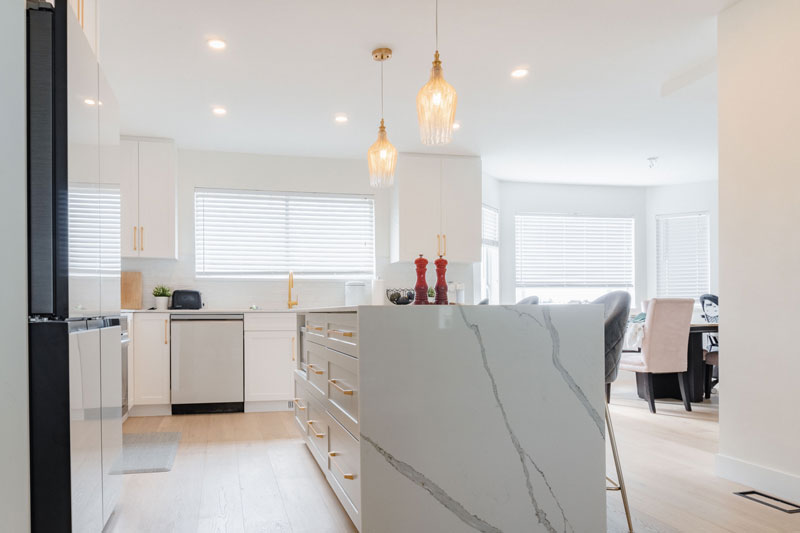
North Van buyers are sophisticated enough to recognize and discount generic renovation work. The all-white Shaker cabinet kitchen with grey LVP flooring and pot lights on 12-inch centres — which was a serviceable renovation formula in the East Van investor market — reads as unambitious in a Lynn Valley or Edgemont Village home. Similarly, the contemporary East Van aesthetic of black-and-white contrast, waterfall marble islands, and open-riser staircases can feel stylistically mismatched in a mountainside split-level. North Van buyers reward investment in natural materials and penalize cosmetic flips. In this market, natural materials add 8 to 12 percent in sale premium over generic finishes at comparable renovation spend levels.
Finding a Contractor for North Vancouver Renovations
Not every Lower Mainland contractor is well-suited to North Vancouver work. The combination of steep lots, two permit jurisdictions, a demanding aesthetic standard, and the logistical realities of working across the bridge creates a natural filter. Contractors without North Van experience may underestimate access costs, submit incorrect permit forms, or apply finishes that don’t fit the market. Finding a contractor who knows the ground is one of the most important steps in a North Van renovation.
What to Look For
Your contractor should be able to answer clearly which jurisdiction your property falls in — District or City — and describe the permit submission process for each. They should have experience with stepped foundations and sloped lot drainage, or be willing to bring in a structural engineer and geotechnical consultant for projects that require it. They should have relationships with North Van trades: plumbers, electricians, and tile installers who are familiar with the commute and don’t charge a premium for it. And they should demonstrate familiarity with the mountain modern aesthetic — not just in words, but in their portfolio.
VGC in North Vancouver
Vancouver General Contractors has been working throughout North Vancouver for years. We have established relationships with both the DNV and CNV permit departments, experience managing steep lot site logistics, and a portfolio of North Van renovations across Lynn Valley, Deep Cove, Lower Lonsdale, and Edgemont Village. We do not charge a cross-bridge or access premium for North Van projects — it is part of our core service territory. Our team understands the mountain modern aesthetic and the quality standard that North Van buyers expect.
If you are planning a renovation in North Vancouver, we would welcome the conversation. Visit our home renovation services page or contact us directly to arrange a consultation.
The Travel Premium Question
Some Metro Vancouver contractors apply a 10 to 15 percent premium to North Vancouver projects to account for bridge tolls, travel time, and the logistical complexity of steep lot access. This is a real cost — a crew commuting from Burnaby or Surrey spends an extra 45 minutes to an hour per day in transit. VGC’s pricing for North Van projects is consistent with our Vancouver pricing because we factor regional accessibility into our base rates rather than treating it as a surcharge. When comparing quotes for a North Van renovation, always ask whether a travel or access premium is embedded in the number.
North Vancouver Renovation ROI
North Vancouver’s high property values create a favourable environment for renovation ROI. When a home is worth $1.8 million to $2.5 million, adding $150,000 to $200,000 in value through a well-executed renovation requires a relatively modest percentage gain. The following table reflects North Vancouver-specific ROI estimates based on current market data and VGC’s experience with comparable projects and their outcomes at resale.
| Project | Cost | Value Added | ROI |
|---|---|---|---|
| Deck and outdoor living | $45,000 | $55,000–$90,000 | 122–200% |
| Kitchen mid-range | $65,000 | $70,000–$100,000 | 108–154% |
| Master ensuite luxury | $75,000 | $80,000–$120,000 | 107–160% |
| Basement suite (legal) | $80,000 | $150,000–$210,000 | 188–263% |
| Second storey addition | $300,000 | $320,000–$480,000 | 107–160% |
The standout performer in North Van is the basement suite, which consistently delivers the highest ROI of any renovation category. This reflects both the strong rental demand in the North Van market and the capitalization rate at which rental income is valued at sale. A suite generating $2,200 per month in rent adds approximately $22,000 to $26,000 in annual income — and at North Van cap rates, that income stream is capitalized into sale value at a multiple of 6 to 8 times annual income, producing a $150,000 to $200,000 value increase from an $80,000 investment.
Deck and outdoor living projects also consistently outperform other categories in North Van, reflecting the lifestyle premium that mountain views and outdoor entertainment space command in this market relative to the Lower Mainland average.
More Neighbourhood Guides Guides

Renovation in Cloverdale, Surrey: Heritage Village Character Homes and Modern Upgrades

Renovation in Fairview, Vancouver: Heritage Properties, Character Homes & Modern Updates
Renovation in Port Coquitlam: Newer Homes vs. Older Stock, Permits & Costs

Renovation in Kensington-Cedar Cottage, East Vancouver: Full Neighbourhood Guide
Renovation in Ladner, Delta: Heritage Homes, Agricultural Land Reserve & Rural Properties
Ready to start your renovation?
Frequently Asked Questions: North Vancouver Renovation
Is renovation more expensive in the District of North Vancouver versus the City of North Vancouver?
Construction costs themselves are essentially the same — labour and material prices don’t change at the municipal boundary. Permit fees are slightly different but within the same range. The main cost difference between District and City properties is site-specific: District lots tend to be larger and are more likely to be on steep terrain, which can add cost. City of North Van properties are often more urban and accessible. If you’re comparing quotes, the variation will come from site conditions, not jurisdiction.
Do I need a permit for a deck in North Vancouver?
Yes, if the deck surface is more than 600mm (approximately 24 inches) above grade at any point. On sloped lots, this threshold is almost always reached. Permit fees are modest — typically $500 to $1,500 — and the inspection process ensures the structure is safe and properly connected to the house. An unpermitted deck creates problems at sale and may affect your home insurance. Always permit your deck in North Van.
Can I add a secondary suite to my North Vancouver home?
Yes, in most cases. Both the District and City of North Vancouver permit secondary suites in most single-family residential zones. The suite must meet BC Building Code requirements for ceiling height (2.0 metres minimum), egress windows, fire separation, and smoke and CO detection. A separate entrance is required. Parking requirements vary slightly between jurisdictions. Your contractor should pull the permit, and the suite should be inspected and legalized to protect you at resale and for insurance purposes.
What is the CMHC Secondary Suite Loan Program?
The CMHC Secondary Suite Loan Program offers eligible homeowners up to $80,000 at 2% interest to create or legalize a secondary suite. It is available to owner-occupiers whose household income falls below a threshold set by CMHC. The program requires a pre-approval before work starts, contractor documentation, and a post-construction inspection. It is well worth exploring if you are planning a basement suite in North Van — the low interest rate significantly improves the financial case for the project.
How much does a steam shower cost to add to a North Van bathroom renovation?
Steam shower installation adds $8,000 to $18,000 to a bathroom renovation, depending on the size of the steam generator, the enclosure design, and the tile scope. The steam generator itself is $2,000 to $5,000 for a quality unit (ThermaSol, Mr. Steam). The enclosure needs to be fully waterproofed with a sloped ceiling to drain condensation and sealed tile throughout. When combined with a full ensuite renovation, the total project cost runs $55,000 to $90,000 at the luxury end — a common scope in Lynn Valley and Edgemont Village.
What are the biggest challenges with renovating on a steep North Van lot?
The main challenges are retaining walls, foundation complexity, site access, and drainage. Retaining walls on significant grades cost $8,000 to $40,000 and may require an engineer. Stepped foundations on additions add $20,000 to $50,000 in structural costs. Rear yard access on the most constrained lots may require crane lifts at $2,000 to $5,000 per day. And drainage management — grading, swales, subsurface drainage — must be part of any project that disturbs the grade. Work with a contractor who has done steep lot work in North Van specifically, not just flatland residential renovation.
How long does it take to get a renovation permit in North Vancouver?
For a complete application, the District of North Vancouver typically takes 4 to 8 weeks for straightforward residential renovation permits. The City of North Vancouver is slightly slower at 6 to 10 weeks. More complex projects — additions, structural changes, secondary suites — may take longer if the application requires revision or additional review. Starting the permit process as early as possible, before finalizing your contractor start date, minimizes project delays.
What is the best ROI renovation in North Vancouver?
Based on current market data, the basement suite and the deck and outdoor living renovation deliver the highest ROI in North Van. A legal basement suite at $80,000 adds $150,000 to $210,000 in value (188–263% ROI) thanks to strong rental demand and the way that income is capitalized at sale. A deck and outdoor living project at $45,000 adds $55,000 to $90,000 in value (122–200% ROI) driven by the outdoor lifestyle premium and mountain view value. Both consistently outperform the Lower Mainland average for those categories.
How do I find a good contractor for a North Vancouver renovation?
Look for a licensed general contractor who has completed projects in both the District and City of North Vancouver and can describe the permit process for each. Ask for references from North Van clients, not just general Lower Mainland work. Verify they understand steep lot conditions, mountain modern design, and the quality standard that North Van buyers expect. Be wary of contractors who add a significant access premium for North Van work — established contractors factor regional access into their base rates. VGC works throughout North Vancouver without surcharge — get in touch for a consultation.
Does cedar siding require a lot of maintenance in North Van?
Cedar siding does require maintenance, but it is manageable. In North Van’s wet climate, cedar should be re-oiled or re-stained every 5 to 8 years to maintain its appearance and prevent moisture absorption. Pre-primed and painted cedar can go 8 to 12 years between repaints with proper preparation. The maintenance requirement is a real cost — budget $3,000 to $8,000 for exterior refinishing every decade — but North Van buyers consistently accept and expect it as part of the mountain home ownership experience. Fibre cement is lower maintenance but does not command the same premium at resale in this market.
What is the typical cost of a full home renovation in North Vancouver?
A full interior renovation — all bathrooms, kitchen, flooring, electrical and plumbing updates, paint — on a typical 1960s–1980s North Van split-level runs $200,000 to $450,000 in 2026. The wide range reflects the size of the home, the specification level, and whether structural work is involved. At the lower end, you are updating finishes with mid-range materials. At the upper end, you are doing a near-complete gut renovation with custom millwork and premium finishes throughout. For a home worth $1.8 million to $2.5 million, a $300,000 renovation that adds $400,000 in value is a rational investment.
What is the difference between a renovation in Deep Cove versus Lynn Valley?
Both are in the District of North Vancouver, so the permit process is the same. Deep Cove properties tend to be older, closer to the water, and sometimes subject to character home considerations — exterior changes may require more careful heritage assessment. Lynn Valley properties are typically larger, more suburban, and on grades that range from moderate to steep. Lynn Valley renovation projects are often more complete gut renovations of 1970s and 1980s homes, while Deep Cove projects may involve more careful preservation of period character alongside modern updates.
Can I renovate the exterior of my home in the British Pacific Properties area?
Properties within the British Pacific Properties (West Van upper slopes and some adjacent North Van zones) are subject to architectural guidelines administered by the properties’ development company in addition to municipal bylaw requirements. These guidelines can restrict siding materials, roof profiles, window configurations, and the scale of additions. Always review the applicable architectural guidelines before finalizing an exterior renovation scope in these areas — your contractor should flag this issue at the project planning stage.
Is it worth renovating before selling in North Vancouver?
In most cases, yes — particularly for targeted high-ROI projects like kitchen and ensuite updates, deck additions, and secondary suite legalization. North Van buyers in the $1.8 million to $2.8 million range are sophisticated and will discount heavily for dated finishes. A kitchen that hasn’t been touched since 1994 will cost you far more at sale than it would cost to renovate before listing. Pre-listing renovation requires timing and capital management, but the return on well-executed targeted updates is consistently positive in North Van’s price bracket. Consult with both a contractor and a real estate agent to identify which updates deliver the best return for your specific property.
How do I get started with a North Vancouver renovation?
Start with a clear sense of your goals — whether you’re renovating to live in the home for another decade or to optimize it for sale. Then consult with a contractor who knows the North Van market specifically. VGC offers consultations for homeowners across the District and City of North Vancouver — we will walk through your property, discuss your goals, identify any site-specific challenges, and provide a realistic cost range before you commit to anything. Visit our Renovation Guide for a broader overview of the renovation planning process, or contact us to book a consultation.
Get a Free Renovation Quote
Metro Vancouver’s trusted general contractors. Free consultations across Vancouver, Burnaby, Richmond, North Shore & beyond.
Get Your Free Quote →Ready to start your project? Vancouver General Contractors (VGC) provides free, fixed-price quotes for homeowners across Metro Vancouver. Learn more about our North Vancouver renovation contractor services or request a free quote today.
VGC serves North Vancouver and surrounding areas. View all renovation services in North Vancouver →

Comments are closed