




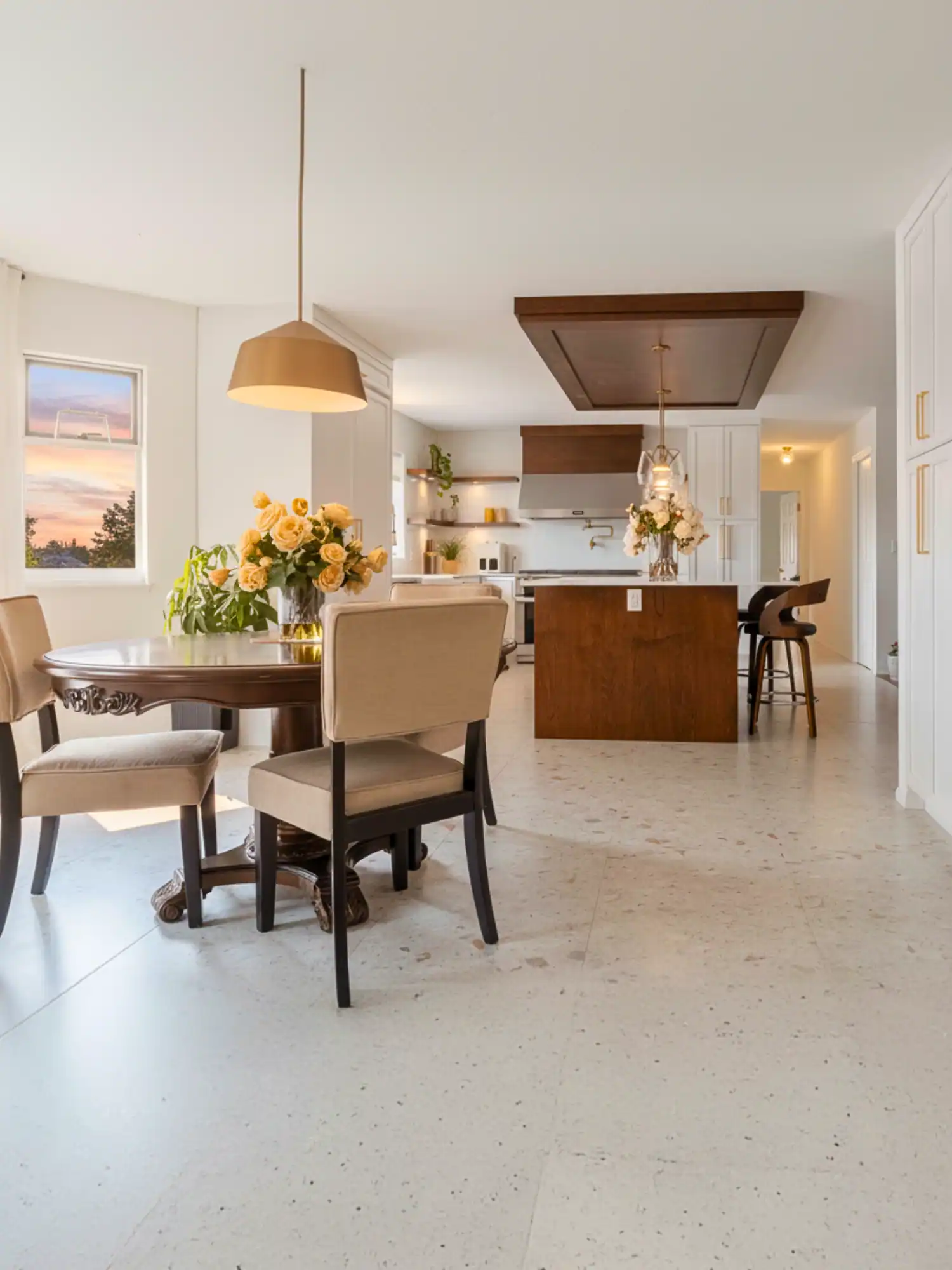
Rancher Renovation Vancouver: Single-Storey Homes, Costs & Aging in Place (2026)
Ranchers are one of Metro Vancouver’s most sought-after housing types — and one of its most misunderstood renovation opportunities. A true rancher is a single-storey detached home where all living space sits on one level: no stairs between floors, a low-pitch roof, and a wider-than-tall street profile that signals something increasingly rare in a region dominated by two-storey colonials and three-storey infill townhomes. In suburbs like Burnaby, North Delta, Tsawwassen, Ladner, Langley, and Port Coquitlam, thousands of ranchers built between the 1950s and 1980s sit on generous 7,000–12,000 sq ft lots, waiting for the renovation that will carry them through the next fifty years.
This guide covers everything you need to know about rancher renovation in Vancouver: what a rancher actually is, why they command a premium in today’s market, what renovations make the most sense, and what it realistically costs to transform a dated 1960s bungalow into a modern, accessible, energy-efficient home. Whether you’re planning an open-concept main floor, adding a second storey, or preparing the home for aging in place, this is the complete resource for Metro Vancouver rancher owners.
What Is a Rancher? Identifying the True Single-Storey Home
In British Columbia, the term “rancher” is used to describe a purpose-built single-storey detached home — not a split-level, not a storey-and-a-half, and not a two-storey with a finished basement. All primary living spaces — bedrooms, bathrooms, kitchen, living room, dining room — sit on a single level with direct access from one floor. There are no interior stairs between habitable floors.
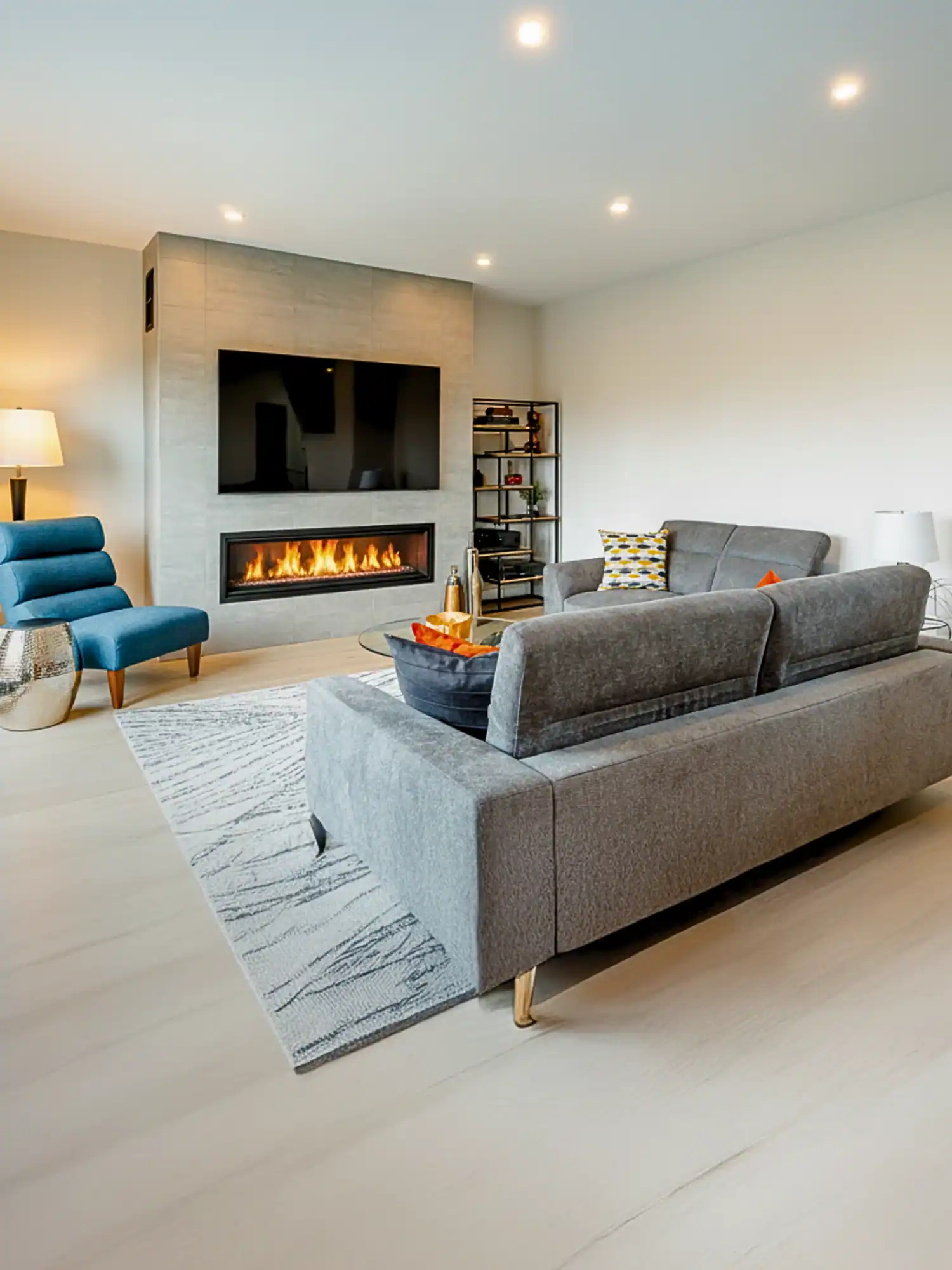 Richmond” class=”wp-image-12768″ />
The renovation opportunity is significant. Many ranchers remain in original or lightly updated condition — dated kitchens, compartmentalized floor plans, small bathrooms, single-pane windows
Vancouver General Contractors
In other parts of Canada and the United States, the same home type is called a bungalow, but in Metro Vancouver and the Fraser Valley, “rancher” is the standard term used by real estate agents, builders, and homeowners. The BC usage is specific: a rancher implies a purpose-built single-storey with a relatively low-pitch roof (typically 3:12 to 5:12 pitch) and a larger footprint than a comparable two-storey home, since all square footage must be accommodated on the ground plane rather than stacked vertically.
Here is how to identify a rancher from the street:
- Wider than tall: The street-facing facade is horizontal in character — the home appears to stretch sideways rather than reaching upward. A 1,400 sq ft rancher might be 50–60 feet wide and only 10–12 feet tall at the eave.
- Low-pitch or flat roof: Most ranchers feature a low-pitch gable or hip roof, often with wide overhanging soffits — a signature of mid-century construction. Some have a slight shed roof pitch.
- No upstairs windows: There are no second-storey windows visible from the street. If you see dormer windows or second-floor glazing, it is not a true rancher.
- Large lot: Metro Vancouver ranchers typically sit on lots of 7,000–12,000 sq ft — larger than the typical lot for a two-storey home of the same era, since the builder needed ground-plane area to accommodate the entire program.
- Single-storey interior: Once inside, there are no stairs to habitable rooms. There may be a crawlspace below (accessed by a hatch) or occasionally a partial basement, but these are utility spaces, not living levels.
Typical Metro Vancouver ranchers were built between 1950 and 1985, with the peak construction era falling in the 1960s and 1970s. Neighbourhoods with high rancher concentrations include North Delta (around Annieville and Nordel), Tsawwassen and Ladner (South Delta), Burnaby’s South Slope and Metrotown-adjacent streets, Cloverdale and Aldergrove in Langley, and established streets in Port Coquitlam and Maple Ridge. Richmond also has a significant rancher stock, though many have since been replaced by newer construction.
Typical rancher sizes run from 1,100 to 1,800 sq ft of finished living space on the main floor. Larger examples from the 1970s sometimes reach 2,000–2,200 sq ft. The home’s entire square footage is on one level, which makes ranchers both intimate and efficient to live in — but also presents specific renovation challenges when owners want to add square footage or modernize the layout.
Why Ranchers Are Valuable in Metro Vancouver — The Aging-in-Place Premium
Metro Vancouver’s housing market is dominated by multi-storey homes — two-storey colonials, three-storey infill townhomes, high-rise condominiums, and stacked duplexes. True single-storey detached homes are relatively rare, and their scarcity is driving a structural shift in how ranchers are valued.
The primary driver is demographics. Metro Vancouver’s baby boomer population — now in their mid-60s to mid-70s — is actively seeking single-storey living. The motivations are practical: stairs become a meaningful safety hazard as mobility changes with age, single-storey homes are easier to navigate with mobility aids, and the elimination of stairs is a key factor in the ability to age in place rather than transitioning to assisted living. A renovated rancher — wide doorways, curbless showers, lever hardware, step-free entries — can support comfortable independent living well into a homeowner’s 80s and beyond.
This demographic demand is showing up in sale prices. In suburban Metro Vancouver markets, well-maintained or renovated ranchers increasingly sell at comparable or higher price-per-square-foot than two-storey homes on similar lots, precisely because the supply of true single-storey homes is limited and the demand from aging homeowners is growing. A renovated 1,500 sq ft rancher in North Delta or Tsawwassen that offers modern finishes, accessibility features, and an open-concept main floor is competing with two-storey homes at 2,200–2,600 sq ft — and winning with buyers who have no interest in climbing stairs.
The renovation opportunity is significant. Many ranchers remain in original or lightly updated condition — dated kitchens, compartmentalized floor plans, small bathrooms, single-pane windows, and inadequate insulation. These homes often trade at a modest discount to the neighbourhood average precisely because they need work. A comprehensive renovation — kitchen, bathrooms, open-concept main floor, updated exterior — can transform a 1965 rancher that sells for $200,000 below neighbourhood peak into a home that commands a premium over comparable two-storey sales.
For homeowners who intend to stay in their rancher rather than sell, the value calculation is different but equally compelling. Renovating a rancher you own — particularly with aging-in-place features — is almost always less expensive than selling and purchasing a newer accessible property, given Metro Vancouver’s transaction costs (real estate commissions, property transfer tax, legal fees) and the scarcity premium on already-renovated accessible homes.
Rancher Renovation Costs: Metro Vancouver 2026 Budget Guide
The table below provides realistic budget ranges for the most common rancher renovation scopes in Metro Vancouver. All figures reflect 2026 labour and material costs, include applicable permits, and assume a qualified general contractor manages the work. Individual projects may fall outside these ranges based on the home’s specific condition, finish level selected, and site-specific requirements.
| Renovation Scope | Budget Range | Notes |
|---|---|---|
| Kitchen renovation | $36,000 – $90,000 | Custom cabinetry, stone counters, and appliances at upper end |
| Master bathroom renovation | $22,000 – $52,000 | Higher end includes curbless shower, heated floor, full tile |
| Hall/secondary bathroom | $16,000 – $40,000 | Full gut and rebuild; accessible features at upper end |
| Open-concept main floor conversion | $35,000 – $75,000 | Structural bearing wall removal, engineered beam, finish work |
| Full main floor renovation | $95,000 – $185,000 | Kitchen, two bathrooms, flooring, paint, trim, electrical, HVAC |
| Second storey addition | $220,000 – $450,000 | Full structural addition; engineering, permit, all finishes |
| Rear addition (footprint expansion) | $180,000 – $350,000 | New foundation, framing, roofline integration, full finish |
| Basement suite conversion | $55,000 – $120,000 | If full basement exists; legal secondary suite |
| Crawlspace-to-basement conversion | $150,000 – $280,000 | Underpinning, new slab, waterproofing — major structural work |
| Crawlspace insulation and vapour barrier | $8,000 – $20,000 | Improve only (no conversion) |
| Accessibility renovation package | $12,000 – $65,000 | Range: grab bars only → full aging-in-place conversion |
| Exterior renovation | $25,000 – $60,000 | New siding, windows, entry, garage door, front landscaping |
| Energy efficiency package | $18,000 – $45,000 | Attic insulation, wall insulation, heat pump, crawlspace |
| Dormer addition (single) | $85,000 – $150,000 | Adds attic bedroom; requires adequate roof pitch |
For a rancher owner planning a phased renovation, the most common sequence is: (1) mechanical and envelope first — electrical panel upgrade, plumbing update, insulation, windows; (2) main floor renovation — kitchen, bathrooms, flooring; (3) structural changes — open concept, additions; (4) exterior and curb appeal. This sequence ensures that cosmetic finishes are not damaged by subsequent structural or mechanical work.
To discuss your specific project scope and receive a detailed estimate, contact our Vancouver renovation team or start with our renovation planning guide.
The Open-Concept Opportunity: Transforming the Rancher Floor Plan
Mid-century ranchers were built with a compartmentalized room philosophy that reflects the domestic habits of the 1960s: a closed kitchen separate from the dining room, a formal living room at the front of the house, a family room (if it existed at all) tucked at the rear. Walls were walls — structural or not — and each room was defined by its enclosure.
Today’s open-concept ideal — a continuous kitchen, dining, and living space that flows together, connects to the backyard, and allows a parent cooking dinner to see children in the living area — is the single most transformative renovation a rancher can receive. And ranchers are uniquely well-suited to this transformation, because all the spaces that need to be connected are already on the same level.
In a two-storey home, opening the main floor requires understanding which walls are load-bearing (supporting the floor above). In a rancher, the structural equation is different: the roof framing spans from exterior wall to exterior wall, and interior walls may or may not carry roof load depending on the framing method. Many ranchers were built with interior bearing walls running parallel or perpendicular to the ridge, and identifying and properly addressing these walls is the core structural challenge of an open-concept rancher renovation.
The process for a rancher open-concept conversion typically involves:
- Structural assessment: A structural engineer reviews the existing framing, identifies bearing walls, and specifies the required beam size and connection details for the opening. For rancher roof spans of 30–40 feet, a single engineered lumber (LVL) beam or a steel beam may be required, depending on the span and load.
- Temporary shoring: Before any wall is removed, temporary walls carry the load while the permanent beam is installed — a step that cannot be skipped and that requires both skill and planning.
- Beam installation: The engineered beam is installed on new or reinforced posts, which transfer the load to the foundation. In many ranchers, this requires installing a new concrete pad or reinforcing the existing foundation at the post location.
- Finishing: Once the structural work is complete, the floor is patched (or new flooring is installed throughout), ceilings are finished, electrical is rerouted, and the new open space is painted and trimmed.
The result is dramatic. A 1965 rancher that originally had a 10×12 closed kitchen, a 12×14 dining room, and a 16×18 living room becomes a single continuous 650+ sq ft open living space — without adding a single square foot. The home feels completely different: brighter (natural light now travels from the front to the rear), more spacious, and fundamentally more liveable for a modern family or couple.
Budget for the structural opening itself (engineering, shoring, beam, posts, foundation work, patching) at $18,000–$35,000. Combined with kitchen renovation, flooring throughout, painting, and lighting, a full open-concept main floor transformation typically runs $55,000–$95,000 for a rancher of 1,200–1,600 sq ft.
Aging-in-Place Renovation: The Highest-Value Category for Ranchers
No home type is better suited to aging-in-place renovation than a rancher. The foundational advantage — all living on one level — is already there. What a well-planned accessibility renovation adds is the detailed layer of features that allow that single level to support comfortable independent living regardless of mobility changes: wide doorways, curbless showers, grab bars, lever hardware, step-free entries, and thoughtfully positioned electrical elements.
Here are the key components of a comprehensive aging-in-place rancher renovation, with individual cost guidance:
Wider Doorways
Standard interior doorways in 1960s–1970s ranchers are 28–30 inches wide — too narrow for a standard manual wheelchair (requires 32 inches minimum) and unusable by a powered wheelchair (requires 36 inches clear). Widening doorways requires reframing the rough opening, replacing the door and frame, and patching the surrounding drywall and trim. Cost per doorway: $800–$2,200, depending on whether the wall is bearing and how much finish work is involved. A whole-home doorway widening project (5–7 doorways) runs $6,000–$14,000.
Curbless (Roll-In) Shower
The curbless shower — also called a roll-in or barrier-free shower — eliminates the step over a shower curb that is the single most common bathroom fall hazard. For a rancher bathroom renovation, a curbless shower requires a linear drain (to manage water on a flat floor), a sloped shower floor (precision tiling), and a shower that is large enough to be useful with a shower chair or mobility aid (minimum 36×36 inches; 36×60 or larger is preferred). Cost: $8,000–$18,000 for the shower alone, depending on tile specification and drain system.
Grab Bars
Grab bars are the most cost-effective accessibility investment in any bathroom. Modern grab bars are available in finishes that match contemporary bathroom hardware — brushed nickel, matte black, polished chrome — and when properly installed into studs or backing, they are nearly invisible as an “accessibility feature” while providing critical safety support. Retrofitting grab bars into an existing bathroom requires either hitting studs or installing blocking behind the drywall. Cost: $300–$800 per bar installed, including blocking if needed. A well-equipped master bathroom might have 4–6 bars.
Step-Free Entries
Many Metro Vancouver ranchers were built with one or two steps up from the front porch or carport to the entry door — a relatively small barrier that becomes significant with age or a mobility device. Step-free entry solutions include: (a) regrading the approach path to eliminate the grade change, (b) building a ramped approach with concrete or pavers (slope no greater than 1:12 per code), or (c) installing a portable threshold ramp. A permanent ramped entry in concrete or masonry runs $4,000–$10,000 depending on the grade change and site conditions.
Lever Hardware and Controls
Round doorknobs are difficult to operate with limited hand strength or grip. Replacing all interior and exterior door hardware with lever-style handles is a straightforward and relatively inexpensive upgrade: $150–$350 per door including installation. Whole-home lever hardware replacement: $1,500–$4,500.
Electrical Positioning
Standard electrical outlet height (12–18 inches off the floor) and switch height (42–48 inches) are challenging for wheelchair users and those with limited reach. Accessible positioning places outlets at 24–48 inches and switches at 36–44 inches. If the rancher is undergoing a full renovation with drywall replacement, repositioning outlets is relatively low-cost ($75–$150 each). In a targeted accessibility retrofit, selective repositioning costs more per outlet but is still achievable: $300–$600 per location.
A comprehensive aging-in-place renovation package for a Metro Vancouver rancher — covering doorways, bathrooms, entries, hardware, and electrical — typically runs $25,000–$65,000, depending on the number of bathrooms, the starting condition of the home, and whether the work is combined with a broader renovation or done as a standalone project. When combined with a master bathroom renovation or a full main floor update, the marginal cost of adding accessibility features is significantly lower than doing them separately.
For families caring for aging parents or planning their own future, a rancher with well-executed aging-in-place features is one of the most practical long-term housing investments available in Metro Vancouver. Learn more about planning your renovation in our comprehensive renovation guide.
Master Suite Renovation: Bringing the Primary Bedroom into the Modern Era
The master bedroom in a 1960s or 1970s rancher is almost always one of the home’s weakest features by today’s standards. Typical characteristics: a 10×12 or 11×13 room, a single small closet (or two narrow reach-in closets), and access to a shared hall bathroom rather than a dedicated en-suite. This configuration was standard for the era and reflected the domestic norms of the time. It is also completely out of step with what today’s buyers and homeowners expect from a primary bedroom suite.
The renovation opportunity is significant — and on a rancher, it is often more feasible than in a two-storey home, because all the bedrooms are on the same level and the spatial relationships between them can be renegotiated without the complexity of working around a staircase or upper-floor structural grid.
Option A: Expand the Master by Borrowing from an Adjacent Bedroom
In most ranchers, the master bedroom sits adjacent to one or two secondary bedrooms. Removing or relocating the shared wall — and claiming 4–6 feet of an adjacent room — can expand a 120 sq ft master into a 180–200 sq ft suite with room for a sitting area, a proper walk-in closet, and a larger en-suite bathroom. This works particularly well when a bedroom cluster has three bedrooms and the owner is comfortable with reducing to two, or when a home office will replace the secondary bedroom function. Cost: $25,000–$55,000 for the reconfiguration plus a new en-suite.
Option B: Add an En-Suite to an Existing Bedroom
If the master bedroom has adequate size but lacks a private bathroom, adding an en-suite is often achievable by converting part of a walk-in closet, borrowing square footage from an adjacent hallway, or cantilevering a small addition at the rear of the home. A new en-suite in a rancher master bedroom runs $22,000–$45,000, depending on size and finish level.
Option C: Add a Walk-In Closet
A dedicated walk-in closet — even a modest 5×8 foot space — transforms the functionality of a master suite. In many ranchers, the space to create a walk-in comes from a combination of taking footage from a hallway, a linen closet cluster, or a secondary bedroom. Cost for a walk-in closet addition (framing, door, built-in organizer system): $8,000–$18,000.
A complete master suite renovation — expanding the bedroom footprint, adding a new en-suite with curbless shower and double vanity, and installing a walk-in closet — typically runs $35,000–$95,000 for a Metro Vancouver rancher, depending on the scope of spatial reorganization and the finish level selected.
Adding a Second Storey to a Rancher: The Biggest Transformation
When a rancher sits on a valuable lot in a desirable neighbourhood and the family needs significantly more space than the existing footprint can provide — without the option or desire to expand horizontally — adding a full second storey is the most dramatic transformation available. It effectively doubles the living area of the home, converts a 1,400 sq ft rancher into a 2,400–2,600 sq ft two-storey, and completely changes the home’s street presence and market position.
A second storey addition to a rancher is also the most complex and expensive renovation category. Here is what is involved:
Structural Assessment and Engineering
The existing rancher was designed and built to carry a single-storey load. Adding a full second storey imposes significantly higher loads on the existing walls, floor framing, and foundation. Before any design work can proceed, a structural engineer must assess: (a) the capacity of the existing foundation (is it sized for a two-storey load, or does it need to be widened or underpinned?), (b) the condition and capacity of the existing exterior wall framing, (c) the floor structure at the main level (which will become the floor/ceiling between first and second storey), and (d) the soil bearing capacity at the foundation level. Engineering fees for this assessment and the subsequent structural drawings: $8,000–$18,000.
The Construction Process
A second storey addition requires removing the existing roof — entirely — and constructing a new floor/ceiling structure above the existing main floor walls. The construction sequence typically involves: (1) relocating the occupants (the home is not livable during the roof removal and framing phase), (2) removing the existing roof, (3) installing a temporary weather enclosure or working quickly to get the new framing above weather-exposed, (4) framing the second storey walls and new roof structure, (5) rough-in of mechanical, electrical, and plumbing for the new upper floor, (6) insulation and drywall, (7) finish work (flooring, millwork, bathrooms, paint). Timeline: 6–10 months for a full second storey addition on a rancher.
Cost
A full second storey addition to a Metro Vancouver rancher costs $220,000–$450,000 in 2026, depending on the footprint size, the finish level, the complexity of the structural upgrades required, and the scope of changes to the main floor during construction. At $450 per sq ft (mid-range finish), a 1,000 sq ft second storey adds $450,000 in construction cost before main floor updates are factored in.
Alternatives to a Full Second Storey
Not every rancher owner needs or wants the disruption of a full second storey. Two alternatives are worth considering:
- Dormer addition: If the rancher’s roof has a pitch of 5:12 or greater, a dormer can be added to the attic space to create a finished room under the roof — typically a bedroom, home office, or loft space. A single dormer addition (including the structural work, insulation, one new room, and a staircase from the main floor) runs $85,000–$150,000. This is far less disruptive than a full second storey and requires less extensive structural work.
- Attic conversion: If the existing attic has adequate pitch (7:12 or greater) and clear span, a full attic conversion — adding a proper staircase, insulation, flooring, and finished rooms — may be possible without a dormer, though headroom is often limited in the 1960s–1970s rancher roof structure.
The decision between a rear addition (see below) and a second storey addition often comes down to lot coverage: if the existing rancher already covers a large proportion of the lot, adding out is limited by setback requirements, and adding up becomes the only route to significant additional square footage.
Rear Addition: Expanding the Rancher Footprint Without Going Up
For rancher owners who want more square footage but are not ready for the cost and disruption of a full second storey, a rear addition offers a compelling alternative: extend the home’s footprint at the back of the lot, adding one or more rooms at grade level while maintaining the single-storey character of the home.
Rear additions are particularly well-suited to ranchers for several reasons. First, the existing rancher structure does not need to carry additional vertical load — the addition is a separate structure at the same level, connected at the rear wall. Second, the transition between the original home and the addition is naturally at the same floor level, avoiding the step-down or step-up transitions that can occur in additions to multi-storey homes. Third, maintaining a single storey preserves the aging-in-place character of the home — every part of the expanded home remains accessible without stairs.
Common Rear Addition Programs
- Extended kitchen and dining area: The most popular rear addition for ranchers — pushing the rear wall of the kitchen and dining room back 12–20 feet, often with a full-height glazed wall or patio doors that connect the new expanded kitchen to the backyard. Transforms a cramped galley kitchen into a large open-plan kitchen and dining space with genuine connection to outdoor living.
- Family room addition: Adding a dedicated family room or great room at the rear of the home, connected to the main living area via the removed rear wall. Often combined with the kitchen extension described above.
- Mudroom and laundry: Many 1960s–1970s ranchers lack a proper mudroom and have laundry in a tight utility closet or in the crawlspace. A rear addition that adds a generous mudroom (with bench, built-in storage, and a sink), a dedicated laundry room, and direct access from the carport or garage resolves one of the rancher’s most common functional deficiencies.
- Primary suite addition: Rather than reorganizing the existing bedroom cluster, some rancher owners add a new primary suite at the rear of the home — a large bedroom, en-suite, and walk-in closet as a purpose-built addition, leaving the original bedrooms intact for family or guests.
Construction and Cost
A rear addition requires a new foundation (most commonly a concrete perimeter or continuous footing), new framing, a roof structure that either ties into the existing rancher roof or is designed as a clean flat-roof or shed-roof addition, and complete mechanical, electrical, and finish work. The connection to the existing home requires opening the rear wall — removing studs, installing a header, and ensuring a level and weathertight connection between old and new construction.
Cost for a rear addition to a Metro Vancouver rancher: $180,000–$350,000, depending on the size of the addition (200–600 sq ft is typical), the foundation conditions, the roofline complexity, and the finish level. Per square foot, rear additions to existing homes run higher than new construction because of the complexity of the connection work and the disruption to existing systems.
Municipal setback requirements govern how far a rear addition can extend toward the rear lot line. In most Metro Vancouver municipalities, the minimum rear yard setback for a principal dwelling is 6–10 metres from the rear lot line. For a rancher on a 120-foot-deep lot, this typically leaves 70–80 feet of buildable depth from the rear face of the existing home — more than enough for a meaningful addition.
Basement and Crawlspace: Understanding What Is Under Your Rancher
One of the first questions homeowners ask when considering a rancher renovation is: what is under the house? The answer varies considerably across Metro Vancouver’s rancher stock, and it significantly affects the renovation options and costs available.
Crawlspace (Most Common)
The majority of Metro Vancouver ranchers built in the 1960s and 1970s sit on a crawlspace — a shallow, unfinished space typically 24–48 inches high between the ground and the underside of the main floor structure. Crawlspaces were the standard foundation approach in this era because they were less expensive than full basements and provided access to mechanical systems (plumbing, heating ductwork) without requiring full excavation.
A well-maintained crawlspace is not a problem — it is simply a mechanical access space. The priority for rancher owners with crawlspaces is ensuring adequate moisture management: a continuous polyethylene vapour barrier on the ground (minimum 6 mil, ideally 10 mil), ventilation or encapsulation (sealed crawlspace with conditioned air is the modern best practice), and insulation between the floor joists. A crawlspace in poor condition — with inadequate vapour barrier, standing water, or deteriorating insulation — can cause elevated moisture in the main floor framing, affecting floor flatness, air quality, and energy performance. Remediation cost: $8,000–$20,000 depending on the scope.
Crawlspace-to-Basement Conversion
Converting a crawlspace to a full basement — a process called underpinning or bench-pinning — is a major structural undertaking that dramatically increases the usable square footage of a rancher. The process involves excavating beneath the existing foundation, constructing new deeper footings, waterproofing the new walls, and pouring a new concrete slab at the lower level. If done properly, the result is a full-height basement (typically 8–9 feet) under the entire rancher footprint — potentially 1,200–1,800 sq ft of new space.
This is not a renovation to be undertaken lightly. Underpinning is done in carefully sequenced sections to prevent the existing foundation from losing support while the new deeper footing is constructed. The engineering requirements are significant, the permit process is detailed, and the construction disruption — while primarily below grade — is substantial. Cost: $150,000–$280,000 for the structural conversion alone. A finished basement suite or living space (insulation, framing, plumbing, drywall, flooring, egress windows, separate entrance) adds $55,000–$95,000 on top of the structural work.
Existing Basement
Some Metro Vancouver ranchers — particularly those built on sloped lots — have a partial or full existing basement. If the basement has adequate ceiling height (7 feet minimum; 8 feet preferred) and the mechanical systems can be reorganized, basement conversion to a secondary suite is one of the highest-ROI renovations available to a rancher owner. A legal secondary suite (self-contained, separate entrance, kitchen, bathroom, bedroom) typically requires: egress windows in any sleeping areas, a separate electrical panel or branch circuit, a complete kitchen and bathroom, fire-separation between suite and main floor, and a permit from the municipality. Cost: $55,000–$120,000, depending on the existing condition and the suite size.
Exterior Renovation: Modernizing the Rancher’s Horizontal Profile
The rancher’s horizontal profile is its defining exterior characteristic — and its most common aesthetic liability. A 60-year-old rancher often presents a wide, low facade clad in original 1960s-era siding (wood bevel siding, stucco, or composite board-and-batten), with small windows, a deteriorating flat or low-pitch roof, and a carport or single-car garage that dominates the street view. The challenge of a rancher exterior renovation is modernizing this horizontal composition without fighting against it — because the best rancher exteriors celebrate the single-storey form rather than pretending it is something else.
New Siding
Replacing the original siding is usually the highest-impact exterior update for a rancher. The current standard for Metro Vancouver renovations is fibre cement (Hardie board and batten, Hardie panel, or Hardie plank) — durable, low-maintenance, and available in a wide range of profiles and colours. On a rancher, a combination of horizontal lap siding on the main wall and vertical board-and-batten on accent sections (gable ends, entrance feature) creates visual interest in the horizontal composition without looking incongruous. Cost for siding replacement on a typical 1,400 sq ft rancher: $18,000–$35,000 including installation, trim, and painting.
New Windows
Original 1960s–1970s rancher windows are typically aluminum single-pane or early double-pane units that are far below current energy standards and visually dated. Replacing all windows with modern low-E argon-filled double or triple-pane vinyl windows transforms both the exterior appearance and the thermal performance of the home. On a rancher, there is also the opportunity to enlarge window openings — particularly at the rear of the home facing the backyard — to bring in more natural light and improve the connection between the main floor and the garden. Full window replacement for a rancher: $18,000–$35,000 including installation.
Front Entry Feature
The rancher’s low roof means the front entry often lacks visual presence — a front door set into a wide, unbroken facade with little overhead shelter or architectural emphasis. Two approaches work well: (a) a covered porch addition — a simple shed or flat roof structure projecting from the facade above the front entry, supported on steel or wood posts, providing shelter and creating a visual focal point; or (b) a pergola or overhead trellis structure over the entry path, which adds a sense of arrival without requiring the structural complexity of a roof addition. Front entry feature cost: $8,000–$20,000.
Garage Door and Landscaping
The garage door on a rancher often occupies 30–40% of the visible street facade. Replacing an original steel single-panel door with a modern insulated sectional garage door — ideally in a contemporary style that complements the new siding and entry — makes a disproportionate visual impact for its cost ($2,500–$5,500 installed). Front landscaping — removing overgrown foundation plantings, installing a clean path, adding defined garden beds — completes the exterior transformation. Landscaping cost: $5,000–$15,000 depending on scope.
A comprehensive rancher exterior renovation — new siding, windows, entry feature, garage door, and front landscaping — runs $25,000–$60,000 and can completely transform the curb appeal of a dated 1960s home into a contemporary single-storey that looks intentional and confident rather than simply old.
Energy Efficiency: Addressing the Rancher’s Thermal Envelope
From an energy perspective, ranchers are the least efficient house form in the residential typology — not because they are poorly built, but because of basic geometry. A single-storey home has more exterior surface area (roof and walls) per square foot of living space than any multi-storey configuration. A 1,400 sq ft rancher has 1,400 sq ft of roof above its living space; a two-storey home with the same total square footage has only 700 sq ft of roof above the upper level. More exterior surface means more potential for heat loss — and more surface area requiring insulation, air sealing, and window upgrades to achieve a modern standard of thermal performance.
The good news is that the same single-storey geometry that makes ranchers thermally challenging also makes them straightforward to upgrade: there is one attic to insulate, one crawlspace to address, and all of the exterior walls are at grade level and accessible from scaffolding or a ladder — no complicated multi-storey access requirements.
Attic Insulation
The attic is the most important energy upgrade for a rancher. Most Metro Vancouver ranchers built in the 1960s–1970s have attic insulation in the R12–R20 range (3–5 inches of fibreglass batts). The current BC Energy Step Code target for existing home upgrades is R50+. Blowing in additional fibreglass or cellulose insulation to bring the attic to R50–R60 is a relatively straightforward and cost-effective upgrade: $4,000–$9,000 for a 1,400 sq ft rancher, depending on accessibility and existing insulation depth. This is consistently the highest return-on-investment energy upgrade available to a rancher owner.
Wall Insulation
Original 1960s–1970s rancher walls typically have 2×4 framing with R12 fibreglass batts — well below the R22+ effective insulation level that current best practice recommends. Wall insulation can be upgraded from the interior (removing drywall, adding dense-pack cellulose or spray foam, re-drywalling) or from the exterior (adding rigid foam insulation board over the existing sheathing before installing new siding). The exterior approach is preferred when new siding is being installed anyway — the incremental cost of adding 2 inches of rigid foam insulation to the wall assembly is $5,000–$12,000 and eliminates thermal bridging through the studs. When combined with a siding replacement project, this is an excellent opportunity to achieve a meaningful wall insulation upgrade.
Heat Pump
Most Metro Vancouver ranchers were originally built with forced-air gas furnaces and no air conditioning. A modern air-source heat pump system provides both heating and cooling from a single system, using electricity rather than gas at an efficiency ratio of 2:1 to 4:1 (for every unit of electrical energy consumed, 2–4 units of heat energy are delivered). Given BC’s clean grid electricity and the provincial carbon tax on natural gas, switching from a gas furnace to a heat pump makes strong economic sense for rancher owners. CleanBC’s heat pump rebate (up to $6,000 for a whole-home heat pump installation) reduces the upfront cost. Total cost for a heat pump system in a rancher: $8,000–$18,000 before rebates.
A comprehensive energy efficiency upgrade package for a Metro Vancouver rancher — attic insulation, wall insulation (when combined with siding), crawlspace improvements, and heat pump installation — runs $18,000–$45,000 before CleanBC rebates, which can offset $2,000–$10,000 of the total cost. Contact our team to discuss how to integrate energy efficiency upgrades with your renovation project and maximize available rebates.
Rancher Renovation FAQ
The following questions are the most common ones we receive from Metro Vancouver rancher owners planning renovations. If you have a question that is not covered here, contact our team directly.
What is the difference between a rancher and a bungalow?
In most of Canada and the United States, “bungalow” and “rancher” describe the same home type — a single-storey detached dwelling with all living on one level. In British Columbia and much of the Pacific Northwest, “rancher” is the preferred and more common term. There is a technical distinction some use: a bungalow often refers to a one-and-a-half storey home with dormers and habitable attic space (the classic early-20th-century bungalow), while a rancher is a fully single-storey home with no habitable floor above the main level. In Metro Vancouver real estate practice, “rancher” means a true single-storey home — all living on one floor, no interior stairs to habitable rooms.
Is a rancher good for aging in place?
Yes — a rancher is the ideal residential form for aging in place. The fundamental challenge of aging in a two-storey home is the staircase: stairs are the primary fall hazard for older adults and become impassable with many mobility aids. A rancher eliminates this challenge entirely. With modest accessibility renovations — widened doorways, a curbless shower, grab bars, and step-free entries — a rancher can comfortably support independent living well into advanced age. This is one of the primary reasons renovated ranchers command a premium in Metro Vancouver’s market among buyers aged 60 and older.
Can I add a second storey to a rancher?
Yes, in most cases — but it requires structural engineering assessment first. The existing rancher was designed to carry a single-storey load. Adding a full second storey imposes greater loads on the foundation, exterior walls, and floor framing. A structural engineer will assess the existing foundation capacity, wall framing, and site conditions, and will specify what upgrades (if any) are required before the upper floor can be added. In many Metro Vancouver ranchers, the foundation and exterior walls can support a second storey with targeted reinforcement rather than full replacement. Budget $220,000–$450,000 for a complete second storey addition including all engineering, structural upgrades, framing, mechanical, and finishes.
Should I renovate my rancher or buy a two-storey home?
This depends on several factors: your attachment to the neighbourhood and lot, the relative cost of a comparable two-storey home in your area, the transaction costs of selling and buying (real estate commissions at 3–5% of sale price, property transfer tax of 1–3% of purchase price, legal fees), and the anticipated return on the renovation investment. For most Metro Vancouver rancher owners who have been in their homes for more than 10 years, renovating is typically more financially efficient than selling and buying — particularly given transaction costs that can easily total $80,000–$150,000 on a typical suburban property sale and purchase. The exception is if the rancher’s lot is underutilized and a move would provide meaningfully more space without equivalent renovation cost.
How can I make my rancher feel bigger without adding square footage?
Several renovation strategies make a rancher feel significantly larger without expanding the footprint: (1) open-concept conversion — removing the walls between kitchen, dining, and living creates a single large space that reads as far larger than the sum of its parts; (2) taller interior doors — replacing standard 6’8″ doors with 8-foot doors raises the perceived ceiling height; (3) improved natural light — enlarging existing window openings or adding a new window on a dark wall costs $2,500–$6,000 per opening and dramatically brightens the interior; (4) continuous flooring — using the same flooring throughout the main floor (rather than different flooring in each room) visually expands the space; (5) lighter colours and minimized millwork transitions — painting in a consistent light palette with minimal transition strips eliminates visual interruption and makes the single level read as a unified whole.
Can I add a basement suite to a rancher?
It depends on what is under your rancher. If your rancher has an existing full basement with adequate ceiling height (7 feet minimum, 8 feet preferred), converting it to a legal secondary suite is absolutely feasible and represents one of the best ROI renovations available — rental income from a legal suite in Metro Vancouver can be $1,800–$2,800 per month, providing strong payback on the $55,000–$95,000 renovation cost. If your rancher sits on a crawlspace, adding a suite requires first converting the crawlspace to a full basement through underpinning — a $150,000–$280,000 structural project. In that case, the economics depend heavily on your local property values and rental market.
How do I know if a wall in my rancher is load-bearing?
The definitive answer requires a structural engineer — never assume a wall is or is not bearing without professional assessment. That said, some general indicators: walls that run perpendicular to the direction of the floor joists are more likely to be bearing; walls that sit above the foundation wall or a beam below are likely bearing; walls at or near the center of the home (often running parallel to the ridge) commonly support the roof structure. In a rancher, the roof is the primary load source, so walls that support rafters or trusses are bearing. For any open-concept renovation that involves removing a wall, always start with a structural engineer’s assessment — the cost ($800–$2,000 for an assessment and structural drawing) is small relative to the renovation and the risk of making an incorrect assumption.
What rancher renovation has the best ROI in Metro Vancouver?
Based on Metro Vancouver market conditions in 2026, the renovations with the strongest return on investment for ranchers are: (1) kitchen renovation — consistently returns 70–90% of its cost in sale price premium; (2) bathroom renovation — similar return to kitchen; (3) open-concept main floor conversion — high buyer appeal in the current market, particularly for ranchers where the closed floor plan is a significant deterrent; (4) exterior renovation — first impressions drive buyer psychology, and a modernized exterior can lift perceived value significantly. For owners who intend to stay long-term rather than sell, aging-in-place renovations offer the highest quality-of-life return and position the home for independent occupancy for decades.
How much does a rancher renovation cost in Metro Vancouver?
Rancher renovation costs in Metro Vancouver range from $12,000 for a targeted accessibility retrofit to $450,000+ for a full second storey addition. The most common project for a rancher owner updating a dated home is a full main floor renovation — kitchen, two bathrooms, new flooring, paint, updated electrical and plumbing — which runs $95,000–$185,000 for a 1,200–1,600 sq ft rancher. For a complete exterior and interior renovation without structural additions, budget $150,000–$250,000. See the full cost table in this guide for a breakdown by project type.
Are ranchers more expensive to heat than two-storey homes?
Yes — ranchers have a higher surface-area-to-volume ratio than two-storey homes, which means more potential heat loss per square foot. A 1,400 sq ft rancher has 1,400 sq ft of roof and approximately 240 linear feet of exterior wall perimeter, while a two-storey home with the same total square footage has 700 sq ft of roof and roughly the same wall perimeter but with the insulation benefit of the first storey ceiling acting as a thermal break. In practice, the difference is meaningful — a well-insulated two-storey home may use 15–25% less heating energy than a comparable rancher. The response for rancher owners is to prioritize attic insulation (where the greatest heat loss occurs) and wall insulation, and to consider a heat pump for its high efficiency. CleanBC rebates support both upgrades.
What permits are required for a rancher addition in Metro Vancouver?
Any structural addition to a rancher — second storey, rear addition, or dormer — requires a building permit from the municipality where the property is located. The permit application requires architectural drawings, structural engineering drawings, and site plan showing setbacks and lot coverage. Interior renovations that do not involve structural work, electrical panel upgrades, or plumbing changes typically do not require a permit, though electrical panel replacement, any new plumbing installation, and HVAC changes (including heat pump installation) each require their own permit. Vancouver, Burnaby, Delta, Langley, and other Metro municipalities all have slightly different requirements and processing timelines — budget 4–12 weeks for permit approval on addition projects.
What accessibility renovations make the most difference in a rancher?
The highest-impact accessibility renovations for a rancher, in order of priority: (1) step-free entries — eliminating the step(s) at all exterior entry points is the most fundamental barrier-free modification and enables independent access for anyone using a mobility device; (2) curbless shower — eliminating the shower curb removes the primary fall hazard in the most dangerous room of the house; (3) grab bars in bathrooms — low cost, high impact, and they can be retrofitted into most existing bathrooms with appropriate backing; (4) wider doorways — necessary for wheelchair or walker access to all rooms; (5) lever hardware — enables door operation with limited grip strength. Together, these five modifications provide a comprehensive aging-in-place foundation at a cost of $12,000–$35,000 for most Metro Vancouver ranchers.
How much does it cost to convert a crawlspace to a basement?
Converting a crawlspace to a full basement through underpinning costs $150,000–$280,000 in Metro Vancouver in 2026 — and that is for the structural work alone (excavation, underpinning, new foundation walls, new slab, waterproofing, drainage). Finishing the new basement space (insulation, framing, electrical, plumbing, drywall, flooring, egress windows, separate entry) adds $55,000–$95,000. Total for a finished basement created from a crawlspace: $205,000–$375,000. Whether this investment makes sense depends on your property’s land value, the local rental market, and your long-term plans. In high-value submarkets like South Burnaby or Tsawwassen, where a finished basement suite commands $2,200–$2,800/month in rent, the investment can pencil out over a 10–12 year horizon.
How do I modernize a 1960s rancher exterior without making it look generic?
The most successful 1960s rancher exterior renovations celebrate the horizontal single-storey form rather than fighting it. Key principles: (1) use a combination of materials and textures — horizontal lap siding for the main field, vertical board-and-batten for accent sections, and natural wood or steel at the entry; (2) choose a contemporary but not trendy colour — deep charcoal, warm grey, or forest green complement the low horizontal profile without looking dated in five years; (3) add a projecting entry feature — a covered porch or canopy adds vertical emphasis and visual interest to the widest part of the facade; (4) upgrade windows significantly — larger, more contemporary window proportions (especially at the front) do more than almost any other single change to modernize a rancher’s appearance; (5) replace the garage door — a contemporary flush-panel insulated door is dramatically different from the original steel overhead door and proportionally large enough on a rancher facade to make a major visual impact.
Rancher vs. split-level renovation — which is easier?
Rancher renovations are generally more straightforward than split-level renovations. A split-level home — where the main floor is divided into half-levels connected by short staircases — presents unique structural challenges: the floor levels are staggered, making open-concept conversions more complex; the multi-level roof structure is harder to modify; and the split-level’s inherent stairs between levels make it fundamentally less accessible than a true rancher. For aging-in-place renovations specifically, the split-level is one of the most challenging home types in Metro Vancouver — it cannot be made truly step-free without major structural reconfiguration. A rancher, by contrast, requires only exterior accessibility modifications (step-free entry, level outdoor path) to achieve a fully accessible living environment. For open-concept conversions, additions, and accessibility work, the rancher is the easier and typically less expensive renovation project.
Ready to plan your rancher renovation? Our team specializes in Metro Vancouver single-storey homes — from targeted aging-in-place upgrades to complete transformations. Contact us for a free consultation or explore our renovation planning guide to start mapping out your project. You can also learn more about the full range of home renovation services we offer across Metro Vancouver.
Get a Free Renovation Quote
Metro Vancouver’s trusted general contractors. Free consultations across Vancouver, Burnaby, Richmond, North Shore & beyond.
Get Your Free Quote →VGC serves Vancouver and surrounding areas. View all renovation services in Vancouver →
More Vancouver Housing Types Guides
Vancouver Special vs. Character Home Renovation: Key Differences in Approach and Cost
Condo vs. House Renovation in Vancouver: What's Different About Strata?
Townhouse vs. Detached Home Renovation in Vancouver: What Strata Changes About Your Project
Micro Unit Laneway Tiny Space Design Solutions Vancouver
Vancouver Special Second Floor Opening Up Layout
Ready to start your renovation?

Comments are closed