





Richmond BC Renovation Guide: Costs, Soil Challenges & Permits (2026)
Richmond is one of Metro Vancouver’s most distinctive renovation markets — and one of the most technically demanding. Built largely on a peat bog delta at the mouth of the Fraser River, Richmond homes face foundation challenges, flood construction level requirements, and soil settlement patterns that simply don’t exist in Vancouver, Burnaby, or Surrey. At the same time, its $1.1M–$2.2M detached home values, strong rental demand from YVR workers and SkyTrain commuters, and a large Chinese-Canadian homeowner demographic create a renovation market with its own priorities, project types, and ROI patterns.
This guide covers everything Richmond homeowners need to know in 2026: real costs by project type, neighbourhood-by-neighbourhood considerations, the City of Richmond’s permit process including flood construction level (FCL) requirements, foundation and soil realities, and which renovations deliver the strongest returns. Whether you’re planning a secondary suite to capture YVR rental demand, a double wok kitchen for a multigenerational family, or a full second-storey addition on a large Seafair lot, this is the complete Richmond renovation resource.
Why Richmond Is a Unique Renovation Market
Richmond sits on Lulu Island and Sea Island — a Fraser River delta composed primarily of peat, silt, and clay deposits that have been accumulating for thousands of years. This isn’t a minor geological footnote. It directly affects how homes are built, how they settle over decades, and what every renovation project must account for before work begins. In older Richmond neighbourhoods like Steveston, McLennan, and Garden City, you’ll find homes that have settled unevenly, foundations that have shifted, and crawl spaces that tell the story of years of differential movement beneath them.
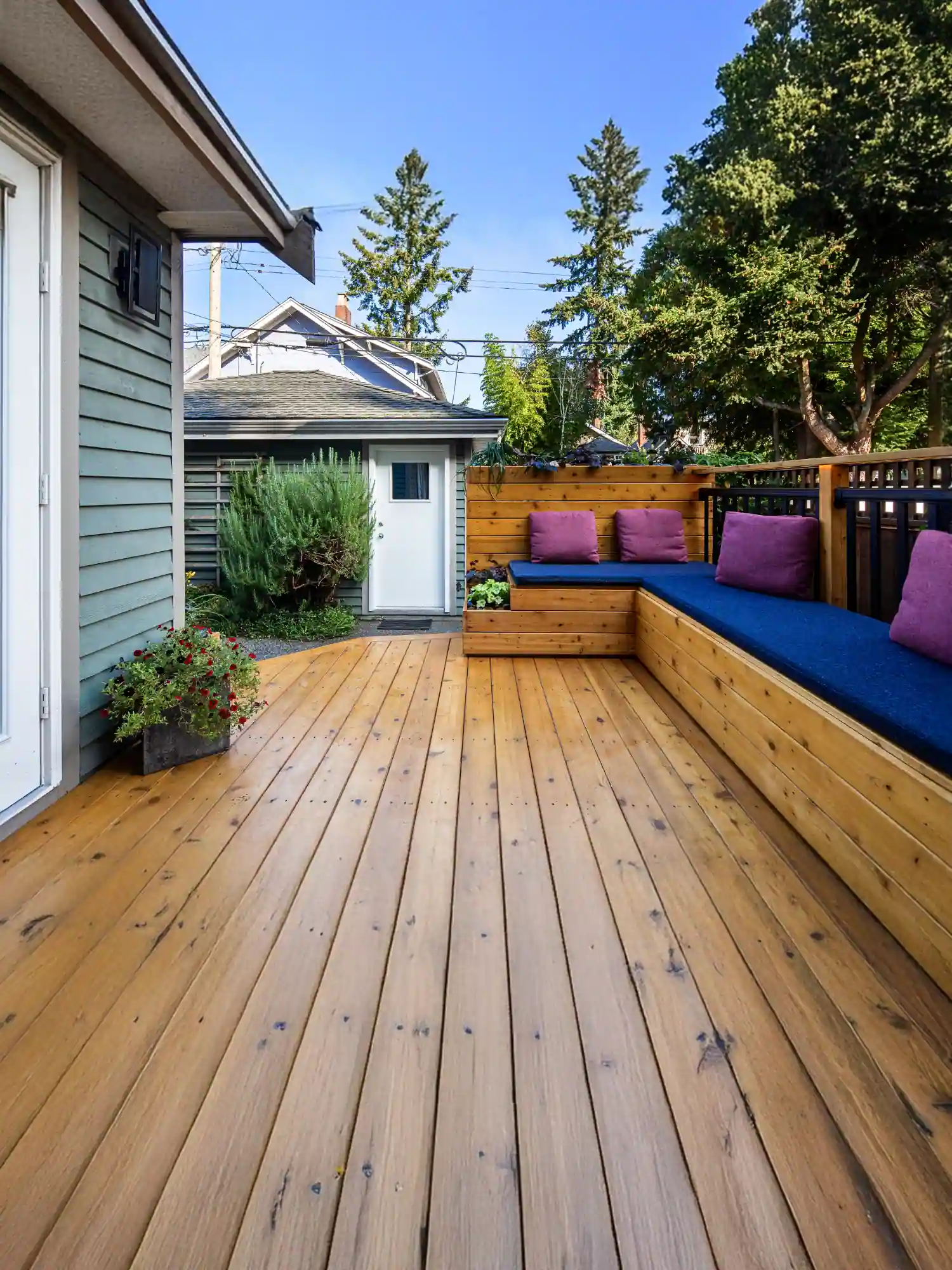
Richmond renovation costs run 8%–15% higher than Metro Vancouver averages due to soil-related complexity, longer permit timelines, flood construction level compliance costs
Vancouver General Contractors
Beyond the soil, Richmond’s proximity to YVR creates strong and consistent rental demand — particularly for secondary suites and laneway-style configurations that appeal to airport workers, airline crews on layovers, and transit riders using the Canada Line. The Richmond-Brighouse, Lansdowne, and Aberdeen SkyTrain stations make City Centre properties especially attractive for rental income strategies.
Richmond’s Chinese-Canadian community — one of the largest concentrations in North America — shapes renovation priorities in measurable ways. The double kitchen strategy (a full secondary wok kitchen in addition to or instead of an open-concept main kitchen) is not a niche request in Richmond; it’s a mainstream renovation choice that affects floor plans, ventilation systems, gas line requirements, and resale positioning. Understanding this preference is essential for contractors and homeowners alike.
Finally, the Oval area redevelopment, ongoing densification along No. 3 Road, and continued pressure from the Agricultural Land Reserve on Richmond’s borders are reshaping land values and renovation economics. Homeowners in the Brighouse and City Centre core are seeing property values that justify ambitious renovation scopes. Those in ALR-adjacent areas face different constraints. Knowing which zone you’re in changes the entire renovation calculus.
Richmond Renovation Costs by Project Type (2026)
Richmond renovation costs run 8%–15% higher than Metro Vancouver averages due to soil-related complexity, longer permit timelines, flood construction level compliance costs, and the specialized trades knowledge required for foundation-adjacent work. The figures below reflect fully permitted, contractor-managed projects with standard-grade to premium finishes. They include design, permitting, demolition, construction, and project management — not materials-only estimates.
| Project Type | Mid-Range Cost | Premium Cost | Typical Timeline |
|---|---|---|---|
| Kitchen Renovation | $48,000–$78,000 | $78,000–$130,000 | 6–10 weeks |
| Double Wok Kitchen Addition | $32,000–$52,000 | $52,000–$85,000 | 4–8 weeks |
| Bathroom Renovation | $22,000–$35,000 | $35,000–$65,000 | 3–5 weeks |
| Ensuite Addition | $28,000–$45,000 | $45,000–$78,000 | 4–7 weeks |
| Basement Suite (finished) | $60,000–$92,000 | $92,000–$130,000 | 10–16 weeks |
| Second Storey Addition | $230,000–$310,000 | $310,000–$370,000 | 20–32 weeks |
| Rear Addition (main floor) | $150,000–$210,000 | $210,000–$260,000 | 16–24 weeks |
| Full Home Renovation | $170,000–$260,000 | $260,000–$340,000 | 24–40 weeks |
| Screw Pile Foundation (if needed) | $8,000–$14,000 | $14,000–$18,000 | 3–5 days |
| Crawl Space Waterproofing | $12,000–$22,000 | $22,000–$35,000 | 1–2 weeks |
These ranges assume standard Richmond lot conditions. Projects requiring screw pile upgrades, FCL-compliance raising of floor levels, or significant crawl space remediation will sit at the upper end of their range or exceed it. Budget a 15%–20% contingency on any Richmond project that involves structural work or foundation-adjacent renovation — the surprises are more common here than in bedrock-founded municipalities.
Richmond Neighbourhoods: What to Expect by Area
Richmond’s neighbourhoods vary significantly in age, lot size, home construction type, and renovation opportunity. Here’s what contractors and homeowners encounter across the key residential areas.
Steveston
Steveston is Richmond’s oldest residential area, with homes dating from the 1920s through 1980s mixed with newer infill. Heritage-adjacent properties near the village core can carry character home designations that restrict exterior changes — always verify heritage status before planning exterior alterations. Older homes here often have post-and-beam or poured concrete perimeter foundations sitting on piles driven into peat. Settlement is common and must be assessed before any addition or second storey. Lot sizes are typically smaller than Terra Nova or Seafair, which limits addition scope but creates strong demand for smart interior renovations and secondary suites.
Terra Nova
Terra Nova is one of Richmond’s premier neighbourhoods — large lots (often 7,000–10,000 sq ft), newer construction (mostly 1990s–2000s), and some of the highest home values in the city. The larger lot coverage allowances and setbacks make Terra Nova ideal for rear additions and second storey projects. Foundation conditions here are generally better than older areas due to modern construction standards, but screw pile supplementation is still occasionally required. This is the neighbourhood where $310,000–$370,000 second storey additions make clear financial sense given $1.8M–$2.2M+ base property values.
Seafair
Seafair sits in southwest Richmond with generous lot sizes and a mix of 1960s–1980s bungalows and newer custom builds. It’s a strong renovation market because older bungalows on large lots offer significant upside — a $170,000–$260,000 full renovation or a second storey addition can dramatically increase livable square footage on properties that already sit on valuable land. Expect to encounter older plumbing (some cast iron drain lines), knob-and-tube electrical in the oldest homes, and foundations that have had 40–60 years to settle into Richmond’s peat.
City Centre / Brighouse
The City Centre core is dominated by high-rise condos and older low-rise apartments, but detached and semi-detached homes do exist in pockets. The Oval area redevelopment has brought significant new investment and density pressure. For the homes that remain, renovation investment is justified by strong rental demand from SkyTrain commuters and the redeveloping area’s appreciation trajectory. Secondary suites in City Centre-adjacent homes command $1,800–$2,400/month — among the highest in Richmond.
Broadmoor
Broadmoor is mid-Richmond’s established estate neighbourhood — large lots, significant tree canopy, and homes ranging from well-preserved 1970s–1980s builds to recently custom-built luxury homes. Renovation investment here tends toward high-end finishes, home automation, luxury kitchen and bathroom packages, and home theatre or recreation room buildouts. Clients in Broadmoor typically budget $78,000–$130,000 for kitchens and are not looking for budget-tier finishes anywhere in the project.
McLennan and Garden City
McLennan and Garden City are central Richmond neighbourhoods with a high concentration of Chinese-Canadian families and strong demand for secondary suites, wok kitchen configurations, and multigenerational home layouts. These areas also have some of Richmond’s most pronounced soil settlement issues in older homes — properties built in the 1970s and 1980s before modern geotechnical requirements were common. Pre-renovation foundation assessments are strongly recommended here. The renovation ROI is solid: Garden City secondary suites consistently rent for $1,600–$2,000/month.
Hamilton
Hamilton is Richmond’s northeast community — newer subdivision homes built mostly in the 1990s and 2000s, with proximity to Alex Fraser Bridge and direct access to Highway 91. Foundation conditions in Hamilton are generally better than older Richmond neighbourhoods due to modern pile foundation requirements at time of construction. Hamilton homeowners frequently pursue secondary suites, garage conversions, and basement finishing projects at the $60,000–$92,000 price point. The area’s newer homes often have existing rough-ins that make secondary suite projects more straightforward.
Foundation and Soil Challenges: What Makes Richmond Different
The Fraser River delta beneath Richmond is composed of organic peat, marine clay, and silty sand deposits that extend tens of metres below the surface. This geology creates two primary challenges for renovation: differential settlement and liquefaction risk. Settlement — the gradual sinking and tilting of structures as the organic material beneath them compresses — is visible in older Richmond homes as sloped floors, sticking doors and windows, cracked drywall along diagonal lines, and gaps between walls and ceilings. These are not cosmetic issues. They indicate ongoing foundation movement that can affect any renovation built on top of it.
Before any addition, second storey, or significant structural renovation in Richmond, a geotechnical assessment is strongly recommended. This typically costs $3,000–$6,000 and involves soil borings to determine what’s actually beneath your specific property — because peat depth varies considerably even within a single block. The assessment will tell you whether your existing foundation is adequate for the planned load increase, whether screw piles or micropiles are required, and what the settlement risk is over the project’s 25-to-50-year useful life.
Screw piles — helical steel piles driven into the load-bearing soil layer below the peat — are the standard remedy when an existing foundation is insufficient for renovation loads. They cost $8,000–$18,000 depending on the number required, site access, and depth needed to reach competent soil (typically 15–25 metres in Richmond). This is not a cost that can be skipped for additions or second storey projects. A contractor who quotes a Richmond second storey without mentioning foundation assessment is either uninformed about local conditions or leaving a significant risk unaddressed.
What to check before your Richmond renovation begins: Have a structural engineer review your existing foundation drawings (from City of Richmond records if you don’t have them). Walk the perimeter of the home and note any visible settlement — misaligned brickwork, cracked exterior cladding along diagonal lines, or uneven concrete steps. Check interior floors with a level; more than 1 inch of slope over 8 feet warrants investigation. Look at door and window frames for racking (parallelogram distortion). These visual checks won’t replace engineering, but they tell you how much settlement has already occurred and help set expectations for what remediation may be required.
City of Richmond Permit Process: FCL, Timelines, and What’s Different
The City of Richmond’s permit process shares the same basic framework as other Metro Vancouver municipalities — building permit application, plan review, permit issuance, inspections, and final occupancy — but adds several Richmond-specific requirements that meaningfully affect project planning and costs.
The most significant Richmond-specific requirement is the Flood Construction Level (FCL). Because much of Richmond sits below sea level and is protected by a ring dike system, the City requires that the underside of wood floor systems (or the top of concrete slab) meet a minimum elevation above the established FCL datum. In most of Richmond, this FCL is set at 3.5 metres geodetic — approximately 1.0–1.5 metres above existing grade for many properties. For additions and new construction, this means your floor level may need to be elevated, which affects step heights at entries, accessibility, relationship to the existing home’s floor level, and cost. Raising a rear addition to FCL compliance can add $15,000–$30,000 to a project through foundation height, additional fill, and stair construction.
Development Permits (DPs) are required in Richmond for projects in certain zones — particularly properties near watercourses, in flood plain management areas, or in heritage conservation areas like parts of Steveston. A DP adds 8–16 weeks to your timeline before a building permit can even be applied for. Confirm with the City of Richmond’s Development Applications department whether your specific project and property require a DP before assuming you can go directly to a building permit.
Standard Building Permit timelines in Richmond for residential renovations run as follows: simple interior renovations (kitchen, bathroom) without structural changes — 2–4 weeks. Projects with structural changes (additions, second storeys, load-bearing wall removals) — 6–12 weeks. Projects requiring a Development Permit first — add 8–16 weeks to those timelines. Secondary suite permits — 3–6 weeks for new suites in properties zoned for them.
Richmond also requires Energy Step Code compliance for additions and new construction — currently Step 3 of the BC Energy Step Code for most residential additions. This means your addition’s envelope (walls, windows, roof) must meet energy performance targets that go beyond the baseline BC Building Code. Budget for higher-R-value insulation, thermally broken windows, and potentially an HRV or ERV system if the addition significantly increases conditioned floor area.
Unlike the City of Vancouver, Richmond does not have a Laneway House program with the same scope — Richmond has its own secondary suite and coach house policies under its zoning bylaws. The two municipalities’ programs are distinct. Do not assume Vancouver secondary suite rules apply in Richmond.
Secondary Suites in Richmond: Rules, Rental Rates, and ROI
Secondary suites are one of the highest-ROI renovations in Richmond, driven by consistent rental demand from YVR workers, Canada Line commuters, and the broader Metro Vancouver housing shortage. Richmond’s zoning bylaws allow secondary suites in most single-family residential zones (RS1, RS1/B, RS2, and variants), subject to regulations on suite size, separate entrance requirements, and parking. The City of Richmond requires a secondary suite permit and final inspection — operating an unpermitted suite creates liability exposure and affects insurance coverage.
Key Richmond secondary suite regulations include: maximum suite floor area of 90 square metres (968 sq ft) or 40% of the dwelling’s gross floor area, whichever is less; minimum ceiling height of 1.95 metres (6’5″) throughout; a separate entrance that does not pass through the primary dwelling’s living areas; and dedicated parking space requirements. The suite must also meet current BC Building Code residential fire separation requirements between the suite and the primary dwelling.
Richmond secondary suite rental rates in 2026 reflect the tight vacancy environment in the region. One-bedroom suites near SkyTrain stations or in City Centre-adjacent areas command significant premiums over suburban locations:
| Suite Type / Location | Monthly Rent Range | Annual Income |
|---|---|---|
| 1-bed, City Centre / SkyTrain adjacent | $1,900–$2,400 | $22,800–$28,800 |
| 1-bed, Seafair / McLennan / Garden City | $1,600–$2,000 | $19,200–$24,000 |
| 2-bed, Terra Nova / Broadmoor | $2,200–$2,800 | $26,400–$33,600 |
| 1-bed, Hamilton / east Richmond | $1,500–$1,900 | $18,000–$22,800 |
| 1-bed, Steveston | $1,700–$2,100 | $20,400–$25,200 |
At a $60,000–$92,000 construction cost and $19,200–$28,800 annual rental income, Richmond basement suites deliver a gross yield of 21%–48% on construction cost annually — before accounting for the capital value increase to the property. The CMHC Secondary Suite Loan Program (up to $40,000 at below-market rates) is available to eligible Richmond homeowners and can substantially reduce the out-of-pocket capital required. Applications are processed through CMHC directly; your contractor can help document the project scope required for the loan application.
Richmond Kitchen Renovations: The Double Kitchen Strategy
Kitchen renovation in Richmond carries a dimension that most Metro Vancouver markets don’t share: the double kitchen. In Richmond’s Chinese-Canadian homeowner community, the wok kitchen — a secondary kitchen, often at the rear of the home or in a converted garage or utility space — is a genuine functional requirement rather than a luxury preference. Traditional Chinese cooking with a wok produces high volumes of cooking smoke, grease-laden steam, and strong aromas that can permeate an open-concept home. A separate, high-exhaust wok kitchen with commercial-grade ventilation keeps the primary kitchen pristine and the main living areas odour-free.
The practical implication for renovation planning: many Richmond homeowners are not simply renovating one kitchen. They’re either converting an existing space into a dedicated wok kitchen while building a new show kitchen, or they’re renovating both kitchens as part of a larger project. The wok kitchen typically requires: a commercial-style range or burner (minimum 60,000 BTU), a high-CFM exhaust system (often 1,200–2,000 CFM requiring makeup air), a dedicated gas line, a utility sink, and a separate ventilation pathway to exterior. Budget an additional $32,000–$52,000 for a mid-range wok kitchen buildout on top of the primary kitchen renovation cost.
For resale, the double kitchen question is nuanced. Richmond’s Chinese-Canadian buyer market — which represents a dominant share of purchasers in most Richmond neighbourhoods — responds positively to a well-executed wok kitchen. It’s a feature, not a liability, in this market. However, the primary kitchen should still maintain a quality open-concept presentation for broad-market appeal. The ideal Richmond kitchen renovation strategy: a $48,000–$78,000 main kitchen with open flow to dining and living, premium cabinetry, quartz countertops, and integrated appliances — plus a $32,000–$52,000 wok kitchen in a dedicated rear space with commercial exhaust and practical finishes.
Standard mid-range Richmond kitchen renovation costs in 2026: semi-custom cabinetry and quartz countertops run $18,000–$28,000. Appliance packages for the primary kitchen (integrated refrigerator, induction or gas range, dishwasher, range hood) run $8,000–$18,000. Flooring, tile, and plumbing fixtures add $6,000–$12,000. Electrical upgrades, lighting, and ventilation add $4,000–$8,000. Labour for a full demo-to-completion kitchen at this level runs $12,000–$20,000. Full-custom cabinetry, integrated appliances, and premium stone surfaces push costs to $78,000–$130,000.
Home Additions and Second Storey in Richmond
Richmond’s large residential lot sizes — particularly in Terra Nova, Seafair, and Broadmoor — make additions and second storey projects exceptionally viable. A standard Richmond RS1 lot (typically 6,000–9,000 sq ft in older neighbourhoods, up to 10,000+ sq ft in newer areas) offers lot coverage allowances that can accommodate substantial rear additions without triggering development permit complications.
Rear additions in Richmond typically add 400–800 square feet of main-floor space at a cost of $150,000–$260,000 depending on scope. A rear addition that expands the kitchen, creates a family room, adds a main-floor bedroom, or extends into a covered patio with glass doors is among the most popular renovation types in Seafair and Terra Nova. Key considerations: the addition must meet FCL requirements (which may require the addition floor to be elevated relative to the existing main floor), must not exceed lot coverage limits (typically 45% in RS1 zones), and requires a building permit with structural drawings stamped by a licensed engineer.
Second storey additions in Richmond represent the largest single renovation investment — $230,000–$370,000 — but also deliver the most dramatic transformation. Converting a bungalow into a two-storey home can double the livable square footage while staying within the same foundation footprint. The foundation assessment is non-negotiable for second storey projects: adding a second storey to a Richmond home typically increases the foundation load by 30%–60%, and the peat/clay soils beneath many older Richmond homes cannot absorb that increase without remediation. Budget $8,000–$18,000 for screw pile supplementation as a contingency item in any second storey project quote.
The permit timeline for a second storey addition in Richmond — assuming a building permit application (no development permit required) — runs 8–14 weeks for plan review and permit issuance, followed by 20–28 weeks of construction. Factor 30–40 weeks from permit application to occupancy for planning purposes. A reputable contractor will begin geotechnical assessment and structural engineering simultaneously with permit application to avoid sequential delays.
Basement Renovations in Richmond: Flood Risk and Waterproofing
Richmond’s basement renovation market has a characteristic that sets it apart from the rest of Metro Vancouver: a large proportion of older Richmond homes don’t have basements at all. Built on crawl spaces above peat and clay, homes in Steveston, Garden City, McLennan, and parts of Seafair sit on perimeter foundations with 3–5 feet of crawl space beneath — not full basements. The distinction matters enormously for renovation planning.
For homes with full basements (more common in Hamilton and in newer construction throughout Richmond), basement finishing costs run $60,000–$92,000 for a well-executed secondary suite with full kitchen, bathroom, bedroom, and living area. Flood risk mitigation is a required consideration for all Richmond basement finishing: the City of Richmond’s FCL requirements may restrict the use of the basement level for habitable space if the floor elevation is below the FCL datum. In practice, this means some Richmond basements can be finished for storage and mechanical use but cannot legally be made into a secondary suite without raising the floor level — which may not be economically feasible.
For crawl space homes, the renovation path toward secondary suite income is typically a rear addition or second storey rather than basement conversion. However, crawl space remediation itself — encapsulation, insulation, vapor barrier, and drainage improvement — is often a worthwhile investment of $12,000–$22,000 before any above-grade renovation begins. A properly conditioned crawl space reduces heating costs, prevents moisture damage to floor framing, and eliminates the musty odour and air quality problems that plague many older Richmond homes. It’s not glamorous, but it protects the investment made in everything above it.
Waterproofing priorities for Richmond basement and crawl space renovations: interior drainage systems with sump pump ($8,000–$15,000) address hydrostatic pressure from Richmond’s high water table. Exterior waterproofing membrane application ($15,000–$30,000 for perimeter excavation and membrane) is the gold standard but requires significant site access. A backwater valve (mandatory in most Richmond permits for below-grade spaces) prevents sewer backup during heavy rainfall events — critical in a city that sits largely below sea level. Budget $2,000–$4,000 for backwater valve installation if not already present.
ROI Data for Richmond Renovations
Return on investment for Richmond renovations is consistently strong — driven by high base property values, strong rental demand, and a buyer market that responds to well-executed, permitted renovations. The ROI figures below represent the increase in assessed or market value relative to the renovation cost, based on comparable sales analysis in Richmond neighbourhoods over the 2023–2025 period. They are not guarantees; individual results depend on execution quality, market timing, and neighbourhood context.
| Renovation Type | Cost Range | Value Added | ROI Range |
|---|---|---|---|
| Kitchen (mid-range) | $48,000–$78,000 | $52,000–$112,000 | 106%–145% |
| Ensuite Bathroom | $28,000–$45,000 | $30,000–$68,000 | 108%–152% |
| Secondary Suite | $60,000–$92,000 | $115,000–$230,000 | 188%–250% |
| Second Storey Addition | $230,000–$370,000 | $265,000–$585,000 | 115%–158% |
| Rear Addition | $150,000–$260,000 | $172,000–$410,000 | 115%–158% |
| Full Home Renovation | $170,000–$340,000 | $190,000–$605,000 | 112%–178% |
| Wok Kitchen Addition | $32,000–$52,000 | $35,000–$68,000 | 109%–131% |
| Basement Finishing | $45,000–$75,000 | $50,000–$95,000 | 111%–127% |
The secondary suite ROI figure (188%–250%) stands out and deserves context. It reflects both the capital value increase to the property and the income capitalization value — a suite generating $22,000/year in net rental income adds approximately $360,000–$440,000 of income-capitalized value at Metro Vancouver’s cap rates, on a $60,000–$92,000 construction investment. Even on pure capital value increase alone (typically $115,000–$180,000 for a permitted suite in Richmond), the ROI exceeds 125% in most cases. This is why secondary suite construction is consistently the first project recommendation for Richmond homeowners with appropriate zoning and space.
Kitchen ROI at 106%–145% reflects Richmond buyers’ willingness to pay a premium for a move-in-ready kitchen renovation — particularly one with the wok kitchen configuration that Chinese-Canadian buyers specifically seek. An unrenovated kitchen in a $1.5M Richmond home can cost $80,000–$150,000 in negotiated buyer discounts; a renovated kitchen can eliminate that discount entirely and add a premium on top of it.
Finding the Right Contractor for Richmond Renovations
Not every contractor who works in Metro Vancouver is equipped to handle Richmond’s specific challenges. The soil conditions, FCL requirements, and permit nuances we’ve outlined throughout this guide require contractors who have completed multiple Richmond projects, understand the geotechnical reality of the delta, and have direct working relationships with Richmond’s Development Applications and Building Department staff.
When evaluating contractors for a Richmond renovation, ask specifically: Have they completed projects in your neighbourhood — not just Richmond generally? Do they routinely engage geotechnical engineers for addition and second storey projects, or do they treat it as optional? Are they familiar with the City of Richmond’s FCL requirements and can they explain how those requirements affect your specific project? Do they carry an active BC contractor licence and appropriate liability and WCB coverage? Can they provide references from Richmond homeowners who completed comparable projects in the last two years?
A contractor who sidesteps questions about geotechnical assessment, dismisses FCL compliance as the engineer’s problem, or cannot demonstrate Richmond project experience is not the right partner for a city where the ground itself introduces risks that require expertise to manage. The cheapest quote for a Richmond addition is not a bargain if it omits the screw pile assessment and the FCL compliance work — those costs will appear eventually, either as change orders during construction or as expensive problems after the project is complete.
Vancouver General Contractors has completed projects across Richmond’s residential neighbourhoods — from secondary suite buildouts in Hamilton and Garden City to full second storey additions in Terra Nova and Seafair. Our team works with licensed structural and geotechnical engineers on every Richmond project involving structural changes, and we manage the full permit process including FCL documentation with the City of Richmond’s Building Department. Contact us to discuss your Richmond renovation project — we’ll walk you through the site-specific considerations before you commit to any scope or budget.
For a broader overview of the Metro Vancouver renovation process, our renovation guide covers the full planning and budgeting process that applies across all municipalities. For general information on home renovation projects, visit our home renovation services page.
Richmond BC Renovation FAQ
1. Do all Richmond homes need a foundation assessment before renovation?
Not all — but any project that adds significant structural load or extends the building footprint should have one. Interior renovations (kitchen, bathroom, basement finishing in homes that already have basements) typically don’t require a geotechnical assessment. However, any project that adds a second storey, constructs a rear or side addition, or involves work near or on the foundation should include a structural engineer’s assessment of the existing foundation’s capacity. In Richmond, that assessment will typically address whether the peat and clay soils beneath the foundation are adequate for the new load — and whether screw pile supplementation is required. Budget $3,000–$6,000 for a geotechnical report; it’s inexpensive compared to the cost of discovering mid-construction that the foundation needs significant remediation.
2. What is the Flood Construction Level (FCL) and how does it affect my renovation?
The FCL is the minimum elevation at which the underside of wood floor systems (or top of concrete slab) must be set in new construction and additions in Richmond. The City of Richmond sets FCLs based on flood risk mapping — most of the city’s residential areas have an FCL of 3.5 metres geodetic. For additions, this means your new floor level may need to be elevated above the existing grade and potentially above your existing main floor level. This can affect step heights at entry points, accessibility, and cost. FCL compliance for a rear addition typically adds $15,000–$30,000 to the project cost through foundation height, additional fill, and transition detailing. Your structural engineer and contractor will calculate the specific FCL impact for your property and address it in the permit drawings.
3. What is the double kitchen strategy and is it worth it for resale?
The double kitchen strategy involves maintaining or building two separate kitchens: a primary open-concept kitchen for everyday use and presentation, and a secondary “wok kitchen” (usually in a rear utility room, garage conversion, or basement space) for high-heat, high-smoke Chinese cooking. In Richmond’s market, this configuration is highly desirable to Chinese-Canadian buyers who represent a major segment of purchasers in most Richmond neighbourhoods. A well-executed double kitchen — primary kitchen renovated to $48,000–$78,000 standard, wok kitchen at $32,000–$52,000 — can add $60,000–$100,000 to the sale price of a Richmond home compared to a single-kitchen configuration of equivalent quality. The key is executing the primary kitchen to a high standard (don’t sacrifice it for the wok kitchen) and ensuring the wok kitchen has proper commercial exhaust.
4. How long does a building permit take in Richmond compared to Vancouver?
Richmond’s permit timelines are broadly comparable to Vancouver’s, but with some differences in process. Simple interior renovation permits in Richmond: 2–4 weeks. Structural projects (additions, second storeys): 6–12 weeks. Projects requiring a Development Permit first: add 8–16 weeks. Vancouver’s permit timelines for similar project types run 4–8 weeks for structural projects after the City’s Streamlined Permit program improvements in recent years. Richmond does not have a comparable streamlined program. The practical advice: submit your permit application as early as possible, ideally before finalizing your contractor selection so you’re not paying a contractor to wait. A good contractor will help prepare the application package to minimize back-and-forth review cycles.
5. Are Richmond renovation costs higher than Vancouver?
Yes — typically 8%–15% higher for projects involving structural work or additions. The premium reflects several Richmond-specific factors: soil conditions that require additional engineering and potentially screw pile work; FCL compliance costs for additions; longer permit timelines that extend contractor overhead; and the specialized knowledge required to execute projects correctly in Richmond’s conditions. Interior renovations (kitchen, bathroom) without structural changes tend to be more price-competitive with Vancouver, since those projects don’t engage the soil and FCL factors as directly. If a contractor quotes your Richmond addition at the same price as an equivalent Vancouver project, ask specifically how they’re addressing foundation assessment and FCL compliance — the answer will tell you whether those costs have been accounted for or simply ignored.
6. Can I build a secondary suite in any Richmond neighbourhood?
Secondary suites are permitted in most Richmond single-family residential zones, but not in all zones and not without limits. RS1, RS1/B, and RS2 zones (which cover most detached residential neighbourhoods) allow one secondary suite per property. Agricultural Land Reserve (ALR) properties have different rules — secondary suites are generally not permitted as secondary dwellings on ALR land in the same way. Properties zoned for duplex, townhouse, or multi-family use have their own rules that may or may not include secondary suites. Before planning a secondary suite, verify your property’s zone at City of Richmond GIS services or by contacting Development Applications directly. Your contractor can assist with this verification as part of the planning process.
7. What CMHC programs are available for Richmond secondary suite construction?
The CMHC Secondary Suite Loan Program provides eligible homeowners with loans up to $40,000 at below-market interest rates (currently 2% fixed, 10-year term) to construct or renovate secondary suites. To be eligible, you must be the owner-occupant of the property (you must live in the main unit), the suite must be new or previously used as a rental unit, and the project must result in an affordable rent (capped at the Canada Mortgage and Housing Corporation’s affordable housing threshold for the area). For Richmond, this affordability threshold limits participation for homeowners targeting premium rental rates, but for owners in Hamilton, Garden City, or McLennan planning to rent at $1,600–$1,800/month, the program can provide $40,000 of the $60,000–$92,000 project cost at 2% interest — a material benefit. Apply directly through CMHC; your contractor can provide the project documentation required.
8. Which Richmond renovation delivers the best ROI?
Secondary suite construction consistently delivers the strongest ROI in Richmond — 188%–250% on construction cost when income capitalization value is included. The combination of strong rental demand, relatively affordable construction cost ($60,000–$92,000), and the dual benefit of rental income and capital value increase makes it the highest-return renovation category in virtually every Richmond neighbourhood where zoning permits it. For homeowners who aren’t interested in being landlords, kitchen renovation (106%–145% ROI) and ensuite bathroom addition (108%–152% ROI) are the next strongest performers. Second storey and rear additions deliver 115%–158% ROI but require significantly more capital outlay — they’re strong investments for homeowners planning to stay in the home for 5–10 years.
9. How do I know if my Richmond home has a crawl space or a full basement?
The easiest way is to check from inside: a full basement has a staircase descending from the main floor to a full-height (typically 7–8 feet) below-grade space. A crawl space is accessed through a small hatch in the floor or an exterior access panel — the space is typically 3–5 feet high and not habitable. In Richmond, homes built before the 1980s in older neighbourhoods (Steveston, Garden City, McLennan, parts of Seafair) often have crawl spaces rather than full basements. Homes built after 1990 and those in Hamilton and Terra Nova more often have full basements. You can also check City of Richmond building records or your original building permit drawings if available — the foundation type will be specified there.
10. What happens if my Richmond renovation doesn’t comply with FCL requirements?
Non-compliant additions or new construction that doesn’t meet FCL requirements will fail the building department’s inspection and cannot receive an occupancy permit. Without an occupancy permit, the space cannot legally be occupied, insured as a habitable area, or marketed as living space in a sale. If discovered during a real estate transaction, a non-compliant addition can collapse a sale or require expensive remediation. In practice, FCL non-compliance is discovered at the permit application stage — City of Richmond plan checkers will flag it — which is why it’s a permit issue, not usually a surprise during construction. Attempting to do structural work without a permit to avoid FCL scrutiny creates much larger problems: it’s illegal, creates title issues, and is typically discovered during sale due diligence.
11. How much do screw piles cost and when are they required?
Screw pile (helical pile) installation in Richmond typically costs $8,000–$18,000 depending on the number of piles required, the depth needed to reach load-bearing soil (usually 15–25 metres in Richmond), and site accessibility. Screw piles are required when the existing foundation cannot support the additional load from an addition or second storey, or when a geotechnical report indicates settlement risk under new loads. A standard rear addition might require 6–12 screw piles at the new foundation bearing points. A second storey might require 8–16 or more depending on load distribution. Your structural engineer will specify the pile count and capacity requirements; a pile contractor then prices and installs them. The $8,000–$18,000 range covers the installation only — geotechnical assessment and engineering are additional.
12. What is the best neighbourhood in Richmond for renovation ROI?
Terra Nova and Seafair offer the strongest absolute ROI on additions and second storey projects because their large lots, high base property values ($1.5M–$2.2M+), and newer construction provide the best foundation (literally and figuratively) for large-scope renovations. Garden City and McLennan offer the strongest ROI on secondary suites relative to construction cost — good rental demand, moderate construction complexity, and purchase prices that leave room for renovation investment. Steveston commands a heritage premium on well-executed renovations that respect the area’s character, making it an excellent market for quality kitchen and bathroom renovations. Hamilton is the most straightforward renovation market — newer construction, better soil conditions, and a growing family demographic that values move-in-ready homes.
13. How does the City of Richmond’s permit process differ for secondary suites vs. additions?
Secondary suite permits in Richmond are processed through the Building Department as a building permit application, typically reviewed in 3–6 weeks. The application requires floor plans showing the suite layout, fire separation details between the suite and primary dwelling, mechanical plans showing the suite’s heating and ventilation, and confirmation that the property is zoned to permit a secondary suite. Addition permits are more complex: they require structural drawings stamped by a licensed engineer, site plans showing lot coverage calculations, FCL elevation documentation, and energy efficiency compliance documentation under the BC Energy Step Code. Addition permits take 6–12 weeks and may require additional review cycles. Both processes are managed through the City of Richmond’s permit portal — your contractor will typically prepare and submit the application package on your behalf.
14. Can I renovate a Richmond home while living in it?
Yes, for most renovation types — and Richmond homeowners commonly do. Kitchen renovations of 6–10 weeks are manageable with a temporary kitchen setup (microwave, electric skillet, outdoor grill, and a bathroom sink for washing). Bathroom renovations of 3–5 weeks are manageable if there’s a second bathroom in the home. Second storey additions and full home renovations of 20–40 weeks are more challenging: the main floor is often open to the elements during structural work, there’s significant dust and noise throughout, and temporary accommodation is frequently the better choice for the duration of major structural phases (typically 4–8 weeks of the project). Discuss the phasing plan with your contractor before start — a well-organized contractor will sequence work to minimize disruption to the areas of the home you’re occupying.
15. How do I get started with a Richmond renovation?
The first step is a site consultation with a contractor who has specific Richmond experience. At this consultation, you should receive: a preliminary scope discussion based on your goals and budget, an initial assessment of any site-specific factors (foundation condition, FCL impact, zoning constraints), a rough cost range for your project type, and a clear explanation of the permit process and timeline for your specific project. From there, the contractor will typically recommend engaging a designer or architect for drawings before the full estimate is finalized — for complex projects like additions and second storeys, the drawings are required for permitting and must precede the final fixed-price contract. Contact Vancouver General Contractors to book a Richmond renovation consultation. We’ll visit your property, assess the site conditions, and give you an honest picture of what your project will involve — before you’ve committed to anything.
Get a Free Renovation Quote
Metro Vancouver’s trusted general contractors. Free consultations across Vancouver, Burnaby, Richmond, North Shore & beyond.
Get Your Free Quote →Ready to start your project? Vancouver General Contractors (VGC) provides free, fixed-price quotes for homeowners across Metro Vancouver. Learn more about our Richmond renovation contractor services or request a free quote today.
VGC serves Richmond and surrounding areas. View all renovation services in Richmond →
More Neighbourhood Guides Guides

Renovation in Steveston, Richmond: Heritage & Coastal Home Considerations

Renovation in Renfrew-Collingwood, East Vancouver: Character Homes & Renovation Guide
Renovation in White Rock: Coastal Homes, Salt Air, and Moisture Management

Renovation in Hastings-Sunrise, East Vancouver: Character Homes & Revitalization Guide
Renovation in Cloverdale, Surrey: Heritage Village Character Homes and Modern Upgrades
Ready to start your renovation?

Comments are closed