





Riley Park & South Cambie Renovation Guide: Character Homes & Cambie Corridor (2026)
Riley Park and South Cambie sit in one of Vancouver’s most coveted renovation corridors — wedged between the character-home density of Main Street and the rapid transformation along the Cambie Street corridor. For families who want a real neighbourhood with mature trees, walkable schools, and genuine character architecture, this pocket of South Vancouver delivers. For investors and long-term owners watching the Cambie Corridor Plan reshape property values, the timing for strategic renovation has rarely looked better.
Home values here range from $1.4 million to $2.2 million depending on lot size, condition, and proximity to Queen Elizabeth Park and the Canada Line. The King Edward station puts downtown Vancouver roughly 12 minutes away by rail, a fact that has quietly made every legal basement suite and laneway house in this area exceptionally valuable. If you are weighing a major renovation — whether a full character home restoration, a basement legalization, or a laneway addition — this guide covers what you actually need to know about the housing stock, the permit process, the costs, and the decisions that matter most in Riley Park and South Cambie.
Why Riley Park and South Cambie Are Sought-After Renovation Neighbourhoods
The appeal is layered. On the surface, it is the combination of large tree-lined lots, genuine pre-war character architecture, and a tight residential grid that feels nothing like the towers rising to the north along Cambie. Dig deeper and you find one of Vancouver’s most favourable renovation economics: properties are expensive enough that quality renovation work adds real, measurable value, but the housing stock is old enough that most homes still have significant unrealized potential.
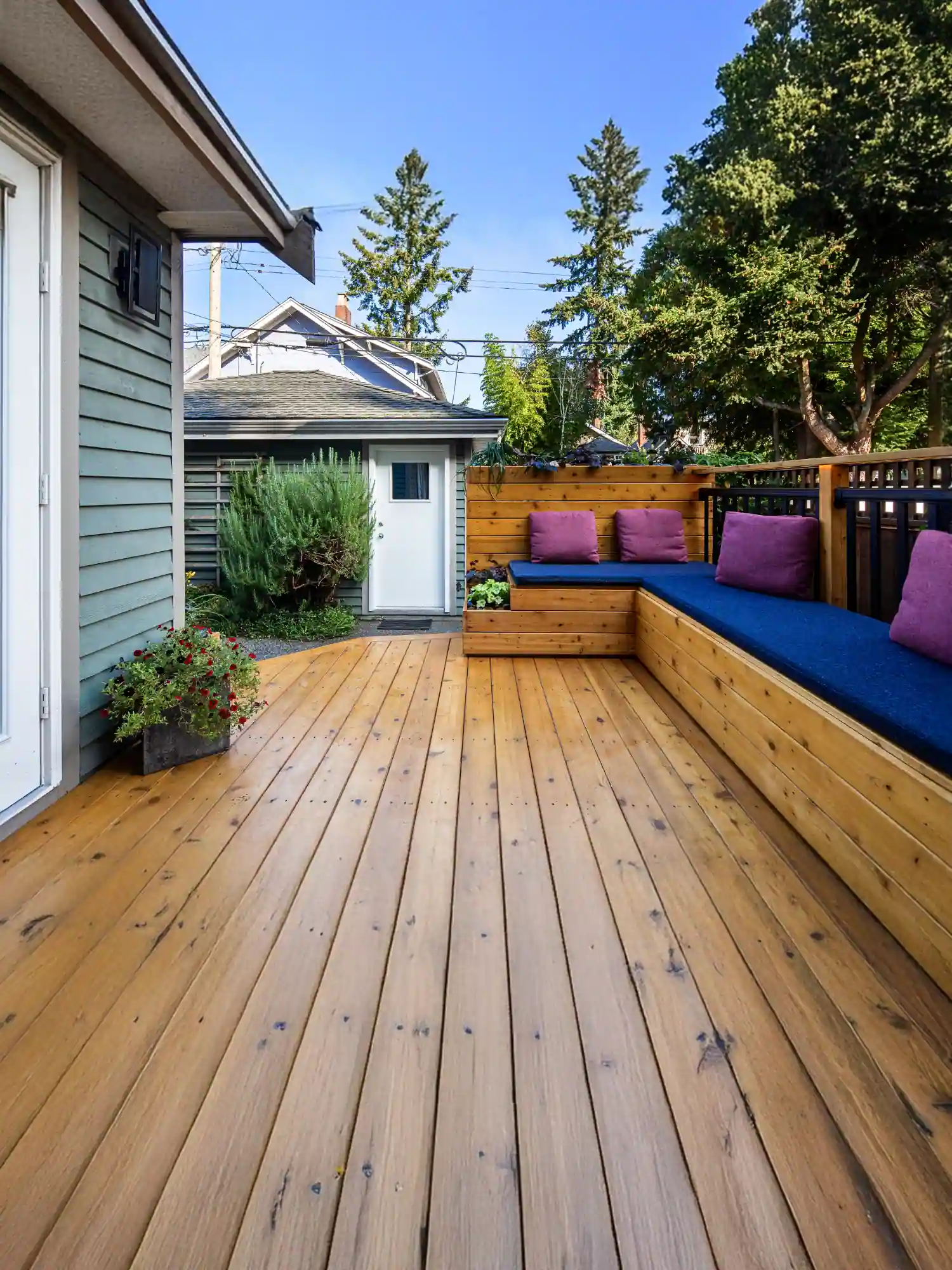 Surrey” class=”wp-image-12769″ />
The Cambie Corridor has been a sustained driver of property value appreciation in this area since the Canada Line opened in 2009
Vancouver General Contractors
Young families are the dominant renovation client in this neighbourhood. They are typically buying a 1920s or 1930s Craftsman bungalow with original character details intact, outdated systems throughout, and a basement that was never properly finished. The renovation goal is almost always the same: preserve what makes the house special, modernize what makes it uncomfortable, and extract the rental income that offsets carrying costs in a market where mortgages have grown large.
The Cambie Corridor has been a sustained driver of property value appreciation in this area since the Canada Line opened in 2009. Queen Elizabeth Park draws consistent visitor traffic that makes the surrounding streets feel alive year-round. The King Edward Canada Line station at West 25th Avenue and Cambie makes the neighbourhood genuinely transit-connected rather than simply transit-adjacent — a distinction that matters enormously to renters who are willing to pay premium rates for a basement suite or laneway house with a 12-minute rail commute downtown.
For owners who purchased five or more years ago, renovation rather than sale makes strong financial sense in most scenarios. The cost to buy back into this neighbourhood after selling — transaction costs, land transfer, the premium for a renovated home — frequently exceeds the cost of renovating the home you already own. That calculation is driving a steady flow of substantial renovation projects through contractor pipelines in this area.
Neighbourhood Housing Stock: What You Are Working With
Riley Park and South Cambie are not a single housing market — they are two distinct sub-areas with meaningfully different housing stock, and understanding the difference matters for renovation planning.
Riley Park sub-area is the denser, older, more character-rich portion. The tight grid streets east of Cambie contain significant concentrations of 1910s through 1940s Craftsman bungalows and character homes. Lots here tend to be larger than East Vancouver equivalents — 33-foot and 40-foot frontages with 120-foot depth are common, providing meaningful backyard depth for laneway development. The pre-WWII inventory is substantial: genuine old-growth fir floors, original millwork, built-in cabinetry, and the distinctive rooflines and porch detailing that define Vancouver Craftsman architecture. These homes require contractors with specific experience in character renovation, because the decisions made during demo and rough-in will determine whether the character is preserved or inadvertently destroyed.
South Cambie runs along the Cambie Street corridor and transitions into post-war housing stock from the 1940s through the 1960s. Bungalows and split-levels dominate the blocks between West 16th and West 33rd Avenue on the Cambie-facing streets. This housing is less architecturally distinctive but often in better structural condition than the pre-war stock — concrete foundations are more common, framing is dimensional rather than balloon-frame, and the systems upgrades required are typically less extensive. The trade-off is that post-war homes tend to have lower ceilings and smaller footprints, which affects basement suite feasibility and open-concept conversion potential.
Zoning throughout most of Riley Park and South Cambie is RS-1 and RS-1B — standard single-family residential. The Cambie Corridor Plan designates certain parcels immediately adjacent to Cambie Street and the King Edward station area for higher density, including townhome and low-rise forms. If your property falls within a Corridor Plan designation area, the renovation-versus-redevelop calculus changes significantly, and a pre-application meeting with the City is worth scheduling before committing to a major renovation investment.
Renovation Costs in Riley Park and South Cambie: 2026 Price Guide
The following cost ranges reflect current contractor pricing in Vancouver for quality work completed to permit. These are not entry-level budgets — they reflect what full-scope, properly permitted renovation work actually costs in 2026 when completed by experienced contractors working in this neighbourhood. Costs at the higher end of each range reflect complex scopes, character-sensitive detailing, or premium finishes.
| Renovation Scope | Cost Range (2026) | Notes |
|---|---|---|
| Kitchen renovation | $42,000 – $105,000 | Mid-range to full custom; includes plumbing/electrical relocation where required |
| Bathroom renovation (main) | $20,000 – $55,000 | Full gut and rebuild; tile, fixtures, ventilation |
| Basement suite legalization | $65,000 – $100,000 | Includes separate entry, egress windows, fire separation, plumbing/electrical to code |
| Character home full renovation | $175,000 – $360,000 | Pre-1940 homes; includes systems replacement, structural, character restoration |
| Post-war bungalow full renovation | $155,000 – $300,000 | 1940s–1960s stock; typically fewer character elements, simpler structural |
| Laneway house addition | $270,000 – $430,000 | Full construction including development permit; 500–700 sq ft typical |
| Character home exterior restoration | $35,000 – $75,000 | Siding, trim, windows (heritage-appropriate), porch reconstruction |
| Open concept main floor conversion | $25,000 – $65,000 | Bearing wall removal, beam installation, floor refinishing, ceiling repair |
| Electrical upgrade (full home) | $18,000 – $35,000 | Knob-and-tube removal and panel upgrade; older character homes at high end |
| Plumbing upgrade (full home) | $15,000 – $30,000 | Galvanized replacement with copper or PEX |
| Ensuite addition | $35,000 – $75,000 | Converting bedroom or creating new bathroom on upper floor |
| Crawl space encapsulation | $8,000 – $18,000 | Common in character homes; moisture management and insulation |
A full renovation of a 1920s or 1930s Craftsman in Riley Park typically lands in the $220,000–$320,000 range when it includes all systems replacement, kitchen and bathroom updates, basement suite creation, and character restoration — but does not include a laneway house. Adding a laneway brings the total project investment to $490,000–$750,000 in the current market. These are significant numbers, but they need to be evaluated against the rental income generated and the appreciation potential of a fully renovated, properly permitted character home in a neighbourhood where supply is constrained and demand is persistent.
For a detailed cost breakdown specific to your home and renovation goals, our renovation planning guide walks through how to structure a budget and evaluate contractor quotes.
The Cambie Corridor Opportunity: Renovation, Sale, or Redevelopment?
No renovation decision in South Cambie should be made without first understanding where your property sits in relation to the Cambie Corridor Plan. The City of Vancouver’s long-term vision for the Cambie Street corridor between West 16th and 57th Avenue involves significant densification, with new townhome, low-rise, and in some nodes mid-rise development replacing older single-family stock over the coming decades.
Properties immediately adjacent to Cambie Street or within the designated Corridor Plan areas may have land value that exceeds the value of any renovation you could execute. If your RS-1 lot sits within a future townhome or low-rise designation, the land value for redevelopment purposes can reach $2.5 million to $4 million or more for a standard 33×122-foot lot — and in that scenario, investing $300,000 in renovation effectively destroys $300,000 in optionality you cannot recover.
The analysis changes for properties that sit deeper in the RS-1 fabric of Riley Park, away from the Corridor. These lots are unlikely to see designation changes in the near term, and the renovation-versus-sell decision comes down to: current condition, carrying cost relative to rental income potential, family needs and timeline, and your risk tolerance for a major project. For most owner-occupants in this category, renovation wins — you stay in a neighbourhood you have chosen deliberately, you eliminate the transaction costs of selling and rebuying, and you end up with a home that reflects your preferences rather than a previous owner’s choices.
The Canada Line proximity is the factor that makes South Cambie rental income particularly strong. A legal basement suite within walking distance of King Edward station commands $1,900–$2,500 per month for a one-bedroom unit and $2,500–$3,200 per month for a two-bedroom. A laneway house on the same property can add another $2,400–$3,500 per month. For families carrying large mortgages on $1.8–$2.2 million properties, that rental income is not supplemental — it is load-bearing for the household budget, and it makes the renovation investment that generates it among the highest-priority projects a homeowner in this area can undertake.
Character Home Renovation in Riley Park: What to Preserve, What to Modernize
Riley Park contains one of Vancouver’s significant concentrations of pre-1940 character homes. These are not incidentally old houses — they were built with materials and craftsmanship that are genuinely irreplaceable at any budget in the current market. Old-growth Douglas fir floors, original built-in bookcases and china cabinets, Craftsman window trim, coffered ceilings, wainscoting, and the distinctive proportions of Arts and Crafts-influenced architecture are features that serious buyers pay meaningful premiums to own. The renovation contractor who treats these as obstacles to modernization, rather than assets to be preserved, is the wrong contractor for a Riley Park character home.
What to preserve: Original fir floors should be sanded and refinished rather than replaced — a quality sand and refinish runs $3,000–$8,000 for a full main floor and produces results that new flooring cannot replicate. Built-in millwork, original doors with their mortise locks and glass knobs, divided-light windows where still functional, and any surviving original trim profiles should be retained, repaired, and painted rather than demolished. These elements are load-bearing for resale value in this market.
What to modernize: Everything behind the walls. Knob-and-tube wiring, galvanized plumbing, asbestos-containing materials, and inadequate insulation are not character features — they are liabilities. A complete systems replacement in a pre-1940 character home is both practical necessity and insurance against the carrying costs of deferred maintenance. The kitchen and bathrooms are also candidates for full modernization even in character homes — buyers in this market do not want original 1930s kitchens, and a well-designed modern kitchen that respects the architectural language of the home (shaker cabinetry, subway tile, in-set appliances) adds more value than it costs.
Character Retention Areas: Some sub-areas of Vancouver trigger the City’s Character Retention program, which can provide density bonuses in exchange for retaining character elements. Whether specific addresses in Riley Park fall within a designated Character Retention Area depends on the specific block and lot — check with the City of Vancouver Development and Building Services counter, or review the zoning map, before finalizing renovation plans. In some cases, character retention designation creates valuable opportunities for additional floor area that would otherwise not be permitted under RS-1 zoning.
The premium for character-sensitive renovation work — contractors who understand plaster repair, original trim replication, and period-appropriate detailing — runs approximately 15–25% above standard renovation pricing. It is money worth spending, both because it produces better outcomes and because it protects the significant premium that character-sensitive buyers pay in this neighbourhood.
Old Systems and Hidden Costs: What Pre-War and Post-War Homes Conceal
The single most reliable way to blow a renovation budget in Riley Park or South Cambie is to underestimate what is hiding inside the walls. Experienced contractors doing pre-purchase assessments or pre-renovation scoping in this area expect to find legacy systems in virtually every home built before 1960 — the question is not whether you will encounter them, but how extensive the remediation will be.
Pre-1940 homes (Riley Park character stock):
- Knob-and-tube wiring: Present in virtually all unrenovated pre-1940 homes. Cannot be insulated over. Must be removed and replaced for insurance and permit compliance. Full removal runs $18,000–$35,000 depending on home size and accessibility.
- Galvanized steel plumbing: Corrodes from inside out, restricting flow and eventually leaking. Replacement with copper or PEX runs $15,000–$30,000 for a full home.
- Asbestos: Found in insulation (especially pipe wrap), floor tiles, drywall compound, and some exterior cladding. Abatement costs vary by scope — budget $3,000–$15,000 for targeted remediation, more for extensive contamination.
- Balloon frame construction: Pre-war homes often use balloon framing (continuous wall studs from foundation to roof) rather than platform framing. This affects how structural modifications are approached and how fire blocking is installed during renovation.
- Plaster walls: Original plaster over wood lath is beautiful when intact but fragile when disturbed. Partial repairs are visible — plan for full room re-drywall if the scope requires significant wall opening.
- Inadequate insulation: Pre-war homes were built without wall insulation in most cases. Injection foam or blown-in insulation during renovation is now standard.
1940s–1960s homes (South Cambie post-war stock):
- Aluminum wiring: Some homes built between 1965 and 1973 used aluminum branch circuit wiring. This requires either full replacement or CO/ALR-rated device installation at every outlet and switch. Budget $8,000–$20,000 depending on extent.
- Galvanized plumbing: Still common in 1940s–1950s homes. Same remediation as pre-war stock.
- Asbestos floor tile: 9×9-inch vinyl asbestos floor tile was standard in 1950s basement and kitchen floors. Abatement or encapsulation required before new flooring installation.
- Undersized electrical panels: 60-amp or 100-amp panels in post-war homes are inadequate for modern loads. Panel upgrade to 200-amp runs $3,000–$6,000 and is required for most significant renovation permits.
| System | Home Age | Remediation Cost Range | Required For |
|---|---|---|---|
| Knob-and-tube removal | Pre-1940 | $18,000 – $35,000 | Insurance, insulation, permits |
| Galvanized plumbing replacement | Pre-1960 | $15,000 – $30,000 | Function, permits on full reno |
| Asbestos abatement (targeted) | Pre-1985 | $3,000 – $15,000 | Required before demolition/opening |
| Aluminum wiring remediation | 1965–1973 | $8,000 – $20,000 | Insurance, safety |
| Asbestos floor tile abatement | 1945–1970 | $2,000 – $8,000 | Required before new flooring |
| Panel upgrade to 200A | Pre-1975 | $3,000 – $6,000 | Most permit scopes |
| Foundation drainage/waterproofing | Pre-1960 | $15,000 – $40,000 | Basement suite livability |
A realistic approach to budgeting in this area is to treat systems remediation as a fixed overhead on any major renovation in a pre-1960 home. For a pre-1940 character home undergoing a full renovation, budget $50,000–$90,000 for remediation before you spend a dollar on finishes. For a post-war home from the 1950s or 1960s, budget $25,000–$50,000 for the same category. These numbers are not optional — they are what separates a renovation that gets permits and passes inspections from one that does not.
Basement Suite Opportunity: Income Potential and Legalization Costs
The basement suite market in Riley Park and South Cambie is among the strongest in Vancouver, and the arithmetic for legalization investment is unusually favourable. King Edward Canada Line station provides a 12-minute commute to downtown Vancouver, making this area competitive with Yaletown and Mount Pleasant for transit-oriented renters — but at a fraction of the rent premium. A well-finished, legally permitted basement suite in this neighbourhood commands consistent demand year-round.
Current rental rates (2026):
- One-bedroom basement suite: $1,900 – $2,500 per month
- Two-bedroom basement suite: $2,500 – $3,200 per month
- Studio or bachelor suite: $1,500 – $1,900 per month
At $2,200 per month for a one-bedroom legal suite, the gross annual rental income is $26,400. Against a $75,000 legalization investment, that is a 35% gross return in year one — before factoring in the portion of the renovation cost that would have been required regardless (insulation, drywall, electrical) to bring the basement up to basic habitable condition. The net renovation cost specifically attributable to legalization is typically $30,000–$50,000 in a home that was already partially finished; the ROI on that incremental investment is exceptional.
Most character homes in Riley Park and most post-war bungalows in South Cambie have sufficient basement ceiling height for legal suite development — typically 7 to 8 feet of headroom in full basement areas. Partial crawl space homes are the exception. The Vancouver building code requires a minimum of 1.95 metres (approximately 6’5″) clear ceiling height in a legal secondary suite; most homes in this area clear that threshold without excavation.
Legalization requirements under Vancouver’s Secondary Suite Program include: a separate entrance, egress-sized windows in sleeping rooms, fire and sound separation between suites (typically 5/8″ Type X drywall to ceiling), a compliant kitchen with dedicated circuits, interconnected smoke and CO alarms, and a permit pulled for the conversion work. A contractor experienced with suite legalization can typically complete a full legalization in 8–14 weeks once permits are issued.
For homeowners who already have an informal suite, legalization is increasingly important — both for insurance compliance (many insurers are tightening policy language on unpermitted suites) and for the rental income disclosure that most mortgage lenders now require as part of debt servicing calculations.
Permit Process for Riley Park and South Cambie Renovations
All renovation work in Riley Park and South Cambie falls under City of Vancouver jurisdiction — not Metro Vancouver or a suburban municipality. Vancouver’s Development and Building Services processes building permits for renovation, addition, and secondary suite work, while development permits are required for new structures (laneway houses) and for changes in use or form in some zoning scenarios.
Building permit timelines (City of Vancouver, 2026 estimates):
- Interior renovation (kitchen, bathrooms, non-structural): 4–8 weeks
- Secondary suite creation or legalization: 6–10 weeks
- Structural renovation (bearing wall removal, additions): 8–14 weeks
- Full home renovation with structural and suite work: 10–16 weeks
- Development permit for laneway house: 4–8 months (includes neighbour notification period)
- Building permit for laneway house (after DP): 6–10 additional weeks
These timelines assume complete, well-prepared permit applications. Incomplete applications — missing structural drawings, inadequate site plans, or energy compliance documentation — trigger revision cycles that can add months to the process. Working with a designer or architect who has specific experience with Vancouver RS-1 permit applications is worth the cost premium for complex scopes.
Character Retention consultation adds a layer to the permit process for homes that trigger the Character Review. If your home is in a Character Retention Area and you are proposing alterations that affect the character-defining elements (roofline, porch, front facade), expect a pre-application meeting with City staff and potentially a longer permit review period. The upside is that Character Retention designation can unlock additional permitted floor area — making the process worthwhile for homeowners planning significant additions.
For properties in the Cambie Corridor Plan area, a pre-application meeting with the City is strongly recommended before any permit application. Development permit applications in Corridor areas involve a more complex review process that can take 6–12 months, but they also open the door to density that RS-1 zoning alone would not permit.
Our team has extensive experience navigating the City of Vancouver permit process for Riley Park and South Cambie renovation projects. Contact us to discuss your scope and timeline before you commit to a design package.
Laneway Houses in Riley Park: Development Potential and Real Costs
Riley Park and South Cambie are well-suited for laneway house development. RS-1 zoning throughout most of the neighbourhood permits laneway houses by right — subject to development permit approval and compliance with lot size, setback, and height requirements. Rear lane access is nearly universal in the area’s tight residential grid, which is a prerequisite for laneway development. And the precedent is well-established: many laneways have been constructed in this neighbourhood over the past decade, meaning the development permit process involves less uncertainty than in areas where laneway development is less common.
The financial case for laneway development in South Cambie is among the strongest in Vancouver, driven specifically by Canada Line proximity. A well-designed one-bedroom laneway house within a 10-minute walk of King Edward station commands $2,400–$3,500 per month in rent — a gross annual income of $28,800–$42,000. At a $350,000 development cost (mid-range for a 550-square-foot laneway), that is an 8–12% gross yield, and the capitalized value of that income stream at a 4% cap rate is $720,000–$1,050,000 — making laneway development one of the few renovation investments in Vancouver where the value created clearly exceeds the cost.
Typical laneway house parameters in Riley Park/South Cambie (RS-1):
- Maximum size: approximately 65 square metres (699 sq ft) for most lots, with some variation based on lot depth and site coverage calculations
- Maximum height: 6 metres to mid-roof (single storey) or up to 6.7 metres for two-storey laneways meeting specific criteria
- Setbacks: 0.9 metres from rear property line (lane), 0.9 metres minimum side setback
- Lot size minimums: most lots in this area exceed the minimum threshold
- Parking: one off-street parking space may be required depending on lot characteristics
Development process: A development permit application requires site survey, architectural drawings, arborist report (if trees are affected), and neighbour notification. The City of Vancouver’s development permit processing for laneways in established neighbourhoods typically runs 4–8 months. Once the development permit is issued, a building permit application follows — typically another 6–10 weeks. Total timeline from design start to construction completion is typically 16–24 months for a laneway project managed well.
Cost range is $270,000–$430,000 for a fully completed, permitted laneway house including all mechanical, electrical, plumbing, finishes, and site connections. Higher-end projects with premium finishes, complex site conditions, or two-storey configurations reach the upper end. Do not proceed on a laneway quote that does not include the development permit costs, site servicing, and utility connections — these add $20,000–$50,000 to base construction cost and are frequently omitted from initial contractor quotes.
Interior Renovation Trends: What Riley Park and South Cambie Families Are Building
The renovation priorities of families buying into Riley Park and South Cambie reflect both the housing stock they are working with and the lifestyle they are building toward. After working through dozens of projects in this area, certain renovation patterns repeat consistently enough to describe as the neighbourhood’s renovation vernacular.
Open concept main floor conversion is almost universally the first priority. The original floor plans of 1920s and 1930s character homes compartmentalized rooms in ways that feel claustrophobic by modern standards — a separate parlour, dining room, and kitchen behind closed doorways on a 1,200-square-foot main floor. Opening the kitchen to the dining and living areas, typically involving one or two bearing wall removals and engineered beam installation, transforms the living experience and is the renovation that clients most consistently describe as “completely worth it.” Budget $25,000–$65,000 depending on structural complexity and kitchen reconfiguration scope.
Kitchen renovation as primary investment follows naturally from the open concept conversion. Families in this neighbourhood tend toward high-quality, design-forward kitchens — shaker or flat-panel cabinetry in painted or natural wood finishes, stone countertops, integrated appliances, and dedicated pantry storage. The West Coast contemporary aesthetic that reads well in renovated character homes avoids the clash between period architecture and ultra-modern interiors. Budget $55,000–$105,000 for a full kitchen renovation with custom cabinetry and quality appliances.
Master ensuite addition is a high-priority renovation for families with older children or those planning to stay in the home long-term. Most pre-war character homes were built without ensuites — the master bedroom shared the main bathroom. Converting a portion of an adjacent bedroom or adding a dormer addition to accommodate an ensuite adds $35,000–$75,000 to the renovation scope but produces one of the strongest returns in resale value among all single-room renovations.
Preserving character while modernizing systems is the theme that ties these renovations together. The most successful projects in Riley Park achieve a finish that feels genuinely contemporary but would not be jarringly out of place if you somehow transported the home back to 1935. Original fir floors refinished and integrated with new wide-plank oak in additions, original trim profiles replicated in new construction, period-appropriate lighting fixtures alongside modern recessed LED — these details are what separates a character home renovation that commands a premium from one that simply removes the original features and replaces them with generic finishes.
For a full overview of renovation project planning, visit our home renovation services page or download our renovation planning guide.
Finding the Right Contractor for Riley Park and South Cambie
The renovation contractor market in Vancouver is large, and the gap between the best contractors and the rest is significant. In Riley Park and South Cambie specifically, the character home context adds a qualification dimension that does not exist in other neighbourhoods: the ability to work with pre-war construction methods, recognize and preserve character elements, and execute the kind of detail work that character-sensitive renovation requires.
The neighbourhood has an active renovation market — there are multiple significant projects underway on most blocks at any given time, which means experienced character home contractors in this area stay busy. Lead times of 3–5 months from initial consultation to project start are typical for quality contractors; the best contractors in the area may be 6–8 months out. If your renovation has a specific timeline driver (you are purchasing a home and want renovation complete before moving in, or you have a target date for basement suite rental income), planning well in advance is essential.
What to look for in a contractor for Riley Park and South Cambie:
- Character home experience: Ask specifically about pre-1940 renovation projects they have completed in Vancouver. Request references and, if possible, site visits to completed character home renovations. The ability to replicate original trim profiles, repair plaster, and match original fir flooring is not universal among general contractors.
- Vancouver permit experience: City of Vancouver permit applications are more complex than those in surrounding municipalities. A contractor who regularly works in Vancouver understands the permit process, inspectors’ expectations, and how to prepare applications that clear review without revision cycles.
- Transparent scope and pricing: The hidden cost profile of pre-war homes means that any contractor unwilling to discuss the potential for unforeseen costs, or who provides a fixed-price quote without a clear scope definition, is setting you up for conflict. Reputable contractors in this market work on detailed scope documents with clear contingency allowances.
- Subcontractor relationships: Pre-war renovation requires specialists — asbestos abatement contractors, heritage plasterers, floor refinishers experienced with old-growth fir. A general contractor who has established relationships with these specialists will execute your project more smoothly than one who is assembling a subcontractor team from scratch.
Vancouver General Contractors has completed numerous projects in Riley Park and South Cambie. We understand the specific challenges and opportunities of this housing stock, the City of Vancouver permit process, and the renovation priorities of families and investors in this neighbourhood. Contact us for a project consultation.
More Neighbourhood Guides Guides

Renovation in White Rock: Coastal Homes, Salt Air, and Moisture Management

Renovation in Hastings-Sunrise, East Vancouver: Character Homes & Revitalization Guide
Renovation in Cloverdale, Surrey: Heritage Village Character Homes and Modern Upgrades

Renovation in Fairview, Vancouver: Heritage Properties, Character Homes & Modern Updates
Renovation in Port Coquitlam: Newer Homes vs. Older Stock, Permits & Costs
Ready to start your renovation?
Frequently Asked Questions: Riley Park and South Cambie Renovation
1. Does Character Retention Area designation affect my Riley Park renovation?
Some blocks in Riley Park fall within the City of Vancouver’s Character Retention program, which protects character homes built before 1940. If your home is designated, certain exterior alterations require a pre-application meeting and may need to demonstrate character retention or enhancement. The upside is significant: Character Retention designation can unlock a density bonus that allows for additional floor area — sometimes a secondary suite or additional storey — that would otherwise exceed RS-1 limits. Check your specific address against the City of Vancouver zoning and character overlays before finalizing any renovation or addition plans.
2. How does the Cambie Corridor Plan affect my property decision?
If your property is immediately adjacent to Cambie Street or within a designated Corridor Plan area, the land may have redevelopment value significantly above its current improved value. Before investing $250,000+ in renovation, confirm your property’s plan designation with the City. If you are in an area designated for townhome or low-rise development, the renovation-versus-redevelop analysis may favour holding for redevelopment or selling to a developer, rather than investing in renovation that will be demolished. For properties deeper in RS-1 zones away from Cambie, standard renovation economics apply.
3. What does knob-and-tube wiring removal cost in a character home?
Full knob-and-tube removal and replacement in a pre-1940 character home in Riley Park typically runs $18,000–$35,000, depending on home size, ceiling accessibility, and the extent of existing partial upgrades. This includes a new 200-amp electrical panel, new branch circuit wiring throughout, and all device replacement. The work is required for insurance purposes (most insurers will not write new policies on homes with active knob-and-tube) and is a prerequisite for adding insulation to any wall or attic cavity. Factor this as a fixed cost in any pre-1940 full renovation budget.
4. Do Riley Park basements have adequate ceiling height for a legal suite?
Most full-basement homes in Riley Park and South Cambie have adequate ceiling height for legal secondary suite development without excavation. The Vancouver building code requires a minimum of 1.95 metres (approximately 6’5″) clear ceiling height in a legal suite. Most character homes in this area have 7 to 8 feet of basement headroom in the main basement area, with lower sections around perimeter beams and mechanical areas. A pre-renovation basement assessment with your contractor will identify any areas requiring beam modification or steel-beam substitution to achieve compliant headroom throughout the suite footprint.
5. Is a laneway house feasible on my Riley Park lot?
Laneway house feasibility in Riley Park depends on lane access (present on most lots), lot depth (minimum 28.3 metres / 93 feet required in most cases), existing site coverage, and tree canopy considerations. The vast majority of standard 33×120 or 33×122-foot RS-1 lots in this area that have lane access are technically eligible for laneway development. A detailed feasibility assessment by a designer or architect familiar with Vancouver RS-1 laneway regulations will confirm whether your specific lot qualifies and what size of laneway is achievable. Do this before commissioning full design drawings.
6. How long does a full home renovation permit take in Vancouver?
A comprehensive renovation permit — covering structural work, secondary suite creation, mechanical and electrical upgrades — typically takes 10–16 weeks for City of Vancouver approval, assuming a complete, well-prepared application. Incomplete applications trigger revision requests that can add 4–8 weeks per cycle. Complex scopes involving Character Retention review or Cambie Corridor considerations take longer. Budget 12–16 weeks as a realistic baseline for a full renovation scope, and have your designer prepare a thorough application package rather than submitting prematurely to save time.
7. What renovation offers the best ROI for resale in Riley Park?
In the current Riley Park market, three renovations consistently produce the strongest resale ROI: (1) legal basement suite creation, which adds both rental income appeal and capitalized suite value to the sale price; (2) kitchen renovation with open concept main floor conversion, which removes the most common objection buyers have to buying an unrenovated character home; and (3) systems replacement (electrical and plumbing), which removes the discount that sophisticated buyers apply to homes with known deferred maintenance. Character-sensitive exterior restoration — siding, trim, porch — also produces strong first-impression value that affects negotiation leverage and days-on-market.
8. Can I convert a Riley Park character home to open concept?
Yes, open concept conversion is feasible and commonly done in Riley Park character homes. Most of the interior walls on the main floor of a 1920s or 1930s character home are non-bearing partition walls — the structural load is carried by the exterior walls and typically one or two interior bearing walls running perpendicular to the floor joists. A structural engineer assessment (typically $1,500–$3,000) will identify which walls are bearing and specify the beam sizing required to transfer load across the opening. The result is an engineered beam installation that is permitted and inspected — far preferable to the unengineered bearing wall removals that contractors sometimes execute without permits in older homes.
9. What rental income can I expect from a basement suite in South Cambie?
A well-finished, legal one-bedroom basement suite in South Cambie within walking distance of King Edward Canada Line station currently rents for $1,900–$2,500 per month. Two-bedroom suites command $2,500–$3,200 per month. Vacancy rates in this area are low — typically 1–3% annually for well-managed suites in good condition. The Canada Line proximity is a consistent demand driver, as transit-reliant renters actively seek this area for its combination of neighbourhood character and commute convenience. A $75,000 legalization investment generating $2,200 per month gross produces $26,400 annually — a 35% gross annual return on the legalization cost.
10. How long does aluminum wiring remediation take in a South Cambie home?
Aluminum wiring remediation in a post-war South Cambie home typically takes 1–3 weeks for a licensed electrician to complete, depending on scope. The two main approaches are: (1) full replacement of aluminum branch circuit wiring with copper, which is the most thorough solution but most expensive at $12,000–$20,000; and (2) installation of CO/ALR-rated devices at every outlet and switch connection, combined with copper pigtailing at all connections, which is less expensive ($4,000–$8,000) and acceptable to most insurers. Your electrician and insurer should both review the proposed approach before work begins.
11. What should I preserve in a 1920s Riley Park character home?
The elements with the highest preservation value — both financially and architecturally — are: original old-growth Douglas fir flooring (refinish, never replace unless genuinely beyond repair); original built-in millwork (bookcases, china cabinets, window seats); Craftsman trim profiles (casings, baseboards, picture rail); original doors with period hardware (mortise locks, glass knobs); divided-light windows where still functional; and the original roofline and porch proportions on the exterior. These elements are load-bearing for resale value in the character home market segment. Buyers who specifically seek out pre-war character homes pay a premium of 10–20% over equivalent modern homes — and they are paying for exactly these features.
12. What is the difference between a development permit and a building permit for a laneway house?
A development permit establishes that a proposed laneway house meets zoning regulations — it addresses use, siting, height, and form. It involves neighbour notification and City planning staff review, and typically takes 4–8 months to process. A building permit, which follows after the development permit is issued, establishes that the construction meets the BC Building Code — it addresses structural, mechanical, electrical, and fire-life-safety requirements. Building permit review for a laneway house typically takes 6–10 weeks. Both permits are required before construction begins, and construction without both permits in place creates significant legal and financial exposure.
13. Are there heritage incentive programs available for Riley Park character homes?
The City of Vancouver’s Heritage Incentive Programs apply primarily to properties on the Vancouver Heritage Register — a specific list of individually designated or listed properties. Most Riley Park character homes are not individually designated, though they may be in a Character Retention Area. The Character Retention program (distinct from formal heritage designation) offers a density bonus — additional permitted floor area — in exchange for retaining the character elements of the home, but it does not provide direct financial grants. Formally designated heritage properties can access the Heritage Façade Rehabilitation Program for facade restoration grants. Check the Vancouver Heritage Register and consult with a heritage professional to determine what programs, if any, apply to your specific property.
14. What are the multi-generational living options in this neighbourhood?
Riley Park and South Cambie offer strong multi-generational renovation options within RS-1 zoning. The most common configuration is a primary residence on the main and upper floors with a legal secondary suite in the basement — providing a separate, self-contained living space for aging parents or adult children while maintaining privacy and independent access. A second option is a laneway house at the rear of the lot, which provides fully independent accommodation with greater separation than a basement suite. Some larger character homes are feasible candidates for a secondary suite plus laneway combination, providing two income-generating or family-use units in addition to the primary residence — the maximum density achievable on a single RS-1 lot.
15. How do I choose the right contractor for a character home renovation in Riley Park?
The most important selection criterion for a character home renovation contractor is demonstrated experience with pre-1940 construction — not just general renovation experience. Ask to see completed character home projects, speak with previous clients, and if possible visit a completed project. Verify that the contractor holds a valid City of Vancouver business licence and that all trades they use are appropriately licensed. Obtain at minimum three detailed written quotes from contractors who have walked the site and reviewed your scope — not phone estimates. Be cautious of significantly below-market quotes, which in the character home context almost always reflect an underestimate of hidden system remediation costs that will resurface as change orders. Contact Vancouver General Contractors to discuss your Riley Park or South Cambie renovation project.
Get a Free Renovation Quote
Metro Vancouver’s trusted general contractors. Free consultations across Vancouver, Burnaby, Richmond, North Shore & beyond.
Get Your Free Quote →
Comments are closed