





South Vancouver & Sunset Renovation Guide: Costs, Vancouver Special & Laneway Homes (2026)
South Vancouver and the Sunset neighbourhood sit at the southern edge of the city proper, bounded by 49th Avenue to the north, SE Marine Drive to the south, Knight Street to the east, and Cambie Street to the west. For homeowners and investors who understand Vancouver’s renovation market, this is one of the most compelling areas in the city: detached homes priced below the Vancouver average, a dense stock of 1940s–1970s housing ready for modernization, and strong rental demand anchored by Langara College and large multi-generational family communities. If you are looking for a neighbourhood where renovation investment still delivers clear, measurable returns, South Vancouver deserves serious attention.
This guide covers everything a homeowner or investor needs to know about renovating in South Vancouver and Sunset: the housing stock, realistic costs, permit timelines, basement suite legalization, laneway opportunities, and the return on investment picture in 2026. Whether you own a Vancouver Special on Knight Street or a postwar bungalow near Langara, the numbers here are specific to this neighbourhood.
Why South Vancouver Is One of Vancouver’s Most Active Renovation Markets
South Vancouver and Sunset have been renovation-active for over two decades, driven by a straightforward economic logic: the neighbourhood offers the most affordable detached housing in Vancouver proper. Home values range from $1.1M to $1.7M for detached properties depending on lot size, condition, and proximity to transit — a significant discount to comparable homes in Dunbar, Kitsilano, or East Vancouver’s trendier pockets. That affordability ceiling makes renovation investment proportionally more powerful here than in higher-priced neighbourhoods.
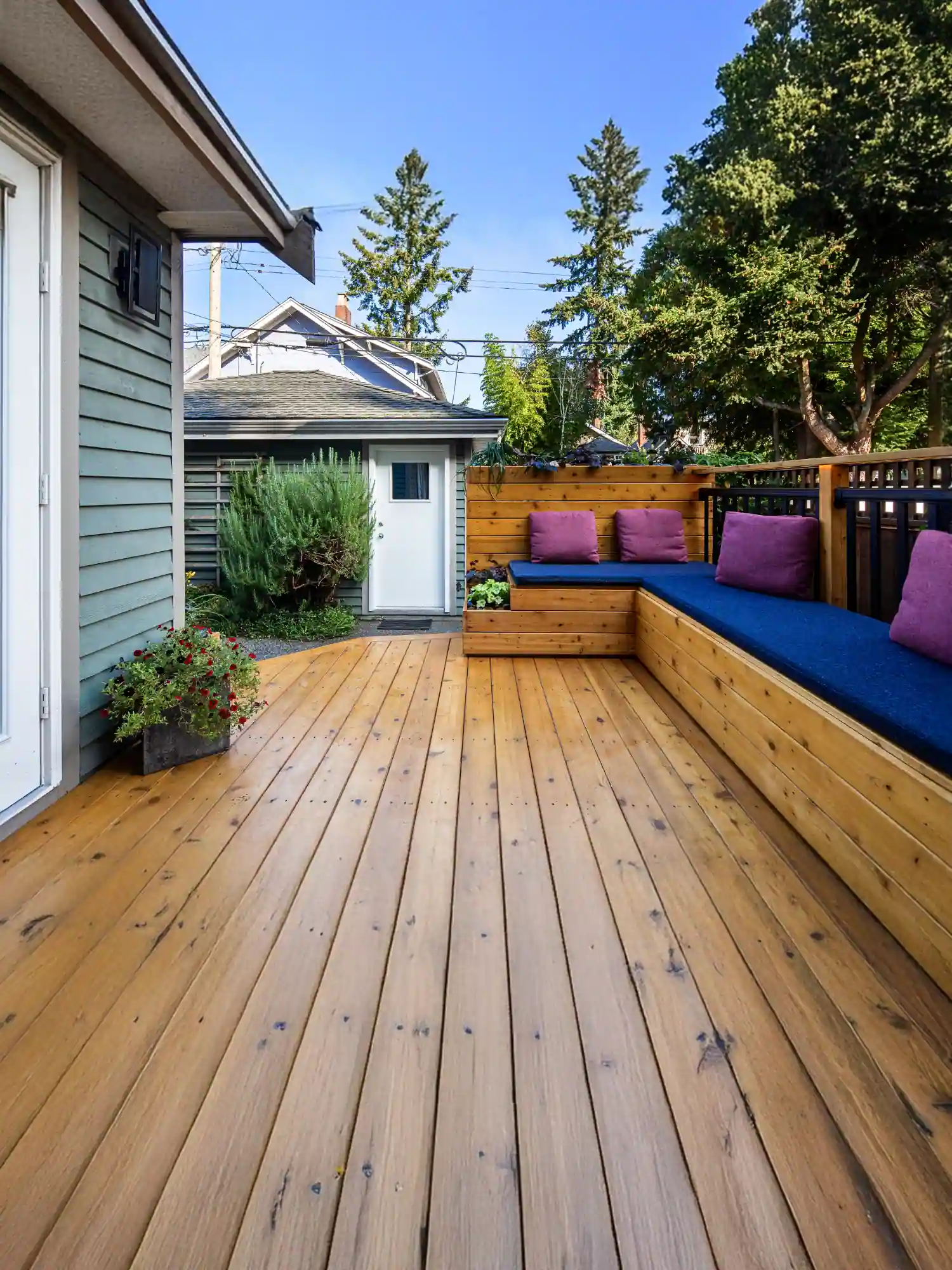 Surrey” class=”wp-image-12769″ />
1940s–1950s wartime and postwar bungalows make up a substantial portion of the older housing stock, particularly in the western and central parts of the neighbourhood near Langara
Vancouver General Contractors
The community driving this renovation activity is diverse and pragmatic. South Vancouver has large Chinese, Filipino, and South Asian communities, many of them multi-generational families who have owned homes here for decades. These are not speculative flippers. They are families renovating to accommodate ageing parents, create rental income from basement suites, or modernize homes that have not been touched since the 1980s. The renovation goals are practical: legalize the basement suite, update the kitchen for a large family, replace the old furnace and knob-and-tube wiring, and add a laneway house to generate long-term rental income.
Transit access also supports the neighbourhood’s trajectory. The Canada Line runs along Cambie Street on the western edge, with Marine Drive Station providing direct SkyTrain access to downtown and the airport. Langara–49th Avenue Station at the northern boundary brings the college catchment close, supporting consistent rental demand. Knight Street serves as the commercial spine through the eastern portion, with bus corridors connecting to the broader transit network.
The rental market here is among the tightest in Vancouver. Langara College enrolls approximately 23,000 students annually, with a large proportion seeking off-campus housing within walking or biking distance. Student rental demand combines with immigrant family housing needs to keep vacancy rates extremely low and suite rental income strong. A renovated two-bedroom basement suite in South Vancouver commands $2,100–$2,800 per month — numbers that make renovation investment genuinely compelling.
South Vancouver’s Housing Stock: What You’re Working With
The dominant housing form in South Vancouver is the postwar single-family home, built between approximately 1940 and 1975. Understanding this stock is essential to realistic renovation planning, because each era of construction comes with a specific set of conditions, challenges, and opportunities.
1940s–1950s wartime and postwar bungalows make up a substantial portion of the older housing stock, particularly in the western and central parts of the neighbourhood near Langara. These are modest, single-storey or storey-and-a-half homes on standard 33×122 foot lots, built quickly and efficiently for returning veterans and growing families. Construction quality is solid — many of these homes have stood for 75+ years — but the systems are aged. Knob-and-tube wiring, galvanized plumbing, 60-amp electrical panels, and uninsulated walls are common. Basements are often low (7 feet or less finished ceiling height) and were never designed as living space, though many have been informally used as suites for decades.
Vancouver Specials are the defining housing form along the Knight Street corridor and throughout the eastern portions of South Vancouver. Built primarily from the mid-1960s through the mid-1980s, the Vancouver Special is a two-storey residential building form with a distinctive profile: flat or low-slope roof, stucco exterior, large windows across the front, main living on the upper floor, and a lower level with a separate entrance that was designed — though rarely officially permitted — as a rental suite. The Vancouver Special represents the most renovation-intensive and highest-value opportunity in this neighbourhood. There are thousands of them in South Vancouver, and a well-executed Vancouver Special renovation typically delivers the strongest return on investment of any project type in the area.
1970s split-levels and two-storey homes round out the housing stock in the newer portions of the neighbourhood. These homes are larger, typically 2,000–2,400 square feet, and were built to higher standards than the wartime bungalows. However, they carry their own issues: poly-B plumbing (installed from approximately 1978 to 1995), older electrical panels, and dated finishes that require comprehensive updating.
Zoning context: Most of South Vancouver is zoned RS-1 (single-family residential), with RS-1B applying along some major corridors. RS-1 permits one secondary suite and one laneway house on lots meeting minimum size requirements. The standard lot — 33 feet wide by 122 feet deep — typically qualifies for both. Rear lane access is near-universal in this neighbourhood’s tight street grid, making laneway development straightforward from a site perspective.
A newer layer is the growing presence of townhouse developments replacing some older single-family stock, particularly near Cambie and along transit corridors. This gentle densification is slowly changing the neighbourhood’s character but has not yet significantly affected the detached renovation market.
South Vancouver Renovation Cost Table (2026)
The following costs reflect 2026 Vancouver market rates for permitted work performed by licensed contractors. These figures account for labour, materials, permit fees, and project management, but exclude structural surprises, hazmat remediation beyond standard scope, and appliances unless noted. See the old systems section below for remediation cost estimates.
| Renovation Scope | Cost Range | Notes |
|---|---|---|
| Kitchen renovation (mid-range) | $36,000–$55,000 | New cabinets, counters, appliances, tile, minor layout changes |
| Kitchen renovation (full, open concept) | $55,000–$90,000 | Structural wall removal, full layout reconfiguration, high-end finishes |
| Bathroom renovation (main) | $22,000–$38,000 | Full gut, new fixtures, tile, vanity, heated floor |
| Bathroom renovation (ensuite/secondary) | $16,000–$30,000 | Standard scope, mid-range finishes |
| Bathroom renovation (luxury) | $38,000–$48,000 | Curbless shower, heated floor, full tile, premium fixtures |
| Basement suite legalization | $52,000–$88,000 | Permits, egress windows, fire separation, kitchen, bath, ceiling height work if needed |
| Vancouver Special full renovation | $150,000–$300,000 | Both levels, new systems, suite legalization, exterior refresh |
| 1950s bungalow full renovation | $140,000–$280,000 | Systems replacement, full interior, basement suite, exterior |
| Laneway house construction | $250,000–$410,000 | New build, 500–900 sq ft, full services, turnkey |
| Exterior renovation (stucco, windows, entry) | $20,000–$55,000 | Stucco repair/replace, new windows, front door, landscaping |
| Electrical panel upgrade (100A→200A) | $3,500–$5,500 | Includes permit and inspection |
| Knob-and-tube rewire (whole house) | $18,000–$35,000 | Scope-dependent; attic/wall access varies |
| Galvanized plumbing replacement | $12,000–$22,000 | Full house replumb to PEX or copper |
| Poly-B replacement | $8,000–$16,000 | Full house, accessible runs |
| Asbestos abatement (standard scope) | $4,000–$18,000 | Popcorn ceilings, floor tile, pipe wrap; scope varies widely |
For a detailed, project-specific estimate, contact our team for a South Vancouver renovation consultation. We work throughout the neighbourhood and can provide accurate scoping based on your home’s specific conditions.
The South Vancouver Opportunity: Why This Neighbourhood Rewards Renovation Investment
South Vancouver occupies a unique position in the Vancouver real estate and renovation landscape. It is the most affordable neighbourhood in Vancouver proper for detached housing — not the suburbs, not Burnaby or Surrey, but within the City of Vancouver limits, with access to city services, transit, and the established appreciation trajectory that Vancouver’s constrained land supply provides.
This affordability creates renovation economics that simply do not exist in higher-priced neighbourhoods. When you buy a Vancouver Special in South Vancouver for $1.2M and invest $200,000 in a comprehensive renovation including suite legalization, you end up with a property worth $1.5M–$1.7M generating $24,000–$30,000 annually in rental income. That same renovation in Dunbar or Point Grey costs the same $200,000 but is applied to a $2.5M+ base — the percentage return is dramatically lower.
The rental demand picture is exceptional. Langara College sits at the northern edge of the neighbourhood, and its 23,000-student enrollment creates persistent demand for basement suites and secondary units. Student renters strongly prefer proximity to campus, which concentrates demand in exactly the blocks where Vancouver Specials and postwar bungalows are densest. Add to this the large immigrant family communities in South Vancouver who prioritize neighbourhood familiarity and affordability, and you have a rental market with some of the lowest vacancy rates in the city.
Vancouver Specials are renovation-ready by design. The lower level of a Vancouver Special was built with separate exterior access, a roughed-in bathroom, and layout that anticipates rental conversion. Legalizing an existing Vancouver Special suite typically involves egress window upgrades, fire separation improvements, kitchen permit compliance, and a few other targeted items — it does not require building a suite from scratch. This dramatically reduces the cost and timeline compared to adding a suite to a bungalow with an unfinished basement.
Rear lane access is nearly universal. The tight grid of South Vancouver, with rear lanes running behind virtually every block, makes laneway house development straightforward from a site perspective. Nearly every RS-1 property in this neighbourhood qualifies for laneway development, giving owners a second income stream option that adds both rental income and significant property value.
Neighbourhood trajectory is positive. The combination of Canada Line proximity, improving commercial nodes along Cambie and Fraser, and ongoing gentle densification is pushing South Vancouver’s profile upward. Homeowners who renovate now are positioning their properties ahead of a neighbourhood trajectory that has been consistently upward for the past fifteen years.
Vancouver Special Renovation: The Primary Project Type in South Vancouver
No housing form defines South Vancouver renovation work more than the Vancouver Special, and understanding how to approach a Vancouver Special renovation is essential for anyone owning or purchasing one of these homes. The Vancouver Special — roughly 10,000 of which were built across Vancouver between the 1960s and mid-1980s — is both the neighbourhood’s dominant housing stock and its primary renovation vehicle.
A typical Vancouver Special is approximately 2,000–2,400 square feet across two levels on a standard 33×122 foot lot. The upper level contains the main living areas: kitchen, living room, dining room, and bedrooms. The lower level — typically 900–1,100 square feet — has a separate side or rear entrance and contains additional bedrooms, a bathroom, and often a kitchen rough-in that has been used as a suite for decades without proper permits.
The three components of a Vancouver Special renovation:
1. Lower level suite legalization ($52,000–$88,000 as standalone, included in full renovation)
Suite legalization is the highest-priority renovation in most Vancouver Specials because it converts an informal arrangement into a registered, insured, and legally rentable asset. The City of Vancouver’s secondary suite requirements include: minimum ceiling height (typically 6’8″ or 2.03m), egress windows in sleeping rooms, fire separation between the suite and main dwelling (fire-rated walls and ceiling, fire-rated door at the shared entrance), separate ventilation, and compliance with the BC Building Code for plumbing and electrical within the suite. Most Vancouver Specials require egress window upgrades (the small side-light windows typical of the form rarely meet current egress requirements), fire separation work, and a kitchen permit — the rest of the lower level is often already close to compliant. Expect 6–10 weeks for permits plus 8–12 weeks of construction on a suite legalization.
2. Main floor modernization ($65,000–$120,000 as standalone)
The upper level of a Vancouver Special is typically compartmentalized: a small, enclosed kitchen separated from the living and dining rooms by walls, a formal dining room that families rarely use, and a living room facing the street. The most common modernization is opening the kitchen to create a combined kitchen-dining or kitchen-living area — usually involving removing one or two non-structural interior walls, replacing the kitchen entirely, and updating the flooring and finishes throughout. For multi-generational families, this renovation often emphasizes kitchen capacity over open-plan aesthetics: larger islands, double sink configurations, and gas ranges are popular priorities.
3. Exterior refresh ($20,000–$55,000)
The Vancouver Special’s exterior — typically original stucco over the garage, a flat or low-slope roof, and dated aluminum windows — is often the most visually obvious renovation opportunity. Stucco repair or replacement addresses both aesthetics and moisture management (failed stucco is a significant source of envelope damage in these homes). Window replacement improves energy efficiency, reduces heat loss, and dramatically updates the home’s appearance. A new front entry door and some landscaping can transform the curb appeal for a relatively modest investment. Many families also address the garage at this stage, replacing the original door with a contemporary panel.
A comprehensive Vancouver Special renovation addressing all three components, plus systems upgrades, runs $150,000–$300,000 and takes 6–12 months from permit application to completion. See our renovation guide for a complete overview of the Vancouver renovation process.
Old Systems: What South Vancouver Homes Are Hiding
The 1940s–1970s construction era that defines most of South Vancouver’s housing stock comes with predictable infrastructure challenges. These are not surprises — they are standard features of this era — but they must be budgeted accurately because they represent non-negotiable expenditure when undertaking any significant renovation. Permit inspectors will flag them; insurance underwriters will require resolution of the most serious issues; and leaving them in place creates safety, liability, and insurability problems.
| System | Era | Problem | Replacement Cost |
|---|---|---|---|
| Knob-and-tube wiring | Pre-1950 | Ungrounded, insulation contact prohibited, insurance refusal | $18,000–$35,000 whole house |
| Galvanized steel plumbing | Pre-1960 | Internal corrosion, sediment, low pressure, leaks | $12,000–$22,000 whole house |
| 60-amp electrical panel | Pre-1970 | Insufficient for modern load, upgrade required for suite permits | $3,500–$5,500 to 200A |
| Asbestos (various) | Pre-1985 | Popcorn ceilings, floor tile/adhesive, pipe wrap, drywall compound | $4,000–$18,000 typical scope |
| Poly-B (polybutylene) plumbing | 1978–1995 | Chlorine degradation, fitting failures, insurance complications | $8,000–$16,000 whole house |
| Aluminum wiring (branch circuits) | 1965–1975 | Connection loosening, oxidation, fire risk; requires pigtailing or rewire | $3,500–$8,000 for pigtailing; $15,000–$28,000 full rewire |
| Cast iron drain stack | Pre-1960 | Corrosion, restricted flow, crack risk; often flagged on inspection | $6,000–$14,000 main stack replacement |
| Single-pane windows | Any era | Heat loss, condensation, comfort; not code violation but affects energy efficiency | $8,000–$20,000 whole house depending on count |
Knob-and-tube wiring is the most serious issue in pre-1950 homes. Insurance companies increasingly refuse to write policies on homes with active knob-and-tube, and when they do, the premium surcharge is substantial. More importantly, knob-and-tube is genuinely dangerous when insulation has been added around it (heat dissipation requires open air space) or when connections have deteriorated over 70+ years. A whole-house rewire in a 1,400-square-foot bungalow runs $18,000–$28,000; in a larger Vancouver Special with two levels, expect $25,000–$35,000.
Galvanized plumbing is the most common plumbing issue in homes built before 1960. The galvanized steel pipes corrode from the inside out over time, depositing iron sediment throughout the system. By the time a home is 60–70 years old, galvanized supply lines typically have significant internal corrosion that restricts flow, discolours water, and creates conditions for pinhole leaks. A full replumb to PEX runs $12,000–$22,000 depending on access and house size.
Poly-B plumbing affects Vancouver Specials and 1970s–1980s homes. Polybutylene pipe was installed throughout Metro Vancouver from approximately 1978 to 1995 before its chlorine sensitivity problems became apparent. Most insurance providers now require disclosure of poly-B and many will not underwrite without replacement or a significant premium surcharge. If you are buying a Vancouver Special built in this era, confirm the plumbing type before purchase.
Asbestos is present in varying forms in virtually all homes built before 1985. In South Vancouver’s housing stock, the most common locations are: acoustic spray (“popcorn”) ceilings, vinyl floor tile and the adhesive beneath it, exterior stucco (rare but possible), pipe insulation on older heating systems, and joint compound in drywall. Any renovation involving demolition or disturbance of pre-1985 materials requires asbestos testing before work begins. Abatement costs vary widely based on the type, location, and quantity of material.
The practical implication for renovation budgeting: assume that any South Vancouver home built before 1970 will require $20,000–$50,000 in systems remediation as part of any comprehensive renovation. This is not a cost that can be deferred when doing permitted work, because permit inspectors will require resolution of code violations they encounter during construction.
Basement Suite Opportunity: Langara College and South Vancouver’s Rental Market
The proximity of Langara College to the heart of South Vancouver creates one of the most consistent rental demand pools in the city. With approximately 23,000 students enrolled annually and limited on-campus housing, Langara generates persistent demand for rental units within a 1–2 km radius of the campus. This demand is structural, not cyclical — it does not depend on the broader Vancouver rental market or economic conditions. South Vancouver homeowners with legal basement suites have a built-in tenant pool that keeps vacancy periods short and rental income predictable.
Current rental income benchmarks for South Vancouver (2026):
| Suite Type | Monthly Rent Range | Annual Income | Notes |
|---|---|---|---|
| 1-bedroom suite (bachelor/1BR) | $1,600–$2,100 | $19,200–$25,200 | Strong student demand near Langara |
| 2-bedroom suite | $2,100–$2,800 | $25,200–$33,600 | High demand from roommate pairs, small families |
| Laneway house (1BR) | $2,000–$2,500 | $24,000–$30,000 | Premium for separate structure, own entrance |
| Laneway house (2BR) | $2,400–$2,800 | $28,800–$33,600 | Family rental; high demand |
The two-bedroom basement suite is particularly strong in South Vancouver. Student renters frequently pair up to share a two-bedroom unit, dividing rent that individually would not be affordable. This makes the two-bedroom configuration more liquid than in some other neighbourhoods — the pool of qualified tenants at the $2,100–$2,800 price point is deeper here than in parts of the city without a major post-secondary institution nearby.
Legalization requirements for RS-1 secondary suites in Vancouver:
The City of Vancouver permits one secondary suite per RS-1 lot. To register a secondary suite, the space must meet the following minimum requirements: minimum floor area of 30 square metres (323 sq ft), minimum ceiling height of 6’8″ (2.03m) in 50% of the habitable floor area, minimum 6’0″ (1.83m) everywhere, a separate bathroom with toilet, basin, and shower or tub, a kitchen with sink, refrigerator space, and cooking facilities, and at least one window meeting egress requirements in any sleeping room. The suite must have fire separation from the main dwelling per the BC Building Code: 12.7mm (1/2″) Type X gypsum board on the shared ceiling and walls, or equivalent assembly.
In most South Vancouver Vancouver Specials, the structural layout already accommodates these requirements. The renovation work involves confirming and upgrading to compliance rather than creating the suite from scratch. The permit timeline for suite legalization is typically 6–10 weeks for plan review, with construction taking 8–14 weeks depending on scope.
For a detailed breakdown of the full renovation process including suite legalization, see our home renovation services page.
Permit Process: City of Vancouver, RS-1 Zoning, and Timeline Expectations
South Vancouver falls entirely within the City of Vancouver, which means building permits are issued by the City of Vancouver Building Department — not Metro Vancouver or any regional authority. This is relevant because Vancouver’s permit process, while consistent and well-documented, has specific timelines and requirements that differ from suburban municipalities like Burnaby or Richmond.
Permit types and typical timelines:
| Permit Type | Typical Timeline | Key Requirements |
|---|---|---|
| Kitchen renovation (no structural) | 4–6 weeks | Electrical and plumbing sub-permits |
| Kitchen with wall removal (structural) | 6–10 weeks | Engineer’s letter for beam/post design |
| Bathroom renovation | 4–6 weeks | Plumbing sub-permit, ventilation compliance |
| Secondary suite registration | 6–10 weeks | Full drawings, fire separation details, egress compliance |
| Full interior renovation | 8–14 weeks | Full set of drawings, engineer review likely |
| Laneway house (development permit) | 12–18 weeks DP + 6–8 weeks BP | Development permit first, then building permit |
| Addition or envelope work | 8–14 weeks | Architect required for structural changes |
The City of Vancouver operates an online permit portal (the VanMap system and the online permit application portal) that allows homeowners and contractors to track permit status. For straightforward residential projects, current review times are running 6–10 weeks for plan check, with some simple permits available through the Over-the-Counter (OTC) process in as little as 1–2 days.
RS-1 zoning specifics for South Vancouver:
RS-1 zoning permits: one single-family dwelling, one secondary suite, one laneway house, and (in some RS-1 areas) a garden suite or detached accessory dwelling unit. The Floor Space Ratio (FSR) for RS-1 is 0.7 FSR for the main house, meaning a 4,026-square-foot lot (33×122 ft) has a maximum above-grade floor area of approximately 2,818 square feet, though various setback and height regulations further constrain buildable area. The secondary suite floor area is not counted against FSR up to a certain limit. Laneway houses have a separate FSR allowance of 16% of the lot area, or up to 83.6 square metres (900 sq ft), whichever is less.
Secondary suite registration: Once construction is complete and inspections passed, the secondary suite must be registered with the City of Vancouver. Registration triggers a modest annual utility fee increase and changes the home’s assessed classification. The registration is required for legal tenancy and for the suite to be covered by your homeowner’s insurance as a permitted use. Operating an unregistered suite in a home that has been issued a permit for one is technically in violation; operating a suite that never had permits is a more serious compliance issue that affects insurance coverage and resale.
Vancouver’s permit process is manageable with proper preparation. The most common delays are incomplete drawing submissions, missing engineer’s letters for structural elements, and sub-permit coordination. Working with an experienced South Vancouver general contractor who regularly pulls City of Vancouver permits — and who has established relationships with permit-ready engineers and architects — dramatically reduces permit timeline risk.
Laneway House: South Vancouver’s Strongest ROI Play
Laneway houses — small detached dwellings built at the rear of RS-1 lots along the rear lane — have transformed the financial calculus of detached home ownership in South Vancouver. For a neighbourhood where home values are in the $1.1M–$1.7M range, the addition of a laneway house generating $24,000–$33,600 annually in rental income is a genuinely transformative investment.
South Vancouver is particularly well-positioned for laneway development because: virtually every block has a paved rear lane; lot sizes (33×122 ft standard) consistently meet the City of Vancouver’s minimum requirements for laneway development; the neighbourhood’s lower home price point means the proportional value added by a laneway is higher here than in more expensive areas; and rental demand from Langara College and the broader South Vancouver community keeps laneway vacancy rates very low.
Laneway house specifications and costs:
| Item | Detail |
|---|---|
| Eligible lots | RS-1 with rear lane, minimum lot width 25 ft (most South Vancouver lots qualify) |
| Maximum size | 16% of lot area or 83.6 sq m (900 sq ft), whichever is less; typically 600–900 sq ft for standard lots |
| Maximum height | 6.1m (20 ft) to peak; one-storey or partial second-storey permitted |
| Setbacks | 1.5m from rear lane, 1.5m from side property lines |
| Construction cost | $250,000–$410,000 fully turnkey |
| Development permit timeline | 12–18 months (DP + BP + construction) |
| Total timeline (land to tenancy) | 18–24 months from permit application |
| Rental income (1BR) | $2,000–$2,500/month |
| Rental income (2BR) | $2,400–$2,800/month |
The ROI arithmetic for a South Vancouver laneway house is compelling. A 700-square-foot laneway house at the midpoint of the cost range — say $330,000 all-in — generates approximately $2,200/month in rental income, or $26,400 annually before operating expenses. At current interest rates, a $330,000 loan at 5.5% variable costs approximately $22,000–$23,000 annually in interest. The laneway is approximately cash-flow neutral from day one, while adding $350,000–$420,000 to the appraised value of the property. No other renovation investment in South Vancouver delivers comparable value creation.
The laneway development permit process in Vancouver requires first completing a development permit application, which includes a design review for neighbourhood compatibility, height and massing compliance, and lane setback confirmation. Development permits take 12–18 weeks at current City of Vancouver processing times. After development permit approval, a building permit application is filed (4–8 additional weeks for residential laneway). Construction typically takes 4–6 months once permits are in hand.
One practical consideration for South Vancouver specifically: lane conditions vary. Some lanes in the neighbourhood are unpaved or in poor condition. The City of Vancouver requires that the lane be paved or improved to a standard sufficient to serve the laneway house. If the lane fronting your property is unpaved, budget an additional $5,000–$15,000 for lane improvement work, which is typically a City requirement before occupancy is granted.
ROI Analysis: What South Vancouver Renovation Actually Returns
Return on investment analysis for renovation is often presented in vague or optimistic terms. The following table attempts to provide realistic, South Vancouver-specific figures based on current market conditions, contractor costs, and comparable sales data. These are estimates, not guarantees — actual returns depend on execution quality, market timing, and specific property conditions.
| Renovation Scope | Investment | Value Added / Income | Notes |
|---|---|---|---|
| Cosmetic refresh (paint, flooring, fixtures) | $20,000–$35,000 | +$50,000–$80,000 on resale | High ROI; fastest payback |
| Kitchen + 2 bathrooms | $65,000–$90,000 | +$110,000–$150,000 on resale | Most impactful rooms for buyers |
| VS suite legalization (standalone) | $52,000–$88,000 | $22,000–$33,600/yr rental income | 2.5–3 yr payback on rental income alone |
| Full Vancouver Special renovation | $175,000–$250,000 | Home value $1.5M–$1.85M from $1.2M | Includes suite income; strong 5-yr return |
| Laneway house (new build) | $280,000–$380,000 | +$350,000–$450,000 value; $26K–$34K/yr rental | Best single-investment ROI in South Van |
| Basement suite + laneway combined | $350,000–$500,000 | $50,000–$67,200/yr combined rental | Maximum income from a standard RS-1 lot |
| Exterior renovation (stucco, windows) | $25,000–$55,000 | +$40,000–$80,000 on resale; insurance/moisture savings | Also reduces maintenance liability |
The standout observation in South Vancouver’s renovation ROI picture is the laneway house. In Dunbar or Shaughnessy, where land values already reflect the neighbourhood’s full potential, a $330,000 laneway investment adds value proportionally smaller relative to the overall asset value. In South Vancouver, the same $330,000 investment on a $1.3M property creates a far more dramatic percentage return — both in rental income yield and property value uplift. This is the core financial argument for renovation investment in South Vancouver over more expensive Vancouver neighbourhoods.
The combination play — suite legalization plus laneway house — is the maximum income extraction from a standard RS-1 lot in South Vancouver. A homeowner who legalizes the existing lower-level suite ($70,000 average investment) and builds a laneway house ($330,000 average investment) creates a $400,000 total investment that generates $48,000–$67,000 in combined annual rental income. The property’s appraised value increases by $450,000–$600,000 over the pre-renovation baseline.
These numbers explain why South Vancouver has become one of the most active renovation markets in the city. The economics work clearly, the housing stock is ready, and the rental demand is structural. Our complete renovation planning guide walks through the process from initial assessment through project completion.
Multi-Generational Living: South Vancouver’s Renovation Priority
More than perhaps any other renovation consideration specific to South Vancouver, the multi-generational family dynamic shapes how homes here are designed and renovated. South Vancouver’s Chinese, Filipino, South Asian, and Vietnamese communities have strong traditions of extended family living — grandparents, adult children, and grandchildren sharing a home that has been thoughtfully configured for everyone’s needs. Understanding these priorities leads to significantly better renovation outcomes than applying a generic “open concept” template.
Bedroom count is non-negotiable. Where a young professional couple might happily accept two bedrooms in exchange for a stunning open kitchen, South Vancouver families routinely require five or six bedrooms across both levels. Renovation planning must account for this: a renovation that converts bedrooms to expand the primary suite, for example, may actually reduce the home’s value for the most likely buyer in this neighbourhood. The Vancouver Special’s two-storey layout, with typically three bedrooms on the main floor and two or three in the lower suite, is well-suited to multi-generational occupancy.
Kitchen capacity over kitchen aesthetics. South Vancouver families typically prioritize cooking capacity and practicality over minimalist kitchen design. The most common kitchen renovation priorities in this neighbourhood are: a large island or peninsula with seating for family meals, gas cooking (a strong preference across Chinese, Filipino, and South Asian cooking traditions), double or triple sink configurations, ample refrigerator and pantry storage, and durable, easy-to-clean surfaces. The dramatic marble waterfall island that photographs well for a Kitsilano listing may be less relevant than a well-organized, high-capacity cooking space with gas supply and excellent ventilation.
Two-stove or wok burner configurations are a meaningful renovation priority for many South Vancouver families. A secondary wok station — typically a high-BTU single burner with commercial-grade ventilation — allows simultaneous cooking for large family gatherings without monopolizing the main range. This is not a luxury accessory; for families regularly cooking for ten or more people, it is a practical necessity. The renovation cost for a dedicated wok station with proper gas supply and ventilation runs $4,000–$9,000 depending on whether gas is already available in the kitchen.
In-law suites for grandparents. The lower-level suite in a Vancouver Special is frequently renovated with an ageing parent in mind rather than a rental tenant. This changes the design priorities: step-free access becomes important (the typical Vancouver Special lower entry has a few steps from the side door to the suite level; reconfiguring this is a $4,000–$10,000 item); grab bars and walk-in shower configurations in the bathroom; wider doorways if mobility aids are anticipated; and kitchen design that accommodates a shorter reach envelope. These accessibility modifications add modest cost but significantly extend the usability of the space for the family’s actual needs.
Separate entrances and acoustic separation. Multi-generational households value both togetherness and privacy. The renovation design should include clear acoustic separation between the main dwelling and the in-law or rental suite — beyond the fire separation requirement, this means proper insulation in the shared floor/ceiling assembly, solid-core doors at the shared entry, and attention to HVAC sound transmission. A suite that sounds directly into the main living area above erodes the quality of life for both households.
The multi-generational design perspective is something our team brings to every South Vancouver project. We have worked extensively with families in this neighbourhood and understand that the renovation outcomes that matter most here are sometimes different from what generic renovation guides describe. Contact us to discuss your family’s specific needs.
More Neighbourhood Guides Guides

Renovation in Lynn Valley, North Vancouver: Family Homes & Hillside Considerations

Renovation in Deep Cove, North Vancouver: Unique Character & Coastal Property Tips

Renovation in Oakridge & Cambie Village, Vancouver: Densifying Corridor Guide 2026

Renovation in Yaletown: Loft Conversions, Condo Renos & Strata Rules in Vancouver
Renovation in Gastown, Vancouver: Heritage Buildings, Commercial Conversions & Rules
Ready to start your renovation?
Frequently Asked Questions: South Vancouver Renovations
How much does it cost to legalize a Vancouver Special basement suite in South Vancouver?
Suite legalization in a South Vancouver Vancouver Special typically costs $52,000–$88,000 for the full permitted scope. This includes egress window upgrades (often the most costly single item, particularly if the window openings need to be enlarged), fire separation work (Type X gypsum on shared ceiling and demising walls), kitchen permit compliance, bathroom upgrades to current code, separate ventilation, and all permit and inspection fees. The lower end of the range applies to Vancouver Specials where the lower level is already in relatively good condition and the existing layout closely matches City of Vancouver requirements. The upper end applies to homes requiring significant window enlargement, floor height work for ceiling clearance, or more extensive kitchen or bathroom reconfiguration. Electrical and plumbing system upgrades, if needed, are additional costs on top of the suite legalization scope.
How much does Langara College affect rental demand in South Vancouver?
Langara College’s approximately 23,000 annual enrolment has a material and consistent effect on rental demand in the blocks surrounding the campus — roughly the area bounded by 49th Avenue to the north, 57th Avenue to the south, and Cambie to Ontario Street. Vacancy rates in this core area are typically below 1%, and rental income for basement suites runs at the higher end of the South Vancouver range. Landlords within 10 minutes walking distance of Langara report faster tenant placement and lower vacancy periods than landlords in the southern portions of the neighbourhood near Marine Drive. If your home is in the Langara catchment zone, the ROI on suite legalization or laneway construction is stronger than the South Vancouver average.
How long does a kitchen renovation permit take in Vancouver?
A kitchen renovation permit in the City of Vancouver currently takes 4–8 weeks for plan review, depending on project complexity. A straightforward kitchen renovation with no structural work (same footprint, no wall removal) may qualify for an Over-the-Counter permit, potentially available in 1–5 business days. A kitchen renovation involving wall removal — the most common scenario when opening a Vancouver Special’s enclosed kitchen — requires a building permit with structural drawings and typically takes 6–10 weeks for plan review. Sub-permits for electrical and plumbing work are filed separately and run on parallel timelines. Your contractor should file all sub-permits simultaneously with the main building permit application to avoid sequential delays.
What does aluminum wiring cost to address in a South Vancouver home?
Aluminum branch circuit wiring was common in Vancouver homes built between approximately 1965 and 1975 — falling squarely in the Vancouver Special era. There are two approaches. The first is pigtailing (also called co-wiring): a licensed electrician installs short copper extensions at every device (outlets, switches, fixtures) using approved CO/ALR connectors. This addresses the oxidation and connection loosening risk at termination points without replacing the aluminum runs. Cost: $3,500–$8,000 for a whole house. The second approach is full rewire, replacing all aluminum branch circuits with copper. This is more disruptive and expensive ($15,000–$28,000) but is sometimes required by insurance underwriters or when other work is already opening walls. Many insurance companies accept a properly documented pigtail job; confirm your insurer’s requirements before choosing the approach.
Will poly-B plumbing affect my home insurance in South Vancouver?
Yes, poly-B plumbing is an active insurance concern in Metro Vancouver. Polybutylene pipe fails at fittings over time due to chlorine degradation, and its failure mode is typically a leak that occurs inside walls or under floors — meaning significant water damage before detection. Most major insurers in BC either refuse to write new policies on homes with poly-B plumbing, or they write with a significant premium surcharge and water damage exclusion. If you are buying a South Vancouver home built between 1978 and 1995, confirm the plumbing type before finalizing your purchase, and get a quote from your intended insurer before proceeding. Full house poly-B replacement to PEX costs $8,000–$16,000 and is almost always worth doing both for insurance access and peace of mind.
Is the ROI on a laneway house better in South Vancouver than in more expensive neighbourhoods?
Yes, by most relevant measures. The key insight is that laneway construction cost is approximately the same regardless of neighbourhood — a 700-square-foot laneway house costs roughly $300,000–$380,000 to build on a lot in South Vancouver, Dunbar, or Kitsilano. The rental income is also similar across neighbourhoods for comparable units. What differs is the base property value. In South Vancouver, a $330,000 laneway investment on a $1.3M property represents a 25% capital investment on the property value and typically adds $350,000–$450,000 in appraised value — a return-on-investment ratio of roughly 1.2–1.4x. In a $2.5M Dunbar home, the same $330,000 laneway investment represents a 13% capital deployment but the proportional value uplift is lower relative to the total asset value. The percentage return on capital invested in the laneway is meaningfully higher in South Vancouver.
What are the RS-1 FSR limits for South Vancouver homes?
RS-1 zoning in Vancouver allows a Floor Space Ratio (FSR) of 0.7 for the principal dwelling, calculated on gross lot area. For a standard South Vancouver lot of 33×122 feet (4,026 sq ft), the maximum above-grade floor area for the main house is approximately 2,818 square feet. The secondary suite is excluded from FSR calculations up to certain limits under the secondary suite bylaw. Laneway houses have a separate allowance of 16% of lot area or 83.6 square metres (900 sq ft), whichever is smaller — for a standard South Vancouver lot, this caps at approximately 644 square feet of floor area above grade. Height limits (6.1m to peak) further constrain what is buildable within the FSR envelope. If you are considering an addition or a more complex renovation that might push FSR limits, a zoning review with the City of Vancouver or a pre-application meeting with a building permit coordinator is advisable before finalizing design.
What is the basement ceiling height in South Vancouver 1950s bungalows, and does it qualify for suite legalization?
This is one of the most common challenges in South Vancouver’s postwar bungalows. Homes built in the 1940s and 1950s typically have unfinished basements with concrete slab floors and floor joists at heights that yield finished ceiling heights of 6’4″ to 7’0″. The City of Vancouver’s secondary suite bylaw requires a minimum ceiling height of 6’8″ (2.03m) in at least 50% of the habitable floor area, with a minimum of 6’0″ (1.83m) everywhere. Many of South Vancouver’s bungalow basements fall just short of the 6’8″ threshold in portions of the space. Solutions include: (1) lowering the concrete slab through underpinning — extremely expensive at $40,000–$80,000+ and rarely justified for a suite alone; (2) accepting that the suite qualifies in its as-is configuration if measurements confirm adequate clearance; or (3) installing a suspended ceiling assembly that minimizes the intrusion of mechanical systems. In some cases, beam and joist configuration allows a raised flat soffit approach that maintains clearance in the habitable portion while routing HVAC below in non-habitable corridors. An experienced contractor will assess your specific basement conditions before committing to a legalization approach.
What is the best renovation for resale ROI in South Vancouver?
For pure resale value maximization, the highest-ROI renovations in South Vancouver are: (1) suite legalization — a legal, registered secondary suite adds $100,000–$160,000 to the appraised value of most South Vancouver homes, while costing $52,000–$88,000 to complete; (2) kitchen renovation — an updated, functional kitchen remains the single strongest room-by-room investment for resale, with typical value added of 1.5–2x the renovation cost; (3) exterior refresh — updated stucco, new windows, and a fresh entry create the first impression that drives buyer interest. Laneway houses add the most absolute dollar value but require the longest timeline and highest capital commitment. For homeowners planning to sell within 2–3 years, suite legalization plus kitchen update plus cosmetic refresh is typically the highest-ROI combination. For homeowners with a 5–10 year horizon, adding a laneway house is the most powerful value creation strategy available in this neighbourhood.
How do I identify knob-and-tube wiring in my South Vancouver home?
Knob-and-tube (K&T) wiring is identifiable by its distinctive components: ceramic knobs that anchor the individual unsheathed wires to framing members, and ceramic tubes that protect wires where they pass through joists or studs. In South Vancouver homes built before 1950, K&T is typically found in the attic (most visible location), accessible basement ceiling areas, and occasionally in wall cavities during renovation work. The wires themselves are cloth-insulated and run as two separate conductors — one black (hot), one white (neutral) — without a ground wire. If you see separate wires stapled to or weaving through ceiling joists in your attic, rather than the sheathed two- or three-wire cables typical of post-1950 construction, you likely have K&T. An electrical inspection by a licensed electrician before any renovation work is strongly recommended for pre-1955 South Vancouver homes — it establishes the scope and cost of electrical work needed and avoids surprises mid-project.
How do I plan a multi-generational layout in a Vancouver Special renovation?
Multi-generational layout planning for a Vancouver Special should begin with a clear family use analysis before design begins: how many adults and children will occupy the home now and in 5–10 years, which generation will occupy which level, what are the accessibility needs of older family members, and are there preferences for shared versus private common areas. The most successful multi-generational Vancouver Special configurations typically allocate the main floor to the primary family (parents and children) with the full kitchen and main living areas, and configure the lower level as a self-contained in-law suite with its own kitchen, bathroom, and separate entrance — but with an internal connecting door for family access. Acoustic separation between the two levels is critical for livability. Key design decisions include: location of the shared laundry (upper vs. lower vs. shared access), whether the internal connecting door is lockable from both sides, and whether the lower kitchen is full-size or kitchenette scale. Our team has completed dozens of multi-generational Vancouver Special renovations in South Vancouver and can walk through layout options specific to your home’s configuration.
Are CleanBC rebates available for South Vancouver renovations?
Yes, CleanBC Better Homes and Home Renovation Rebate programs are available to all BC homeowners including South Vancouver residents. The most relevant rebates for typical South Vancouver renovation projects include: heat pump installation (air source heat pump rebates of $3,000–$6,000 under the Better Homes program, replacing gas furnaces), heat pump water heaters ($1,000 rebate), insulation upgrades (attic, wall, and underfloor insulation), and window and door replacements meeting EnergyGuide thresholds. The federal Canada Greener Homes Grant (currently being wound down) offered additional rebates for similar improvements. For a comprehensive systems renovation in a 1950s–1970s South Vancouver home — replacing the gas furnace, upgrading insulation, and replacing single-pane windows — total CleanBC rebate eligibility can reach $8,000–$12,000. Note that most rebates require a pre-renovation EnergyAdvisor assessment; this must be booked before work begins to be eligible. Visit the CleanBC Better Homes website or ask your contractor for current program details, as rebate amounts and eligibility are updated periodically.
What are contractor lead times for South Vancouver renovations in 2026?
In 2026, quality general contractors in Vancouver are booked 3–6 months in advance for full renovation projects. South Vancouver specifically sees consistent demand driven by the neighbourhood’s renovation activity, so early planning is important. For a basement suite legalization or full Vancouver Special renovation, expect to spend 2–3 months in design and permit preparation before breaking ground — meaning your total timeline from first contractor meeting to move-in can be 9–15 months. For a kitchen-only renovation, the design-to-permit phase is shorter (4–8 weeks) and contractor availability at 2–3 months out is more common. The practical implication: if you are planning a renovation for spring or summer occupancy, begin contractor conversations in the fall of the preceding year. Do not wait until you have permits in hand to find a contractor — many projects are delayed 3–6 months because the owner sequenced permit approval before contractor engagement, rather than running them in parallel.
How long does a typical South Vancouver renovation take from start to finish?
Renovation timelines in South Vancouver depend heavily on project scope. A kitchen renovation with no structural changes takes 4–8 weeks of construction time after permits are in hand. A bathroom renovation takes 3–5 weeks. A basement suite legalization with moderate scope takes 8–14 weeks of construction. A full Vancouver Special renovation — both levels, systems upgrades, exterior work, suite legalization — takes 5–9 months of construction time. A laneway house construction takes 4–6 months from permit approval. These timelines assume no significant discovered conditions (asbestos requiring abatement, unexpected structural issues, hidden water damage) that require scope adjustment. The permit timeline precedes construction: plan for 6–10 weeks for residential permits, with development permits for laneway houses requiring 12–18 weeks additional. Most South Vancouver full renovation projects, from initial design meeting through permit approval through construction completion, run 12–18 months total. Beginning your planning process early and working with a contractor experienced in City of Vancouver permitting is the most effective way to manage timeline risk.
How does renovation ROI in South Vancouver compare to other Vancouver neighbourhoods?
South Vancouver offers distinctly favourable renovation ROI compared to most other Vancouver neighbourhoods, for reasons rooted in its affordability and rental demand profile. In high-value neighbourhoods like Point Grey, Dunbar, or Kerrisdale, homes are already priced at $2.5M–$4M — the “land value” component of the price is so dominant that structural renovation rarely adds proportional value on top of it. In South Vancouver, the home’s improvement value still represents a meaningful portion of total price, meaning renovation quality directly translates to appraised value. Suite income yield is also higher as a percentage of investment cost in South Vancouver: a $70,000 suite legalization generating $25,200/year represents a 36% annual cash yield on investment. In Point Grey, the same $70,000 investment on a $3M home barely moves the needle. The rental demand from Langara College provides a floor under South Vancouver vacancy rates that most other residential neighbourhoods lack. For investors and owner-occupants who want clear, measurable renovation returns rather than speculative appreciation, South Vancouver is consistently among Vancouver’s most rewarding renovation markets.
Get a Free Renovation Quote
Metro Vancouver’s trusted general contractors. Free consultations across Vancouver, Burnaby, Richmond, North Shore & beyond.
Get Your Free Quote →VGC serves Vancouver and surrounding areas. View all renovation services in Vancouver →

Comments are closed