




Structural Permit Vancouver: Bearing Walls, Engineering & When You Need One (2026)
If you are planning a renovation in Vancouver that involves walls, windows, foundations, or structural framing, there is one question you need to answer before a single nail is pulled: do you need a structural permit? The short answer, in most cases, is yes. The City of Vancouver takes structural safety seriously, and any work that affects the load-bearing capacity or structural integrity of a home requires a building permit — complete with engineer-stamped drawings and a series of inspections.
This guide walks you through exactly what triggers a structural permit in Vancouver, how the engineering and permit process works, what bearing wall removal actually costs when done properly, and what happens when homeowners skip the permit. Whether you are planning an open-concept renovation, adding a window, building an addition, or upgrading your home’s seismic resistance, understanding the structural permit process will save you time, money, and serious legal risk.
What Triggers a Structural Permit in Vancouver
In the City of Vancouver, a building permit is required for any work that affects the structural integrity of a building. This is broader than many homeowners assume. It is not just about major construction — even seemingly minor work can trigger a permit requirement if it touches the structural system of the building.
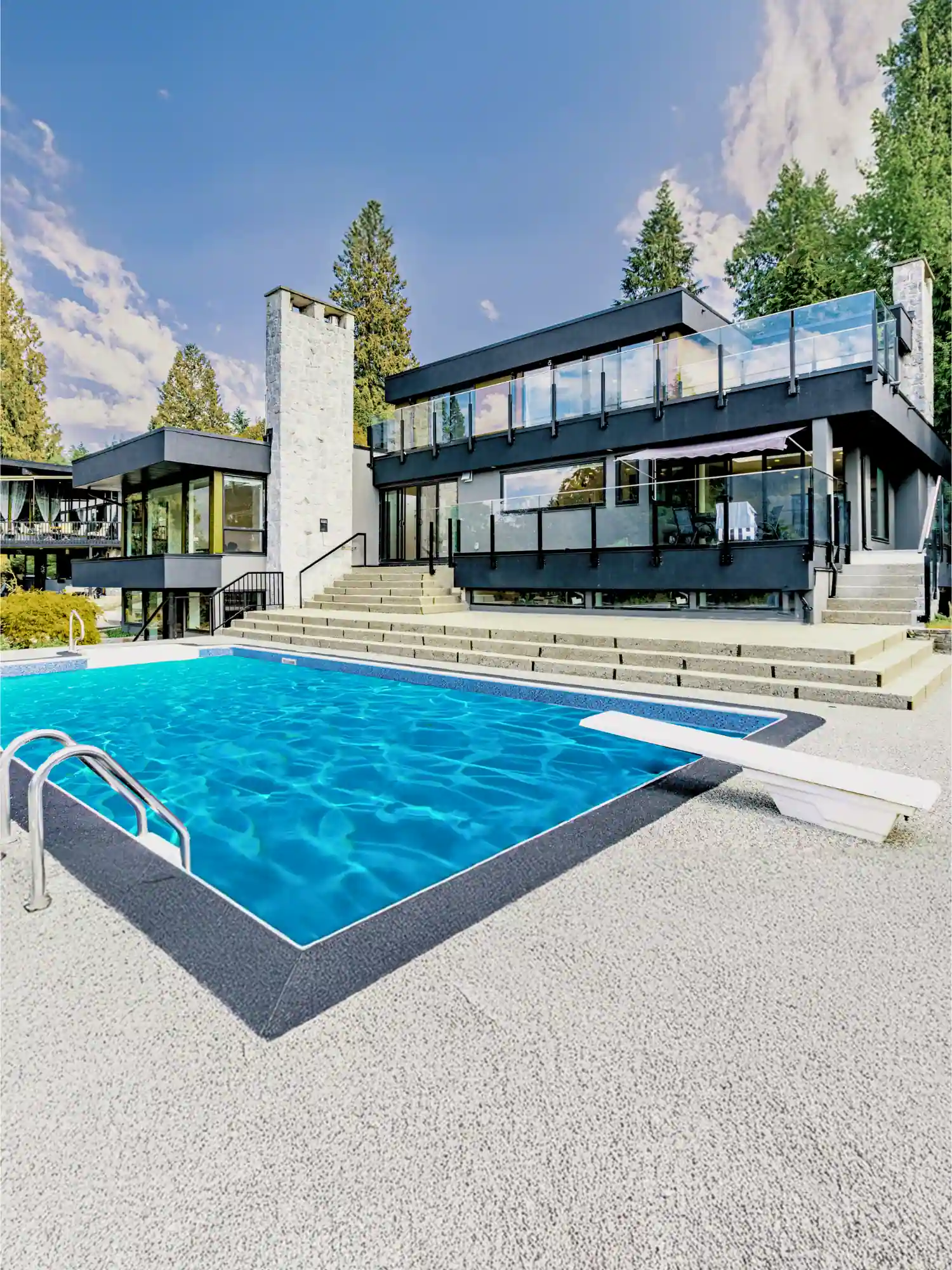
The cost of having a structural engineer do a site visit to assess bearing versus non-bearing walls is typically $400–$800
Vancouver General Contractors
The following activities all require a building permit with structural drawings in Vancouver:
- Removing or modifying a bearing wall — this is the most common trigger. Any wall that carries load from above must be replaced with a properly engineered beam before the wall is removed.
- Cutting into or removing floor joists — creating an opening in a floor system (for stairs, a utility access, or plumbing) requires structural review.
- Adding or enlarging window or door openings — cutting a new opening in an exterior wall requires a structural header above it, which must be sized by calculation.
- Building any addition — even a small addition requires a permit covering foundation, framing, and connection to the existing structure.
- Underpinning a foundation — lowering a basement floor or increasing basement height by digging beneath the existing footing requires sequential underpinning and full engineering.
- Installing a beam — any new beam installation, whether replacing a wall, creating an open span, or supporting a new load, requires permit drawings.
- Second storey additions — adding a full or partial second floor requires structural review of the existing foundation and first-floor framing to confirm it can carry the additional load.
- Seismic upgrades — retrofitting an older home with anchor bolts, shear walls, or cripple wall bracing is permit-required work.
Work that does not affect the structure — painting, flooring, cabinet replacement, tile, fixture replacement, and similar cosmetic work — typically does not require a permit. But when in doubt, contact the City of Vancouver’s Development and Building Services Centre at 515 West 10th Avenue before starting work. A quick call can save you from a stop-work order later.
Bearing Wall vs. Non-Bearing Wall: The Most Misunderstood Concept in Renovation Permits
The single most common source of unpermitted structural work in Vancouver is the mistaken belief that a homeowner — or even an experienced contractor — can identify a bearing wall by eye and remove it without consequences. This assumption is wrong and potentially dangerous.
A bearing wall is a wall that carries structural load from above and transfers it down to the foundation. A non-bearing wall (also called a partition wall) divides space but carries no structural load — only its own weight. The critical difference is that removing a bearing wall without replacement support causes the structure above to lose its load path to the ground, resulting in sag, cracking, or in extreme cases, partial collapse.
How to Identify a Bearing Wall
While only a structural engineer can give a definitive determination, there are several indicators that a wall is likely bearing:
- Runs perpendicular to floor or ceiling joists — joists typically span across the shortest dimension of a house; a wall running across (perpendicular to) the joists is likely supporting their mid-span.
- Sits directly above a foundation wall or beam — load must travel continuously from roof to ground. A wall positioned above a foundation element is almost certainly bearing.
- Has a wall, post, or column directly below it — load paths are stacked. If there is structure below, there is usually structure above.
- Carries point loads from above — walls that support a ridge beam, a header from a floor above, or a post from a floor above are bearing.
- Located near the centre of the house — interior walls running down the centre length of the house are frequently the primary bearing line for the floor and roof system.
Even with all these indicators, you cannot be certain without a professional assessment. Vancouver homes from different eras — character homes from the 1910s–1940s, post-war bungalows from the 1950s–1960s, and newer construction — all have different framing conventions. Some older homes have structural configurations that defy easy identification.
The cost of having a structural engineer do a site visit to assess bearing versus non-bearing walls is typically $400–$800. That investment will tell you definitively what you are dealing with before any work begins. It is the most important money you will spend in a renovation involving wall removal.
Consequences of Removing an Unsupported Bearing Wall
The consequences of removing a bearing wall without proper replacement support range from inconvenient to catastrophic:
- Floor sag — the floor above begins to deflect, sometimes within days of the wall being removed. Floors that were flat develop a visible bow at mid-span.
- Ceiling cracking — drywall cracks at corners and along the ceiling line as the structure above shifts.
- Door and window racking — as the structure deflects, door frames and window frames go out of square, causing doors to stick or fail to latch.
- Long-term structural damage — even moderate sag, left uncorrected, causes cumulative damage to framing connections, sheathing, and finishes throughout the home.
- Immediate structural failure — in extreme cases, particularly where point loads from above are large, removal of a bearing wall can cause rapid and catastrophic failure of the floor or roof system above.
No renovation project — open-concept kitchen, main floor living space, or otherwise — is worth this risk. The engineering process exists precisely to ensure that when a bearing wall is removed, the load it was carrying is properly redirected through a new beam and posts to the foundation. This is non-negotiable structural work.
The Structural Engineering Process for Bearing Wall Removal
When a bearing wall is removed in Vancouver, a licensed structural engineer (P.Eng.) must be involved from assessment through to construction sign-off. Here is how the process works from start to finish.
Step 1: Site Assessment and Load Path Analysis
The engineer visits the site and assesses the wall in question. They trace the load path from the roof ridge down through the floors and walls to the foundation. This tells them how much load the wall is carrying — dead load (weight of structure) plus live load (occupants, furniture, snow) — and what the replacement beam must be designed to carry.
Step 2: Beam Design
The engineer calculates the required beam size based on the span (the distance the beam must bridge) and the load it will carry. The most common material used for residential bearing wall removal in Vancouver is LVL (Laminated Veneer Lumber). LVL is engineered wood with high uniform strength — it does not have the knots or grain variations of dimensional lumber that reduce strength. It is typically available in depths from 9.5 inches to 18 inches and can be doubled or tripled for heavier loads.
For long spans — typically anything over 12–14 feet, or where the load is very high — the engineer may specify a steel beam (W-shape wide flange). Steel beams carry much higher loads in a shallower profile, but they are heavier, require crane or significant labour to install, and cost more.
Step 3: Post and Footing Design
The beam does not float in the air — its ends must be supported by posts, and those posts must bear on adequate footings. The engineer specifies the post size (typically 3.5″ x 3.5″ to 5.5″ x 5.5″ depending on load), the bearing connection hardware, and whether the existing footings below are adequate or need to be enlarged. This is particularly important in older Vancouver character homes where original footings were sized for the original building, not the concentrated point load from a new beam post.
Step 4: Stamped Drawings
The engineer produces a set of drawings showing the existing conditions, the proposed beam, post sizes, footing requirements, and all connection hardware details. These drawings are stamped and signed by the P.Eng. and submitted as part of the building permit application. The City of Vancouver’s building department will not issue a structural permit without engineer-stamped drawings for bearing wall removal.
Step 5: Construction Inspection and Letter
The engineer’s involvement does not end at the permit drawing stage. During construction, the engineer (or their designated representative) must attend site to inspect that the beam, posts, and connections are installed exactly as designed. Once the work is confirmed to be correct, the engineer produces a letter of compliance or inspection report confirming the structural work meets the stamped drawings. This letter is submitted to the City as part of the permit close-out process — without it, the permit cannot be closed.
The total cost of structural engineering for a bearing wall removal in Vancouver typically ranges from $1,500 to $4,500, depending on the complexity of the load path, number of beams involved, and whether the engineer needs to design new footings or perform additional analysis.
Building Permit for Structural Work: The Application and Review Process
A structural permit in Vancouver is issued as a building permit — there is no separate permit category labelled “structural.” The building permit application for structural work requires a specific package of documents that gets reviewed by the City’s plan check team, including a structural reviewer.
What the City Reviews
The City of Vancouver’s building department reviews the following for structural work:
- Engineer-stamped structural drawings — beam design, post sizes, footing requirements, connection details, all signed by a BC-registered P.Eng.
- Site plan showing scope of work — floor plan indicating which wall is being removed, location of new beam, and any related work.
- Compliance with BC Building Code — spans, loads, lumber grades, connection hardware, and seismic requirements must all meet current code.
- Energy efficiency compliance — for any work that opens walls or ceiling assemblies, insulation and vapour barrier compliance may be reviewed.
Who Can Submit a Structural Permit Application
In Vancouver, the following parties can submit a building permit application for structural work:
- Homeowner (owner-builder) — the registered property owner can submit and act as their own general contractor, subject to owner-builder requirements under BC law.
- Registered architect — for complex work or larger projects, an architect of record submits the application.
- Building designer — a registered building designer (House Designer, Schedule B designer) can coordinate the structural permit application.
- Licensed contractor — a contractor can submit on behalf of the homeowner with written authorization.
The Plan Check Process
Once submitted, the application enters plan check. A building plans examiner reviews the architectural drawings (if any) while a structural reviewer checks the engineer’s calculations and drawings for code compliance. If the reviewer has questions or finds items that need clarification, they issue a Referral for Revision (RFR) — a list of items the engineer must address and resubmit. This back-and-forth is normal, especially for complex jobs, and can add 2–4 weeks to the timeline.
Permit Fees and Timeline
Vancouver permit fees for structural work are based on the declared construction value. The fee is approximately 1% of construction value (including materials and labour) for residential work, subject to a minimum. For a bearing wall removal with $20,000 in construction value, expect a permit fee of approximately $800–$1,200.
The timeline for a residential structural permit in Vancouver is typically 4–10 weeks from a complete application submission. Simple work — a single beam with clear drawings — often moves through in 4–6 weeks. Complex work involving multiple structural elements or requiring multiple rounds of RFR can take 8–12 weeks.
| Structural Permit Item | Typical Cost or Timeline |
|---|---|
| Structural engineering (bearing wall removal) | $1,500 – $4,500 |
| Permit fee (residential structural) | $800 – $2,500 |
| Plan check timeline (residential) | 4 – 10 weeks |
| Engineer site assessment (bearing vs. non-bearing) | $400 – $800 |
Bearing Wall Removal Costs: The Full Picture
One of the most frequently underestimated renovation costs in Vancouver is bearing wall removal. Homeowners often see a quote for “demo and beam” and assume the cost is the beam and a few hours of labour. The reality is that a proper, permitted bearing wall removal involves multiple cost layers — and skipping any one of them creates serious risk.
Here is the full cost breakdown for a typical permitted bearing wall removal in Vancouver:
| Cost Item | Typical Range |
|---|---|
| Structural engineering (assessment + drawings + inspection) | $1,500 – $4,500 |
| Building permit fee | $800 – $2,500 |
| Contractor labour (demo + temporary support + beam install) | $4,000 – $12,000 |
| LVL beam material | $500 – $3,000 |
| Steel beam (if required for long span) | $1,500 – $8,000 |
| Post installation and hardware | $500 – $2,000 |
| Footing work (if upgrade required) | $1,000 – $4,000 |
| Patching: floor, ceiling, drywall, flooring | $2,000 – $6,000 |
| Total (LVL beam, moderate span) | $8,000 – $18,000 |
| Total (steel beam, long span or complex) | $15,000 – $28,000 |
These figures assume a single bearing wall in a typical Vancouver house. The cost increases significantly for:
- Long spans (over 14 feet) requiring a steel beam and potentially a crane
- Multiple load-bearing walls removed in the same project
- Homes where existing footings are inadequate and require enlargement
- Heritage-designated or character homes where additional constraints apply
- Projects where electrical, plumbing, or HVAC runs through the wall being removed
For accurate budgeting, we strongly recommend getting the structural engineer’s assessment before getting contractor quotes. Once you have the engineer’s beam and post specifications, contractors can quote apples-to-apples on the actual scope of work.
Our team at Vancouver General Contractors manages the full process — engineering coordination, permit submission, structural construction, and finishing — so you have a single point of accountability. Contact us for a project assessment.
Adding and Enlarging Window Openings: Structural and Permit Requirements
Many homeowners are surprised to learn that adding a new window to an exterior wall — or enlarging an existing window opening — requires a building permit in Vancouver. This is because cutting a new opening in an exterior wall removes the framing that was carrying load above that opening. A properly sized structural header must be installed above every window and door opening to redirect that load around the opening to the cripple studs on either side.
What the Permit Covers
A building permit for window enlargement in Vancouver typically covers:
- Structural header design — the header size (dimension and species) must be appropriate for the span. For openings under 4 feet in a standard residential wall, prescriptive tables in the BC Building Code may apply. For larger openings or complex load situations, engineer drawings are required.
- Framing inspection — a city inspector must review the rough framing (header, king studs, cripple studs, sill) before the wall is closed up with sheathing and interior finishes.
- Weather resistance compliance — the new window installation must meet BC Building Code requirements for flashing, air sealing, and water drainage.
- Energy efficiency — window thermal performance (U-value) must meet current BC Energy Step Code requirements.
Cost of Window Enlargement in Vancouver
A typical window enlargement project in Vancouver — including structural framing, permit, window supply and installation, exterior patching, and interior drywall — costs in the range of $3,000–$8,000 per window. The cost varies based on:
- Size of the enlargement (small existing window to large picture window = more structural work)
- Whether the wall is load-bearing above the opening
- Window product cost (standard vinyl vs. wood-clad vs. fibreglass)
- Exterior cladding type (stucco requires professional patching, fibre cement is easier)
- Interior finish complexity
See our complete renovation guide for more on window and door projects that require permits in Vancouver.
Home Addition Structural Requirements in Vancouver
Any addition to a Vancouver home — regardless of size — requires a building permit. There is no “small addition” exception. Even a 50-square-foot bump-out requires a permit because it involves new foundation work, new framing, connection to the existing structure, and weather envelope work.
Foundation Design for Additions
Every addition needs its own foundation — the new structure cannot simply rest on the existing footing, which was not designed for the additional load or outward extent. Foundation options for additions in Vancouver include:
- Poured concrete strip footings and foundation walls — the standard for full additions. A continuous poured footing is placed below frost depth, and a poured or block foundation wall is built above it. Cost-effective and durable.
- Helical piles — steel screw-piles driven into the ground. Popular for smaller additions, decks, and situations where excavation is impractical. Fast to install, no concrete curing time, but more expensive per linear foot than poured.
- Grade beams on piles — a concrete beam spanning between pile heads, used where the soil conditions require deeper pile penetration.
Connection to the Existing Structure
The new addition must be structurally tied to the existing building. This requires engineering to address:
- Differential settlement — new foundations settle slightly as the soil consolidates under the new load. The connection detail between old and new structure must accommodate minor differential movement without cracking the finishes.
- Ledger board connections — where a floor system ties into the existing wall, the ledger board must be bolted to the existing framing with adequate fasteners and flashed to prevent water intrusion.
- Roofline integration — tying the new roof into the existing roof requires careful detailing to maintain weather resistance and structural continuity.
For additions over approximately 10 square metres, the City of Vancouver will require engineer-stamped structural drawings as part of the permit application. For smaller additions, a registered building designer may be able to provide the drawings using prescriptive code tables, but this depends on the specific conditions of the site and the existing structure.
Visit our home renovation page for an overview of the full range of addition and renovation services we provide in Vancouver and the Lower Mainland.
Underpinning and Foundation Work: Permits and Engineering
Underpinning is the process of extending a foundation deeper into the ground — typically to increase basement height, strengthen a failing foundation, or allow construction of a new basement beneath a house that currently has a crawlspace. It is one of the most technically demanding residential projects in Vancouver, and it requires both a building permit and a structural engineer throughout the entire process.
The Underpinning Process
The most common residential underpinning method is sequential pier-and-beam underpinning. The process works as follows:
- The basement floor is excavated in small sections — typically 3-foot-wide bays — working sequentially around the perimeter so that no more than one section of foundation is undermined at a time.
- Each section is hand-dug beneath the existing footing, a new concrete footing is poured at the lower level, and the gap between old and new footing is filled with non-shrink grout.
- The sequence continues around the entire perimeter, with each adjacent bay completed only after the previous bay’s concrete has fully cured.
- Once all perimeter sections are complete, the interior slab is removed and the floor is re-poured at the new lower grade.
Benching is an alternative to underpinning where the foundation wall is stepped rather than extended straight down. Benching is less expensive but consumes floor area along the perimeter walls — it is only appropriate where the ceiling height gain outweighs the perimeter floor area lost.
Engineering and Permit Requirements for Underpinning
Underpinning requires full structural engineering drawings before permit submission, including a geotechnical assessment of the soil conditions (typically a letter from a geotechnical engineer confirming the soil bearing capacity and groundwater conditions). The City of Vancouver requires inspection at each stage of the underpinning sequence — not just a single framing inspection.
The permit timeline for underpinning projects is longer than standard structural work: expect 6–14 weeks from application to permit issuance, depending on the complexity of the project and whether a geotechnical report is required.
Structural engineering fees for underpinning in Vancouver typically range from $3,000–$8,000, plus the geotechnical assessment ($1,500–$3,000), plus the permit fee. Total engineering and permit costs alone can reach $15,000 on a complex underpinning project before any construction begins.
Seismic Upgrades: Permits, Process, and Why Older Vancouver Homes Need Them
Vancouver sits in one of the highest seismic hazard zones in Canada. The risk of a significant earthquake — particularly from the Cascadia Subduction Zone — is well documented, and Vancouver homes built before 1980 were constructed without the seismic provisions that are now standard in the BC Building Code. These older homes are significantly more vulnerable to earthquake damage, and seismic upgrading has become an important part of Vancouver’s residential renovation landscape.
Seismic Upgrades That Require a Permit
Any structural seismic upgrade requires a building permit in Vancouver. Common upgrades include:
- Mudsill anchor bolts (SSTB anchors) — the mudsill (the lowest piece of wood framing, sitting on top of the foundation wall) must be bolted to the foundation with specified anchor bolts at defined spacing. Many older homes have no anchor bolts, or bolts that are inadequate by current standards.
- Cripple wall bracing — the short wood-framed wall between the foundation and the first floor (common in older Vancouver bungalows) is a frequent point of seismic failure. Plywood sheathing nailed to the cripple wall studs dramatically increases its resistance to lateral (sideways) earthquake forces.
- Shear wall installation — adding structural plywood sheathing panels to specific interior or exterior walls creates shear walls that resist the lateral racking forces generated by an earthquake. Shear wall locations and nailing patterns are specified by the engineer.
- Connection hardware for roofline — hurricane ties, rafter ties, and hold-down hardware connect the roof framing to the wall framing, preventing the roof from lifting or racking away from the walls during ground shaking.
Cost of a Seismic Upgrade in Vancouver
A basic seismic retrofit package for a typical pre-1980 Vancouver house typically costs $3,000–$12,000 including engineering and construction. The range is wide because it depends on the size of the house, the condition of the existing foundation and cripple walls, and the extent of the shear wall system required. Some lenders — particularly for older homes — now require seismic upgrades as a condition of mortgage approval or refinancing, making this work not just desirable but sometimes mandatory.
Inspections for Structural Work: The Full Sequence
Getting a structural permit issued is only the beginning. The permit process requires a series of inspections at specific stages of the work — and construction cannot proceed past each stage until the inspection is passed. Understanding the inspection sequence helps you schedule the work correctly and avoid costly delays.
The Inspection Sequence for Structural Work in Vancouver
- Footing inspection — required before any concrete is poured for a new footing. The inspector confirms the footing dimensions, depth, reinforcing steel, and bearing conditions match the permit drawings. Pouring concrete before this inspection is a serious violation.
- Foundation inspection — for new foundation walls (additions, underpinning), the inspector reviews the formwork and rebar before the concrete pour.
- Framing inspection — after all structural framing is complete (beam installed, posts in place, all connections made) but before any drywall, insulation, or sheathing covers the structural members. This is the critical inspection for bearing wall removal projects — the inspector confirms the beam size, post sizes, bearing hardware, and connections match the permit drawings.
- Engineer’s inspection and letter — where a structural engineer is the qualified professional of record (as is the case for bearing wall removal), the engineer must inspect the work and provide a letter of compliance confirming the installation matches the stamped drawings. This letter is submitted to the City.
- Final building inspection — after all work is complete, including drywall, finishes, and any related mechanical work. The inspector confirms all permit conditions have been met and the work is complete.
What Inspectors Check
At a framing inspection for structural work, the inspector checks:
- Beam species, grade, and dimensions match the permit drawing
- Beam bearing length at each end (minimum bearing on posts or walls)
- Post size and species match the drawing
- Post-to-beam and post-to-bearing connection hardware is installed correctly
- Temporary shoring has been removed (or confirmed unnecessary)
- Any floor joist hangers or other connection hardware is properly installed
What Happens if You Fail an Inspection
If an inspection fails, the inspector issues a deficiency notice listing what must be corrected. You correct the deficiencies, then call for a re-inspection. Failed inspections add time and, if the structural work must be corrected, can add significant cost. This is one of the primary reasons to work with experienced contractors who know what inspectors are looking for and build it right the first time.
Consequences of Structural Work Without a Permit in Vancouver
Unpermitted structural work is one of the most consequential problems a Vancouver homeowner can face. The consequences extend well beyond a city fine — they affect your ability to sell your home, your insurance coverage, your ability to refinance, and potentially your physical safety.
Resale Disclosure
BC property law requires sellers to disclose known defects, including unpermitted work. The standard Contract of Purchase and Sale used in BC real estate transactions includes direct questions about unpermitted work and open permits. If you have done unpermitted structural work, you must disclose it. Failure to disclose a known defect exposes you to legal liability from the buyer — and the defect is often discovered during the buyer’s home inspection anyway.
Buyers routinely pull permit histories from the City of Vancouver’s permit database. If walls were removed or a beam was installed with no corresponding permit, sophisticated buyers and their agents will notice. Unpermitted structural work frequently kills deals or results in significant price reductions.
Insurance Refusal
Your homeowner’s insurance policy almost certainly includes a clause requiring compliance with building code and permit requirements. If a fire, flood, or structural failure occurs in connection with unpermitted structural work, the insurer can and often will deny the claim on the grounds that the work was done without a permit and without inspections. Even worse, if unpermitted work is discovered during a different claim — say, a water leak in the area of an old unpermitted beam — the insurer may investigate the full extent of unpermitted work and raise questions about the coverage of the entire home.
City Enforcement
The City of Vancouver has enforcement authority under the Vancouver Building By-law. If unpermitted structural work is discovered — through a complaint, a real estate transaction, or a routine inspection — the City can issue:
- Stop-work order — all construction on the property must halt immediately.
- Order to open walls — the City can require you to expose the unpermitted structural work so that an inspector can evaluate whether it is safe and code-compliant. This means cutting open finished drywall, flooring, and finishes — at your expense.
- Order to repair or remove — if the work does not meet code, the City can order you to correct or remove it, again at your expense.
- Fines and penalties — penalty fees for unpermitted work can be substantial, and they are in addition to the cost of legitimizing the work.
Legalizing After the Fact
It is possible to obtain an after-the-fact permit for unpermitted structural work, but it is significantly more expensive and disruptive than doing it right the first time. The process typically requires:
- A structural engineer to assess the existing (unpermitted) work and determine whether it is code-compliant
- Opening walls and ceilings to expose the structural elements for inspection
- Engineer-stamped drawings prepared based on as-built conditions
- A permit application with penalty fees (typically double the standard permit fee for unpermitted work)
- City inspections of the exposed work
- Closing walls back up after inspection — doubling the cost of drywall work
The total cost of legalizing unpermitted structural work routinely exceeds the cost of doing it properly with a permit in the first place. The permit process exists to protect homeowners — from structural failure, from insurance problems, and from the costly process of remediation. It is almost never worth bypassing.
More Permits & Regulations Guides

Vancouver vs. Burnaby Building Permit: Key Differences for Renovation Projects

After-the-Fact Permit vs. Getting It Right Upfront in Metro Vancouver

Owner-Builder vs. Hiring a Contractor in BC: When Can You DIY Your Renovation?

Ventilation Requirements for Bathrooms, Kitchens, and Suites in BC
Insulation R-Value Requirements by Climate Zone in BC
Ready to start your renovation?
Structural Permit Vancouver: Frequently Asked Questions
How do I know if a wall is load-bearing?
Visual indicators include: the wall runs perpendicular to floor or ceiling joists, it sits directly above a foundation wall or beam, there is a wall or column below it on lower floors, or it runs through the centre of the house parallel to the ridge. However, these indicators are not definitive — some walls that appear to be non-bearing are actually carrying loads from above, particularly in homes with unusual framing or where modifications have been made previously. The only reliable way to confirm is a site assessment by a licensed structural engineer, which costs $400–$800 and is money very well spent before any demo work begins.
Can I remove a wall without a permit in Vancouver?
Only if the wall is non-bearing and the removal involves no work that otherwise requires a permit (such as moving electrical, plumbing, or HVAC). If the wall is bearing — or if you are not certain — you need a permit. Even a clearly non-bearing wall removal may require a permit if the work involves opening the ceiling or floor assemblies, or if it is part of a larger renovation project that is permit-required. When in doubt, call the City of Vancouver’s building department before starting.
How long does a structural permit take in Vancouver?
From a complete application submission to permit issuance, residential structural permits in Vancouver typically take 4–10 weeks. Simple, clearly drawn projects with no referral back to the engineer for revisions can move through in 4–6 weeks. Complex projects — multiple structural elements, underpinning, or projects requiring back-and-forth with the structural reviewer — can take 8–14 weeks. The City of Vancouver has made efforts to improve permit processing times, and submitting online through the City’s eCityGov portal tends to be faster than paper submission.
What is an LVL beam?
LVL stands for Laminated Veneer Lumber. It is an engineered wood product made by gluing thin wood veneers together under heat and pressure, with all the grain running in the same direction. The result is a beam with very high, consistent strength — much higher than a dimensional lumber beam of the same size, and without the variability caused by knots and grain direction in solid lumber. LVL beams are the most common material used for residential bearing wall replacements in Vancouver. They are available in various depths (9.5″, 11.25″, 14″, 16″, 18″) and can be stacked in multiple plies for heavier loads. Common sizes for single-storey bearing wall removal are a double or triple 1.75″ x 9.5″ or 11.25″ LVL.
Can a homeowner submit a structural permit application in Vancouver?
Yes. The registered owner of a property can submit a building permit application as an owner-builder. However, the structural drawings must still be prepared and stamped by a licensed P.Eng. — the homeowner cannot draw the structural plans themselves (unless they happen to be a registered engineer). In practice, most homeowners work through a contractor or building designer who coordinates the permit application on their behalf, but submitting as an owner-builder is legally permitted.
What does structural engineering cost for bearing wall removal in Vancouver?
Structural engineering fees for a typical residential bearing wall removal in Vancouver range from $1,500 to $4,500. This includes the site assessment, load path analysis, beam and post design, production of stamped drawings for the permit application, and the construction inspection and letter at the end. The fee is at the lower end for simple single-span beams with straightforward load paths, and at the higher end for complex situations: multiple beams, unusual load configurations, heritage homes with non-standard framing, or projects where the engineer must also design new footings.
Does removing a non-bearing wall need a permit in Vancouver?
Not always — but often there are related items that do require a permit. Removing a non-bearing wall itself may not require a permit, but if that wall contains electrical wiring that must be rerouted, HVAC ducts, plumbing, or if the project involves any change to the building envelope, a permit will likely be required for those elements even if the wall itself is non-structural. Always assess the full scope of the project before concluding no permit is needed.
What if the City rejects my structural drawing?
It is common for the City’s structural reviewer to issue a Referral for Revision (RFR) with questions or items that need clarification. This is not a rejection — it is part of the plan check process. Your structural engineer responds to the RFR, updates the drawings if required, and resubmits. Most residential structural permit applications go through one or two rounds of RFR before approval. If the drawings are fundamentally non-compliant with code, the reviewer will note that clearly and the engineer must substantially redesign the approach. Working with an engineer experienced in Vancouver residential structural permitting reduces the likelihood of significant RFRs.
How do I schedule inspector visits for structural work?
Inspections in Vancouver are scheduled through the City’s inspection booking system, available online through the eCityGov portal or by phone. Inspections for residential structural work are typically available within 2–5 business days of the request. It is important to schedule the inspection before the work that requires inspection — do not close up walls or pour concrete before the inspection is completed and passed. Your contractor should be managing the inspection schedule as part of the project timeline.
What is the permit fee for bearing wall removal in Vancouver?
Vancouver permit fees are based on declared construction value. For a typical bearing wall removal with construction value in the $15,000–$25,000 range, the permit fee is approximately $800–$1,500. The City uses a fee schedule based on construction value tiers, and the fee is approximately 1% of declared construction value for residential work above a minimum threshold. There is also a processing/administration fee component. The declared construction value must be accurate — deliberately undervaluing a project to reduce permit fees is fraudulent and can result in enforcement action.
Can I do structural work myself in Vancouver?
A homeowner acting as owner-builder can legally perform their own construction work under a building permit in BC, including structural work. However, the engineering design must still come from a licensed P.Eng., and all work must pass City inspections. In practice, structural work — especially beam installation with temporary shoring and precise connection hardware — is highly technical and physically demanding. Most homeowners who attempt it without professional carpentry experience have difficulty meeting the precision required to pass framing inspection. The risk of doing it wrong is significant. We recommend hiring experienced structural contractors for this work.
What documents do I need for a structural permit application in Vancouver?
A residential structural permit application in Vancouver typically requires: a completed permit application form, a site plan showing the property and location of the work, floor plans showing existing and proposed conditions, structural drawings stamped by a licensed BC P.Eng. (showing beam size, post sizes, footing requirements, connection details, and relevant BC Building Code references), and the declared construction value. For underpinning or foundation work, a geotechnical letter is also required. The City may request additional information during plan check.
What is the difference between a building permit and a structural permit?
In Vancouver, there is no separate permit category called a “structural permit.” All construction permits — including those for structural work — are issued as building permits. The term “structural permit” is colloquially used to refer to a building permit where structural engineering drawings are a requirement of the application. When people say they need a structural permit, they mean they need a building permit for work that involves structural elements and requires engineer-stamped drawings as part of the application package.
What is the difference between a structural engineer and a building designer for structural work?
A structural engineer (P.Eng.) is a licensed professional engineer registered with Engineers and Geoscientists BC (EGBC). They can design and stamp drawings for any structural work, including complex beam designs, foundation engineering, and seismic upgrading. A building designer (registered with the Building Officials’ Association of BC or holding a House Designer designation) can prepare permit drawings for residential buildings using prescriptive code tables — but they cannot engineer custom structural elements or stamp structural drawings. For bearing wall removal, underpinning, and most significant structural work, a P.Eng. is required. Building designers can typically handle window and door additions using prescriptive header tables, without needing an engineer.
What happens if I don’t get a structural inspection?
If you have an open structural permit and close the walls without calling for the required framing inspection, the permit remains open — it cannot be closed without the inspection. An open permit on a property shows up in title searches and City permit records, and buyers, lenders, and real estate professionals will find it. You will eventually need to open the walls to allow the inspection to happen — at considerable cost. If the work turns out to be non-compliant, you may also need to correct deficiencies before the permit can be closed. There is no shortcut here: the inspections required by the permit must be completed.
Get a Free Renovation Quote
Metro Vancouver’s trusted general contractors. Free consultations across Vancouver, Burnaby, Richmond, North Shore & beyond.
Get Your Free Quote →Navigating the structural permit process in Vancouver takes time and coordination — but it is not optional, and skipping it creates serious risks to your home’s safety, your insurance coverage, and your ability to sell. At Vancouver General Contractors, we manage the full structural permit process: engineering coordination, permit submission, construction, inspections, and permit close-out. Contact our team to discuss your project and get a clear picture of what the permit process will look like for your specific renovation.
For more information on the full range of renovation permits required in Vancouver, see our Vancouver Renovation Guide.

Comments are closed