




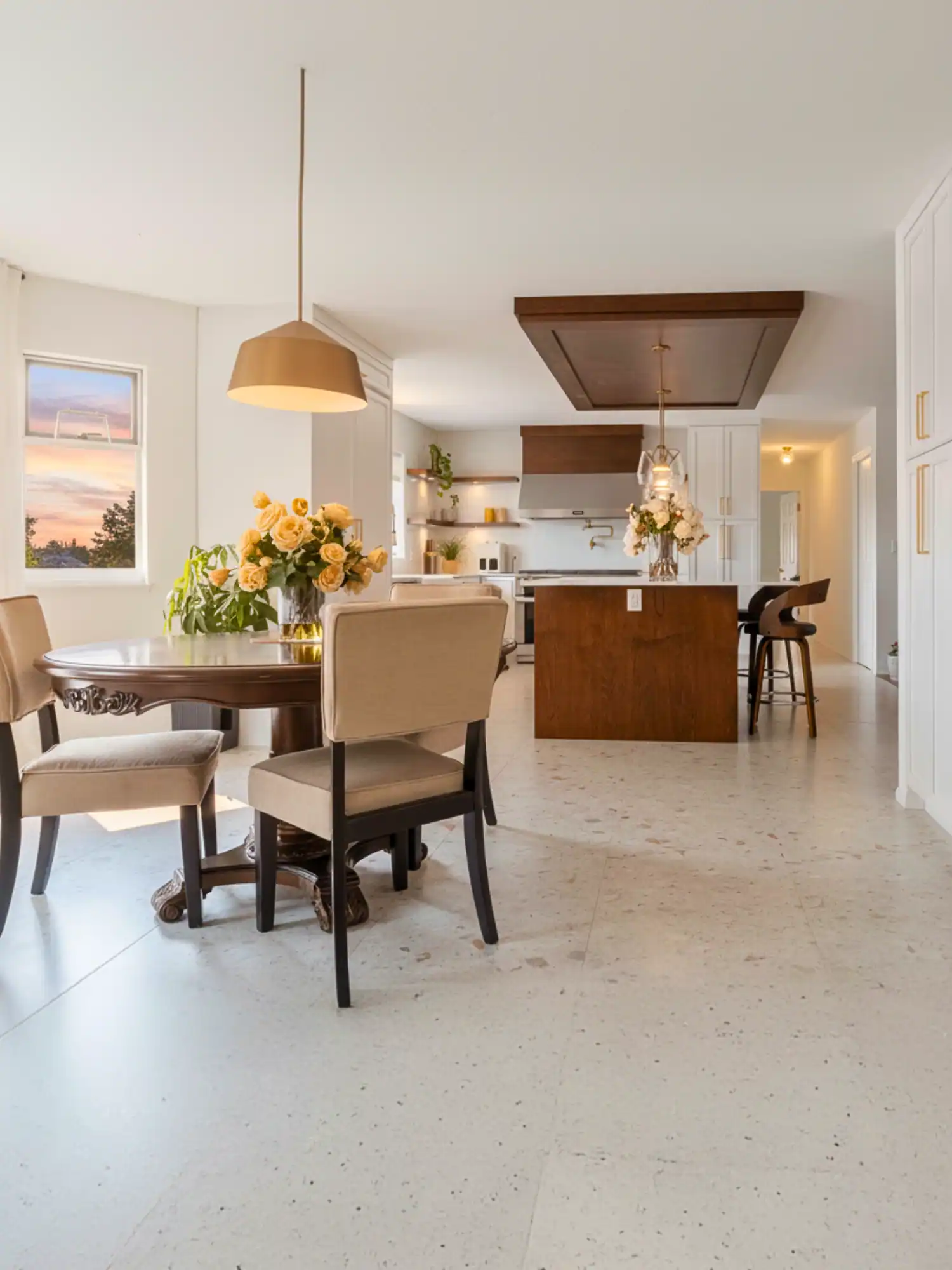
Two-Storey Home Renovation Vancouver: Costs, What to Renovate & Common Issues (2026)
Walk through almost any neighbourhood in Burnaby, New Westminster, Coquitlam, North or West Vancouver, or South Surrey and you will find the same house repeated dozens of times: a two-storey built between 1965 and 1995, three or four bedrooms upstairs, living and dining on the main floor, a full basement underneath, a double garage, and — if the owners have not touched it in twenty years — shag carpet, brass fixtures, popcorn ceilings, and a staircase that was already dated when it was installed. These homes are solid, well-located, and structurally sound. They are also desperately in need of updating, and their owners consistently rank among the busiest renovation clients in the Lower Mainland.
This guide covers every major scope of a two-storey home renovation in Vancouver — costs, sequencing, permit requirements, mechanical upgrades, ROI, and the specific quirks that come with homes built in this era. Whether you are planning a cosmetic refresh or a full gut renovation with a legal basement suite, the information below will help you understand what you are getting into before the first contractor sets foot in your home.
Before you start, download our free Vancouver Renovation Guide — it covers permit sequencing, contractor selection, and budgeting in detail. If you are ready to talk numbers, contact our team for a no-obligation estimate.
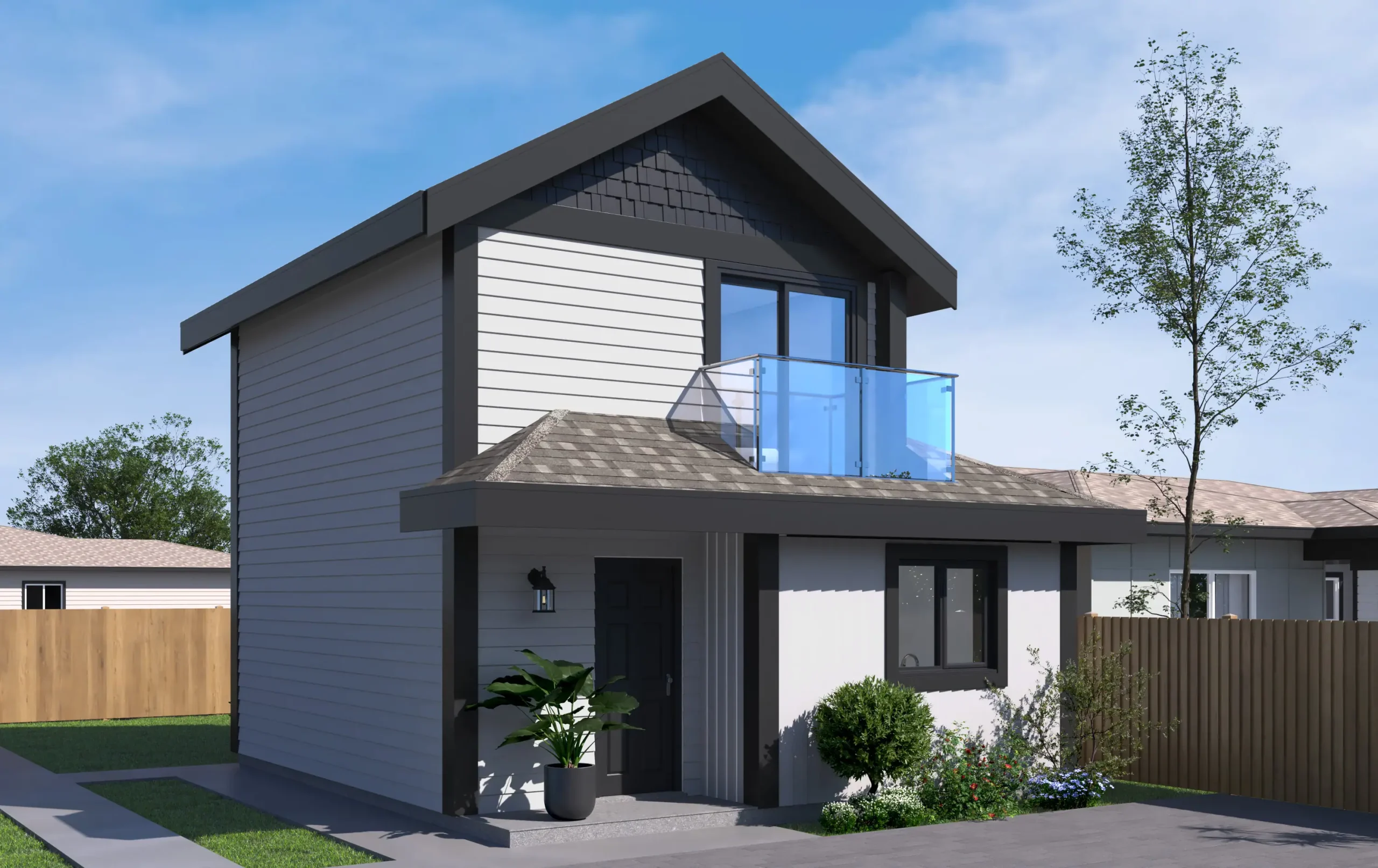 Laneway house construction in Vancouver” class=”wp-image-12762″ />
Current market values for these homes range from roughly $1.3 million for a smaller, less updated example in Burnaby or New Westminster up to $2.5 million or more for a larger
Vancouver General Contractors
Vancouver’s Two-Storey Housing Stock: What You Are Working With
The bulk of Vancouver’s two-storey single-family homes were built in two waves: a first wave from the mid-1960s through the mid-1970s, and a second larger wave from the late 1970s through the early 1990s. Both waves produced structurally similar homes — wood-frame construction, 1,800 to 2,800 square feet of finished living space, full concrete basements, and layouts that reflected the era’s preference for separated, formal rooms over open-plan living.
These homes sit predominantly in the suburbs that experienced rapid post-war residential growth: Burnaby’s Brentwood, Edmonds, and Deer Lake Park neighbourhoods; New Westminster’s Queensborough and Glenbrooke North; Coquitlam’s Harbour Chines and Westwood Plateau (the latter being more 1990s); North Vancouver‘s Delbrook and Capilano Highlands; West Vancouver’s Ambleside and Chartwell; and South Surrey’s Elgin and Sunnyside Park. Within Vancouver proper, Renfrew, Collingwood, and South Cambie also have significant concentrations of this housing type.
The typical floor plan has the main living areas — living room, formal dining room, kitchen, and a small powder room — on the ground floor, with three or four bedrooms plus one or two bathrooms on the second floor. Basements are almost universally full-height (seven to eight feet of clear ceiling height), which is excellent news for anyone considering a suite conversion. Garages are typically attached and accessed through the main floor. Attics are usually unconditioned storage accessed via a hatch.
Current market values for these homes range from roughly $1.3 million for a smaller, less updated example in Burnaby or New Westminster up to $2.5 million or more for a larger, well-renovated home in West Vancouver or South Surrey. The gap between an unrenovated and a fully renovated example in the same neighbourhood is frequently $300,000 to $600,000 — which is precisely why strategic renovation investment in this housing type tends to generate strong returns.
The renovation challenges specific to this era of construction include: original electrical panels rated at 100 amps (insufficient for modern loads), galvanized or early copper plumbing that may need partial replacement, minimal insulation by modern standards (R-12 or less in walls), asbestos-containing materials in floor tiles and textured ceilings built before 1985, oil-fired forced-air furnaces in many 1970s examples, and load-bearing walls between the kitchen and living room that owners consistently want removed. None of these challenges are deal-breakers — they are simply costs and sequences that need to be planned for.
Two-Storey Renovation Costs: The Full Range for Vancouver in 2026
Two-storey homes renovate at a higher per-square-foot cost than bungalows for a specific structural reason: any changes to the second floor require either staircase access for materials or crane lifts for larger items. Trades also bill more time for work at height — electricians, drywalllers, and painters all charge a premium on second-storey work. That said, the overall cost per project is often similar to a comparably sized bungalow because the basement is not counted as finished living space in most renovation scopes.
The table below reflects Vancouver-market contractor pricing in 2026, including labour, materials, permits, and project management. These ranges assume a home in average original condition — if asbestos abatement, major structural remediation, or plumbing replacement is needed, add 10% to 25%.
| Renovation Scope | Cost Range (2026) | Typical Duration |
|---|---|---|
| Cosmetic refresh (flooring, paint, fixtures, trim) | $45,000 – $90,000 | 6–10 weeks |
| Kitchen + master suite renovation | $85,000 – $150,000 | 10–16 weeks |
| Full interior renovation (all rooms, mechanical) | $200,000 – $380,000 | 5–9 months |
| Full renovation + basement suite | $280,000 – $480,000 | 7–12 months |
| Exterior update (siding, windows, roof) | $55,000 – $120,000 | 6–12 weeks |
| Staircase replacement or upgrade | $8,000 – $22,000 | 1–2 weeks |
| Basement suite conversion only | $60,000 – $95,000 | 10–14 weeks |
| Mechanical package (panel + HVAC + HRV) | $25,000 – $55,000 | 2–4 weeks |
A note on contingency: two-storey homes built before 1985 almost always reveal surprises when walls are opened — asbestos wrap on heat ducts, knob-and-tube wiring in secondary circuits, or unexpected plumbing configurations. Budget a minimum 15% contingency on any project that involves opening walls, and 20% if the home is pre-1980.
Main Floor Renovation: Open Concept, Kitchen, and Flooring
The single most requested renovation in a two-storey home built between 1965 and 1995 is the removal of the wall between the kitchen and the living or dining area. Every home from this era was built with a closed kitchen — small, efficient by the standards of the time, and completely isolated from the family activity happening in the adjacent rooms. Today’s buyers and owners universally want an open-plan main floor, and achieving it requires dealing with the bearing wall that almost always sits between those spaces.
In a two-storey home, the wall between the kitchen and living room typically runs perpendicular to the floor joists above and carries load from the second floor and sometimes the roof. Removing it requires engineering — a structural engineer must design the replacement beam (typically a laminated veneer lumber or steel beam), specify the posts and footings, and provide stamped drawings for the permit. This is not optional and is not a shortcut to take. The permit and engineering cost alone runs $2,500 to $5,000. The full scope — engineering, permit, wall removal, beam installation, temporary support, patching ceilings and floors where the wall was — runs $15,000 to $35,000 depending on the beam span and the complexity of the plumbing or electrical that runs through that wall.
Kitchen renovation costs in a two-storey home sit in the $50,000 to $85,000 range for a mid-range finish — new cabinetry, quartz countertops, a tile backsplash, updated appliances, and reconfigured plumbing and electrical. High-end kitchens with custom millwork, integrated appliances, and heated floors run $90,000 to $160,000. These costs are consistent with other Lower Mainland home types because the kitchen itself does not change size based on how many storeys the house has.
Flooring continuity across the main floor is a detail that separates a professional renovation from a DIY patch-up. The goal is a single consistent floor material flowing from the front door through the living room, dining room, and kitchen. In most 1970s–1990s two-storeys, this means ripping out a mix of carpet (living room), vinyl (kitchen), and possibly ceramic tile (entry) and replacing everything with a single material. Engineered hardwood is the preferred choice — it handles the humidity variation of a full main floor better than solid hardwood, and it installs over radiant heat if that upgrade is planned. Expect $8,000 to $16,000 for engineered hardwood across a typical two-storey main floor, including removal, subfloor prep, and installation.
Powder rooms on the main floor are often undersized or awkwardly located in homes from this era — sometimes tucked under the stair in a space that barely fits a toilet and pedestal sink. A powder room refresh (new vanity, toilet, mirror, light fixture) runs $4,000 to $8,000. If relocation or a full build-out is needed, budget $12,000 to $22,000 including the plumbing rough-in changes.
Master Bedroom and Ensuite Renovation
In a two-storey home built before 1990, the master bedroom is almost always on the second floor — typically the largest of the three or four bedrooms, usually at the front or rear of the home. What it almost never has is an adequate ensuite. Homes built in the 1970s commonly had a single shared bathroom serving all three or four bedrooms. By the late 1980s, a small ensuite — often called a three-piece at 5 feet by 7 feet — was becoming standard, but it rarely included a double vanity, a soaking tub, or the storage that today’s buyers expect.
Expanding a master ensuite in a two-storey home almost always means taking square footage from an adjacent space — either borrowing from the master bedroom itself, absorbing part of an adjacent smaller bedroom, or (less commonly) enclosing a hallway section. Taking from an adjacent bedroom requires careful planning: the smaller bedroom must remain functional, and the structural implications of moving walls on the second floor depend on which direction the joists run and whether any walls above the ceiling are load-bearing. A structural engineer review costs $800 to $1,500 but is worth every dollar before demolition starts.
A master suite renovation — new flooring in the bedroom, full ensuite gut and rebuild with double vanity, heated tile floors, a walk-in shower with glass enclosure, and a freestanding soaking tub — runs $35,000 to $75,000 in Vancouver’s 2026 market. That range covers a competently finished renovation; custom tile work, steam showers, or a full bathroom expansion that absorbs an adjacent room pushes the number to $80,000 to $120,000.
Walk-in closet conversion is frequently bundled into a master suite renovation. Most second-floor bedrooms in this era have small reach-in closets — often two sliding doors on a six-foot opening. Converting the existing closet to a proper walk-in requires taking two to four feet of additional bedroom depth, which is generally feasible given that master bedrooms in these homes typically run twelve by fifteen feet or larger. Custom built-in closet systems run $3,500 to $8,000 for a well-fitted walk-in. Prefabricated systems from big-box suppliers start around $1,200 but rarely use the space as efficiently.
What makes a master suite renovation particularly effective in a 1970s–1990s two-storey is the combination of space availability and buyer expectation. These homes have the room to create something genuinely impressive; it simply was not prioritized at original construction. A well-executed master suite is consistently one of the top two or three features cited by buyers when they purchase a renovated home in this price bracket.
The Staircase: Visual Centre of the Two-Storey Home
In a single-storey home, the staircase is a utility. In a two-storey home, it is architecture — the first thing you see when you walk through the front door, the visual spine of the interior, and one of the most photographed features in any real estate listing. In a home built between 1965 and 1995, the staircase is also almost certainly made of painted or stained oak with turned spindles, carpeted treads, and risers that looked acceptable in 1988 and look dated in every way today.
The most popular staircase update for two-storey homes is replacing the existing oak or softwood spindles with black powder-coated metal balusters or cable railing, refinishing or replacing the treads with hardwood or LVP, and replacing the handrail with a clean-profile oak or walnut cap. This transformation — which keeps the existing stair structure intact — costs $4,000 to $9,000 and dramatically changes the visual character of the home’s main floor. If the stair is carpeted, removing the carpet and restoring the underlying treads (or installing new solid hardwood treads) adds $1,500 to $3,500.
Open riser staircases — where the back of each step is exposed rather than enclosed with a solid riser — are popular in contemporary renovation but carry a permit requirement in Metro Vancouver: the BC Building Code requires that open risers not permit the passage of a 100mm (four-inch) sphere, meaning the tread-to-tread gap must be under 100mm. This is relevant if you are converting a closed-riser stair to an open-riser style, as it affects tread spacing and the structural support method. A permit is required any time you alter the stair structure, change riser height or tread depth, or switch railing type.
Full staircase replacement — removing the existing stair structure down to the framing and installing an entirely new stair — runs $12,000 to $22,000 depending on the span, the materials, and the complexity of the landing configuration. This is worth considering when the existing stair has structural damage, a non-compliant rise-run ratio, or a layout that impedes the open-plan main floor conversion. Full replacement also allows for a floating-tread cantilevered design, which requires proper steel stringer engineering and costs at the higher end of that range.
One structural limitation to keep in mind: the staircase in a two-storey home built in this era typically sits adjacent to the main bearing wall running parallel to the front of the house. Any relocation of the stair opening affects the floor structure above and likely requires engineering. Do not assume the stair can simply be repositioned without structural review.
Exterior Renovation: Siding, Windows, Roofing, and Curb Appeal
The exterior of a two-storey home built between 1965 and 1995 tells its age immediately. The most common siding types are T1-11 plywood panel siding (ubiquitous in 1970s and early 1980s construction, prone to moisture damage at the base and around windows), cedar clapboard (better performing but weathered and often painted multiple times), and in later examples, vinyl siding in builder-grade profiles that have faded and chalked over thirty years. Roofing is typically three-tab asphalt shingle that is either at end of life or has already been replaced once with a similar product.
The most durable and visually transformative exterior renovation for a 1970s–1990s two-storey is a complete siding replacement. Three materials dominate the current Vancouver market:
| Siding Material | Installed Cost (Two-Storey) | Lifespan | Notes |
|---|---|---|---|
| Fibre cement (Hardie board) | $18,000 – $35,000 | 30–50 years | Fire-resistant, paintable, best long-term value |
| Vinyl (premium profile) | $12,000 – $22,000 | 20–30 years | Lower maintenance, limited visual depth |
| Western red cedar | $20,000 – $40,000 | 25–40 years | Premium aesthetic, requires periodic staining |
| Engineered wood (LP SmartSide) | $15,000 – $28,000 | 25–35 years | Good compromise between cost and appearance |
Window replacement is one of the highest-impact exterior upgrades for energy performance and curb appeal. 1970s and 1980s two-storeys typically have aluminum-frame single or double-pane windows with no thermal break — they are cold to the touch in winter, prone to condensation, and a significant source of heat loss in a home with long duct runs. Replacement windows with thermally broken aluminum or vinyl frames and argon-filled double or triple glazing run $1,200 to $2,500 per window installed. A typical two-storey has 15 to 22 windows, so a full window replacement project runs $18,000 to $55,000. City of Vancouver and Metro Vancouver municipalities require a permit for window replacement when the opening size changes; permit-in-kind replacements (same opening size) have varying requirements by municipality — check before starting.
Exterior painting — either on new siding before it weathers or as a refresh on existing wood siding — runs $6,000 to $14,000 for a two-storey including proper preparation, priming, and two-coat finish application. The difference between a professionally painted exterior and a DIY paint job is visible from the street and affects the home’s market perception immediately.
Roofing replacement for a two-storey ranges from $12,000 to $22,000 for architectural asphalt shingles (the standard upgrade from three-tab) and $28,000 to $55,000 for metal standing-seam or synthetic slate. Roofing is almost always permit-required in Vancouver-area municipalities. The combination of new siding, new windows, and a new roof — the complete exterior envelope — is the single highest-impact visual transformation possible for a dated two-storey and will change the home’s perceived value dramatically.
Mechanical Upgrades: Electrical, HVAC, and Energy Systems
Two-storey homes built between 1965 and 1985 have a mechanical profile that is consistently inadequate by modern standards and often poses insurance challenges that homeowners do not discover until they need to make a claim or sell the property. Addressing mechanical systems is the unsexy, invisible work that makes every other renovation investment perform correctly — and it is almost always the right first step in a major two-storey renovation.
Electrical panels in homes of this era are almost universally rated at 100 amps — the standard when the home was built and now the minimum threshold where many insurers begin to raise questions. A modern two-storey with an electric vehicle charger, air conditioning, a basement suite with its own circuits, and the standard kitchen load (refrigerator, dishwasher, electric range, microwave) needs a 200-amp panel. Panel upgrades — removing the existing panel and service entrance, installing a new 200-amp panel, and bringing the service entrance up to current code — run $3,500 to $6,500 in Metro Vancouver. Add a subpanel for a basement suite for another $1,200 to $2,000. Federal Pacific or Zinsco brand panels (common in this era) should be replaced as a priority regardless of amp rating — both have documented breaker failure issues that insurers consider high risk.
Heating systems in two-storey homes from the 1970s were frequently oil-fired forced-air furnaces. Many have since been converted to gas, but some oil tanks — underground or in-slab — remain, and their decommissioning is a regulated process that costs $3,000 to $12,000 depending on whether contamination is found. If you are buying a two-storey with an oil system, factor oil tank decommissioning into your purchase calculus. Gas furnace replacement (existing gas system, furnace only) runs $5,000 to $9,000 including installation and permit.
Heat pump installation is the dominant mechanical upgrade trend in Metro Vancouver’s 2026 market, driven by BC Hydro and FortisBC rebate programs and the long-term operating cost advantage. A ducted heat pump system that replaces the existing gas furnace and provides both heating and cooling runs $12,000 to $22,000 installed before rebates. The BC government’s CleanBC rebates currently offer up to $6,000 for cold-climate heat pumps, bringing the net cost to $6,000 to $16,000. For two-storey homes specifically, ductwork balance matters — longer duct runs to second-floor rooms lose more heat, and the original ductwork sizing may need adjustment when transitioning from a higher-output gas furnace to a heat pump.
Central air conditioning addition to an existing forced-air system — adding a central AC coil and outdoor condenser — runs $6,000 to $12,000. HRV (heat recovery ventilator) installation, which is required by BC Building Code for new airtight construction and strongly recommended as a renovation upgrade, runs $3,500 to $6,500 including ductwork. The best time to install an HRV is when walls are already open for other renovation work — the labour savings from not patching around new ductwork are significant.
Cost bundling strategy for mechanical: the single most effective way to manage mechanical upgrade costs in a two-storey renovation is to bundle all mechanical work into one mobilization — electrical, HVAC, and plumbing rough-in for a basement suite all happening in the same open-wall phase. Trades share access, inspection sequences align, and you avoid paying for wall opening and patching multiple times. This bundling approach can reduce the combined mechanical upgrade cost by 20% to 30% compared to staging each scope separately.
Basement Suite Creation: Converting the Full-Height Basement
The basement of a 1965–1995 two-storey is one of the most valuable renovation opportunities in Metro Vancouver’s housing market. Unlike 1950s postwar bungalows with crawl spaces or partial basements, two-storeys from this era almost universally have full concrete-block or poured-concrete foundations with seven to eight feet of clear ceiling height — typically already meeting the minimum 1.95-metre (6’5″) ceiling height required for a legal secondary suite under the BC Building Code. Many have eight feet, which is genuinely comfortable and essentially eliminates the most common barrier to suite conversion.
A basement suite conversion includes: framing interior partition walls, installing insulation (minimum R-20 in walls under Metro Vancouver’s Step Code requirements), drywalling and taping, installing a bathroom (rough plumbing, tile, fixtures), installing a kitchen rough-in and cabinetry, electrical (separate circuits and a subpanel, separate metering if desired), flooring, windows upgrade to egress-sized openings, and — critically — a separate entrance. Expect $60,000 to $95,000 for a complete two-bedroom legal suite conversion in an existing full-height basement.
Separate entrance options for a two-storey basement suite depend on the site’s grade. Walk-out basements — where the rear or side of the basement is at or near grade — allow a simple exterior door without excavation. Homes where the basement is fully below grade on all sides require either a below-grade stairwell (a concrete well dug at the exterior with stairs leading down to a door cut through the foundation — $8,000 to $18,000) or a shared internal entrance with a fire-rated door and separation between the suite and the main house. Separate external entrances are strongly preferred by tenants and required by some municipalities for legal suite registration.
The permit process for a basement suite in Vancouver and Metro Vancouver municipalities involves a building permit (structural and mechanical drawings required), electrical permit, plumbing permit, and in some cases a zoning check to confirm secondary suites are permitted in the specific zone. Most residential zones in Burnaby, New Westminster, Coquitlam, North and West Vancouver, and South Surrey now permit one secondary suite by right. Processing times for building permits for suite conversions run four to twelve weeks depending on the municipality and current queue depth. Do not start construction without the permit — suite conversions without permits cannot be registered and can create significant issues at resale.
The rental income case for a two-storey basement suite in Metro Vancouver is compelling: a two-bedroom suite in Burnaby or Coquitlam rents for $2,200 to $2,800 per month in 2026. At $2,500 per month, a $75,000 suite conversion pays back in 30 months in rental income alone — before any consideration of resale value increase.
Updating the 1970s–1990s Aesthetic: The Details That Transform a Dated Two-Storey
Not every two-storey renovation is a full gut. Many homeowners inherit a structurally sound but cosmetically exhausted home and need to transform its feel without a complete rebuild. The good news is that the specific cosmetic markers of the 1970s–1990s era are well-understood, and addressing them systematically produces a compounding visual transformation that exceeds the sum of its parts.
Popcorn ceiling removal is the starting point. Textured acoustic ceilings were standard in homes built before the late 1980s and were almost exclusively applied to hide imperfect drywall work that would be immediately visible under a smooth finish. Removing them reveals the drywall underneath — which then needs to be skim-coated or re-drywalled, primed, and painted. In homes built before 1985, asbestos testing of the texture is required before removal (a sample test costs $50 to $150 per room; professional asbestos abatement if positive runs $2,000 to $8,000 for a typical two-storey main floor). Assuming no asbestos, popcorn ceiling removal and smooth finish across the entire main floor of a two-storey runs $2,000 to $5,000.
Brass fixtures — door hardware, plumbing fixtures (faucets, towel bars, toilet paper holders, shower heads), and light fixtures — are the single most date-specific visual element in a 1980s or early 1990s home. They are also surprisingly affordable to replace. Replacing all door hardware (typically 12 to 18 interior doors plus closets) with brushed nickel or matte black hardware runs $800 to $2,000 for materials. Replacing plumbing fixtures in two bathrooms, a powder room, and a kitchen runs $1,500 to $4,000 for quality fixtures. Light fixture replacement throughout the main floor and second floor runs $2,000 to $6,000 for fixtures plus electrician time. Total brass-to-modern fixture replacement: $3,000 to $8,000, with a visual impact that is completely out of proportion to the cost.
Carpet removal and replacement is the other foundational cosmetic upgrade. Almost every two-storey from this era has carpet throughout the bedrooms and often on the second-floor landing and hallway. Removing it and installing engineered hardwood or LVP throughout the entire second floor (typically 600 to 900 square feet) runs $8,000 to $16,000 including removal, subfloor prep, and installation. Combined with the main floor flooring, a whole-house flooring upgrade runs $16,000 to $32,000 and produces the single most dramatic visual transformation per dollar of any cosmetic renovation.
Interior doors in a 1970s–1990s two-storey are almost universally hollow-core moulded panel doors with the cheapest possible hinges and the cheapest possible hardware. Replacing them with solid-core doors — which have better acoustic performance, a better look, and a better feel — runs $150 to $350 per door including installation. A typical two-storey has 12 to 18 interior doors; a full replacement runs $2,000 to $6,300. The difference in sound transmission between a hollow-core and solid-core bedroom door is immediately obvious to anyone who has lived with both.
Interior trim — baseboards, door casings, and window sills — in these homes is either very narrow (1970s) or builder-grade colonial profile (1980s–1990s). Replacing it with clean, wider contemporary profile baseboard (typically three or four inches) and simple square-edge casing throughout the main floor costs $3,000 to $7,000 in materials and labour and completes the transformation from dated to modern that the other cosmetic upgrades begin.
ROI for Two-Storey Home Renovation in Vancouver
Return on investment for renovation in Vancouver’s two-storey segment is among the strongest in the Lower Mainland, driven by the gap between unrenovated and renovated valuations in the $1.3M to $2.5M price band. The data below reflects VGC’s project experience and current Lower Mainland resale market conditions — ROI varies with neighbourhood, the quality of execution, and market timing, but the ranges below represent realistic outcomes for competently executed renovations.
| Renovation Scope | Typical Cost | ROI Range | Notes |
|---|---|---|---|
| Kitchen renovation (mid-range) | $55,000 – $85,000 | 108% – 148% | Highest single-room ROI in two-storey segment |
| Master ensuite renovation | $35,000 – $75,000 | 109% – 152% | Especially strong in 3-bed homes with single shared bath |
| Full interior renovation | $200,000 – $380,000 | 112% – 172% | Best ROI when cosmetic + mechanical combined |
| Basement suite addition | $60,000 – $95,000 | 185% – 250% | Highest ROI of any scope; adds legal suite income |
| Exterior update (siding/windows/roof) | $55,000 – $120,000 | 106% – 132% | Strong curb appeal and energy efficiency gains |
| Staircase update | $8,000 – $22,000 | 110% – 140% | High visual impact relative to cost |
| Cosmetic refresh | $45,000 – $90,000 | 115% – 155% | Best cost efficiency for homes in good structural condition |
The basement suite addition stands out as the strongest ROI in the two-storey segment for a specific reason: it converts unfinished, low-value square footage (basement storage) into legal, income-generating living space. The market values a two-storey with a legal suite at a premium that consistently exceeds the cost of the suite conversion, and the rental income provides ongoing return beyond the resale calculation. In North Vancouver, Burnaby, and Coquitlam specifically, a two-storey with a legal two-bedroom suite commands a $150,000 to $300,000 premium over a comparable home without a suite.
ROI figures above 100% indicate that the renovation adds more value to the property than it costs — meaning buyers in the current market are paying more for renovated homes than the renovation itself cost to complete. This is not always the case in all renovation segments, but it is consistently the case for well-executed two-storey renovations in Metro Vancouver’s current market. The key qualifier is execution quality: a poorly done renovation using low-grade materials and inadequate trade work will not achieve these returns. The market is sophisticated enough to recognize quality — especially at the $1.5M+ price points where two-storey renovated homes compete.
Planning a Two-Storey Renovation: Phasing, Permits, and Living Arrangements
Two-storey home renovations are frequently phased over one to three years, either by design (to spread cost) or by circumstance (permit delays, contractor availability, financing). Understanding the correct sequence for a phased renovation is essential — doing work in the wrong order creates rework costs and can damage already-completed finishes.
The correct phasing sequence for a major two-storey renovation is: mechanical first, structural second, finishes third. Mechanical (electrical, plumbing, HVAC) must be roughed in before walls are closed. Structural (bearing wall removal, beam installation, window enlargement) must be completed and inspected before framing work proceeds. Finishing (drywall, flooring, cabinetry, fixtures, paint) comes last. This sequence is non-negotiable because each step depends on the previous one, and reversing it creates expensive rework.
For a phased renovation over two years, a typical sequencing approach is: Phase 1 (Year 1) — mechanical upgrades (panel, HVAC, plumbing), basement suite rough-in, structural work (bearing wall removal, beam), exterior envelope (siding, windows, roof); Phase 2 (Year 2) — main floor kitchen and living area finishes, basement suite completion, staircase, second-floor bathrooms; Phase 3 (Year 2–3) — master bedroom, second-floor cosmetic work, exterior landscaping and driveway.
Living in a two-storey during renovation is feasible for most scopes, provided the basement is not being simultaneously converted. The typical arrangement is: the family occupies the second floor (bedrooms intact) and either the main floor kitchen (if not yet demolished) or a temporary kitchen setup in the basement. When the main floor kitchen is out of commission — typically two to six weeks — a microwave, mini fridge, and hot plate in the basement serve most households adequately. What makes this workable in a two-storey specifically is the vertical separation between the construction zone and the sleeping areas. The same renovation in a bungalow is considerably more disruptive.
Permit sequencing for a renovation that spans multiple scopes requires coordination with your municipality’s building department early — not after you have already started. In Vancouver, Burnaby, and most Metro Vancouver municipalities, a single building permit can cover multiple scopes if the drawings are submitted together. Separate permits are required for electrical and plumbing regardless. Inspection scheduling — structural framing inspection, electrical rough-in inspection, insulation inspection, and final occupancy inspection for any new suite — needs to be planned against your contractor’s schedule. Failing to book inspections in time is one of the most common causes of renovation delays, and it costs nothing except forethought.
If you are at the planning stage and not yet certain which scopes to tackle first, our Vancouver home renovation page covers the full scope of services we offer, and our free renovation guide provides a permit-by-permit walkthrough for the most common renovation types in Metro Vancouver.
More Vancouver Housing Types Guides
Vancouver Special vs. Character Home Renovation: Key Differences in Approach and Cost
Condo vs. House Renovation in Vancouver: What's Different About Strata?
Townhouse vs. Detached Home Renovation in Vancouver: What Strata Changes About Your Project
Post And Beam Home Renovation North Vancouver
Split Level Home Renovation Opening Awkward Layout
Ready to start your renovation?
Frequently Asked Questions: Two-Storey Home Renovation Vancouver
How much does it cost to remove a bearing wall in a two-storey home?
Removing a bearing wall in a two-storey home costs $15,000 to $35,000 in Metro Vancouver for the complete scope: structural engineering drawings and stamp ($2,500–$5,000), building permit ($800–$1,800), temporary support installation, wall removal, beam and post installation, and patching of ceiling, floors, and any disturbed mechanical. The wide range reflects beam span (a four-metre beam costs less than a seven-metre beam), whether electrical or plumbing runs through the wall, and whether the posts require new footings in the basement. Do not hire a contractor who proposes skipping the engineering — the consequences of an under-specified beam in a two-storey are severe and irreversible.
Can I expand my master ensuite by taking space from an adjacent bedroom?
Yes, this is one of the most common second-floor modifications in two-storey homes. The feasibility depends on which direction the floor joists run relative to the wall you want to move, whether the wall carries any load from above, and how much the adjacent bedroom can shrink before it becomes non-functional. Most second-floor non-load-bearing partition walls can be moved with a building permit and minor framing work ($2,000–$5,000 for the structural work alone). A structural engineer should confirm load-bearing status before demolition begins. Budgeting $800 to $1,500 for an engineering confirmation visit is the right approach.
Do I need a permit to update my staircase?
Yes, in Metro Vancouver municipalities, any alteration to stair structure, railing height, baluster spacing, or tread depth requires a building permit. Cosmetic changes — refinishing existing treads, staining a handrail — typically do not require a permit. Replacing balusters with a different style while maintaining the existing handrail height and railing structure is often permit-exempt, but this varies by municipality. When in doubt, call your local building department with a description of the work before starting. Unpermitted stair work is a disclosure issue at resale and can create liability problems.
Does my 1970s basement meet the height requirement for a legal suite?
Most full basements in 1970s–1990s two-storeys have seven to eight feet of floor-to-joist clearance, which meets or exceeds the BC Building Code minimum of 1.95 metres (6’5″) for a legal secondary suite. Measure from the top of the finished floor (or proposed finished floor if you are adding flooring) to the underside of the floor joists or beam above. If the existing concrete floor is below the minimum and you cannot raise the floor, underpinning or benching the perimeter is possible but expensive ($30,000–$80,000) and generally not economical unless you are also addressing foundation waterproofing issues. In the vast majority of 1970s–1990s two-storeys, underpinning is not needed.
What is the best siding to replace T1-11 plywood siding on a 1970s two-storey?
Fibre cement (James Hardie board and batten or lap siding) is the most common replacement for T1-11 on Metro Vancouver two-storeys and the best long-term value. It does not rot, does not expand and contract significantly with humidity, is fire-resistant, and holds paint for 15 to 20 years between repaints. Hardie board installed on a two-storey costs $18,000 to $35,000 depending on the home’s perimeter and complexity. When replacing T1-11, always include new house wrap or building paper, replace all window flashings, and inspect the sheathing underneath for moisture damage before re-cladding — T1-11 has a known failure mode at base plate and window jamb intersections where water has historically entered.
How do I know if my carpet is hiding good hardwood floors underneath?
Two-storeys built in the 1970s sometimes have fir or oak hardwood under the carpet on the main floor (it was standard before carpet became fashionable), but second-floor subfloors are almost always plywood, not hardwood. To check, lift the carpet at a corner in an inconspicuous spot — usually inside a closet — and look at what is underneath. If it is hardwood, it may be restorable depending on its condition and finish depth. Be aware that hardwood refinishing in a 1970s home requires testing for lead paint (older finishes sometimes contained lead) before sanding. In most cases, even if hardwood is present, installing new engineered hardwood over it produces a better result than attempting to restore 50-year-old flooring of unknown condition.
How long does popcorn ceiling removal take in a two-storey home?
Removing popcorn ceilings across the entire main floor (living, dining, kitchen, hallway, powder room) typically takes two to four days for a crew of two. The process involves wetting the texture, scraping, skim-coating the ceiling surface, sanding, priming, and painting — the skim-coating and finishing stages take as long as the removal itself. The entire scope from removal to finished painted ceiling runs one to two weeks per floor. Before any removal begins in a home built before 1985, asbestos testing is required. If asbestos is present, a licensed abatement contractor must remove the material under containment before any other trades enter the space.
What should I renovate first if I am phasing the work over two years?
Start with mechanical — electrical panel, HVAC, and plumbing — before any cosmetic work. Mechanical work requires opening walls and ceilings; doing it after you have installed new drywall and flooring means tearing out your own renovation. After mechanical, proceed to structural (bearing wall removal, window replacement) and then to finishes. If budget allows in Year 1, prioritize: panel upgrade, HVAC replacement, and exterior envelope (siding and windows) — these have the greatest impact on the home’s functionality and protection from weather damage. Year 2: kitchen, bathrooms, flooring, and cosmetic work throughout. This sequence avoids rework and builds value in the right order.
Is it worth upgrading from oil heat to a heat pump in a 1970s two-storey?
Almost always yes, for three reasons: (1) operating cost — heat pumps are two to three times more efficient than oil heat per unit of energy delivered; (2) elimination of oil tank liability — underground tanks and even above-ground tanks over 20 years old create contamination risk and insurance problems; (3) BC government rebates — up to $6,000 for a cold-climate heat pump under the CleanBC program as of 2026. The net cost of a ducted heat pump in a two-storey after rebates is typically $6,000 to $16,000, with payback through energy savings running three to seven years depending on current oil prices. Factor oil tank decommissioning ($3,000–$12,000) into the comparison — it is often required regardless of what replaces the oil system.
What permits are required for a full two-storey renovation?
A full two-storey renovation typically requires: (1) Building permit — covers structural work, new walls, window enlargement, and suite conversion; (2) Electrical permit — required for any new circuits, panel upgrade, or fixture wiring beyond simple replacements; (3) Plumbing permit — required for any moved or new plumbing fixtures, drain relocations, or water service changes; (4) Gas permit — required for any gas appliance installation or line changes; (5) HVAC permit — typically covered under building permit in most municipalities, but confirm locally. In Vancouver specifically, a development permit may be required if you are changing the building envelope significantly. Work with a general contractor who understands the permit requirements in your specific municipality — requirements vary between Vancouver, Burnaby, North Vancouver, and other Metro municipalities.
How much does a full two-storey basement suite conversion cost in 2026?
A legal two-bedroom basement suite conversion in an existing full-height basement costs $60,000 to $95,000 in Metro Vancouver in 2026, including all permits, trades, materials, and finishing. This assumes the basement has adequate ceiling height (7’+) and an existing or readily created separate entrance. Variables that increase cost: adding an exterior stairwell where none exists ($8,000–$18,000), upgrading egress windows to meet code size ($800–$2,500 per window), installing a separate electrical meter ($1,500–$3,000), and any waterproofing remediation needed before framing. The investment is typically recovered within 30 months through rental income at current Metro Vancouver rental rates.
Will a staircase update add value to my two-storey home?
Yes — and disproportionately so relative to cost. The staircase is in the sightline from the front door and is typically the centrepiece of every real estate listing photo for a two-storey. Replacing dated oak spindles with black metal balusters, refinishing or replacing treads with hardwood, and installing a clean-profile handrail costs $4,000 to $9,000 and transforms the visual impression of the entire home’s interior. Buyers viewing two-storeys in the $1.5M+ market consistently cite the staircase as a feature that either draws them in or turns them off. The ROI on a quality staircase update is 110% to 140%, meaning it adds more to the home’s value than it costs.
Should I do the exterior renovation before or after the interior?
Exterior envelope work — siding replacement, window replacement, and roofing — should happen before or simultaneous with interior finishing work, never after. The reason is moisture: if the envelope is compromised (old siding, failed window flashings, worn roofing), moisture intrusion during interior renovation can damage new drywall, flooring, and cabinetry before it is even finished. Sequence correctly: envelope first (or at least windows and any actively failing siding sections), then interior mechanical, then interior finishes. If budget forces a choice, a partial exterior scope focusing on actively failing areas can be Phase 1, with complete siding replacement deferred to Phase 2 after interior work is complete — but do not defer addressing known moisture entry points.
How does a two-storey renovation compare in cost to a rancher or bungalow?
Per square foot, two-storey renovations cost 8% to 15% more than equivalent bungalow renovations, driven by the labour premium for second-floor access and the complexity of coordinating mechanical upgrades across two floors of finished space. However, total project cost is often similar or lower than a comparable bungalow renovation because the basement — which would be finished living space in a bungalow scope — is typically unfinished in a two-storey and either excluded from the scope or handled as a separate suite conversion. The two-storey’s advantage is its higher ceiling height on both floors (standard 8 feet versus the 7’6″ or lower of some 1950s bungalows) and its clear vertical separation between living and sleeping areas, which makes living-in-during-renovation considerably more feasible.
What is the biggest mistake homeowners make when renovating a two-storey?
The most common and most expensive mistake is starting cosmetic work before completing mechanical and structural. Specifically: installing new flooring before the bearing wall comes out (the wall removal and subfloor patching will damage the new floor), finishing the basement before adding the separate entrance (requires cutting through finished drywall and framing), or painting before the electrical work is done (outlets and switches get relocated, walls get patched). The second most common mistake is budgeting without a contingency for a home of this age. Pre-1985 two-storeys virtually guarantee surprises — asbestos, knob-and-tube, unexpected plumbing configurations — and homeowners who have not budgeted for these either stop the project partway through or make poor decisions under financial pressure. Budget 15% to 20% contingency before signing any contract.
How do I find a general contractor for a two-storey renovation in Vancouver?
Look for a licensed general contractor (BC Homeowner Protection Office licence check at hpo.bc.ca) with demonstrated experience specifically in two-storey home renovations — not just general construction. Ask for references from two-storey renovation projects in your municipality, confirm they pull all required permits (any contractor who suggests skipping permits is a liability), and get a minimum of three written quotes for any scope over $25,000. A detailed written contract specifying scope, materials, payment schedule, and dispute resolution is essential. Vancouver General Contractors specializes in two-storey home renovation across Metro Vancouver — contact our team for a free consultation and estimate.
Get a Free Renovation Quote
Metro Vancouver’s trusted general contractors. Free consultations across Vancouver, Burnaby, Richmond, North Shore & beyond.
Get Your Free Quote →VGC serves Vancouver and surrounding areas. View all renovation services in Vancouver →

Comments are closed