




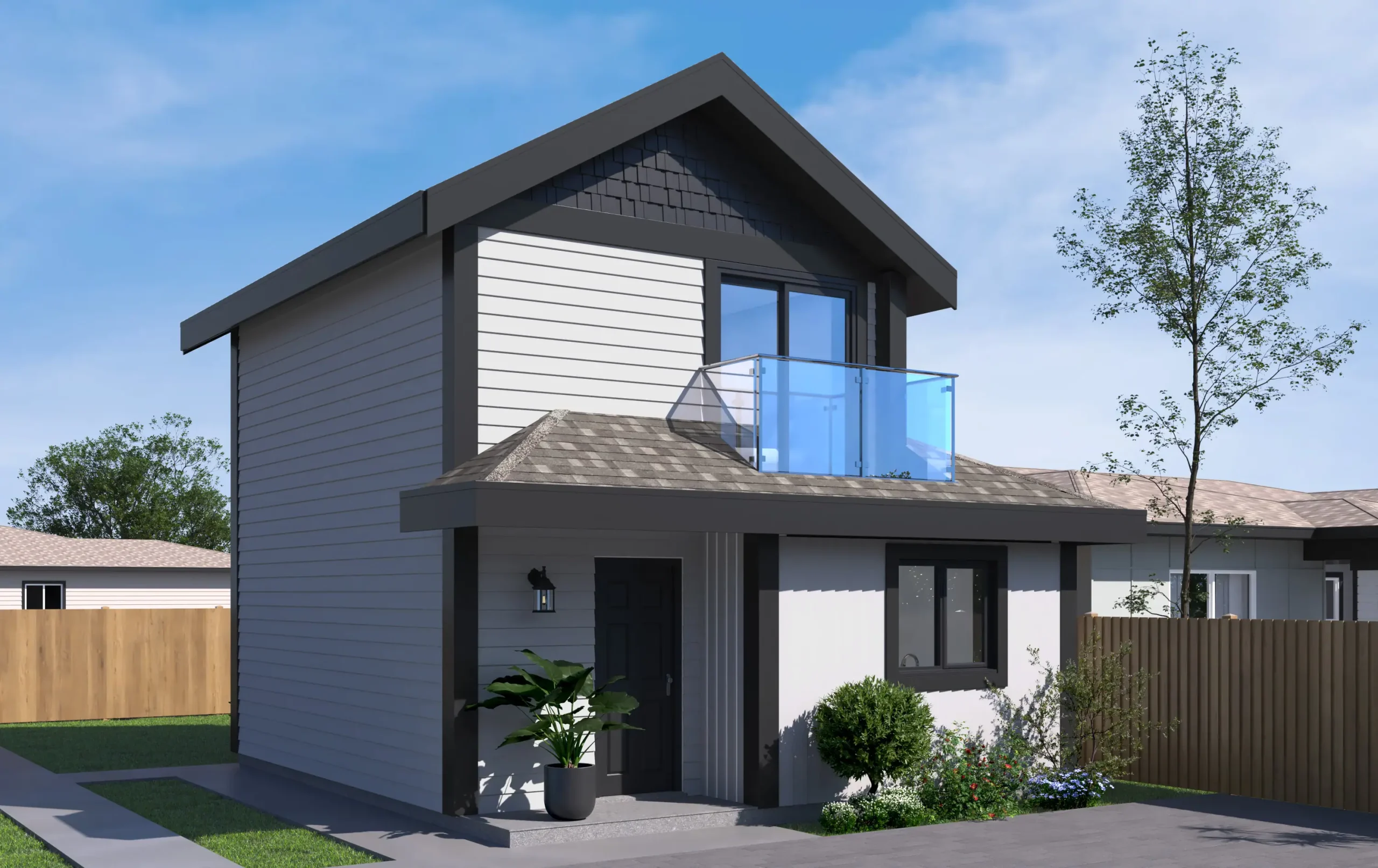
Vancouver Multiplex Conversion Guide: How Bill 44 Changes the Math on Your Property (2026)
If you own a home in Vancouver and haven’t yet looked seriously at what Bill 44 means for your property, you’re leaving money on the table. British Columbia’s Small-Scale Multi-Unit Housing legislation — in effect since June 2024 — is the most significant shift in residential zoning in a generation. For Vancouver homeowners, it means that a single lot can now legally host three or even four separate, rentable dwelling units without going through the expensive, time-consuming rezoning process that used to make multiplex development prohibitive for the average homeowner.
This guide breaks down exactly what Bill 44 enables on a typical Vancouver lot, what it costs, what you can earn, how the permits work, and how to sequence the project phases to maximize your return. Whether you’re a long-term homeowner looking to generate retirement income, a family exploring multi-generational living, or an investor evaluating acquisition opportunities, this is the most comprehensive Vancouver multiplex conversion guide available for 2026.
What Is Bill 44 and How Does It Change Vancouver Properties?
Bill 44, formally known as the Housing Statutes (Residential Development) Amendment Act, received royal assent in November 2023 and came into full force on June 30, 2024. The legislation overrides local zoning bylaws across British Columbia to allow small-scale multi-unit housing on any lot previously zoned for one or two residential units. It is provincial law, which means municipalities — including the City of Vancouver — cannot opt out.
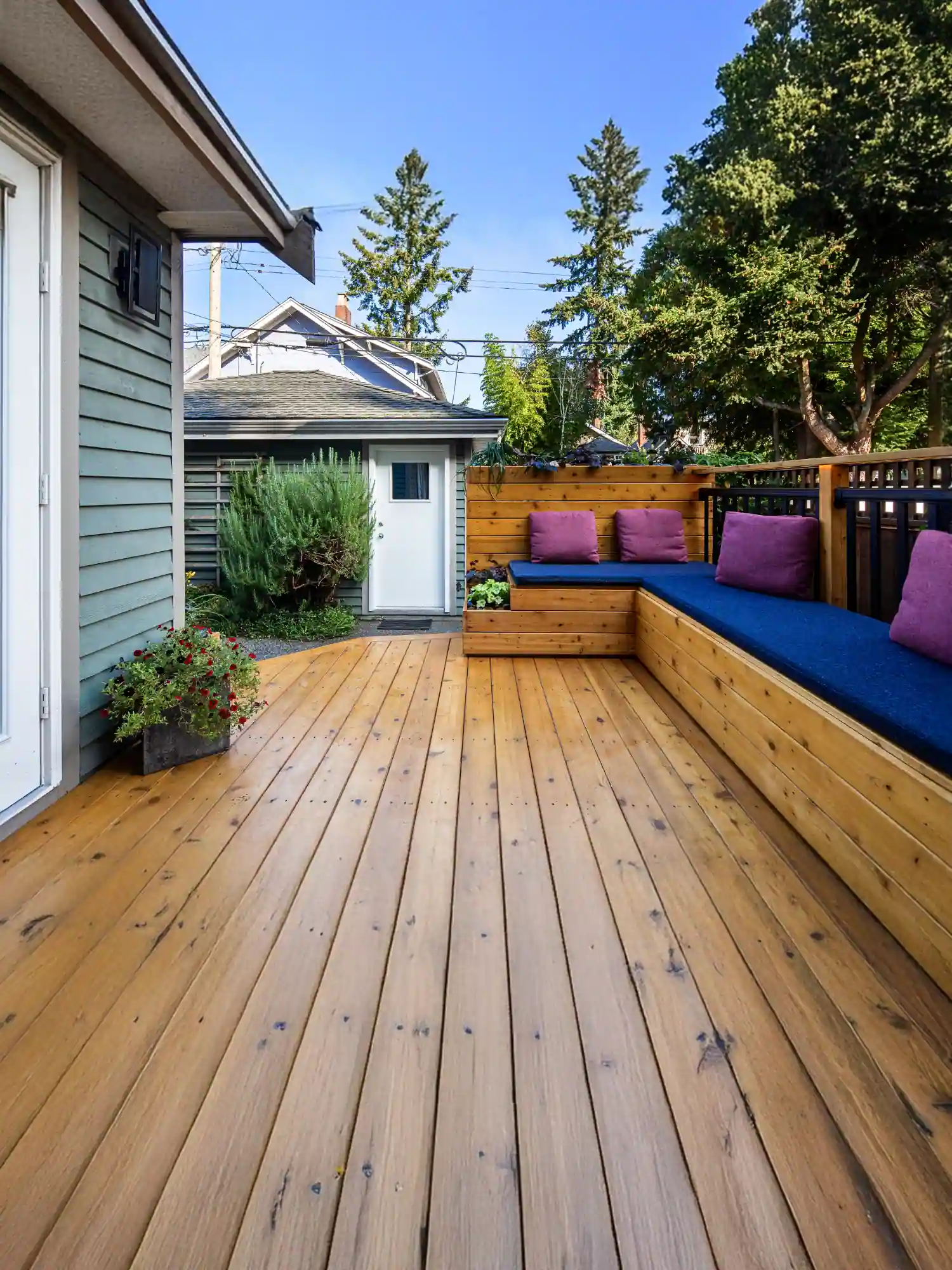 Surrey” class=”wp-image-12769″ />
Before Bill 44, a homeowner who wanted to build a laneway house alongside a secondary suite faced a rezoning application process that could take 18–36 months
Vancouver General Contractors
In practical terms, the Bill mandates that all single-family and duplex-zoned lots in BC’s larger municipalities must now permit:
- 3 units on lots under 280 square metres (~3,014 sq ft)
- 4 units on lots 280 square metres or larger
- 6 units on lots near frequent transit corridors (within 400m of a bus stop with service every 15 minutes or better)
Vancouver responded by creating the R1-1 Residential Inclusive zone, which replaced the legacy RS-1 (Single Family Residential) designation across most of the city’s traditional single-family neighbourhoods. Under R1-1, the combination of a main house, a secondary suite, and a laneway house — which was previously only possible after a long rezoning application — is now permitted as-of-right on virtually any standard Vancouver lot that has lane access.
The impact on property values has been immediate and measurable. Real estate analysts have noted that lots clearly positioned for triplex development — meaning they have lane access, sufficient lot width, and no encumbering covenants — now command premiums of 10–20% over comparable lots without those features. The market has quickly priced in the income potential that Bill 44 unlocks.
Who does this matter to most? Three groups stand out. First, long-term homeowners who bought in Vancouver decades ago and now have substantial equity: Bill 44 gives them a path to generate $5,000 or more per month in rental income without selling. Second, investors evaluating Vancouver acquisitions: the income math on a triplex lot is fundamentally different from a single-family purchase. Third, families pursuing multi-generational housing: Bill 44 makes it financially viable to house three generations on one lot, with genuine privacy for each.
What Can You Build Under Bill 44 in Vancouver?
Let’s be specific about what is now legally permitted on a standard Vancouver RS-1 lot — the 33-foot-wide by 122-foot-deep configuration that defines most of East Vancouver, Kitsilano, Mount Pleasant, and dozens of other neighbourhoods.
The Three-Unit Combination
On a standard 33×122 ft lot with lane access, the City of Vancouver’s R1-1 zoning now permits:
- Principal dwelling: The main house, typically 1,800–2,400 sq ft on two storeys
- Secondary suite: A self-contained suite within or attached to the principal dwelling — basement or main floor, minimum 37 sq m (398 sq ft), with its own exterior entrance
- Laneway house or garden suite: A detached dwelling at the rear of the lot, up to 83.6 sq m (900 sq ft), accessed from the lane
That is a legal triplex — three fully rentable, self-contained units on one residential lot — achieved entirely within the as-of-right R1-1 zoning. No rezoning application. No public hearing. No uncertainty about whether the project gets approved.
On Larger Lots
Lots wider than 33 feet or deeper than 122 feet may support a fourth unit, depending on their total area and the specific floor space ratio (FSR) calculations. A 40×122 ft lot, for example, has significantly more FSR headroom and may permit a larger laneway plus a carriage suite above it. Vancouver’s Development and Building Services Centre can confirm the exact envelope for your specific legal lot.
What Changed Relative to Before
Before Bill 44, a homeowner who wanted to build a laneway house alongside a secondary suite faced a rezoning application process that could take 18–36 months, cost $30,000–$60,000 in consultant fees alone, and still might not be approved at public hearing. The city’s heritage, character, and neighbourhood impact considerations gave objecting neighbours meaningful leverage to block projects. That barrier is now gone for Bill 44-compliant projects. The secondary suite plus laneway combination — the core triplex strategy — proceeds directly to building permit.
Stacking Existing Density
Many Vancouver homeowners already have one of the two secondary units in place. If you have an existing unauthorized suite, legalizing it under Bill 44 is now straightforward — the city has streamlined its secondary suite registration process. If you have an existing legal suite, you can proceed directly to planning your laneway house. Either way, you are stacking toward the full triplex configuration, and each step generates independent rental income.
The Financial Case for Multiplex Conversion
Numbers matter more than zoning rules. Let’s run the financial analysis on a real-world scenario that reflects what VGC clients encounter regularly.
The Property
A 1960s Vancouver Special in East Vancouver. Standard 33×122 ft lot. Current assessed value: $1.75 million. Existing state: main house with three bedrooms, no secondary suite, no laneway house. The homeowners have lived there for 22 years and have roughly $1.4 million in equity.
Scenario A: Add Secondary Suite Only
Cost: $75,000–$90,000 (full secondary suite with separate entrance, kitchen, bathroom, laundry, electrical sub-panel). Rental income: $2,200/month. Annual rental income: $26,400. Gross yield on construction cost: approximately 30%. Property value uplift: $150,000–$250,000 (capitalizing rental income at 5% cap rate and adding renovation premium).
Scenario B: Add Secondary Suite + Laneway House (Full Triplex)
Cost: $75,000–$90,000 for suite + $420,000–$500,000 for laneway house = total $495,000–$590,000. Rental income: $2,200/month (suite) + $2,800/month (laneway) = $5,000/month = $60,000/year. Gross yield on total construction cost: approximately 11–12%. Property value uplift: The rental stream alone, capitalized at 5%, represents $1.2 million in asset value — and the lot itself has become a triplex-income-producing property, which the market values at a significant premium over the pre-Bill 44 comparables.
| Scenario | Construction Cost | Monthly Rental Income | Annual Rental Income | Gross Yield on Build Cost | Estimated Property Value Uplift |
|---|---|---|---|---|---|
| Status Quo (no build) | $0 | $0 | $0 | — | — |
| A: Secondary Suite Only | $75K–$90K | $2,200 | $26,400 | ~30% | $150K–$250K |
| B: Suite + Laneway (Full Triplex) | $495K–$590K | $5,000 | $60,000 | ~11–12% | $800K–$1.2M |
The secondary suite alone produces an exceptional yield because the cost is low and the income is immediate. The full triplex takes longer and costs more, but the property value transformation is dramatic — and the $5,000/month in rental income covers a substantial portion of a typical mortgage payment, making the investment self-funding over time.
It is worth noting that CMHC’s MLI Select program offers mortgage insurance premium reductions for properties that include two or more affordable or accessible units. For a project of this scale, that premium reduction can translate to meaningful savings on financing costs. We cover this in detail in the financing section below.
Vancouver’s R1-1 Zoning: What’s Changed
The City of Vancouver’s R1-1 Residential Inclusive zone is the local implementation mechanism for Bill 44. Understanding what it actually permits — and what constraints remain — is essential before committing to a design and build plan.
Before and After
Under the old RS-1 zoning, a standard lot permitted: one principal dwelling unit, and one secondary suite OR one laneway house (with lane access) — but not both. The secondary suite and laneway combination required rezoning to RT (Two-Family Residential) or CD (Comprehensive Development), which was expensive, slow, and uncertain.
Under R1-1, the combination of principal dwelling + secondary suite + laneway house is permitted as-of-right. No rezoning. No development permit for zoning compliance. The path from decision to building permit has been dramatically shortened.
Key R1-1 Development Standards
- FSR (Floor Space Ratio): 0.60–0.70 depending on lot area. On a 33×122 ft lot (4,026 sq ft), this means a maximum of approximately 2,416–2,818 sq ft of combined floor space for all structures, excluding the laneway house (which has its own separate FSR calculation of 0.16 of the lot area, up to 83.6 sq m).
- Lot coverage: 45% maximum for ground floor structures. On a standard lot, this is approximately 1,812 sq ft of ground coverage across all buildings combined.
- Laneway house requirements: Lane access is required. The laneway house must face the lane. Maximum height is 5.8m (19 ft) to the mid-point of the roof.
- Setbacks: Side setbacks of 1.2m, rear setback of 6m for the principal dwelling, laneway house sited within 1m of the rear property line.
- Secondary suite requirements: Minimum 37 sq m floor area, own exterior entrance, full kitchen and bathroom, meets BC Building Code requirements for fire and sound separation.
What R1-1 Does Not Apply To
R1-1 and Bill 44 do not apply to strata lots. If your property is strata-titled — a townhouse, ground-floor strata unit, or similar — the provincial legislation and R1-1 zoning do not permit you to add additional dwelling units without strata corporation approval and, typically, a separate rezoning process. Lots in industrial or commercial zones are also excluded. Some properties carry heritage designations or restrictive covenants that limit development; a title search and review by a qualified professional is always recommended before proceeding.
The Three-Unit Strategy: Sequencing Your Multiplex
One of the most common mistakes homeowners make when they first discover the triplex opportunity is trying to do everything at once. That approach maximizes disruption, maximizes the financing requirement, and maximizes the risk of cost overruns affecting the entire project simultaneously. A phased strategy is almost always superior — and it is the approach VGC recommends and executes for most Vancouver multiplex conversion clients.
Phase 1: Secondary Suite ($70,000–$95,000)
Start with the secondary suite. It produces the fastest return on investment, the lowest capital requirement, and the least disruption to existing occupants. The work typically involves: creating a separate entrance (often an existing side door or exterior stair), reconfiguring basement or main-floor space, installing a full kitchen (including exhaust), upgrading the electrical panel or adding a sub-panel, plumbing for kitchen and bathroom, and ensuring building code compliance for fire separation (typically 30-minute fire assembly between units) and sound separation (STC 50+ for walls and floors). Timeline: permit to occupancy in approximately 4–6 months. Rental income begins: immediately upon tenant occupancy.
Phase 2: Laneway House Design and Permit (~6 months, overlapping with Phase 1)
While the suite is being built and rented, begin the design and permit process for the laneway house. Architectural drawings, structural engineering, and permit submission can proceed in parallel with suite construction and early tenancy. By the time the suite has been generating income for several months and you have confirmed rental demand and income, the laneway permit may be ready to issue. This eliminates dead time between phases.
Phase 3: Laneway House Construction ($350,000–$520,000)
The laneway house is the major capital investment and the one that completes the triplex. Construction takes approximately 10–14 months from permit issuance to certificate of occupancy. During construction, the suite continues generating rental income, which can be directed toward construction loan servicing. At completion, the property reaches full triplex income: $5,000–$6,500/month depending on unit size and neighbourhood rental market.
Full Triplex Outcome
- Total investment: $420,000–$615,000
- Total rental income: $5,000–$6,500/month ($60,000–$78,000/year)
- Gross yield on construction cost: 10–15%
- Property value increase: $800,000–$1,200,000 (estimated, market-dependent)
- Overall timeline: Phase 1 complete in 6 months; full triplex operational approximately 24 months from project start
The phased approach also gives you flexibility. If rental demand or construction costs shift materially between phases, you can adjust the laneway house design or delay Phase 3 without having committed to the full investment upfront. Many VGC clients find that Phase 1 rental income makes Phase 3 construction significantly easier to finance.
Permit Process for Multiplex Development in Vancouver
The permit process is where many homeowners — and unfortunately some contractors — underestimate the complexity and timeline. Understanding the permit landscape before you start saves significant time and money.
The Key Change Under Bill 44
Prior to Bill 44, adding a third unit to a single-family lot required a development permit (DP) for rezoning compliance in addition to a building permit. The DP process involved submitting to the City’s Development and Building Services, a discretionary review period, potential referral to Urban Design staff, and public notification — a process that could take 12–24 months and cost $25,000–$50,000 in consultant fees before a shovel went in the ground.
Under Bill 44 and R1-1, projects that comply with the as-of-right zoning standards do not require a development permit. You proceed directly to building permit. This is a fundamental change in the regulatory pathway and one of the most significant practical benefits of the legislation.
Building Permits Required
Each unit addition requires its own building permit application:
- Secondary suite permit: Submitted to the City of Vancouver Building and Licences Department. Required documents include architectural drawings showing the suite layout, separate entrance, fire separation details, electrical and plumbing scope. Secondary suite registration with the city is required upon completion. Timeline: 6–12 weeks for permit issuance on a straightforward application.
- Laneway house permit: More comprehensive — requires full architectural drawings (stamped by a registered architect or building designer), structural engineering drawings, site plan showing setbacks and lot coverage calculations, energy compliance documentation (Step Code 3 for new construction), and mechanical scope. Timeline: 18–28 weeks from complete application submission to permit issuance, depending on city workload and any revision cycles.
Parallel Permit Strategy
VGC’s approach for clients pursuing the full triplex is to submit both permit applications simultaneously where the timeline allows. While the laneway permit is being reviewed (a longer process), the suite permit is often issued and construction completes. This approach eliminates the sequential delay of waiting for one permit before beginning the next application. It requires more upfront investment in design and engineering, but the time savings — often 4–6 months — more than justify the cost.
Secondary Suite Registration
The City of Vancouver requires formal registration of secondary suites upon completion. Registration confirms the suite meets all code requirements and is reflected in city records. Unregistered suites — even if constructed to code — can create complications with insurance, lending, and future sale. VGC manages the registration process as part of every secondary suite project.
For a detailed overview of the full renovation permit process in Vancouver, see our comprehensive renovation guide.
Financing a Multiplex Conversion in Vancouver
Financing is the piece that makes or breaks most multiplex conversion projects. The good news: the financial ecosystem around small-scale multi-unit housing in Canada has evolved rapidly since Bill 44, and there are now more purpose-built financing tools available than at any previous point.
HELOC for Phase 1 (Secondary Suite)
For most Vancouver homeowners with substantial equity, a Home Equity Line of Credit is the most efficient financing tool for a secondary suite project. The cost ($75,000–$95,000) is modest relative to typical Vancouver equity positions, the draw is flexible, and the rental income from the completed suite often covers the HELOC interest charge with room to spare. A $90,000 HELOC at prime + 0.5% (~7.2% as of early 2026) costs approximately $540/month in interest — well below the $2,200 rental income the suite generates.
CMHC Secondary Suite Loan Program
The federal government’s Secondary Suite Loan Program provides up to $80,000 at a 2% interest rate, repayable over 10 years, for homeowners adding a secondary suite. This is a subsidized rate designed specifically to accelerate the production of rental housing supply. Eligibility requirements include owner-occupancy of the principal dwelling and meeting CMHC’s income and property value thresholds. The program is administered through approved lenders and has processed thousands of applications across BC since its launch.
CMHC MLI Select for the Full Triplex
CMHC’s MLI Select (Multi-Unit Mortgage Loan Insurance) program offers tiered mortgage insurance premium reductions for multi-unit residential properties based on affordability, accessibility, and energy efficiency outcomes. For a triplex where two or more units meet the affordability criteria (rents below a defined threshold), the insurance premium can be reduced significantly. On a $600,000 construction mortgage, even a 1% premium reduction represents $6,000 in upfront savings, and the program’s extended amortization options (up to 50 years in some cases) can meaningfully reduce monthly carrying costs.
Construction Mortgage for the Laneway House
Laneway house construction is typically financed through a construction mortgage — a staged-draw facility that advances funds at defined project milestones: foundation completion, framing completion, mechanical rough-in, and substantial completion. Construction mortgages for laneway houses are now a standard product at most major Canadian banks and credit unions, particularly in Greater Vancouver where lender familiarity with the asset class is high. At completion, the construction mortgage typically converts to a conventional term mortgage.
Rental Income for Mortgage Qualification
A significant change in lender policy since Bill 44: many lenders now permit borrowers to use projected rental income from newly added units to qualify for larger construction mortgages. This matters particularly for homeowners whose income alone would not support a $500,000 construction loan. With documented rental market comparables (which VGC can provide from completed projects), lenders can now include 50–80% of projected rental income in the qualifying calculation, opening up financing that previously would not have been available.
Tax Considerations
Rental income from all three units is taxable income. However, the rental portion of the property is eligible for Capital Cost Allowance (CCA) depreciation, and all expenses directly related to the rental units — mortgage interest, property taxes proportional to rental area, maintenance, insurance, and management costs — are deductible against rental income. Consult a qualified accountant familiar with Canadian rental property tax rules before finalizing your financing and operating plan. There are also GST considerations for new construction (the laneway house) that we address in the FAQ section.
What Does a Full Triplex Look Like? Design Considerations
The design of a well-functioning triplex is more demanding than adding a simple basement suite. Each unit must function as a genuinely self-contained home — not an afterthought — or you will face ongoing tenant dissatisfaction, high vacancy rates, and reduced rental income. Here are the design standards VGC applies to every multiplex conversion project.
Self-Contained Unit Requirements
Each dwelling unit requires: a private exterior entrance that does not pass through another unit; a full kitchen with range, refrigerator, and exhaust ventilation; a full bathroom (toilet, sink, shower or tub); adequate natural light (minimum window-to-floor area ratios per BC Building Code); and its own laundry facilities or access to shared laundry. The City of Vancouver’s secondary suite bylaw specifies a minimum suite area of 37 square metres (398 sq ft). In practice, suites under 500 sq ft are difficult to rent at premium rates; 600–800 sq ft is the sweet spot for a one-bedroom suite.
Sound Separation
Sound transmission between units is one of the most common sources of tenant complaints in converted multiplexes. BC Building Code requires STC (Sound Transmission Class) 50 for party walls and IIC (Impact Insulation Class) 65 for floor/ceiling assemblies between units. In practice, achieving these ratings in a 1960s Vancouver Special — where the existing floor structure is often 2×10 joists with subfloor and finished flooring — requires adding acoustic underlayment, resilient channel or clips for the ceiling below, and mass-loaded vinyl or additional drywall layers. VGC’s suite projects routinely meet or exceed these ratings.
Separate Electrical Metering
Legal separate tenancies require separate electrical meters for each unit. This allows tenants to pay their own electricity and eliminates disputes over utility costs. BC Hydro requires a separate meter base for each unit; your electrician must coordinate the meter installation with BC Hydro’s scheduling. Metering typically adds $3,000–$6,000 to the electrical scope but is essential for proper legal tenancy.
Plumbing and Mechanical
Each unit needs its own hot water supply. This typically means either a separate hot water tank per unit or a hydronic system with zone separation. The secondary suite in the principal dwelling often shares the existing hot water system initially, but the laneway house always requires its own independent mechanical system. Each unit also needs its own heat source — a ductless mini-split heat pump is the most common and energy-efficient choice for both suites and laneway houses, and it meets BC Step Code 3 energy efficiency requirements for new construction.
Addressing and Mail
Each unit in a legal triplex receives its own civic address from the City of Vancouver. The laneway house address is typically the parent address followed by a letter designation (e.g., 123A Main Street) or the lane-facing address. This is important for mail delivery, emergency services, and ensuring tenants can properly register the address for government services. VGC coordinates civic addressing as part of the laneway house completion process.
Multi-Generational Housing: The Family Multiplex
One of the most compelling and underreported applications of Bill 44’s triplex opportunity is multi-generational family housing. Vancouver’s housing affordability crisis has created a generation of adult children who cannot afford to purchase near their parents, and a generation of aging parents who would benefit enormously from having family nearby. The Bill 44 triplex is a purpose-built solution for this dynamic.
A Typical Family Multiplex Configuration
Consider a retired couple who own a paid-off Vancouver Special in Fraserview, valued at $1.8 million. Their adult daughter and her partner want to live near them but cannot afford a Vancouver purchase. Their son is studying at UBC and needs affordable accommodation. The Bill 44 triplex solves all of this:
- Main house: Parents/grandparents occupy the 2,200 sq ft principal dwelling
- Secondary suite (basement, 750 sq ft): Adult daughter and partner at below-market rent, contributing to mortgage payments or construction loan service
- Laneway house (850 sq ft): Son during studies, then a market-rate tenant once he graduates and moves on
The laneway house provides genuine privacy — it has no shared walls with the principal dwelling, its own entrance from the lane, and its own mechanical systems. Family members can be neighbours without being roommates, which is the critical distinction that makes multi-generational arrangements actually work long-term.
The Financial Advantage of Family-Financed Construction
When the family collectively finances the construction — parents contributing equity, adult children contributing income to loan service — the effective cost of housing for the entire family unit is dramatically lower than if each household attempted to purchase separately in Vancouver’s market. Three separate market-rate purchases in East Vancouver might cost $5.5–$7 million in total. A family-financed triplex conversion on an existing family property costs $495,000–$590,000 in construction, producing equivalent multi-generational housing for a fraction of the alternative cost.
VGC has completed more than six multi-generational duplex and triplex conversions in East Vancouver in the past three years, and the feedback consistently confirms: the key success factors are genuine unit separation (private entrances, no shared walls for the laneway), separate utility metering so each household manages its own costs, and clear legal documentation of the tenancy arrangement even within families.
Neighbourhood-Specific Multiplex Opportunities
Not all neighbourhoods offer equal triplex potential. Lane access is the single most important variable — without it, the laneway house option disappears and you are limited to a suite-only duplex configuration. Lot size matters for FSR headroom. And rental demand determines how quickly units lease and at what rates. Here is VGC’s assessment of the best neighbourhoods for Bill 44 triplex development in Greater Vancouver.
| Neighbourhood | Lane Access Rate | Typical Lot Size | Rental Demand | VGC Recommendation |
|---|---|---|---|---|
| East Vancouver (general) | ~70% | 33×122 ft | Very High | Prime Bill 44 opportunity; most lots qualify for full triplex |
| Fraserview / Killarney | ~75% | 33–40×120 ft | Very High | Best lane access rate in Vancouver; wider lots increase FSR headroom |
| Mount Pleasant / Kensington | ~65% | 33×122 ft | Very High | Strong rental premiums; proximity to transit boosts demand |
| Burnaby North / Brentwood | ~65% | 50×120 ft | High | Larger lots support bigger laneway; SkyTrain proximity commands premium rents |
| Surrey (Newton / Whalley) | ~55% | 50×130 ft+ | High | Lower entry cost; larger lots offset lower lane access rate |
| Richmond | Limited | Large (irregular) | High | Flood plain and drainage requirements add cost and complexity |
East Vancouver and Fraserview/Killarney represent the strongest all-around cases for Bill 44 triplex development. The combination of high lane access rates, standard lot configurations that fit the R1-1 rules cleanly, and very high rental demand from proximity to transit, commercial corridors, and the broader job market makes these neighbourhoods VGC’s most active areas for multiplex conversion work.
For Burnaby and Surrey properties, note that these municipalities have adopted their own SSMUH-compliant zoning bylaws under the provincial mandate, and the development standards vary from Vancouver’s R1-1. VGC’s permit team is familiar with each municipality’s specific requirements and can advise on the precise envelope for your address.
Working With VGC on Your Multiplex Project
A Vancouver multiplex conversion is not a project for a generalist contractor who occasionally does basement suites. The coordination complexity — multiple permit applications, multiple trade scopes running in sequence or parallel, tenant management during construction, CMHC loan coordination, and the sheer dollar value at stake — demands a contractor with specific experience in multi-unit residential construction in the Vancouver regulatory environment.
Full Project Management
VGC provides end-to-end project management from initial feasibility assessment through to the certificate of occupancy for every unit. This includes: lot analysis and zoning confirmation, architect and structural engineer coordination, permit application preparation and submission, trade scheduling (electrical, plumbing, framing, insulation, drywall, finishing), city inspection coordination, and final deficiency resolution. Homeowners get a single point of contact and fixed-price contracts for each phase — no surprise change orders on scope items that should have been anticipated at the outset.
Permit Strategy
VGC’s permit team submits parallel applications wherever the timeline permits. For the full triplex, this means the secondary suite permit and the laneway house permit are both in process simultaneously, with the suite often receiving permit issuance and completing construction while the laneway house permit is still under city review. This approach compresses the total project timeline by 4–6 months compared to a sequential permit strategy.
Trade Coordination for Multi-Unit Work
Each unit requires its own electrical sub-panel and BC Hydro meter base, its own plumbing stack connections to the city main, and its own mechanical system (typically a ductless heat pump per unit). Coordinating three separate electrical, plumbing, and mechanical scopes — while ensuring they do not conflict with each other in a shared building envelope — requires the kind of detailed coordination that comes from doing this work repeatedly. VGC’s subtrade relationships in Vancouver are built specifically around multi-unit residential projects.
CMHC Loan Coordination
VGC has assisted more than 40 clients through the CMHC Secondary Suite Loan application process. We provide the documentation lenders require: detailed cost breakdowns, permit confirmation, architectural drawings, and completion certificates. We also advise on which phases of work are eligible under which financing programs, helping clients optimize their financing structure before committing to a draw schedule.
If you are ready to explore what your property can support under Bill 44, the first step is a site assessment. Contact VGC to schedule a no-obligation consultation with our project team. We’ll confirm your lot’s eligibility, outline the realistic scope and cost for your specific property, and give you a clear picture of the income and value uplift you can expect.
You can also learn more about the full range of renovation and construction services we offer through our home renovation page, and explore our specific laneway homes portfolio to see the quality and range of laneway houses VGC has completed across Greater Vancouver.
More Laneway Homes & Multiplexes Guides

Laneway House vs. Secondary Suite in Vancouver: Which is the Better Investment?
Prefab vs. Custom-Built Laneway House in Vancouver: Complete Comparison for 2026
Duplex vs. Secondary Suite in Vancouver: Which Maximizes Your Investment Return?
Strata vs. Rental for Your Vancouver Duplex: Which Makes More Financial Sense?
Garden Suite vs. Laneway House in Vancouver: Key Differences and Which to Choose
Ready to start your renovation?
Frequently Asked Questions About Vancouver Multiplex Conversion
Is my lot eligible under Bill 44?
Most lots in Vancouver that were previously zoned RS-1 (single-family residential) are now zoned R1-1 and eligible for up to three units without rezoning. The primary exceptions are strata lots, lots in industrial or commercial zones, properties with restrictive heritage designations, and lots affected by specific covenants that restrict density. A title search and a conversation with VGC’s permit team will confirm your specific lot’s eligibility within 24 hours.
How many units can I actually add to my existing home?
On a standard 33×122 ft lot with lane access, you can add both a secondary suite and a laneway house, bringing the total to three units. On larger lots (typically 40+ feet wide or 140+ feet deep), a fourth unit may be possible, depending on the FSR and lot coverage calculations for your specific address. VGC provides a free preliminary assessment that identifies the maximum unit count for your property.
Do I need to rezone my property?
No — this is one of the most significant practical changes Bill 44 introduced. If your project complies with the R1-1 development standards (FSR, lot coverage, setbacks, unit size minimums), you proceed directly to building permit. There is no development permit for zoning compliance, no public hearing, and no discretionary approval process. You are building as-of-right.
What permits are required?
A building permit is required for each unit addition — one for the secondary suite and a separate one for the laneway house. Secondary suite permits are typically issued in 6–12 weeks. Laneway house permits take 18–28 weeks due to the more comprehensive documentation requirements. Each permit requires architectural drawings; the laneway house also requires structural engineering and energy compliance documentation.
Can I rent all three units, or do I need to live on site?
Under R1-1 zoning, there is no owner-occupancy requirement. All three units can be rented to independent tenants. This is a change from some earlier policy discussions that contemplated owner-occupancy requirements; the final R1-1 bylaw as adopted does not impose this restriction. If you are accessing the CMHC Secondary Suite Loan Program, that program does require owner-occupancy of the principal dwelling — so financing terms and operational plans should be considered together.
How does adding units affect my property tax?
BC Assessment will reassess your property to reflect the additional improvements and any change in highest and best use. In most cases, the assessed value will increase — reflecting both the added square footage and the income-producing potential of the additional units. Higher assessed value means higher property tax. However, the rental income from the additional units typically exceeds the property tax increase by a significant margin. Your accountant can advise on the deductibility of property tax for the rental portions of the property.
What are the GST implications of adding a laneway house?
New residential construction in Canada is subject to GST (5%). A newly constructed laneway house is a new residential unit and GST applies to the construction cost. However, the New Residential Rental Property Rebate (NRRPR) allows you to recover up to 36% of the GST paid (to a maximum rebate of $6,300) if the laneway house is rented to a long-term tenant at closing. This rebate effectively reduces the net GST cost significantly. Consult a tax professional before construction to ensure you structure the project correctly to qualify for the rebate.
How long does the full triplex construction take from start to finish?
Using VGC’s recommended phased approach: Phase 1 (secondary suite) takes approximately 4–6 months from permit application to occupancy. Phase 2–3 (laneway house design, permit, and construction) adds approximately 18–22 months, with permit review accounting for 18–28 weeks of that time. From the date you engage VGC for the full triplex project, you should plan for approximately 24–30 months to full triplex occupancy. The suite can be generating rental income for 12–18 months before the laneway house is complete.
What is CMHC MLI Select and do I qualify?
CMHC MLI Select is a multi-unit mortgage loan insurance product that offers premium reductions — and in some cases extended amortizations — for rental properties that meet thresholds for affordability (rents below market median), accessibility (units meeting accessibility standards), or energy efficiency (above building code energy performance). For a Vancouver triplex where units are rented at or below the CMHC affordability threshold, significant premium reductions are available. A mortgage broker with experience in CMHC multi-unit products is the right first call to assess your specific eligibility.
Can I add units to a strata property?
No — Bill 44 and R1-1 do not apply to strata-titled properties. Strata lots are governed by the Strata Property Act, and adding dwelling units requires strata corporation approval (typically a 3/4 vote) and, in most cases, a separate rezoning process. This is a firm exclusion from the as-of-right triplex pathway.
What is the minimum lot size for a laneway house in Vancouver?
The City of Vancouver requires a minimum lot depth of 28 metres (approximately 92 feet) for a laneway house. The lot must have lane access. There is no minimum lot width specified for the laneway house itself, but the FSR and lot coverage calculations that govern the entire lot must accommodate both the principal dwelling and the laneway house within their combined limits. Most standard Vancouver lots of 33×122 ft or larger comfortably accommodate a laneway house within these parameters.
What happens to my existing unauthorized suite under Bill 44?
Bill 44 and R1-1 do not automatically legalize existing unauthorized suites — they need to be brought up to building code and registered with the city to be legal. However, the city’s streamlined secondary suite registration process under R1-1 makes this significantly faster and less costly than under the old RS-1 regime. VGC can assess your existing suite’s compliance status and recommend the most efficient path to registration. Legalizing an existing suite is often faster and less expensive than building a new one from scratch.
Can I build a larger laneway house than 83.6 sq m?
The City of Vancouver caps laneway house floor area at 83.6 square metres (900 sq ft), or 16% of the lot area, whichever is less. This cap applies regardless of overall lot size. There is no variance process to exceed this limit for a laneway house — it is a hard cap in the R1-1 bylaw. The laneway house can be two storeys within the 5.8m height limit, which allows for efficient use of the 83.6 sq m envelope.
How does Bill 44 affect the resale value of my property?
Bill 44 has been consistently positive for Vancouver lot values, particularly for lots with lane access. The market has priced in the income potential: a lot that can support a legal triplex trades at a premium to an identical lot that cannot. Completed triplex configurations — where all units are built, permitted, and generating rental income — trade at significant premiums to their constituent land value alone. VGC clients who have sold after completing triplex conversions have consistently achieved prices well above pre-conversion market assessments.
What if my property has an existing laneway house — can I still add a suite?
Yes. If you already have a laneway house and want to add a secondary suite to the principal dwelling to reach the full triplex, that is fully permitted under R1-1. The sequence does not matter — the zoning allows the combination of all three units regardless of which was built first. Existing laneway houses should be confirmed as permitted (not just built) and in compliance with current code; VGC can assess this as part of a site evaluation.
How do I get started?
The first step is a site assessment with VGC’s project team. We review your legal lot description, confirm R1-1 eligibility and the specific unit count your lot supports, walk through the realistic cost and income scenarios for your property, and outline the permit timeline. This assessment is provided at no obligation. Contact VGC to schedule your assessment, or visit our renovation guide to explore the full scope of renovation services we offer alongside multiplex conversion work.
Get a Free Renovation Quote
Metro Vancouver’s trusted general contractors. Free consultations across Vancouver, Burnaby, Richmond, North Shore & beyond.
Get Your Free Quote →VGC serves Vancouver and surrounding areas. View all renovation services in Vancouver →

Comments are closed