




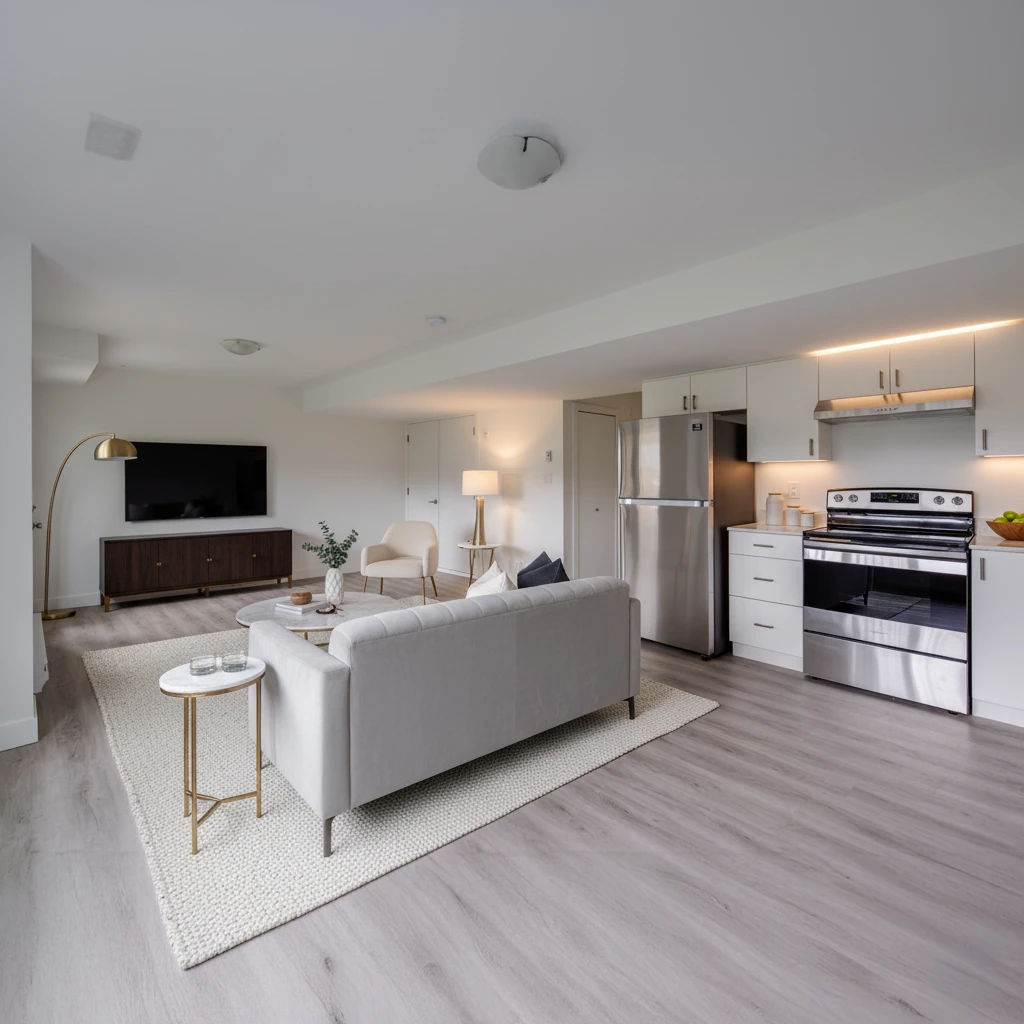
Basement Suite Rental Income in Vancouver: What to Expect, Tenant Laws, and How to Maximize Your Return (2026)
If you own a home in Metro Vancouver, you are sitting on one of the most powerful passive income opportunities in Canada. A legal basement suite can generate $1,850–$2,300 per month in East Vancouver alone — and with the city’s rental vacancy rate at just 0.9% (CMHC, 2025), the lowest in the country, qualified tenants are not hard to find. But understanding basement suite rental income in Vancouver goes well beyond posting a listing on Craigslist. You need to know the numbers, the law, the tax obligations, the insurance requirements, and how to run the suite like the investment it truly is.
This guide covers everything — from actual 2026 rental rates across Metro Vancouver neighbourhoods, to BC’s Residential Tenancy Act, to a full ROI analysis showing why a new basement suite can return over 250% in five years. Whether you are evaluating a new build, legalizing an existing secondary suite, or already renting one out, this is your complete 2026 reference.
Basement Suite Rental Income in Vancouver: The Numbers (2026)
Let’s start with the most important question: how much can you actually earn? The answer depends on suite size, location, legal status, and finishing quality. The table below provides a current 2026 snapshot of typical monthly rents across Metro Vancouver’s most active rental markets.
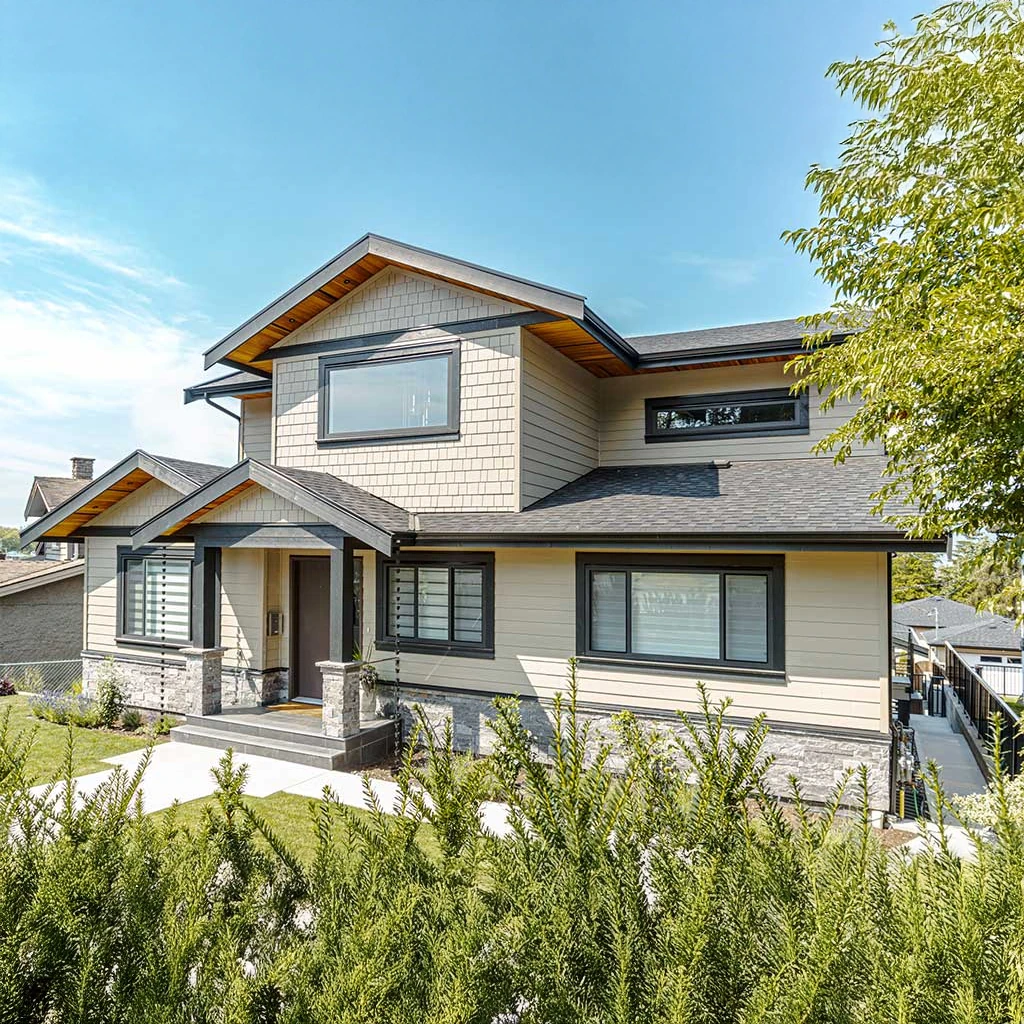
To put the income potential in concrete terms: a 1-bedroom legal suite in East Vancouver generating $2,050/month (midpoint of the range) produces $24,600 per year in gross rental income
Vancouver General Contractors
| Suite Type | East Vancouver | Burnaby | North Vancouver | Surrey |
|---|---|---|---|---|
| Studio / Bachelor | $1,450–$1,750 | $1,350–$1,650 | $1,550–$1,850 | $1,250–$1,550 |
| 1-Bedroom | $1,850–$2,300 | $1,750–$2,100 | $2,000–$2,400 | $1,600–$2,000 |
| 2-Bedroom | $2,300–$2,900 | $2,200–$2,700 | $2,500–$3,100 | $2,000–$2,500 |
These figures reflect unfurnished, self-contained suites with private entry, in-suite laundry, and standard appliances. Furnished suites, suites with parking, or suites in higher-demand micro-locations can push rents above the upper end of these ranges.
To put the income potential in concrete terms: a 1-bedroom legal suite in East Vancouver generating $2,050/month (midpoint of the range) produces $24,600 per year in gross rental income. After a conservative vacancy allowance and operating expenses, you are realistically looking at $15,000–$18,000 in net annual income from a single suite.
The macroeconomic backdrop makes this even more compelling. Metro Vancouver’s rental vacancy rate sits at 0.9% as of CMHC’s 2025 Rental Market Report — the lowest of any major Canadian city. In practical terms, this means a well-priced, well-presented legal suite will rent within days, not weeks. Vacancy is not a meaningful risk in this market when you price and present correctly.
Legal Suite vs. Illegal Suite: The Income Difference
Many homeowners in Vancouver have suites that were built without permits or do not fully meet current building code requirements. The temptation to rent them anyway is understandable — the rental income looks the same on the surface. But the financial and legal risks of an illegal suite are substantial enough to fundamentally change your return on investment.
The Risks of Renting an Illegal Suite
- City closure order: Vancouver and surrounding municipalities have active bylaw enforcement programs. If a neighbour complains or an inspector identifies your suite, the City can issue a notice requiring you to stop renting — immediately. Your income disappears while your mortgage does not.
- Insurance claim denial: If a fire, flood, or tenant injury occurs and your insurer discovers you were running an undeclared rental suite, your claim can be denied entirely. You could be personally liable for damage or injury costs that run into hundreds of thousands of dollars.
- Mandatory disclosure at sale: In BC, sellers are required to disclose known defects and non-compliant uses. If your suite is illegal, you must disclose it — which will reduce buyer interest and property value, or expose you to legal liability post-sale if you fail to disclose.
- Financing complications: Many lenders will not count rental income from an illegal suite toward your mortgage qualification, and some will reassess your loan terms if they discover the suite during a property inspection.
Why Legal Suites Command a 10–20% Rent Premium
A legal suite is not just about avoiding risk — it is about attracting better tenants at higher rents. Legally permitted suites typically feature proper egress windows, fire separation between units, code-compliant electrical panels, dedicated ventilation, and sound-dampening insulation. These features translate directly into a better living experience, and tenants — especially long-term, high-income renters — are willing to pay for them.
In a market where tenants are highly educated about their options, a permitted suite listed openly on Rentals.ca with a legal suite designation commands a 10–20% premium over an equivalent unregistered basement unit. On a $2,000/month rent, that is $200–$400 more per month, or $2,400–$4,800 per year — simply for having done the project properly.
The legalization cost for an existing non-compliant suite typically runs $25,000–$55,000, depending on the scope of work required. This almost always includes fire separation upgrades, egress window installation, electrical panel work, plumbing, and permit fees. When you factor in a property value increase of $150,000–$200,000 for a legal secondary suite in Vancouver, plus the higher rents and elimination of legal risk, legalization is nearly always the financially correct decision.
If you are considering legalizing an existing suite or building a new one, our team can provide a detailed scope and cost estimate. Visit our renovation guide or contact us directly for a consultation.
The Financial Return: Building a New Suite vs. Legalizing an Existing One
Understanding the full return on investment requires looking at two common scenarios: building a new basement suite from scratch in an unfinished basement, and legalizing or renovating an existing non-compliant suite.
New Suite from Scratch: Full ROI Analysis
Building a self-contained legal basement suite in Metro Vancouver in 2026 typically costs $70,000–$95,000 for a 1-bedroom unit. This includes architectural drawings and permits, framing, insulation, electrical (new sub-panel), plumbing (bathroom + kitchen rough-in), drywall, flooring, kitchen cabinets and countertops, appliances, bathroom fixtures, a separate entrance, and egress windows.
Here is what the financial picture looks like over five years:
| Financial Metric | Conservative | Optimistic |
|---|---|---|
| Suite construction cost | $95,000 | $70,000 |
| Monthly gross rent (1-bed, East Van) | $1,850 | $2,300 |
| Annual gross income | $22,200 | $27,600 |
| Annual expenses (insurance, tax, maintenance, vacancy) | $9,000 | $6,600 |
| Annual net income | $13,200 | $21,000 |
| Simple payback period | 7.2 years | 3.3 years |
| Property value increase | $150,000 | $200,000 |
| Total 5-year return (income + value) | $216,000 | $305,000 |
| 5-year ROI on suite cost | 127% | 336% |
The midpoint tells a compelling story: a $82,500 investment (average suite cost) generating $17,000/year net income and $175,000 in property value appreciation delivers roughly $260,000 in total 5-year return — a 215% return on capital before leverage.
CMHC Secondary Suite Financing: Positive Cash Flow from Day One
CMHC’s Secondary Suite Loan Program offers eligible homeowners up to $80,000 at a below-market rate (currently 2% fixed). At $80,000 over 10 years at 2%, your monthly payment is approximately $736. If your suite generates $2,000/month in rent, your net monthly cash flow is positive from the first month — roughly $1,264/month after the loan payment alone, before operating expenses but before your income and property tax offset as well.
This is an unusually favourable financing environment for real estate investment. A $2,000/month rental return on $80,000 in financing represents a gross yield of 30% — far above what any conventional real estate investment can offer in this market.
Vancouver Residential Tenancy Act: What Every Landlord Must Know
The moment you rent a basement suite in British Columbia, you become a landlord under the BC Residential Tenancy Act (RTA). This legislation governs virtually every aspect of the landlord-tenant relationship — from how you collect a deposit to how (and whether) you can end a tenancy. Getting this wrong is expensive: the Residential Tenancy Branch (RTB) has full authority to award damages, order rent reductions, and compel compliance.
Key RTA Rules for Basement Suite Landlords
- Rent increases — maximum 3.5% in 2026: BC sets a rent increase cap tied to the Consumer Price Index each year. For 2026, the maximum allowable increase is 3.5%. You must give tenants at least 3 full months’ written notice before any increase takes effect. Increases can only happen once every 12 months per tenancy.
- Security deposit: You may collect a maximum of one-half month’s rent as a security deposit at the start of the tenancy — and nothing more. You have 15 days after the end of the tenancy to return the deposit (with interest) or apply to the RTB to keep it.
- Pet deposit: If you allow pets, you may collect a separate pet damage deposit of up to one-half month’s rent. This is in addition to the security deposit.
- Landlord entry: You must give at least 24 hours’ written notice before entering the suite for non-emergency purposes (inspections, repairs). Entry for emergencies — fire, flood, immediate safety risk — does not require notice.
- Ending tenancy for personal use: If you need the suite for yourself, a close family member, or a purchaser of your home, you can end the tenancy with 2 months’ notice. You must also pay the tenant one month’s rent as compensation. This rule has strict eligibility requirements — misusing it carries significant RTB penalties.
- Dispute resolution: Both landlords and tenants can file disputes with the Residential Tenancy Branch. Hearings are held by telephone or video conference. The BC Civil Resolution Tribunal handles small monetary claims. Processing times have improved but can still take several weeks to months.
Fixed-Term vs. Month-to-Month: VGC’s Recommendation
Many new landlords default to a 1-year fixed-term lease, believing it provides more security. In practice, BC law converts a fixed-term tenancy into a month-to-month tenancy at the end of the term unless both parties agree otherwise — and the RTA prohibits “vacate clauses” that require the tenant to leave at the end of a fixed term (except in specific circumstances). This means fixed-term leases offer very little additional protection for landlords.
Our recommendation at VGC: start with a month-to-month tenancy. It provides equivalent protection under the RTA, preserves flexibility if you plan to sell your home in the next few years, and avoids the administrative complications of term renewals. What matters most is a well-written lease agreement that clearly sets out house rules, utility responsibilities, parking allocation, and guest policies.
Important: Never apply rent increases above the annual maximum, never enter without proper notice, and never accept a security deposit above one-half month’s rent. RTB penalties for violations can exceed the amounts you were trying to collect.
Setting the Right Rent for Your Vancouver Suite
Pricing your suite correctly is one of the most important decisions you will make as a landlord. Price too high and your suite sits vacant — costing you far more in lost income than any rent premium would have gained. Price too low and you attract renters who could not qualify for better-priced units, and you permanently lose that rent base (since increases are capped at 3.5%/year).
How to Research Current Market Rents
Start with the most current data sources available:
- CMHC Rental Market Report (cmhc-schl.gc.ca): Published annually in November, this is the most rigorous source of median and average rents by bedroom type and municipality.
- Padmapper / Rentals.ca / Zumper: Active listing aggregators that show you real-time asking rents for comparable units in your specific neighbourhood. Filter by bedroom count, basement vs. above-grade, and similar square footage.
- Facebook Marketplace and Craigslist: Still heavily used in Metro Vancouver for basement suites. The volume of listings gives you a real-time snapshot of what landlords are asking in your specific area.
Pricing Factors That Adjust Your Base Rent
- Legal suite premium: Add 10–20% over comparable unregistered suites in the area. Your suite is legally permitted, properly insulated, and code-compliant — tenants know this represents a safer, higher-quality living environment.
- Furnished vs. unfurnished: A fully furnished suite (quality furniture, full kitchen equipment, linens) commands $200–$500/month more, but attracts shorter tenancies — often students, new immigrants, or corporate renters. Unfurnished suites attract longer-term tenants, which is generally preferable for basement suite landlords who share the property.
- Utilities included: Advertising “utilities included” (heat, electricity, water) will increase your headline rent by $150–$250/month, but shifts the financial risk of a cold winter or a high-energy tenant onto you. We recommend separating utilities — install a sub-meter for electricity if possible, or negotiate a flat monthly utility allowance.
- Parking: If you have an additional parking stall to offer, this adds $75–$150/month in Metro Vancouver. Advertise it separately so you retain the option to rent the stall independently in the future.
The Most Important Rent Rule: Never Miss Your Annual Increase
Under the BC RTA, landlords can only increase rent by the allowable maximum once every 12 months. If you miss a year — say you forget to apply the 3.5% increase — you cannot “catch up” the following year. The rent base is permanently set at the lower amount, and every subsequent increase is calculated from that lower base. Over a multi-year tenancy, this compounding effect is significant. Always set a calendar reminder to serve the rent increase notice (with the mandatory 3 months’ notice) every year, without exception.
Finding and Screening Tenants for Your Vancouver Suite
In a 0.9% vacancy market, you will receive applications quickly — often within hours of posting a listing. The challenge is not finding applicants; it is identifying the right tenant efficiently and lawfully.
Where to Advertise
- Rentals.ca: Canada’s largest dedicated rental listing platform. Highest visibility for serious renters with stable income. Free basic listing, paid upgrades for featured placement.
- PadMapper: Strong Vancouver user base, map-based search makes it popular with renters looking in specific neighbourhoods.
- Facebook Marketplace: Very high volume of basement suite listings and inquiries in Metro Vancouver. Best for reaching a broad demographic quickly.
- Craigslist: Still widely used in Vancouver, especially for immediate availability listings. Be aware of scam risk — only communicate through verified contact.
- CMHC Housing portal and local community boards: Useful secondary channels, particularly for connecting with established community networks.
Lawful Tenant Screening in BC
BC’s Human Rights Code prohibits discriminating against tenants based on race, colour, ancestry, place of origin, religion, marital status, family status, physical or mental disability, sex, sexual orientation, gender identity or expression, or age. Violations can result in complaints to the BC Human Rights Tribunal and significant financial penalties. This means you must evaluate applicants solely on their ability and willingness to pay rent and comply with the tenancy agreement.
What you can lawfully screen for:
- Income verification: The common standard is monthly income of at least 40× the monthly rent (so for a $2,000/month suite, you are looking for $80,000+/year gross income or equivalent demonstrated ability to pay). Ask for recent pay stubs, employment letters, or business income statements.
- Rental history and references: Request contact information for previous landlords — not just the most recent one. Call them and ask specifically: “Would you rent to this person again, and why or why not?”
- Credit check: Both Equifax and TransUnion offer tenant screening products for approximately $30 with the applicant’s written consent. A credit report reveals payment history, outstanding collections, and prior evictions (if they appear as civil judgements).
A practical note on suite quality and tenant self-selection: a well-finished, legal suite with quality appliances and fresh finishes naturally attracts higher-income tenants who have options. Tenants who can afford to be selective about where they live also tend to be more stable, more communicative, and more respectful of the property. The investment in a quality renovation pays dividends in tenant quality for the entire life of the suite.
Tax Implications of Rental Income in Vancouver
Rental income is taxable income in Canada, and the CRA takes basement suite income seriously. However, the tax rules also allow you to deduct a meaningful range of legitimate operating expenses — which substantially reduces your taxable rental income and, in many cases, your overall tax burden.
Reporting Your Rental Income
You report basement suite rental income on CRA Form T776 — Statement of Real Estate Rentals, which is filed as part of your personal T1 tax return. If you and a spouse or partner co-own the property, you each report your proportionate share of income and expenses.
Deductible Expenses
The CRA allows you to deduct expenses that are proportionate to the rental portion of your home. If the basement suite represents 35% of your home’s total livable area, then 35% of shared expenses (mortgage interest, property taxes, home insurance, heat, electricity, internet if shared) are deductible against your rental income.
Commonly deductible expenses include:
- Proportionate mortgage interest (not principal repayment — only interest)
- Property taxes (proportionate share)
- Home insurance (proportionate share, plus any landlord endorsement premium)
- Maintenance and repairs (100% deductible if exclusively for the rental suite)
- Utilities paid on tenant’s behalf (if included in rent)
- Advertising costs (listing fees, photography)
- Accounting and legal fees related to the rental property
- Capital Cost Allowance (CCA) — a depreciation deduction on the building structure (see important warning below)
The CCA Recapture Warning
Capital Cost Allowance allows you to deduct a percentage of the building’s value as depreciation each year, reducing your taxable rental income significantly. However, when you sell your home, any CCA you have claimed is “recaptured” — added back to your income in the year of sale and taxed at your marginal rate. In a Vancouver real estate market where home values have increased dramatically, this recapture can create a large, unexpected tax bill at sale. Always speak to a qualified accountant before claiming CCA on a principal residence with a rental suite.
Principal Residence Exemption and Rental Suites
Renting a portion of your principal residence can affect your eligibility for the full Principal Residence Exemption (PRE) when you sell — potentially making a portion of your capital gain taxable. CRA’s administrative position allows homeowners to claim the full PRE in many basement suite situations as long as the suite is incidental to the use of the home as a residence and you have not claimed CCA. Your tax professional can confirm how this applies to your specific property. Accountant fees for rental property T776 preparation typically run $500–$1,500/year — and they are fully deductible.
Note: Residential rent in Canada is generally exempt from GST/HST. You do not charge GST on residential rent, and you do not file GST returns for a residential rental suite.
Property Insurance for a Rented Basement Suite
This is one of the most commonly overlooked aspects of basement suite rental income in Vancouver — and one of the most financially dangerous. Standard residential homeowner insurance policies cover owner-occupied homes. The moment you rent a portion of your property, you have changed the risk profile in a way that most standard policies explicitly exclude.
What Can Go Wrong Without Proper Coverage
If a fire starts in your tenant’s suite, if a pipe bursts and damages both units, or if your tenant slips on an icy walkway and sustains an injury — and your insurer discovers you were running an undisclosed rental suite — your claim can be denied in full. You could be personally responsible for rebuilding costs, third-party injury claims, and legal fees with no insurance backstop.
What to Do
- Notify your insurer immediately when you add a rental unit. This is not optional — it is a policy condition in virtually every homeowner policy issued in BC.
- Request a landlord endorsement on your existing policy, or ask your broker about a separate landlord/rental property policy. The cost is typically $800–$1,500/year more than a standard homeowner policy.
- What the landlord endorsement covers: Damage caused by tenants, loss of rental income if the suite is uninhabitable due to a covered claim (such as fire), and third-party liability if someone is injured on the rental premises.
- Require tenant insurance: While you cannot legally force your tenant to maintain insurance, you can include it as a lease condition. A tenant insurance policy costs tenants as little as $15–$25/month and covers their contents and personal liability — reducing the chance that a small incident becomes a large landlord-tenant dispute.
Uninsured rental properties are far more common in Metro Vancouver than landlords realize. Many homeowners assume their existing policy covers everything, only to discover the exclusion clause when they file a claim. Spend the $1,200/year on proper coverage — it is a fraction of your rental income and a fully deductible expense.
Maintenance and Operating Costs for Vancouver Basement Suites
To accurately forecast your basement suite rental income, you need a realistic picture of the operating expenses that reduce your gross rent to net income. The table below provides typical annual operating costs for a legal basement suite in Metro Vancouver in 2026.
| Expense Category | Annual Cost (Typical Range) |
|---|---|
| Landlord insurance endorsement | $1,000–$1,500 |
| Property tax (proportionate ~30% share) | $1,500–$2,500 |
| Maintenance reserve (2% of suite build cost) | $1,400–$1,900 |
| Utilities — suite portion (if included in rent) | $1,800–$2,400 |
| Vacancy allowance (4% = approx. 2 weeks/year) | $900–$1,200 |
| Property management (if self-managing = $0) | $0–$2,400 |
| Total Annual Expenses | $6,600–$11,900 |
Using the midpoint of these ranges ($9,250/year in expenses) against a gross annual rent of $24,000 (1-bed East Van at $2,000/month), your net annual rental income is approximately $14,750.
Expressed as a yield on suite construction cost: $14,750 net income ÷ $80,000 suite cost = 18.4% net annual yield. This compares extraordinarily favourably with other asset classes — GICs at 4–5%, dividend equities at 3–6%, or commercial real estate at 5–8% cap rates.
Planning for Maintenance: The 2% Reserve Rule
Experienced property managers recommend budgeting 1–2% of the suite’s construction value annually for maintenance and replacement. For a $80,000 suite, that is $800–$1,600/year. Over a 10-year period, you can realistically expect to replace appliances once ($2,500–$4,000), repaint ($1,500), replace flooring in high-traffic areas ($2,000–$3,500), and address plumbing or mechanical issues ($1,000–$2,000). Budgeting for these costs proactively prevents cash flow surprises and ensures your suite maintains its rental appeal over time.
Maximizing Your Suite’s Rental Appeal in Vancouver
In a competitive rental market, the difference between a suite that rents in 2 days and one that sits vacant for 3 weeks is often finishing quality and presentation — not price. Vancouver renters in 2026 are sophisticated. They compare listings side-by-side and quickly identify which landlords have invested in their suites and which have not.
Must-Haves for a Competitive Vancouver Rental Suite
- In-suite laundry (dedicated, not shared): This is the single feature most frequently cited by Vancouver renters as a dealbreaker. A washer and dryer inside the suite commands $100–$150/month more in rent compared to suites with shared or no laundry. If your suite does not have in-suite laundry, adding it should be the first upgrade you prioritize.
- Dishwasher: Expected as a standard appliance by most renters in 2026. Suites without a dishwasher will be filtered out of search results by a meaningful percentage of applicants.
- Luxury vinyl plank (LVP) flooring: Tenants have learned to associate carpet with allergens, difficult cleaning, and landlord disputes over damage deposits. LVP is durable, easy to clean, modern in appearance, and dramatically increases rental appeal. It is also significantly cheaper to replace than hardwood when needed.
- Dedicated storage: A locked storage room, separate storage locker, or designated basement storage area. Tenants in urban markets accumulate possessions and genuinely value storage space — often as much as additional square footage.
- Natural light: Egress windows (required by building code for legal suites anyway) dramatically improve the liveability and perceived size of a basement suite. A suite with good natural light rents faster and holds tenants longer than a dark, cave-like unit.
Nice-to-Haves That Justify Premium Pricing
- Dedicated parking stall: Worth $75–$150/month as a separate add-on, or factor it into your base rent as a premium item. Parking in Metro Vancouver is genuinely scarce.
- Private outdoor space: Even a small patio, deck, or dedicated backyard area attached to the suite commands a significant premium and dramatically improves tenant satisfaction.
- EV charging outlet: A Level 2 EV charger or even a dedicated 240V outlet in the parking area is increasingly valued — and as EV adoption continues to accelerate, this will become a differentiator that justifies a $50–$75/month premium.
- Smart home features: A smart thermostat (Nest or Ecobee), video doorbell, and keyless entry are low-cost additions ($500–$800 total) that signal a quality, professionally managed suite.
Photography: The Single Highest-ROI Marketing Investment
Professional photography of your rental suite costs $150–$350 and generates measurably better results: studies of online rental listings consistently show that professionally photographed listings receive approximately 40% more inquiries and rent an average of 5–7 days faster than comparable listings with smartphone photos. In a market where one week of vacancy costs $450–$575 (1-bed East Van), professional photos pay for themselves on the very first rental. Use them every time the suite is listed.
Self-Managing vs. Hiring a Property Manager
One of the most common questions we hear from homeowners who have just completed a basement suite renovation is: do I manage it myself, or hire a property manager? The honest answer depends on your lifestyle, proximity, risk tolerance, and how many units you own.
Self-Managing: The Costs and Benefits
Self-managing a single basement suite is entirely feasible for most homeowners — particularly owner-occupants who live in the same building. The tenant has immediate access to you for maintenance requests, you maintain direct control over who lives on your property, and you save $160–$240/month in management fees.
The real cost of self-management is time and emotional bandwidth. Responding to maintenance calls, managing rent collection, handling lease renewals and rent increase notices, and navigating tenant disputes all require time and knowledge of the RTA. Most owner-occupant landlords find this manageable for a single suite, especially after the first year when the major setup work is done.
When to Hire a Property Manager
Property managers in Metro Vancouver typically charge 8–12% of monthly gross rent, which on a $2,000/month suite amounts to $160–$240/month or $1,920–$2,880/year. For this fee, a full-service property manager will handle tenant sourcing and screening, lease execution, rent collection, maintenance coordination, annual rent increase notices, and RTB filings if a dispute arises.
Property management makes clear financial sense when:
- You own two or more rental units (complexity scales quickly)
- You live more than 30 minutes from the property
- You have a high-income career where your time is worth more than $20–$30/hour
- You have already experienced (or are currently in) an RTB dispute
- You travel frequently or are uncomfortable handling tenant communications directly
Even if you self-manage day-to-day, consider retaining a property manager or tenancy lawyer on an as-needed basis for RTB filings and dispute resolution. The RTB process has specific procedural requirements, and a single procedural error can result in your application being dismissed — costing you months of time and potentially thousands of dollars in unpaid rent.
Ready to build or legalize your basement suite? Our team at VGC has completed hundreds of secondary suite projects across Metro Vancouver. Visit our contact page to request a free estimate, or explore our renovation guide for more information on the planning and permit process.
Frequently Asked Questions About Basement Suite Rental Income in Vancouver
How much can I charge for a basement suite in Vancouver?
In 2026, a 1-bedroom legal basement suite in East Vancouver typically rents for $1,850–$2,300/month. Burnaby suites range from $1,750–$2,100/month, North Vancouver from $2,000–$2,400/month, and Surrey from $1,600–$2,000/month. Studio suites are $200–$500/month lower, while 2-bedroom suites range from $2,000–$3,100/month depending on location. Legal suite status, in-suite laundry, parking, and finishing quality all affect where you land within these ranges.
Do I have to pay tax on basement suite rental income?
Yes. Rental income from a basement suite is taxable and must be reported on CRA Form T776 as part of your annual T1 personal tax return. However, you can deduct proportionate operating expenses including mortgage interest, property taxes, insurance, maintenance, and utilities paid on the tenant’s behalf. The net taxable rental income after legitimate deductions is often significantly lower than the gross rent received.
Can I evict my tenant to sell my home?
Under the BC Residential Tenancy Act, you can end a tenancy to allow a purchaser of your home to occupy the unit. You must provide 2 months’ written notice and pay the tenant compensation equal to 1 month’s rent. The purchaser must intend to occupy the unit as their primary residence — this is not a mechanism for vacancy before listing. Using the “purchaser use” grounds improperly can result in significant RTB penalties.
What if my tenant doesn’t pay rent?
If a tenant fails to pay rent, you can issue a 10-Day Notice to End Tenancy for unpaid rent. The tenant then has 5 days to pay the arrears (including filing fees) or dispute the notice at the RTB. If they do neither, the tenancy ends and you can apply for a Writ of Possession to have the tenant removed. The RTB can also award a monetary order for unpaid rent, which becomes a civil judgement you can pursue through collections. Document all payment records — keep dated records of every e-transfer, cheque, or cash receipt.
Do I need special insurance for a rental suite?
Yes. Standard homeowner insurance policies do not cover rental activities. You must notify your insurer when you begin renting your suite and add a landlord endorsement or obtain a separate rental property policy. Failure to do so can result in claim denial for events related to the rental suite, including fire, flooding, and tenant injury. The additional premium is typically $800–$1,500/year and is a fully deductible rental expense.
Can I rent my suite on Airbnb instead of to a long-term tenant?
Short-term rentals (fewer than 30 consecutive days) through Airbnb and similar platforms are regulated differently than long-term tenancies. In the City of Vancouver, short-term rentals require a City business licence and are generally only permitted in a host’s principal residence. Strata properties face additional restrictions. The gross income from Airbnb can be higher than long-term rent, but the operating costs (cleaning, supplies, higher vacancy, licence fees, strata risk) are also substantially higher. Long-term tenancy typically delivers more predictable net income for basement suites.
Is a basement suite legal in all Vancouver zones?
Secondary suites are permitted as of right in most residential zones across the City of Vancouver following zoning reforms introduced in 2023–2024. However, the suite must meet building code requirements and obtain a building permit regardless of the zone. Some municipalities in Metro Vancouver (Burnaby, Richmond, Surrey) have their own specific zoning rules. Always verify your property’s zoning and applicable bylaws through your municipality’s planning department before beginning construction.
What is the maximum rent increase in BC for 2026?
The BC government sets an annual rent increase cap tied to the Consumer Price Index. For 2026, the maximum allowable rent increase is 3.5%. You must give tenants a minimum of 3 full calendar months’ written notice before the increase takes effect, and you can only increase rent once every 12 months per tenancy. The notice must be given on the correct RTB-approved form (RTB-7).
How do I screen tenants in BC?
You can lawfully screen tenants based on financial qualifications (income, credit history, rental references) but not on protected characteristics under the BC Human Rights Code (race, religion, family status, disability, etc.). Best practice: use a written rental application form, run a credit check with written consent (Equifax or TransUnion tenant screening, ~$30), contact at least two previous landlords, and verify employment or income documentation. Make your selection based on documented criteria applied consistently to all applicants.
What is the vacancy rate in Vancouver right now?
Metro Vancouver’s overall rental vacancy rate is 0.9% as of CMHC’s 2025 Rental Market Report — the lowest of any major Canadian city. At this vacancy rate, a well-priced legal basement suite in a desirable neighbourhood will typically receive applications within 24–72 hours of listing. Vacancy is not a meaningful risk in this market when the suite is properly priced and presented.
Should I rent my suite furnished or unfurnished?
Furnished suites command $200–$500/month more in rent but attract shorter tenancies (students, newcomers, corporate renters) and carry higher turnover costs (cleaning between tenancies, furniture wear and replacement). Unfurnished suites attract longer-term tenants who treat the unit as a home rather than a temporary stop. For most owner-occupant landlords who value stable, low-maintenance tenancies, unfurnished is the better choice. Furnished makes more sense if you have high demand from temporary workers or a strong corporate relocation market in your area.
What happens if my tenant damages the suite?
You can apply to deduct documented damage costs from the security deposit. If damage exceeds the deposit, you can file a claim with the RTB for the additional amount (up to $35,000; amounts above that go to BC Supreme Court). You must document the suite’s condition at move-in with a written and signed Condition Inspection Report (CIR) and move-out inspection — without both inspections, the RTB will not allow you to claim damages from the deposit. Always complete move-in and move-out inspections and keep all invoices and receipts for repairs.
How do I report rental income on my taxes?
Report your basement suite rental income and expenses on CRA Form T776 — Statement of Real Estate Rentals, attached to your T1 personal income tax return. List gross rents received under “Gross rents,” then deduct proportionate eligible expenses (mortgage interest, property taxes, insurance, maintenance, utilities, management fees, advertising). The net rental income is added to your other income and taxed at your marginal rate. Keep all receipts and records for at least 6 years. A tax professional familiar with rental property T776 preparation is worth the $500–$1,500 annual fee.
Can I rent my suite while I live in the main house?
Yes — this is the most common basement suite scenario in Metro Vancouver. Owner-occupied properties with rental suites are subject to the full BC Residential Tenancy Act, the same as any other rental property. Your status as the owner-occupant does not give you additional rights to enter the suite, evict the tenant, or bypass RTA protections. The RTA applies equally regardless of whether you live upstairs or in a separate building. What owner-occupancy does affect is your potential eligibility for the Principal Residence Exemption and your ability to claim “personal use” grounds for ending tenancy.
What is a subletting clause and should I include one?
Subletting occurs when your tenant rents the suite (or part of it) to a third party. Under the BC RTA, tenants have the right to sublet with the landlord’s written consent — and landlords cannot unreasonably withhold consent. You can (and should) include a subletting clause in your lease that requires prior written approval for any sublet or assignment, specifies that the original tenant remains responsible for rent and damages during any sublet, and prohibits short-term rental platforms (Airbnb, VRBO) as a form of subletting. This gives you documented grounds to act if the tenant sublets without approval.
Ready to turn your basement into a revenue-generating legal suite? Contact Vancouver General Contractors for a free consultation and detailed project estimate. Our team has completed legal secondary suite projects across Metro Vancouver, from East Van to Burnaby, North Van, and Surrey. Explore our renovation guide to learn more about the planning process, or read our full guide on building a legal basement suite in Vancouver.
Get a Free Renovation Quote
Metro Vancouver’s trusted general contractors. Free consultations across Vancouver, Burnaby, Richmond, North Shore & beyond.
Get Your Free Quote →
Comments are closed