





Burnaby Renovation Guide: Costs by Neighbourhood, Permits, and What Makes Burnaby Unique (2026)
Burnaby sits at the geographic and economic centre of Metro Vancouver — bounded by Vancouver to the west, Coquitlam to the east, and served by three SkyTrain lines threading through its core. For homeowners, that position translates directly into renovation ROI: properties in Burnaby command strong resale values, attract deep pools of qualified tenants for secondary suites, and benefit from a municipal permit process that is, by most measures, faster and less complicated than the City of Vancouver’s. Whether you own a 1968 rancher in Capitol Hill, a 1990s two-storey in Suncrest, or a compact lot near Metrotown, Burnaby offers renovation economics that are hard to match anywhere else in the Lower Mainland.
This guide covers everything you need to plan a Burnaby renovation in 2026: costs by project type, neighbourhood-by-neighbourhood economics, the City of Burnaby permit process, Bill 44 multi-unit strategy, secondary suite rules, rancher additions, and ROI data drawn from Vancouver General Contractors’ (VGC) active project history across Burnaby’s diverse residential neighbourhoods.
Related reading: VGC’s Metro Vancouver Renovation Guide | Home Renovation Services | Get a Free Burnaby Renovation Quote
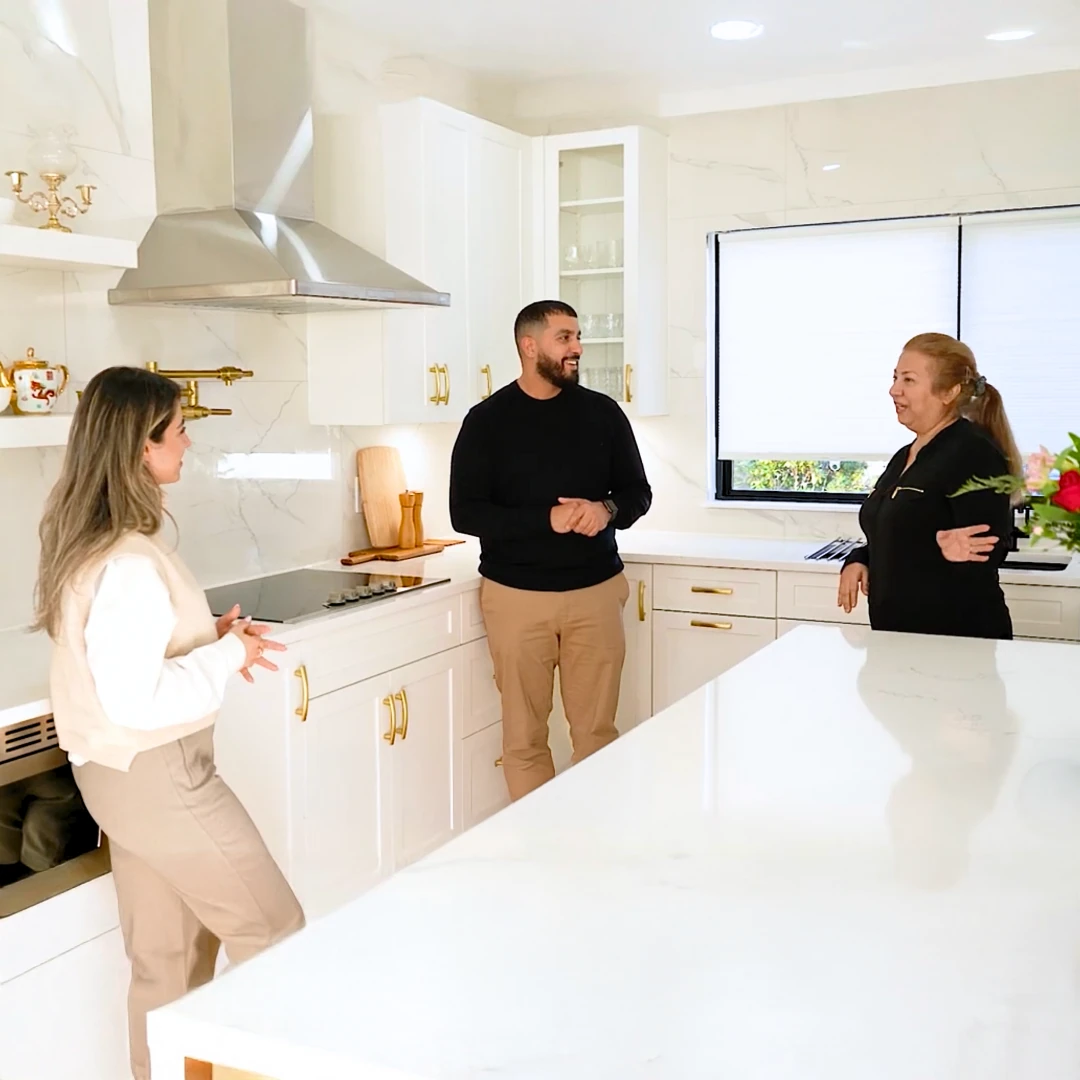
Burnaby is the only Metro Vancouver municipality served by three separate SkyTrain lines: the Expo Line runs east-west through the southern half, the Millennium Line cuts through the northern half
Vancouver General Contractors
Why Burnaby Is Metro Vancouver’s Best Renovation Market
Ask any experienced Metro Vancouver contractor where renovation dollars work hardest, and Burnaby consistently comes up. The reasons are structural, not cyclical — they are baked into Burnaby’s geography, housing stock, and transit infrastructure in ways that are unlikely to change regardless of short-term market fluctuations.
SkyTrain Connectivity and Rental Demand
Burnaby is the only Metro Vancouver municipality served by three separate SkyTrain lines: the Expo Line runs east-west through the southern half, the Millennium Line cuts through the northern half, and the Evergreen Extension connects Burnaby Mountain and the SFU corridor to Coquitlam. This means that a secondary suite anywhere in Burnaby — whether in North Burnaby’s Capitol Hill or South Burnaby’s Edmonds neighbourhood — is reachable by renters who do not own a car. That matters enormously for rental vacancy rates. Burnaby consistently posts some of the lowest residential vacancy rates in Metro Vancouver, typically ranging between 0.8% and 1.5%, and average rents have tracked upward for six consecutive years as of 2026. A basement suite in Brentwood rents for $1,800–$2,200 per month for a one-bedroom; in North Burnaby, the range is $1,700–$2,100; in South Burnaby, $1,650–$2,000. These are not speculative projections — they are rates VGC clients are actively achieving on completed suite projects.
Burnaby’s Housing Stock: The Renovation Goldmine
Burnaby’s residential neighbourhoods were built out in distinct waves. The oldest stock — 1940s to early 1960s — concentrated in North Burnaby along the slopes of Burnaby Mountain and Capitol Hill. The dominant building era, 1960s to 1985, produced the rancher and split-level homes that now define Burnaby’s renovation opportunity: solid post-war construction, generous lot sizes (typically 6,000–8,500 sq ft), and interiors that are cosmetically dated but structurally sound. A 1968 Burnaby rancher typically has good bones — Douglas fir framing, full-height basements often exceeding 1,200 sq ft of unfinished space — but will require complete kitchen and bathroom updates, insulation upgrades, and electrical panel expansion to meet modern standards. The 1990s to early 2000s wave, concentrated in South Burnaby neighbourhoods like Suncrest and Buckingham Heights, produced larger two-storey homes on slightly more constrained lots that are now entering their first major renovation cycle: kitchens, master ensuites, and basement finishing are the dominant project types here.
Property Values and Renovation Economics
Average freehold property values in Burnaby range from approximately $1.4 million in the more accessible parts of South Burnaby to $2.5 million in premium North Burnaby and Brentwood-adjacent locations. At these valuations, renovation investment ratios remain highly favourable — a $80,000 basement suite investment on a $1.6M property represents 5% of property value while adding $155,000–$210,000 in appraised value and generating $20,000–$26,400 in annual gross rental income. That combination of capital appreciation and cash flow is what makes Burnaby one of the strongest renovation investment cases in Canada.
Bill 44’s Impact on Burnaby RS Lots
The BC government’s Bill 44 (Housing Statutes Amendment Act, 2023, enacted 2024) fundamentally changed what is permissible on Burnaby’s residential single-family lots. Most RS-1 zoned lots in Burnaby are now eligible for three to four units as of right — meaning a triplex or quadplex does not require rezoning or a public hearing. For existing homeowners, the practical implication is significant: a rancher with a basement suite can add a laneway home or garden suite without navigating a full rezoning process, creating a legal three-unit income property on a single residential lot. VGC’s standard recommendation for Burnaby homeowners is to build the secondary suite now (immediate cash flow and value) and design the project with a future laneway or garden suite in mind — preserving access, setbacks, and utility rough-in so the third unit can be added with minimal disruption later.
Key Burnaby Renovation Areas
Renovation activity is strong across all of Burnaby’s residential areas, but the intensity and project type vary significantly by neighbourhood. North Burnaby — Capitol Hill, Brentwood, and Willingdon Heights — has the oldest housing stock and the strongest secondary suite demand. South Burnaby — Edmonds, Suncrest, Buckingham Heights — has newer homes and larger families driving kitchen, addition, and master bath projects. Burnaby Mountain and the SFU corridor attract a younger, renter-heavy demographic with smaller lots but strong demand for compact, well-finished spaces. The Metrotown and Bonsor area is gentrifying rapidly as transit-oriented development pressure increases land values and older single-family homeowners undertake full renovations to remain competitive in the rental market. Big Bend, at Burnaby’s southwestern edge, remains primarily industrial but is seeing growing residential interest at its margins.
Burnaby Renovation Costs by Project Type
The following cost ranges reflect VGC’s 2026 Burnaby project data. All figures are for full-scope, permit-pulled work by licensed contractors, including design, materials, labour, permit fees, and project management. They do not include furniture, landscaping, or owner-supplied fixtures unless noted.
| Project Type | Typical Burnaby Cost Range (2026) | Notes |
|---|---|---|
| Kitchen Renovation (mid-range) | $50,000 – $80,000 | Open concept, semi-custom cabinetry, quartz, appliances included |
| Kitchen Renovation (premium) | $80,000 – $130,000 | Custom cabinetry, high-end appliances, full structural changes |
| Bathroom (main bath) | $22,000 – $35,000 | Full gut and refile, mid-range fixtures |
| Master Ensuite | $35,000 – $55,000 | Double vanity, walk-in shower, heated floor |
| Basement Suite (legal) | $65,000 – $95,000 | Permit, egress window, separate entrance, full finish |
| Home Addition (rear, 200–400 sq ft) | $160,000 – $260,000 | Foundation, structure, mechanical, finish |
| Second Storey Addition | $250,000 – $380,000 | Full second storey on rancher, 600–900 sq ft |
| Full Home Renovation | $180,000 – $350,000 | Gut reno excluding structure, all trades, design |
Burnaby renovation costs are generally 5–10% lower than equivalent projects in Vancouver proper, primarily due to fewer heritage and character overlays, simpler permit pathways, and slightly easier site access on Burnaby’s wider lots. Material and labour costs are identical — Burnaby and Vancouver draw from the same Metro Vancouver trade pool.
Burnaby Neighbourhoods: Renovation Economics by Area
Burnaby’s renovation landscape is not uniform. Project types, renovation triggers, and ROI calculations differ meaningfully across the city’s neighbourhoods. Understanding where your property sits in Burnaby’s geography helps you prioritize scope, budget, and long-term strategy.
North Burnaby: Capitol Hill, Brentwood, Willingdon Heights
North Burnaby has Burnaby’s oldest housing stock — a significant portion of homes date from the 1940s through the early 1970s, including pre-war cottages, post-war ranchers, and early split-levels. These homes were built to last, but they now carry 50 to 80 years of deferred maintenance and cosmetic obsolescence. The renovation opportunity is correspondingly large. A Capitol Hill rancher purchased at $1.5M will typically require $150,000–$200,000 in comprehensive renovation to reach modern rental and resale standards, but that investment consistently generates $300,000–$450,000 in appraised value uplift based on recent comparable sales. The SkyTrain proximity premium is real in this corridor: homes within walking distance of Brentwood Town Centre Station or Holdom Station command 8–12% premiums over equivalent properties further from transit, and this premium flows directly to secondary suite rental rates. Brentwood, in particular, has undergone dramatic transformation as the Brentwood Town Centre mega-development has matured — the surrounding single-family streets have become among the most desirable renovation targets in all of Burnaby.
South Burnaby: Edmonds, Suncrest, Buckingham Heights
South Burnaby’s housing stock is newer — primarily 1980s to early 2000s construction — and sits on some of Burnaby’s largest lots, often 7,000–9,500 sq ft. The demographic profile is notably family-oriented: South Burnaby has strong school catchments (including access to some of Burnaby’s most sought-after elementary and secondary schools), and renovation triggers here tend to be family-driven rather than rental-income-driven. Kitchen expansions, master ensuite additions, basement family-room finishing, and rear additions for additional bedroom or flex space dominate VGC’s South Burnaby project portfolio. That said, secondary suites in South Burnaby remain highly rentable — proximity to the Edmonds and 22nd Street SkyTrain stations creates a tenant pool that is larger and more diverse than many homeowners expect. Average lot sizes in South Burnaby also make future laneway additions under Bill 44 very feasible, with sufficient rear yard space in most cases.
Burnaby Mountain and SFU Area
The SFU area and Burnaby Mountain neighbourhood have a unique character: the dominant housing form is attached townhomes and strata units rather than detached freehold. For homeowners in detached properties on the mountain’s flanks, the renovation calculus is different — smaller lots, steeper grades, and a predominantly younger, university-affiliated renter demographic. Projects here tend toward efficient interior renovations: kitchen and bath updates, suite creation where permitted, and energy efficiency improvements. The mountain setting also introduces occasional structural complexity — retaining walls, slope drainage, and lot grading are more likely to require attention on Burnaby Mountain than on the flat lots of South Burnaby. Permit costs and complexity are broadly similar to the rest of Burnaby, but construction logistics may add 5–10% to project costs due to access constraints on steeper sites.
Metrotown and Bonsor: Rapid Gentrification
The Metrotown SkyTrain station area is undergoing some of the most rapid land use transformation in Metro Vancouver. High-rise towers have reshaped the immediate commercial and residential landscape, and the surrounding blocks of older single-family and low-rise rental properties are under intense gentrification pressure. For owners of single-family homes in the Metrotown-Bonsor corridor, the renovation decision is often binary: undertake a comprehensive renovation and hold for 10–15 years of strong rental income, or plan for eventual assembly and land sale. VGC is frequently engaged in full gut renovations on Metrotown-area single-family homes where the goal is maximum legal density: secondary suite, potential garden suite under Bill 44, and a fully modernized primary residence that commands top-tier rents from the dense professional and student population drawn to Metrotown’s retail, transit, and services.
Burnaby Secondary Suites: The Primary Value Driver
If there is a single renovation that delivers more value per dollar invested in Burnaby than any other, it is the legal secondary suite. The numbers are clear, the demand is proven, and the City of Burnaby’s regulatory framework is more accommodating than many homeowners realize.
Burnaby Secondary Suite Rules and Zoning
The City of Burnaby permits secondary suites in most RS-1 (Residential District) zoned lots. Unlike some municipalities in Metro Vancouver that have historically required owner-occupancy as a condition of secondary suite registration, Burnaby’s rules have evolved to be more permissive — in many zones, owner-occupancy is not strictly required, though the specific zoning bylaw provisions should be confirmed with the City for your specific lot. Secondary suites in Burnaby must meet BC Building Code requirements for minimum ceiling heights (generally 1.95m / 6’5″), independent ventilation, egress windows in sleeping rooms, and fire separation between the suite and the primary dwelling. A separate entrance is required — a shared entrance does not qualify as a legal suite.
Why SkyTrain Makes Burnaby Suites Uniquely Valuable
The depth of Burnaby’s tenant pool is what distinguishes secondary suite economics here from equivalent projects in, say, Langley or Maple Ridge. Because Burnaby’s SkyTrain network reaches downtown Vancouver, Metrotown, Brentwood, Lougheed, and Coquitlam, renters in Burnaby basement suites genuinely do not need a vehicle. This expands the eligible tenant pool to include students (SFU has over 35,000 students), healthcare workers (Burnaby Hospital and Royal Columbian are nearby), and service sector employees across the Metro Vancouver core — all of whom may not own cars. Vacancy periods for well-finished Burnaby basement suites are typically two to six weeks from listing to lease signing. Compare this to car-dependent markets where the same quality suite might sit vacant for eight to twelve weeks.
Burnaby Suite Rental Rates (2026)
| Neighbourhood | 1-Bedroom Suite | 2-Bedroom Suite |
|---|---|---|
| Brentwood / Willingdon Heights | $1,800 – $2,200/mo | $2,200 – $2,700/mo |
| Capitol Hill / North Burnaby | $1,700 – $2,100/mo | $2,100 – $2,600/mo |
| South Burnaby (Edmonds, Suncrest) | $1,650 – $2,000/mo | $2,000 – $2,500/mo |
| Metrotown / Bonsor | $1,900 – $2,300/mo | $2,300 – $2,800/mo |
| Burnaby Mountain | $1,600 – $1,950/mo | $1,950 – $2,350/mo |
CMHC Secondary Suite Loan Program
As of 2026, CMHC’s Secondary Suite Loan Program provides up to $80,000 at 2% interest for eligible homeowners creating new secondary or garden suites. For a Burnaby homeowner investing $75,000–$90,000 in a basement suite, this program can cover the majority of costs at a rate far below conventional renovation financing. Eligibility requires owner-occupancy of the primary residence and CMHC-approved use of funds. VGC’s project management team can help clients navigate the program requirements and documentation. Combined with a $20,000+ annual rental income return, the effective payback period for a Burnaby secondary suite — accounting for CMHC financing at 2% — is often under five years.
Burnaby Suite Legalization: Faster Than Vancouver
One of Burnaby’s practical advantages over Vancouver is permit speed. The City of Burnaby Building Department processes secondary suite permits in approximately four to six weeks for straightforward applications — compared to eight to twelve weeks at the City of Vancouver for similar scope. Burnaby’s secondary suite permit requires a building permit application, a site plan showing the suite location, mechanical drawings if HVAC changes are required, and payment of the secondary suite registration fee (typically $400–$800 depending on scope). Inspection stages are: framing inspection, rough-in mechanical and electrical, insulation and vapour barrier, and final occupancy. VGC has established permit submission relationships with the City of Burnaby that typically allow applications to be reviewed in the early portion of the permit window, not the late portion.
Burnaby Permits: The City of Burnaby Process
Understanding Burnaby’s permit process is essential for accurate project scheduling and budget planning. Homeowners accustomed to Vancouver’s permit timelines are often pleasantly surprised by Burnaby’s efficiency — but the process still requires careful preparation and accurate documentation to avoid re-submissions and delays.
What Requires a Permit in Burnaby
The City of Burnaby requires building permits for all structural work, additions, secondary suite creation, electrical panel upgrades (in conjunction with BC Safety Authority), plumbing changes, HVAC modifications, and any change of use. Cosmetic renovations — painting, flooring, cabinet replacement without structural wall changes — generally do not require permits. Kitchen renovations that involve moving plumbing or electrical panels require permits; those that involve only new cabinetry and countertops do not. If you are unsure, VGC’s project managers will clarify permit requirements during the initial consultation — pulling permits is always the right approach, and unpermitted work creates significant liability at resale and during insurance claims.
Development Permits vs. Building Permits
In Burnaby, a development permit is required for certain additions and significant exterior alterations, particularly where the project triggers design guidelines review. The development permit process in Burnaby is notably more streamlined than in Vancouver — Burnaby has fewer heritage overlays, fewer character retention policies, and a more consistent application of its design guidelines. Most residential additions in Burnaby proceed directly to building permit without a development permit requirement, unless the property is in a designated development permit area. VGC’s team confirms development permit requirements at the project assessment stage to avoid surprises mid-project.
Typical Burnaby Permit Timeline
| Project Type | Typical Burnaby Permit Timeline | Notes |
|---|---|---|
| Kitchen renovation (with plumbing/electrical) | 3 – 5 weeks | Straightforward residential |
| Bathroom renovation | 3 – 5 weeks | Includes rough-in changes |
| Secondary suite | 4 – 6 weeks | Includes registration |
| Home addition (rear) | 6 – 10 weeks | May require development permit review |
| Second storey addition | 8 – 12 weeks | Full structural drawings required |
| Full home renovation | 5 – 8 weeks | Depends on structural scope |
Inspection Schedule
City of Burnaby inspections follow the standard BC Building Code inspection sequence: footing and foundation (for additions), framing, rough-in mechanical and electrical, insulation and vapour barrier, fire separation (for suites), and final occupancy. Burnaby inspectors are generally regarded as efficient and predictable — inspections are typically booked within two to three business days of request, and re-inspection rates for well-prepared contractors are low. VGC’s site supervisors coordinate all Burnaby inspections and prepare sites to pass on first submission, which is a meaningful scheduling advantage on projects with tight timelines.
The Burnaby Rancher Renovation: VGC’s Most Common Burnaby Project
If VGC had to name the single most common Burnaby project type, it would be the 1960s–1980s rancher renovation. These one-storey homes with full-height basements are abundant across North and South Burnaby, and they represent one of the best renovation value propositions in Metro Vancouver.
What Makes Burnaby Ranchers a Great Renovation Target
Post-war and early boom-era Burnaby ranchers were built to a high structural standard. Douglas fir framing, solid concrete foundations, and generous lot coverage mean these homes have good bones that can support substantial renovation without the structural surprises that can derail older Vancouver properties. The typical Burnaby rancher floor plan — 1,200–1,600 sq ft on the main floor, 1,000–1,400 sq ft of full-height basement — gives renovators a large canvas. The basement is often completely unfinished or only partially developed, representing immediate secondary suite potential. The main floor kitchen and bathrooms are typically original to the 1960s–1980s construction period: functional but cosmetically obsolete, with galley kitchens, single-vanity bathrooms, and low ceilings that feel dated against current standards.
Standard Burnaby Rancher Renovation Scope
VGC’s typical Burnaby rancher renovation combines a full kitchen and bathroom update on the main floor with secondary suite creation in the basement. This scope — kitchen gut and rebuild (open concept where structurally feasible), two bathroom renovations, basement suite with separate entrance and egress windows, electrical panel upgrade to 200-amp service, plumbing manifold installation, and insulation upgrade — runs $120,000–$200,000 depending on finish level and the extent of mechanical upgrades required. This investment on a $1.5M–$1.8M Burnaby rancher is consistently supported by market evidence: comparable renovated ranchers in Capitol Hill and Burnaby Heights trade at $200,000–$350,000 premiums over unrenovated equivalents, and the basement suite generates $20,000–$26,000 in annual gross rental income.
Second Storey Addition: The Burnaby Rancher’s Biggest Opportunity
Burnaby ranchers are particularly popular candidates for second storey additions, and for good reason. Most 1960s–1980s Burnaby ranchers were built on large lots with substantial FSR (floor space ratio) remaining — the single-storey footprint occupies far less of the allowable building envelope than a two-storey home would. A 600–900 sq ft second storey addition — typically three bedrooms and a master ensuite — costs $250,000–$380,000 in Burnaby and adds $300,000–$500,000 in property value in North and South Burnaby’s current market. The structural analysis for rancher second storey additions in Burnaby is typically straightforward: the original foundation and bearing walls are assessed by a structural engineer, steel beam reinforcement or post additions are installed as required, and the existing roof is removed and replaced with a full second floor structure. VGC has completed multiple North and South Burnaby rancher-to-two-storey conversions, and the project type is well within our team’s standard scope.
Burnaby Kitchen Renovations
Kitchen renovations are among the most requested projects in Burnaby across all neighbourhood types. The motivators are consistent: original 1960s–1990s kitchens feel cramped and dysfunctional by 2026 standards, open-concept living is now the dominant buyer preference, and a renovated kitchen is the single most visible improvement in any home listing or rental.
Burnaby Kitchen Sizes and Open Concept Opportunity
One of Burnaby’s renovation advantages over Vancouver is kitchen size. The typical Burnaby rancher or two-storey kitchen runs 120–180 sq ft — considerably larger than many Vancouver infill and heritage homes where 80–110 sq ft kitchens are common. This square footage gives Burnaby kitchen renovations room to breathe: islands with seating for four, integrated pantry storage, and full-size appliance suites are achievable without heroic structural intervention. The most common kitchen renovation scope VGC executes in Burnaby involves removing the wall between the original galley kitchen and the adjacent dining room to create an open-concept kitchen-dining-living area — a structural change that typically adds $15,000–$25,000 to the renovation cost (engineering, beam, header, patching) but transforms the livability and perceived square footage of the entire main floor.
Burnaby Kitchen Renovation Costs and Scope
Mid-range Burnaby kitchen renovations — semi-custom cabinetry, quartz countertops, tile backsplash, new flooring, appliance package, updated lighting, and plumbing fixture refresh — run $50,000–$80,000 for a typical 120–160 sq ft kitchen. Premium renovations with custom cabinetry, high-end appliance packages (Sub-Zero, Wolf, Miele), waterfall island counters, and full structural reconfiguration run $80,000–$130,000. The most consistent cost driver in Burnaby kitchens is appliances: a mid-range package (KitchenAid, Bosch, Samsung) adds $8,000–$14,000 to project cost; a premium package (Wolf range, Sub-Zero refrigerator, Miele dishwasher) adds $25,000–$45,000. VGC sources appliances directly and passes contractor pricing to clients, which typically saves $1,500–$3,500 versus retail on a mid-range package.
What Burnaby Buyers and Renters Want in a Kitchen
Burnaby’s buyer and renter demographic skews family-oriented across most neighbourhoods. The practical implications for kitchen design: island seating for at least four people is expected in renovated Burnaby homes, not aspirational. Ample pantry storage — ideally a full pantry cabinet or walk-in pantry if the floor plan allows — ranks higher than decorative features for most Burnaby buyers. Practical, durable finishes (quartz over marble, LVP or hardwood over polished tile at floor level) are strongly preferred. The desire for connection between the kitchen and family or play spaces means that sight lines from the kitchen to the backyard and to the primary family living area drive layout decisions in nearly every Burnaby kitchen renovation VGC completes.
Bill 44 and Multi-Unit: Burnaby’s Big Opportunity
Bill 44 has changed the strategic calculus for Burnaby homeowners more than any policy development in recent memory. Understanding what it enables — and how to position your property to take full advantage — is now a core part of renovation planning in Burnaby.
What Bill 44 Allows on Burnaby RS Lots
Effective as of June 2024, Bill 44 requires municipalities across BC to permit a minimum of three to four residential units on most urban residential lots as of right — without requiring rezoning or a public hearing. In Burnaby, this means most RS-1 lots are now eligible for a principal dwelling plus a secondary suite plus a laneway or garden suite — a legal triplex on a standard residential lot. For lots larger than a certain threshold (typically 280 sq m / 3,000 sq ft for four units), a quadplex may be permissible. The City of Burnaby has been updating its zoning bylaws to implement Bill 44’s requirements, and VGC’s permit team stays current on the evolving implementation details.
The Burnaby Multi-Unit Strategy
VGC’s recommended approach for Burnaby homeowners looking to maximize long-term property value under Bill 44 is a phased strategy. Phase one: create a legal secondary suite in the basement, generating immediate rental income and value. During this phase, rough in a separate electrical sub-panel, a separate water meter connection point, and a clear rear yard access path — infrastructure investments that cost $3,000–$6,000 now but save $15,000–$25,000 in retrofit costs when the laneway or garden suite is added later. Phase two: add a laneway or garden suite in the rear yard, subject to setback and height regulations. This creates the legal triplex income stream that transforms the property’s income and cap rate. In Burnaby’s SkyTrain-served neighbourhoods, three rental units on a single freehold lot — renting at $1,800–$2,200 per unit per month — generate $64,800–$79,200 in gross annual rental income on a property with a $1.6M–$2M land value. This is a fundamentally different investment profile than a traditional single-family home.
Why Burnaby SkyTrain Proximity Makes Bill 44 Especially Valuable
The higher the achievable rental rate on each unit, the better the cap rate and the stronger the case for investment. Burnaby’s SkyTrain access is the factor that pushes rental rates above the Metro Vancouver average for comparable product — and this premium is more durable than localized market fluctuations because it is rooted in infrastructure that cannot be replicated or removed. A triplex on a Brentwood SkyTrain-adjacent lot commands meaningfully higher rents than an equivalent triplex in a car-dependent suburb, and that gap is likely to widen as transit-oriented density increases in Burnaby and drives further competition for SkyTrain-walkable rental housing.
Burnaby Home Addition Costs
When homeowners have outgrown their existing square footage but love their neighbourhood and lot, additions are the answer. Burnaby’s lot sizes, setback rules, and FSR regulations generally make additions more feasible here than in many Vancouver neighbourhoods.
Rear Additions
A rear addition — extending the back of the home on the existing slab or with a new foundation — is the most common addition type in South Burnaby, where larger rear yards provide the space. A 200–400 sq ft rear addition, adding a family room, expanded kitchen, or additional bedroom, runs $160,000–$260,000 in Burnaby. This range includes foundation work (perimeter footings or slab extension), structural framing, roofline integration, exterior cladding to match the existing home, interior finishing to mid-range standard, and all rough-in mechanical and electrical. The permitting timeline for a rear addition in Burnaby is typically six to ten weeks. Burnaby’s wider lots and more straightforward setback regulations make rear additions easier to site-plan than comparable projects in Vancouver’s RS-1 zones.
Second Storey Additions
As detailed in the rancher section above, second storey additions are among the highest-ROI projects in Burnaby. The $250,000–$380,000 cost range for a 600–900 sq ft second floor is driven by the structural complexity of lifting the roofline, the engineering required to assess and potentially reinforce the existing bearing walls and foundation, and the mechanical integration of new heating, plumbing (for the master ensuite), and electrical runs through the existing main floor structure. Burnaby’s FSR rules are generally more accommodating than Vancouver’s in the RS-1 zones most common in North and South Burnaby, which means second storey additions are frequently feasible without requiring variances or special approvals.
Seismic Considerations
Burnaby sits in the same seismic zone as Vancouver, and the same seismic upgrade requirements apply when additions trigger substantial structural work. Homes built prior to 1985 typically have unreinforced cripple walls that require plywood sheathing reinforcement when a building permit for structural work is pulled. This is a positive development — seismic upgrades significantly reduce earthquake risk — but it adds $8,000–$18,000 to addition costs on pre-1985 homes and should be budgeted from the outset. VGC’s structural team incorporates seismic assessment into all addition projects on pre-1985 Burnaby homes.
Burnaby Renovation ROI
Return on investment calculations for Burnaby renovation projects are based on VGC’s project data combined with comparable sales analysis from the Real Estate Board of Greater Vancouver and BC Assessment data. The figures below represent typical outcomes for well-executed renovations in Burnaby’s current market and should not be taken as guarantees — individual results depend on project quality, neighbourhood micro-conditions, and market timing.
| Project | Typical Cost | Value Added (Estimated) | ROI Range |
|---|---|---|---|
| Kitchen (mid-range) | $65,000 | $70,000 – $95,000 | 108% – 146% |
| Master Ensuite | $55,000 | $60,000 – $85,000 | 109% – 155% |
| Basement Suite (legal) | $80,000 | $155,000 – $210,000 | 194% – 263% |
| Rancher Second Storey | $320,000 | $380,000 – $520,000 | 119% – 163% |
| Full Home Renovation | $220,000 | $250,000 – $400,000 | 114% – 182% |
The basement suite ROI figures (194%–263%) are the most striking in the table, and they reflect two compounding value drivers that are unique to this project type: the appraised value uplift from adding a legal income-generating unit, and the capitalized rental income value that sophisticated buyers price into offers when purchasing homes with legal suites. In Burnaby’s current market, a legal basement suite with a proven rental history is valued at 2.0–2.5x its annual gross rent in the purchase price premium buyers are willing to pay — meaning a suite generating $22,000 per year adds $44,000–$55,000 in buyer willingness-to-pay, separate from and additive to the appraised value uplift.
Finding a Contractor for Burnaby Renovations
Burnaby is well-served by Metro Vancouver’s general contractor community. Unlike North Vancouver’s steep slopes or the Fraser Valley’s distance from the trade base, Burnaby poses no particular access or logistics challenges — most Metro Vancouver contractors work regularly in Burnaby, and the city’s flat-to-gently-sloping terrain makes site setup and material delivery straightforward across all neighbourhoods except parts of Burnaby Mountain.
VGC’s Burnaby Project History
Vancouver General Contractors has an active and growing project presence in Burnaby. Our most frequently completed Burnaby project types include: full gut renovations and suite additions on 1960s–1980s North Burnaby ranchers; kitchen and master ensuite renovations on South Burnaby two-storey homes; second storey additions on ranchers in Capitol Hill and Burnaby Heights; and comprehensive renovation-plus-suite projects on Metrotown-area single-family homes. We have established working relationships with the City of Burnaby Building Department’s residential permit reviewers and inspection staff — relationships that translate to accurate permit timeline estimates, early identification of application gaps before formal submission, and efficient inspection scheduling throughout construction.
What to Look for in a Burnaby Renovation Contractor
When evaluating renovation contractors for a Burnaby project, the key qualifications to verify are: BC Residential Builder Licence (required for projects over $10,000 in BC), WorkSafeBC coverage for the contractor and all subcontractors, proof of liability insurance (minimum $2M general liability), and demonstrated Burnaby permit history. Ask any prospective contractor whether they pull permits for all trade work — electrical work must be permitted and inspected by BC Safety Authority, and plumbing changes must be permitted by the municipality. Contractors who suggest skipping permits are creating liability for you, not saving you money. Ask for references specifically from Burnaby projects — the permit process, inspection culture, and typical project conditions in Burnaby have specifics that experienced Burnaby contractors know well and less experienced ones may not.
Ready to discuss your Burnaby renovation? Contact VGC for a free consultation and project estimate. We work across all Burnaby neighbourhoods and can provide neighbourhood-specific ROI analysis for your specific property and renovation scope. You can also explore our Metro Vancouver Renovation Guide and Home Renovation Services for more detail on project types and our approach.
Frequently Asked Questions: Burnaby Renovations
How much does a second storey addition cost on a Burnaby rancher?
A second storey addition on a Burnaby rancher typically costs $250,000–$380,000 for 600–900 sq ft of finished second floor space. This includes structural engineering, roof removal, second floor framing, master ensuite plumbing, electrical, HVAC extension, exterior finish, and interior completion to mid-range standard. High-end finishes, custom millwork, or particularly complex structural conditions can push costs above $380,000. The project generally adds $300,000–$500,000 in property value in North and South Burnaby.
Are secondary suites allowed in all Burnaby neighbourhoods?
Secondary suites are permitted in most RS-1 (Residential District) zoned areas across Burnaby. Some strata and townhome zones do not permit secondary suites. For detached freehold properties, the City of Burnaby’s zoning map and the specific lot’s zoning designation should be confirmed before investing in suite construction — your contractor or a development permit consultant can confirm eligibility quickly. The vast majority of detached homes in North Burnaby, South Burnaby, and the Metrotown area are RS-1 or equivalent and are eligible for secondary suite creation.
Is renovating in Burnaby cheaper than renovating in Vancouver?
Generally, yes — by approximately 5–10% on comparable projects. Burnaby’s permit fees are slightly lower, permit processing is faster (reducing carrying costs on construction financing), there are fewer heritage and character overlays that can mandate expensive architectural features, and Burnaby’s lots are typically easier to access for deliveries and trade vehicles. Material and labour costs are identical, as both cities draw from the same Metro Vancouver supply chain and trade pool. The savings are most pronounced on addition projects where the development permit process is simpler in Burnaby.
What does Bill 44 mean for my Burnaby property?
Bill 44 means that most Burnaby RS-1 lots are now eligible for three to four residential units as of right — without requiring rezoning. In practice, this means you can have a principal dwelling, a secondary suite in the basement, and a laneway or garden suite in the rear yard as a legal triplex without a public hearing or rezoning application. This is a significant change from pre-2024 rules and meaningfully increases the income potential and long-term value of Burnaby residential lots, particularly in SkyTrain-accessible neighbourhoods.
How long does a Burnaby renovation permit take?
Burnaby permit timelines vary by project type. Straightforward kitchen and bathroom renovations with plumbing and electrical changes: three to five weeks. Secondary suite permits: four to six weeks. Rear additions: six to ten weeks. Second storey additions: eight to twelve weeks. These timelines are for complete applications — incomplete submissions (missing drawings, engineer stamps, or site plans) will extend the review period. VGC submits complete applications and has not experienced permit delays attributable to incomplete submissions on Burnaby projects.
What is the best ROI renovation in Burnaby?
By the numbers, the legal basement suite delivers the strongest ROI in Burnaby — 194%–263% based on current cost and value uplift data. This reflects both the appraised value added by creating a legal income unit and the capitalized rental income premium that buyers apply when purchasing homes with proven legal suites. For homeowners not interested in becoming landlords, a full kitchen renovation combined with a master ensuite delivers the strongest lifestyle-plus-resale ROI combination, typically returning 108%–155% of investment at resale.
Does SkyTrain proximity actually affect rental income on Burnaby suites?
Yes, measurably. Burnaby basement suites within a 15-minute walk of a SkyTrain station consistently rent $150–$350 per month higher than equivalent suites more than 20 minutes from transit, based on active Burnaby rental listings. They also show significantly lower vacancy periods — two to six weeks to lease versus six to twelve weeks for car-dependent locations. Over a 10-year hold period, this SkyTrain premium adds $18,000–$42,000 in cumulative rental income on a single suite.
Can I use the CMHC Secondary Suite Loan for a Burnaby renovation?
Yes. The CMHC Secondary Suite Loan Program (up to $80,000 at 2% interest) is available for eligible homeowners across Canada, including Burnaby. Requirements include owner-occupancy of the primary residence, use of funds for suite creation or legalization, and meeting CMHC’s standard underwriting criteria. With Burnaby suite costs typically running $65,000–$95,000, the CMHC program can cover the majority of costs at a rate significantly below conventional renovation financing. VGC’s team can help you understand documentation requirements for the program.
What should I expect during a Burnaby secondary suite inspection?
Burnaby secondary suite inspections follow the standard BC Building Code inspection sequence: framing (confirming wall locations, ceiling height compliance, structural openings), rough-in mechanical and electrical (confirming plumbing supply and drain locations, electrical rough-in before walls are closed), insulation and vapour barrier (confirming thermal envelope and moisture control), fire separation (confirming 30-minute fire separation between suite and primary dwelling, including fire-rated drywall and intumescent caulking around penetrations), and final occupancy (confirming all fixtures, appliances, smoke and CO detectors, and egress windows are properly installed and functional). Burnaby inspectors are straightforward and communicate clearly — VGC’s sites are consistently prepared to pass on first inspection.
What is a typical full gut renovation timeline in Burnaby?
A full home renovation (gut reno) in Burnaby from permit application to occupancy typically runs five to eight months. Permit: three to six weeks. Demolition: one to two weeks. Structural and framing: two to three weeks. Rough-in mechanical and electrical: two to three weeks. Insulation and drywall: two to three weeks. Finishing (cabinetry, tile, flooring, millwork): four to eight weeks. Final fixtures and punch-list: two to three weeks. Total elapsed time is compressed when permits are processed quickly and trades are pre-scheduled. VGC manages all trade scheduling as part of project management.
Do I need to move out during a Burnaby renovation?
For comprehensive renovations (full gut, second storey addition, extensive basement work), temporary relocation is strongly recommended and often necessary — dust, noise, utility interruptions, and safety hazards during demolition and rough-in phases make continued occupancy impractical and potentially unsafe. For smaller-scope projects (single bathroom renovation, kitchen renovation without structural changes), staying in the home is usually possible with some disruption to daily routines. VGC provides clear guidance on occupancy during each project type at the planning stage so clients can make informed decisions about temporary housing needs.
How does Burnaby’s permit process compare to Coquitlam or New Westminster?
Burnaby’s residential permit process is broadly comparable to Coquitlam and faster than New Westminster in most cases. Coquitlam is known for efficient processing, particularly for secondary suites. New Westminster has more heritage overlay complexity in its older neighbourhoods that can add time to applications. Burnaby’s advantage is the combination of efficient processing, clear design guidelines, and a large residential building department with experience in the range of project types common in Burnaby’s diverse housing stock. All three municipalities are generally faster than the City of Vancouver for comparable residential permit applications.
What are the biggest renovation mistakes Burnaby homeowners make?
The most common and costly mistakes VGC sees on Burnaby renovation projects are: (1) Beginning construction before permits are in hand — inspectors can require expensive demolition and reconstruction if work is done out of sequence. (2) Under-budgeting for electrical panel upgrades — virtually all pre-1990 Burnaby homes require a panel upgrade from 100-amp to 200-amp when undertaking secondary suite or kitchen renovations, adding $4,000–$8,000 to project cost. (3) Choosing the cheapest contractor quote without verifying permit history, insurance, and WorkSafeBC coverage — the cost of fixing a contractor’s mistakes or completing an abandoned project consistently exceeds the initial savings. (4) Not designing the basement suite with future laneway addition in mind — rough-in investments now save significant money later under Bill 44 strategy.
How does a Burnaby home renovation affect property taxes?
Significant renovations that increase the assessed value of a Burnaby property will trigger a BC Assessment reassessment and potentially increase annual property taxes. For context: a $200,000 increase in assessed value at Burnaby’s 2025 residential tax rate of approximately 2.8 per $1,000 of assessed value equates to approximately $560 per year in additional property tax. For most renovation projects, this incremental tax cost is immaterial relative to the rental income and resale value benefits. The addition of a secondary suite does not typically trigger a separate tax class change as long as the property remains owner-occupied — confirm with BC Assessment when secondary suite rental income is significant.
Are there Burnaby-specific renovation grants or incentives in 2026?
As of 2026, the most significant Burnaby renovation incentive remains the federal-provincial CMHC Secondary Suite Loan ($80,000 at 2%). BC Hydro’s PowerSmart program offers rebates for qualifying energy efficiency upgrades (insulation, heat pump installation, windows) that are often triggered by renovation projects — rebates range from $500 to $6,000+ depending on scope and existing home efficiency rating. The City of Burnaby itself does not currently offer direct renovation grants for market-rate residential properties, though programs may evolve as the provincial housing policy landscape continues to develop. VGC’s project managers track active incentive programs and can identify applicable programs at the planning stage of each project.
How do I start planning a Burnaby renovation with VGC?
The first step is a free consultation at your property. VGC’s project managers visit the site, assess existing conditions, discuss your goals and priorities, and provide an initial scope and budget range based on comparable Burnaby projects. From there, we develop a detailed proposal including design scope, permit strategy, trade schedule, and contract pricing. Most Burnaby projects move from initial consultation to signed contract in two to four weeks. To schedule your consultation, contact VGC here or call our main line. We’re active across all Burnaby neighbourhoods and can typically schedule site visits within five business days.
Get a Free Renovation Quote
Metro Vancouver’s trusted general contractors. Free consultations across Vancouver, Burnaby, Richmond, North Shore & beyond.
Get Your Free Quote →
Comments are closed