




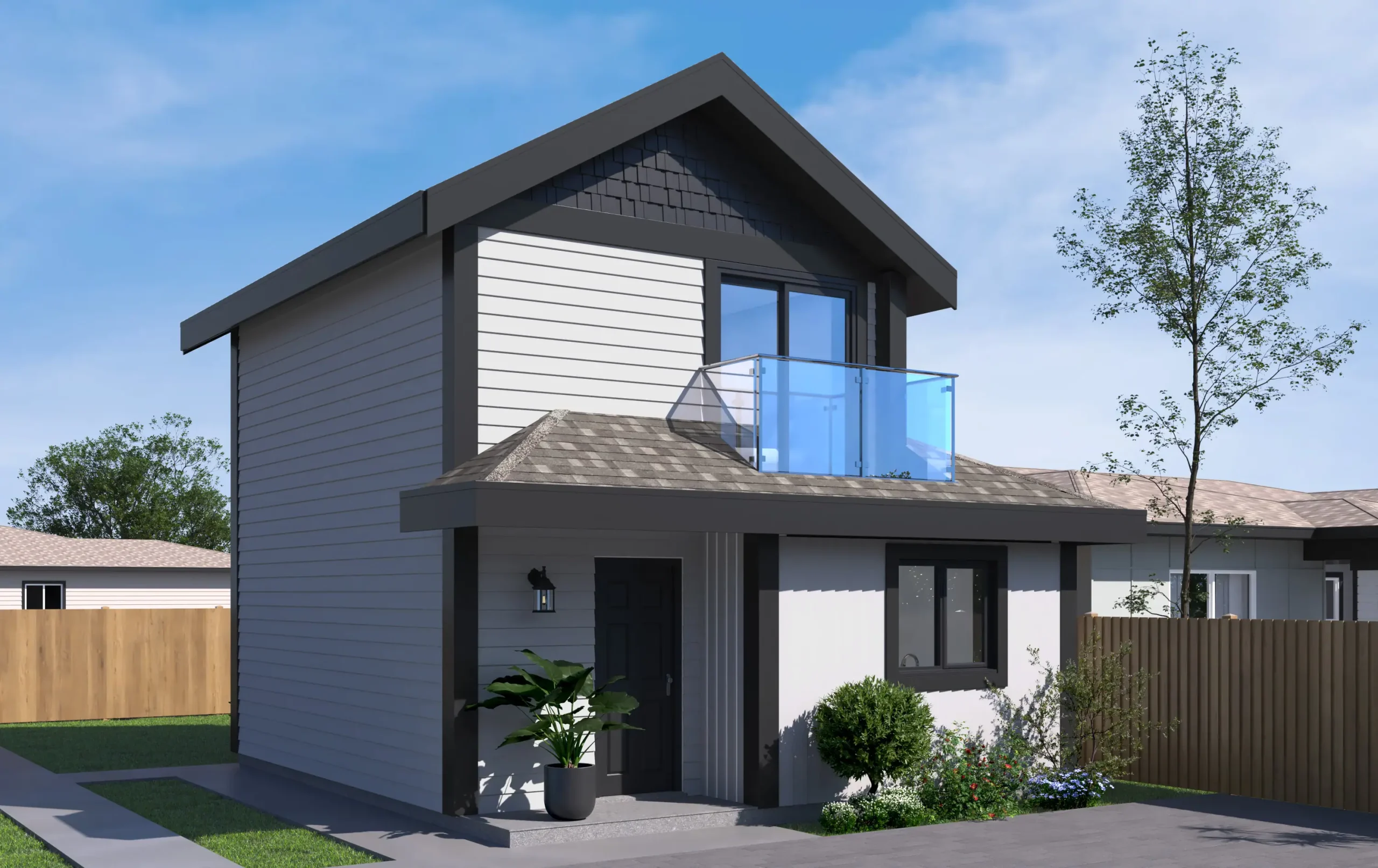
Garage Conversion Vancouver: Costs, Permits & Suite Options (2026)
Vancouver’s real estate market has created an unusual math problem for homeowners: a single parking spot in the city now occupies land worth $80,000 to $150,000. Meanwhile, a converted garage generating $2,000 per month in rental income adds well over $400,000 to your property’s effective value at today’s cap rates. That arithmetic is driving a wave of garage conversions across the city — from Kitsilano to East Van, from Marpole to Hastings-Sunrise.
Whether you’re eyeing a legal secondary suite, a dedicated home office, or a full accessory dwelling unit, a garage conversion is one of the highest-ROI renovations available to Vancouver homeowners. But it’s also one of the most technically complex — particularly when you’re working with a slab-on-grade foundation and an attached structure that was never designed for human habitation.
This guide covers everything you need to know: costs, City of Vancouver zoning rules, permit requirements, slab plumbing challenges, insulation standards, and what separates a legal suite from an expensive liability. We’ve built dozens of these conversions across Metro Vancouver, and we’ll share the realities that most contractors don’t tell you upfront.
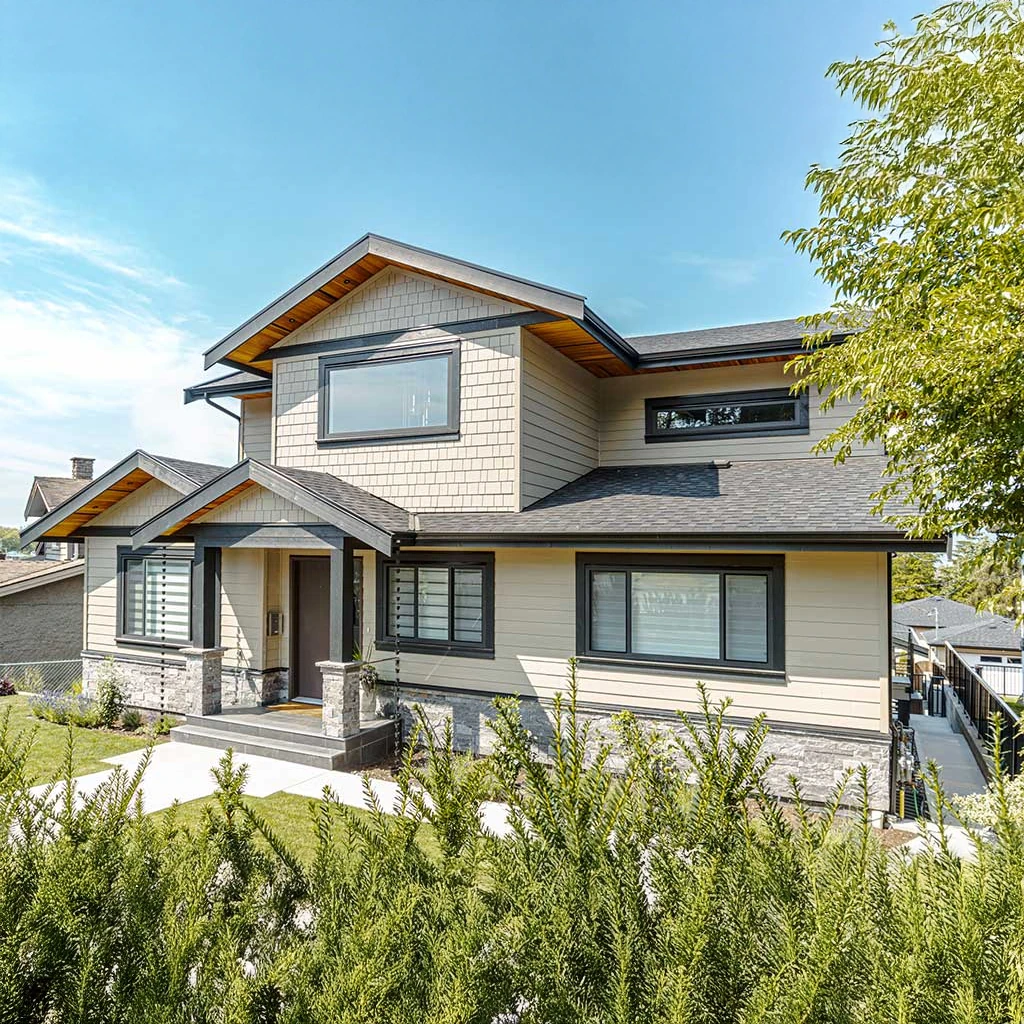
Land value has simply overwhelmed the parking use case. In most Vancouver neighbourhoods, a 20-by-20-foot attached garage sits on land worth $100,000 or more
Vancouver General Contractors
Why Vancouver Homeowners Are Converting Garages in 2026
Three forces have converged to make garage conversions the renovation of the decade in Vancouver.
Land value has simply overwhelmed the parking use case. In most Vancouver neighbourhoods, a 20-by-20-foot attached garage sits on land worth $100,000 or more. Using it to shelter a car — something you can accomplish on a rented stall for $150/month — is an economic misallocation that more homeowners are recognising. The square footage that car occupies, converted to liveable space, can generate $1,800 to $2,400 per month in rental income.
Bill 44 and the provincial small-scale multi-unit housing (SSMUH) legislation changed the legal landscape dramatically. As of June 2024, BC municipalities must permit secondary suites as-of-right across most residential zones. For garage conversions, this means the zoning barrier that previously blocked many conversions has been significantly lowered — though the City of Vancouver’s local regulations still apply and still require navigating carefully.
Work-from-home demand has created enormous appetite for detached, soundproofed workspace. A converted garage studio — insulated, heated, with a separate entrance — offers something a home office inside the house can’t: genuine separation from family life. Many Vancouver homeowners are spending $30,000 to $45,000 on garage office conversions that transform their productivity and their property value simultaneously.
The size math works. A standard attached Vancouver garage runs 400 to 600 square feet — enough for a functional one-bedroom suite with combined living/dining, a small kitchen, a full bathroom, and a bedroom. That’s not cramped by Vancouver standards; it’s exactly what thousands of renters are actively searching for.
Garage Conversion Costs in Vancouver: Full Breakdown
Costs vary significantly depending on the scope of conversion, existing conditions, and whether you’re adding a bathroom and kitchen. Here is what to budget realistically in 2026.
| Conversion Type | Typical Cost Range | What’s Included |
|---|---|---|
| Basic Home Office / Studio | $25,000 – $45,000 | Insulation (walls + ceiling), drywall, electrical upgrade, heating (mini-split), windows, flooring, interior finishes, overhead door infill wall |
| Legal Secondary Suite (no new plumbing rough-in) | $45,000 – $65,000 | All of above + full bathroom (connecting to existing drain line), basic kitchen, separate entrance, egress windows, HRV ventilation |
| Legal Secondary Suite (slab cutting required) | $55,000 – $90,000 | All of above + slab cutting for drain rough-in ($3,000–$8,000), new water supply lines, full kitchen and bathroom plumbing |
| Full ADU / Laneway-Style Suite | $75,000 – $110,000 | Full suite fit-out, high-end finishes, separate metering, soundproofing package, premium HVAC, all permits and inspections included |
The biggest cost variables are plumbing and structural. If your garage already has a floor drain connected to the sanitary system, you may be able to rough in a bathroom without cutting the slab — saving $4,000 to $8,000. If it doesn’t, slab cutting is unavoidable for a legal suite with a bathroom.
What drives costs up:
- Slab plumbing (cutting, rough-in, patching): $3,000–$8,000
- Electrical panel upgrade (most garages are 60A or subpaneled — suites need 100A minimum): $2,500–$5,000
- Mini-split heat pump (heating + cooling): $4,000–$8,000 installed
- HRV (Heat Recovery Ventilator, required for suites): $2,500–$4,500 installed
- Spray foam insulation on slab perimeter and walls: $3,000–$6,000
- Egress windows (required for sleeping rooms): $800–$1,500 per window installed
- City of Vancouver permits and inspections: $1,500–$3,500 depending on scope
- Overhead door removal and infill wall (framing, sheathing, cladding): $4,000–$8,000
A word on budget contingency: garage conversions have a higher-than-average rate of hidden conditions discovered during demolition — rotten sill plates from moisture intrusion, inadequate footings at the garage door opening, or drainage problems that weren’t visible before the slab was cut. Budget 15% contingency on any garage conversion project.
Vancouver Zoning Rules for Garage Conversions
Zoning determines what you can legally do with your converted garage. In Vancouver, the rules differ depending on whether you’re converting an attached or detached garage and what zone your property sits in.
RS-1 and RS-2 zones (single-family residential, the most common zone in Vancouver) now permit secondary suites in principal dwellings as of right under Bill 44 amendments. A garage conversion to a secondary suite is permitted, subject to the City of Vancouver’s suite standards.
RT zones (two-family or duplex zones) have historically permitted secondary suites and continue to do so.
Key zoning requirements for a legal secondary suite in Vancouver:
- Minimum ceiling height: 2.1 metres (6 feet 11 inches) throughout at least 75% of the floor area. This is the most common reason garage conversions fail — many attached garages have 7-foot ceilings that just barely meet this threshold, and any dropped ceiling for mechanical chases can disqualify the suite.
- Minimum floor area: 26 square metres (280 square feet) for a bachelor suite; practical suites are typically 37+ square metres.
- Separate entrance: The suite must have its own entrance, separate from the main dwelling entry.
- Natural light: Windows providing natural light and ventilation are required in all habitable rooms. Sleeping rooms require windows meeting egress standards (minimum 0.35 m² opening area, minimum 380mm in any dimension).
- Kitchen and bathroom: A legal suite must contain a full kitchen (cooking facilities) and a bathroom. A studio without cooking facilities is not a secondary suite — it’s a “sleeping unit,” which has different (and typically more restrictive) rules.
- Not a strata: Secondary suites cannot be stratified (sold separately) under the current rules. They are rentable but remain part of the same lot and title.
When a garage conversion is NOT permitted as a suite: If your garage ceiling height falls below 2.1 metres after accounting for insulation and any dropped ceiling elements, you cannot obtain a suite permit. Similarly, if the garage is part of a strata property, strata bylaws may prohibit conversion entirely regardless of municipal zoning. Always verify strata bylaws before committing to any conversion project.
Secondary suite registration: Once built and inspected, a secondary suite must be registered with the City of Vancouver. Registration requires the suite to pass a final inspection confirming compliance with all applicable codes. Unregistered suites — even if well-built — expose landlords to liability and can complicate property insurance and mortgage refinancing.
Permit Requirements for Garage Conversion in Vancouver
This is where many homeowners try to cut corners — and where the consequences of doing so are most severe. Let’s be direct: a garage conversion without permits in Vancouver is not a legal secondary suite, generates unlawful rental income, voids your home insurance for suite-related claims, and becomes a mandatory-disclosure liability when you sell.
Building permit: Always required for a garage conversion of any scope. Even a home office conversion with no plumbing changes triggers a building permit requirement because you are changing the use and occupancy classification of the space. The City of Vancouver charges building permit fees based on the value of construction — typically $1,200 to $2,500 for a garage conversion project.
Electrical permit: Required whenever electrical work exceeds replacing devices in kind. Panel upgrades, new circuits, subpanel installation, and new wiring all require an electrical permit and BC Safety Authority (BCSA) inspection. This is a separate process from the City of Vancouver building permit.
Plumbing permit: Required for any new plumbing rough-in, slab cutting, drain connections, or fixture installation beyond simple replacement.
Gas permit: If you’re adding a gas line for a range or fireplace, a gas permit and BCSA inspection are required. Note that combustion appliances — including gas fireplaces — are not permitted in sleeping spaces under residential occupancy rules. Mini-split heat pumps are the standard heating solution for suites for this reason.
City of Vancouver permit process and timelines:
- Application submission: Plans drawn by a designer or architect (depending on scope), submitted through the City’s online portal or in person at Development and Building Services.
- Review period: 6 to 10 weeks for a standard garage conversion. Complex projects or those requiring a Development Permit (DP) take longer. Simple home office conversions with no plumbing changes can sometimes be approved in 4 to 6 weeks.
- Inspections during construction: Framing inspection (before insulation), insulation inspection (before drywall), and final inspection are standard. Plumbing and electrical have their own inspection sequences.
- Final inspection and occupancy: Before the suite can be legally occupied, the final building inspection must be passed and a compliance certificate issued.
What happens with unpermitted garage conversions? The City of Vancouver has an active bylaw enforcement program. Complaints from neighbours, real estate transactions, and insurance claims all trigger inspections. If an unpermitted conversion is discovered, the City can issue a stop-use order, require restoration to original condition, and levy fines. More practically, when you sell the property, a real estate lawyer’s title search will surface any outstanding permits or complaints. Unpermitted suites routinely kill deals or require price reductions far exceeding what the permits would have cost.
We handle the full permit process for every garage conversion we build. If you’re ready to explore the process, reach out to our team or review our renovation planning guide to understand the full project lifecycle.
Structural Considerations: What’s Different About a Garage
A garage is structurally unlike the rest of your house in several important ways that drive cost and complexity in any conversion project.
Slab-on-grade foundation. Most Vancouver attached garages are built on a concrete slab at or slightly below grade — not on a foundation wall with a crawlspace or basement beneath. This has major implications:
- All drain lines must either run through the slab (requiring cutting) or be accommodated with above-slab plumbing (which raises floor height and creates step-down threshold issues)
- The slab provides no thermal break from the ground — insulation must be added above or at the perimeter
- Moisture migration through the slab is common and must be addressed before installing any flooring
- Radon gas can enter through slab cracks and perimeter gaps — mitigation is required for habitable spaces in many Vancouver-area neighbourhoods
The overhead door opening. Removing the garage door and infilling the opening is one of the most impactful structural changes in any conversion. The opening is typically 8 to 16 feet wide, and the header spanning it was sized for the door — not for a wall with windows. In most cases, the existing header is adequate for the infill wall, but this must be confirmed by review of the original framing or by a structural engineer if there’s any question.
The infill wall typically consists of:
- New 2×6 framing at 16″ on centre (meeting energy code for insulation cavity depth)
- Window rough openings (typically one or two windows to meet natural light requirements)
- Exterior sheathing and weather barrier continuous with the existing wall
- Exterior cladding to match or complement the house
- Interior insulation, vapour barrier, and drywall
Ceiling height and roof structure. If your garage roof is flat or has a low slope, adding ceiling insulation to meet code (R-40 for ceilings in BC Energy Step Code 3, which most municipalities now require for new or substantially altered buildings) can eat into ceiling height. On a garage with 7-foot walls, adding even 3 inches of rigid foam to the ceiling drops you below the 2.1-metre suite minimum. This is a calculation that must happen before you commit to a suite conversion — not after the permits are submitted.
Wall framing. Many older attached garages were built with 2×4 walls, which provide only a 3.5-inch insulation cavity. Meeting BC Energy Step Code 3 R-22 wall requirements in a 2×4 wall requires either continuous exterior insulation (which changes the exterior profile of the building) or building a new 2×6 wall inside the existing structure (which reduces floor area). Neither option is free.
Plumbing in a Garage Conversion: The Slab Challenge
Adding a bathroom or kitchen to a space with no existing plumbing rough-in is always expensive. In a slab-on-grade garage, it’s the most technically demanding — and most often underestimated — element of the entire project.
How drain lines work in a slab garage: In a standard house with a basement or crawlspace, adding a bathroom means running drain lines under the floor through accessible space. In a slab garage, there is no accessible space beneath the concrete. To install floor drains, toilet rough-ins, or shower drains, a licensed plumber must:
- Mark out the drain locations and confirm the path to the existing sanitary system
- Use a concrete saw to cut trenches in the slab (typically 12 to 18 inches wide, 18 to 24 inches deep)
- Excavate the trench and install drain piping at the correct slope (1/4 inch per foot minimum)
- Connect to the existing house drain or, if the garage is lower than the main drain, potentially install a sewage ejector pump system
- Backfill and patch the slab with concrete
Cost of slab cutting for plumbing: $3,000 to $8,000 depending on the number of fixtures, distance to the existing drain connection, and whether any complications arise (rock, high water table, poor soil conditions). This is concrete-cutting contractor time plus plumbing labour — it cannot be priced precisely without knowing the existing conditions, which is why we always include a slab investigation in our initial site assessment.
The ejector pump option: If your garage slab is at or below the level of the main house drain, gravity drainage may not be possible without significant excavation. In these cases, a sewage ejector pump (also called a macerator pump) can pump waste upward to the drain connection. These add $1,500 to $3,000 to the project cost and require a dedicated electrical circuit and periodic maintenance. They are code-compliant and widely used — but they do add a mechanical system that doesn’t exist in a conventional gravity-drain installation.
Water supply is typically simpler: new supply lines can usually be run through the ceiling or wall cavities from the main house without slab cutting. The cold and hot water supply lines are flexible enough to route around obstacles in ways that drain lines — which require gravity and slope — cannot.
City of Vancouver connection requirements: All plumbing connections must be made by a licensed Red Seal plumber. The City’s plumbing inspector will confirm that the drain connection is compliant, the venting is correct (all traps must be vented), and the installation meets the BC Plumbing Code. The plumber must pull the permit and arrange inspections — this is not DIY territory regardless of your skill level.
Heating and Ventilation for Garage Conversions
A garage has no heating system. Creating a habitable space means adding one — and the options you choose will affect not just comfort but permit compliance, energy performance, and the long-term operating cost for your tenant.
Mini-split heat pumps: the standard solution. For virtually every garage conversion in Vancouver, we recommend a ductless mini-split heat pump. Here’s why:
- Provides both heating and cooling from a single system
- No combustion — compliant with sleeping space requirements
- High efficiency (COP 3.0–4.5 at Vancouver temperatures) means low operating costs for your tenant
- No ductwork required — the indoor head unit mounts high on the wall, refrigerant lines run through a small wall penetration to the outdoor compressor
- Installed cost: $4,000 to $8,000 for a single-zone system sized for 400–600 square feet
- BC Hydro and Fortis BC rebates are available for qualifying systems ($1,000–$2,000 rebate depending on efficiency rating)
What you cannot use: Combustion heating appliances — gas furnaces, gas fireplaces, propane heaters — cannot be used in sleeping spaces. This is not just a preference; it is a code prohibition related to carbon monoxide hazard. If a tenant will sleep in the space, only non-combustion heating is permitted without elaborate sealed combustion and ventilation systems that add significant cost.
HRV (Heat Recovery Ventilator) requirements: BC Building Code requires mechanical ventilation — specifically an HRV or ERV — in any new secondary suite. An HRV continuously exchanges stale indoor air with fresh outdoor air while recovering the heat from the outgoing air stream, maintaining both air quality and energy efficiency. Installed cost for an HRV sized for a suite: $2,500 to $4,500. This is not optional for a legal suite permit in Vancouver.
Radon venting: Radon is a naturally occurring radioactive gas that enters buildings through slab cracks and perimeter gaps. Health Canada and the BC Centre for Disease Control recommend radon testing for all below-grade or slab-on-grade habitable spaces in BC. If testing shows radon levels above 200 Bq/m³ (the Canadian action level), a sub-slab depressurisation system must be installed. Cost for a passive radon vent system: $500 to $1,500. Cost for an active system with a fan: $1,500 to $3,000. We strongly recommend testing before completing any slab-on-grade conversion — radon is the second leading cause of lung cancer in Canada and is invisible and odourless.
Insulation and Energy Performance: Meeting BC Energy Step Code
BC’s Energy Step Code requires new buildings and major renovations to meet minimum energy efficiency targets. For a garage conversion — which is classified as a change of use — the applicable requirements can vary, but most jurisdictions in Metro Vancouver apply Step Code 3 to new secondary suites, which requires:
- Above-grade walls: Effective R-22 (approximately R-20 batt + R-5 continuous exterior insulation, or equivalent)
- Ceilings/roofs: Effective R-40
- Slab perimeter: R-10 (two inches of rigid foam at the slab edge, extending down at least 600mm)
- Windows and doors: Maximum U-value 1.4 W/(m²·K) — this means double-pane, low-E glass minimum
The slab insulation challenge: A concrete slab has essentially zero thermal resistance. In winter, an uninsulated slab acts as a heat sink — drawing warmth out of the space and making radiant floor warmth impossible. Addressing this requires one of three approaches:
- Rigid foam above the slab: 2 inches of XPS (R-10) laid over the slab, covered with plywood subfloor and finished flooring. This raises the floor height by approximately 3 inches — which reduces ceiling height. In a tight garage, this trade-off must be calculated carefully.
- Spray foam at slab perimeter: Closed-cell spray foam applied to the interior of the foundation wall and the perimeter of the slab where cold bridging is worst. Less effective than full-slab insulation but preserves more ceiling height.
- Sleeper system: Pressure-treated 2×4 sleepers fastened to the slab, rigid foam between sleepers, plywood over top. Allows running low-voltage wiring in the floor cavity if needed.
Vapour control: Concrete slabs are permeable to moisture vapour rising from the ground. Before installing any wood-based flooring product over a slab, a vapour retarder (6-mil polyethylene or equivalent) must be installed. Failure to do this leads to flooring cupping, mould growth, and eventual flooring failure — one of the most common callbacks on garage conversions built without proper oversight.
Spray foam vs. batt insulation in walls: For the infill wall at the former garage door opening and for new interior walls, standard batt insulation is adequate in a 2×6 framing cavity. For the existing garage walls — particularly the shared wall with the house and any exterior walls — spray foam provides superior air sealing that is especially valuable in a slab-on-grade structure with many penetration points. The premium over batt insulation is typically $1,500 to $3,000 for a full garage, and the performance improvement in a leaky existing structure is significant.
Converting Your Garage to a Legal Secondary Suite
A legal secondary suite is the highest-value outcome of a garage conversion project — and also the most demanding. Here’s exactly what makes a suite “legal” in Vancouver and what that designation is worth.
The legal suite checklist:
- Minimum 2.1m (6’11”) ceiling height over at least 75% of floor area
- Separate exterior entrance (not through the main dwelling)
- Full kitchen with cooking facilities (range and sink minimum)
- Full bathroom (toilet, sink, shower or tub)
- Sleeping room with egress window (minimum 0.35 m² clear opening)
- Mechanical ventilation (HRV or ERV) — not just a bathroom exhaust fan
- Non-combustion heating or sealed combustion system compliant with BC Building Code
- Smoke and CO detectors interconnected with main dwelling system
- Building permit issued and all inspections passed
- Suite registered with the City of Vancouver
Rental income potential: In Vancouver’s rental market as of early 2026, a studio or one-bedroom suite in a detached home typically rents for $1,600 to $2,400 per month depending on location, finish level, and whether parking or laundry is included. At $2,000 per month, a garage suite generates $24,000 per year in gross rental income.
ROI calculation: A $75,000 garage conversion generating $2,000/month in rental income produces a 32% annual gross return on construction cost. Even after accounting for vacancy, maintenance, and operating costs at 25% of gross rent, the net yield is approximately 24% — extraordinary by any real estate investment standard. The conversion also adds assessed value to the property (suites typically add $150,000 to $300,000 to Vancouver property values), making the effective ROI even higher.
Comparison to basement suite: Many Vancouver homeowners face the choice between a garage suite and a basement suite. Basement suites are often easier on plumbing (existing rough-in, gravity drain), but they typically require more extensive waterproofing, window well installation for egress, and often more ceiling work. Garage conversions start from scratch but on a simpler structure. The cost difference is usually modest — $5,000 to $15,000 — and the choice often comes down to which space is currently more functional for the homeowner’s daily use.
Our home renovation services include full secondary suite conversions with permit management, trades coordination, and final city registration. If you’re ready to start planning, contact our team for a site assessment.
Garage Conversion for Home Office or Studio
Not every homeowner wants a rental suite. The home office or creative studio conversion is a growing category — and at $25,000 to $45,000, it’s significantly more accessible than a full suite conversion while still delivering outstanding quality-of-life and property value improvements.
What’s included at this price point:
- Overhead door removal and insulated infill wall with one or two windows
- Full insulation package (walls, ceiling, slab perimeter)
- Drywall, tape, and paint
- Hardwood, engineered hardwood, or luxury vinyl plank flooring over a subfloor
- Electrical upgrade: new panel or subpanel, circuits for workstations, lighting, HVAC
- Mini-split heat pump (heating and cooling)
- LED lighting (potlights throughout)
- Network and data rough-in (ethernet, HDMI, etc.)
- Interior door to house (if attached garage) or exterior door with weather vestibule
What’s NOT required at this price point: Full plumbing (no bathroom or kitchen means no slab cutting, no plumbing permit, lower overall cost), HRV ventilation (required only for sleeping suites, not for office use), and egress windows (required in sleeping rooms — a home office window can be fixed glass if desired).
Electrical panel upgrade: Even for a home office conversion, the electrical demand may require panel work. Most residential garages are wired with a 60-amp subpanel or as a circuit off the main panel. A converted home office with dedicated circuits for computers, monitors, a mini-split (which requires its own 20A or 30A circuit), and adequate lighting will typically consume 40–60 amps continuously — which means the garage subpanel needs to be upgraded. Budget $2,500 to $5,000 for this work.
Sound insulation: If you’re conducting video calls or music recording in the converted garage, sound isolation becomes important. Standard insulation provides some noise reduction, but true acoustic separation requires decoupled drywall systems (resilient channels or double-layer drywall with acoustic compound), mass-loaded vinyl at penetrations, and solid-core doors. Add $3,000 to $8,000 for a meaningful acoustic upgrade.
Permit requirements for a home office conversion: Still required. A building permit for change of use and electrical permit for any panel work are mandatory. The permit process is typically faster and simpler for a non-suite conversion because there are no plumbing or suite-specific requirements to review.
The Lost Parking Question: What Happens to the Car?
The most common hesitation homeowners express when considering a garage conversion is: “Where does the car go?” This is worth addressing directly because the parking concern often overstates the practical impact.
City of Vancouver parking replacement requirements: The City of Vancouver does not require homeowners to replace off-street parking when converting a garage to a secondary suite or home office. This is confirmed in the City’s secondary suite regulations — there is no parking replacement obligation tied to garage conversion permits. If you currently park in your garage, converting it means your car moves to the driveway, the street, or a rented stall. That’s a lifestyle adjustment, but not a regulatory barrier.
Strata properties: If your attached garage is part of a strata development, your strata bylaws almost certainly govern use of the garage and may explicitly prohibit conversion. Strata corporations can — and often do — prohibit conversions that would affect common elements, structural components, or the building envelope. Always review strata bylaws and get written strata council approval before submitting any permit application for a strata garage conversion. Failing to do so can result in the strata compelling restoration at your cost.
Non-strata properties: For a freehold property (the vast majority of Vancouver single-family homes), you have full discretion over parking and no obligation to replace it. The practical consideration is whether your driveway provides adequate off-street parking for both you and your tenant — which typically it does in Vancouver, since most lots have at least one driveway space in addition to the garage.
Neighbourhood considerations: Street parking availability varies significantly across Vancouver. Before converting a garage in a dense area with limited street parking, consider whether your tenant will have practical access to parking and whether the loss of your garage space will significantly affect your own daily routine. In most cases, homeowners adapt quickly — but it’s worth thinking through before the project starts rather than after.
Carport option: Some homeowners choose to build a carport alongside the converted garage — essentially a roofed, open structure for vehicle storage that doesn’t require a full building permit in most cases (though a development permit for a new accessory structure may be needed). A basic carport costs $8,000 to $18,000 and partially mitigates the parking loss, though it doesn’t provide the same weather protection or security as an enclosed garage.
Frequently Asked Questions: Garage Conversions in Vancouver
Can I convert an attached garage into a secondary suite in Vancouver?
Yes, attached garage conversions to secondary suites are permitted in Vancouver’s RS-1, RS-2, and RT zones, subject to meeting the City’s secondary suite standards: minimum 2.1m ceiling height, separate entrance, full kitchen and bathroom, egress windows in sleeping rooms, and mechanical ventilation. A building permit is required. Confirm your zoning at the City of Vancouver’s online portal or by calling Development and Building Services before committing to the project.
Can I convert a detached garage into a suite in Vancouver?
A detached garage conversion to a suite is more complex. Depending on your lot and zone, a detached conversion may qualify as a laneway house (which has its own specific standards and permit process) rather than a secondary suite. Laneway houses must face the lane, meet setback and height requirements, and are subject to a separate fee structure and review process. If your detached garage faces the lane and meets the laneway house criteria, conversion to a laneway house can be highly valuable — but it’s a different process from a secondary suite. Consult with the City and a knowledgeable contractor before proceeding.
What is the minimum ceiling height for a garage conversion suite in Vancouver?
The City of Vancouver requires a minimum ceiling height of 2.1 metres (6 feet 11 inches) throughout at least 75% of the floor area in a secondary suite. This must be the finished ceiling height — after insulation, any dropped ceiling elements, and mechanical chases are accounted for. Many older Vancouver garages have raw ceiling heights of 7 to 7.5 feet (2.13 to 2.28 metres), which leaves very little margin once insulation and finishes are added. Measure carefully and calculate the finished ceiling height before committing to a suite conversion.
Do I need a permit to convert my garage in Vancouver?
Yes, always. A building permit is required for any garage conversion regardless of scope — even a home office conversion with no plumbing changes requires a permit because you are changing the occupancy classification of the space. Additionally, electrical work requires an electrical permit from BCSA, and plumbing work requires a plumbing permit. There is no legal exception or exemption for garage conversions in Vancouver. Working without permits exposes you to stop-work orders, fines, mandatory restoration, and serious complications at resale.
How long does the City of Vancouver permit process take for a garage conversion?
Expect 6 to 10 weeks for a standard garage conversion building permit in Vancouver. The timeline begins when a complete application — including detailed drawings prepared by a designer or architect — is submitted. Incomplete applications are returned for revision and restart the clock. For a simple home office conversion, some permits are approved in 4 to 6 weeks. For a full secondary suite conversion with plumbing, expect 8 to 10 weeks or longer. Electrical and plumbing permits are typically reviewed and approved within 1 to 2 weeks once applied for.
How do I add plumbing to a slab-on-grade garage?
Adding drain plumbing to a slab garage requires cutting the concrete slab to install drain lines below it — a process called slab cutting or concrete saw-cutting. A licensed plumber marks out the drain locations, cuts trenches in the slab with a concrete saw, installs drain piping at the correct slope, connects to the existing house sanitary drain (or installs an ejector pump if the grade doesn’t allow gravity drainage), and patches the slab with concrete. Cost ranges from $3,000 to $8,000 depending on the number of fixtures and distance to the drain connection. Water supply lines can typically be run through wall or ceiling cavities without slab cutting.
What heating system should I use for a converted garage suite?
A ductless mini-split heat pump is the standard and recommended solution for garage suite conversions in Vancouver. It provides both heating and cooling, requires no ductwork, uses no combustion (compliant with sleeping space requirements), and has high energy efficiency. Installed cost is $4,000 to $8,000 for a single-zone system. BC Hydro and Fortis BC offer rebates of $1,000 to $2,000 for qualifying high-efficiency models. Combustion appliances — including gas furnaces and gas fireplaces — are not permitted in sleeping spaces without a sealed combustion system and extensive ventilation provisions.
How much rental income can I earn from a converted garage suite in Vancouver?
A legal secondary suite in a converted garage in Vancouver typically rents for $1,600 to $2,400 per month in 2026, depending on neighbourhood, suite size, finish level, and included amenities (laundry, parking). East Vancouver neighbourhoods (Grandview-Woodland, Hastings-Sunrise, Kensington-Cedar Cottage) and the West Side (Kitsilano, Dunbar, Point Grey) both show strong demand. At $2,000 per month, a garage suite generates $24,000 annually in gross income — enough to service the debt on a $75,000 renovation at today’s interest rates within approximately 3.5 years.
Is a garage conversion better ROI than a basement suite in Vancouver?
Both offer strong ROI, but they serve different situations. A basement suite typically benefits from existing plumbing rough-in, which can significantly reduce costs. A garage conversion starts from scratch but has the advantage of a simpler structure and often easier permit navigation. If your basement already has rough-in plumbing and adequate ceiling height, a basement suite may be modestly cheaper. If your garage is the more spacious or accessible option, the conversion math often works out similarly. The key variable is existing conditions — a site assessment by a knowledgeable contractor is the only way to compare the two options accurately for your specific property.
How long does a garage conversion take to build?
Once permits are in hand, a typical garage suite conversion takes 8 to 14 weeks of active construction. The sequence is: demolition and slab cutting (1–2 weeks), framing and rough-in (plumbing, electrical, HVAC — 2–4 weeks), insulation and vapour barrier (1 week), drywall (1–2 weeks), finishing (flooring, millwork, fixtures — 2–4 weeks), final inspections and deficiency corrections (1–2 weeks). A home office conversion without plumbing typically completes in 6 to 10 weeks. Combined with the 6- to 10-week permit period, plan for 4 to 6 months from project start to tenant move-in for a full suite conversion.
Can I live in my home during the garage conversion?
Yes, in most cases. A garage conversion is typically isolated from the main living space and does not require shutting down the house’s primary systems for extended periods. There are brief disruptions: electrical work may require main panel shutdowns for a few hours, slab cutting is noisy and dusty (though contained to the garage), and the garage interior will be a construction zone throughout. The most significant disruption is usually during the infill wall work at the former garage door opening, which may temporarily expose the garage interior to weather. Good contractors schedule this work to minimize exposure and complete the weatherproofing in a single continuous sequence.
What is the difference between a converted garage suite and a laneway house?
A secondary suite in a converted garage is a dwelling unit within or attached to the principal house — it shares the same structure and sits on the same foundation. A laneway house is a completely separate, detached dwelling unit built at the rear of the lot, typically facing the lane. Laneway houses are subject to their own zoning regulations including maximum floor area (typically 83 m² / 893 sq ft in Vancouver), minimum setbacks, height limits, and a separate development permit process. If your detached garage is at the rear of your lot facing the lane, converting it to a dwelling unit may make it a laneway house — which offers more autonomy and potentially higher rental income but requires more extensive permitting and construction. If your garage is attached to the house, it is a secondary suite conversion.
What are the most common mistakes in garage conversions?
The five most common (and costly) mistakes we encounter in garage conversion projects: (1) Not checking ceiling height before committing to a suite — discovering the finished ceiling will be 2.05m instead of 2.1m after construction has begun. (2) Skipping radon testing — slab-on-grade spaces in many Vancouver neighbourhoods have measurable radon; discovering this after the suite is finished and rented is expensive and legally problematic. (3) Underestimating slab plumbing costs — the $4,000 to $8,000 slab cutting and rough-in cost is regularly omitted from early contractor quotes. (4) Converting without permits — the short-term savings are reliably consumed by the long-term liability, particularly at resale. (5) Failing to address moisture in the slab — skipping vapour barrier and slab insulation to save money produces flooring failures and mould within two to three years.
Can I convert my garage if I have a strata title?
A strata-titled garage conversion requires strata council approval before any permits can be applied for. Strata bylaws frequently prohibit modifications to the building envelope, structural changes, and changes to designated parking stalls. Even if the City of Vancouver would permit the conversion, the strata has authority to prohibit it under the Strata Property Act. Review your strata’s bylaws and apply for written strata approval as the first step — before engaging a contractor or designer. If your strata prohibits conversion, you have no legal path forward without amending the bylaws (which requires a 3/4 vote of strata owners).
Do I need to add radon mitigation in my converted garage?
Radon testing is strongly recommended for all slab-on-grade garage conversions in Metro Vancouver. Radon enters through slab cracks, construction joints, and service penetrations. Testing with a long-term radon detector ($30 to $50 at hardware stores, or through Health Canada’s free test kit program) for 90 days in the finished space will give you an accurate reading. If results exceed 200 Bq/m³ — the Canadian action level — sub-slab depressurisation is required. Proactive radon venting rough-in (a simple slotted pipe under the slab connected to a vent stack) can be installed during construction for $300 to $600 and activated later with a fan if testing shows elevated levels. This is far cheaper than retrofitting after the suite is finished and occupied.
What permits does a home office garage conversion need compared to a suite?
A home office conversion requires a building permit and an electrical permit (for panel work and new circuits) but does not require a plumbing permit (if no plumbing is added), an HRV, egress windows, or secondary suite registration. The permit application is simpler and review timelines shorter. The building permit itself is still required because you are changing the occupancy classification of the space from garage (Group F) to office (Group D) — a code-significant change regardless of the scope of physical work. Do not omit the permit for a home office conversion on the assumption that “it’s just an office.” The permit is required, straightforward, and protecting you at every future transaction involving the property.
Ready to Convert Your Garage? Start With a Site Assessment
A garage conversion is one of the highest-impact renovations available to Vancouver homeowners — but it rewards careful planning and penalises shortcuts. The homeowners who get the best outcomes are those who start with a thorough site assessment that confirms ceiling height, slab conditions, existing electrical capacity, and drain connection options before committing to a scope or budget.
Vancouver General Contractors has completed garage conversions across the Lower Mainland — from simple home office studios in East Vancouver to full legal secondary suites in Kitsilano and Burnaby. We handle permits, trades coordination, city inspections, and final registration so you don’t have to navigate the bureaucracy alone.
Ready to explore what your garage conversion could look like? Contact our team to schedule a site assessment, or read our complete renovation guide to understand how we manage projects from first consultation through final occupancy. For a broader overview of our renovation services, visit our home renovation page.
The car can find another spot. The opportunity in that garage is too valuable to leave parked.
Get a Free Renovation Quote
Metro Vancouver’s trusted general contractors. Free consultations across Vancouver, Burnaby, Richmond, North Shore & beyond.
Get Your Free Quote →
Comments are closed