




Mudroom Renovation Vancouver: Adding a Mudroom, Costs & Ideas (2026)
Vancouver gets 1,189 millimetres of rain every year. Add muddy hiking boots, soaking wet rain jackets, backpacks dripping from a downpour, and a dog that treats every puddle as a personal invitation — and you start to understand why a mudroom renovation in Vancouver is one of the most practical home improvement investments a homeowner can make.
The problem is that most Vancouver homes were built without a functional entry. The front door opens directly into the living room or dining area. There is no buffer zone — no place to drop wet gear, hang soaked coats, or kick off muddy boots before tracking everything across hardwood floors. A proper mudroom renovation creates that buffer zone, and the difference it makes in daily family life is dramatic.
This guide covers everything you need to know about mudroom renovations in Vancouver: costs, locations, design, permits, millwork options, flooring, and how to add a mudroom even when you think you have no space. Whether you are converting an existing coat closet, building a garage entry mudroom, or planning a small addition, this guide will help you make smart decisions and get the most out of your renovation budget.
Beyond daily function, mudrooms carry real estate value in Vancouver's competitive housing market. Buyers — especially families with children — actively look for homes with functional entry storage
Vancouver General Contractors
Why Mudrooms Are Essential in Vancouver
Vancouver is one of the wettest major cities in Canada. With over 1,189mm of annual rainfall — and a rainy season that stretches from October through April — the challenges of a wet climate are embedded in daily life. You are not dealing with the occasional rainy day. You are managing months of continuous wet weather, muddy trails, soaked school bags, and dog paws caked with mud from Jericho Beach or Pacific Spirit Park.
The standard Vancouver home entry — particularly in older craftsman bungalows, Vancouver Specials, and pre-1990s single-family homes — was never designed for this reality. A narrow front hallway, a small coat closet (if you are lucky), and immediate adjacency to the main living area. Every time a family member comes home from school, work, or a hike, they are navigating from wet exterior directly into clean interior space with no transition zone to catch the mess.
A properly designed mudroom solves four distinct problems at once:
- Wet gear containment. Jackets, umbrellas, rain pants, and hats all have a designated place to dry before being stored. Wet gear does not pile up on chairs, hang from door knobs, or end up on the floor.
- Shoe and boot management. In a city where most households remove shoes at the door, dedicated shoe storage changes everything. Shoes are not scattered across the entry, piled in a heap, or stuffed under a bench in a disorganized mass.
- Backpack and bag drop zone. School bags, gym bags, work bags, and sports equipment need a home. A mudroom gives every family member a cubby or hook that is theirs, so the front entry stays clear.
- Dog integration. For the substantial portion of Vancouver families with dogs, a mudroom provides a place to wipe down paws, hang leashes, store dog supplies, and manage the post-walk chaos before it spreads through the house.
Beyond daily function, mudrooms carry real estate value in Vancouver’s competitive housing market. Buyers — especially families with children — actively look for homes with functional entry storage. Listings that highlight a well-designed mudroom, custom lockers, or a garage entry with built-in storage command attention. Real estate agents in Vancouver increasingly describe this as the “mudroom premium”: a thoughtfully renovated entry can contribute $15,000–$30,000 to perceived value and buyer appeal, disproportionate to the cost of the renovation itself.
Mudroom Renovation Costs in Vancouver (2026)
Mudroom renovation costs vary significantly depending on scope, location within the home, and level of finish. A simple entry closet conversion is a very different project from a full mudroom addition with custom millwork and plumbing. The table below provides realistic cost ranges for Vancouver in 2026, based on current material and labour pricing.
| Mudroom Type | Typical Size | Cost Range |
|---|---|---|
| Bench + hooks + coat rail in existing hallway (no construction) | 4–6 linear feet | $1,500–$4,000 |
| Entry closet conversion (open up closet, add millwork) | 36–48″ wide niche | $6,000–$14,000 |
| Basic entry closet conversion with tile flooring | 36–60″ wide niche | $8,000–$18,000 |
| Garage entry mudroom (laundry/utility conversion) | 60–100 sq ft | $12,000–$25,000 |
| Small mudroom conversion (carving space from adjacent room) | 40–80 sq ft | $18,000–$35,000 |
| Full mudroom addition (new construction off front or side) | 80–150 sq ft | $35,000–$75,000 |
| Full mudroom addition with sink and heated floors | 80–150 sq ft | $50,000–$85,000 |
These figures include design, demolition (where applicable), framing, drywall, millwork, flooring, painting, and electrical. Plumbing for a sink is itemized separately because it is highly site-dependent — proximity to the waste stack and hot water supply determines whether it is a straightforward add-on or a complex routing job.
What Drives Mudroom Renovation Costs
Several factors push mudroom renovation costs up or down. Understanding these will help you make smart trade-offs:
- Custom millwork. A set of six custom-built mudroom lockers with painted MDF doors, soft-close drawers, and integrated bench seating runs $4,000–$12,000 for the millwork alone. This is typically the single largest cost item in a mudroom renovation.
- Flooring. Porcelain tile in a mudroom entry costs $15–$35 per square foot installed. For a 30–50 sq ft entry zone, this adds $500–$1,750 to the project. Heated floor systems under tile add another $8–$15 per square foot.
- Structural changes. If you are widening a doorway, removing a closet wall, or relocating a door, structural work adds $2,000–$8,000 depending on whether load-bearing elements are involved.
- Plumbing for a sink. Adding a mudroom sink costs $3,000–$7,000 in labour and materials, more if supply and drain lines need to be run significant distances.
- Permits and engineering. A simple millwork installation does not require a permit. Structural changes, plumbing, or a new addition all require City of Vancouver building permits, adding $500–$2,500 in permit fees plus the cost of drawings.
For most Vancouver families, the sweet spot is a well-executed entry closet conversion or garage entry mudroom in the $12,000–$25,000 range — enough to get custom millwork, quality tile flooring, and a result that genuinely transforms daily life without the cost of a full addition.
Where to Put a Mudroom in a Vancouver Home
Location is the most important decision in a mudroom renovation. A beautifully designed mudroom that nobody actually uses — because it is not on the natural path through the house — is a failed project. The goal is to intercept the family’s natural traffic flow and place the mudroom exactly where it will be used every single time someone enters the home.
There are five primary locations for a mudroom in a Vancouver home:
1. Front Entry Conversion
The most common mudroom renovation in Vancouver is converting or expanding the front entry. Most Vancouver homes — craftsman bungalows, Vancouver Specials, 1970s–1990s houses — have a standard coat closet at the front door, typically 24–30 inches deep and 36–48 inches wide. This closet is usually an underperforming storage solution: things get stuffed in, nothing has a proper place, and the closet door hides a chaotic jumble of coats and shoes.
Opening up this closet — removing the door and converting it to an open niche, or removing the side wall to expand into adjacent space — creates a functional mudroom alcove. Add a bench, cubbies above, hooks on the sides, and tile flooring in the entry niche, and you have transformed a frustrating closet into a hardworking entry system. Cost: $6,000–$18,000 depending on scope and finish level.
2. Side Entry Addition
Homes with a side door — typically leading to the driveway or backyard — often have the opportunity to add a small mudroom addition or convert an adjacent interior space. Side entries are particularly common on Vancouver Specials and older bungalows where a secondary door was added to the kitchen or side hallway. This location is ideal for families who primarily use the side entry as their daily entry point. Cost for a small addition: $25,000–$55,000.
3. Garage Entry (Most Functional for Car Families)
For families who drive regularly, the garage entry into the house is the actual main entry — the door that gets used 90% of the time. Yet this entry is often an afterthought: a door opening directly into a laundry room or utility space, with no storage, no bench, and no organization. Converting the garage entry zone into a functional mudroom is often the highest-value mudroom renovation for these families. Cost: $12,000–$25,000.
4. Rear Entry from Backyard
Homes with active backyard use — vegetable gardens, play structures, dogs, or frequent outdoor entertaining — benefit enormously from a rear entry mudroom. This entry catches the garden mud, the post-yard-work mess, and the dog after a romp in the grass. A rear entry mudroom can often be combined with a back deck project or kitchen renovation. Cost varies widely based on existing configuration.
5. Basement Entry for Families Using Backyard Access
In two-storey Vancouver homes with daylight basements, families often enter through a basement-level door after using the backyard or coming up from the garage. Converting the basement entry landing — typically an under-utilized space — into a functional mudroom with built-in storage works extremely well. This location is below the main living area, so mess stays contained at a lower level and does not travel through the home.
To choose the right location, spend one week consciously noting every time a family member enters the home. Which door do they use? Do they tend to drop gear at the entry or carry it to another room? The location with the highest actual traffic is where the mudroom belongs — regardless of which entry you consider the “front door.”
Converting the Front Entry Closet
The front entry closet conversion is the most accessible and cost-effective mudroom renovation available to most Vancouver homeowners. Here is a detailed breakdown of how this project works and what it costs.
The typical Vancouver home coat closet sits directly beside or behind the front door. It is 24–30 inches deep, 36–48 inches wide, and 8 feet tall. It has a hinged door (occasionally bifold), a single rod, a shelf above, and no other storage features. It holds coats, but not much else in an organized way.
The conversion process involves several steps:
- Remove the closet door and frame. Opening up the closet to the hallway transforms it from a closed cabinet to an open alcove — accessible, visible, and easier to use for the whole family.
- Widen the opening (optional but recommended). If the budget allows, widening the opening from the standard 30–32 inch door rough opening to 48–60 inches makes the mudroom feel spacious rather than cramped. This requires header work if any wall framing is involved.
- Install tile flooring in the niche. The entry niche gets a durable tile floor — typically a 12×24 porcelain tile in a warm greige tone. A tile border or transition strip creates a clean boundary between the mudroom zone and the main hallway flooring.
- Build and install the bench. A built-in bench sits at 17–18 inches high, with a depth of 16–18 inches. This is the right height to sit comfortably while removing shoes. The bench can be solid with a hinged seat for storage below, or open below with basket storage.
- Install cubbies above the bench. Individual cubbies — one per family member — are built above the bench from approximately 30 inches to 72 inches AFF. Each cubby is 12–16 inches wide. Upper cubbies (above 72 inches) are used for seasonal storage.
- Mount coat hooks on the side walls. Hooks on each side wall of the alcove at 60–72 inches AFF for adults, with a lower row at 42–48 inches for children. The side-wall placement keeps hooks from blocking the visual depth of the space.
- Add shoe storage below the bench. Open cubbies, pull-out drawers, or simple basket shelves below the bench handle the daily shoe rotation — the two to three pairs currently in use per family member.
The result is a compact but highly functional mudroom alcove. For a family of four, a 48-inch-wide converted closet provides four individual cubbies, seating for two, approximately 16 coat hooks across both side walls, and shoe storage for eight to twelve pairs. That handles the daily rotation of an active Vancouver family.
Cost breakdown for a standard entry closet conversion:
| Component | Cost Range |
|---|---|
| Demolition and opening up closet | $500–$1,500 |
| Widening opening / header work | $1,500–$3,500 |
| Custom millwork (bench, cubbies, upper storage) | $3,500–$8,000 |
| Tile flooring in entry zone | $800–$2,000 |
| Painting, trim, finishing | $600–$1,200 |
| Hooks and hardware | $200–$500 |
| Total | $6,000–$14,000 |
The Essential Mudroom Components
A mudroom is only as functional as its components. Too many mudroom renovations are designed around aesthetics without thinking carefully about the ergonomics of daily use. Here is a breakdown of every component, what it does, and the dimensions that make it work.
The Bench
The bench is the heart of the mudroom. It provides a place to sit while removing boots and shoes — which, in a Vancouver home where shoes come off at the door, happens every single time someone enters. The correct bench dimensions are 17–18 inches high (same as a standard chair seat) and 16–18 inches deep. Deeper benches feel like obstacles; shallower benches are uncomfortable to sit on. The bench should run the full width of the mudroom for maximum utility. A hinged bench top with storage below is a useful addition, particularly for seasonal items like extra scarves, hats, and gloves.
Coat Hooks
Coat hooks above the bench at 60–72 inches AFF for adults, with a secondary row at 42–48 inches for children. The number of hooks matters — a typical Vancouver family needs four to six hooks per person: one for the everyday rain jacket, one for a secondary coat, one for a sports bag or gym bag. Hooks set in rows rather than side by side allow multiple items to hang without tangling. Choose hooks that project at least 3–4 inches from the wall to prevent bunching when multiple coats hang together.
Individual Cubbies
One cubby per family member is the organizing principle that makes mudrooms work. Each cubby — 12–16 inches wide, 16–18 inches deep — is that person’s zone. Their backpack goes there. Their sports gear goes there. Their helmet, their reusable bags, their library books. The cubby creates ownership and accountability that a shared open shelf never achieves. Label the cubbies for young children; let older children and adults own their space. A family of four needs four cubbies at accessible height, with additional cubbies above for seasonal storage.
Shoe Storage
Below-bench shoe storage is critical in Vancouver, where shoes come off at the door without exception for most households. Options include open cubbies (simple, visible, accessible), pull-out shoe drawers (tidy, conceals mess), angled shoe shelves (efficient use of space), and baskets (flexible, easy to clean). The minimum is two to three pairs of shoes per family member in the active zone — the current season’s footwear. Additional long-term shoe storage can be in a hall closet or bedroom.
Backpack and Bag Hooks
Separate from the coat hook area, dedicated bag hooks make a significant difference for families with school-age children. Lower hooks at 42–48 inches AFF for children’s backpacks (low enough for kids to reach and hang independently); higher hooks at 60–66 inches for adult work bags, gym bags, and reusable shopping bags. Backpack hooks inside individual cubbies work particularly well — the bag stays contained within the cubby space rather than hanging in the open zone.
Secondary Coat Storage
The everyday coat hooks handle the two or three coats currently in rotation. But Vancouver families accumulate seasonal gear: ski jackets, heavy winter coats, rain pants, high-visibility vests, sports jerseys. A secondary storage cabinet — with a hanging rod for longer items — keeps seasonal coats accessible but out of the primary zone. This can be a tall cabinet flanking the main mudroom unit, or a separate hall closet modified for coat storage.
Dog Supplies Nook
Vancouver is a city that takes its dogs seriously. For the roughly 40% of Vancouver households with dogs, a dog-dedicated section of the mudroom transforms the post-walk routine. A low hook for the leash, a basket or bin for balls and toys, a shelf for the poop bag holder and treats, and a paw-wipe station (a small mat and damp cloth holder or built-in drawer with a microfibre cloth) makes a meaningful difference. In a garage entry mudroom, a hose bibb provides the option for a full paw wash — a game-changer for muddy-season walks.
Custom Millwork vs. Prefab Systems
One of the most important decisions in any mudroom renovation is how to approach the storage millwork. The options range from fully custom-built units to off-the-shelf systems from Canadian Tire, with several worthwhile options in between. Each approach has real advantages depending on your budget and priorities.
Fully Custom Mudroom Millwork
Custom mudroom cabinetry is built to fit your exact space, painted to match your trim colour, and designed around your family’s specific storage needs. A six-locker custom mudroom unit — individual lockers with painted MDF door panels, soft-close drawers in the base, integrated bench, and upper open cubbies — costs $4,000–$12,000 for the millwork fabrication and installation.
What custom delivers that prefab cannot:
- Exact fit to non-standard wall lengths and ceiling heights — critical in Vancouver homes where no two entries are the same dimension
- Integration with wainscoting, trim profiles, and the existing architectural character of the home
- Painted finishes that match the home’s interior trim colour precisely
- Soft-close hinges and drawer slides on every component
- Custom sizing for unusual family needs — oversize cubbies for sports equipment, extra-deep drawers for boots, tall lockers for ski gear
Semi-Custom: IKEA PAX with Custom Fronts
The IKEA PAX wardrobe system, modified with custom doors and millwork surround, is a well-proven approach to achieving a custom look at a reduced cost. PAX units are structurally solid, come in multiple depths and heights, and accept a wide range of custom door fronts from suppliers like Semihandmade, Reform, or local Vancouver cabinet shops. The combination of PAX carcases with custom painted MDF fronts, a site-built bench, and millwork trim to integrate the units with the wall can cost $2,000–$5,000 in materials — significantly less than full custom millwork.
The limitation is that PAX units come in fixed widths (15, 19.7, 23.6 inches) which may not divide evenly into your available space, and the depth options (13.8 or 22.8 inches) may not match your ideal mudroom bench depth. A skilled carpenter can make these work with filler panels and custom site-built elements, but the process requires more problem-solving than full custom.
Prefab Bench-and-Hook Systems
Off-the-shelf mudroom systems from Canadian Tire, RONA, Home Depot, and similar retailers offer an entry-level solution at $500–$1,500. These typically include a bench, a rail with hooks, and upper shelving in a coordinated system. They are easy to install, require no contractor, and can be assembled in an afternoon.
The honest assessment: prefab systems work reasonably well for light use and as a starter solution while you plan a more permanent renovation. They look prefab — the proportions are generic, the finishes do not match your trim, and the storage options are limited. For a Vancouver home that you plan to sell in three to five years, a prefab system does not create the “mudroom premium” that buyers notice. For a starter home or a rental property, it is a perfectly reasonable approach.
If you are planning a full mudroom renovation, use the prefab system as a placeholder while you gather quotes and make decisions. Remove it when the renovation begins — the benchmark cost of prefab installation is so low that there is no reason to compromise the finished result by trying to incorporate it.
Mudroom Flooring for Vancouver’s Climate
Flooring is the most critical material decision in a mudroom renovation — arguably more important than the millwork itself. The mudroom floor takes direct assault from wet boots, muddy paws, dripping umbrellas, and everything else that comes through the door on a Vancouver November morning. It needs to be impervious to water, easy to clean, durable under abrasion, and slip-resistant.
Porcelain Tile: The Right Choice for Vancouver Mudrooms
Porcelain tile is the gold standard for Vancouver mudroom flooring, and for good reason. It is completely impervious to water, unaffected by grit and mud, easy to mop, and available in hundreds of finishes that complement any design direction. Importantly, porcelain tile holds up indefinitely — a quality tile installation in a mudroom will outlast every other component of the renovation.
For a mudroom, specify a tile with an R10 anti-slip rating or higher. R10 provides adequate traction for a damp entry area under normal use. R11 or R12 is appropriate if the mudroom opens directly to the exterior and is frequently wet with standing water. The slip rating is measured differently by European (R-scale) and North American (DCOF) standards — ask your tile supplier to confirm slip resistance under wet conditions.
Popular tile choices for Vancouver mudrooms include large-format (24×24 or 12×24) porcelain in warm greige tones that conceal dirt between cleanings, patterned encaustic-look porcelain for character in a heritage home entry, and dark slate-look tile that provides a dramatic visual grounding for the entry space.
Cost: $15–$35 per square foot installed, depending on tile cost and installation complexity.
Luxury Vinyl Plank (LVP): Warmer but With Caveats
LVP is warmer underfoot than tile, less expensive, and easier to install. Many homeowners choose it for the main living areas and want continuity into the mudroom zone. It is water-resistant (not waterproof — note the distinction) and durable enough for moderate mudroom use.
The concern with LVP in a Vancouver mudroom is long-term performance under sustained wet conditions. Standing water, repeatedly wet boots, and the grit of fine sand and gravel from outdoor surfaces will eventually degrade LVP flooring faster than in a normal interior application. If you choose LVP for the mudroom, specify a commercial-grade product with a 20 mil wear layer (not the standard residential 12 mil) and a fully waterproof core. Expect to replace it every eight to twelve years in a high-traffic mudroom, versus thirty-plus years for quality porcelain tile.
Heated Floors: The Vancouver Mudroom Upgrade
One of the most frequent complaints about tile mudroom floors is that they are cold underfoot on winter mornings — particularly when sitting on the bench to remove shoes or boots. In-floor electric radiant heating under tile eliminates this problem entirely and makes the mudroom a genuinely pleasant space even on the coldest Vancouver mornings.
Electric radiant heat under tile in a mudroom costs $8–$15 per square foot including the heating mat, thermostat, and installation. For a 30–40 square foot mudroom zone, this is a $300–$600 material cost and roughly $400–$800 in labour — a $700–$1,400 upgrade that transforms the daily experience of the space. On a $15,000 mudroom renovation, adding heated floors is a worthwhile investment that dramatically improves the perceived quality of the finished product.
Important note: ensure the tile installer is experienced with radiant heat systems. The heating mat must be embedded in the tile mortar bed correctly, and the thermostat wiring requires an electrical rough-in. Plan this with your contractor from the start — it cannot easily be added after the tile is installed.
Adding a Mudroom Sink
The mudroom sink is the single most functional upgrade available in a mudroom renovation — and the most frequently overlooked. Once you have a mudroom sink, you will wonder how you managed without one.
What a mudroom sink handles that no other fixture can:
- Muddy dog paws. A low-set mudroom sink (or a dog-washing station) lets you wash off paw mud before the dog sets foot on your floors. No more trying to clean four paws with a towel at the door.
- Pre-entry handwashing. Children coming in from the yard, adults coming in from the garden — hands get washed in the mudroom before anyone touches the kitchen or bathroom.
- Soaking wet outerwear. Rain jackets, ski pants, and sports uniforms that need to be rinsed or soaked before washing go directly into the mudroom sink. No more carrying dripping gear through the house to the laundry room.
- Cut flower prep and garden harvest. Trim flowers from the garden at the mudroom sink before bringing them inside. Rinse garden vegetables before they come into the kitchen.
The mudroom sink does not need to be large to be functional. A 12×12-inch prep sink — the size of a single laundry sink basin — is adequate for handwashing and dog paw cleaning. A standard 18×18-inch utility sink handles more volume and is the better choice if you plan to soak or rinse larger items. Wall-mounted sinks save floor space and make cleaning underneath easy.
Adding a mudroom sink requires a plumbing rough-in: cold and hot water supply lines, and a drain tied to the waste stack. The feasibility and cost depends almost entirely on where the waste stack is in relation to your mudroom. If the mudroom is adjacent to the kitchen or a bathroom — as it often is in Vancouver homes — the drain is a short, simple run and the project is straightforward. If the mudroom is on the opposite side of the home from all plumbing, routing the drain may require cutting through floors or walls and running drain lines significant distances, which is expensive.
Budget for a mudroom sink addition: $3,000–$7,000 in most Vancouver homes, including plumbing rough-in, sink, faucet, and cabinet surround. Permits are required for plumbing work in the City of Vancouver — your contractor will pull the plumbing permit as part of the project. See our home renovation guide for more information on permit requirements for renovation projects in Vancouver.
Adding a Mudroom Addition to Your Vancouver Home
For many Vancouver homeowners, the challenge is not designing the mudroom — it is finding the space. Older homes and many post-war bungalows have entries so small that there is simply nothing to work with: a 3×4-foot landing, a door that opens directly into the living room, and no adjacent space to borrow from. In these cases, a mudroom addition may be the only real solution.
A mudroom addition is a small structural addition to the home — typically 6×8 feet to 8×12 feet — built off the front entry, side entry, or rear entry of the house. It requires a foundation (concrete footings and a slab, or a crawlspace with treated framing), exterior wall framing, a roof tied into the existing roofline, exterior cladding to match the house, and all interior finishes.
The addition process involves:
- Architectural drawings. A set of permit drawings showing the proposed addition dimensions, structural details, and exterior appearance. Required for the building permit application. Cost: $2,500–$6,000 for a simple addition from a residential designer.
- Building permit from the City of Vancouver. Required for any structural addition. The permit application includes the drawings and a development permit review if the addition will affect the lot coverage ratio. Permit fees for a small addition typically run $1,500–$3,500. Processing time varies — plan for 8–16 weeks in the City of Vancouver.
- Construction. Foundation, framing, roofing, windows and doors, exterior cladding, insulation, drywall, flooring, and all interior finishes including the mudroom millwork.
Cost for a full mudroom addition in Vancouver: $35,000–$75,000 for the addition itself, plus $4,000–$12,000 for custom mudroom millwork, plus $3,000–$7,000 for a sink if included. Total for a well-executed mudroom addition: $42,000–$94,000.
The development permit question is important in Vancouver. The city limits lot coverage — the percentage of the lot that can be covered by the building footprint — and your existing home may already be at or near the limit. Your architect or designer will confirm lot coverage compliance before submitting the permit application. If you are at the coverage limit, a bump-out (cantilevered addition that does not add footprint) or an entry canopy with interior reorganization may be the only feasible options without a variance.
For families considering a mudroom addition alongside other renovation work, the economics can improve significantly. Adding a mudroom addition as part of a larger renovation — a kitchen extension, a full main floor renovation, or a significant exterior project — allows some costs to be shared, particularly mobilization, permits, and design fees. If you are planning other major work, explore whether the mudroom addition can be folded into the same project scope. Our Vancouver Renovation Guide covers how to plan and manage larger renovation projects.
Garage Entry Mudroom: The Most-Used Entry in Many Vancouver Homes
Here is a fact that many homeowners do not fully acknowledge: for families with cars, the garage entry into the house is the real front door. It is used far more often than the formal front entry. Yet in most Vancouver homes, this entry is the least considered and least functional space in the house.
The typical garage entry scenario in a Vancouver home: the internal door from the garage opens into a laundry room or small utility area. There is a washer and dryer along one wall. A water heater. Some random shelving with tools and cleaning supplies. Perhaps a cat litter box. The floor is concrete or cheap vinyl. There is no bench, no hooks, no organized storage — and yet this is the door the family uses every single time they arrive home by car.
Converting the garage entry zone into a functional mudroom — typically by reorganizing the laundry/utility room and adding dedicated mudroom storage — creates an entry that actually works for the family’s real patterns. The combination of mudroom and laundry room is particularly effective because it is where wet and dirty clothes naturally want to go: outerwear gets hung to dry on the mudroom hooks, sports uniforms go directly into the laundry, gym bags live in the cubbies adjacent to the washer.
Garage entry mudroom design considerations:
- Durable flooring. The garage entry floor takes vehicle grease, oil residue from the garage floor, and extremely wet boots. Porcelain tile or sealed concrete is the right choice. LVP is not appropriate for a garage entry.
- Built-in bench along the entry wall. A bench immediately beside the door from the garage — so the first thing you can do after entering is sit and remove your shoes — is the defining feature of a functional garage entry mudroom.
- Laundry integration. If the laundry is in this room, design the mudroom storage around the washer and dryer rather than fighting the layout. Cubbies and hooks between the garage door and the laundry appliances create a logical flow: enter, remove outerwear, hook it up, drop sports gear in cubby, put dirty clothes in the laundry.
- Hose bibb for dog washing. A garage-located hose bibb — connected to the hot water supply for a warm wash — is the most practical dog-washing station possible. Dogs get washed in the garage before ever entering the house. This requires a plumbing rough-in but is a relatively simple addition in the garage environment.
Cost for a garage entry mudroom conversion: $12,000–$25,000 including new flooring, custom millwork (bench, cubbies, lockers), painting, and electrical. Add $3,000–$7,000 for a utility sink or dog-washing station with plumbing rough-in. This is often the highest-value mudroom renovation for families who drive regularly — the return in daily usability is immediate and dramatic.
Mudroom Design: Making It Work Visually and Practically
A mudroom that functions well but feels like a dark, cramped storage closet is a missed opportunity. With thoughtful design choices, even a small mudroom can feel welcoming, bright, and like a purposeful part of the home rather than an afterthought.
Preventing the Dark and Cramped Feeling
Small mudrooms can feel claustrophobic, especially when packed with coats, bags, and gear. Several design moves counteract this:
- White or light paint. The millwork, walls, and ceiling should be painted in the same light colour — typically a white or warm off-white that matches the home’s trim. Painting the millwork a contrasting dark colour looks dramatic in design magazines but makes small mudrooms feel oppressively dark in daily use.
- Full-length mirror. A mirror on the back wall of the mudroom alcove or on one side wall doubles the perceived depth of the space and is genuinely useful — checking your appearance before leaving the house is a natural mudroom activity.
- Glass-front upper cabinet doors. If the upper storage is enclosed with cabinet doors rather than open cubbies, glass-front doors on the upper section maintain visual lightness. Solid upper doors on a small mudroom can make it feel like a wall of wood.
- Adequate lighting. A mudroom with a single dim overhead fixture is not a functional space. Under-shelf LED strip lighting, a well-positioned ceiling fixture, or a wall sconce above the bench zone ensures the mudroom is well-lit at all hours — including the early morning and evening hours when it sees the most use.
Durable Finish Choices
Everything in the mudroom takes more abuse than it would anywhere else in the house. Finish choices need to reflect this:
- Paint: semi-gloss or satin finish throughout. Flat and eggshell paints scuff and mark in high-contact zones. Semi-gloss is washable and holds up well on millwork. Satin is slightly softer in sheen but still cleanable — a good choice for walls if the high-gloss of semi-gloss feels too commercial.
- Millwork: painted MDF or painted maple. Painted MDF is the standard for custom mudroom millwork — it paints to a smooth, uniform finish and takes hardware well. Avoid stain-grade woods in a mudroom unless you specifically want the warmth of wood grain; painted finishes are dramatically more durable for a high-contact space.
- Hooks: solid metal, not plastic-coated or zinc die-cast. Hooks see constant stress loading — wet heavy coats, full bags, multiple items hanging at once. Specify solid cast iron, stainless steel, or solid brass hooks. Avoid the lightweight hooks that come with prefab systems; they bend under load and eventually pull out of the wall.
Dog Integration Design
For dog-owning families, thoughtful dog integration transforms the mudroom from a people-storage space into a complete household management hub. Design options include a built-in dog kennel in the lower section of the mudroom millwork (a crate-sized opening with a custom door — the dog has a den, the family has a tidy entry), a food and water bowl station built into the base cabinetry with a pull-out shelf at the correct height, a dedicated leash and collar hook at a lower height, and a paw-wipe drawer with a damp microfibre cloth permanently at the ready. In a garage entry mudroom, the option of a hose-down area with a floor drain and hose bibb completes the picture.
Seasonal Storage Strategy
A well-designed mudroom has two zones of storage: active (the daily-use items within easy reach) and seasonal (the items that rotate in and out a few times per year). Seasonal storage in the mudroom belongs at high height — cubbies above 72 inches AFF, or enclosed upper cabinets. This is where winter ski gear lives in summer, where the camping backpacks live when not in use, where the holiday wreath and the extra umbrella collection live year-round. Keeping seasonal items at high height reserves the ergonomically accessible zone for daily-use items, which is what makes the mudroom functional rather than a storage dump.
Mudroom Renovation Vancouver: Frequently Asked Questions
The following questions cover the most common concerns Vancouver homeowners raise when planning a mudroom renovation. If your question is not answered here, our team is happy to provide a detailed answer specific to your home — contact Vancouver General Contractors for a consultation.
What size mudroom is functional for a family of four?
A family of four needs at minimum 48 linear inches of mudroom storage — four individual cubbies at 12 inches wide each. In terms of floor space, a functional but compact mudroom for four can work in 30–40 square feet (e.g., a 5×6 foot or 6×8 foot zone). The bench depth (16–18 inches) plus walking space in front (24–36 inches) sets the minimum room depth at approximately 40–54 inches — between 3.5 and 4.5 feet. Anything narrower than 36 inches of walking depth in front of the bench is uncomfortably cramped. For a family of four with sports equipment, a dog, and active outdoor lives, 60–80 square feet is a comfortable mudroom size that does not require constant heroic organization to keep functional.
Do I need a permit for a mudroom renovation in Vancouver?
It depends on the scope. Installing millwork, a bench, hooks, and new flooring in an existing room does not require a building permit — this is cosmetic renovation work. You will need a permit if the project involves: (1) removing or modifying a load-bearing wall, (2) widening a door opening that requires structural header work, (3) adding plumbing (a mudroom sink), (4) adding a structural addition to the home, or (5) changing the electrical panel or adding new circuits beyond basic outlet additions. When in doubt, check with the City of Vancouver’s development and building services office or ask your contractor — pulling a permit when one is required protects you at time of sale and ensures the work is inspected.
Can I add a mudroom to a condo?
In most Vancouver condos, the entry is limited and structural modifications are not possible (the walls and flooring are common property). However, functional mudroom storage can absolutely be added to a condo entry without structural work: a freestanding bench with storage, a wall-mounted hook rail, a shoe cabinet or rack, and an entry mat system can create most of the function of a mudroom within a condo’s constraints. Check your strata bylaws before any wall-mounting work — some stratas restrict anchoring into walls or require approval for floating cabinetry. Strata approval is required for any work involving penetrating exterior walls, plumbing changes, or modifications to electrical panels.
How do I add a mudroom to a home with no entry space?
If the front door opens directly into the living room with no entry zone, you have two main options: borrow space from the adjacent room (remove a section of wall between the entry and an adjacent closet or room corner, creating an entry alcove), or add a small addition off the entry (exterior bump-out). A third option — less structural — is to define a mudroom zone within the living room itself using a partial wall, a freestanding storage unit, or a built-in unit along the entry wall. This does not give you dedicated mudroom space but creates the organizational function within the constraints of the existing layout. A proper consultation with a designer or renovation contractor will identify the best option for your specific home.
Should I combine a mudroom and laundry room?
Yes — for most families, the mudroom/laundry combination is the most functional arrangement possible. Dirty outerwear, muddy sports clothes, and wet gear all want to go to the laundry room anyway. Having the laundry adjacent to the entry means clothes go directly from the wearer to the washer, rather than travelling through the house. The combination is particularly effective in the garage entry zone, where the workflow — enter garage, remove outerwear (mudroom zone), put dirty clothes in washer (laundry zone) — is completely linear and intuitive. The main design challenge is allocating adequate space for both functions without either one compromising the other.
What is the best mudroom flooring?
Porcelain tile with an R10 or higher slip rating is the best mudroom flooring for Vancouver’s wet climate. It is completely waterproof, easy to clean, durable under abrasion from grit and footwear, and long-lasting. Pair it with in-floor electric radiant heat if budget allows, to eliminate the cold-tile complaint. LVP is an acceptable secondary option for lower-traffic mudrooms or where continuity with the adjacent floor covering is important — specify commercial-grade (20 mil wear layer) if choosing LVP for a mudroom application.
How do I keep a mudroom organized long-term?
Organization systems work when they are friction-free: every item has a dedicated home, that home is conveniently located, and it requires minimal effort to return the item to that home. The biggest organizational failures in mudrooms come from insufficient storage (no room for everything the family owns), wrong-height storage (children cannot reach their hooks so they drop things on the bench), and multi-person shared spaces (the shared hook where everyone’s stuff piles together). Individual cubbies per family member, height-adjusted hooks for children versus adults, and adequate daily-use shoe storage — these three design principles solve 80% of ongoing organizational problems. Seasonal cleanouts twice per year (fall and spring) to relocate off-season gear to long-term storage keep the daily-use zone from accumulating clutter.
How much does it cost to add a mudroom sink?
Adding a mudroom sink in Vancouver costs $3,000–$7,000 in most homes, including the plumbing rough-in (supply and drain), sink, faucet, and any cabinet surround or countertop. The low end of this range applies when the mudroom is adjacent to an existing plumbing wall (kitchen or bathroom) and the drain run is short. The high end applies when supply and drain lines must be routed through walls, floors, or over significant distances to reach the mudroom location. A plumbing permit is required. This cost is in addition to the base mudroom renovation cost, and the decision to include a sink should be made at the design stage — adding plumbing after the renovation is complete costs significantly more.
Can I convert a bathroom into a mudroom?
Let me continue writing the script since it got cut off: cat > /tmp/publish_mudroom.php << 'PHPEOF' <?php $_SERVER['HTTP_HOST'] = 'vancouvergeneralcontractors.com'; $_SERVER['REQUEST_URI'] = '/'; require '/var/www/vhosts/vancouvergeneralcontractors.com/public_html/wp-load.php'; $content = <<<'CONTENT'Vancouver gets 1,189 millimetres of rain every year. Add muddy hiking boots, soaking wet rain jackets, backpacks dripping from a downpour, and a dog that treats every puddle as a personal invitation — and you start to understand why a mudroom renovation in Vancouver is one of the most practical home improvement investments a homeowner can make.
The problem is that most Vancouver homes were built without a functional entry. The front door opens directly into the living room or dining area. There is no buffer zone — no place to drop wet gear, hang soaked coats, or kick off muddy boots before tracking everything across hardwood floors. A proper mudroom renovation creates that buffer zone, and the difference it makes in daily family life is dramatic.
This guide covers everything you need to know about mudroom renovations in Vancouver: costs, locations, design, permits, millwork options, flooring, and how to add a mudroom even when you think you have no space. Whether you are converting an existing coat closet, building a garage entry mudroom, or planning a small addition, this guide will help you make smart decisions and get the most out of your renovation budget. For a broader look at what renovation projects make sense for your home, see our Vancouver Renovation Guide.
Why Mudrooms Are Essential in Vancouver
Vancouver is one of the wettest major cities in Canada. With over 1,189mm of annual rainfall — and a rainy season that stretches from October through April — the challenges of a wet climate are embedded in daily life. You are not dealing with the occasional rainy day. You are managing months of continuous wet weather, muddy trails, soaked school bags, and dog paws caked with mud from Jericho Beach or Pacific Spirit Park.
The standard Vancouver home entry — particularly in older craftsman bungalows, Vancouver Specials, and pre-1990s single-family homes — was never designed for this reality. A narrow front hallway, a small coat closet if you are lucky, and immediate adjacency to the main living area. Every time a family member comes home from school, work, or a hike, they navigate from wet exterior directly into clean interior space with no transition zone to catch the mess.
A properly designed mudroom solves four distinct problems at once:
- Wet gear containment. Jackets, umbrellas, rain pants, and hats all have a designated place to dry before being stored. Wet gear does not pile up on chairs, hang from door knobs, or end up on the floor.
- Shoe and boot management. In a city where most households remove shoes at the door, dedicated shoe storage changes everything. Shoes are not scattered across the entry, piled in a heap, or stuffed under a bench in a disorganized mass.
- Backpack and bag drop zone. School bags, gym bags, work bags, and sports equipment need a home. A mudroom gives every family member a cubby or hook that is theirs, so the front entry stays clear.
- Dog integration. For the substantial portion of Vancouver families with dogs, a mudroom provides a place to wipe down paws, hang leashes, store dog supplies, and manage the post-walk chaos before it spreads through the house.
Beyond daily function, mudrooms carry real estate value in Vancouver’s competitive housing market. Buyers — especially families with children — actively look for homes with functional entry storage. Listings that highlight a well-designed mudroom, custom lockers, or a garage entry with built-in storage command attention. Real estate agents in Vancouver increasingly describe this as the “mudroom premium”: a thoughtfully renovated entry can contribute $15,000–$30,000 to perceived value and buyer appeal, disproportionate to the cost of the renovation itself.
Mudroom Renovation Costs in Vancouver (2026)
Mudroom renovation costs vary significantly depending on scope, location within the home, and level of finish. A simple entry closet conversion is a very different project from a full mudroom addition with custom millwork and plumbing. The table below provides realistic cost ranges for Vancouver in 2026, based on current material and labour pricing.
| Mudroom Type | Typical Size | Cost Range |
|---|---|---|
| Bench + hooks + coat rail in existing hallway (no construction) | 4–6 linear feet | $1,500–$4,000 |
| Entry closet conversion (open up closet, add millwork) | 36–48″ wide niche | $6,000–$14,000 |
| Entry closet conversion with tile flooring and custom millwork | 36–60″ wide niche | $8,000–$18,000 |
| Garage entry mudroom (laundry/utility conversion) | 60–100 sq ft | $12,000–$25,000 |
| Small mudroom conversion (carving space from adjacent room) | 40–80 sq ft | $18,000–$35,000 |
| Full mudroom addition (new construction off front or side) | 80–150 sq ft | $35,000–$75,000 |
| Full mudroom addition with sink and heated floors | 80–150 sq ft | $50,000–$85,000 |
These figures include design, demolition where applicable, framing, drywall, millwork, flooring, painting, and electrical. Plumbing for a sink is itemized separately because it is highly site-dependent — proximity to the waste stack and hot water supply determines whether it is a straightforward add-on or a complex routing job.
What Drives Mudroom Renovation Costs
Several factors push mudroom renovation costs up or down. Understanding these will help you make smart trade-offs between budget and outcome:
- Custom millwork. A set of six custom-built mudroom lockers with painted MDF doors, soft-close drawers, and integrated bench seating runs $4,000–$12,000 for the millwork alone. This is typically the single largest cost item in a mudroom renovation.
- Flooring. Porcelain tile in a mudroom entry costs $15–$35 per square foot installed. For a 30–50 square foot entry zone, this adds $500–$1,750 to the project. Heated floor systems under tile add another $8–$15 per square foot.
- Structural changes. If you are widening a doorway, removing a closet wall, or relocating a door, structural work adds $2,000–$8,000 depending on whether load-bearing elements are involved.
- Plumbing for a sink. Adding a mudroom sink costs $3,000–$7,000 in labour and materials, more if supply and drain lines need to be run significant distances.
- Permits and engineering. A simple millwork installation does not require a permit. Structural changes, plumbing, or a new addition all require City of Vancouver building permits, adding $500–$2,500 in permit fees plus the cost of drawings.
For most Vancouver families, the sweet spot is a well-executed entry closet conversion or garage entry mudroom in the $12,000–$25,000 range — enough to get custom millwork, quality tile flooring, and a result that genuinely transforms daily life without the cost of a full addition.
Where to Put a Mudroom in a Vancouver Home
Location is the most important decision in a mudroom renovation. A beautifully designed mudroom that nobody actually uses — because it is not on the natural path through the house — is a failed project. The goal is to intercept the family’s natural traffic flow and place the mudroom exactly where it will be used every single time someone enters the home.
There are five primary locations for a mudroom in a Vancouver home:
1. Front Entry Conversion
The most common mudroom renovation in Vancouver is converting or expanding the front entry. Most Vancouver homes — craftsman bungalows, Vancouver Specials, 1970s and 1990s houses — have a standard coat closet at the front door, typically 24–30 inches deep and 36–48 inches wide. This closet is usually an underperforming storage solution: things get stuffed in, nothing has a proper place, and the closet door hides a chaotic jumble of coats and shoes.
Opening up this closet — removing the door and converting it to an open niche, or removing the side wall to expand into adjacent space — creates a functional mudroom alcove. Add a bench, cubbies above, hooks on the sides, and tile flooring in the entry niche, and you have transformed a frustrating closet into a hardworking entry system. Cost: $6,000–$18,000 depending on scope and finish level.
2. Side Entry Addition
Homes with a side door — typically leading to the driveway or backyard — often have the opportunity to add a small mudroom addition or convert an adjacent interior space. Side entries are particularly common on Vancouver Specials and older bungalows where a secondary door was added to the kitchen or side hallway. This location is ideal for families who primarily use the side entry as their daily entry point. Cost for a small side addition: $25,000–$55,000.
3. Garage Entry (Most Functional for Car Families)
For families who drive regularly, the garage entry into the house is the actual main entry — the door that gets used 90% of the time. Yet this entry is often an afterthought: a door opening directly into a laundry room or utility space with no storage, no bench, and no organization. Converting the garage entry zone into a functional mudroom is often the highest-value mudroom renovation for these families. Cost: $12,000–$25,000.
4. Rear Entry from Backyard
Homes with active backyard use — vegetable gardens, play structures, dogs, or frequent outdoor entertaining — benefit enormously from a rear entry mudroom. This entry catches the garden mud, the post-yard-work mess, and the dog after a romp in the grass. A rear entry mudroom can often be combined with a back deck project or kitchen renovation. Cost varies widely based on existing configuration.
5. Basement Entry for Families Using Backyard Access
In two-storey Vancouver homes with daylight basements, families often enter through a basement-level door after using the backyard or coming up from the garage. Converting the basement entry landing — typically an under-utilized space — into a functional mudroom with built-in storage works extremely well. This location sits below the main living area, so mess stays contained at a lower level and does not travel through the home.
To choose the right location, spend one week consciously noting every time a family member enters the home. Which door do they use? Do they tend to drop gear at the entry or carry it to another room? The location with the highest actual traffic is where the mudroom belongs — regardless of which entry you consider the formal front door.
Converting the Front Entry Closet Into a Mudroom
The front entry closet conversion is the most accessible and cost-effective mudroom renovation available to most Vancouver homeowners. Here is a detailed breakdown of how this project works and what it costs.
The typical Vancouver home coat closet sits directly beside or behind the front door. It is 24–30 inches deep, 36–48 inches wide, and 8 feet tall. It has a hinged door, a single rod, a shelf above, and no other storage features. It holds coats but not much else in an organized way.
The conversion process involves several key steps:
- Remove the closet door and frame. Opening the closet to the hallway transforms it from a closed cabinet to an open alcove — accessible, visible, and easier for the whole family to use.
- Widen the opening if budget allows. Widening from the standard 30–32 inch door opening to 48–60 inches makes the mudroom feel spacious rather than cramped. This requires header work if wall framing is involved.
- Install tile flooring in the niche. The entry niche gets a durable tile floor — typically a 12×24 porcelain tile in a warm greige tone. A tile border or transition strip creates a clean visual boundary between the mudroom zone and the main hallway flooring.
- Build and install the bench. A built-in bench sits at 17–18 inches high, with a depth of 16–18 inches. This is the right height to sit comfortably while removing shoes. The bench can be solid with a hinged seat for storage below, or open below with basket storage.
- Install cubbies above the bench. Individual cubbies — one per family member — are built above the bench from approximately 30 inches to 72 inches AFF. Each cubby is 12–16 inches wide. Upper cubbies above 72 inches are used for seasonal storage.
- Mount coat hooks on the side walls. Hooks on each side wall at 60–72 inches AFF for adults, with a lower row at 42–48 inches for children. Side-wall placement keeps hooks from blocking the visual depth of the space.
- Add shoe storage below the bench. Open cubbies, pull-out drawers, or simple basket shelves below the bench handle the daily shoe rotation — the two to three pairs currently in active use per family member.
The result is a compact but highly functional mudroom alcove. For a family of four, a 48-inch-wide converted closet provides four individual cubbies, seating for two, approximately 16 coat hooks across both side walls, and shoe storage for eight to twelve pairs. That handles the daily rotation of an active Vancouver family.
| Component | Cost Range |
|---|---|
| Demolition and opening up closet | $500–$1,500 |
| Widening opening and header work | $1,500–$3,500 |
| Custom millwork (bench, cubbies, upper storage) | $3,500–$8,000 |
| Tile flooring in entry zone | $800–$2,000 |
| Painting, trim, and finishing | $600–$1,200 |
| Hooks and hardware | $200–$500 |
| Total | $6,000–$14,000 |
The Essential Mudroom Components
A mudroom is only as functional as its components. Too many mudroom renovations are designed around aesthetics without thinking carefully about the ergonomics of daily use. Here is a breakdown of every component, what it does, and the dimensions that make it work.
The Bench
The bench is the heart of the mudroom. It provides a place to sit while removing boots and shoes — which in a Vancouver home where shoes come off at the door happens every single time someone enters. The correct bench dimensions are 17–18 inches high (same as a standard chair seat) and 16–18 inches deep. Deeper benches feel like obstacles; shallower benches are uncomfortable to sit on. The bench should run the full width of the mudroom for maximum utility. A hinged bench top with storage below is a useful addition, particularly for seasonal items like scarves, hats, and gloves.
Coat Hooks Above the Bench
Coat hooks above the bench at 60–72 inches AFF for adults, with a secondary row at 42–48 inches for children. The number of hooks matters — a typical Vancouver family needs four to six hooks per person: one for the everyday rain jacket, one for a secondary coat, one for a sports bag or gym bag. Hooks set in rows allow multiple items to hang without tangling. Choose hooks that project at least 3–4 inches from the wall to prevent bunching when multiple coats hang together. Solid cast iron or stainless steel hooks are strongly preferred over lightweight zinc die-cast — they hold heavy wet coats without bending.
Individual Cubbies Per Family Member
One cubby per family member is the organizing principle that makes mudrooms work. Each cubby — 12–16 inches wide, 16–18 inches deep — is that person’s zone. Their backpack goes there. Their sports gear goes there. Their helmet, their reusable bags, their library books. The cubby creates ownership and accountability that a shared open shelf never achieves. Label the cubbies for young children; let older children and adults own their space. A family of four needs four cubbies at accessible height, with additional cubbies above for seasonal storage.
Shoe Storage Below the Bench
Below-bench shoe storage is critical in Vancouver where shoes come off at the door without exception for most households. Options include open cubbies (simple, visible, accessible), pull-out shoe drawers (tidy, conceals mess), angled shoe shelves (efficient use of space), and baskets (flexible, easy to clean). The minimum is two to three pairs per family member in the active zone — the current season’s footwear. Additional long-term shoe storage can live in a hall closet or bedroom.
Backpack and Bag Hooks
Separate from the coat hook area, dedicated bag hooks make a significant difference for families with school-age children. Lower hooks at 42–48 inches AFF for children’s backpacks (low enough for kids to hang independently); higher hooks at 60–66 inches for adult work bags, gym bags, and reusable shopping bags. Backpack hooks inside individual cubbies work particularly well — the bag stays contained within the cubby space rather than hanging in the shared zone.
Secondary Coat Storage
The everyday coat hooks handle the two or three coats currently in rotation. But Vancouver families accumulate seasonal gear: ski jackets, heavy winter coats, rain pants, high-visibility vests, sports jerseys. A secondary storage cabinet — with a hanging rod for longer items — keeps seasonal coats accessible but out of the primary zone. This can be a tall cabinet flanking the main mudroom unit, or a separate hall closet modified for coat storage.
Dog Supplies Nook
Vancouver is a city that takes its dogs seriously. For the roughly 40% of Vancouver households with dogs, a dog-dedicated section of the mudroom transforms the post-walk routine. A low hook for the leash, a basket or bin for balls and toys, a shelf for the poop bag holder and treats, and a paw-wipe station makes a meaningful difference. In a garage entry mudroom, a hose bibb connected to warm water provides the option for a full paw wash — a game-changer for muddy-season walks.
Custom Millwork vs. Prefab Systems
One of the most important decisions in any mudroom renovation is how to approach the storage millwork. The options range from fully custom-built units to off-the-shelf systems from Canadian Tire, with several worthwhile options in between. Each approach has real advantages depending on your budget and priorities.
Fully Custom Mudroom Millwork: $4,000–$12,000
Custom mudroom cabinetry is built to fit your exact space, painted to match your trim colour, and designed around your family’s specific storage needs. A six-locker custom mudroom unit — individual lockers with painted MDF door panels, soft-close drawers in the base, integrated bench, and upper open cubbies — costs $4,000–$12,000 for the millwork fabrication and installation.
What custom delivers that prefab cannot: exact fit to non-standard wall lengths and ceiling heights; integration with wainscoting, trim profiles, and the existing architectural character of the home; painted finishes that match the home’s interior trim colour precisely; soft-close hinges and drawer slides on every component; and custom sizing for unusual family needs such as oversize cubbies for sports equipment, extra-deep drawers for boots, or tall lockers for ski gear.
Semi-Custom: IKEA PAX with Custom Fronts: $2,000–$5,000
The IKEA PAX wardrobe system, modified with custom doors and a millwork surround, is a well-proven approach to achieving a custom look at reduced cost. PAX units are structurally solid, come in multiple depths and heights, and accept custom door fronts from suppliers like Semihandmade or local Vancouver cabinet shops. The combination of PAX carcases with custom painted MDF fronts, a site-built bench, and millwork trim to integrate the units with the wall can cost $2,000–$5,000 in materials — significantly less than full custom millwork.
The limitation is that PAX units come in fixed widths (15, 19.7, 23.6 inches) which may not divide evenly into your available space, and the depth options may not match your ideal mudroom bench depth. A skilled carpenter can make these work with filler panels and custom site-built elements, but the process requires more problem-solving than full custom.
Prefab Bench-and-Hook Systems: $500–$1,500
Off-the-shelf mudroom systems from Canadian Tire, RONA, Home Depot, and similar retailers offer an entry-level solution. These typically include a bench, a rail with hooks, and upper shelving in a coordinated system. They are easy to install, require no contractor, and can be assembled in an afternoon.
The honest assessment: prefab systems work reasonably well for light use and as a starter solution while you plan a more permanent renovation. They look prefab — the proportions are generic, the finishes do not match your trim, and the storage options are limited. For a Vancouver home you plan to sell in three to five years, a prefab system does not create the buyer appeal that a custom installation delivers. For a rental property or as a temporary measure, it is a perfectly reasonable approach.
Mudroom Flooring for Vancouver’s Rainy Climate
Flooring is the most critical material decision in a mudroom renovation — arguably more important than the millwork itself. The mudroom floor takes direct assault from wet boots, muddy paws, dripping umbrellas, and everything else that comes through the door on a Vancouver November morning. It needs to be impervious to water, easy to clean, durable under abrasion, and slip-resistant.
Porcelain Tile: The Right Choice for Vancouver
Porcelain tile is the gold standard for Vancouver mudroom flooring, and for good reason. It is completely impervious to water, unaffected by grit and mud, easy to mop, and available in hundreds of finishes that complement any design direction. Importantly, porcelain tile holds up indefinitely — a quality tile installation in a mudroom will outlast every other component of the renovation.
For a mudroom, specify a tile with an R10 anti-slip rating or higher. R10 provides adequate traction for a damp entry area under normal use. R11 or R12 is appropriate if the mudroom opens directly to the exterior and frequently has standing water. The slip rating is measured differently by European (R-scale) and North American (DCOF) standards — ask your tile supplier to confirm slip resistance under wet conditions.
Popular tile choices for Vancouver mudrooms include large-format 24×24 or 12×24 porcelain in warm greige tones that conceal dirt between cleanings, patterned encaustic-look porcelain for character in a heritage home entry, and dark slate-look tile that provides a dramatic visual grounding for the entry space. Cost: $15–$35 per square foot installed.
Luxury Vinyl Plank (LVP): Warmer but With Caveats
LVP is warmer underfoot than tile, less expensive, and easier to install. Many homeowners choose it for the main living areas and want continuity into the mudroom zone. It is water-resistant and durable enough for moderate mudroom use. The concern with LVP in a Vancouver mudroom is long-term performance under sustained wet conditions. Standing water, repeatedly wet boots, and grit from outdoor surfaces will eventually degrade LVP faster than in a normal interior application. If you choose LVP for the mudroom, specify a commercial-grade product with a 20 mil wear layer and a fully waterproof core. Expect to replace it every eight to twelve years in a high-traffic mudroom, versus thirty-plus years for quality porcelain tile.
Heated Floors: The Vancouver Mudroom Premium Upgrade
One of the most frequent complaints about tile mudroom floors is that they are cold underfoot on winter mornings — particularly when sitting on the bench to remove shoes or boots. In-floor electric radiant heating under tile eliminates this problem entirely and makes the mudroom a genuinely pleasant space even on the coldest Vancouver mornings.
Electric radiant heat under tile in a mudroom costs $8–$15 per square foot including the heating mat, thermostat, and installation. For a 30–40 square foot mudroom zone, this is a $700–$1,400 upgrade that dramatically improves the perceived quality of the finished space. On a $15,000 mudroom renovation, adding heated floors is a worthwhile investment.
Important: ensure the tile installer is experienced with radiant heat systems. The heating mat must be embedded in the tile mortar bed correctly, and the thermostat wiring requires an electrical rough-in. Plan this with your contractor from the start — it cannot easily be added after tile is installed.
Flooring Transition to the Main Home
The transition from the mudroom tile to the main home’s flooring — whether hardwood, engineered wood, or LVP — requires a clean, durable transition detail. A recessed threshold with a metal or stone transition bar is the most durable option and creates a clear visual boundary between the mudroom zone and the home interior. The transition should be flush or near-flush to avoid a tripping hazard, particularly in a family home with young children. Design this detail at the outset of the project, not as an afterthought during installation.
Adding a Mudroom Sink
The mudroom sink is the single most functional upgrade available in a mudroom renovation — and the most frequently overlooked. Once you have a mudroom sink, you will wonder how you managed without one.
What a mudroom sink handles that no other fixture can:
- Muddy dog paws. A mudroom sink lets you wash off paw mud before the dog sets foot on your floors. No more trying to clean four paws with a towel at the door while the dog tries to run inside.
- Pre-entry handwashing. Children coming in from the yard, adults coming in from the garden — hands get washed in the mudroom before anyone touches the kitchen or bathroom surfaces.
- Soaking wet outerwear. Rain jackets, ski pants, and sports uniforms that need to be rinsed or soaked before washing go directly into the mudroom sink. No more carrying dripping gear through the house to the laundry room.
- Cut flower prep and garden harvest. Trim flowers from the garden at the mudroom sink before bringing them inside. Rinse vegetables before they come into the kitchen.
The mudroom sink does not need to be large to be functional. A 12×12-inch prep sink is adequate for handwashing and dog paw cleaning. A standard 18×18-inch utility sink handles more volume and is the better choice if you plan to soak or rinse larger items. Wall-mounted sinks save floor space and make cleaning underneath easy.
Adding a mudroom sink requires a plumbing rough-in: cold and hot water supply lines, and a drain tied to the waste stack. Feasibility and cost depend almost entirely on where the waste stack is relative to your mudroom. If the mudroom is adjacent to the kitchen or a bathroom — as it often is in Vancouver homes — the drain is a short, simple run. If the mudroom is on the opposite side of the home from all plumbing, routing the drain may require cutting through floors or walls over significant distances, which is expensive.
Budget for a mudroom sink addition: $3,000–$7,000 in most Vancouver homes, including plumbing rough-in, sink, faucet, and cabinet surround. Permits are required for plumbing work in the City of Vancouver. See our home renovation guide for more information on permit requirements for renovation projects in Vancouver.
Adding a Mudroom Addition to Your Vancouver Home
For many Vancouver homeowners, the challenge is not designing the mudroom — it is finding the space. Older homes and many post-war bungalows have entries so small that there is nothing to work with: a 3×4-foot landing, a door that opens directly into the living room, no adjacent space to borrow from. In these cases, a mudroom addition may be the only real solution.
A mudroom addition is a small structural addition to the home — typically 6×8 feet to 8×12 feet — built off the front entry, side entry, or rear entry of the house. It requires a foundation (concrete footings and a slab, or a crawlspace with treated framing), exterior wall framing, a roof tied into the existing roofline, exterior cladding to match the house, and all interior finishes.
The addition process involves three major phases:
- Architectural drawings. A set of permit drawings showing the proposed addition dimensions, structural details, and exterior appearance. Required for the building permit application. Cost: $2,500–$6,000 for a simple addition from a residential designer.
- Building permit from the City of Vancouver. Required for any structural addition. The permit application includes drawings and a development permit review if the addition affects lot coverage. Permit fees for a small addition typically run $1,500–$3,500. Processing time: 8–16 weeks in the City of Vancouver.
- Construction. Foundation, framing, roofing, windows and doors, exterior cladding, insulation, drywall, flooring, and all interior finishes including the mudroom millwork.
Cost for a full mudroom addition in Vancouver: $35,000–$75,000 for the addition structure, plus $4,000–$12,000 for custom mudroom millwork, plus $3,000–$7,000 for a sink if included. Total for a well-executed mudroom addition with full finishes: $42,000–$94,000.
The development permit question is important in Vancouver. The city limits lot coverage — the percentage of the lot covered by the building footprint — and your existing home may already be at or near the limit. Your designer will confirm lot coverage compliance before submitting the permit application. If you are at the coverage limit, a bump-out cantilevered addition that does not add footprint may be the feasible option, or interior reorganization without expanding the building envelope.
For families considering a mudroom addition alongside other renovation work, the economics can improve significantly. Adding a mudroom addition as part of a larger renovation — a kitchen extension, a full main floor renovation, or a significant exterior project — allows some costs to be shared, particularly mobilization, permits, and design fees. Our Vancouver Renovation Guide covers how to plan and manage larger renovation projects effectively.
Garage Entry Mudroom: The Most-Used Entry in Many Vancouver Homes
Here is a fact that many homeowners do not fully acknowledge: for families with cars, the garage entry into the house is the real front door. It is used far more often than the formal front entry. Yet in most Vancouver homes, this entry is the least considered and least functional space in the house.
The typical garage entry scenario: the internal door from the garage opens into a laundry room or small utility area. There is a washer and dryer along one wall. A water heater. Some random shelving with tools and cleaning supplies. The floor is concrete or cheap vinyl. There is no bench, no hooks, no organized storage — and yet this is the door the family uses every single time they arrive home by car.
Converting the garage entry zone into a functional mudroom — typically by reorganizing the laundry and utility room and adding dedicated mudroom storage — creates an entry that actually works for the family’s real patterns. The combination of mudroom and laundry room is particularly effective because it is where wet and dirty clothes naturally want to go: outerwear gets hung to dry on the mudroom hooks, sports uniforms go directly into the laundry, gym bags live in the cubbies adjacent to the washer.
Key design considerations for the garage entry mudroom:
- Durable flooring. The garage entry floor takes vehicle grease, oil residue from the garage floor, and extremely wet boots. Porcelain tile or sealed concrete is the right choice. LVP is not appropriate for a garage entry application.
- Built-in bench along the entry wall. A bench immediately beside the door from the garage — so the first thing you do after entering is sit and remove your shoes — is the defining feature of a functional garage entry mudroom.
- Laundry integration. Design the mudroom storage around the washer and dryer rather than fighting the layout. Cubbies and hooks between the garage door and the laundry appliances create a logical flow: enter, remove outerwear, hook it up, put dirty clothes directly in the washer.
- Hose bibb for dog washing. A garage-located hose bibb connected to the hot water supply for a warm wash is the most practical dog-washing station possible. Dogs get washed in the garage before ever entering the house. This requires a plumbing rough-in but is relatively simple in the garage environment.
Cost for a garage entry mudroom conversion: $12,000–$25,000 including new flooring, custom millwork (bench, cubbies, lockers), painting, and electrical. Add $3,000–$7,000 for a utility sink or dog-washing station with plumbing rough-in. This is often the highest-value mudroom renovation for families who drive regularly — the return in daily usability is immediate and dramatic.
Mudroom Design: Practical and Aesthetic Considerations
A mudroom that functions well but feels like a dark, cramped storage closet is a missed opportunity. With thoughtful design choices, even a small mudroom can feel welcoming, bright, and like a purposeful part of the home rather than an afterthought.
Preventing the Dark and Cramped Feeling
Small mudrooms can feel claustrophobic when packed with coats, bags, and gear. Several design moves counteract this effectively:
- White or light paint throughout. The millwork, walls, and ceiling should be painted in the same light colour — typically a white or warm off-white that matches the home’s trim. Painting the millwork a contrasting dark colour looks dramatic in design magazines but makes small mudrooms feel oppressively dark in daily use.
- Full-length mirror. A mirror on the back wall of the mudroom alcove or on one side wall doubles the perceived depth of the space and is genuinely useful — checking your appearance before leaving the house is a natural mudroom activity.
- Glass-front upper cabinet doors. If the upper storage is enclosed with cabinet doors rather than open cubbies, glass-front doors on the upper section maintain visual lightness. Solid upper doors on a small mudroom can make it feel like a wall of wood.
- Adequate lighting. A mudroom with a single dim overhead fixture is not a functional space. Under-shelf LED strip lighting, a well-positioned ceiling fixture, or a wall sconce above the bench zone ensures the mudroom is well-lit at all hours — including the early morning and evening hours when it sees the most use.
Durable Finish Choices
Everything in the mudroom takes more abuse than it would anywhere else in the house. Finish choices need to reflect this reality:
- Paint: semi-gloss or satin finish throughout. Flat and eggshell paints scuff and mark in high-contact zones. Semi-gloss is washable and holds up well on millwork. Satin is slightly softer in sheen but still cleanable — a good choice for walls if the high-gloss of semi-gloss feels too commercial.
- Millwork: painted MDF or painted maple. Painted MDF is the standard for custom mudroom millwork — it paints to a smooth, uniform finish and takes hardware well. Painted finishes are dramatically more durable than stained wood for a high-contact space.
- Hooks: solid metal. Hooks see constant stress loading from wet heavy coats and full bags. Specify solid cast iron, stainless steel, or solid brass hooks. Avoid the lightweight hooks that come with prefab systems — they bend under load and eventually pull out of the wall.
Dog Integration Design
For dog-owning families, thoughtful dog integration transforms the mudroom into a complete household management hub. Design options include a built-in dog kennel in the lower section of the millwork (a crate-sized opening with a custom door — the dog has a den, the family has a tidy entry), a food and water bowl station built into the base cabinetry with a pull-out shelf at the correct bowl height, a dedicated leash and collar hook at a low height, and a paw-wipe drawer with a damp microfibre cloth permanently at the ready. In a garage entry mudroom, the option of a hose-down area with a floor drain and hose bibb completes the picture for even the muddiest trail dogs.
Seasonal Storage Strategy
A well-designed mudroom has two zones of storage: active (daily-use items within easy reach) and seasonal (items that rotate in and out a few times per year). Seasonal storage in the mudroom belongs at high height — cubbies above 72 inches AFF or enclosed upper cabinets. This is where winter ski gear lives in summer, where camping backpacks live when not in use, where the holiday wreath and the extra umbrella collection live year-round. Keeping seasonal items at high height reserves the ergonomically accessible zone for daily-use items, which is what makes the mudroom functional rather than a storage dump.
Mudroom Renovation Vancouver: Frequently Asked Questions
The following questions cover the most common concerns Vancouver homeowners raise when planning a mudroom renovation. If your question is not answered here, our team is happy to provide a detailed answer specific to your home — contact Vancouver General Contractors for a consultation.
What size mudroom is functional for a family of four?
A family of four needs at minimum 48 linear inches of mudroom storage — four individual cubbies at 12 inches wide each. In terms of floor space, a functional but compact mudroom can work in 30–40 square feet (a 5×6 or 6×8 foot zone). The bench depth of 16–18 inches plus walking space of 24–36 inches in front sets the minimum room depth at approximately 40–54 inches. Anything narrower than 36 inches of walking space in front of the bench is uncomfortably cramped. For a family of four with sports equipment, a dog, and active outdoor lives, 60–80 square feet is a comfortable mudroom size that does not require constant heroic organization to maintain.
Do I need a permit for a mudroom renovation in Vancouver?
It depends on the scope. Installing millwork, a bench, hooks, and new flooring in an existing room does not require a building permit — this is cosmetic renovation work. You will need a permit if the project involves: removing or modifying a load-bearing wall; widening a door opening that requires structural header work; adding plumbing (a mudroom sink); adding a structural addition to the home; or adding new electrical circuits beyond simple outlet additions. When in doubt, check with the City of Vancouver’s development and building services office, or ask your contractor — pulling a permit when one is required protects you at time of sale and ensures the work is properly inspected.
Can I add a mudroom to a condo?
In most Vancouver condos, structural modifications are not possible — the walls and flooring are common property. However, functional mudroom storage can absolutely be added to a condo entry without structural work: a freestanding bench with storage, a wall-mounted hook rail, a shoe cabinet or rack, and an entry mat system can create most of the function of a mudroom within a condo’s constraints. Check your strata bylaws before any wall-mounting work — some stratas restrict anchoring into walls or require approval for floating cabinetry. Strata approval is required for any work involving plumbing changes or modifications to common-property walls.
How do I add a mudroom to a home with no entry space?
If the front door opens directly into the living room with no entry zone, you have two main options: borrow space from the adjacent room (remove a section of wall between the entry and an adjacent closet or room corner, creating an entry alcove), or add a small addition off the entry. A third option is to define a mudroom zone within the living room itself using a freestanding storage unit or a built-in unit along the entry wall. This does not give you dedicated mudroom space but creates the organizational function within the constraints of the existing layout. A consultation with a renovation contractor will identify the best option for your specific home configuration.
Should I combine a mudroom and laundry room?
Yes — for most families, the mudroom and laundry combination is the most functional arrangement possible. Dirty outerwear, muddy sports clothes, and wet gear all want to go to the laundry room anyway. Having the laundry adjacent to the entry means clothes go directly from the wearer to the washer rather than travelling through the house. The combination is particularly effective in the garage entry zone, where the workflow — enter, remove outerwear in mudroom zone, put dirty clothes in washer — is completely linear and intuitive. The main design challenge is allocating adequate space for both functions without either one compromising the other.
What is the best mudroom flooring for Vancouver?
Porcelain tile with an R10 or higher slip rating is the best mudroom flooring for Vancouver’s wet climate. It is completely waterproof, easy to clean, durable under abrasion from grit and footwear, and extremely long-lasting. Pair it with in-floor electric radiant heat if budget allows, to eliminate the cold-tile complaint in winter months. LVP is an acceptable secondary option for lower-traffic mudrooms or where continuity with the adjacent flooring is important — specify commercial-grade (20 mil wear layer) if choosing LVP for a mudroom application.
How do I keep a mudroom organized long-term?
Organization systems work when they are friction-free: every item has a dedicated home, that home is conveniently located, and it requires minimal effort to return the item to that home. The biggest organizational failures in mudrooms come from insufficient storage, wrong-height storage (children cannot reach their hooks so they drop things), and multi-person shared spaces (the shared hook where everyone’s stuff piles together). Individual cubbies per family member, height-adjusted hooks for children versus adults, and adequate daily-use shoe storage solve 80% of ongoing organizational problems. Seasonal cleanouts twice per year — fall and spring — to relocate off-season gear to long-term storage keep the daily-use zone from accumulating clutter.
How much does it cost to add a mudroom sink?
Adding a mudroom sink in Vancouver costs $3,000–$7,000 in most homes, including the plumbing rough-in (supply and drain lines), sink, faucet, and any cabinet surround or countertop. The low end applies when the mudroom is adjacent to an existing plumbing wall and the drain run is short. The high end applies when supply and drain lines must be routed through walls or floors over significant distances. A plumbing permit is required. This cost is in addition to the base mudroom renovation cost, and the decision to include a sink should be made at the design stage — adding plumbing after the renovation is complete costs significantly more.
Can I convert a bathroom into a mudroom?
Yes, with planning. A main floor powder room or half bath adjacent to the front entry is an excellent candidate for conversion to a mudroom in homes that have another full bathroom accessible from the main floor. The existing plumbing rough-in can be repurposed for a mudroom sink (convert the vanity location) and the existing tile floor may be retained. The principal considerations are whether the bathroom is truly surplus (do you have adequate washroom access on the main floor from other bathrooms?), and whether the conversion requires a building permit (yes, if you are capping plumbing or significantly altering the wet wall). The result can be a well-equipped mudroom with a sink, tile floor, and a good-sized room — often more space than a converted coat closet provides.
What are the best mudroom ideas for a narrow entryway?
In a narrow entryway (under 48 inches wide), every design decision must prioritize depth over width. The key moves: use a floating bench (no legs, wall-mounted) to keep the floor visual clear and create a lighter feel; run coat hooks on the wall above rather than taking floor space with a freestanding unit; use a vertical locker configuration (tall and narrow) rather than a wide horizontal run; install a full-height mirror on the entry-facing wall to visually double the space; and choose light paint colours and minimal hardware. Even a 30-inch-wide niche can function as a mudroom with the right design — the goal is extracting maximum storage from every linear inch of wall space.
Are heated floors in a mudroom worth the cost?
Yes, heated floors in a Vancouver mudroom are worth the cost for the right homeowner. The upgrade cost — $700–$1,400 for a standard mudroom zone — is relatively modest in the context of a full mudroom renovation, and the experience improvement is significant. Cold tile floors are the most common complaint about mudrooms in winter; heated floors eliminate that complaint entirely. The operational cost is low — a small mudroom zone running two to three hours per day during the heating season costs $3–$8 per month in electricity. For a family that uses the mudroom multiple times daily through Vancouver’s long rainy season, it is a worthwhile investment. For a garage entry mudroom where the entry is less weather-exposed, it is less essential.
Custom vs. IKEA mudroom systems: which is better?
Both are genuinely good options depending on your priorities and budget. Custom millwork delivers a perfect fit for your exact space, finishes that match your home’s trim precisely, and a level of quality that contributes meaningfully to resale value. It costs $4,000–$12,000 for a six-locker unit. IKEA PAX with custom fronts delivers 70–80% of the visual result for 30–50% of the cost, with the trade-off of fixed module widths that may not perfectly fit your space and a slightly less integrated look. For a home you plan to sell in three to five years, custom millwork is the stronger investment. For a home you plan to stay in long-term where budget is a significant constraint, IKEA PAX with custom fronts is a smart, honest solution.
Does a mudroom add resale value in Vancouver?
Yes, and the return is often disproportionate to the cost. A well-designed mudroom renovation in Vancouver — particularly a custom millwork installation with tile flooring — consistently generates buyer attention and positive comments in showings. Vancouver buyers, especially families, understand the value of functional entry storage in the city’s climate. Real estate professionals frequently cite a $15,000–$30,000 contribution to perceived value from a quality mudroom renovation costing $12,000–$20,000. The resale return is strongest when the mudroom is purpose-built rather than improvised, when it uses durable materials (tile, not LVP; custom millwork, not prefab), and when it has been maintained in clean, functional condition. A poorly maintained mudroom — packed and disorganized — can actually be a negative, so the design must support ongoing organization.
What is the best coat hook configuration for a Vancouver mudroom?
The best coat hook configuration for a Vancouver mudroom is two rows of hooks, staggered in height, on the side walls of the mudroom alcove rather than on the back wall. The upper row at 66–72 inches AFF for adults’ primary coats; the lower row at 42–48 inches for children’s coats and adults’ secondary coats (rain gear, sports coats). Using the side walls rather than the back wall preserves the visual depth of the alcove and allows hooks on both sides to serve different family members’ zones. Use double-arm hooks that allow two garments to hang from the same hook position without tangling. Minimum four hooks per family member; six per active adult is more realistic given Vancouver’s layering habits.
What mudroom storage heights work for children versus adults?
Designing a mudroom that genuinely works for children requires placing their storage elements within their reach. Coat hooks for children: 42–48 inches AFF (children ages 4–10); 52–58 inches AFF (preteens and teenagers). Backpack hooks: 36–42 inches AFF so children can hang their bag independently rather than dropping it. Cubby depth should be within reach from the bench or from standing — children should not need to stretch to access their cubby. Shoe storage below the bench at floor level is perfectly accessible for children of all ages. As children grow, adjust hook heights — design the hooks on a recessed rail so positions can be changed without re-patching the wall.
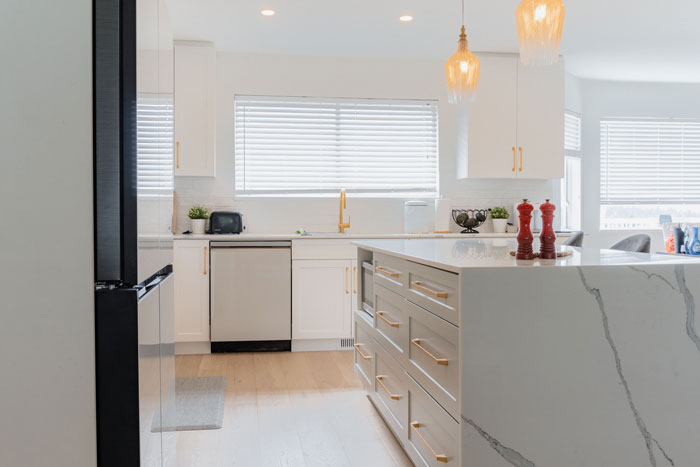
Get a Free Renovation Quote
Metro Vancouver’s trusted general contractors. Free consultations across Vancouver, Burnaby, Richmond, North Shore & beyond.
Get Your Free Quote →A mudroom renovation is one of the most immediately impactful investments a Vancouver homeowner can make. It changes how the house functions every single day — every arrival, every departure, every rainy walk with the dog. When it is designed thoughtfully and built with quality materials, it transforms the entry experience from daily frustration to daily ease.
Vancouver General Contractors has renovated hundreds of entries, mudrooms, and home interiors across Metro Vancouver. We understand the specific demands of this climate, the character of Vancouver’s housing stock, and what makes a mudroom renovation actually work for real families. If you are planning a mudroom renovation — whether a simple closet conversion or a full addition — we would be glad to help you think through the options and provide a detailed estimate.
Contact us for a mudroom renovation consultation — we provide free, no-obligation estimates for mudroom projects throughout Vancouver, Burnaby, North Vancouver, and the surrounding municipalities. You can also explore our full Vancouver Renovation Guide for insights on planning, permitting, and budgeting your renovation project.

Comments are closed