




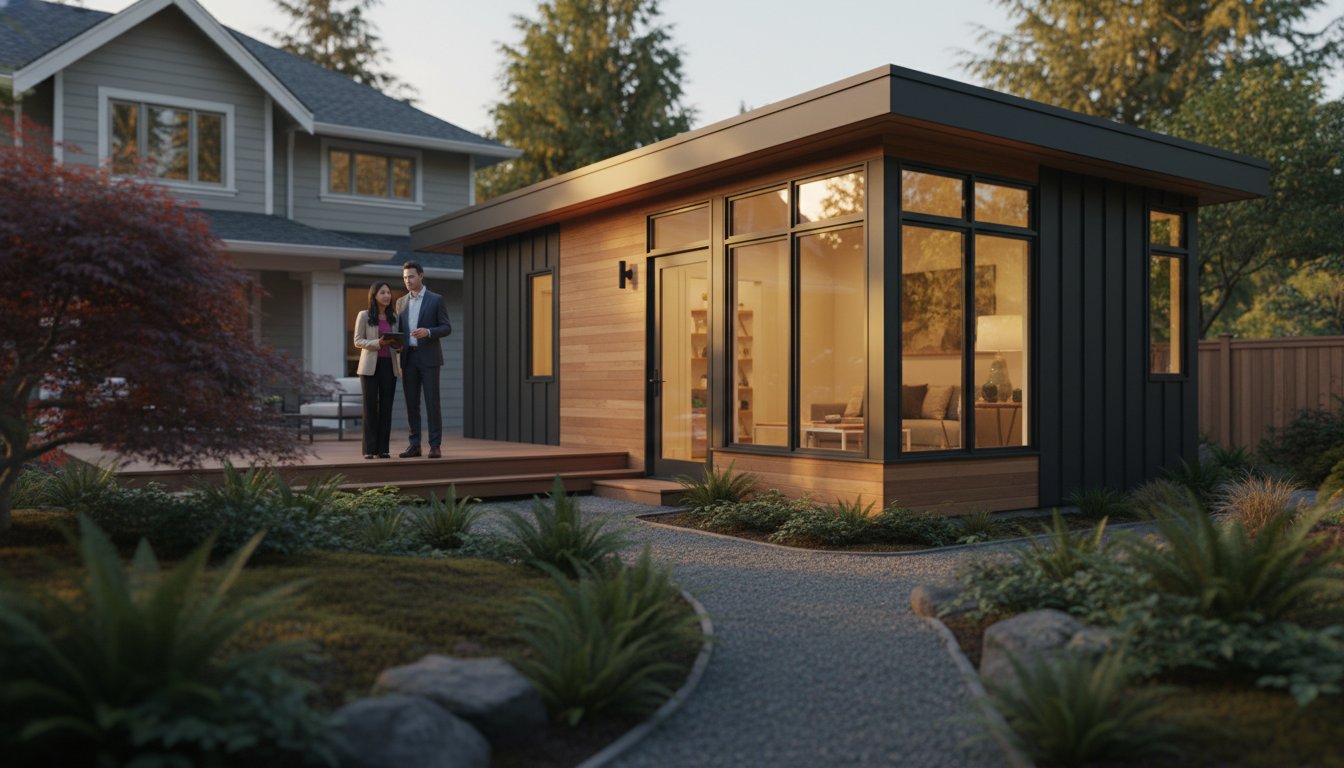
Laneway Home as an Investment: A 2026 Vancouver Property Strategy Guide
What if your backyard could do more than just grow grass and host the occasional summer barbecue? In Vancouver’s 2026 real estate market, a laneway house has evolved from a simple secondary suite into a sophisticated hedge against land scarcity. You likely agree that while the potential for equity is clear, the weight of permitting hurdles and evolving zoning can feel overwhelming. It’s natural to wonder if a laneway home as an investment truly makes financial sense when balancing rental yields against modern interest rates.
This guide will show you how to transform your property into a high-performing asset that generates sustainable income and long-term value. We’ll explore how recent density legislation like Bill 44 has opened new doors for homeowners to build enduring wealth. You will gain a clear understanding of current rental trends, property tax implications, and the peace of mind that comes from a disciplined, fixed-price construction methodology. Our goal is to replace the typical anxieties of building in Metro Vancouver with a transparent roadmap toward a transformative life experience and a secure financial legacy.
Key Takeaways
- Realize the full potential of your property by understanding how a laneway home as an investment functions as a strategic hedge against land scarcity while delivering premium rental income.
- Compare the capital expenditure and lifestyle advantages of detached laneway houses versus basement suites to find the most profitable path for your unique lot.
- Navigate the complexities of Bill 44 and modern zoning regulations with confidence, ensuring your project aligns with Metro Vancouver’s latest density requirements.
- Protect your ROI by utilizing a fixed-price construction model that provides cost-certainty and eliminates the typical anxieties of budget overruns.
- Gain a clear roadmap for managing the tax implications and equity gains associated with high-end, detached secondary dwellings in today’s evolving market.
The Value Proposition of Laneway Housing in Metro Vancouver’s 2026 Market
In Metro Vancouver, land is the most precious commodity we have. A laneway house, which is a detached secondary dwelling unit built onto an existing residential lot, has transitioned from a niche luxury to a cornerstone of urban density. Choosing a laneway home as an investment in 2026 isn’t just about adding square footage; it’s about maximizing the utility of your land in a city where detached housing is increasingly rare. This strategy leverages Vancouver’s permanent land scarcity to create a premium asset that serves multiple purposes: generating rental income, housing family members, and significantly boosting property equity. We see this as a sophisticated hedge against market volatility, turning a standard backyard into a high-performance financial vehicle.
Equity vs. Cash Flow: A Dual-Track Investment
Building a detached suite offers a distinct financial advantage over traditional interior renovations. While a basement suite is a valuable addition, a detached laneway home typically appreciates at a faster rate because it provides the “missing middle” housing that buyers and renters crave. This process creates “forced appreciation,” where the market value of your property increases by more than the cost of the build itself. These structures act as a powerful mortgage helper for your primary residence; they allow you to offset rising living costs with a high-yield rental stream that doesn’t compromise your own household’s privacy. By separating the dwellings, you create a distinct asset class that retains its value far better than shared-wall configurations.
Why 2026 is the Strategic Year for Laneway Builds
The timing for these projects has never been more precise. Following the implementation of Bill 44, which mandated increased density across British Columbia, the regulatory path for detached accessory units has become more predictable. In 2026, we see a clear market preference for detached rental units over high-rise apartments. Tenants often seek the privacy, natural light, and outdoor access that a laneway build provides. This demand ensures long-term stability in the Vancouver rental market. It positions your property as a resilient asset in an evolving urban environment. We focus on creating high-end living environments that attract long-term, reliable tenants, ensuring your investment remains profitable for decades to come. The primary drivers for this year’s surge in construction include:
- Regulatory Clarity: Municipalities have now fully integrated provincial density mandates into their local bylaws.
- Market Demand: A growing population of professionals prefers detached living over crowded condo towers.
- Multi-generational Utility: Families are using these units to house aging parents or adult children while maintaining independent living spaces.
Analyzing the ROI: Rental Income, Property Equity, and Tax Benefits
Calculating the true return on a laneway home as an investment requires looking beyond the monthly rent cheque. While gross yields are attractive, a disciplined investor considers net returns after accounting for property tax adjustments and maintenance. According to March 2026 data, a laneway house can increase your property’s assessed value by $200,000 to $350,000. This equity boost is complemented by premium rental rates. As of May 2026, two-bedroom units in Vancouver often command $2,700 to over $3,500 per month. This “detached premium” is significantly higher than what a basement suite offers because tenants value the privacy, independence, and lack of shared ceilings.
The financial impact on your annual obligations is manageable but must be planned for with precision. For instance, a new build valued at $400,000 adds roughly $1,040 to your annual property tax bill based on Vancouver’s current residential mill rate. You also need to stay current with Provincial housing legislation and local requirements, such as filing the Vancouver Empty Homes Tax declaration by the February 3, 2026, deadline to avoid the 3% penalty. Beyond external renters, the multi-generational savings are profound. Housing an aging parent or adult child in a laneway avoids the high costs of senior care or the current $2,358 average asking rent for one-bedroom apartments in the city.
Maximizing Rental Yield Through Smart Design
Design choices directly dictate your net yield. We’ve observed that two-bedroom layouts offer the most resilient ROI because they cater to a wider demographic, including small families and remote professionals. Incorporating private outdoor space and high-end finishes allows owners to command a rental premium of up to 20% compared to basic, utilitarian builds. If you’re curious about how these features might fit on your specific lot, a professional design-build consultation can clarify your options and help you realize the highest potential of your land.
Equity Gains and Resale Value in the Lower Mainland
In markets like Burnaby, Richmond, and Vancouver, a legal secondary dwelling is a major liquidity booster. Buyers prioritize properties with existing suites because they provide immediate mortgage relief. Research suggests that the estimated payback period for these builds, based on rental income alone, typically ranges from 8 to 12 years. By adding a permanent, high-quality structure, you aren’t just building a house; you’re creating a high-demand asset that makes your property stand out in a competitive resale market. This approach ensures your investment provides both immediate cash flow and a stable financial legacy for your family.

Laneway vs. Basement Suites: Which Investment Delivers Better Returns?
When evaluating a laneway home as an investment, homeowners often compare it to the more traditional basement suite renovation. While retrofitting a basement usually requires a lower initial capital expenditure, the long-term financial performance of a detached unit often proves superior. A new build offers the advantage of modern construction standards, which translates to significantly lower maintenance costs over the first decade. In contrast, legalizing an older basement often uncovers hidden structural issues or outdated plumbing that can lead to unforeseen expenses. We view the laneway as a proactive asset that avoids the “patchwork” maintenance cycles common in older home renovations.
Vacancy risk is another critical factor where the detached unit wins. In a market where one-bedroom apartments saw a 7% year-over-year decrease in asking rent as of May 2026, the unique appeal of a detached home remains resilient. Tenants are less likely to move when they have their own front door and no neighbours living directly above them. This stability protects your cash flow and reduces the administrative burden of finding new occupants every year. It’s a strategy that prioritizes the quality of the tenant relationship and the durability of the structure itself.
The Privacy Premium: Why Tenants Pay More
Privacy is the primary driver of rental value in Metro Vancouver. Detached living means no noise transfer from footsteps above or muffled conversations through shared walls. This lack of friction leads to longer-term tenancies and reduced turnover costs. For many Vancouver renters, there is a distinct psychological shift when moving from a “suite” to a “house.” This distinction allows owners to command higher rates, as evidenced in our 2026 ROI + Rental Income Analysis. Separate addresses and independent utility meters also simplify property management. Tenants take full responsibility for their own consumption without the need for complicated shared billing arrangements.
Construction Complexity and Regulatory Hurdles
The path to completion differs significantly between these two options. Legalizing a basement suite involves working within the constraints of an existing foundation and ceiling height, which can limit design flexibility. A laneway project, while more complex in its permitting timeline, allows for a bespoke design that maximizes every square inch of your lot. It’s about creating a permanent living environment rather than just converting a storage area. For a detailed breakdown of the process, you can read our Building a Laneway House in Vancouver: The 2026 Homeowner’s Guide. While the structural requirements for adding density are rigorous, the result is a high-demand asset that experiences lower vacancy risk than traditional basement units.
Navigating BC’s New Zoning: Bill 44 and Investment Potential
The regulatory landscape in British Columbia shifted fundamentally following the introduction of Bill 44 in late 2023. By June 30, 2024, municipalities across the province were required to update their zoning bylaws to accommodate Small-Scale Multi-Unit Housing (SSMUH). In 2026, we’re seeing the full impact of these changes. For many homeowners, the choice now lies between building a laneway house or converting their entire lot into a multiplex. While a multiplex offers higher density, a laneway home as an investment is often the more pragmatic choice. It allows you to maintain your primary residence while adding a detached, high-value asset without the massive capital expenditure and displacement required for a full lot redevelopment.
Choosing a laneway build over a multiplex often results in a faster, more predictable construction timeline. You avoid the complexities of multi-unit strata titles and the logistical nightmare of moving your family during a total rebuild. By focusing on detached density, you maximize your lot’s value while keeping your lifestyle intact. This surgical approach to density is what makes the laneway model so resilient in the current market. It turns underutilized backyard space into a high-performance asset without the “all-or-nothing” risk of larger developments.
Zoning Flexibility in Burnaby, Surrey, and Vancouver
Regional implementation of Bill 44 varies across the Lower Mainland, but the trend toward flexibility is universal. In cities like Burnaby and Surrey, we’ve seen a significant reduction in onsite parking requirements. This shift is a major win for investors because it frees up square footage for larger laneway footprints rather than paved stalls. Removing the need for underground or covered parking structures directly lowers your construction costs and simplifies the foundation work. We help you navigate these local nuances to ensure your design utilizes every allowable centimetre of your property. For a comprehensive overview of how these rules apply to your specific situation, the Vancouver laneway housing guidelines for 2026 provide an essential reference for verifying lot eligibility and understanding the latest provincial Bill 44 impacts.
Future-Proofing Your Investment
A successful build must be as adaptable as the market itself. We recommend designing for “flex” use, ensuring the structure can transition from a high-yield rental to a professional home office or a guest house for aging parents. In 2026, meeting the latest Step Code energy requirements is also non-negotiable for long-term value. High-performance envelopes and efficient mechanical systems reduce operating costs and attract environmentally conscious tenants. To see how these modern standards and zoning rules apply to your property, book a site assessment with our expert team to explore your lot’s full density potential.
Visualizing this density on a standard lot can be challenging. We utilize 3D design technology to show you exactly how a new detached dwelling will interact with your existing home and the surrounding landscape. This transparency ensures there are no surprises regarding privacy or natural light. By planning with 2026 standards in mind, you ensure your property remains a premier asset in Vancouver’s evolving urban fabric for decades to come.
Securing Your ROI with Vancouver General Contractors’ Fixed-Price Model
Budget volatility is the single greatest threat to the long-term success of your project. While the market provides the opportunity, poor execution or unforeseen expenses can quickly erode your potential gains. We act as your stable partner, navigating the complex Vancouver permit maze so you don’t have to worry about the granular details of regulatory compliance. Our design-build methodology brings concept, permitting, and construction under one roof. This integrated approach ensures that the initial vision for your laneway home as an investment remains financially viable from the first drawing to the final inspection.
Fixed-price contracts are the cornerstone of our operational transparency. In an industry often plagued by “hidden costs” and mid-project surprises, we provide a definitive financial roadmap. By establishing a predictable cost structure early, we remove the typical anxieties associated with large-scale construction. This allows you to calculate your net rental yield and payback period with absolute confidence, rather than working with moving targets. Our role as a “Transparent Expert” means we take full responsibility for the project lifecycle, managing every specialized trade and logistical hurdle to protect your bottom line.
Eliminating Financial Risk in Construction
Precision begins long before the first shovel hits the dirt. Detailed pre-construction planning serves as the foundation of a successful build, where we identify potential challenges before they become expensive problems. We utilize advanced 3D design services to help you visualize every corner of the new dwelling, which effectively prevents costly mid-build changes. This creative clarity ensures the aesthetic outcome matches your high-end aspirations while respecting the fixed budget. To further protect your asset, our work is backed by an industry-leading warranty. This commitment to durability ensures that your laneway home as an investment remains a low-maintenance, high-value part of your property for decades. Before committing to a build, reviewing a comprehensive laneway house cost Vancouver breakdown will help you understand the full all-in budget requirements and avoid the common pitfall of underestimating true project expenses.
Your Next Steps to a Profitable Laneway Build
Every property in Metro Vancouver is unique. A site-specific feasibility study is the essential first step to determine what is possible on your lot under current 2026 regulations. We help you align your personal investment goals, whether that’s immediate cash flow or long-term family utility, with the physical and regulatory potential of your land. This methodical approach builds momentum and trust simultaneously. When you’re ready to move from vision to execution, book your fixed-price laneway consultation with Vancouver General Contractors. We provide the specialized expertise and logistical competence needed to create a high-end living environment that stands the test of time.
Building Your Financial Legacy in Vancouver’s Backyard
The 2026 real estate landscape offers a unique window of opportunity for homeowners to maximize their property’s potential. By leveraging recent density legislation and the high demand for detached living, a laneway home as an investment has become one of the most stable ways to build long-term wealth in Metro Vancouver. You’ve seen how these builds provide superior rental yields and significant equity gains compared to traditional interior suites. Success depends on navigating the permit process with precision and protecting your capital from budget volatility.
Our team at Vancouver General Contractors provides the logistical competence and operational transparency needed to bring your vision to life. We take full responsibility for the project lifecycle, from initial 3D design to the final post-completion guarantee. With our expertise in the latest zoning bylaws and our signature fixed-price contract guarantee, we eliminate the typical anxieties of construction. You can focus on the excitement of creating a high-end living environment while we handle the technical complexities. Start your investment journey with a fixed-price laneway quote and take the first step toward a transformative life experience. We look forward to helping you create a permanent asset that serves your family for generations.
More Uncategorized Guides

Heated Floors in Bathroom Cost: The 2026 Vancouver Homeowner’s Guide

Laneway House vs. Basement Suite: Maximizing Rental Income in Vancouver (2026)

Building a Legal Secondary Suite in Surrey: The 2026 Homeowner’s Guide

Bungalow to Two-Storey Conversion Cost Delta: A 2026 Vancouver Homeowner’s Guide

Custom Home Design Process in Vancouver: A 2026 Step-by-Step Guide
Ready to start your renovation?
Frequently Asked Questions
Is a laneway house a good investment in Vancouver in 2026?
Yes, choosing a laneway home as an investment in 2026 is a strategic way to leverage land scarcity in Metro Vancouver. While rental rates have seen a slight year-over-year decrease as of May 2026, the demand for detached, private living remains high among professionals. This approach provides a resilient income stream and a significant hedge against market volatility. It transforms your backyard into a high-performance asset while maintaining the long-term legacy of your primary residence.
How much does a laneway house increase property value in BC?
A new detached suite typically increases the assessed value of a property by $200,000 to $350,000 according to March 2026 data. This forced appreciation often exceeds the initial logistical effort of the build. Beyond the raw numbers, having a legal secondary dwelling increases your home’s liquidity. Buyers in the Lower Mainland prioritize properties with established mortgage helpers, making your home easier to sell in a competitive resale market.
Can I build a laneway house and a basement suite on the same lot?
Yes, you can typically have both a basement suite and a detached laneway home on the same residential lot. Recent provincial density mandates and updated municipal bylaws in Vancouver have cleared the path for this “triplex” configuration. This allows homeowners to maximize their rental yield by managing two separate income streams. You should verify specific floor area ratio limits for your lot, as these regulations dictate the maximum allowable square footage for all structures.
How do the new BC Bill 44 zoning rules affect my laneway build?
Bill 44 has fundamentally changed the landscape by requiring municipalities to allow increased density on single-family lots. As of June 30, 2024, most local governments updated their zoning bylaws to comply with these provincial standards. For you, this means a more predictable permitting process and greater flexibility in how you utilize your land. It has essentially standardized the right to build detached accessory units across British Columbia, reducing the uncertainty of site-specific rezoning.
What is the average rental income for a laneway house in the Lower Mainland?
As of May 2026, monthly rental rates for one-bedroom laneway units in Vancouver range from $2,200 to $2,700. Two-bedroom units often command $2,700 to $3,500 or more depending on the finishes and location. These rates reflect a “privacy premium” that tenants are willing to pay for detached living. Even with a 6% year-over-year decrease in general one-bedroom rents, high-quality detached units remain a premium asset class with stable demand.
Is it better to build a laneway house or a multiplex?
Building a laneway home is often the more pragmatic choice if you wish to remain in your primary residence. A multiplex requires a full lot redevelopment and a significantly higher capital investment, which often means displacing your family during construction. A laneway project adds density surgically, allowing you to generate income and equity while preserving your current lifestyle. It is a faster, more cost-effective way to realize the investment potential of your backyard.
How long does it take to recoup the cost of building a laneway house?
The estimated payback period for a laneway home as an investment is currently 8 to 12 years based on rental income alone. This calculation considers the average asking rents in 2026 against typical construction specifications. While the initial capital expenditure is significant, the combination of monthly cash flow and the immediate boost to property equity provides a strong total return. Most homeowners realize a positive impact on their net worth long before the structure is fully amortized.
Do I need to provide parking for a laneway house under new regulations?
In many parts of Metro Vancouver, you are no longer required to provide onsite parking for a new laneway home. Recent zoning updates have reduced parking mandates to encourage higher density and lower construction costs. This change is particularly beneficial for smaller lots where a parking stall would significantly limit the living area. You should confirm the specific requirements for your neighbourhood, as some municipalities still have transit-proximity rules that dictate final parking needs.

Comments are closed