




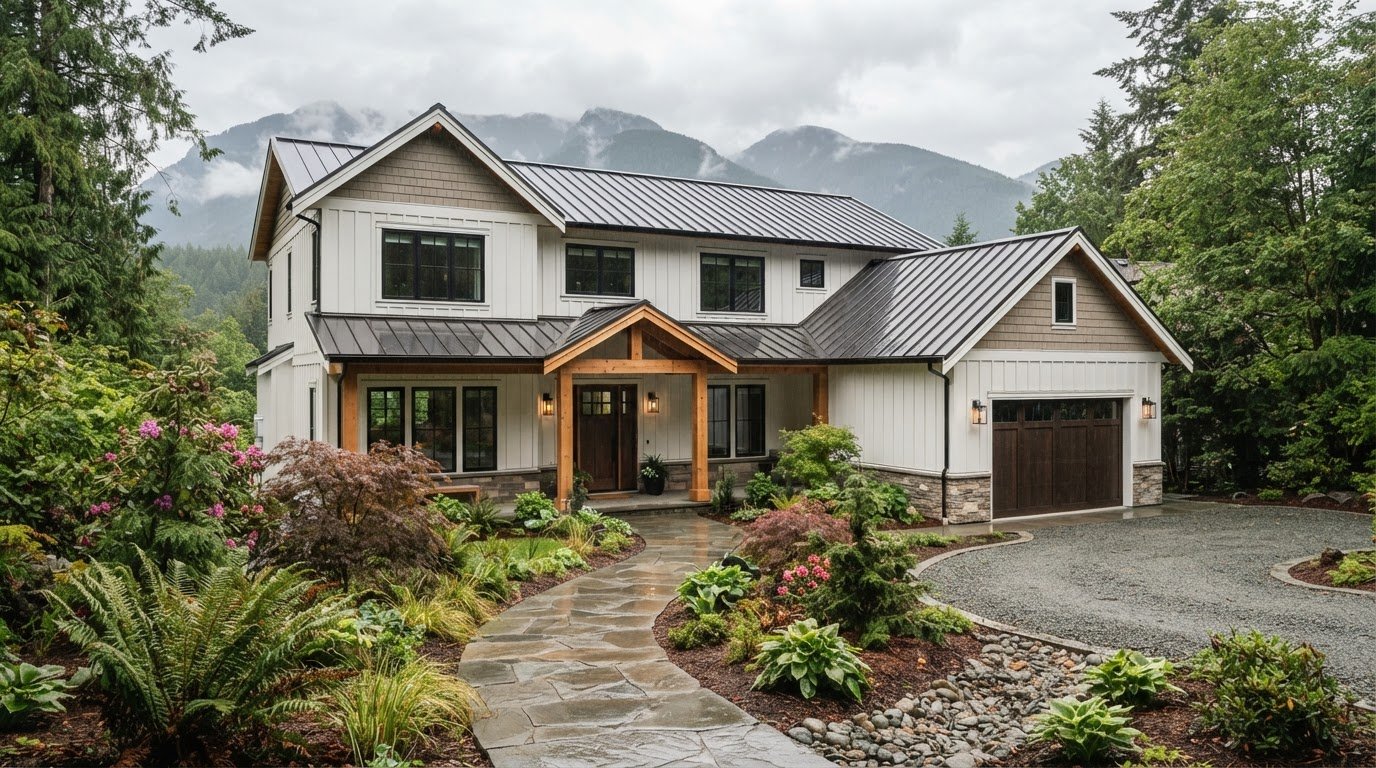
Modern Farmhouse Exterior Design Ideas: 25 Ways to Get the Look
The most recognizable farmhouse detail can be the one that makes your home look least distinctive. Board-and-batten siding, dark window frames and a welcoming porch create instant character, but using every familiar feature can leave a façade feeling generic. The best modern farmhouse exterior design ideas start with the home itself, then balance signature details with a simple, personal palette.
You can bring farmhouse charm to your home without making it feel dated or choosing finishes that struggle in Metro Vancouver’s wet climate. This guide explores practical ways to coordinate siding, rooflines, windows, entryways and colours. You’ll also learn how to adapt inspiration to your home, consider durability in rainy conditions and recognize when exterior changes need broader renovation planning. The goal is a cohesive exterior with contemporary restraint and details chosen to suit the house.
Key Takeaways
- Use modern farmhouse exterior design ideas as a starting point, then choose a cohesive direction that suits your home instead of following every trend.
- Compare siding, roofing, window and accent combinations to see how material and colour choices shape the overall impression.
- Assess your home and shortlist exterior materials with Metro Vancouver’s wet conditions in mind, including drainage and moisture management.
- Turn saved inspiration into a practical brief by recording your priorities, preferred materials, colours and project constraints.
- For a whole-home renovation or custom build, coordinated design and construction planning can carry the exterior concept from early design through construction.
Modern farmhouse exterior design ideas: the elements that define the look
Modern farmhouse pairs familiar rural forms with restrained contemporary details. Its character comes from the balance: simple, legible shapes and a welcoming entry provide farmhouse familiarity, while clean lines and a limited number of finishes keep the exterior feeling current. The look draws on traditional farmhouse design, but it doesn’t require a particular floor plan, colour scheme or set of features.
Modern farmhouse is a balance, not a checklist of compulsory details. A home can suit the style when its materials, proportions and entry work together, even if it skips trend-led features. Use this guide to distinguish defining visual cues from optional choices:
- Defining cues: uncomplicated forms, a clear focal entry and considered contrast between exterior finishes.
- Common choices, not requirements: board-and-batten siding, dark window frames, a porch or natural wood accents.
Which exterior details make a farmhouse look feel modern?
Choose clean rooflines, simplified trim and an uncluttered façade to give familiar farmhouse forms a contemporary edge. Light siding paired with darker window frames creates crisp contrast. A restrained accent colour adds personality without competing with the architecture. Natural wood at the entry, on a soffit or in a small siding section can bring warmth. Keep accents focused so they support the design rather than take it over.
These are options, not a formula. A house with a modest front elevation, for example, may need only a defined doorway and a thoughtful siding contrast to establish the style. Adding every popular detail can make the exterior feel busy rather than cohesive.
How do proportion and contrast shape the overall look?
Visual balance depends on how the parts relate to one another. Window placement can reinforce the façade’s lines, while a well-scaled entry can become a focal point without overpowering it. Roof proportions matter too. A steep or broad roofline may already carry visual weight, so adding several bold materials could make the exterior feel crowded.
Repeat a small group of finishes across the façade, such as one main siding, a complementary trim colour and a limited accent material. Adapt the combination to the home’s architecture and setting. The same contrast that looks balanced on a broad, symmetrical house may feel too stark on a narrower or more irregular one.
Modern farmhouse siding, roofing, and windows: combinations to inspire
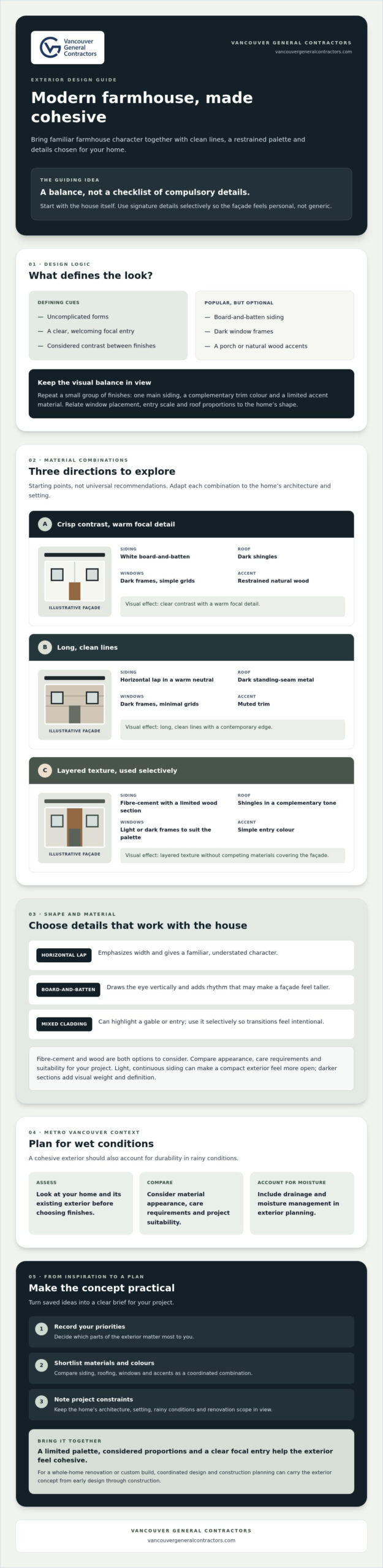
Materials do more than set the colour scheme. Their texture, direction and contrast can make a façade feel taller, broader, more traditional or more contemporary. Treat these combinations as starting points, not universal recommendations. For more visual references, browse Farmhouse architecture and design and notice how projects use materials in relation to the home’s shape.
| Siding | Roof | Windows | Accent | Visual effect |
|---|---|---|---|---|
| White board-and-batten | Dark shingles | Dark frames, simple grids | Restrained natural wood | Clear contrast with a warm focal detail |
| Horizontal lap siding in a warm neutral | Dark standing-seam metal | Dark frames, minimal grids | Muted trim | Long, clean lines with a contemporary edge |
| Fibre-cement siding with a limited wood section | Shingles in a complementary tone | Light or dark frames to suit the palette | Simple entry colour | Layered texture without covering the whole façade in competing materials |
What siding styles suit a modern farmhouse exterior?
Horizontal lap siding emphasizes width and gives a house a familiar, understated character. Board-and-batten draws the eye vertically, adding rhythm that may make a façade feel taller. Mixed cladding can create a focal area, such as a gable or entry, but use it selectively so transitions look intentional. Fibre-cement and wood are both options to consider; experienced siding contractors such as Advantage Plus Construction Group highlight how premium fibre-cement installations can deliver authentic farmhouse textures with long-lasting durability. Compare their appearance, care requirements and suitability for your project rather than assuming one is right for every home.
Colour affects the sense of scale as well. A light, continuous siding colour can make a compact exterior feel more open, while darker sections add visual weight and definition. Texture contributes too: pronounced vertical lines read differently from smooth horizontal boards.
How can roofing and windows complete the design?
A standing-seam metal roof is one option for a crisp, contemporary line, while shingles can support a more familiar, understated appearance. Neither is a default choice. Window shape and placement should relate to the home’s proportions. Dark frames create stronger contrast against pale siding, while grids can add a traditional note. Coordinate the elements rather than giving every feature equal emphasis.
Before settling on a combination, ask qualified professionals to check product suitability, installation details, material transitions and maintenance needs for the home and site. A finish that looks compelling in a reference image may require a different approach for your project. If these choices are part of a larger update, explore whole-home renovation planning as one way to connect the exterior concept with the wider scope of work.
Modern farmhouse exterior examples: choose a direction, not just a trend
Use reference images to identify a design direction, then check whether its details suit your home. These modern farmhouse exterior design ideas group siding, trim, roofing, windows and entry features into three coordinated looks, rather than treating each choice as a separate trend.
Classic contrast
Coordinated details: Light lap or board-and-batten siding, selective dark trim, a dark roof, dark-framed windows and a defined entry door or porch.
Character and context: Crisp and traditional. Consider it for a home with a clear front elevation and enough visual simplicity for the contrast to read well.
Upkeep question: How will the selected finishes and entry details handle their exposure and ongoing care needs?
Warm natural materials
Coordinated details: Muted, earthy siding; restrained wood at the entry or in a limited accent area; complementary trim; a roof in a quiet tone; and windows that don’t compete with the materials.
Character and context: Welcoming and textured. It can suit a setting where softer colours feel more at home than sharp contrast.
Upkeep question: Before specifying wood, assess its location, weather exposure and expected maintenance.
Understated contemporary
Coordinated details: Smooth or simple horizontal siding, minimal trim, a low-key roof colour, clean-lined windows and an uncluttered entry.
Character and context: Quiet and modern. It can work well when the home’s shape already provides interest and a busier palette would feel crowded.
Upkeep question: Confirm that proposed cladding, finishes and installation details suit the specific project.
How can you make a high-contrast farmhouse exterior feel balanced?
Let light cladding cover the main surface, then use dark finishes selectively. Rather than outlining every edge, concentrate contrast on a few elements, such as window frames or the roof. A distinct front door or porch can anchor the view. Planting and layered exterior lighting can soften the effect, adding warmth and depth without introducing more competing finishes.
How can natural materials create a warmer farmhouse look?
Wood accents, muted colours and varied textures can temper a crisp façade. Use a limited palette and place natural materials where they make a clear contribution, such as around an entry. Before choosing them, consider weather exposure and ongoing care. Treat reference images as inspiration, not specifications: adjust their colours, proportions and materials to suit your home’s architecture and setting.
Planning a modern farmhouse exterior in Metro Vancouver
Good planning connects the look you want with the home you have and the conditions it faces. Before settling on modern farmhouse exterior design ideas, follow a clear sequence to keep aesthetic choices and practical requirements in view:
- Assess the home: Note its shape, existing roofline, windows, exterior condition and site exposure.
- Choose a direction: Decide whether you’re aiming for classic contrast, warmer natural materials or an understated contemporary look.
- Check materials: Review finish, compatibility, maintenance and how materials meet at edges, openings and transitions.
- Plan the work: Define the scope and confirm applicable requirements with your municipality before construction begins.
This process helps distinguish a visual refresh from a project that needs broader coordination. Changing a colour or updating a small accent may be largely cosmetic. Altering window openings, rooflines, structural elements or exterior walls can affect the building’s structure or envelope, so review those plans early.
What should homeowners consider in Vancouver’s wet climate?
Metro Vancouver’s rainy conditions make water management a central design consideration, not an afterthought. Ask qualified professionals to review how water sheds from the roof and façade, how openings and material transitions are detailed, and whether the proposed materials work together. Covered entry areas or roof overhangs may suit the design and provide shelter where appropriate, but feasibility depends on the home. No cladding choice is maintenance-free or right for every exposure.
Plan for the whole assembly, not just the visible finish. Siding, trim, windows, flashing and drainage details need to work as a coordinated system. A professional review can help identify compatibility or detailing questions before materials are selected and work is underway.
When do exterior design changes need project planning?
Arrange an early review if your plans change window size or location, roof shape, structure or exterior walls. These decisions affect more than appearance, and requirements can depend on the project scope and municipality. Confirm current permit requirements with the relevant local government before construction starts. For broader work, include home renovation planning and permits in your research, and establish how design decisions connect to construction planning.
A design-build process can coordinate concept development, 3D design, construction and permits. Fixed-price construction contracts are established during pre-construction. If you’re considering a whole-home renovation or addition in Metro Vancouver, discuss your exterior renovation plans with Vancouver General Contractors as part of defining the project scope.
Turn modern farmhouse exterior ideas into a cohesive renovation plan
Saved images help explain what you like, but a collection of references needs a clear brief before it can guide a project. Look for patterns across your favourite modern farmhouse exterior design ideas: perhaps siding texture, restrained contrast, a welcoming entry or a warmer palette. Then separate the look you want from features that may not suit your home.
What should you include in a farmhouse exterior design brief?
Make the brief specific enough to support decisions while leaving room for professional input. Include reference images and note what you want to keep, change or avoid. Record practical priorities alongside appearance so the design responds to daily use as well as curb appeal.
- References: Save examples and identify the details you’re drawn to, such as window proportions, trim or entry design.
- Priorities: List must-keep features, desired changes, preferred materials and colours.
- Constraints: Note concerns about maintenance, privacy, daylight, weather exposure and the existing home.
- Questions: Ask the design team to flag scope, material compatibility and potential permit considerations early.
This brief turns broad inspiration into choices that can be reviewed together. It also makes trade-offs easier to discuss before decisions move into construction.
When should you involve a design-build contractor?
Bring construction planning into the conversation early if your ideas affect the structure, window or door openings, roofline or several exterior systems at once. These choices can influence one another, so reviewing them as a coordinated scope connects design intent with practical requirements and applicable municipal processes. For a new build, a custom home design-build guide can help you understand how planning and construction fit together.
Vancouver General Contractors’ design-build process can manage concept development, 3D design, construction and permits. During pre-construction, the project scope is developed and a fixed-price construction contract is established. The price is tied to the work defined for the project, so clear priorities and selections matter.
If you’re considering a whole-home renovation, an addition or a custom home in Metro Vancouver, Vancouver General Contractors can help you explore how your exterior vision fits into the broader project. A clear brief is a practical place to begin.
Make your farmhouse exterior feel right at home
The strongest modern farmhouse exterior design ideas aren’t copied wholesale from a reference photo. They bring together a clear direction, a few complementary finishes and details suited to the home’s proportions and Metro Vancouver’s wet climate. Thinking through material performance, drainage and project scope early helps turn inspiration into a cohesive plan.
If your vision involves changes to openings, rooflines or multiple exterior systems, coordinate design and construction planning from the start. Vancouver General Contractors serves Metro Vancouver with a design-build process that can carry a project from concept through construction. Fixed-price construction contracts are established during pre-construction, based on the defined scope.
Discuss your home renovation or custom-build vision with Vancouver General Contractors. Thoughtful planning can help you create an exterior that feels personal and practical.
More Uncategorized Guides
Ready to start your renovation?
Frequently Asked Questions
What colours work best for a modern farmhouse exterior?
Choose a palette that suits your home’s setting and architectural features instead of relying on one required colour scheme. Soft whites and warm neutrals pair well with charcoal, earthy green or muted taupe accents. In Metro Vancouver, consider how natural light, trees and overcast skies affect the colours you’re choosing. Test siding, trim, roof and entry colours together to see how they read as one exterior.
What siding is commonly used on modern farmhouse homes?
Board-and-batten siding is a recognizable option, often paired with horizontal lap siding for a more layered façade. Fibre-cement and wood siding are also used, but suitability depends on the home, exposure, installation details and maintenance expectations. Consider the visual effect too: vertical boards can draw the eye upward, while horizontal lines emphasize width. Compare complete assemblies with a qualified professional before selecting materials.
Can a modern farmhouse exterior work on a small house?
Yes. A smaller home can take on the style through a few well-scaled choices, such as simple siding, a clearly defined entrance and coordinated window and trim colours. Avoid adding too many materials or strong contrasts, which can make a compact façade feel busy. Adapt the roof, window and entry details to the existing proportions instead of copying features from a larger home in a reference image.
How do you make a modern farmhouse exterior look less trendy?
Focus on balanced proportions, a restrained palette and materials that work with the home’s architecture. Use familiar details selectively rather than applying every popular feature at once. To make modern farmhouse exterior design ideas feel personal and enduring, decide which elements matter most, then keep the remaining finishes simple. Consider how the exterior will look alongside its surroundings in Vancouver, Burnaby, Richmond, West Vancouver, North Vancouver, New Westminster, Coquitlam, Port Moody, Port Coquitlam, Surrey or Delta, not just in a saved image.
Are black windows a good choice for a farmhouse exterior?
Are black windows a good choice for a farmhouse exterior?
Black window frames can create definition against light siding, but they aren’t right for every exterior. Consider the window shape, frame finish, amount of contrast and how the choice relates to the roof and trim. Dark frames may look striking on a simple façade, while a softer frame colour may feel more cohesive with warm or muted materials. Confirm product suitability and installation details for your specific project. If you want to explore different frame styles or replacement options, check out Window Galaxy USA for ideas on contemporary designs.
What exterior details help a home suit Vancouver’s rainy climate?
Plan for water management as part of the exterior design. Review roof drainage, water-shedding details and how windows, siding and other materials meet. Covered entries and roof overhangs may be appropriate, depending on the home and design. Vancouver’s wet conditions make careful detailing important, but no single cladding material is maintenance-free or universally suitable. Ask qualified professionals to assess material compatibility, exposure and ongoing care needs.
Do modern farmhouse exterior renovations require a permit in Vancouver?
It depends on the work and the municipality, so confirm current requirements before construction. Changes involving structure, new construction or additions can require permits; a colour update may have different considerations. Vancouver has its own building bylaw, and rules may differ in Burnaby, Richmond, West Vancouver, North Vancouver, New Westminster, Coquitlam, Port Moody, Port Coquitlam, Surrey and Delta. Contact the relevant municipality about your project’s scope.

Comments are closed