




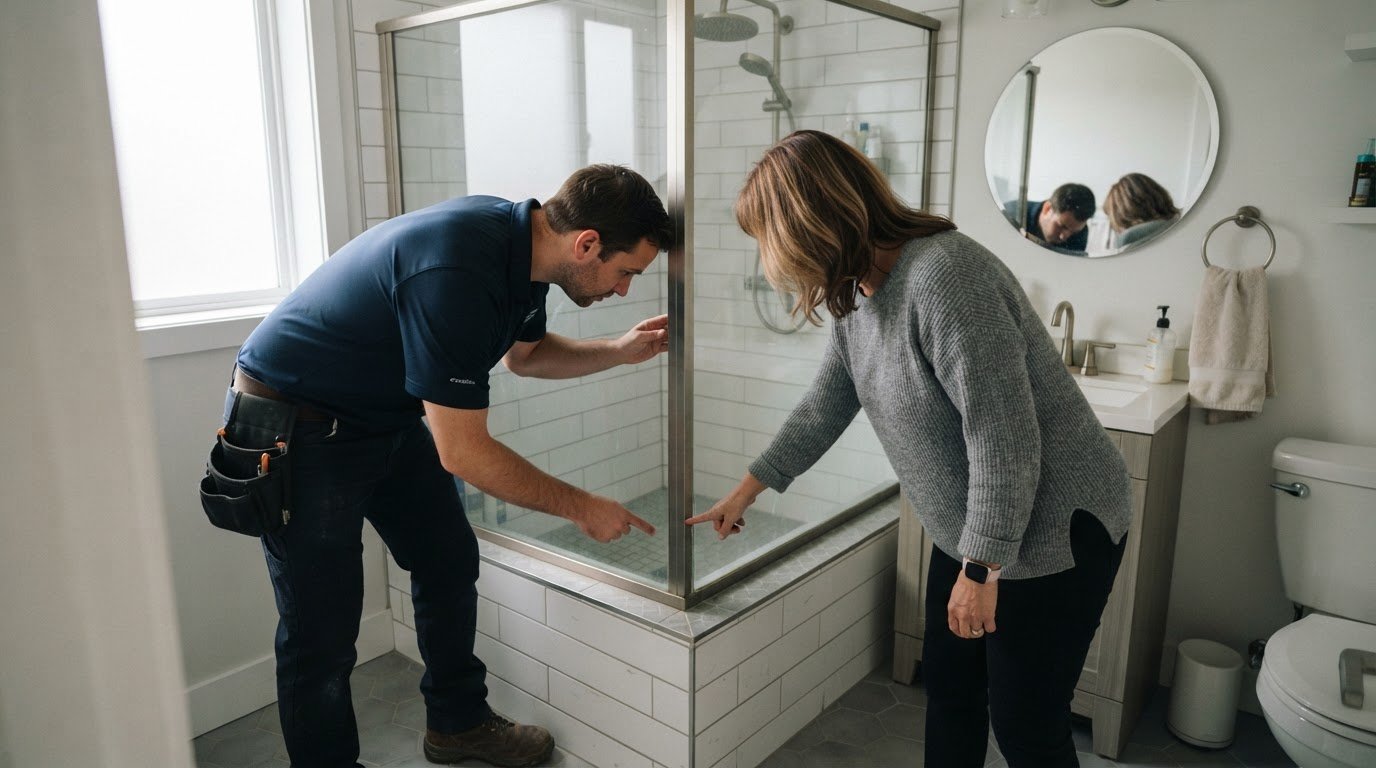
Home Renovation Warranty: What Your Contract Should Cover
A warranty is only as useful as the work and defects it clearly covers. A Canadian renovation contract usually provides a one-year warranty on the renovator’s work, so knowing what to look for in a home renovation warranty starts with clear terms for coverage, duration and how to report a problem. Put those details in writing alongside the project scope.
It’s reasonable to want more than a general promise that the work is covered. The contract should explain what counts as a defect, what the warranty excludes, how claims are handled and which manufacturer warranties apply to products used in the renovation. This guide outlines terms to review and records to keep, so you can understand what coverage applies if an issue appears after completion.
Key Takeaways
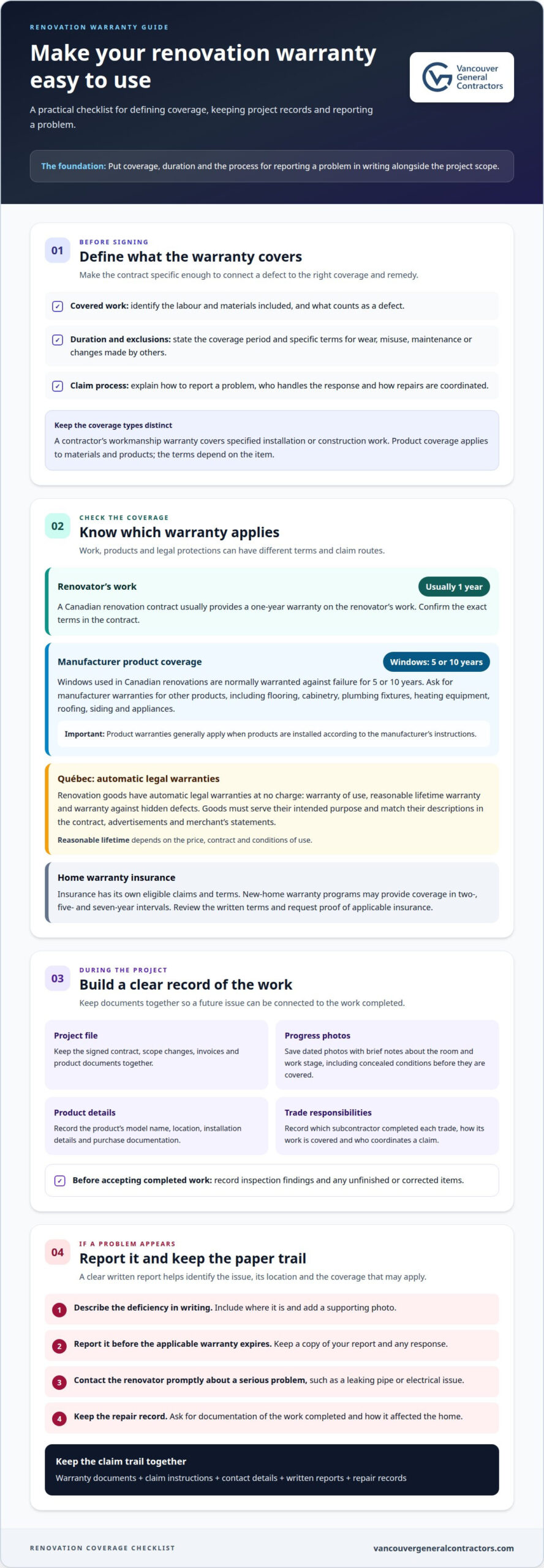
- Make the contract spell out which work is covered, what qualifies as a defect and how a warranty claim is handled.
- In Québec, renovation materials have automatic legal warranties; the materials must serve their intended purpose and match their descriptions.
- Keep written records, notes and photos of the renovation, and report deficiencies in writing before the applicable warranty expires.
- Ask for manufacturer warranty documents and clear instructions for making a claim, since product coverage can depend on proper installation.
What Exactly Is a Warranty?
A renovation warranty sets out which defects qualify for repair and who handles the remedy. The contract should identify covered labour and materials, the coverage period, exclusions and the process for reporting a problem.
Automatic Legal Warranties
In Québec, renovation goods come with automatic legal warranties at no charge. These include the warranty of use, reasonable lifetime warranty and warranty against hidden defects. This means protection for renovation materials doesn’t depend only on a separate written warranty. Goods must serve their intended purpose and match their descriptions in the contract, advertisements and merchant’s statements. Reasonable lifetime depends on the price, contract and conditions of use.
Labour and Materials Coverage
A contractor’s workmanship warranty covers specified installation or construction work, while materials coverage concerns products incorporated into the renovation. A Canadian renovation contract usually provides a one-year warranty on the renovator’s work. For trade-specific tasks such as residential interior and exterior finishes, established specialists like Chaparro’s Painting, LLC highlight how detailing both the application process and product specifications protects the homeowner. Ask the contract to distinguish a workmanship defect from a product defect, and explain who coordinates the response. Exclusions vary by contract; look for specific terms about wear, misuse, maintenance and changes made by others.
Material Warranties
Material warranties are product-specific protections supplied by manufacturers, with terms that depend on the item. Windows used in Canadian renovations are normally warranted against failure for 5 or 10 years. Flooring, cabinetry, plumbing fixtures, heating equipment, roofing, siding and appliances should also have manufacturer warranties. These warranties generally apply when products are installed according to the manufacturer’s instructions. Include the warranty documents and claim procedures in the renovation records.
Contractor Warranties and Home Warranty Insurance
A contractor warranty addresses the contractor’s covered work; home warranty insurance is a policy with its own eligible claims and terms. Renovation coverage differs from new-home warranty programs, which may provide coverage in two-, five- and seven-year intervals. To understand a contractor’s warranty and insurance, review the written coverage, exclusions, duration and claims process, and request proof of applicable insurance. The documents show what work and risks each protection addresses.
Manufacturer and subcontractor warranties
Product warranties and trade-specific commitments can sit alongside the contractor’s written coverage. Clear terms connect each defect to the responsible party and explain how a claim moves forward.
Subcontractor Warranties
A subcontractor warranty describes coverage for work completed by a trade, such as plumbing, electrical work, or specialty finishing. Its value depends on the written scope, exclusions and process for reporting a defect. For instance, dedicated trade contractors such as The Awesome Painting Services emphasize clear guarantees on surface preparation and finish coats so homeowners understand how labour and materials are protected. The renovation contract should explain how subcontractor work is covered and who coordinates a claim. For example, a plumbing issue may involve both the installation and a supplied fixture, so responsibility should be easy to follow.
Legal and Manufacturer Warranties
A legal warranty arises under applicable consumer law; a manufacturer warranty sets terms for a specific product. In Québec, a merchant can’t require a consumer with a defective renovation product to deal with the manufacturer instead. The merchant or manufacturer may repair it without charge, exchange it or refund the consumer. They may also have to compensate for damage caused by using the defective product. These protections address different aspects of a renovation, so one doesn’t replace the other.
Keep product coverage traceable to the renovation. The renovator should provide manufacturer warranty documents and explain the procedures to follow if a problem arises. Keep records that connect each product to its location and the work completed, such as its model name, installation details and purchase documentation. Clear records help distinguish a product fault from an installation issue and show which warranty process applies.
- File each warranty document with the product and installation records.
- Keep claim instructions and the appropriate contact details together.
- Record which subcontractor completed each trade and how its work is covered.
For projects involving several trades, coordinated renovation planning can make responsibilities easier to define before work begins.
Documenting renovation work for warranty claims
Warranty records connect a reported defect to the work completed and the coverage in the contract. During hiring and construction, keep project documents together so details remain clear if a problem appears.
Monitor progress and record what changes from one stage to the next. Notes and dated photos can show the room before work, concealed conditions during construction and the finished result. For example, photos of plumbing before a wall is closed can help identify where work was completed if a leak later appears.
- Keep the signed contract, scope changes, invoices and product documents in one project file.
- Save progress photos with brief notes describing the room, work stage and date.
- Record inspection findings and any unfinished or corrected items before accepting completed work.
Review completed work before treating it as finished. Report visible deficiencies in writing, with a clear description, location and supporting photo. Send the report before the applicable warranty expires, and keep a copy with any response or repair record. If a serious problem develops, such as a leaking pipe or electrical issue, contact the renovator promptly. Minor problems can generally be scheduled for repair at a time convenient for the homeowner.
Ask the renovator to document the work completed and how it affected the home. This record can help explain renovation work if you also need to make a claim to the builder under an existing new-home warranty. For example, a written note can distinguish a renovated bathroom connection from untouched plumbing elsewhere in the home.
Keep a simple timeline of the issue: when it appeared, when you reported it and what happened next. Attach the relevant contract section, photos and messages. A dated record makes it easier to describe the defect consistently and follow the warranty’s stated process. Keep repair notes with the original project file, including what was corrected and which area was affected.
Latent defects and warranty duration
A latent defect is a problem concealed during construction that becomes apparent later, such as moisture behind a finished wall. The contract’s duration and claim terms matter because a defect may emerge after visible work appears complete. Identify when coverage starts, what work it applies to and how to report a problem before the stated period ends.
A Canadian renovation contract usually provides a one-year warranty on the renovator’s work. The written contract should state the duration that applies to the project and identify which work it covers. This gives both parties a clear reference if a workmanship issue appears after completion.
Don’t assume a product’s expected life creates a fixed warranty period. Québec law doesn’t require kitchen cabinets to last 20 years. Their reasonable lifetime depends on the product and circumstances. A concealed cabinet installation defect and ordinary wear are different issues, so clear wording helps distinguish the workmanship covered from normal deterioration.
New-home coverage follows a separate structure. New-home warranty coverage can vary by the work covered. Those periods don’t automatically set the duration for renovation work. If a renovation takes place during an existing new-home warranty, the builder’s warranty and renovator’s warranty apply to work completed by each party. Keep the scopes distinct in the contract and project records.
Whether a product or renovation warranty transfers to a new owner depends on its terms, so check the written warranty before a sale. That can matter during a future sale, especially if coverage remains active. Keep the written warranty, completion date and repair records together, so the next owner can understand what coverage applies.
For a major renovation, plan a whole-home renovation with the scope and warranty terms clearly defined from the start.
Vancouver General Contractors
Vancouver General Contractors brings renovation planning and construction together through a design-build process. For a project where warranty clarity matters, the scope, materials and responsibilities can be considered alongside the design before construction begins. The process manages each phase, from the initial concept and 3D design through construction and permits, giving the project a coordinated framework.
This approach can help homeowners planning a whole-home renovation, condo renovation, kitchen renovation or addition keep project decisions connected. Clear records of the agreed scope and selected materials also support a better understanding of what work was completed. Warranty terms depend on the written contract and applicable product coverage, so address both in the project documentation.
For help planning a renovation with clear project details, contact Vancouver General Contractors.
Make the contract part of your project plan
Before work begins, treat the warranty discussion as part of defining the renovation, not as paperwork to revisit at the end. Clear expectations help keep decisions about scope, materials and responsibilities aligned throughout the project. Knowing what to look for in a home renovation warranty also gives you a practical way to assess whether the written terms reflect the work you’ve agreed to.
As you plan your next project, bring your priorities and questions into the early conversations. Vancouver General Contractors’ design-build process coordinates planning and construction, giving the project a structured path from concept to completion. The right starting point is a shared understanding of the work and how its terms will be documented.
Contact Vancouver General Contractors to discuss your renovation plans and take the next step with clarity.
More Uncategorized Guides





Ready to start your renovation?
Frequently Asked Questions
Home improvement contract: What elements should be included?
Include the project scope, materials, payment schedule, change-order process, completion expectations and warranty terms. The contract should also explain how both parties approve a change, such as switching a flooring product after ordering. Record permit responsibilities and the process for resolving disagreements. A clear written agreement gives you a shared reference if the finished work differs from the agreed plan.
What Should You Look for In a Home Remodeling Warranty?
Knowing what to look for in a home renovation warranty starts with the covered work, exclusions, coverage start date, claim process and available remedy. For example, if a cabinet door separates from its hinge, the terms should help clarify whether the issue concerns installation or the product itself. Also note whether coverage transfers with a home sale. These details help you understand how a specific problem will be assessed.
What is a “reasonable lifetime”?
In Québec, reasonable lifetime means how long a product should remain fit for its intended use, based on factors such as its price, contract terms and conditions of use. It isn’t a fixed number of years for every renovation material. For example, the expected useful life of a fixture depends on the product and how it’s used, rather than a universal timeline.
What renovation warranties exist?
Renovation protection can include a contractor’s workmanship warranty, manufacturer coverage for a product, and legal warranties that apply to goods in Québec. Some contractors also offer optional renovation warranty programs in Québec. These protections may address different issues, so identify which one applies to the particular defect. A manufacturer’s product coverage, for instance, doesn’t automatically explain how a workmanship concern will be handled.
What to do in case of a renovation dispute?
Keep the contract, written deficiency reports, photos and repair records together, then document the issue and communications. In Québec, options include sending formal notice, pursuing court action or making a formal complaint to the Office de la protection du consommateur or the Régie du bâtiment du Québec. Small Claims Court handles renovation disputes involving amounts under $15,000. The appropriate route depends on the dispute and amount involved.
What does a home renovation warranty cover in Canada?
Coverage depends on the written terms and may address defects in the renovator’s work or specific products, under separate conditions. If you’re considering what to look for in a home renovation warranty in Vancouver, Burnaby, Richmond, West Vancouver, North Vancouver, New Westminster, Coquitlam, Port Moody, Port Coquitlam, Surrey or Delta, Vancouver General Contractors offers an industry-leading two-year warranty covering the entire renovation. Its pricing is fixed with no hidden fees, and there’s no pressure or commitment to buy.

Comments are closed