


The Stress of Managing a Renovation Yourself: Set a Budget
The stress of managing a renovation yourself can ease when a professional team takes responsibility for coordinating the work, while you set clear priorities and spending limits. Renovations can disrupt daily routines and plans, so a realistic schedule and room to adjust can help you feel more prepared.
It’s understandable to want control over your home, budget, and the decisions that shape the finished space. The right renovation team can organize those decisions, plan for potential delays, and keep communication clear, leaving you more room to focus on life at home. This article explains how to prepare for disruption, manage timeline changes, set spending boundaries, and choose a design-build team whose process fits your project.
Key Takeaways
- Protect a calmer part of your home from renovation disruption and make space for regular breaks.
- Build flexibility into the project schedule so a delay doesn’t derail your plans.
- Set a comfortable budget, a firm spending limit, and a clear point for reconsidering added costs.
- Choose a design and construction team that communicates clearly and coordinates the project around your priorities.
1. Creating a refuge from renovation disruption
A major renovation can occupy your thoughts 24/7, especially when rooms, routines, and belongings are affected. Before work starts, decide which space will stay untouched, such as a bedroom away from a kitchen renovation. Keep its door usable, and set aside daily time there to read, rest, or reconnect with family. That physical boundary can also create a mental break from decisions and construction noise.
Plan your household setup alongside the work. Move fragile or valued belongings away from active work areas, and consider storage if protecting them at home feels difficult. If children are unsettled by disruption, explain which rooms remain available and where they can take a break. Renovation professionals can plan work zones, access routes, deliveries, and cleanup around household needs. Clear updates about when a room or service will be unavailable help everyone prepare.
Disruptions can still happen. A professional team can sequence tasks, coordinate trades, and communicate changes, while you identify which routines matter most. A kitchen renovation may require temporary meal arrangements; a bathroom renovation may affect morning schedules. Agree on how updates will be shared, and keep project correspondence organized. If you notice jaw clenching or shallow breathing, take a pause in a quieter space.
Permit and inspection requirements vary by project and location in Canada. The scope of work and municipal rules determine which approvals or inspections apply, so plan for permit coordination before construction begins.
A renovation contract should clearly describe the work, materials, schedule, payment terms, responsibilities, and how changes will be documented. Put communication plans for disruptions and the process for resolving disagreements in writing, so expectations are clear before work starts.
A design-build team can define the scope, develop the design, coordinate permits, schedule construction, and manage trades and updates. Homeowners can also contact their provincial or territorial consumer protection office to learn about local options for resolving renovation disputes.
2. Planning timelines and allowing for delays
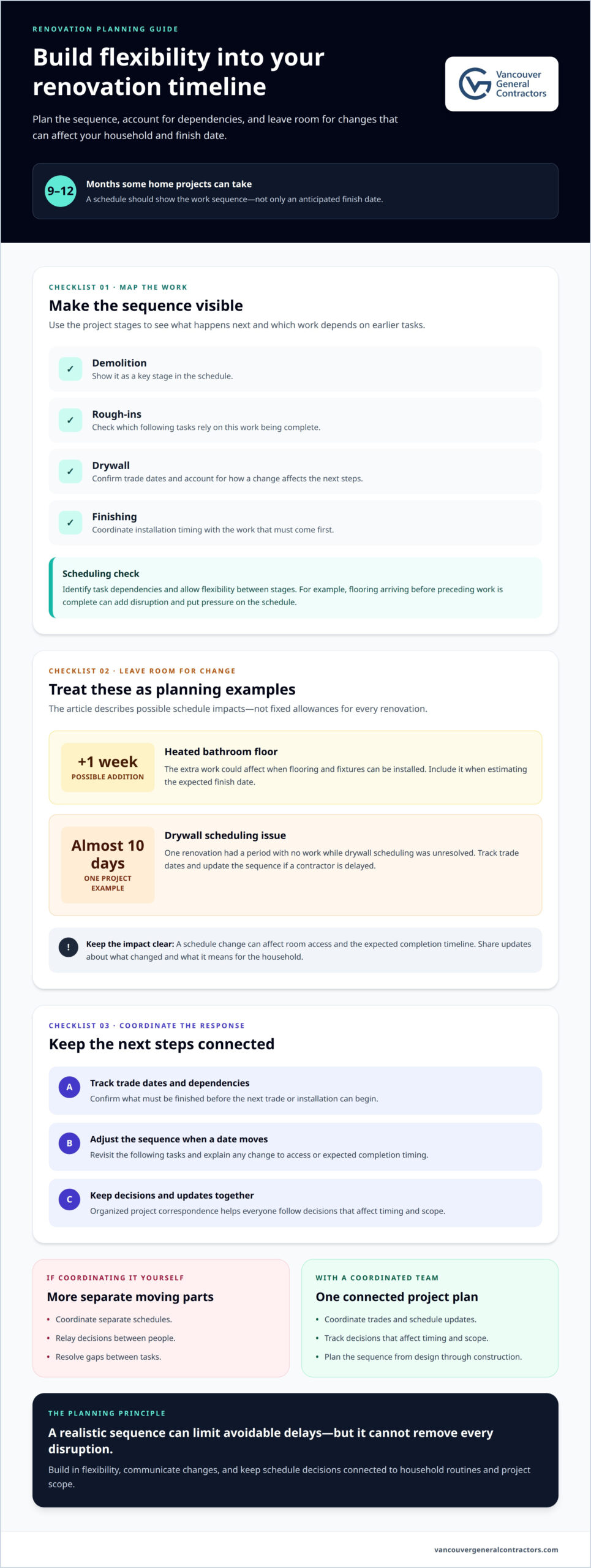
A renovation schedule should show the sequence of work, not just an anticipated finish date. Some home projects can last 9-12 months, so map key stages such as demolition, rough-ins, drywall, and finishing. Identify which tasks depend on earlier work, then allow flexibility between stages. That plan gives household members a clearer view of what happens next and when routines may be affected.
Plan for likely disruptions before construction begins. A bathroom renovation that includes a heated floor, for example, could add an extra week. That may affect when flooring and fixtures can be installed, so the schedule should account for the additional work and the trades that follow. A realistic sequence makes an exciting design easier to live with while work is underway.
Contractor availability can shift. In one renovation, a drywall scheduling issue left the project without work for almost 10 days. A coordinated team can track trade dates, confirm dependencies, and adjust the next steps when a contractor is delayed. If drywall moves, the team can update the sequence and communicate what the change means for access and the expected completion timeline.
Managing contractors and tradespeople yourself means coordinating separate schedules, relaying decisions, and resolving gaps between tasks. If flooring arrives before the preceding work is complete, for example, it can create extra disruption and put pressure on the schedule.
Construction delays can be stressful when they interrupt routines or leave a room unusable longer than planned. A professional team reduces that burden by coordinating trades, sharing schedule updates, and tracking decisions that affect timing and scope. Those steps help limit avoidable delays and keep spending decisions connected to the project plan, though they can’t remove every disruption. For a project that needs coordinated scheduling from design through construction, explore professionally managed renovation planning.
Build time for potential delays into the renovation schedule. If adding a heated floor could add an extra week, include that time when estimating the expected finish date.
3. Setting a renovation budget and spending boundaries
A renovation budget can reduce financial pressure when you set it before work begins. Start with three boundaries: an amount you’re comfortable spending, a maximum you won’t exceed, and a point where added costs become concerning. These limits give decisions context. If a kitchen selection exceeds your comfortable amount but stays below your maximum, you can weigh its value against the overall plan. The stress of managing a renovation yourself can grow when every choice feels financially open-ended.
Next, connect the budget to the project scope. List the work and finish choices that matter most, then separate essentials from upgrades. For example, if a bathroom plan includes a heated floor, decide how that feature ranks against other priorities before construction starts. Budget for the duration of the renovation, and account for regular household commitments so project payments don’t crowd them out.
A renovation team can manage costs by defining the project scope, organizing expected costs, and tracking decisions as work progresses. A clear process records what’s included and explains how proposed changes affect the budget. Before approving an upgrade, compare its added cost with your maximum and consider whether another choice needs to change. To ease the stress of managing a renovation yourself, make deliberate decisions rather than reacting to pressure.
Unexpected costs can still feel difficult. Review the change calmly, identify what caused it, and make a payment plan that fits your finances. Keep decisions and payment details together in your project correspondence so you can follow how the budget evolves. Regular reviews with the renovation team can clarify spending commitments and outstanding decisions before they become last-minute surprises. Clear boundaries won’t prevent every change, but they can help you respond with a plan instead of making rushed choices.
Keep the comfortable budget, maximum spending limit, and point where costs become concerning in view as decisions arise; these boundaries can help guide renovation choices. Budget money to the penny for the next few years, or for the duration of the renovation, as the page advises. If unexpected payments arise, review them calmly and make a plan for paying them.
4. Choosing a design and construction team
Choosing a team is a project decision, not just a hiring step. Managing a renovation yourself gives you direct control over trade schedules, questions, and day-to-day decisions. A general contractor coordinates those moving parts, while you guide the design, priorities, and approvals. The practical difference is who manages coordination between demolition, rough-ins, and finishing.
Before work begins, share your expectations for communication, household access, decision-making, and changes. A kitchen renovation, for example, can involve several connected tasks and choices. Establish who will send schedule updates, how decisions will be recorded, and who will explain a proposed change’s effect on scope or timing. Clear roles help prevent missed messages from becoming avoidable conflicts.
Look for a process that connects design decisions with construction planning. Ask how the team develops the project scope, organizes trade coordination, handles permits, and tracks decisions. The answers should describe a sequence, not simply promise a smooth experience. A design-build process can connect initial concepts and 3D design with construction and permit coordination, keeping project stages under one organized process.
- Scope: Work and materials are described clearly, including what falls outside the agreed project.
- Communication: You know who provides updates and how decisions are documented.
- Changes: The process explains how revisions are approved and reflected in cost and schedule.
- Coordination: Responsibilities for trade scheduling and project stages are understood.
Managing a renovation yourself can suit someone with the time and confidence to coordinate schedules, communication, and decisions. A general contractor takes on that coordination, giving you a central point for project updates while you remain involved in key choices. Neither approach removes every disruption; the right fit depends on how much project management you want to handle yourself.
If you want a coordinated process from design through construction, discuss your renovation project and the level of support you need.
Vancouver General Contractors
Vancouver General Contractors helps homeowners reduce the demands of renovation planning with a design-build process that manages each project phase. Turn to the team when coordinating design decisions, permits, construction, and trade schedules feels like more than you want to manage alone.
The process connects the initial concept and 3D design with construction planning and delivery, helping keep project decisions and next steps organized. Whether you’re planning a home renovation or addition, you remain involved in defining priorities while the team coordinates the work. Clear scope and communication help you make informed decisions about changes, timing, and spending as the project progresses.
Contact Vancouver General Contractors to discuss your renovation plans.
Move forward with a clearer plan
The stress of managing a renovation yourself can ease when a professional team coordinates the work and you have a clear role in key decisions. Start by turning your household’s priorities into a shared project direction. Consider how you want to use the finished space, what needs to feel different, and which decisions you want to stay closely involved in.
That vision can guide a whole-home renovation, condo renovation, or home addition, keeping design and construction decisions connected to your everyday needs. A project conversation can clarify how the work will be organized and where your input is needed, helping you approach the transformation with purpose instead of feeling responsible for every moving part.
Vancouver General Contractors works with homeowners through renovation planning and construction. Contact Vancouver General Contractors to discuss your project and what you’d like your home to become. A well-considered beginning can help make the journey ahead feel more manageable.
Frequently Asked Questions
What are the main sources of stress when managing a home renovation yourself?
The main sources of stress are competing decisions, coordinating trades, and keeping the household functioning while work is underway. A change to a cabinet layout, for example, may affect electrical placement and require decisions across different parts of the project. Homeowners may also feel caught between family preferences and construction priorities. Much of the mental load comes from tracking each issue and making sure important choices are communicated.
How much time does DIY renovation project management typically take?
There’s no single reliable time estimate because the workload depends on the project’s scope, the number of trades, and outstanding decisions. Management may be intermittent, with quieter periods between tasks and busier stretches when approvals, deliveries, or changes need attention. A whole-home renovation requires different coordination from a single-room update. Expect to give the project attention throughout its stages, rather than treating management as a one-time planning task.


Trusted by Canada’s
Top Building Experts
“I only put my name on companies I’d hire myself.”
Business
Guarantee
Approved
More Uncategorized Guides