
Sourcing Sustainable Building Materials in BC for Wet Coastal Climates
In Metro Vancouver, sustainable materials need to do more than look good on paper. Sourcing sustainable building materials in BC means balancing recycled or local content with moisture resistance, insulation value and durability, so a choice makes sense for both the environment and a wet coastal climate.
It’s understandable to focus on where a material comes from and what it’s made of. Its impact through production, transportation, installation and eventual reuse or disposal matters too. A locally sourced product still needs to suit the part of the home where it will be used.
This guide explains how to compare materials and what to consider in coastal conditions. You’ll learn where recycled, reclaimed, certified and locally sourced materials can fit, and how siding, insulation, roofing and windows differ in the qualities that matter for a durable home.
Key Takeaways
- Compare materials across their full lifecycle, including production, transport, installation and end-of-life options, rather than judging sustainability by one feature alone.
- Consider reclaimed wood and recycled metal to reuse existing resources and reduce demand for newly produced materials.
- Look at certified lumber and regional options, weighing sourcing distance alongside the material’s intended use and durability.
- For Metro Vancouver’s wet climate, prioritize moisture management, insulation performance and long service life when assessing roofing, siding, windows and insulation.
Why Choose Sustainable Building Materials?
Sustainable material choices account for environmental impact, performance and service life. For projects in BC, they can also help reduce waste and create healthier indoor spaces.
Choosing Green Construction and Finishing Materials
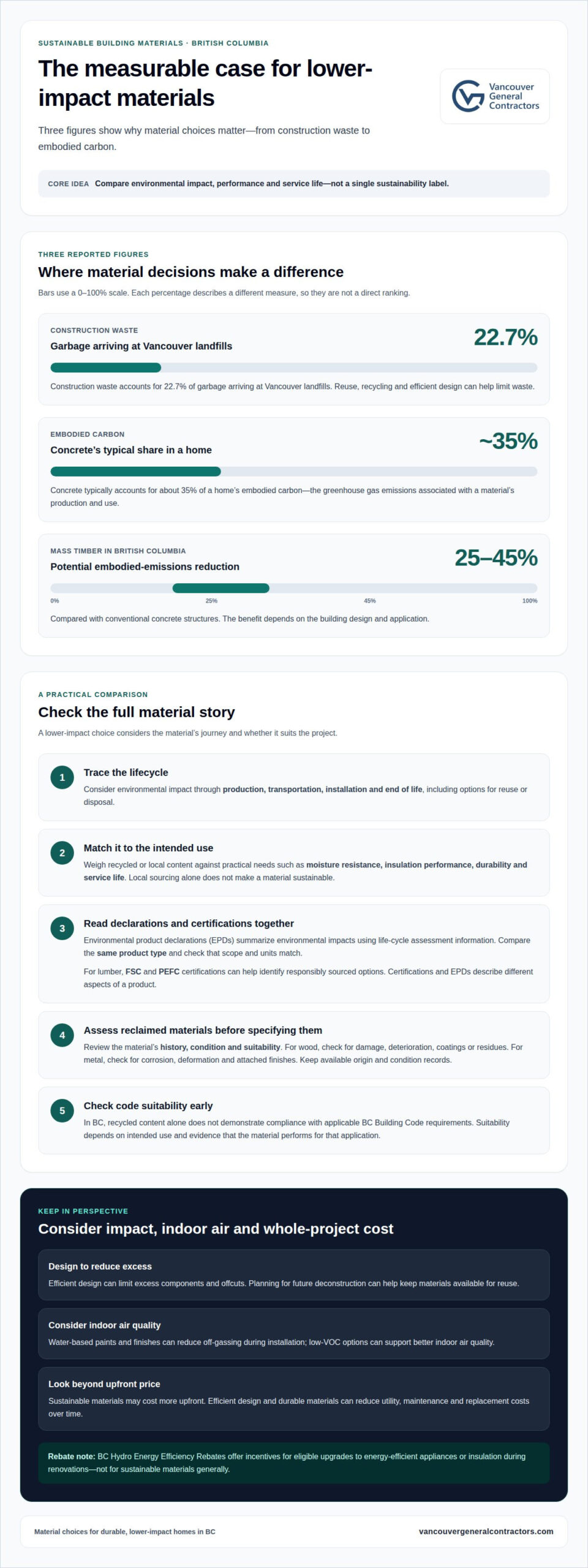
Green construction and finishing materials are selected to reduce environmental impacts across production, transport, installation and disposal. Their value depends on the project’s needs, not a sustainability label alone. For example, water-based paints and finishes can reduce off-gassing during installation, while low-VOC options can support better indoor air quality. Efficient design also limits excess components and offcuts. Construction waste accounts for 22.7% of garbage arriving at Vancouver landfills, making reuse and recycling practical considerations during project planning.
Mass Timber and Embodied Carbon
Embodied carbon is the greenhouse gas emissions associated with a material’s production and use. Concrete typically accounts for about 35% of a home’s embodied carbon, so choosing structural materials carefully can matter. In British Columbia, mass timber can reduce embodied emissions by 25-45% compared with conventional concrete structures. Its benefits depend on the building design and application. Planning components efficiently and designing for future deconstruction can also help reduce waste and keep materials available for reuse.
Prices, Rebates, and Incentives
Sustainable materials may cost more upfront than conventional options, while efficient design and durable materials can reduce utility, maintenance and replacement costs over time. Compare the project’s overall impact, including how long materials may last and whether they can reduce energy use. BC Hydro’s Energy Efficiency Rebates offer financial incentives for eligible upgrades to energy-efficient appliances or insulation during renovations. These incentives apply to eligible upgrades, not sustainable materials generally.
Verifying Declarations and Certifications
Environmental product declarations (EPDs) summarize a product’s environmental impacts using life-cycle assessment information. Compare declarations for the same product type and check that their stated scope and units match. Life-cycle assessment standards can help provide context for understanding environmental product declarations and their product category rules. For lumber, Forest Stewardship Council (FSC) and Programme for the Endorsement of Forest Certification (PEFC) certifications can help identify responsibly sourced options. Read the declaration and certification details together, since they describe different aspects of a product.
Recycled building materials and adaptive reuse
Adaptive reuse keeps existing structures or components in service instead of replacing everything. Reclaimed wood and recycled metals can also give useful materials a second life in renovation projects.
Reclaimed Wood and Recycled Metals
Reclaimed wood is salvaged from existing structures, while recycled metal is recovered to make new products. Both can reduce demand for virgin materials and help keep usable resources out of landfill. Reclaimed lumber may work for visible finishes or other applications when its condition and dimensions are suitable. Recycled metal may suit appropriate building components. In both cases, consider the material’s previous use and current condition.
Recycled Steel and Concrete
Recycled steel uses recovered metal, reducing demand for virgin materials and the energy associated with steel production. Its strength makes it worth considering for suitable structural or non-structural components. Reusing concrete requires a separate assessment: its former role, condition and proposed application determine whether it can serve again. Steel and concrete are distinct choices, not interchangeable solutions. Their environmental value depends on how each fits the project.
Assessing Material Quality and Contaminants
Assess reclaimed materials by reviewing their history, condition and suitability for the intended use. For wood, look for damage, deterioration, coatings or residues that could affect handling or installation. For metal, check for corrosion, deformation and attached finishes. A material’s former use can indicate which contaminants may need assessment. Keep available origin and condition records with the project information, so choices are based on evidence, not appearance alone.
Code Compliance for Reclaimed Materials
In BC, recycled content alone doesn’t demonstrate compliance with applicable BC Building Code requirements. Suitability depends on the material’s intended use and evidence that it performs for that application. Reclaimed components may need a different assessment from newly manufactured products, particularly when their original specifications are unavailable. Include this review early in planning, before designs depend on a particular salvaged component. Renovation planning can account for reuse alongside new materials.
Sustainable, recycled, and locally sourced building materials
In British Columbia, material choices can bring together recycled content, regional supply and suitability for the project. Compare origin and environmental impact with practical needs such as insulation performance and panel dimensions.
Locally Sourced and Regional Materials
Locally sourced materials are produced or recovered closer to the project, while regional choices suit BC building needs. Products made near Victoria may reduce transportation emissions and support the regional economy. Local sourcing alone doesn’t make a material sustainable: consider how it is made, how long it lasts and whether it suits its intended use. For lumber, recognized forest certification can help assess responsible sourcing.
Supply Limitations and Seasonal Availability
Local supply limitations can arise when a material’s production, stock or delivery timing doesn’t match project requirements. Seasonal availability may also affect access, so coordinate material decisions with the project schedule. For example, a specified insulation product or panel may need a different delivery plan from commonly stocked alternatives. Identifying acceptable options early helps align material selection with design and construction sequencing.
Transportation Emissions from Local Sourcing
Shorter transportation routes can reduce emissions from moving materials, although transport is only one part of a product’s environmental impact. The Confluence Building in Castlegar uses prefabricated cross-laminated timber panels manufactured within 17 kilometres of the site. This example shows how regional production can pair with a specific building component. For a project, compare where materials are made with their intended performance, durability and availability.
Evaluating a Materials Supplier
Evaluate suppliers by reviewing material origin, recycled content, product documentation and delivery timing. Ask about the product’s intended application and available performance information, such as insulation value or panel specifications. Compare those details with project requirements, and clarify whether an option is locally produced, recycled or merely distributed locally. This distinction supports clear sourcing decisions and helps reduce transportation emissions without overlooking quality or suitability.
Sustainable materials for Metro Vancouver’s wet coastal climate
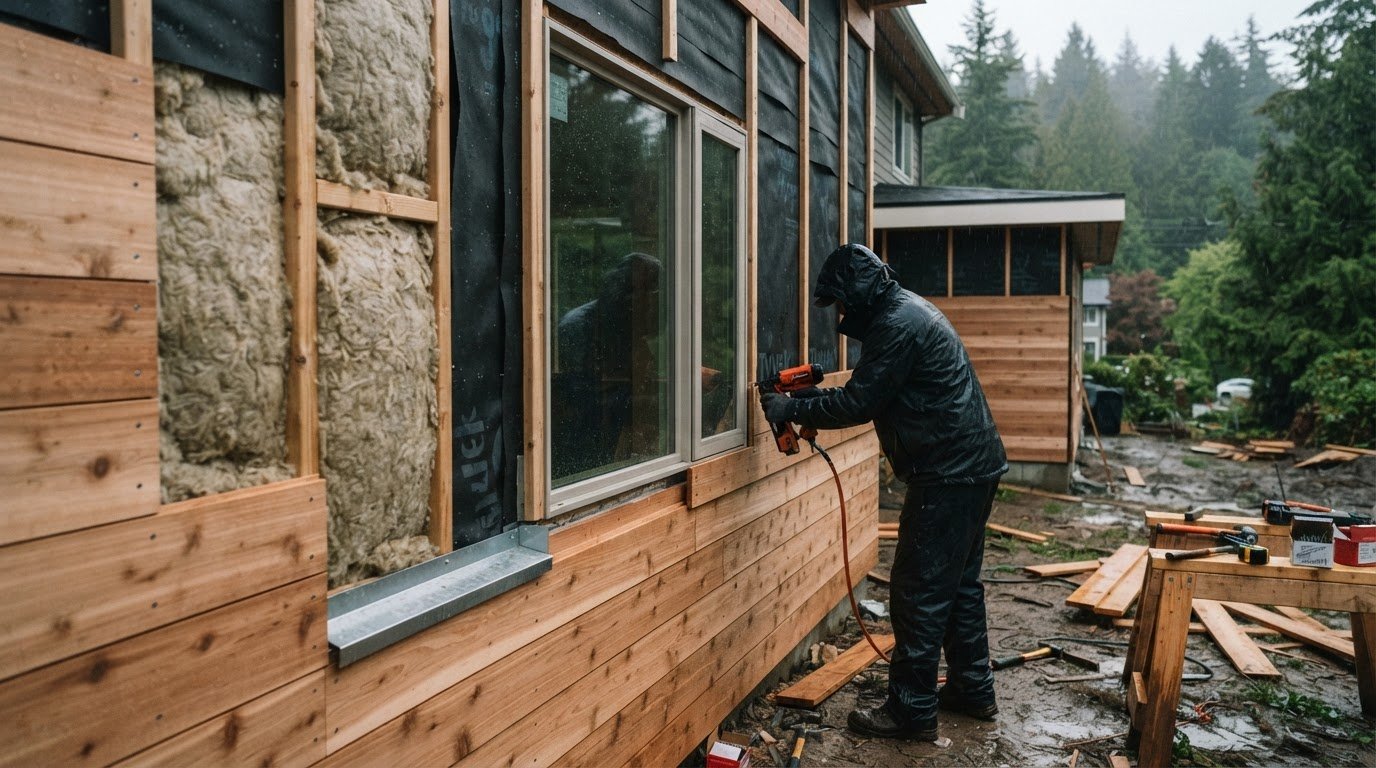
Metro Vancouver’s wet coastal climate makes moisture resistance, insulation value and durability central to material decisions. Environmental benefits matter, but so does a product’s performance in the assembly where it will be installed. For exterior walls, consider how siding, treated lumber and rainscreen systems work together to help limit moisture buildup.
Fibre-cement siding, engineered wood and high-performance insulation can support efficiency and reduce maintenance. Recycled cellulose insulation and mineral wool provide thermal performance and resist moisture. These materials serve different roles, so compare them based on where they’ll be used. Insulation, for example, is part of a complete wall assembly, while siding contributes to exterior protection. Both product selection and installation details shape long-term performance.
Roofing also calls for a climate-specific comparison. Metal roofing, clay tiles and recycled rubber shingles can last decades longer than conventional asphalt shingles. A longer service life may reduce replacement frequency, but the right option depends on roof design and material suitability. For structural elements, consider strength and environmental impact together. Sustainable construction isn’t simply a matter of choosing one low-impact product; it means selecting components that work as a durable system.
Windows and interior finishes matter, too. Triple-pane windows can improve efficiency, while water-based paints and finishes can reduce off-gassing during installation. Pairing better insulation with appropriate windows can support indoor comfort and reduce energy demand. During a whole-home development or renovation, coordinate the exterior envelope, insulation and finish choices instead of treating them as separate decisions. That approach makes trade-offs clearer: a material must meet the building’s performance needs as well as its sustainability goals. Plan climate-ready material choices as part of your renovation.
Vancouver General Contractors
Vancouver General Contractors can incorporate sustainable material decisions into renovation and addition plans. The team can help you weigh environmental priorities alongside durability, climate performance, design and project requirements.
Through its design-build process, the company manages project phases from initial concept and 3D design to construction and permits. This creates a coordinated setting for considering how material choices fit the overall scope, including whole-home renovations, condo renovations, kitchens and home additions. The aim is to connect the materials selected with the design and construction plan, rather than treating each choice in isolation.
For a project where material selection and delivery need to work together, contact Vancouver General Contractors to discuss your plans.
Make your next project a lasting one
Give sustainability a clear place in your project brief from the outset. Decide which priorities matter most to your household, such as material reuse, local sourcing, indoor comfort or long-term durability. Then connect those priorities to the design, intended use and construction plan. This makes trade-offs easier to discuss and keeps material decisions purposeful as the project takes shape.
For sourcing sustainable building materials in BC, the next step is turning broad goals into choices that suit your home and its coastal setting. A renovation or addition creates an opportunity to consider those choices as part of an overall plan, rather than making last-minute substitutions. Vancouver General Contractors can coordinate this planning through its renovation and home addition services.
Contact Vancouver General Contractors to discuss your project and take the next step with confidence.
Frequently Asked Questions
Performance Metrics: How Do These Materials Measure Up?
Compare materials using measures relevant to their intended role: thermal performance for insulation, moisture management for exterior assemblies, and durability for heavily used surfaces. For carbon comparisons, use environmental product declarations with matching scopes and units. A low-impact material may still be unsuitable if it performs poorly in its application, so weigh environmental attributes alongside installation needs and expected upkeep.
What sustainable building materials are available from suppliers in British Columbia?
Options in British Columbia include certified lumber, reclaimed wood, recycled metal, mineral wool, recycled cellulose insulation, fibre-cement siding, engineered wood and recycled rubber roofing. Availability varies by product and location. For a renovation, first define the material’s role, such as structure, insulation, roofing or finish, then compare options that meet the design and performance requirements. This keeps choices relevant to the project.
Which BC suppliers sell reclaimed, recycled, and low-carbon building materials?
BC-based building-material distributors, lumber suppliers and architectural salvage businesses are useful supplier categories to explore. Inventories differ, so search by material and intended use, such as reclaimed flooring or recycled steel components. For low-carbon products, request product-specific environmental information alongside specifications. This provides a clearer basis for comparison than relying on general sustainability claims or a supplier’s location alone.
How can I find locally sourced and FSC-certified lumber in BC?
Ask lumber suppliers to identify a product’s origin and provide documentation linking the specific lumber to its Forest Stewardship Council (FSC) certification. Check that the product description and paperwork refer to the same material. If local origin matters, distinguish where the wood was harvested from where it was processed or sold. These details make regional sourcing easier to compare with certification.
Which sustainable insulation, concrete, roofing, and finish materials work best in BC climates?
The right option depends on the building assembly and local exposure. In Metro Vancouver, compare mineral wool or recycled cellulose for insulation, and assess roofing for durability in wet conditions. For concrete, consider mix-specific environmental information and structural requirements. Water-based finishes can reduce off-gassing during installation. Match each product to its application rather than treating any single material as a solution for every BC climate.
How do transportation distances and embodied carbon affect material choices in BC?
Transportation distance is one part of a material’s environmental impact; production, installation and end-of-life matter too. A nearby product may reduce transport emissions, while its overall embodied carbon depends on its full lifecycle. Compare product-specific declarations where available, and consider service life and future reuse. When sourcing sustainable building materials in BC, assess regional supply alongside these lifecycle factors, not as a stand-alone measure.

Trusted by Canada’s
Top Building Experts
“I only put my name on companies I’d hire myself.”
Business
Guarantee
Approved
More Uncategorized Guides