

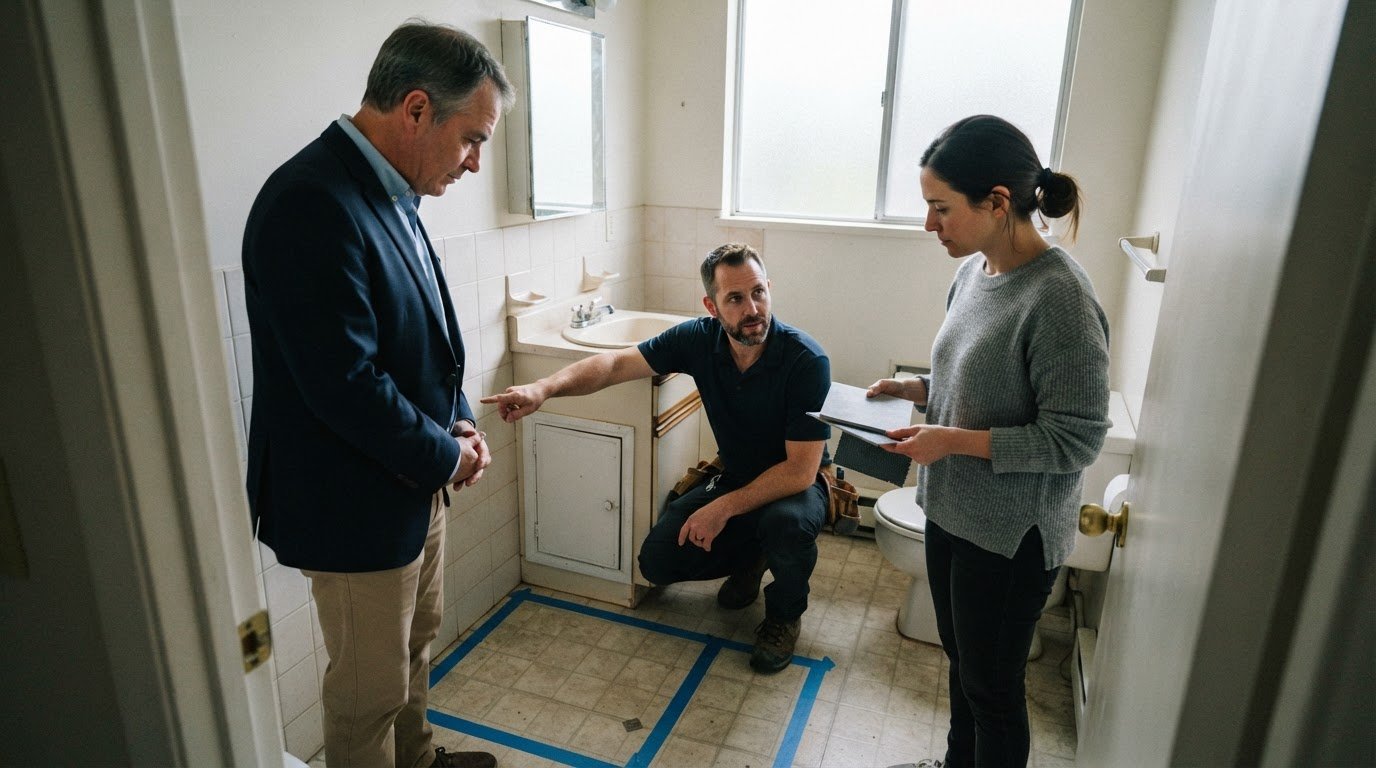
How to Present a Renovation Plan to Your Strata Council
An interior renovation isn’t automatically exempt from strata approval. In British Columbia, section 6 of the standard strata bylaws requires written approval before an owner alters common property, including limited common property or common assets. Some interior renovations may require written approval if they affect parts of the building beyond the strata lot. Presenting a renovation plan to a strata council starts with identifying what the work affects, not just whether it stays within your walls.
It’s reasonable to think work contained within your unit won’t affect the building. However, plumbing, electrical, structural, or building-envelope work can trigger additional approval or permit requirements. Your strata’s bylaws and renovation policies also set practical conditions, including work hours, flooring requirements, and access to common areas.
This guide explains how to prepare a clear application, follow building rules, understand review timelines and possible refusals, and request relevant strata records. It also outlines the details that help council assess your renovation’s scope and impacts, so you can submit an organized plan before work begins.
Key Takeaways
- Map the work’s impact on common property, building systems and exterior appearance to understand what may need written strata approval.
- Plan for building rules on work hours, noise, flooring, neighbour notices and access before setting the renovation schedule.
- Allow time for council review, and learn which strata records and renovation policies can clarify the approval process.
- For a condo renovation, Vancouver General Contractors can manage the project from design through construction, helping coordinate the work within the strata process.
Do I need strata approval for work entirely inside my unit?
Not always, but interior work can affect insured parts of your strata lot or common property. Assess the project scope before setting a start date.
How a renovation professional assesses project scope and property condition
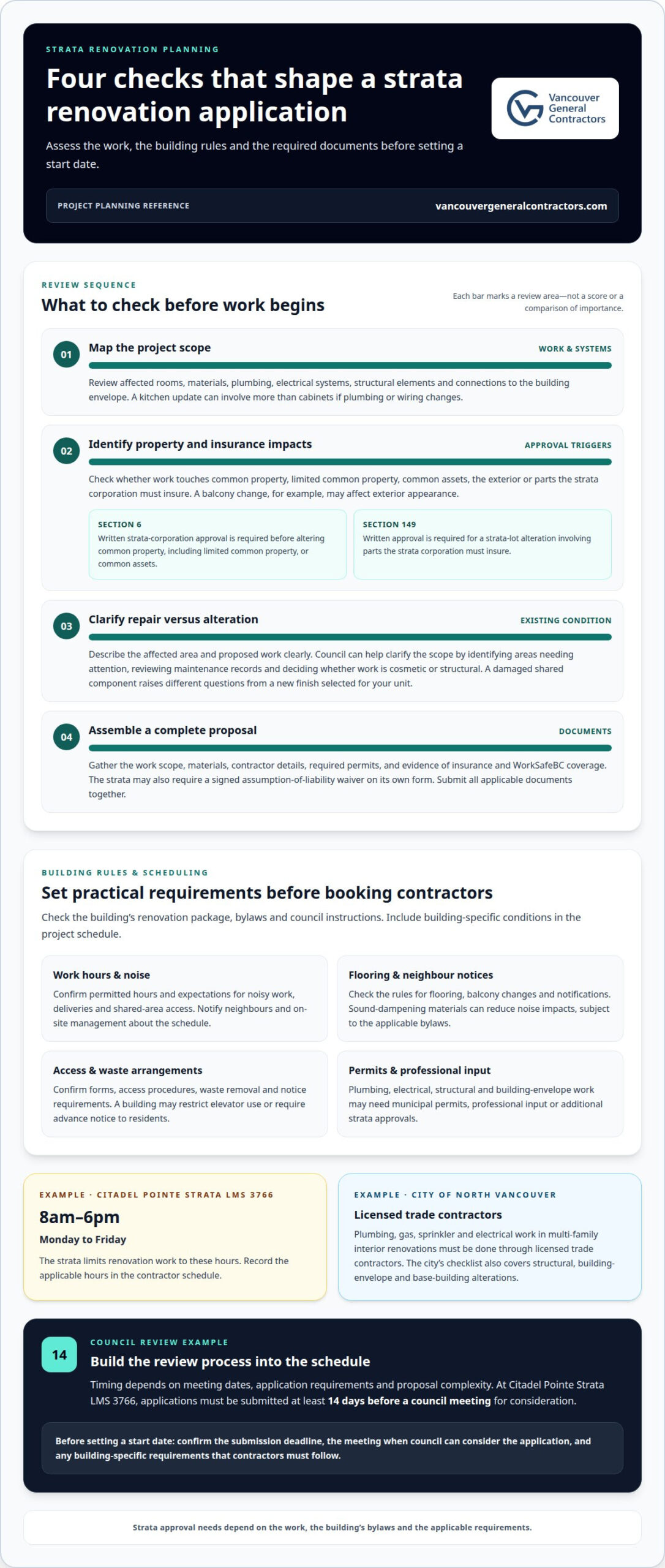
Ask a renovation professional to review the proposed work and the unit’s existing condition. They can identify affected rooms, materials, plumbing, electrical systems, structural elements, and connections to the building envelope. A kitchen update, for example, may involve more than cabinets if it changes plumbing or wiring. A clear scope helps distinguish cosmetic work from changes that may require permits or strata approval.
How a renovation professional identifies common-property or exterior changes
Have the professional identify work that touches common property, limited common property, common assets, or the building’s exterior. Under section 6 of British Columbia’s standard strata bylaws, written strata-corporation approval is required before altering common property, including limited common property, or common assets. Section 149 also requires written approval for a strata-lot alteration involving parts the strata corporation must insure. A balcony change can affect exterior appearance.
How a renovation professional checks whether work repairs strata property
Ask the professional to distinguish repairs from owner-requested alterations in the project description. The strata council can clarify the scope by identifying areas that need attention, reviewing maintenance records, and deciding whether the proposed work is cosmetic or structural. A damaged shared building component, for example, raises different questions from a new finish selected for your unit. Record the affected area and proposed work clearly.
Preparing renovation proposal documents with a professional
Ask the professional to assemble a proposal that includes the work scope, materials, contractor details, required permits, and evidence of insurance and WorkSafeBC coverage. The strata may also require a signed assumption-of-liability waiver on its own form. Permit, deposit, and strata fees have no single Canada-wide amount: permit costs depend on the municipality and work, while strata charges depend on the building’s policies. Submit all applicable documents together.
Following council noise and building-work rules
Set work rules before scheduling contractors. Plumbing, electrical, structural, or building-envelope work may require municipal permits, professional input, or additional strata approvals.
How a renovation professional checks building-specific renovation rules
Have your renovation professional review the building’s renovation package and council instructions before scheduling work. Confirm the required application forms, access procedures, waste-removal arrangements, and notice requirements. For example, a building may restrict elevator use or require advance notice to residents. Include these conditions in the project schedule so contractors can plan deliveries and protect shared areas.
How a renovation professional reviews applicable bylaws and rules
Ask the professional to compare the proposed work with the strata bylaws and rules that apply to your unit. Review provisions for flooring, balcony changes, neighbour notifications, and access to common property. Flooring choices matter: sound-dampening materials can reduce noise impacts, subject to any specific bylaw requirements. Don’t assume a finish or installation method complies without checking the applicable rules.
How a renovation professional confirms noise and building-work requirements
Confirm permitted work hours and noise expectations before contractors begin. Strata rules may set limits for noisy work, deliveries, and access to shared areas. Residents should notify neighbours and on-site management about the renovation schedule. A building’s specific rules govern; for example, Citadel Pointe Strata LMS 3766 limits renovation work to 8am-6pm Monday to Friday. Record the applicable hours in the contractor schedule.
How a renovation professional identifies permit and building-code approvals
Ask the professional to identify which parts of the scope may need municipal permits or professional input. Plumbing, electrical, structural, and building-envelope work can trigger additional requirements. In the City of North Vancouver, plumbing, gas, sprinkler, and electrical work in multi-family interior renovations must be done through licensed trade contractors. Its checklist also covers structural, building-envelope, and base-building alterations. For coordinated condo renovation planning, account for these requirements before construction begins.
Renovation approval timelines and refusals
Build council review into the project schedule. Timing depends on meeting dates, application requirements, and the proposal’s complexity. Presenting a renovation plan to a strata council is more straightforward when you coordinate the submission with the meeting schedule.
How a renovation professional submits a request to the strata council
Ask your renovation professional to organize and submit the application through the building’s stated process. The package should describe the work clearly and include the supporting information the strata requests. Confirm the submission deadline and the meeting when council can consider it. At Citadel Pointe Strata LMS 3766, applications must be submitted at least 14 days before a council meeting for consideration.
What to expect while a renovation professional awaits the council’s decision
Allow council time to review the proposal against the bylaws, consider approval conditions, and vote on a motion. A request may be refused or delayed if details need clarification or the proposed work raises concerns. Structural changes, for example, may require closer review than cosmetic updates. Don’t book work to begin before council has made its decision.
How a renovation professional reviews approval conditions
Ask the professional to translate each written condition into a project requirement before scheduling construction. Conditions may affect the work scope, materials, access, timing, or documentation. Compare the approved plan with the final construction schedule and resolve any mismatch before work begins. If council requests changes, revise the proposal instead of proceeding with an unapproved version.
How a renovation professional confirms written approval before work starts
Have the professional retain council’s written decision and confirm that it covers the proposed scope. Start only after final approval and any required documents or conditions are in place. Work completed without permission can lead to an order to restore the unit. In documented cases, courts have ordered restoration costing hundreds of thousands of dollars or more. A careful approach to presenting a renovation plan to a strata council keeps the approved scope clear before construction starts.
Requesting strata records and renovation policies
Use records to understand the building’s renovation process and confirm how earlier changes were handled. In British Columbia, owners can request strata records under the Strata Property Act.
- Request the current bylaws, rules, and renovation policies from the strata corporation. These records can clarify application procedures, alteration requirements, work-hour restrictions, and required agreements. Organize them around your project scope, such as flooring changes or plumbing work, so the relevant conditions are easy to find.
- Ask for records showing whether changes from the unit’s original construction received strata approval. This is especially useful when buying a strata lot or planning work near an existing alteration. Compare available approval records with the unit’s current layout, such as a moved wall or changed fixture, and note any differences in your proposal.
- Request relevant council records and maintenance history for areas affected by your renovation. Previous decisions may clarify how the strata handled similar alterations, while maintenance records can help distinguish a repair from an owner-requested improvement. For example, a history of water issues near a bathroom may affect how the proposed work is described and reviewed.
- Ask whether the strata requires an alteration or indemnity agreement before work begins. Read its terms alongside the approval conditions, and keep the signed agreement with the approved plans and council decision. A professional can organize these records into one project file, making the approved scope and required documents easier to track. To coordinate a condo renovation with strata requirements, plan your renovation with Vancouver General Contractors.
Vancouver General Contractors
Vancouver General Contractors can help when your renovation scope, strata requirements, and construction planning need to align. Its design-build process manages project phases from initial concept and 3D design through construction and permits, helping organize the work before it begins. This can be useful for condo renovations involving several decisions, including layout, materials, building systems, and council conditions.
Bring the project scope and any strata policies or council correspondence to your planning discussion with Vancouver General Contractors. The team develops the design and construction plan around your renovation, while strata approval remains a separate step governed by your building’s requirements. This approach can support whole-home renovations, kitchens, and additions.
For support planning your renovation, contact Vancouver General Contractors.
Move Your Renovation from Approval to Action
Once the council process is underway, look beyond the application: your design and construction plan should carry the approved intent through to the finished space. A clear handoff keeps decisions about layout, materials, and construction aligned as the project develops. That’s the practical value of presenting a renovation plan to a strata council with the next phase in mind.
Vancouver General Contractors works on condo renovations, whole home renovations, and home additions. If you’re ready to discuss how your project can move from planning into construction, contact Vancouver General Contractors.
A well-considered renovation can shape how you live for years to come. Take the next step when you’re ready.
More Uncategorized Guides




Ready to start your renovation?
Frequently Asked Questions
What if my building is older and does not have a formal process?
Ask the strata corporation for its current bylaws, rules, and written direction before planning work. If there’s no renovation application form, prepare a concise written description, drawings or specifications, a proposed schedule, and contractor details. Ask how council wants the proposal submitted and when it can be reviewed. Keep the response with your project records, especially if the building has older plans or undocumented alterations.
What if my strata says no?
Pause the proposed work and ask for the decision and reasons in writing. Review whether council identified a specific bylaw, building concern, or missing detail, then consider whether a revised scope addresses the issue. For example, a proposal affecting a shared system may need clearer technical information. Don’t treat silence or an informal conversation as approval; keep the written decision with your application records.
What renovations require strata council approval in Canada?
Approval requirements depend on the province, the corporation’s bylaws, and what the renovation affects. In British Columbia, the standard bylaws require written approval for specified alterations to common property and insured parts of a strata lot. Work involving exterior appearance, structural elements, or shared building systems can also raise approval questions. Check the rules for your property rather than assuming interior work is automatically exempt.
What are typical strata renovation approval timelines in Canada?
There’s no single Canada-wide review period. Timing depends on the strata’s meeting schedule, application requirements, and whether council needs more information or professional input. For example, Citadel Pointe Strata LMS 3766 requires applications at least 14 days before a council meeting for consideration. Treat that as a building-specific deadline, not a standard timeline for other strata properties.
Who pays for damage to common property during a renovation?
Responsibility depends on the circumstances and the agreements that apply to the project. A strata corporation may require an owner to sign an alteration or indemnity agreement before work starts; its terms can address responsibility for damage. Keep the signed agreement, approved scope, and work records together. If damage occurs, document the affected area and notify the strata promptly.
What strata bylaws govern renovations in British Columbia, Alberta, and Ontario?
Renovation rules differ by province and by strata or condominium corporation. In British Columbia, renovation requirements can depend on the applicable strata bylaws and the parts of the property affected. Alberta and Ontario have their own provincial frameworks and corporation-specific documents. For any province, review the registered governing documents that apply to your property and proposed work.

Trusted by Canada’s
Top Building Experts
“I only put my name on companies I’d hire myself.”
Business
Guarantee
Approved
