

Cost of Moving vs Renovating in Vancouver: Compare the Costs
The cost of moving vs. renovating in Vancouver isn’t simply a choice between selling your home and starting a construction project.
It’s reasonable to want a clear comparison before making such a significant decision. Renovation costs depend on the project scope, the home’s existing condition and any structural changes, so it helps to look beyond a single headline figure.
This guide explains how renovation costs vary by scope, what can push them higher, and which expenses can make moving costlier than expected. Use the practical framework to weigh both options against your home and plans.
Key Takeaways
- Compare the full cost of selling and buying, including commissions, property transfer tax, legal expenses and moving, with the cost of renovating.
- Structural changes and existing building conditions can shift a renovation budget substantially, so scope matters as much as finishes.
- Use renovation ranges by project type to distinguish a focused update from a whole-home transformation.
- Include contingency, temporary accommodation and storage when weighing your options; moving may make more sense when renovation costs approach 70-80% of rebuild costs.
Structural changes and existing building conditions
These ranges show why construction scope matters more than a typical finish choice, such as new cabinetry.
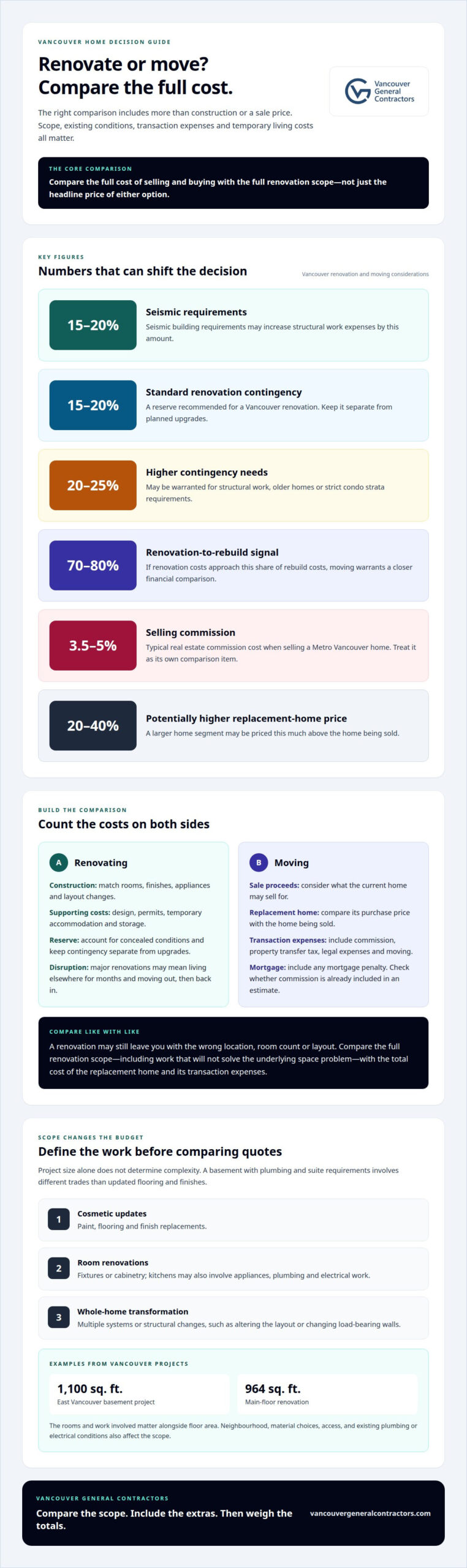
Existing conditions can shift the budget before new living space takes shape. Seismic building requirements may increase structural work expenses by 15-20%. For older homes, structural work, or strict condo strata requirements, a 20-25% contingency accounts for a wider range of potential costs.
Age can also shape the renovation approach. Pre-1940s construction may be a consideration in Vancouver heritage and character assessments. A 1920s or 1930s Kitsilano home, for example, may hold character features worth retaining. If the desired layout requires changing load-bearing walls, reinforcing structure, or updating multiple systems, the project moves beyond cosmetic work. The scope should reflect both the building’s condition and the homeowner’s plans.
Costs also change over time. The comparison illustrates why past project totals aren’t current quotes. Before weighing renovation against moving, distinguish work that preserves the structure from major structural changes, then consider whether the revised layout will meet your housing needs. If your home can’t accommodate those needs without extensive work, moving may be more practical.
Situations where moving may make more sense
Moving deserves serious consideration when the home can’t support your needs without extensive reconstruction. That’s a substantial outlay, but it may compare favourably with renovation work approaching 70-80% of rebuild costs. The comparison should include the home you’d move into, not just the cost of selling. A larger home segment may be priced 20-40% above the home being sold.
Selling costs add up before the moving truck arrives. Selling a Metro Vancouver home typically costs 3.5-5% in real estate commission. Treat these as separate comparison items, not additions to an overall estimate that may already include them.
Moving can make more financial sense when renovation would still leave you with the wrong location, room count or layout. For example, new flooring, updated bathrooms and improved electrical systems won’t necessarily add the bedrooms a growing household needs. A renovation scope should separate essential repairs from changes that still won’t meet those needs. Even after accounting for transaction costs, another property may fit your priorities better.
Compare like with like: the current home’s sale proceeds, the replacement property’s purchase price, transaction expenses and any mortgage penalty. Then compare that total with the full renovation scope, including work that won’t solve the underlying space problem. If a renovation estimate approaches 70-80% of rebuild costs, moving warrants a closer financial comparison. For homeowners still weighing a substantial transformation, whole-home renovation planning can help clarify what the project involves before choosing a direction.
Vancouver renovation cost ranges by scope
In Vancouver, start with the scope, not a citywide average. A cosmetic refresh is different from a kitchen renovation, a multi-room overhaul or a whole-home transformation. Each step adds work: changing finishes isn’t the same as moving plumbing, replacing electrical systems or altering the layout. These choices shape the investment, making a defined project brief more useful than a broad comparison.
Project size alone doesn’t determine complexity. An East Vancouver basement project covered 1,100 square feet, while a main-floor renovation covered 964 square feet. Those examples show why the rooms involved matter alongside floor area. A basement with plumbing and suite requirements involves different trades than updated flooring and finishes. In a kitchen, cabinetry, appliances, plumbing and electrical work can all affect the construction scope.
Group the work into clear categories before comparing quotes. First, list cosmetic updates such as paint, flooring and finish replacements. Next, identify room renovations involving fixtures or cabinetry. Finally, describe whole-home work that involves multiple systems or structural changes. This makes it easier to see whether proposals cover the same rooms, materials and layout goals. For example, a whole-home project in Burnaby is a different scale from a single-room refresh.
Construction costs change over time, so older project totals may not reflect current quotes. The neighbourhood, material choices, access to the home, and existing plumbing or electrical conditions all affect the work involved. For a useful comparison, define the rooms, finishes, appliances and layout changes first. Then compare quotes against the same scope, not just the lowest headline figure. The key is to match project scope before comparing renovation with moving: a small refresh and a full transformation aren’t equivalent investments.
What renovation costs are commonly underestimated, such as contingency, temporary housing, and storage?
A construction budget isn’t the full project budget. The difference may include design, permits, temporary accommodation, storage and contingency. Separating construction from supporting expenses makes the comparison with moving more realistic and shows which costs apply only if your household needs to leave during construction.
Set contingency according to the home and project conditions. A 15-20% reserve is recommended for a Vancouver renovation. Structural work, older homes or strict condo strata requirements can warrant 20-25%. These reserves help absorb costs uncovered as work progresses, such as concealed building conditions. Keep contingency separate from planned upgrades, so choosing new finishes doesn’t consume funds reserved for unexpected work.
Permits are another budget line. Include permit costs alongside construction, rather than treating them as contingency. Group expenses into construction, permits, temporary housing, storage and reserve funds. This makes it easier to see which costs may change if the project scope changes.
Major renovations can require homeowners to live elsewhere for months. If the work means moving out, plan for two moves: once to leave, then again to return. Temporary accommodation and storage costs depend on the length of the work, household needs and belongings stored. Include these alongside the renovation budget, even when their exact amounts depend on those choices. Before finalizing your renovation-versus-moving comparison, plan your renovation budget with construction, permits and relocation needs considered together.
Vancouver General Contractors
Vancouver General Contractors helps homeowners assess whether renovating can make their current home work better than moving. Its design-build process manages project phases from initial concept and 3D design through construction and permits, bringing scope and planning into one coordinated process.
Consider Vancouver General Contractors when you’re weighing a substantial renovation and need to understand the project scope. The company handles whole-home, condo and kitchen renovations, as well as home additions, to address different space and layout needs. The right direction depends on your home’s condition, the changes you want and whether staying in your neighbourhood remains a priority.
Discuss your renovation plans with Vancouver General Contractors to explore the project’s scope and next steps.
Choose the home that fits your next chapter
The decision isn’t just about which option costs less today. Consider whether your current home can support the way you want to live and whether the work will create a lasting fit. Before deciding, identify what must change, what you want to preserve and what matters most about your location. Those priorities can clarify the comparison.
The cost of moving vs. renovating in Vancouver is easier to assess when the renovation scope reflects your actual plans. Vancouver General Contractors offers home additions, whole-home renovations and condo renovations for homeowners looking to reshape their living space. Discussing your priorities can help define the right direction for your home.
Contact Vancouver General Contractors to discuss your renovation plans and explore a practical next step. With a thoughtful plan, you can move forward with greater clarity and create a home that feels right for the years ahead.
More Uncategorized Guides





Ready to start your renovation?
Frequently Asked Questions
When does it make financial sense to move instead of renovating in Vancouver?
Moving may make more financial sense when renovations won’t solve the home’s main limitation, such as too few bedrooms or an unsuitable location. Compare what a replacement home offers with what renovation can realistically change, including the layout and usable space. The cost of moving versus renovating in Vancouver also depends on how much you value staying in your neighbourhood relative to construction disruption and a substantially altered home.
Kitsilano Character Homes: Save or Replace?
Renovating a Kitsilano character home can make sense when its distinctive features matter to you and the existing structure can support your plans. Replacing it may be worth considering if extensive changes still won’t provide the space or function you need. Identify the features that give the home its character, then compare a plan that retains them with one that makes more substantial changes.
Should you renovate or relocate?
Renovate if the location suits your daily life and the home can be adapted to your priorities. Relocate if the neighbourhood, layout or available space remains a poor fit after considering realistic changes. For example, a household that needs a different commute may benefit more from moving than from reconfiguring rooms. Consider how long you expect to stay and which features matter most in your next home.
What Actually Drives Renovation Costs in Vancouver?
Project scope drives the comparison: changing finishes involves different work from altering plumbing, electrical systems or structural elements. Material choices, existing conditions, access to the home and coordination between trades also affect the work involved. To compare contractor quotes meaningfully, define the rooms, finishes and changes you want first. A clear project description makes differences in proposed scope easier to spot.
What are the pros and cons of renovating?
Renovating lets you tailor your home to your preferences while keeping the location you know. It can also bring disruption, difficult choices about which features to preserve and surprises behind existing walls. Weigh the value of customization against convenience. Renovation may suit homeowners seeking a tailored home; moving may be a better fit if your priorities call for a different property or neighbourhood.
How do Vancouver strata bylaws and approval requirements affect renovation costs and timelines?
Strict condo strata requirements can warrant a 20-25% renovation contingency. City permit approvals can add 2-6 weeks to the timeline.


Trusted by Canada’s
Top Building Experts
“I only put my name on companies I’d hire myself.”
Business
Guarantee
Approved
