


How to Get Buy-In for a Commercial Reno by Clarifying Roles
A commercial renovation can be ready on paper and still stall if the people affected do not understand what they are being asked to support. Getting buy-in from stakeholders for a commercial reno starts with clarifying who makes decisions, who contributes, and how the work may affect daily operations. Explain the reason for the renovation, each person’s role, the expected workload, and how updates and concerns will be handled from the outset.
Staff, managers, owners, and tenants may have different priorities. Some may focus on business continuity; others may worry about responsibilities, disruption, or whether their feedback will matter. Agreement is more likely when people see how the renovation supports shared goals and understand which decisions are open to input.
This guide explains how to identify the stakeholders to involve, set expectations, assign accountability, and respond constructively to resistance. It also covers how transparent communication and follow-through can build trust, giving the project a clearer foundation before planning moves into construction.
Key Takeaways
- Map who is affected by the renovation and consider each stakeholder’s interests, influence, and concerns.
- Connect the project to shared business priorities so people can understand its purpose and value.
- Clarify decision-making authority, responsibilities, workload, and where stakeholder input can shape the plan.
- Address resistance with open communication, transparent updates, and follow-through on commitments.
Acceptance, accountability, alignment, and agreement
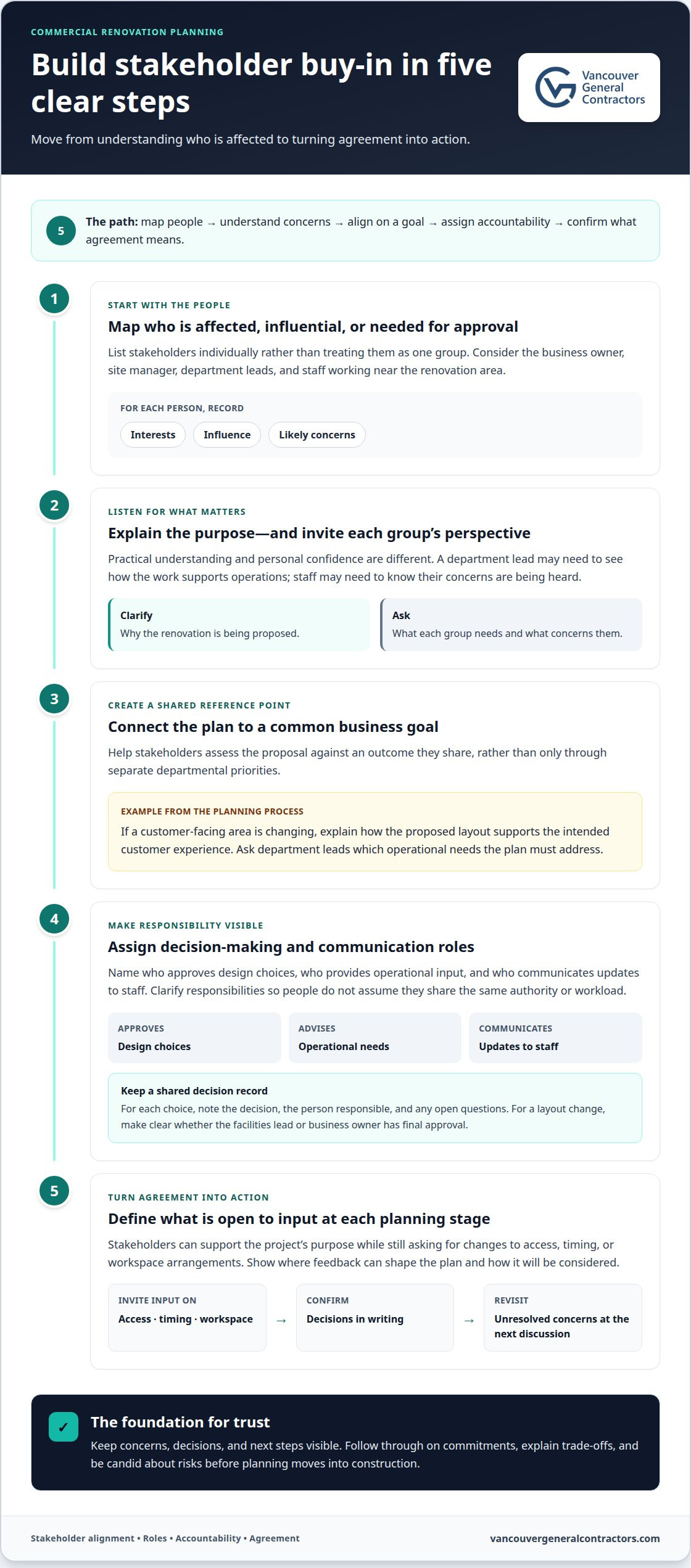
- Map the people affected by the renovation, those with influence, and those whose approval is needed. For example, include the business owner, site manager, department leads, and staff working near the renovation area. Record each person’s interests and likely concerns. This makes the discussion specific instead of treating stakeholders as a single group with identical priorities.
- Distinguish practical understanding from personal confidence. A department lead may need to understand how the work supports operations, while staff may need to know their concerns are being heard. Explain the project’s purpose and invite each group to share its perspective. Respectful relationships encourage honest participation, even when people are not yet ready to support the plan.
- Connect the renovation to a shared business goal. If the project changes a customer-facing area, explain how the proposed layout supports the intended customer experience. Then ask department leads what operational needs the plan must address. This helps stakeholders assess the renovation against a common outcome instead of judging it only through separate departmental priorities.
- Assign accountability before decisions get lost in discussion. Name who approves design choices, who provides operational input, and who communicates updates to staff. Keep a shared decision record noting each choice, the person responsible, and any open questions. For example, record whether the facilities lead or business owner has final approval for a proposed layout change.
- Define what agreement means at each planning stage. Stakeholders may support the project’s purpose while still requesting changes to access, timing, or workspace arrangements. List which decisions are open to input and explain how feedback can shape the plan. Confirm decisions in writing, then revisit unresolved concerns at the next project discussion. This creates a clear path from agreement to action.
Challenges such as resistance, conflict, and mistrust
Address objections by asking what specific impact concerns each stakeholder, then discuss practical options. If staff worry about noisy work near a service desk, consider whether work sequencing or temporary arrangements could address the concern.
When priorities compete, use a shared decision rule. Compare each request with operational needs and project goals, consider the effect of delaying a decision, and record the reasoning.
Late decisions, scope changes, and unexpected conditions in existing spaces can delay a renovation or increase costs. Unresolved choices may lead to redesign or rework, while changes after planning can affect purchasing and construction sequencing.
- Separate resistance from the underlying concern. A department lead who opposes a new layout may be protecting customer flow or staff access. Ask for a concrete example, then invite the lead to identify which parts of the plan could change. This turns a general objection into a planning issue the team can assess.
- Make stakeholder engagement regular and useful. Set a consistent update schedule, share decisions and open questions, and explain what has changed since the last discussion. For example, if a work area will be temporarily unavailable, explain which operations are affected and propose alternatives before finalizing the sequence.
- Give leadership a clear role in resolving competing priorities. Ask a decision-maker to weigh conflicts against agreed business needs, such as maintaining customer access while improving the workspace. Document the decision and its reasoning so internal teams understand the trade-off rather than seeing it as an unexplained preference.
- Build trust by being candid about risks and following through. If an existing condition could change the planned work, explain how the team will assess its impact and communicate any necessary adjustment. Avoid promising a fixed outcome before the relevant decisions and site conditions are understood.
- Use a practical strategy to test concerns before they harden into conflict. Walk stakeholders through a proposed layout, mark the areas affected, and invite specific feedback. A structured renovation planning approach can help keep concerns, decisions, and next steps visible to the people involved.
Sequence the work around operational needs, using temporary arrangements to keep affected services accessible where possible. Explain which operations will be affected and what alternatives are proposed before finalizing the sequence. This gives stakeholders a chance to raise concerns and understand how disruption will be managed.
Clarity about roles and expectations
- List each stakeholder’s role before planning decisions begin. Identify who approves design choices, who advises on staff needs, and who communicates updates to affected teams. For example, an operations manager can explain how construction access affects deliveries, while an owner makes the final decision on scope. Clear boundaries prevent people from assuming they have the same authority or responsibilities.
- Match responsibilities to each person’s influence and capacity. A department lead may provide feedback on customer flow but should not be expected to coordinate every staff request. Define expected tasks, decision deadlines, and the escalation route in writing. This keeps the workload visible and supports meaningful participation without assigning unclear duties.
- Set communication expectations before planning advances. Identify who sends updates, which teams need them, and how staff can raise operational concerns. For example, the project lead can share access-route changes with affected employees and direct design questions to the person gathering feedback. A consistent process helps teams work from the same information.
- Explain which decisions are open to consultation and which require approval from a designated decision-maker. If staff can suggest options for a shared workspace, describe how their input will be considered. If a decision is already fixed, explain why. This supports collaboration without suggesting every idea will change the plan.
- Clear responsibilities provide a practical foundation for getting buy-in from stakeholders for a commercial reno. Ask participants to raise concerns with a specific example, listen to competing operational needs, and document decisions. For instance, if two teams need the same temporary work area, record each team’s requirements and the agreed priority. This helps people see how their roles connect to the project’s progress.
Getting buy-in from stakeholders for a commercial reno also depends on setting expectations that remain useful as planning develops. Revisit responsibilities when decisions affect another team, and make the next action clear to the person accountable for it.
Which stakeholders should be involved in planning a commercial renovation?
- Start with the people who own or sponsor the project. They define the business case, set priorities, and make decisions when requests conflict. For example, an owner may weigh an upgraded reception area against the need to maintain customer access. Include the person with authority to approve the scope, not only someone who shares the owner’s preferences.
- Involve managers responsible for daily operations. A site manager can explain delivery routes, access needs, and busy periods. Department leads can identify how construction may affect staff workflows or customer service. Ask each manager to name the operational constraints the plan must address, then record them alongside the project goals.
- Include employees who will use or work near the renovated spaces. Their day-to-day experience can reveal issues a floor plan alone may miss, such as shared equipment or a frequently used passage. Invite representatives from affected teams to comment during early planning. Explain what their input can influence and how the team will consider it.
- Identify property stakeholders whose decisions or interests affect the site. Depending on the project, this may include a property owner, building manager, or tenant representative. Map each person’s interests, influence, and relationship to the work. For instance, a building manager may know which access arrangements need coordination, while a tenant can explain how the space supports the business.
- Include the professionals shaping and delivering the project alongside internal decision-makers. Designers and construction partners can help translate operational needs into practical planning choices. Give them a clear process for receiving stakeholder feedback and raising constraints. A defined group can keep consultation focused while ensuring affected teams have a meaningful voice.
Ready to bring your project team and affected stakeholders into a clear planning process? Discuss your commercial renovation planning.
Vancouver General Contractors: Commercial Renovations
Vancouver General Contractors is a natural next step when your commercial renovation needs coordinated planning and construction. Its design-build process manages each phase, from the initial concept and 3D design through construction and permits. That gives stakeholders a clearer project path, with planning decisions connected to the work that follows.
Bring the priorities gathered from owners, managers, staff, and other affected groups into early discussions. Clear roles and operational needs can help shape a plan around how the space must function. Vancouver General Contractors also offers Home Additions, Whole Home Renovations, and Condo Renovations for other property needs.
For a commercial renovation, contact Vancouver General Contractors to discuss your project.
Move Your Renovation Plan Forward
Turn stakeholder agreement into a practical starting point: write a brief that captures the business outcome, the decisions still ahead, and the person responsible for each one. Share it with those affected and use their responses to identify unresolved priorities before planning advances. This gives the next discussion a clear purpose and keeps the project connected to your organization’s needs.
Getting buy-in from stakeholders for a commercial reno is an ongoing part of turning a shared intention into action. Keep the brief current as decisions evolve, and make the next step clear to everyone involved. If you’re ready to move your renovation forward, start a conversation with Vancouver General Contractors.
A well-aligned project can give your space a stronger foundation for what comes next.
Frequently Asked Questions
What Is Stakeholder Buy-In?
Stakeholder buy-in is the willingness of affected or influential people to support, participate in, or accept a project. It can mean practical agreement with the renovation’s purpose and confidence that the process considers people’s interests. For example, a tenant may accept temporary changes to a shared entrance if they understand the reason and how access will be managed during the work.
How do you ensure there is complete organizational buy-in?
Build broad support by connecting the renovation to organizational goals and addressing each department’s specific impact. A retail team may prioritize customer access, while finance may focus on approval authority and documented decisions. Invite affected groups to contribute before key choices are finalized, then make unresolved issues visible to leadership. Do not assume one approval meeting secures complete agreement; keep communication active as the plan develops.
What does complete buy-in look like?
Buy-in means people understand the project’s purpose and can act on their part of the plan. A department manager knows which operational decisions they own, staff know where to direct access concerns, and leadership can explain how the project supports organizational priorities. Support does not mean everyone prefers every design choice. It means people understand the decisions and can move forward within their responsibilities.
Why get buy-in?
Buy-in connects renovation decisions to the needs of people who will work in or manage the space. Without their input, a design might overlook a practical issue, such as where deliveries are received or how a team serves customers during construction. Early participation gives decision-makers a chance to consider these needs before they become plan changes or sources of disagreement.
How do you build stakeholder buy-in for a commercial renovation?
Start with a clear reason for the work, then tailor the discussion to each group’s role. For a Vancouver workplace renovating its reception area, customer-facing staff can describe common visitor needs, while management can explain service priorities. Present options in plain language and ask stakeholders to respond to a specific choice. Follow up by showing how their input shaped the next planning decision.
How do you create a business case and ROI estimate for a commercial renovation?
Set out the business problem, the proposed change, and the outcomes the organization wants to assess. Compare the current space with the planned one using relevant measures, such as workflow interruptions, usable work areas, or customer access. List project and operating costs separately, state the assumptions behind each estimate, and describe how results will be reviewed after completion. Do not present projections as guaranteed returns.

Trusted by Canada’s
Top Building Experts
“I only put my name on companies I’d hire myself.”
Business
Guarantee
Approved
More Uncategorized Guides