




Which Home Renovations Have the Best ROI in Vancouver 2026?
Could your single-family lot actually be the foundation for an eight-unit multiplex? With the 2026 R1-1 zoning changes now in full effect, the traditional rules of property value have been completely rewritten. You’re likely feeling the pressure of high construction costs and the frustration of municipal permit delays that often stretch for months. It’s natural to worry about over-improving for your neighbourhood or guessing where interest rates will land by the time your project is complete. If you’re wondering which home renovations have the best roi in vancouver 2026, you need a strategy grounded in current market data rather than guesswork.
We believe that a renovation should be a transformative life experience, not a source of constant anxiety. This guide reveals the top-performing improvements for the 2026 Metro Vancouver market to maximize your property value and lifestyle. We’ll explore high-yield density plays like laneway houses, the growing “Green Premium” driven by the BC Energy Step Code, and why cost-certainty is your most valuable asset. You’ll gain a clear list of high-ROI projects and the confidence to move forward with a predictable, transparent plan that protects your investment for the long term.
Key Takeaways
- Learn how the latest R1-1 zoning shifts and the “Cost vs. Value” ratio determine which home renovations have the best roi in vancouver 2026.
- Identify the specific kitchen and bathroom upgrades that provide the highest financial return while modernizing your primary living space.
- Explore how density-focused additions like laneway houses and secondary suites can create immediate rental income and significant long-term equity.
- Understand the impact of the BC Energy Step Code and how energy-efficient retrofits attract a substantial “Green Premium” in the current market.
- Discover how the design-build methodology provides cost-certainty and eliminates the common permit delays associated with Metro Vancouver projects.
The Vancouver Real Estate Landscape in 2026: Why Renovation ROI Matters
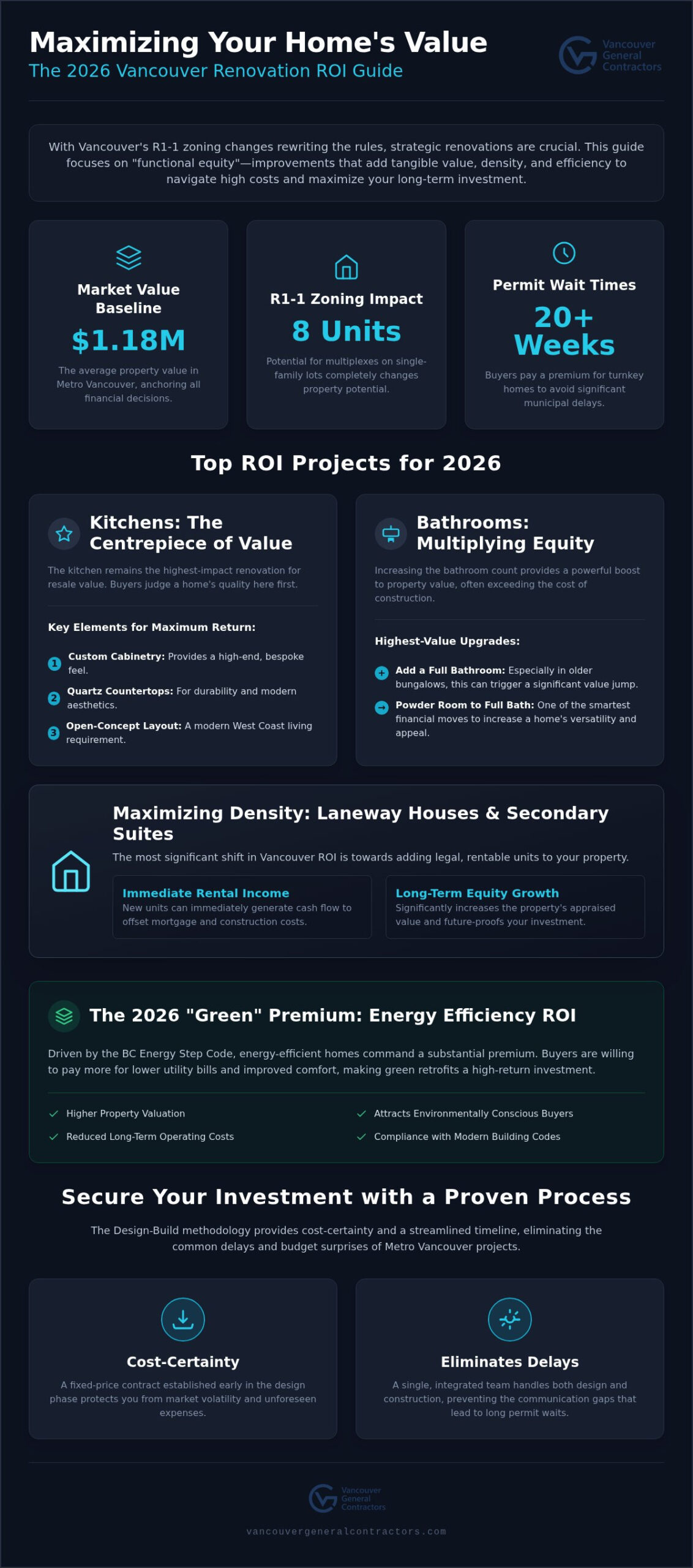
In the current Metro Vancouver market, property values have reached a baseline average of $1.18 million. This high entry point fundamentally changes the math of home improvement. When we discuss Return on Investment (ROI) in 2026, we aren’t just looking at the profit made upon a potential sale. We’re measuring how effectively a renovation increases the total equity of your primary asset while protecting you from future market volatility. If you’re asking which home renovations have the best roi in vancouver 2026, you’re looking at a market where land value now anchors every financial decision.
The “Cost vs. Value” ratio has shifted significantly. Homeowners have moved away from purely aesthetic updates toward “functional equity” projects. These are renovations that add living units, create multi-generational spaces, or implement drastic energy efficiency. Because land is so precious, the most successful projects are those that maximize every square foot of the existing footprint or add density through new structures.
Understanding the 2026 Market Dynamics
Interest rates have finally stabilized after the volatility of previous years. This predictability allows homeowners to plan large-scale projects with a level of cost-certainty that was impossible just a few years ago. Because new detached homes are increasingly scarce, existing houses on R1-1 zoned lots have become high-value assets. Buyers in 2026 are willing to pay a significant premium for “turnkey” properties. They want to avoid the 20-week permit wait times themselves. A recently renovated home that meets all modern codes is often more attractive than a fixer-upper, even at a higher price point.
Calculating Your Potential Return on Investment
Distinguishing between short-term resale spikes and long-term equity is vital for any Vancouver homeowner. A basement suite might provide immediate rental income to offset a mortgage, while a whole-home renovation secures the structure’s value for decades. Determining which home renovations have the best roi in vancouver 2026 requires a deep dive into how density changes impact your specific lot. You must also be mindful of the “neighbourhood ceiling.” Over-improving a home beyond what the local market can support can diminish your returns, so we always aim for a balance of luxury and local market logic.
In the 2026 Vancouver market, ROI is defined as the percentage of renovation costs recovered through the immediate increase in the property’s appraised market value combined with long-term lifestyle utility. By focusing on projects that align with new zoning laws and energy requirements, you ensure your home remains a liquid and lucrative asset.
Top ROI Projects for 2026: Kitchens and Bathrooms
While density projects are a major market trend, internal upgrades remain the most reliable way to boost immediate resale value. If you’re asking which home renovations have the best roi in vancouver 2026, the kitchen still takes the crown. It’s the first place buyers look to judge a home’s quality and craftsmanship. In British Columbia, a minor kitchen remodel often recoups a higher percentage of its cost compared to a major overhaul, but for luxury properties in West Vancouver or Kitsilano, a high-end transformation is often required to meet buyer expectations and secure a top-tier sale price.
Increasing the bathroom count is another powerhouse move for financial growth. Adding a second or third full bathroom, particularly in older Vancouver bungalows, can trigger a value jump that far exceeds the initial construction costs. We’ve found that converting a simple powder room into a full three-piece bath is one of the smartest financial decisions a homeowner can make in a competitive market. These functional changes provide the “functional equity” we discussed earlier, making the home more versatile for different buyer profiles.
Kitchen Renovations: Where to Spend and Where to Save
To maximize your return, prioritize custom cabinetry, tiered lighting, and durable quartz countertops. These elements provide the visual impact that justifies a higher asking price. An open-concept layout is no longer just a trend; it’s a requirement for modern West Coast living. When you’re planning a kitchen renovation vancouver project, remember that even secondary kitchens in rental suites must adhere to the latest City of Vancouver laneway house regulations to ensure the space is fully legal and insurable. Investing in quality materials now prevents the “budget creep” of future repairs.
Bathroom Remodelling for Maximum Equity
The “Spa-at-Home” aesthetic has become the gold standard for 2026. Buyers are increasingly favouring large, curbless walk-in showers over traditional bathtubs in secondary bathrooms. High-quality tiling and heated floors aren’t just luxuries anymore; they’re features that modern buyers expect in a premium market. If you’re looking to modernize an older home, updating a dated secondary bathroom can prevent your property from being overlooked in favour of newer builds. If you’re ready to see how these upgrades fit your specific layout, our team at Vancouver General Contractors can help you identify which home renovations have the best roi in vancouver 2026 for your unique property.
Maximizing Density: Laneway Houses and Secondary Suites
In a city where land is the most expensive component of real estate, density is the ultimate lever for financial gain. If you’re analyzing which home renovations have the best roi in vancouver 2026, adding a second or third dwelling unit to your property stands as the most aggressive way to build equity. The recent shift to R1-1 zoning has transformed traditional single-family lots into potential multi-unit hubs. This policy allows for multiplexes of up to eight units on certain lots, which fundamentally changes how we calculate the value of your backyard. By adding density, you aren’t just improving a building; you’re maximizing the utility of the land itself.
There’s a massive equity difference between a legal suite and an unauthorized basement. Buyers in 2026 are highly risk-averse and value the security of a permit-protected home. A legal suite adds to your home’s official square footage and can be fully insured, making it a “bankable” asset during a sale. Unauthorized suites often lead to complications with financing and insurance, which can actually devalue a property in a sophisticated market. We focus on ensuring every density project meets municipal standards to protect your long-term investment.
The Financial Case for Building a Laneway House
Building a detached garden suite provides a unique “Laneway House Advantage” in 2026. While the initial investment includes significant Development Cost Levies (DCLs) and utility connection fees, the resale value of a lot with two distinct dwellings often exceeds the construction cost. A laneway house functions as a powerful mortgage helper, providing a steady stream of rental income that makes high-value properties more accessible to a wider range of buyers. When you’re building a laneway house in vancouver, you’re creating a versatile asset that can house aging parents, adult children, or high-paying tenants.
Basement Suite Conversions: Low Entry, High Return
For many homeowners, converting an existing basement into a legal suite is the most accessible path to high ROI. It has a lower entry cost than a new build because the foundation and shell are already in place. The key to success here is functional square footage. In 2026, a well-designed 600-square-foot suite with high ceilings and plenty of natural light can command premium rents in Vancouver, Burnaby, or Richmond. Navigating the specific permit requirements for each municipality is essential, as code compliance is what transforms a simple basement into a legitimate financial instrument. We manage this entire regulatory process for you, ensuring your project stays on track and within the fixed-price budget we’ve promised.
The 2026 “Green” Premium: Energy Efficiency and Exterior ROI
In 2026, the Vancouver housing market doesn’t just reward how a home looks; it rewards how it performs. The BC Energy Step Code has become a central pillar in property valuations, as buyers now prioritize operational efficiency alongside aesthetic appeal. If you’re investigating which home renovations have the best roi in vancouver 2026, you’ll find that “Climate-Ready” homes in North and West Vancouver are commanding significant premiums. These properties are built or retrofitted to withstand shifting weather patterns while maintaining low energy footprints, making them highly desirable for long-term investors who value durability over fleeting trends.
Identifying which home renovations have the best roi in vancouver 2026 often leads homeowners to the exterior of their property. While interior luxury is important, the structural integrity and efficiency of the building envelope now dictate the final sale price. High-efficiency upgrades signal to buyers that the home has been meticulously maintained and is prepared for future environmental regulations. This peace of mind is a powerful motivator in a market where buyers are increasingly cautious about hidden costs.
Energy Efficiency as a Resale Strategy
Buyers are increasingly wary of rising utility costs and carbon taxes. A home equipped with high-performance window replacements and a central ducted heat pump offers immediate relief from these concerns. As of July 2026, the CleanBC Better Homes program provides substantial rebates to help offset these costs, with middle-income households eligible for up to $7,000 when converting from natural gas or oil. These incentives effectively lower your net investment while boosting your final sale price. Energy audits have become a standard part of the Vancouver sales process, as a high efficiency rating provides a transparent, third-party verification of the home’s long-term value and lower operating costs.
Exterior Renovations and Curb Appeal
First impressions remain the most powerful driver of emotional buying decisions. Modernizing your home’s exterior with durable siding, updated front doors, and architectural lighting can provide a return that rivals internal remodels. In the 2026 lifestyle, outdoor living spaces like decks and patios have transitioned from optional luxuries to essential requirements. These spaces effectively increase the usable square footage of your home without the high cost of a full addition. When planning your home renovation vancouver project, consider how these exterior elements work together to create a cohesive, high-end feel. A well-executed exterior doesn’t just invite buyers inside; it sets the stage for the value they expect to find there. If you want to ensure your exterior upgrades align with the latest market demands, contact our team at Vancouver General Contractors to discuss your vision.
Navigating the Design-Build Process for Maximum Financial Return
The most lucrative project on paper can quickly become a financial burden if the execution lacks discipline. When you’re determining which home renovations have the best roi in vancouver 2026, you must consider the delivery method as much as the floor plan. The design-build model is specifically engineered to prevent “budget creep,” the phenomenon where small oversights during the planning phase balloon into massive costs during construction. By integrating the design and construction phases under one specialized team, we eliminate the communication gaps that typically lead to expensive delays. We take full responsibility for the project lifecycle, ensuring the vision you see on day one is exactly what we deliver on the final day.
One of the most powerful tools for protecting your return is the use of 3D virtual designs. These high-fidelity visualizations allow you to walk through your renovated space before a single hammer is swung. This foresight is critical for avoiding mid-construction changes, which are the primary killers of project ROI. It’s much cheaper to move a virtual wall during the planning stage than a physical one once the plumbing is already roughed in. With median permit processing times in Vancouver sitting at 20.0 weeks for new housing and 15.6 weeks for laneway houses, having a meticulously planned design is essential for navigating the municipal queue without setbacks.
Fixed Pricing: The ROI Protector
The traditional “Cost-Plus” model often leaves Vancouver homeowners vulnerable to the material price fluctuations that continue to impact the 2026 market. We prioritize financial transparency by providing fixed-price construction contracts. This approach shifts the risk of inflation away from you and onto us, ensuring that your initial ROI calculations remain accurate upon completion. Our comprehensive 3-step design-build process focuses on extreme detail during pre-construction, so there are no surprises later. We also back our work with a 2-year industry-leading warranty, providing long-term security for your investment and peace of mind for future buyers.
Designing for Resale vs. Designing for Lifestyle
Maximizing your return requires a delicate balance between personal taste and broad market appeal. While you want a home that reflects your personality, high-ROI renovations prioritize architectural planning that maximizes usable space and natural light. Using neutral but high-value materials ensures your home appeals to the widest possible demographic when it’s time to sell. If you’re ready to build something that lasts, Book a free ROI-focused consultation with VGC to explore which home renovations have the best roi in vancouver 2026 for your specific property. Our team manages every detail from the first sketch to the final permit, so you can focus on the excitement of your new living environment.
Securing Your Property’s Future in a Changing City
The 2026 Vancouver market doesn’t reward guesswork. Whether you’re maximizing your lot’s density through a laneway house or modernizing your building envelope to meet the BC Energy Step Code, your success depends on a strategic approach. We’ve explored how functional square footage and energy performance have become the primary benchmarks for value. By focusing on projects that align with new R1-1 zoning and high-efficiency standards, you ensure your home remains a competitive asset in a sophisticated market.
Understanding which home renovations have the best roi in vancouver 2026 is only half the battle; the other half is execution. Our design-build methodology eliminates the traditional anxieties of construction by providing a fixed-price guarantee and full permit management services. We handle the logistical complexities so you can enjoy the creative transformation of your living space. With our 2-year comprehensive warranty, your investment is protected long after the final inspection is complete.
Ready to transform your property into a high-performance home? Start your high-ROI renovation journey with a free VGC estimate. We’re here to help you build a legacy of value and comfort in the city you love.
More Uncategorized Guides





Ready to start your renovation?
Frequently Asked Questions
Which home renovation adds the most value in Vancouver in 2026?
Density-focused projects like laneway houses and multiplex conversions add the most value because they maximize the utility of expensive land. While high-end kitchen renovations remain the top choice for internal ROI, the 2026 R1-1 zoning changes make adding a second or third dwelling unit the most aggressive equity builder. These projects transform a single-family lot into a multi-unit asset, which is a major driver when determining which home renovations have the best roi in vancouver 2026.
Do I need a permit for a kitchen renovation in Vancouver?
You generally need a permit for a kitchen renovation if you’re making structural changes, moving plumbing fixtures, or updating electrical systems. As of 2026, Vancouver’s building permit fees are calculated at $1.70 per $1,000 of construction value for standard work. Minor cosmetic updates like painting or replacing cabinet hardware don’t require permits, but anything involving the building’s core systems must be documented to ensure the home remains legal and insurable for future resale.
Is a laneway house worth the investment in 2026?
A laneway house is widely considered a high-value investment in 2026 because it provides both immediate rental income and a significant boost to your property’s total equity. While initial development cost levies and utility connections can range from $45,000 to over $70,000, the resale value of a lot with two dwellings often exceeds these costs. This “mortgage helper” makes your property more accessible to buyers in a high-interest environment, securing your long-term financial stability.
How much does a full home renovation cost in Metro Vancouver?
In the 2026 market, general renovation costs in Metro Vancouver typically range from $150 to $300 per square foot depending on the scope and finish quality. However, these figures can vary significantly based on your specific site conditions and design requirements. We address this volatility by offering fixed-price construction contracts. This approach ensures you have cost-certainty from the start, protecting your budget from the material inflation and labour shortages that often derail traditional renovation projects.
What is the difference between design-build and a traditional general contractor?
The primary difference is that a design-build firm manages both the architectural planning and the construction phases under one roof. In contrast, a traditional general contractor usually executes plans already created by a separate architect. Our integrated 3-step process eliminates the communication gaps that often lead to budget creep and delays. By handling everything from 3D design to permit management, we provide a more transparent and accountable experience for homeowners looking to protect their ROI.
Can energy-efficient upgrades actually increase my home’s resale value?
Energy-efficient upgrades definitely increase resale value by lowering future operating costs and meeting the mandatory BC Energy Step Code requirements. Buyers in 2026 look for “Climate-Ready” features like high-efficiency heat pumps and high-performance windows. These improvements often qualify for CleanBC rebates, which can reach up to $7,000 for middle-income households. This “Green Premium” ensures your home stands out in the market as a durable, low-maintenance asset that is prepared for future environmental regulations.
How long does the permit process take for a Vancouver home addition?
Median permit processing times in Vancouver currently sit at approximately 20.0 weeks for new low-density housing and additions. If you’re building a standalone laneway house, the process is slightly faster, with a median time of 15.6 weeks. Navigating this “permit maze” requires meticulous planning and coordination with municipal departments. We manage this entire administrative process for our clients, ensuring that all documentation is accurate to avoid unnecessary delays that could stall your construction timeline.
Should I renovate my basement into a suite or a recreation room for better ROI?
A legal basement suite almost always offers a better ROI than a recreation room because it functions as a legitimate mortgage helper. While a rec room adds lifestyle value, a legal rental suite generates consistent income that directly increases your borrowing power and the property’s marketability. When assessing which home renovations have the best roi in vancouver 2026, the ability to offset housing costs with a secondary unit is the most powerful financial advantage you can create.

Comments are closed