




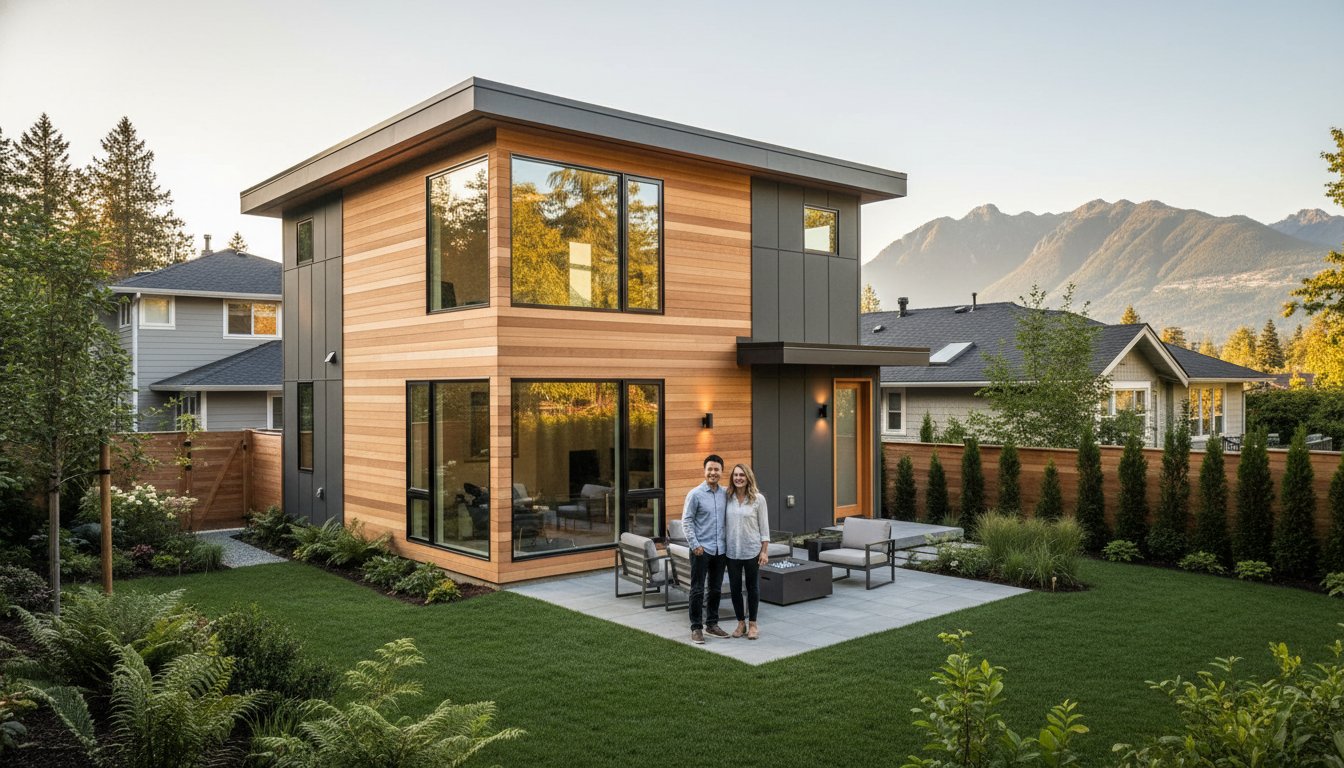
Building a Laneway House in Vancouver: The 2026 Homeowner’s Guide
Did you know that multiplex and laneway developments now account for approximately 50% of all R1-1 applications across the city? This surge reflects a major shift in how homeowners utilize their land, yet the actual process of building a laneway house in vancouver remains a complex undertaking. You might feel overwhelmed by the intricate R1-1 zoning bylaws or the fear of budget overruns that often plague large scale projects. It’s natural to worry about coordinating various consultants while trying to keep your daily life on track.
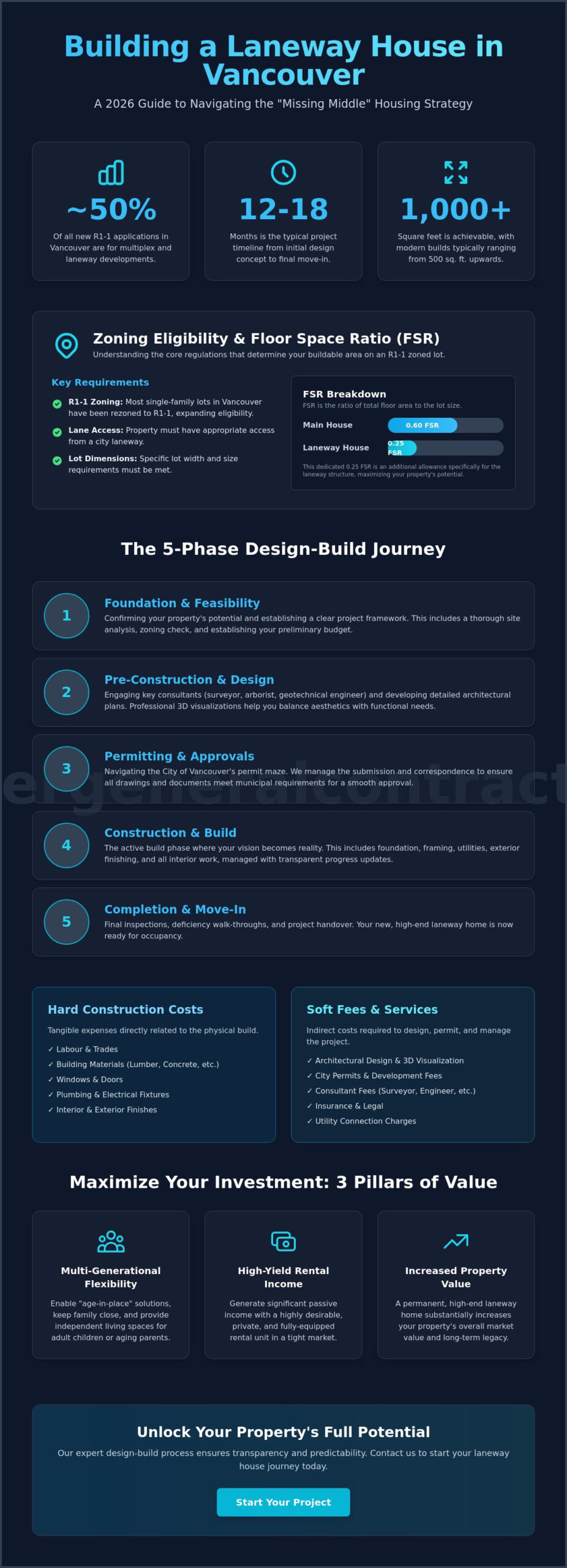
We believe that transparency and expert guidance are the foundations of a successful build. This 2026 guide promises to simplify the “Missing Middle” housing strategy by providing a clear framework for eligibility, zoning, and the design-build process. You’ll learn how to navigate City of Vancouver requirements with confidence and establish a predictable plan for your project. From understanding floor space ratios to managing the 12 to 18 month timeline, we’ll show you how to turn your backyard into a high-end living environment without the typical construction headaches.
Key Takeaways
- Learn how Vancouver’s R1-1 zoning and Floor Space Ratio (FSR) requirements dictate the maximum buildable area for your specific property.
- Understand the critical distinction between hard construction costs and soft fees to realize a predictable budget without hidden surprises.
- Master the step-by-step design-build roadmap to ensure building a laneway house in vancouver is a transparent and highly organized experience.
- Discover how to maximize your investment through high-yield rental income and long-term property value increases.
- Explore how professional 3D visualization and site analysis can help you balance aesthetic design with functional multi-generational living needs.
Understanding Laneway Houses: More Than Just a Backyard Suite
A Laneway house is a self-contained, detached dwelling typically located in the rear yard of a primary residence, opening onto the city’s alleyway network. These structures represent a permanent commitment to your property’s legacy. They provide a sophisticated solution for families who want to remain together while maintaining distinct boundaries. Unlike a temporary garden suite, building a laneway house in vancouver creates a high-end living environment that functions as a fully independent home. This addition offers three primary pillars of value: multi-generational flexibility, high-yield rental potential, and a substantial increase in your property’s long-term resale value.
The 2026 regulatory environment has fundamentally shifted how we approach these projects. The transition to the R1-1 zone across former single-family neighbourhoods has expanded eligibility significantly. This change was designed to address the “Missing Middle” housing gap, making it easier for homeowners to realize the full potential of their land. It’s vital to distinguish these builds from other options. While a legal basement suite exists within your primary structure, a laneway house is entirely detached. It differs from a coach house as well; while both are detached, coach houses are often historically associated with larger estates or specific heritage contexts, whereas laneway houses are purpose-built for Vancouver’s unique urban density requirements.
Why Laneway Homes are the Future of Vancouver Living
Vancouver faces a unique housing challenge that requires creative, “age-in-place” solutions. Laneway homes allow older residents to downsize into a custom-designed, ground-level space while their adult children move into the main residence. This keeps the family unit intact while providing the younger generation with a foothold in the Lower Mainland. Because these homes are detached, they offer significantly more natural light and privacy than a traditional basement suite. You don’t have to worry about overhead noise or the lack of windows often found in sub-grade living spaces. It’s a lifestyle choice that prioritizes dignity and independence for every occupant.
Key Characteristics of a Modern Laneway Build
Modern builds typically range from 500 to over 1,000 square feet, depending on your lot’s specific dimensions and Floor Space Ratio (FSR). These are not secondary outbuildings. They’re complete homes equipped with full kitchens, bathrooms, laundry facilities, and their own utility connections. We prioritize “neighbourly design” in every project. This means we carefully place windows and outdoor spaces to protect the privacy of both your main house and your neighbours. A well-executed build balances aesthetic beauty with the logistical competence required to fit a functional, high-end home into a compact footprint.
Zoning, Eligibility, and the Vancouver Permit Maze
Determining whether your property qualifies is the first hurdle in the journey. Most R1-1 zoned lots in the city are eligible, provided they meet specific width requirements and have appropriate lane access. The buildable area is primarily dictated by the Floor Space Ratio (FSR). In Vancouver’s current regulatory framework, a single-detached house typically allows for a maximum FSR of 0.6, with an additional 0.25 FSR specifically allocated for the laneway structure. Understanding these limits early prevents design heartbreak later. When building a laneway house in vancouver, you must also consider the pre-construction phase. This stage involves hiring a land surveyor to confirm boundaries, an arborist to protect the city’s canopy, and often a geotechnical engineer to assess soil stability.
The 2026 landscape has introduced “Standardized Housing Designs” to help streamline the initial phases. While these templates can offer a faster path through the city’s intake process, they still require professional adaptation to fit your lot’s unique topography and utility connections. Beyond the technical drawings, Financing a laneway house requires a clear understanding of these municipal prerequisites, as lenders often look for verified permit potential before approving construction loans.
Navigating Metro Vancouver’s Diverse Regulations
Regulations shift as soon as you cross municipal borders. While Vancouver has moved toward a more permissive R1-1 model, cities like Burnaby and Richmond maintain their own distinct bylaws regarding height and setbacks. Parking remains a pivotal issue. While Vancouver often allows for the waiving of an on-site parking stall to preserve green space, other North Shore municipalities may be stricter. If your main residence is flagged for “Character Merit,” you might face additional design scrutiny to ensure the new structure complements the historic aesthetic of the neighbourhood.
The Permit Timeline: What to Expect in 2026
The municipal queue is divided into two main stages: the Development Permit (DP) and the Building Permit (BP). As of 2026, the total timeline for these approvals typically spans three to six months. Incomplete applications remain the primary cause of delays. These errors often push projects back by several weeks or months. This is where a professional partner becomes invaluable. By managing the municipal coordination on your behalf, a specialized builder ensures every document is meticulously prepared. If you’re feeling uncertain about these initial steps, you can consult with a project manager to clarify your lot’s specific potential.
Budgeting for Your Build: Hard Costs vs. Soft Fees
Financial transparency is the cornerstone of a successful construction project. When you begin the process of building a laneway house in vancouver, your budget naturally divides into two distinct categories: hard costs and soft fees. Hard costs represent the tangible elements of the build, including the raw materials, specialized labour, and the physical structure of the home. These are the expenses you see rising from the ground. Soft fees, however, cover the essential groundwork required before a single nail is driven. This category includes architectural fees, structural engineering, city permit levies, and the mandatory utility connection fees that vary based on your property’s existing infrastructure.
Site work remains one of the most variable factors in any backyard project. You must account for excavation, soil grading, and potential BC Hydro upgrades. Many homeowners don’t realize that their existing electrical service may not support two separate dwellings. Upgrading your service to the required capacity is a technical necessity that requires careful coordination with the city. We advocate for a fixed-price model to eliminate the anxiety of “cost-plus” volatility. By establishing a firm price at the outset, you protect yourself from the budget overruns that frequently occur in less structured management plans. For a comprehensive breakdown of every expense category you’ll encounter, review our detailed guide to laneway house cost Vancouver to ensure your financial plan accounts for every line item.
Hidden Fees That Blindside Homeowners
Don’t forget about landscaping restoration. Once the heavy machinery leaves, you’ll need a budget for soil replacement, specialized drainage solutions, and the restoration of your garden to its original beauty. Even if you are outside their primary service area, the durability standards shared by wwwpeninsulaconcrete.com provide an excellent blueprint for high-quality concrete work.
Strategies for Cost-Certainty
Achieving a predictable outcome starts with the “Pre-Construction” phase. This period allows us to identify site-specific risks, such as hidden underground utilities or poor soil conditions, before they become expensive problems. We’ve found that choosing mid-range, durable finishes often yields the best return on investment, especially if the home is intended for the rental market. Utilizing 3D design technology is another vital tool. It allows you to visualize every corner of the home, which prevents expensive change orders once construction is already underway. This methodical approach ensures your investment creates permanent value without the stress of unforeseen complications. The same fixed-price design-build philosophy that protects residential clients is equally critical for larger projects; working with an experienced commercial general contractor in Vancouver applies these same principles of cost-certainty and integrated oversight to commercial renovations and developments.
The Design-Build Journey: From Concept to Move-In
Transforming a backyard into a high-end residence requires a methodical, multi-stage methodology. When building a laneway house in vancouver, the process begins with a rigorous site analysis. We don’t just look at the dirt. We analyze utility locations, solar orientation, and the structural integrity of existing fences and trees. This initial discovery phase ensures your project is feasible before you invest in detailed architectural drawings. By integrating design and construction under one roof, we eliminate the friction between what is drawn and what can actually be built.
- Step 1: Discovery. We confirm your lot’s specific R1-1 constraints and utility capacities.
- Step 2: Design and Visualization. Our team creates a floor plan that maximizes every square inch of your buildable area.
- Step 3: Permitting. We handle the entire municipal coordination process, from structural engineering to city intake.
- Step 4: Construction. A dedicated Project Manager oversees daily operations, ensuring the timeline remains on track.
- Step 5: Handover. After final city inspections, we deliver your keys along with a comprehensive, long-term service guarantee.
The Power of Integrated 3D Design
Visualizing a small-space luxury environment is difficult on a flat piece of paper. Our 3D visualization process allows you to walk through your future home before construction starts. You can see how vaulted ceilings and strategic window placement will pull natural light into the living area. This stage is also where we ensure the laneway home complements the aesthetic of your primary residence, creating a cohesive look for the entire property. Finalizing material selections during this phase is what allows us to secure your fixed-price contract, protecting you from the market volatility discussed in the previous section.
Construction Management and Transparency
Building in a tight urban backyard requires disciplined logistical competence. Our Project Managers act as your primary point of contact, providing regular updates so you’re never left wondering about progress. We take full responsibility for managing sub-trades and maintaining site safety in constrained spaces across the Lower Mainland. This level of organization is what separates a stressful renovation from a professional build. If you’re ready to start your project with a partner who values accountability, book a design-build consultation today to explore your property’s potential.
Maximizing Your Investment: Lifestyle and ROI
Deciding to invest in your property is a significant choice that balances immediate lifestyle needs with long-term financial security. For many, building a laneway house in vancouver is the ultimate “age-in-place” solution. It allows families to stay connected on the same lot while maintaining complete independence and privacy. This multi-generational approach solves the housing challenge for adult children or aging parents without the compromises of shared walls. Unlike mass-produced pre-fab units, a custom-built home offers the durability and aesthetic permanence required to truly enhance your property’s legacy. When you coordinate this build with whole home renovations, you create a cohesive architectural vision that maximizes both function and future resale value.
The financial return on a well-executed build is equally compelling. Current data indicates that a laneway home can add between $200,000 and $350,000 to a property’s total value. When you consider the rental market, the payback period is often surprisingly short, typically ranging from 8 to 12 years. This predictable revenue stream turns an underutilized backyard into a high-yield asset. To fully understand how recent density legislation like Bill 44 has expanded these opportunities, explore our detailed breakdown of the laneway home as an investment in Vancouver’s 2026 property market. We focus on creating high-end living environments that justify premium rents and attract stable, long-term tenants who value quality craftsmanship.
Rental Income Potential in Metro Vancouver
Market rent for a studio or one-bedroom laneway home in Vancouver currently fluctuates between $2,000 and $2,800 per month. These rates remain consistently high across the Lower Mainland, from the North Shore to the suburbs of Surrey, due to the scarcity of detached rental options. Beyond the monthly cheques, there are significant tax implications to consider. Homeowners can often write off a portion of their construction interest, property taxes, and maintenance costs against the rental income. Investing in high-end finishes isn’t just about aesthetics; it’s a strategic move to minimize tenant turnover and reduce long-term maintenance expenses. This philosophy of preservation extends to all your high-value assets; for instance, maintaining your vehicle’s condition through expert car detailing Brampton is another way to protect your long-term investments and ensure your lifestyle standards remain consistent across all domains.
Building for the Future: Sustainability and Quality
Modern building codes in British Columbia are increasingly focused on energy efficiency and carbon reduction. We prioritize builds that meet or exceed these standards, often incorporating Passive House principles that significantly lower utility costs for you or your tenants. A sustainable home is a more comfortable home, featuring superior insulation and advanced air filtration systems. This commitment to quality is backed by a comprehensive construction warranty, providing you with the peace of mind that your investment is protected. By building a laneway house in vancouver with a focus on longevity, you’re not just adding a structure; you’re creating a permanent, high-value asset for your family’s future.
Secure Your Property’s Future Legacy
Mastering the complexities of R1-1 zoning and municipal permits is a significant first step toward enhancing your land’s value. You now have a clearer understanding of how integrated design and disciplined site analysis create the foundation for a successful project. Building a laneway house in vancouver is more than a simple construction job; it’s a strategic investment in multi-generational living and long-term financial stability. By choosing a partner who prioritizes transparency, you can avoid the common pitfalls of budget volatility and logistical delays.
Our team is here to act as your stable partner throughout this transformative experience. We provide Fixed-Price Construction Contracts and a comprehensive Design-Build Process to ensure your journey is predictable and stress-free. Every project we deliver is backed by an industry-leading warranty, reflecting our commitment to durability and professional accountability. Start your stress-free laneway build with a Fixed-Price quote today and take the first step to realize your property’s full potential. Your vision for a high-end backyard home is within reach, and we’re ready to help you build it with confidence.
More Uncategorized Guides
Laneway Home Builders in Richmond: How to Choose the Right Builder
Energy Efficient Custom Home Design: A Vancouver Homeowner’s Guide
Modern Farmhouse Exterior Design Ideas: 25 Ways to Get the Look
Soundproofing a Basement Suite Ceiling: A Practical Guide

Creating a Basement Home Theatre: A Practical 2026 Planning Guide
Ready to start your renovation?
Frequently Asked Questions
How much does it cost to build a laneway house in Vancouver in 2026?
All-in costs for a professional build typically range from $300,000 to $500,000 depending on the complexity and finish level. This figure includes construction materials, labour, design fees, and municipal levies. Building a laneway house in vancouver requires a clear financial plan, so we utilize fixed-price contracts to protect our clients from the budget volatility that often affects the local construction industry.
Can I build a laneway house on a 33-foot lot?
Yes, you can build on a standard 33-foot lot provided it meets the city’s R1-1 zoning requirements. Most residential lots with this width are eligible if they have appropriate lane access and can accommodate the necessary setbacks. We conduct a thorough site analysis during the discovery phase to confirm your lot’s specific buildable area based on the Floor Space Ratio (FSR).
Does building a laneway house increase my property taxes?
Your property taxes will likely increase because the addition of a detached dwelling adds substantial value to your land. BC Assessment evaluates the improved utility of your property, which typically results in a higher annual tax bill. However, the rental income generated by a high-end suite often far exceeds these additional tax costs, making the project a net-positive investment for your family.
Can I sell my laneway house separately from my main home?
No, the City of Vancouver does not allow laneway houses to be strata-titled or sold as independent real estate. The structure must remain part of the primary property and cannot be subdivided. This regulation ensures these builds remain as long-term rental stock or multi-generational housing solutions rather than being converted into individual condominiums or separate saleable lots.
What is the maximum size allowed for a laneway house in Vancouver?
The maximum size is generally limited to approximately 1,000 square feet, though the exact limit depends on your lot’s FSR. Building a laneway house in vancouver became more flexible after 2023 when the city simplified design requirements to better accommodate family-sized units. We help you maximize this footprint by utilizing 3D design to create efficient, two-bedroom layouts that feel spacious and functional.
How long does it take to get a permit for a laneway house?
Permit processing times in 2026 typically range from three to six months for both the Development and Building Permits. The total project timeline, from your first design consultation to the final move-in date, usually spans 12 to 18 months. Our team manages the entire municipal coordination process to prevent the incomplete applications that cause the majority of city delays.
Is a laneway house better than a basement suite for rental income?
A laneway house typically generates higher rental yields because it offers tenants superior privacy, natural light, and independent living space. Detached suites are highly desirable in the Lower Mainland and attract stable, long-term tenants who are willing to pay a premium. While a basement suite is a valid option, a detached build adds more significant long-term value to your property’s resale price.
What are the parking requirements for a laneway home?
Vancouver has relaxed its parking bylaws, often allowing homeowners to waive the requirement for an on-site parking stall. This shift is part of the city’s strategy to increase housing density while preserving permeable green space in residential backyards. We verify your lot’s specific eligibility for this waiver during the pre-construction phase to ensure your design prioritizes garden space over unnecessary asphalt.

Vancouver Laneway Housing Guidelines: The 2026 Homeowner’s Guide
August 21, 2026 10:00 am[…] It helps to think of the Development Permit as the “what” and the Building Permit as the “how.” The DP ensures your design fits the neighbourhood character, while the BP confirms the structure is safe and durable. While the City has attempted to streamline these stages, 12 to 18 months is the standard expectation for the total process in 2026. For a deeper look at the specific construction milestones that follow these approvals, visit our guide on Building a Laneway House in Vancouver: The 2026 Homeowner’s Guide. […]
Kitchen Renovation Burnaby: The 2026 Homeowner’s Guide To...
August 23, 2026 10:00 am[…] of both dwellings. For those considering expanding their property’s footprint, our guide on Building a Laneway House in Vancouver offers valuable context on how these secondary structures are regulated in the Lower Mainland. We […]
Basement Renovation Vancouver: The 2026 Guide To Design-Build...
August 24, 2026 10:00 am[…] between a basement remodel and a laneway house in Vancouver often comes down to budget and yard space. While a laneway house offers a detached dwelling, a […]
Vancouver Design Build Firm: The 2026 Homeowner’s Guide To...
August 25, 2026 10:00 am[…] requirements. If you’re considering adding a separate dwelling to your property, our guide on Building a Laneway House in Vancouver details the specific setbacks and height restrictions mandated by the new code. For those […]
Laneway House Cost Vancouver 2026: The Complete Budgeting Guide
August 26, 2026 10:00 am[…] to build often outweighs any potential savings from future rate drops. It’s vital to begin building a laneway house in Vancouver with a plan that accounts for these 2026 realities. Starting your project now secures your place in […]
Laneway House Design Ideas Vancouver: Maximizing Space And Value...
August 30, 2026 10:00 am[…] One of the most significant benefits of this model is the implementation of fixed-price contracts. In an industry where “budget creep” is a common fear, we offer financial transparency that protects your investment. We lock in the cost of your project before the first shovel hits the ground, providing the stability you need in the Lower Mainland’s complex market. For a deeper dive into the specific steps involved, you can explore our comprehensive guide on Building a Laneway House in Vancouver: The 2026 Guide. […]
Fixed Price Home Renovation In Vancouver: The 2026 Guide To Cost...
August 30, 2026 10:00 am[…] you are building a laneway house in Vancouver, professional coordination becomes even more vital. You aren’t just managing builders; […]
Vancouver Design-Build: 2026 Homeowner’s Guide
September 9, 2026 10:00 am[…] and parking requirements. For a detailed breakdown of these opportunities, explore our guide on Building a Laneway House in Vancouver. We ensure your project meets every safety protocol, from NFPA 72 smoke detector placement to the […]
Laneway House Design Ideas Vancouver: Maximize Your Lot In 2026
September 10, 2026 10:00 am[…] electricians, and finishers with disciplined precision to ensure a seamless transition from building a laneway house in Vancouver to finally moving into your new space. You won’t have to worry about managing subcontractors […]
Custom Home Builders Vancouver: The 2026 Guide To Design-Build...
September 11, 2026 10:00 am[…] We realize that a generic approach leads to permit rejections. This expertise is vital when building a laneway house in Vancouver, where density regulations and utility connections are highly zone-specific. Our 15 years of […]
Home Renovation Design In Vancouver: The 2026 Homeowner’s Guide To...
September 16, 2026 10:00 am[…] and oversized light wells. Many homeowners now choose to coordinate their interior updates with building a laneway house in Vancouver. This comprehensive strategy maximizes property value and creates flexible floor plans that adapt […]
Custom Home Design Process In Vancouver: A 2026 Step-by-Step Guide
September 17, 2026 10:00 am[…] for homeowners but add layers of complexity to the feasibility stage. If you are considering building a laneway house in vancouver, understanding how these new density rules interact with your primary residence is critical. We […]
Bungalow To Two-Storey Conversion Cost Delta: A 2026 Vancouver...
September 18, 2026 10:00 am[…] for future opportunities. Keeping your ground-level footprint small leaves the door open for a Laneway House development. This secondary structure can serve as a mortgage helper, a home office, or a space for […]
Building A Legal Secondary Suite In Surrey: The 2026 Homeowner’s Guide
September 19, 2026 10:00 am[…] before a building permit is issued. It’s also vital to distinguish between a suite and a laneway house, as the permitting requirements and setbacks differ significantly. Misinterpreting these […]
Laneway House Vs. Basement Suite: Maximizing Rental Income In...
September 20, 2026 10:00 am[…] your investment from the volatility of material costs, Vancouver General Contractors provide a fixed-price contract for all detached new builds. This commitment to financial transparency allows you to move forward […]
Laneway Home Builders In Richmond: How To Choose The Right Builder
October 2, 2026 10:00 am[…] and what information they need to review the site. For a comparison of local context, see this Vancouver laneway-home guide. Use it as background, not as a substitute for checking Richmond’s […]