




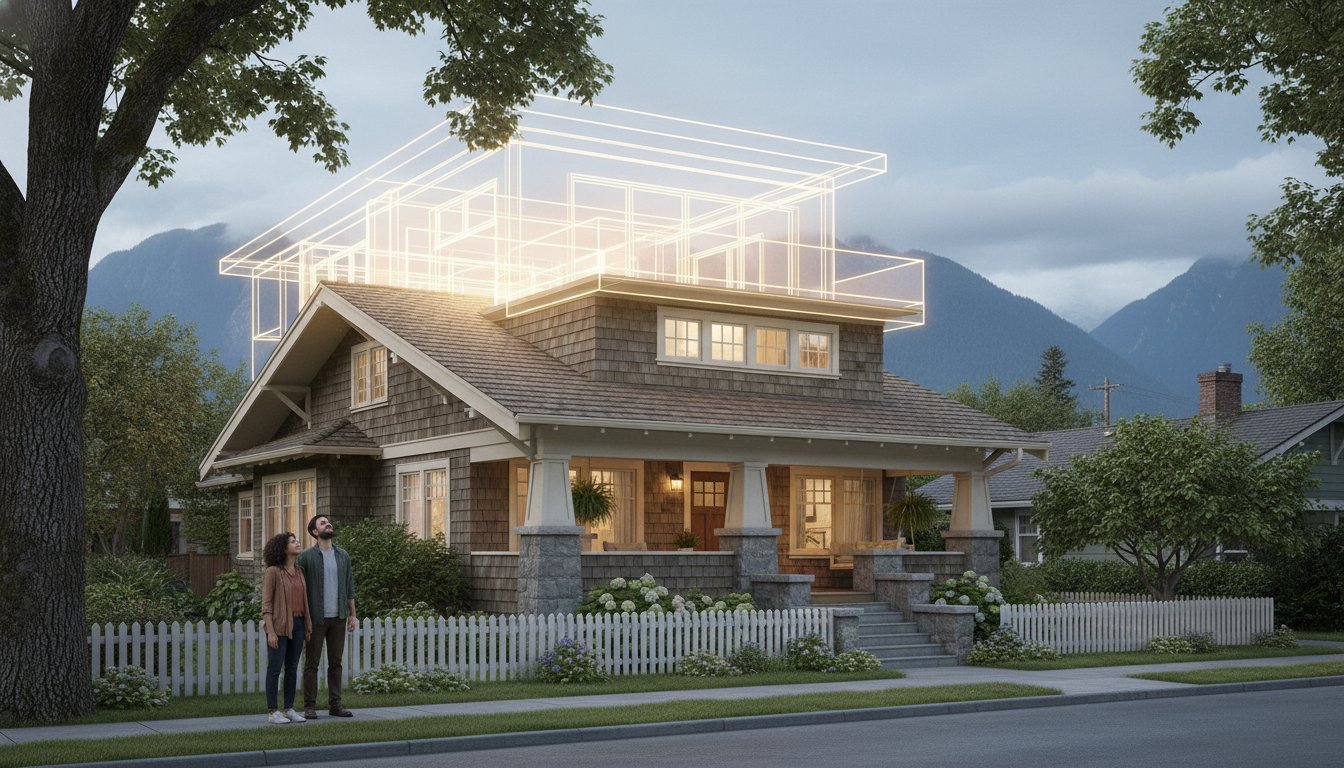
Second Story Addition Vancouver: The 2026 Homeowner’s Guide to Costs and Planning
What if the most valuable real estate in Metro Vancouver isn’t a new lot, but the empty air space directly above your roof? Expanding your living area through a second story addition vancouver is often the most strategic way to bypass the city’s tight setbacks and maximize your property’s potential. It’s a bold move that transforms a cramped bungalow into a spacious family legacy, but it also comes with heavy questions about structural integrity and the City of Vancouver’s 0.6 Floor Space Ratio (FSR) limits.
You likely realize that building up involves more than just new framing; it’s a complex puzzle of foundation reinforcements and navigating a 2026 permit landscape that recently saw a 4.5% fee increase. This guide provides the clarity you need to master these hurdles, from understanding why a C$3,100 development permit fee might apply to your project to deciding if an addition beats building a laneway house. We’ll preview the essential steps to secure a fixed-price construction agreement, ensuring you can plan your transition with total financial confidence and zero surprises.
Key Takeaways
- Learn why vertical expansion is the most strategic way to increase square footage while respecting Metro Vancouver’s restrictive lot setbacks and land-to-structure value ratios.
- Understand the vital structural engineering requirements for foundation reinforcement to ensure your home’s “bones” are ready to safely support a new level.
- Master the 2026 regulatory environment, including how Floor Space Ratio (FSR) and specific permit fees impact your second story addition vancouver.
- Compare the costs and long-term property value of adding a second floor versus building a detached laneway house or a ground-level extension.
- Achieve peace of mind with a framework for fixed-price contracts that eliminate the financial anxiety of unforeseen construction costs and budget overruns.
Why a Second Story Addition is the Strategic Choice for Vancouver Homeowners
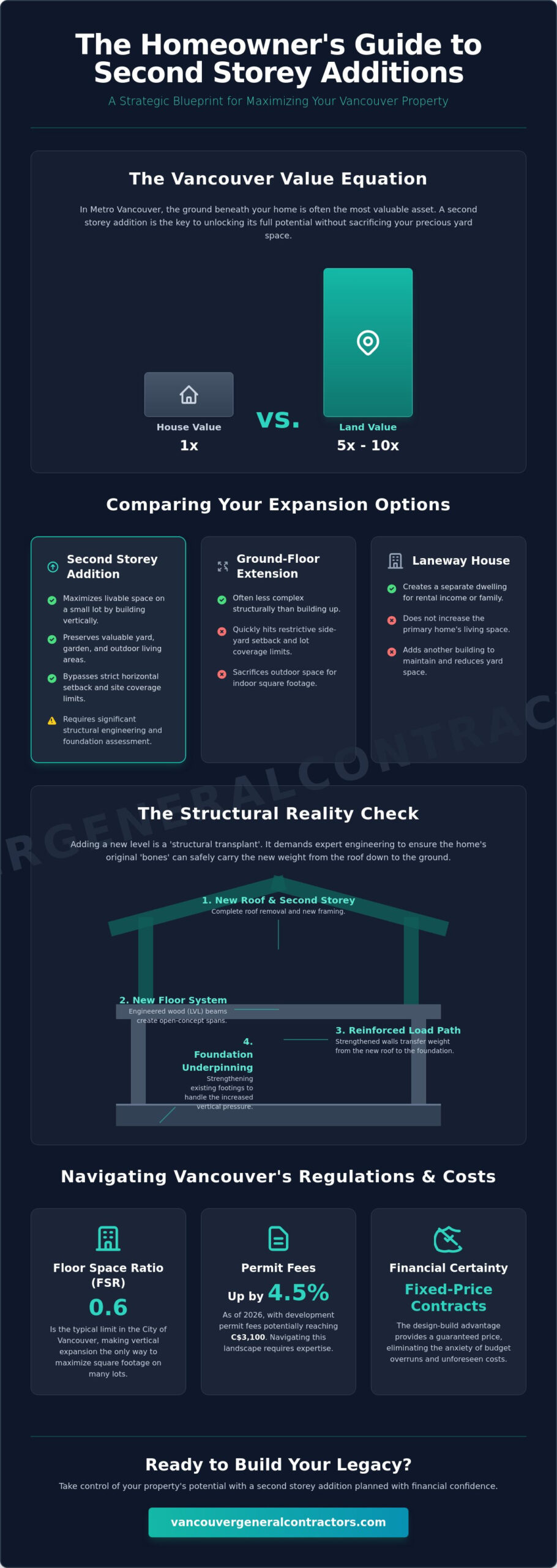
Vancouver’s real estate market operates on a logic where the dirt beneath your feet is frequently worth five to ten times more than the shingles above your head. When the land value represents such a massive portion of your net worth, the decision to maximize that footprint becomes a matter of legacy and financial health. A second story addition vancouver is the primary tool for homeowners who need more space but refuse to compromise on their location or their backyard.
Most Vancouver lots are characterized by narrow widths and strict side-yard setbacks. If you try to expand on the ground level, you quickly run into site coverage limits that cap how much of your lot can be covered by buildings. By choosing to build up, you effectively bypass these horizontal constraints. This strategy preserves your outdoor sanctuary while creating a modern, multi-level environment that fits the city’s vision for increased urban density. You aren’t just adding rooms; you’re optimizing the most expensive component of your property.
Land Value vs. Renovation Investment
Investing in your current property is often a more stable financial move than entering the volatile move-up market. In high-demand pockets like Kitsilano or Mount Pleasant, the cost of purchasing a larger home includes a staggering Property Transfer Tax and significant real estate commissions. By reinvesting that capital into a second story addition vancouver, you’re building equity in a known quantity. This approach also allows you to modernize the interior while maintaining the exterior character that makes local neighbourhoods so desirable. You might even consider incorporating a secondary suite within the new design to offset mortgage costs or provide a dedicated space for multi-generational living.
The Neighborhood Factor: Why Staying Put Wins
The value of a home isn’t just found in its floor plan; it’s anchored in the community. Expanding your current residence means you don’t have to leave your preferred school catchment or say goodbye to the neighbours you trust. You avoid the stress of a competitive bidding war and the moving tax associated with a new purchase. Instead, you take control of the process, ensuring the final result is a bespoke living environment that serves your family for decades. This stability provides a sense of security that a new mortgage and a new neighbourhood simply cannot match.
The Structural Reality: What Actually Happens When You Add a Second Floor?
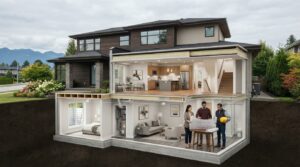
A second story addition vancouver is a significant structural transplant. It begins with the complete removal of your existing roof, followed by the installation of a new floor system that must safely carry the weight of an entire additional level. This is why a structural engineer is the most critical partner during the early stages. They don’t just look at the walls; they examine the “bones” of the house, specifically the footings and foundation, to ensure they can handle the increased vertical pressure without settling or cracking.
The “roof-off” phase is the most intense window in the construction timeline. In our local climate, managing this exposure requires military-grade precision. Professional teams must be ready to dry-in the new structure within a very tight window to protect your existing main floor from moisture. It’s a high-stakes period that demands a contractor with a proven track record of logistical competence. To see how professional teams manage these requirements, you can visit Trenick Roofing. Every load-bearing wall must be identified and reinforced because the weight of the new floor must be transferred directly to the ground through a series of studs, posts, and beams.
Foundation and Framing Reinforcement
Many older Vancouver bungalows weren’t built to support the weight of two floors. In these scenarios, foundation underpinning is often required to strengthen the existing footings. We frequently utilize a strategic mix of steel beams and engineered wood, such as LVL, to create the necessary spans for modern, open-concept layouts. A structural load path is the continuous chain of support that transfers weight from the new roof, through the walls and floors, and directly into the foundation and the ground. This engineering is essential for the Strategic Choice for Vancouver Homeowners who want a safe, permanent expansion that stands the test of time.
The Staircase Challenge: Reconfiguring the Main Floor
Integrating a staircase is often the most difficult design hurdle. It isn’t just about finding a hole in the floor; it’s about maintaining the natural flow of your kitchen and living areas. This is where 3D design becomes indispensable. It allows you to walk through the virtual space and see how the new stairs affect natural light and movement before construction begins. This prevents “staircase regret,” where the addition feels like an afterthought rather than a seamless part of the home. You’ll also need to consider how modern HVAC and plumbing stacks will be integrated into the existing structure without creating awkward bulkheads. If you’re ready to see how your floor plan could evolve, consulting with a design-build specialist can help clarify the structural path forward.
Comparing the Options: Second Story vs. Ground-Floor Addition vs. Laneway House
Choosing the right expansion method requires a balance between your family’s daily needs and your long-term financial goals. While a ground-floor extension might seem simpler, it often consumes your entire backyard and triggers complex setback issues that are difficult to resolve. In contrast, a second story addition vancouver offers a higher efficiency in terms of cost-per-square-foot because you aren’t paying for a new foundation or completely new site services. While a laneway house creates a separate dwelling, it often carries a higher price tag per square foot due to the requirement for independent utility connections and a completely new building envelope.
From a resale perspective, adding a second floor significantly boosts the value of the primary residence, making it more attractive to families who prioritize integrated living. Property taxes will naturally increase with the added square footage, but the ROI on a vertical build remains strong in neighbourhoods where land is at a premium. Additionally, permit timelines for a second story addition vancouver are typically more predictable. You can generally expect a timeline of 8 to 14 weeks for a complete building permit application to be processed by the City of Vancouver, which is often faster than the lead times associated with detached new builds. Homeowners in neighbouring municipalities should also explore their local options, as home additions in Burnaby follow a distinct set of Floor Area Ratio rules and permit processes that differ from Vancouver’s regulatory framework. Similarly, homeowners across the Fraser River can find tailored guidance on richmond home additions, where Chapter 30 zoning bylaws and Floor Area Ratio limits create a unique planning environment that requires its own strategic approach.
The Laneway House Alternative
There are specific scenarios where building a laneway house in vancouver is the superior choice. If your primary goal is rental income or providing a detached sanctuary for adult children, the privacy of a laneway house is unbeatable. However, zoning is the ultimate gatekeeper. Vancouver’s Floor Space Ratio (FSR) rules mean you must choose your square footage wisely. You generally cannot maximize both an addition and a laneway house if the combined area exceeds the 0.6 FSR limit found in most RS zones.
Master Suite Additions: Vertical vs. Horizontal
Designing a master suite addition on a second level provides a level of privacy that ground-floor bedrooms simply cannot match. Elevating your sleeping quarters allows you to capture mountain or city views that are otherwise hidden by fences and foliage. This vertical shift also allows you to allocate more of your budget toward luxury interior finishes rather than extensive ground-level excavation. By concentrating the heavy structural work on the existing footprint, you free up capital to create a true sanctuary with high-end ensuite features and custom walk-in closets.
Navigating the Vancouver Permit Maze: Zoning, Height, and FSR
Securing approval for a second story addition vancouver requires more than just a set of blueprints; it requires a deep understanding of the City’s evolving regulatory framework. In 2026, all development and building permits saw a 4.5% fee increase, making early accuracy in your application more valuable than ever. The most critical metric you’ll encounter is the Floor Space Ratio (FSR). In most RS (single-family) zones, the FSR is capped at 0.6. This means your total floor area, including the new level, cannot exceed 60% of your lot size. If your addition pushes you past this limit, the project won’t move forward without a variance, which is rarely granted for standard residential builds.
Beyond square footage, height restrictions and protected “view cones” often dictate the pitch of your new roof or the placement of windows. While Vancouver has its specific hurdles, neighbouring municipalities like Burnaby or North Vancouver have their own distinct bylaws regarding setbacks and secondary suites. Burnaby homeowners planning to expand should review the dedicated guidance on home additions burnaby regulations to understand how the city’s My Permits Portal and 2026 fee increases affect their specific projects. You must also distinguish between a Development Permit and a Building Permit. For an addition of 60 square metres or more, the development permit fee for an “outright approval” is currently C$3,100.00. Smaller additions under 60 square metres cost C$785.00. These fees are separate from the building permit itself, which is calculated based on the estimated cost of the work.
Modern Zoning Changes in 2026
The “Missing Middle” housing policies and new provincial mandates have shifted the landscape for vertical expansion. While these changes aim to increase density, they also introduce stricter requirements for the BC Energy Step Code. Adding a second floor often triggers a requirement for a full home energy upgrade to meet modern efficiency standards. However, there are incentives available. The City of Vancouver frequently offers character home retention incentives. These programs allow for a modest FSR increase if you preserve the original facade while building your second story addition vancouver.
The Municipal Coordination Process
Timeline expectations vary significantly across the Lower Mainland. While a complete building permit application in Vancouver typically takes 8 to 14 weeks to process, other cities like Surrey may move at a different pace depending on their current backlog. This variability is why having a specialized contractor manage all municipal communications is vital. They act as your advocate, handling the granular details of inspections and city hall inquiries so you don’t have to. Thorough pre-construction planning is the only way to mitigate the risk of costly delays. If you want to ensure your project remains on track, booking a professional site assessment is the best first step toward permit certainty.
The Design-Build Advantage: Achieving Cost Certainty with Fixed Pricing
The traditional “Design-Bid-Build” model often creates a painful disconnect between the architectural vision on paper and the reality of the construction site. When an architect designs a second story addition vancouver without constant, real-time input from a builder, the resulting contractor quotes frequently exceed the homeowner’s original budget. This leads to a frustrating cycle of “value engineering” where you’re forced to strip away the features you loved just to make the project financially viable. By integrating design and construction under one roof, we eliminate this friction. Our team takes full responsibility for the entire project lifecycle, ensuring the design is structurally feasible and the costs are locked in before the first hammer swings.
In an industry often criticized for budget volatility, we prioritize financial transparency through fixed-price agreements. Unlike “cost-plus” contracts where the final price fluctuates based on receipts and labour hours, a fixed-price contract provides a definitive ceiling. This is especially vital for vertical additions where structural discoveries, such as hidden foundation issues or outdated plumbing stacks, can quickly derail a loose budget. We absorb the responsibility for these details, positioning ourselves as a stable partner who manages the risk so you don’t have to.
Eliminating Budget Volatility
A fixed-price agreement in 2026 is a comprehensive promise that includes all materials, skilled labour, and rigorous project management. We conduct an exhaustive pre-construction phase to identify potential structural risks before the final contract is signed. This disciplined approach ensures that the price we quote is the price you pay. To further protect your investment, our work is backed by an industry-leading warranty on all major structural components, providing the peace of mind that comes with enduring quality and professional accountability.
Starting Your Expansion Journey
Your journey toward a more spacious home begins with a detailed site visit and a feasibility study. We examine your existing structure to confirm it can safely support a new level, followed by the creation of initial 3D design concepts. These renders help you visualize the flow and natural light of your new space before any physical work begins. For a broader look at how we manage these complex transformations, our home renovation vancouver pillar guide is an essential resource for your planning phase. While a second story addition vancouver typically involves a 6-month construction window, the result is a high-end living environment that serves your family for generations.
Scaling Your Future with Structural Confidence
Building up is the most sustainable path to growing your home without sacrificing the neighbourhood you love. You’ve seen how mastering the 0.6 Floor Space Ratio and the 2026 permit landscape requires a disciplined, professional approach. By prioritizing structural integrity and utilizing our comprehensive 3D design-build process, you eliminate the guesswork that often plagues large-scale renovations.
Investing in a second story addition vancouver is a significant commitment to your family’s legacy. Our integrated methodology replaces traditional budget anxiety with a fixed-price contract guarantee and an industry-leading structural warranty. We manage every complexity, from municipal coordination to the final walkthrough, so you can focus on the excitement of your new level.
If you’re ready to explore the potential above your roofline, we’re here to provide the expertise you need. Book Your Free Fixed-Price Feasibility Consultation today. Let’s build a home that stands the test of time together.
Common Questions About Adding a Second Level
Do I need to move out during a second story addition in Vancouver?
You’ll almost certainly need to move out for the duration of the project. Moving out is a safety necessity because the process involves removing the entire roof and exposing the main floor to the elements. Temporary utility shut-offs and significant construction noise make the home uninhabitable. Planning for a six to eight month temporary relocation ensures your family stays comfortable while our teams work to dry-in the new structure.
How much does a second story addition cost per square foot in 2026?
Investment levels for a second story addition vancouver depend on the structural reinforcements required and the quality of finishes you select. While industry reports for 2026 show a wide range for Metro Vancouver builds, your specific total will reflect the unique engineering needs of your existing foundation. We focus on providing a fixed-price agreement during the feasibility stage to ensure your budget remains predictable from the start of the design phase.
Will my existing foundation support another floor?
A structural engineer must assess your footings to determine if they can carry the new vertical load. Many older Vancouver bungalows require foundation underpinning or the addition of steel beams to transfer weight safely. If your foundation is insufficient, we can often reinforce it internally. This specialized engineering ensures your home remains stable and compliant with modern seismic requirements in the Lower Mainland.
How long does the permit process take for a second story in Metro Vancouver?
You should expect a timeline of 8 to 14 weeks for the City of Vancouver to process a complete building permit application in 2026. This period varies depending on the complexity of your design and current municipal backlogs. Starting with a thorough pre-construction plan helps mitigate delays by ensuring all documentation is accurate and compliant with local zoning bylaws before submission.
Can I add a second story to a character home or heritage building?
Yes, adding a second level to a character home is possible and often encouraged through municipal incentives. The City of Vancouver provides Floor Space Ratio (FSR) bonuses for homeowners who commit to preserving the original facade while modernizing the interior. This approach allows you to retain the historic charm of your property while gaining the modern square footage your family requires for a contemporary lifestyle.
What is the maximum height allowed for residential homes in Vancouver?
Maximum height limits vary by specific zoning district, but most residential areas allow for a height of approximately 9.5 to 10.7 metres. These limits are strictly enforced to protect neighbourhood character and “view cones” that preserve sightlines to the mountains. Our design process includes a detailed zoning analysis to ensure your new roofline fits perfectly within these legal parameters while maximizing your interior ceiling height.
Is a second story addition cheaper than a ground-floor extension?
Building up is frequently more cost-effective per square foot than expanding outward. A ground-floor extension requires expensive excavation, new foundation footings, and site service relocations that aren’t necessary when you utilize the existing footprint. While vertical builds require structural reinforcement, they preserve your valuable yard space and bypass many of the tight setback restrictions that make horizontal additions difficult on small Vancouver lots.
Does adding a second floor increase my property taxes significantly?
Your property taxes will increase because the BC Assessment will reflect the higher market value and increased square footage of your renovated home. Since taxes are calculated based on the assessed value of the structure and the land, a major improvement like a second story addition vancouver will result in a higher annual bill. However, this increase is typically offset by the substantial boost in your home’s equity and long-term resale potential.
More Uncategorized Guides


Ready to start your renovation?

Comments are closed